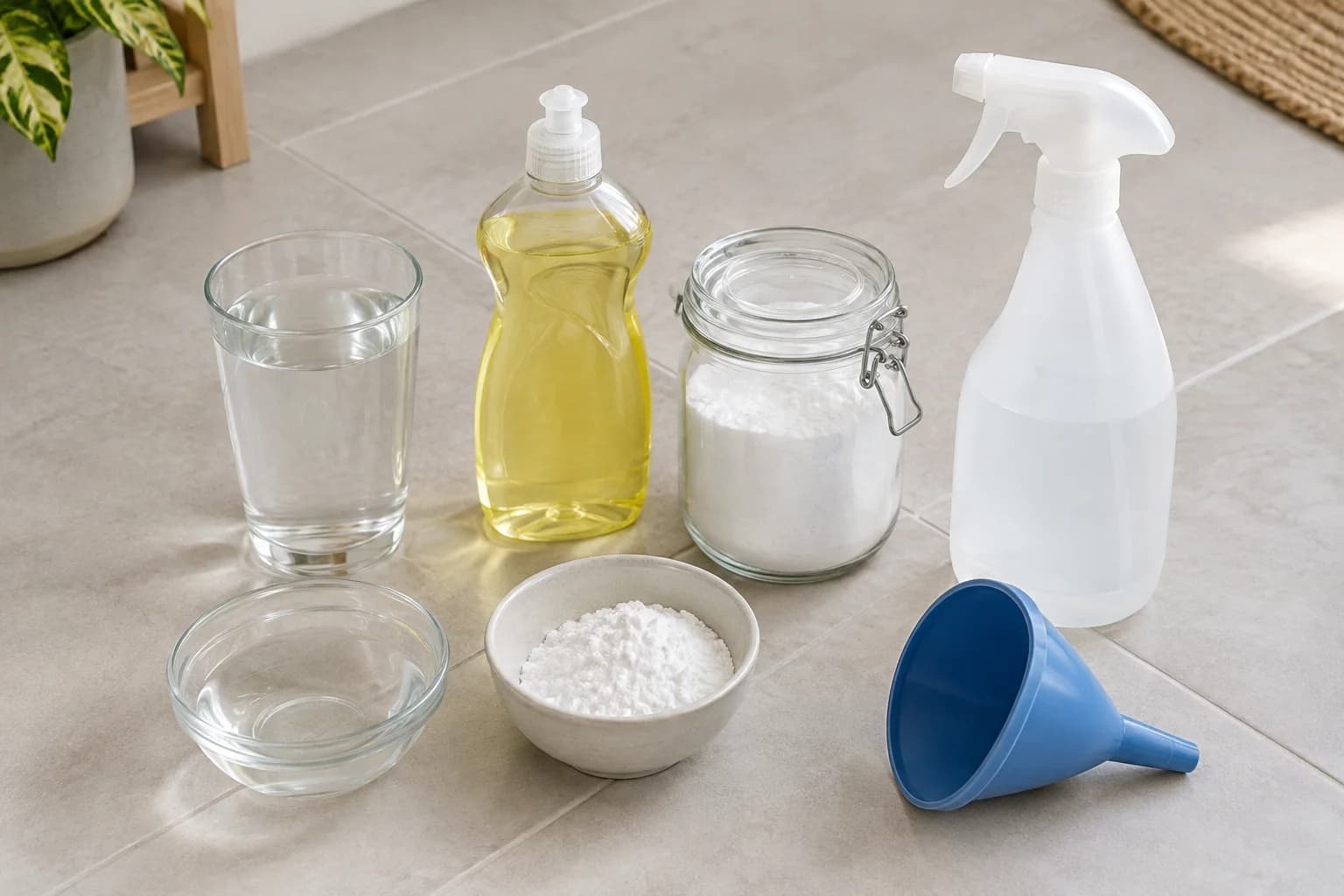
Homemade Oven Cleaner: A Baking Soda Paste That Lifts Baked-on Grease
Part of Homemade Cleaners · article 8 of 8
Spread a paste of baking soda, water, and dish soap inside the cooled oven, let it sit, then wipe clean and spray remaining residue with white vinegar; makes about 1 cup of paste, enough for one oven interior, ready in 10 min and keeps up to 2 weeks.
On this page
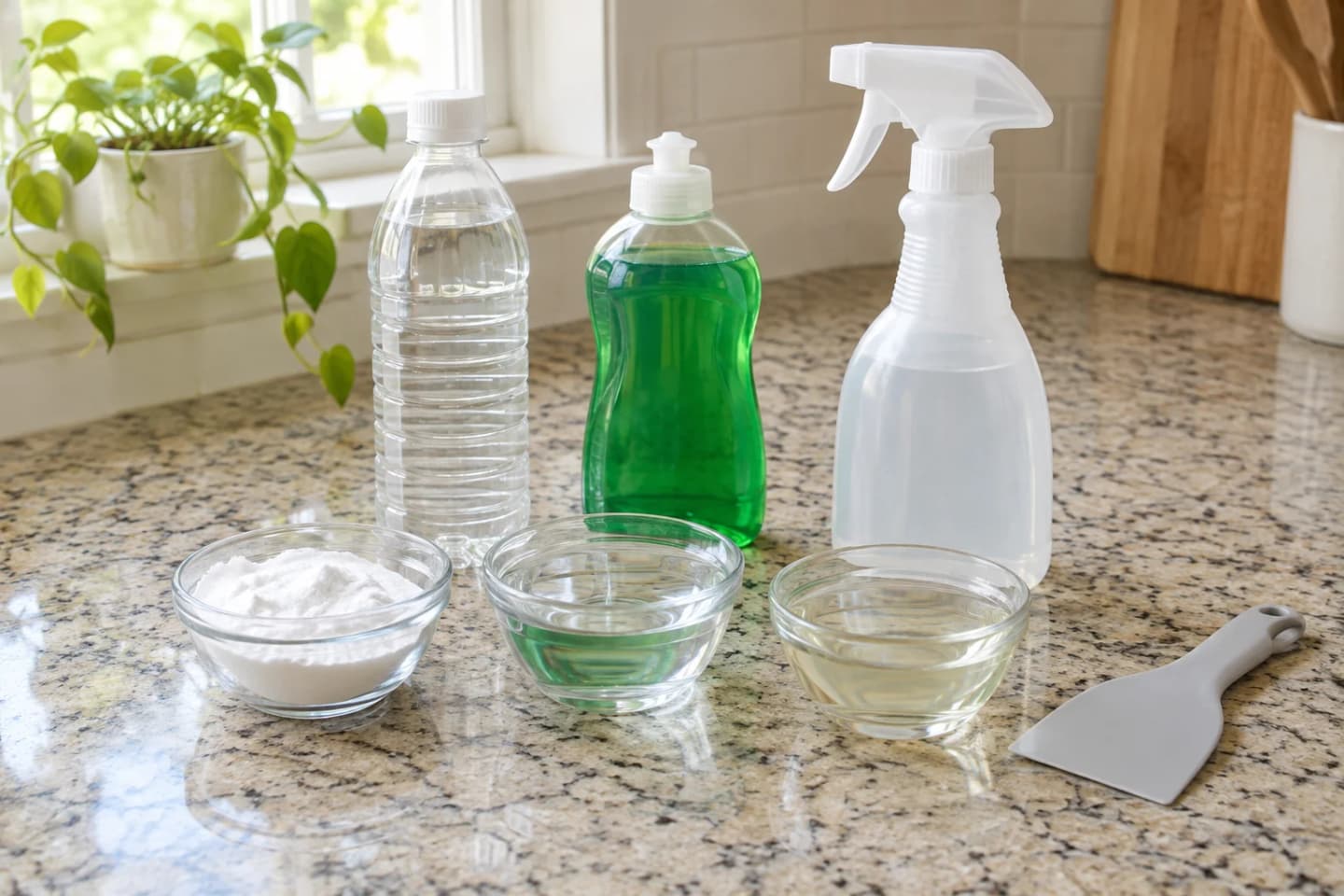
Homemade Baking Soda Oven Cleaner
Ingredients
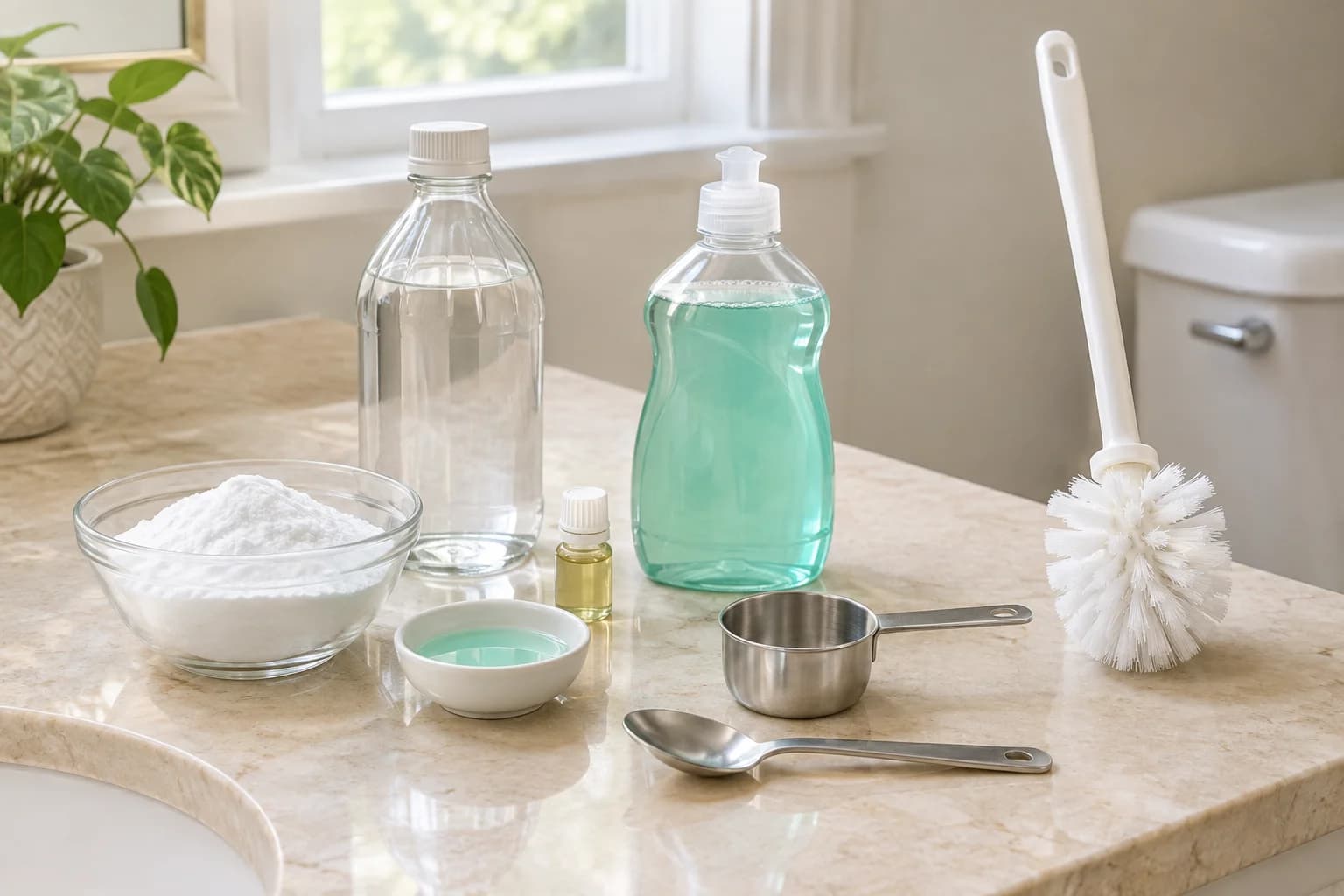
- 1/2 cup baking soda — mild abrasive and grease-cutting base (or washing soda)
- 3 tablespoons water — binds the baking soda into a spreadable paste
- 1 teaspoon dish soap — helps lift baked-on grease
- 1/2 cup white vinegar — reacts with dried baking soda residue to loosen it for easy wiping (or lemon juice)
You need
- mixing bowl
- spoon or spatula
- rubber gloves
- spray bottle
- damp cloth or sponge
- plastic scraper
Make it
- Remove oven racks and set them aside to clean separately.
- In a bowl, stir the baking soda with water and dish soap until it forms a spreadable paste.
- Spread the paste over the interior surfaces of the cooled oven, avoiding the heating elements.
- Let the paste sit for at least 8 hours or overnight.
- Wipe out the softened grime with a damp cloth, using a plastic scraper on stubborn spots.
- Fill a spray bottle with white vinegar, mist any remaining residue, then wipe clean.
Precautions Wear rubber gloves since baking soda paste and vinegar can dry out skin, and make sure the oven is completely cool and unplugged or off before cleaning; store leftover vinegar in a labeled, sealed bottle out of children's reach.
What Does Each Ingredient in This Homemade Oven Cleaner Actually Do?
Baking soda is the workhorse: its fine, gritty texture scrubs away baked-on grease and carbon without scratching enamel, while its mild alkalinity breaks down grime chemically rather than relying on force alone. Washing soda works as a substitute and is more alkaline, so it cuts grease faster, but it's rougher on skin and should always be used with gloves. Water simply turns the powder into a spreadable paste; without it, baking soda has nowhere to cling and slides off vertical oven walls instead of sitting on the grime long enough to work. Dish soap adds a surfactant that breaks the bond between grease and metal, letting the paste lift baked-on residue instead of just loosening the surface layer; a grease-cutting dish soap gives slightly stronger results than a gentle, fragrance-free formula. White vinegar is the finishing step: its acidity reacts with dried baking soda residue, fizzing it loose so it wipes away instead of leaving a chalky film. Lemon juice is a workable substitute with the same acid-base reaction, though it's weaker and leaves a sticky residue from natural sugars if not rinsed well. For general upkeep between deep cleans, a look at other oven cleaning hacks can help you decide how often this paste treatment is really needed.
Storing Your Baking Soda Paste Safely: Shelf Life, Labeling, and Ventilation
Leftover paste keeps for up to 2 weeks if stored in a sealed container, such as a jar with a tight lid, rather than left open to the air, which dries it out and weakens its grease-cutting power. Mark the container with the contents and the date you mixed it, since baking soda paste looks a lot like other household pastes once it's out of its original box. Keep it, along with your spray bottle of white vinegar, on a high shelf or in a locked cabinet away from children and pets, since neither ingredient is meant to be swallowed. Wear rubber gloves whenever you handle the paste or wipe down the oven, since repeated contact with baking soda and vinegar can dry out your skin. Ventilation matters too: open a window or run the kitchen exhaust fan while the paste sits and again when you spray vinegar, since the combination can release a strong odor in an enclosed space. Always confirm the oven is completely cool and unplugged or switched off before you start, and never store cleaning mixtures near food items, even when the container is clearly labeled.
Frequently asked questions
What is a natural oven cleaner made of?
How does cleaning an oven with vinegar and baking soda work?
How can you clean an oven without store-bought oven cleaner?
How long should you leave the baking soda paste in the oven before wiping it out?
Can you use this baking soda paste on a self-cleaning oven?
How this article was made
Edited by Claire Mercier, Editor. The guides are written with AI assistance.