Homemade Toilet Bowl Cleaner: A Fizzing Baking Soda Soak
Part of Homemade Cleaners · article 7 of 8
Sprinkle baking soda into the toilet bowl first, pour in white vinegar, let it fizz, then scrub with dish soap; this treatment takes 5 min, makes 1 treatment per toilet bowl, and should be used the same day.
On this page
Homemade Toilet Bowl Cleaner
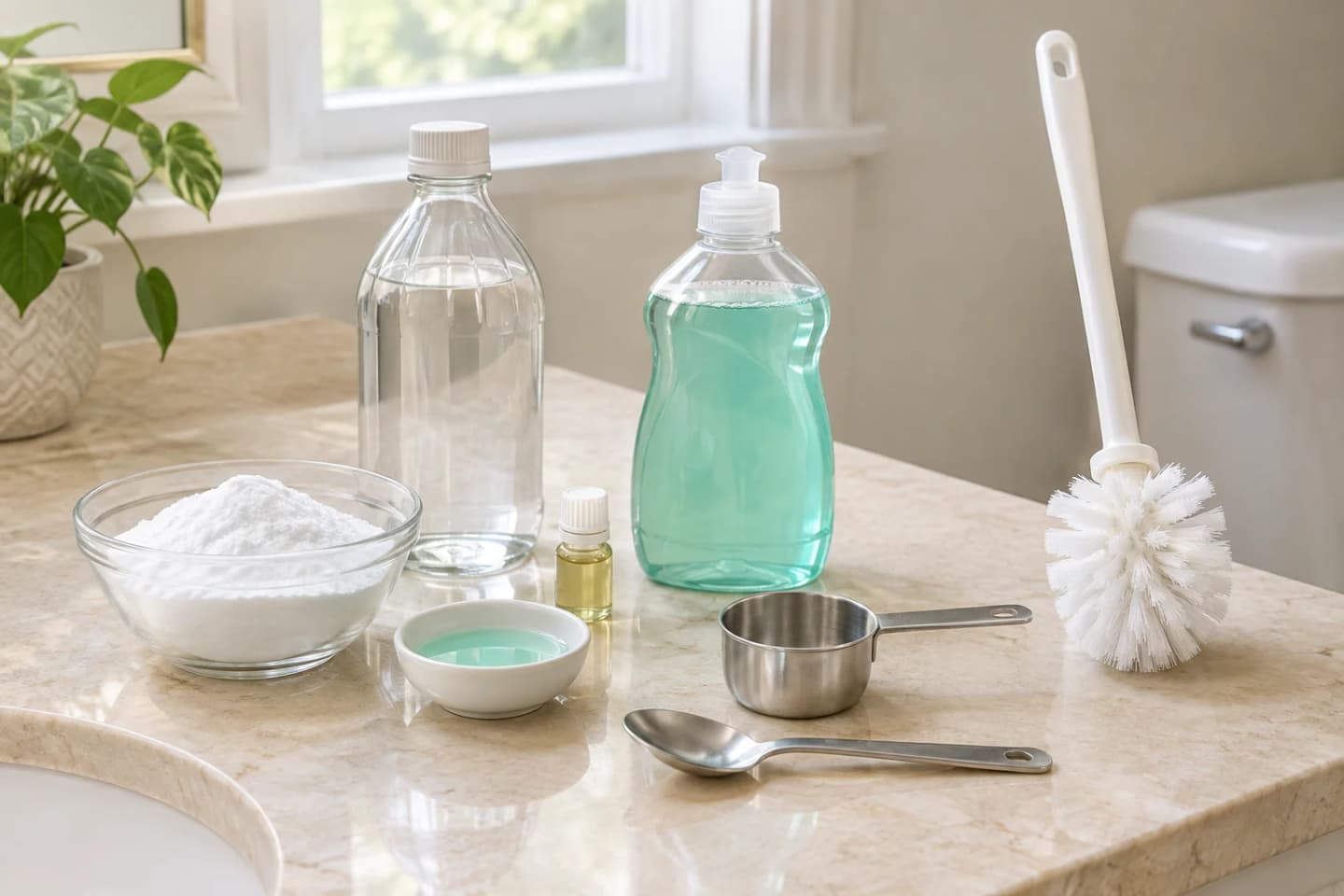
Ingredients
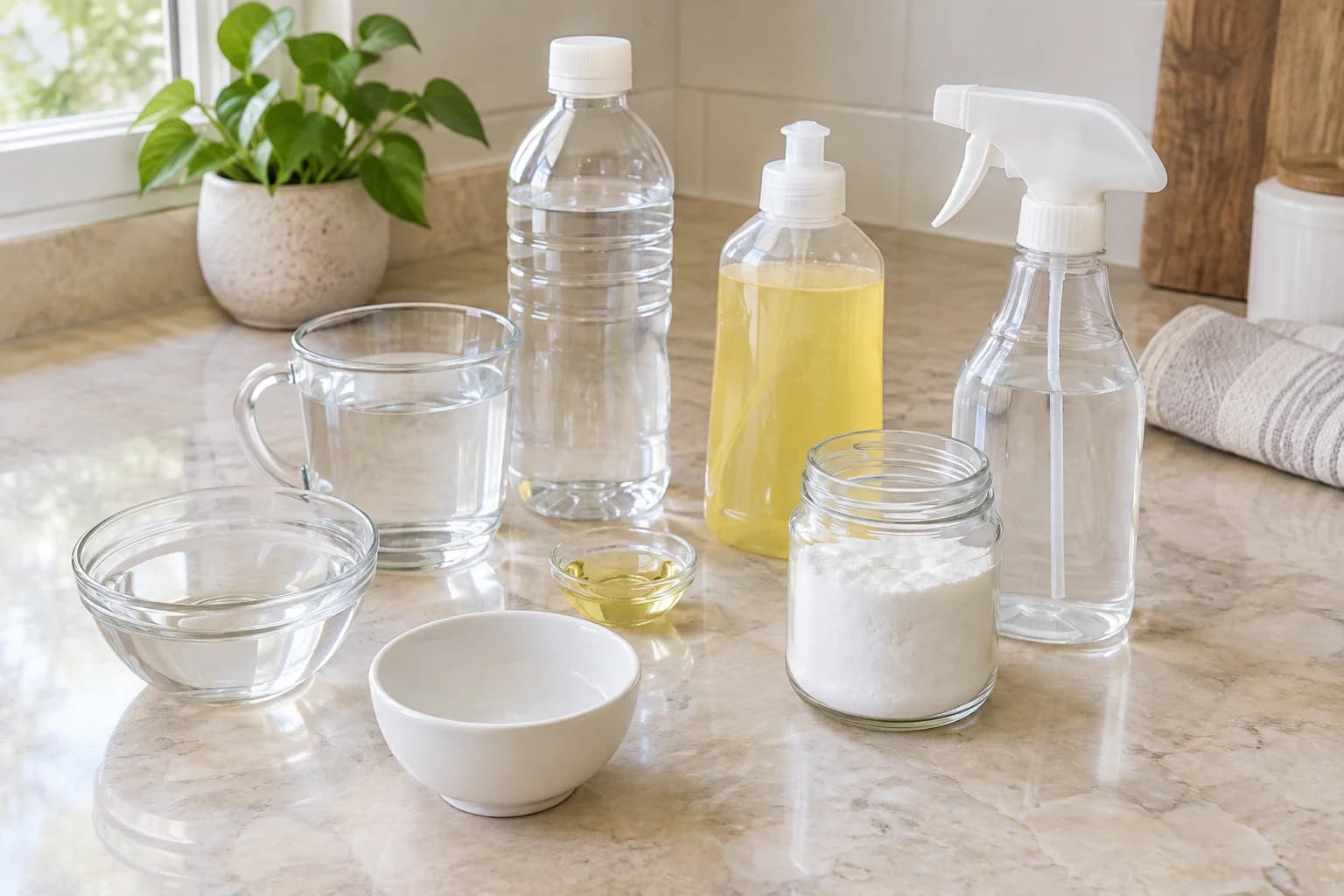
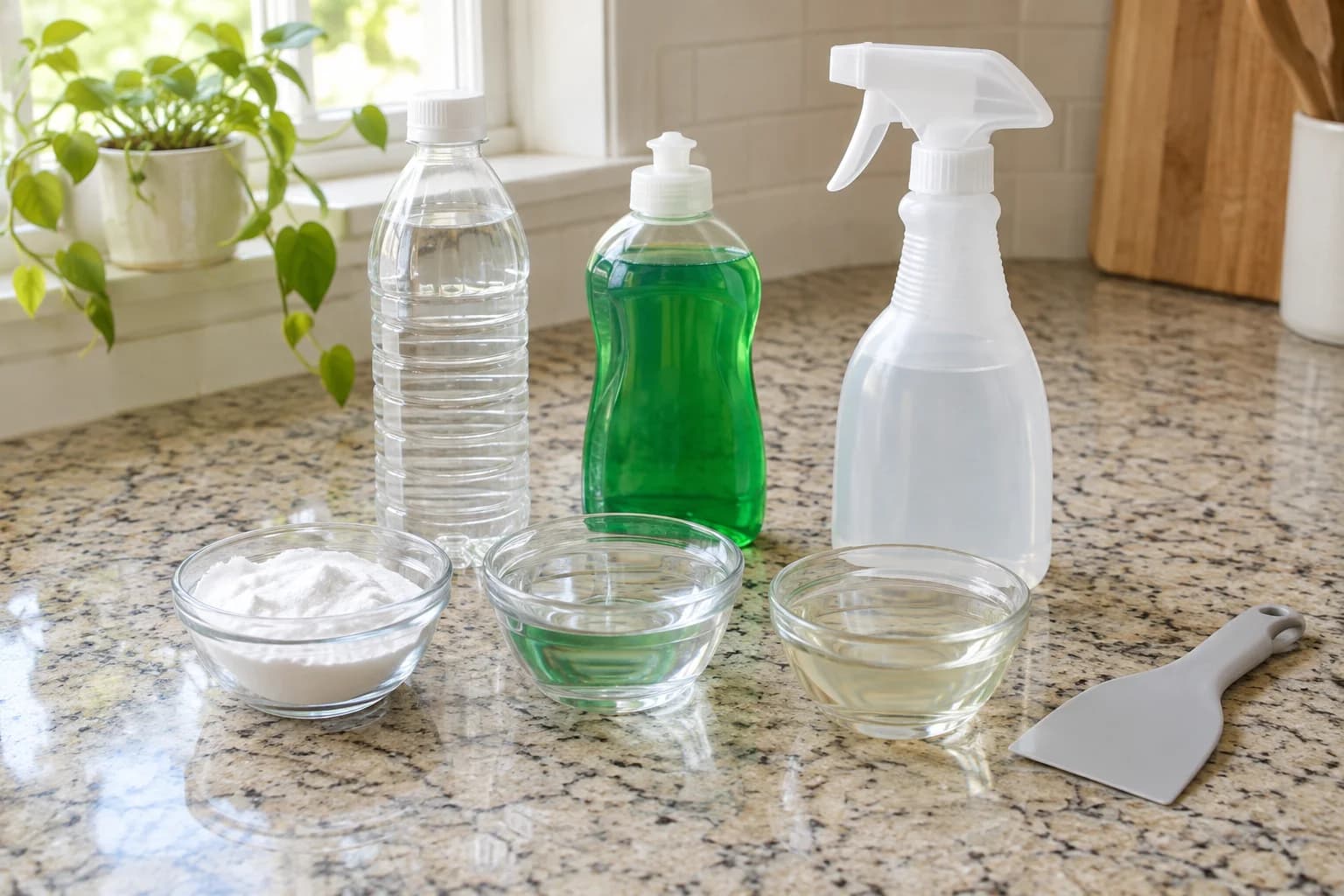
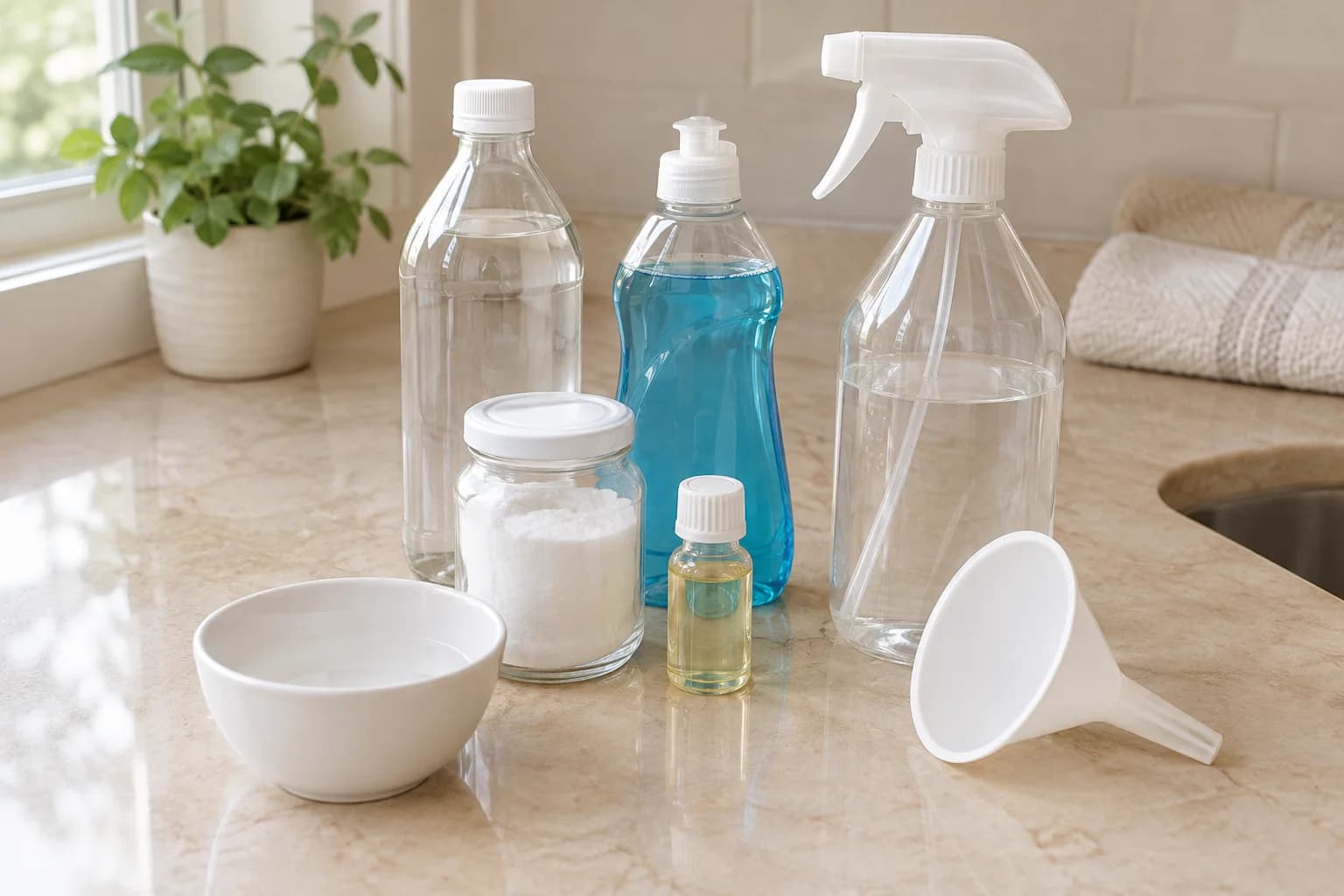
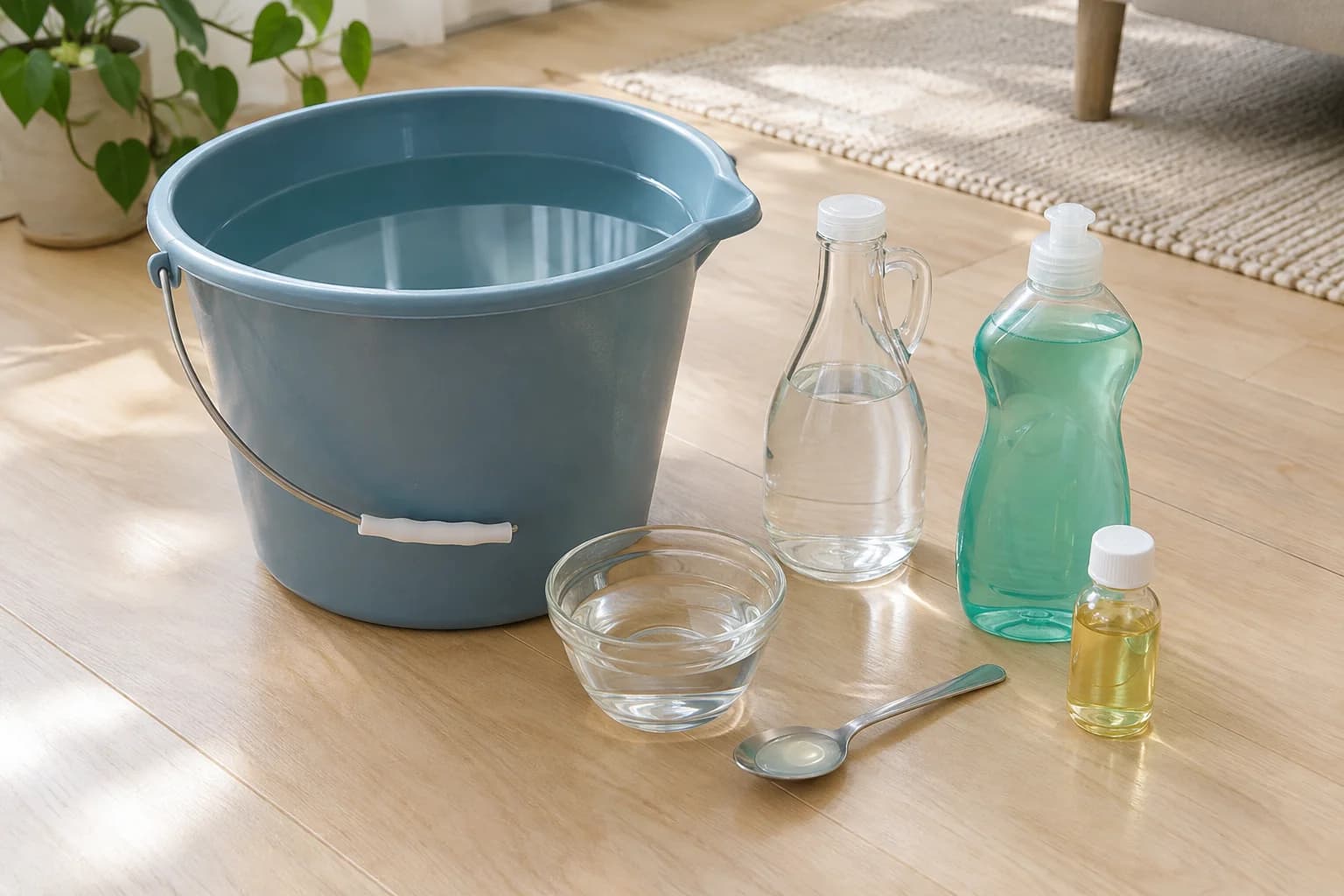
- 1 cup baking soda — mild abrasive and deodorizer (or washing soda)
- 1 cup white vinegar — acid that dissolves limescale and lifts stains (or lemon juice)
- 1 tablespoon dish soap — grease cutter that helps lift grime
- 5 drops essential oil — optional scent (or omit)
You need
- toilet brush
- measuring cup
- measuring spoon
Make it
- Put on gloves and make sure the bathroom is ventilated.
- Pour the baking soda directly into the toilet bowl, aiming it around the waterline and sides.
- Add the vinegar slowly; it will fizz actively for a few minutes, so let it work for about 10 minutes.
- Add the dish soap and swirl with the toilet brush, scrubbing under the rim and along stained areas.
- Flush to rinse the bowl completely.
Precautions Wear gloves since prolonged contact with vinegar and baking soda can dry or irritate skin, and keep the bathroom door open or a fan running while the mixture fizzes. Mix only the amount needed and use it immediately in an open bowl; do not store leftover fizzing mixture, and keep baking soda and vinegar out of reach of children.
What Does Each Ingredient Do in This Homemade Toilet Bowl Cleaner?
Baking soda goes in first because it's a mild abrasive that scrubs away surface grime while also neutralizing odors trapped in the bowl. Washing soda can substitute in the same 1-cup amount, but it's more alkaline, so it cuts through grease and mineral buildup a bit more aggressively, which also means it can feel harsher on hands even through gloves.
White vinegar is the acid in the pairing, and it's what dissolves limescale and lifts mineral stains once it hits the baking soda and starts fizzing. Lemon juice works as a substitute in the same 1-cup quantity, with a milder acidity that takes a little longer to break down heavy limescale, though it leaves a fresher scent behind. As with any acidic cleaner, save it for the toilet bowl itself and avoid using it on any marble or stone bathroom surfaces nearby, since acids etch stone over time.
Dish soap is added last because it's a grease cutter, helping the toilet brush lift grime that the fizzing reaction alone won't fully dislodge. There's no real substitute here since other soaps either foam too much for a confined bowl or lack the degreasing power dish soap offers.
Essential oil is purely optional, added at 5 drops for scent, and can simply be omitted with no change to cleaning performance.
Storage and Safety: Shelf Life, Labeling, and Ventilation Tips
This treatment isn't something you make in a batch and tuck away under the sink. Mix only what you need for one bowl, use it right away, and skip the idea of storing leftovers for next week's cleaning. If you want a cleaner you can store between uses, a labeled spray bottle works better, like the vinegar-based mix described in the quick vinegar spray that lasts a month.
Keep the dry baking soda and the vinegar jug in their original containers, clearly labeled, on a shelf well out of reach of children and pets, since both can cause stomach upset or irritation if swallowed in quantity. Put on rubber gloves before you start scrubbing, since repeated contact with vinegar and baking soda can dry out or irritate skin over a full cleaning session. Open the bathroom door or run the exhaust fan while the mixture is actively fizzing, since the reaction releases a strong vinegar smell in a small, enclosed space. Once you've flushed the bowl, there's no residue worth saving, so rinse your measuring cups and the toilet brush and put the ingredients straight back on their shelf.
Frequently asked questions
How do you clean a toilet bowl with vinegar and baking soda?
What is a good natural toilet bowl cleaner?
How often can you use this homemade toilet bowl cleaner?
Is it safe to let the baking soda and vinegar mixture sit in the toilet overnight?
Can you use this cleaner on a toilet seat or tank lid made of marble or granite?
How this article was made
Edited by Claire Mercier, Editor. The guides are written with AI assistance.