Homemade Window Cleaner: The Cornstarch Trick for No Streaks
Part of Homemade Cleaners · article 3 of 8
Mix white vinegar, water, dish soap, and cornstarch in a spray bottle to make 2 cups in 5 min; spray on glass windows and wipe dry with a microfiber cloth for a streak-free shine. Keeps up to 3 months.
On this page

Homemade Window Cleaner
Ingredients
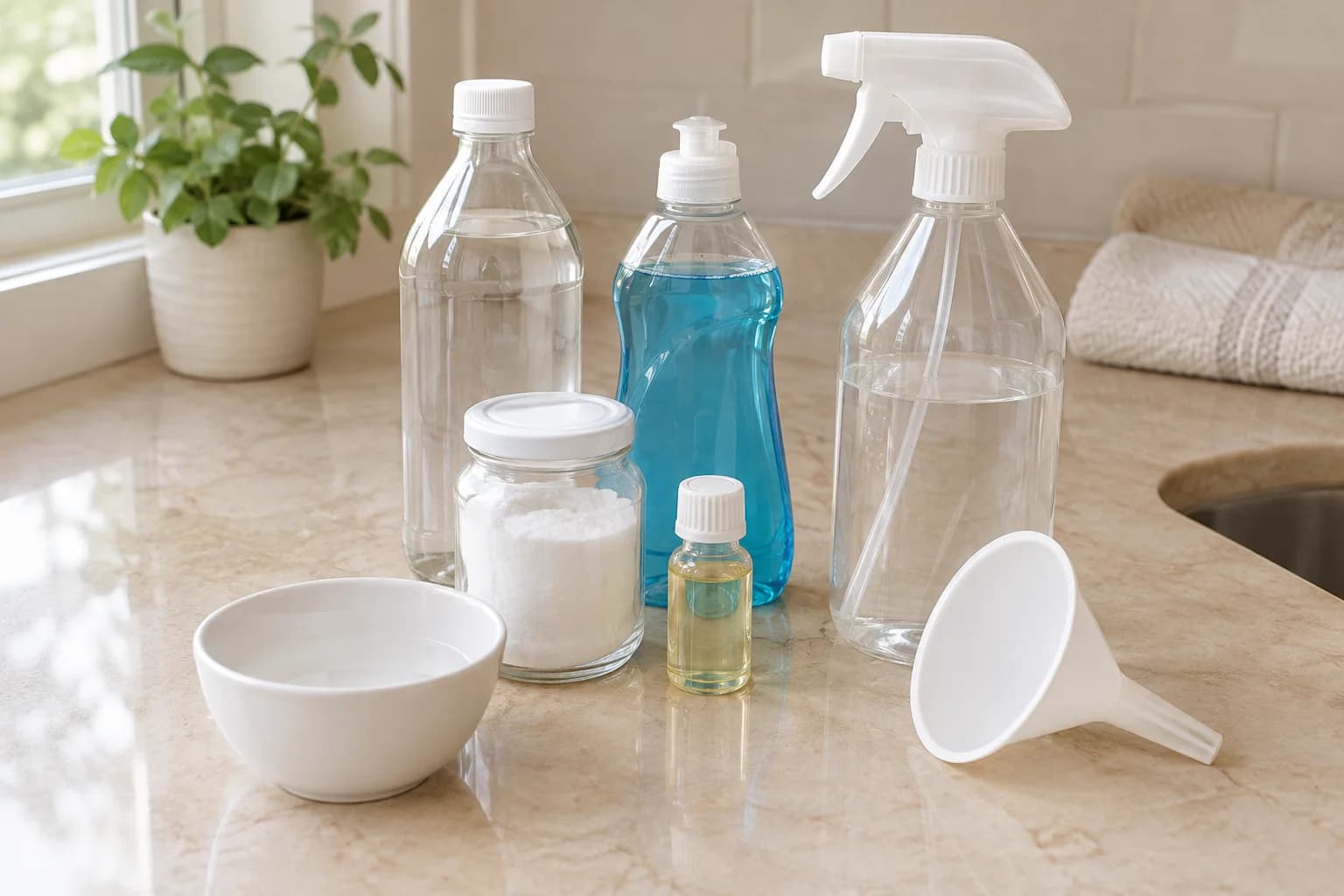
- 1/2 cup white vinegar — cuts grime and dissolves mineral deposits (or lemon juice)
- 1 1/2 cups water — dilutes the acid so it is safe for glass
- 1/4 teaspoon dish soap — lifts oily residue and fingerprints
- 1 tablespoon cornstarch — helps prevent streaking on large panes
You need
- spray bottle
- microfiber cloth or newspaper
- funnel
Make it
- Pour the water into the spray bottle using a funnel.
- Add the vinegar and dish soap.
- Add the cornstarch and close the bottle.
- Shake gently until the cornstarch is fully dissolved.
- Spray a light, even coat onto the window glass.
- Wipe immediately with a microfiber cloth or crumpled newspaper in a circular motion until dry.
Precautions Label the spray bottle with its contents, keep it out of reach of children, and avoid spraying near eyes; only use this cleaner on glass, not on marble or other natural stone surfaces, and ventilate the room while cleaning.
What Does Each Ingredient in This Homemade Window Cleaner Actually Do?
The white vinegar is the workhorse, cutting through grime and dissolving the mineral deposits that water spots leave behind on glass; lemon juice works as a substitute in the same amount, though it leaves a faint citrus smell and can turn slightly sticky in humid weather. Water dilutes that acid to a strength that is safe for glass and window frames, and using less of it makes the solution too harsh for repeated use on painted trim or rubber seals. Dish soap lifts the oily residue and fingerprints that vinegar alone can't fully break down, and swapping in a stronger degreasing soap can leave behind extra suds that are harder to wipe away without streaking. Cornstarch is the detail that sets this formula apart: it acts like a very fine polishing agent as you wipe, helping prevent the streaking that often shows up on large panes or sliding glass doors. Skipping it still gets you a clean window, just with a higher chance of faint streaks in direct sunlight. If you want to see how this same streak-free logic applies to mirrors and other glass surfaces around the house, the guide to cleaning a mirror without leaving streaks covers the technique in more detail.
Storing, Labeling, and Handling Your Window Cleaner Safely
Because the cornstarch settles and the vinegar smell fades over time, this cleaner keeps for up to 3 months when stored in a sealed spray bottle at room temperature, away from direct sunlight. Shake it before each use to redistribute any settled starch. Write the contents and the date mixed directly on the bottle, something like "Window Cleaner, vinegar/water/soap/cornstarch, made [date]," so no one mistakes it for plain water or another spray. Since it contains vinegar and a small amount of dish soap, store the bottle on a high shelf or in a locked cabinet, out of reach of children and pets, the same way you'd handle any other household spray.
You generally don't need gloves for occasional use, since the vinegar is diluted with water, but if your skin is sensitive or you're cleaning several windows back to back, a light pair of cleaning gloves will prevent dryness or irritation. Open a window or turn on a fan while you spray, especially in small rooms or on sliding glass doors where fumes can concentrate. Avoid spraying near your eyes, and if the solution does contact them, rinse with water right away. For more on keeping glass streak-free beyond windows, see this guide to cleaning a mirror without leaving streaks.
Frequently asked questions
How do you make a homemade glass cleaner?
Is cleaning windows with vinegar safe for the glass and frames?
What is the right ratio for a vinegar and water glass cleaner?
Can I use glass cleaner on my TV?
Why does my homemade window cleaner leave streaks even with vinegar in it?
How this article was made
Edited by Claire Mercier, Editor. The guides are written with AI assistance.