Homemade Carpet Cleaner: Vacuum, Spray, Blot, and Baking Soda Finish
Part of Homemade Cleaners · article 2 of 8
Vacuum the carpet first, then spray a mix of warm water, dish soap, and white vinegar on the stain, blot, and finish with baking soda; makes 2 cups in 5 min and keeps up to 1 week.
On this page

Homemade Carpet Stain Cleaner
Ingredients
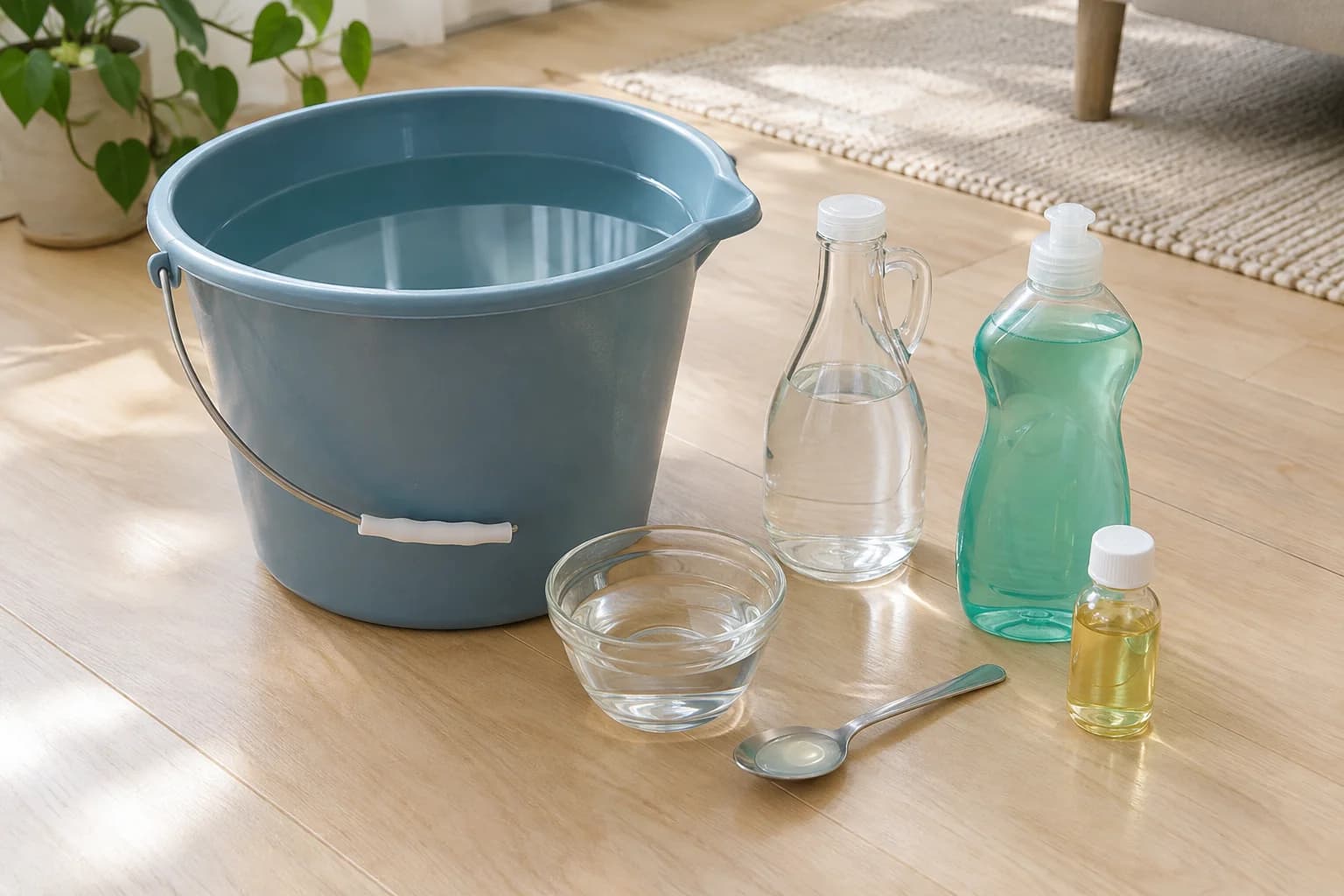
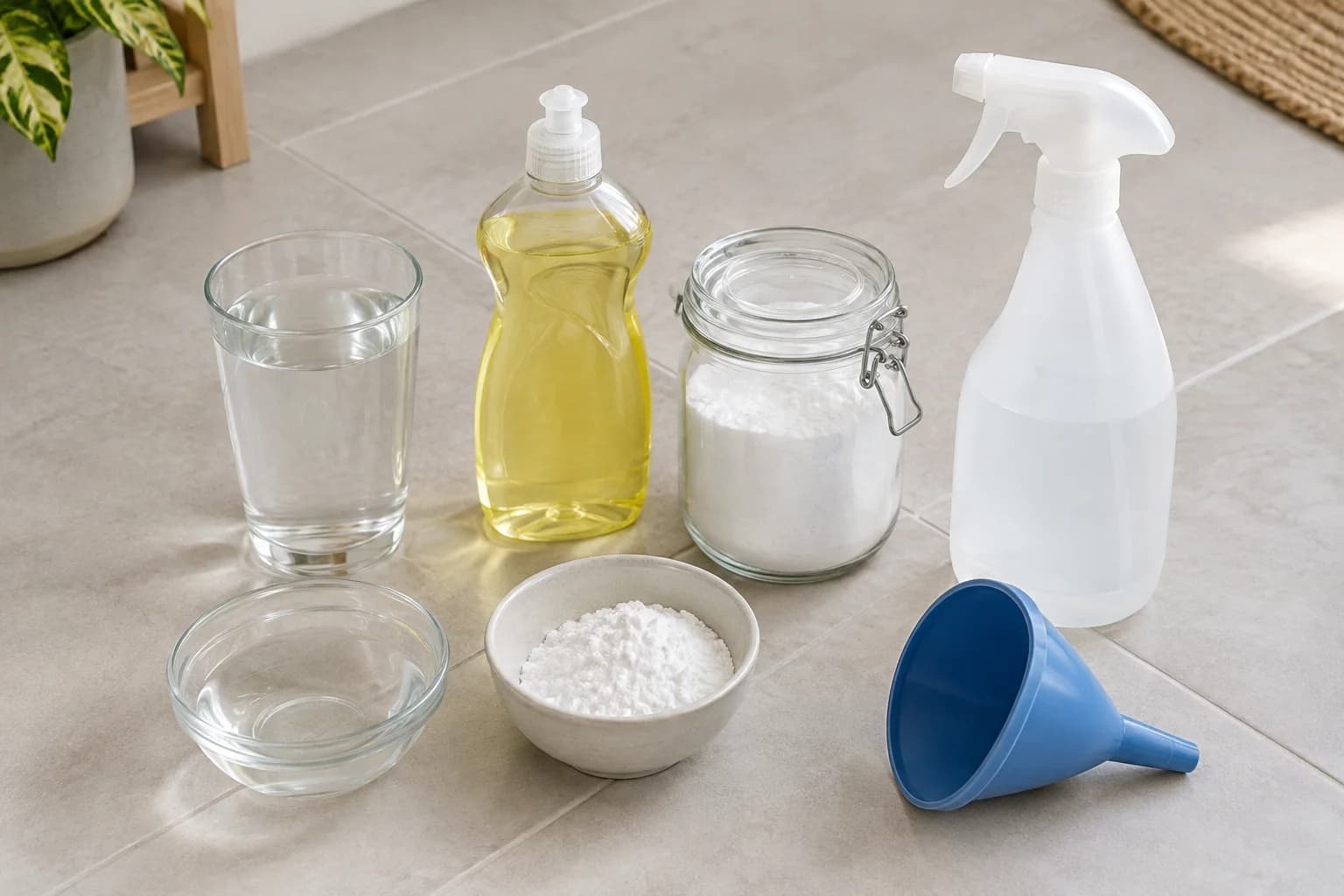
- 1 1/2 cups warm water — dilutes the cleaner and helps lift the stain
- 1 tablespoon dish soap — breaks down grease and grime (or castile soap)
- 1/4 cup white vinegar — dissolves mineral deposits and deodorizes (or lemon juice)
- 1 tablespoon baking soda — absorbs odors and helps lift residue once dry
You need
- spray bottle
- clean cloth or sponge
- soft-bristle brush
- measuring cups and spoons
Make it
- Vacuum the carpet area thoroughly to remove loose dirt and debris before treating the stain.
- In a spray bottle, combine the warm water, dish soap, and white vinegar; cap and shake gently to mix.
- Spray the solution directly onto the stained area, covering it evenly without soaking the carpet.
- Let the solution sit for 5 minutes, then blot with a clean cloth, working from the outside of the stain inward.
- Sprinkle baking soda over the damp area, let it dry fully for a few hours, then vacuum it up.
- Repeat steps 3 and 4 if the stain persists, and allow the carpet to air-dry completely before walking on it.
Precautions Wear gloves if you have sensitive skin, keep the room ventilated while the carpet dries, and store the mixture in a labeled spray bottle out of children's reach; do not combine with bleach or ammonia-based products.
What Does Each Ingredient in This Homemade Carpet Cleaner Do?
Warm water makes up the bulk of the mix and dilutes the soap and vinegar so the solution loosens a stain without oversaturating the carpet fibers; using less water concentrates the cleaner and raises the risk of leaving a soapy residue behind. Dish soap is the main grease-cutter, breaking down oily or greasy stains so they lift free when you blot; castile soap works as a substitute and is gentler on sensitive skin, though it may need an extra pump to match the cleaning power of standard dish soap. White vinegar dissolves mineral deposits and mild residue while neutralizing odors trapped in the fibers; lemon juice can stand in for a similar acidic effect and a fresher scent, but it is more likely to leave a faint citrus smell behind and offers slightly less odor-neutralizing strength on old stains. Baking soda goes on last, after blotting, to absorb lingering odors and pull up any remaining moisture and residue as it dries; cornstarch can work in a pinch for the drying and lifting action, though it lacks baking soda's odor-absorbing properties, so smells may linger. For a broader look at how these same staples handle other stains and problem areas, see these additional carpet cleaning hacks.
Storing, Labeling, and Handling Your Carpet Cleaner Safely
Mix only as much as you'll use within a week; the vinegar and dish soap solution loses its cleaning power after that and can start to smell flat rather than fresh. Pour it into a spray bottle and label it clearly with the contents and the date you mixed it, since an unlabeled bottle of clear liquid is easy to mistake for something else, especially around kids or pets. Keep it on a high shelf or in a locked cabinet rather than under the sink where small children can reach it.
Ventilate the room while you work and while the carpet dries, since the vinegar smell is sharp in an enclosed space and dissipates faster with a window cracked or a fan running. If you have sensitive skin, wear rubber gloves when spraying and blotting, since repeated contact with dish soap and vinegar can dry out your hands. Never combine this mixture with bleach or ammonia-based cleaners; mixing vinegar with either can release fumes that are dangerous to breathe. If you're building a broader kit of homemade solutions, the same labeling and ventilation habits apply across the vinegar-based sprays you keep on hand.
Frequently asked questions
How do you use baking soda to clean carpet?
Can you use baking soda and vinegar together to clean carpet?
What is a good homemade carpet cleaning solution?
How long does homemade carpet cleaner last once mixed?
Will this homemade carpet cleaner work on all carpet types?
How this article was made
Edited by Claire Mercier, Editor. The guides are written with AI assistance.