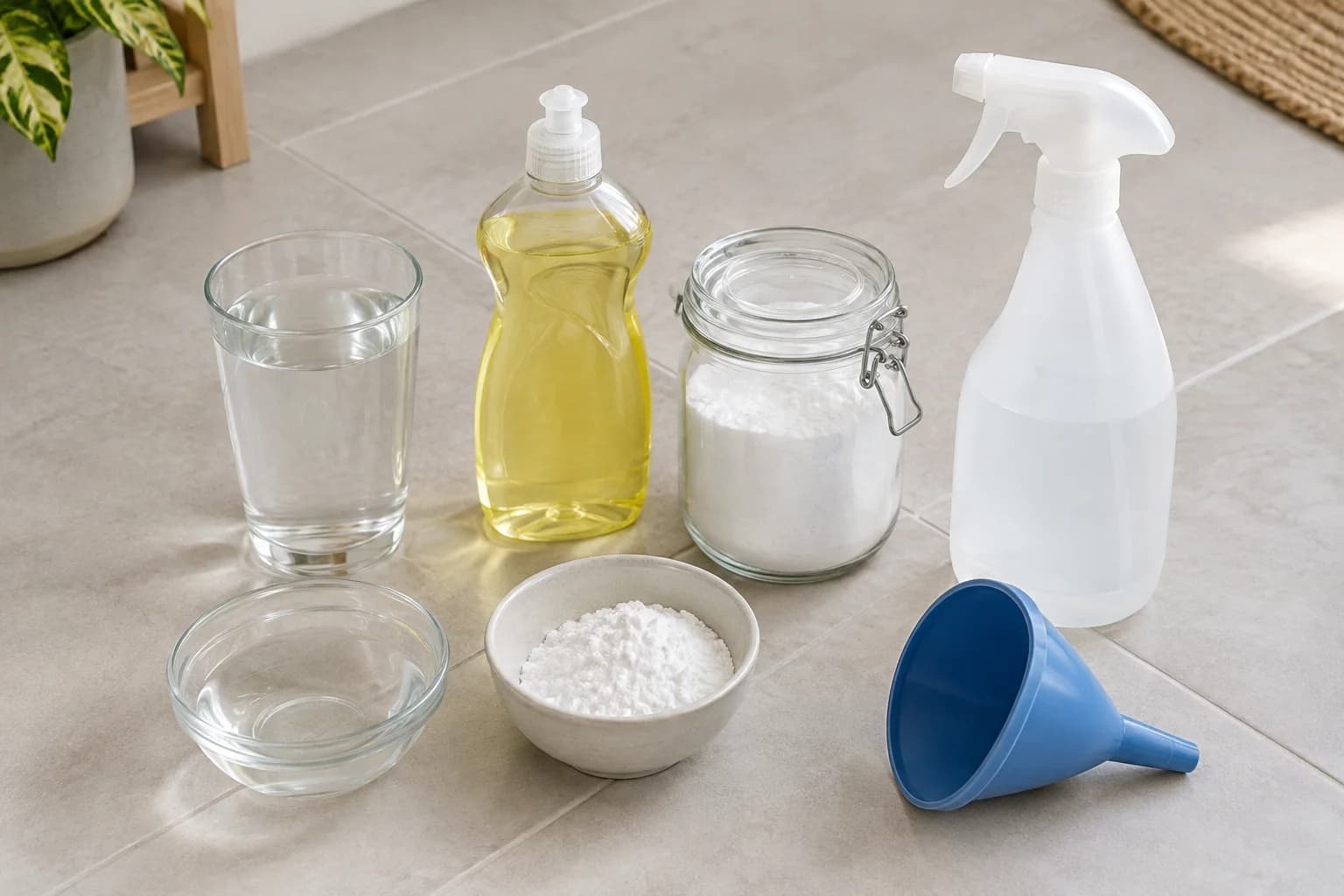
Homemade Shower Cleaner: A Vinegar Spray That Cuts Soap Scum
Part of Homemade Cleaners · article 5 of 8
Combine white vinegar, warm water, dish soap, and essential oil in a spray bottle to make 2 cups in 5 min; use on shower tile and glass to dissolve soap scum, and store the mix for up to 1 month.
On this page
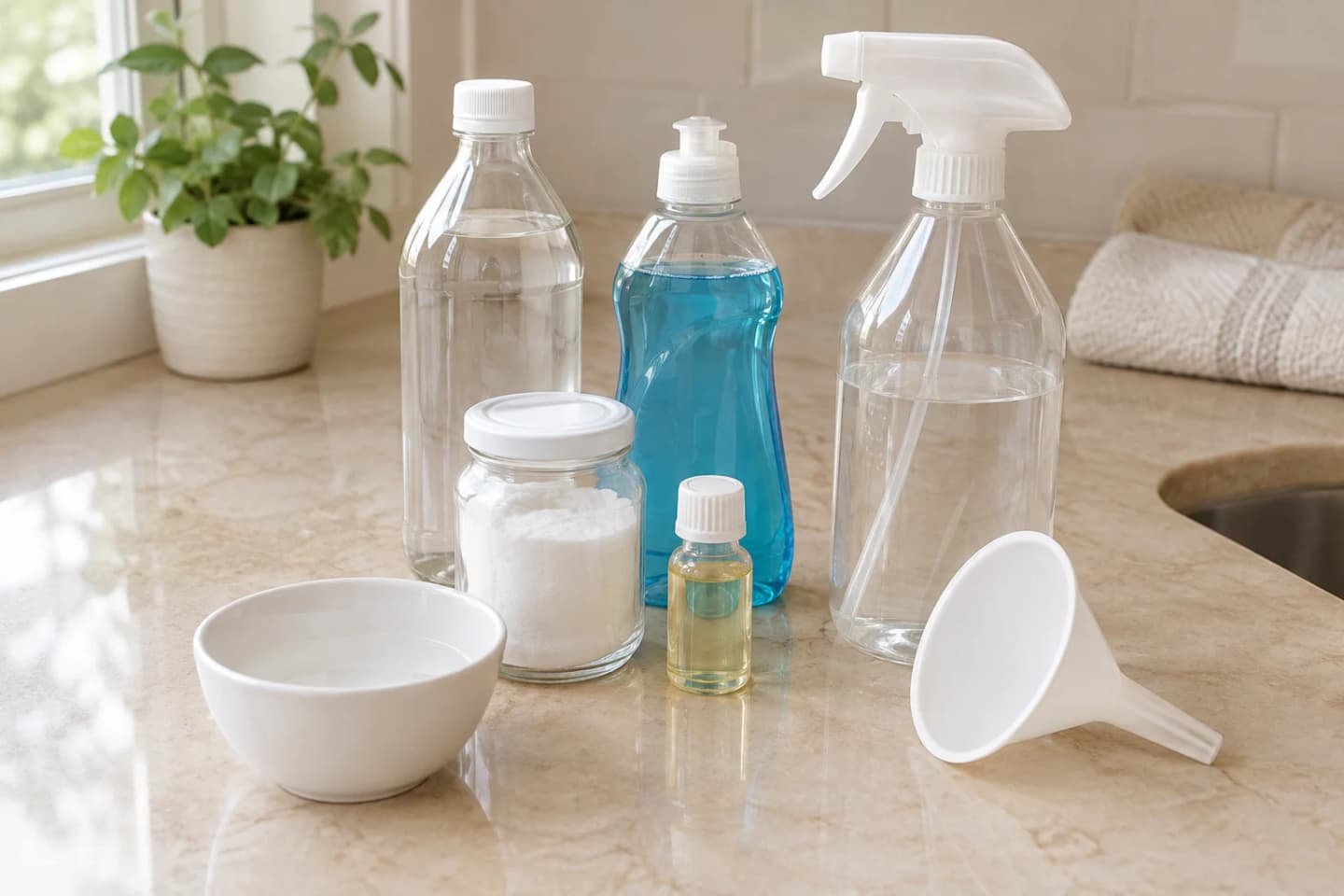
Homemade Shower Cleaner
Ingredients
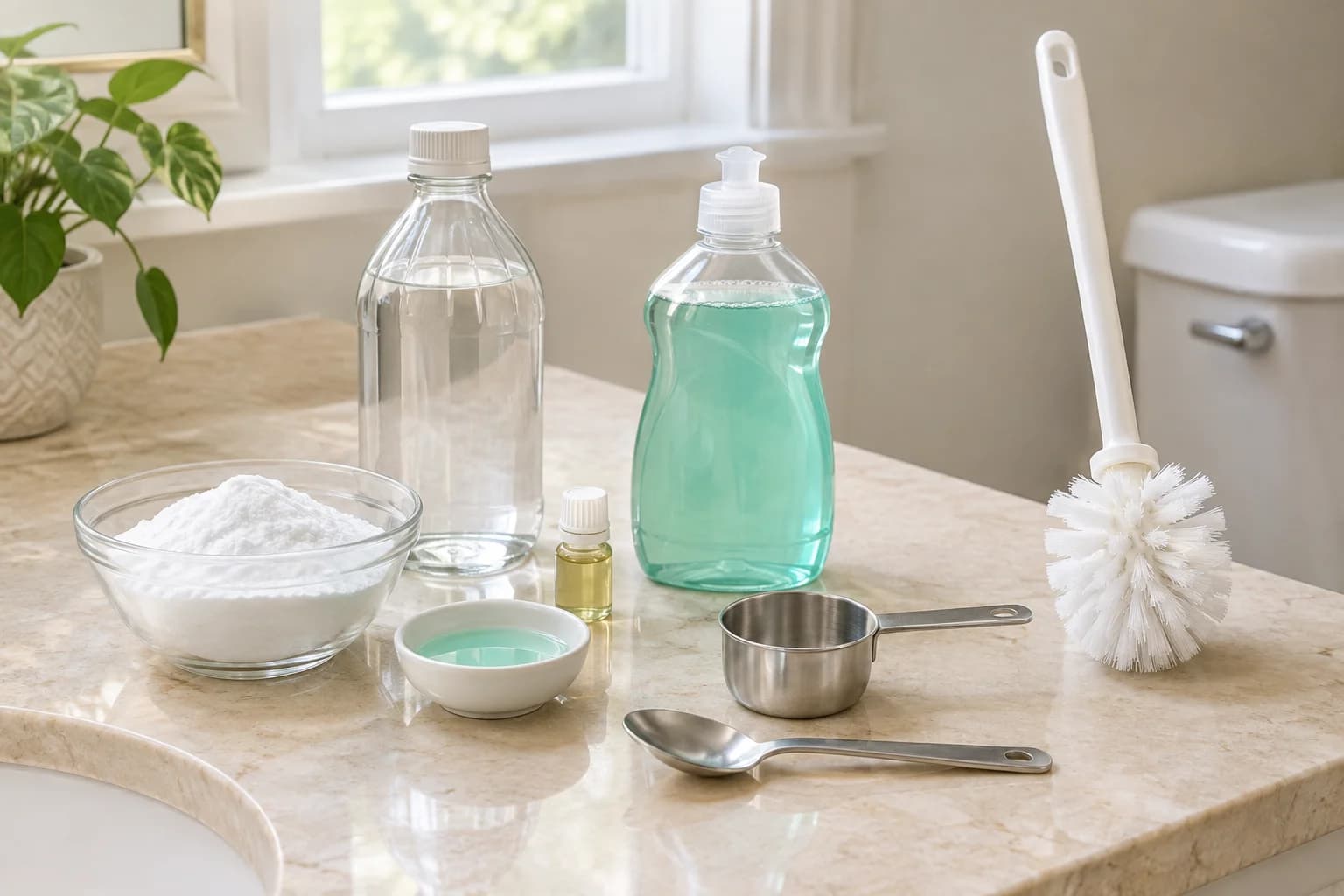
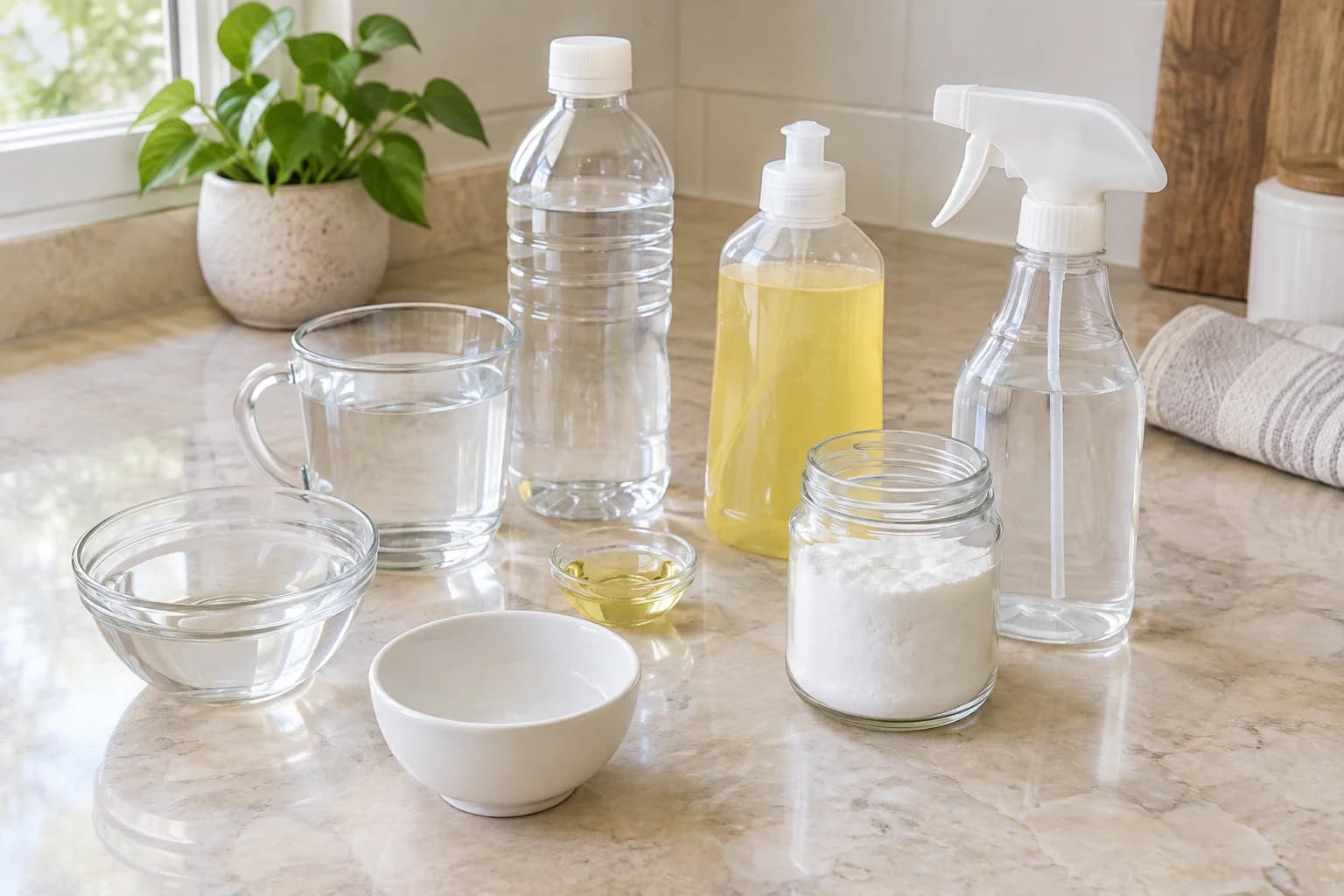
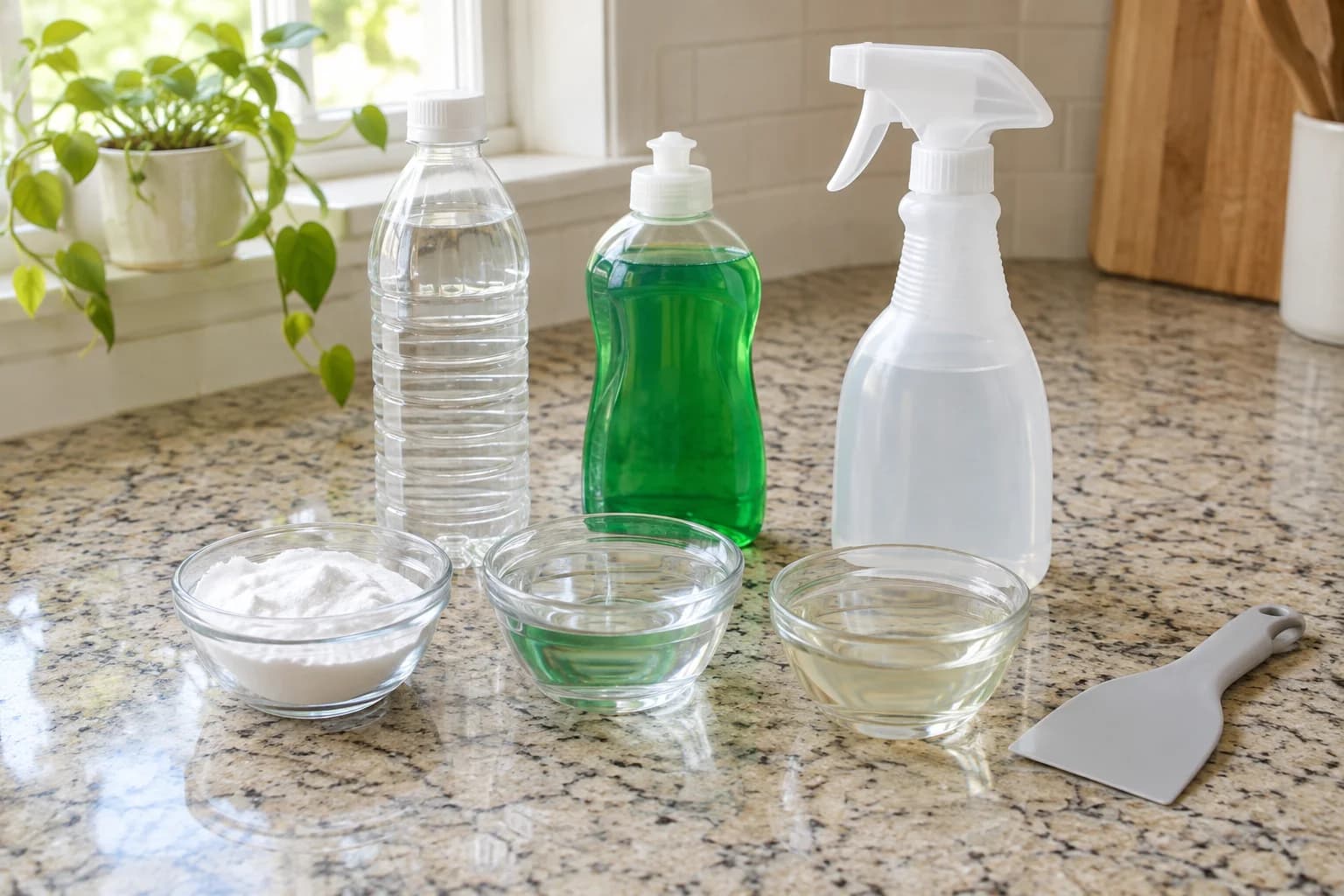
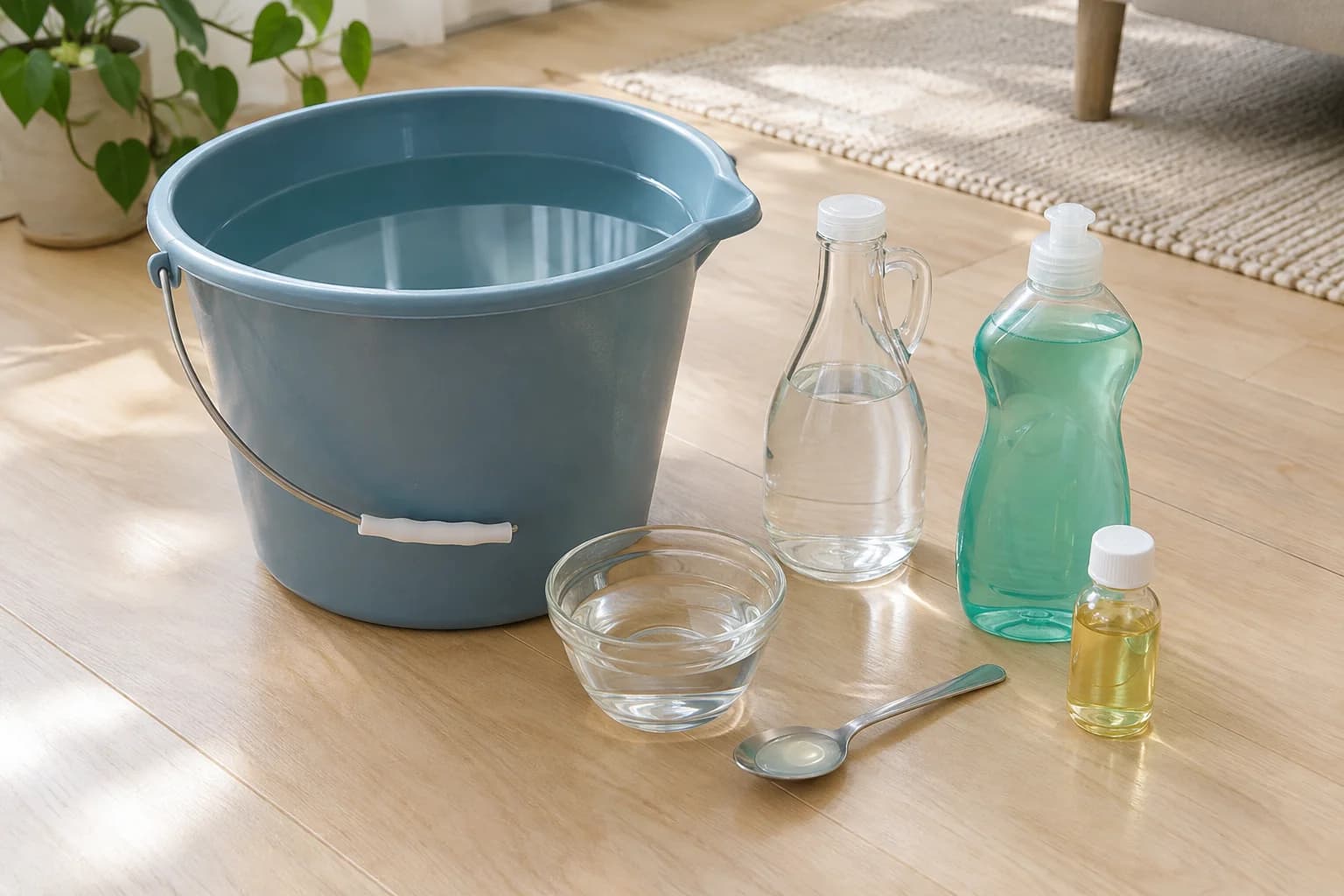
- 1 cup white vinegar — dissolves soap scum and mineral deposits (or lemon juice)
- 1 cup warm water — dilutes the acid for safe daily use
- 1 tablespoon dish soap — lifts grease and body oils
- 5 drops essential oil — adds a light scent to mask the vinegar smell
You need
- spray bottle
- measuring cup
- funnel
Make it
- Pour the warm water into the spray bottle using the funnel.
- Add the white vinegar.
- Add the dish soap slowly to limit foaming.
- Add the essential oil drops if using.
- Cap the bottle and swirl gently to combine; do not shake hard to avoid excess suds.
- Label the bottle with the contents and date.
Precautions Avoid using this on marble, granite, or other natural stone surfaces since the vinegar can etch them; ventilate the bathroom while spraying and keep the bottle labeled and out of reach of children. Store in a cool spot away from direct sunlight to keep the scent and cleaning power intact.
What Does Each Ingredient in This Homemade Shower Cleaner Do?
The white vinegar is the workhorse of this mix: its acid breaks down the mineral deposits and alkaline soap scum that build up on tile and glass, and if you swap in lemon juice instead, you get a similar effect with a fresher scent but slightly less cutting power on tough mineral buildup. Warm water dilutes that acid so the spray is gentle enough for daily use without damaging grout or rubber seals; using less water makes the spray stronger but harsher on surfaces, while more water stretches the bottle further but weakens its scum-cutting ability. Dish soap handles what vinegar alone cannot, lifting the greasy body oils and lotion residue that acid doesn't dissolve well; a plant-based liquid soap works as a substitute, though it may foam more and require a lighter hand when combining ingredients. Essential oil plays no cleaning role at all; it simply masks the sharp vinegar smell once the spray dries, and leaving it out is perfectly fine if you don't mind a faint vinegar scent that fades within an hour or so. If you'd rather skip measuring this out yourself, the same base ratios show up in a quick vinegar spray that lasts a month, which works well across other surfaces in the house too.
Storing, Labeling, and Handling Your Vinegar Spray Safely
This vinegar spray keeps for up to one month when stored in a cool spot away from direct sunlight; heat and light break down the essential oil scent faster and weaken the cleaning power over time. Write the contents and the date mixed directly on the bottle with a permanent marker or a piece of masking tape, since clear liquid in an unlabeled spray bottle is easy to mistake for something else, especially for kids or guests. Keep the bottle on a high shelf or in a locked cabinet, out of reach of children and pets, the same way you'd store any cleaning product.
Open a window or turn on the bathroom fan before spraying, since the vinegar smell is strong in a small, enclosed space and can irritate your eyes or throat if you breathe it in for several minutes straight. If you have sensitive skin or you're cleaning a large shower area, gloves are worth wearing, since repeated contact with the diluted acid and dish soap can dry out your hands. Once a batch passes the one-month mark, discard it and mix a fresh one rather than topping it off, since the cleaning strength isn't guaranteed to hold beyond that window.
Frequently asked questions
How do you make a DIY shower cleaner at home?
Does a vinegar shower cleaner actually work on soap scum?
Why combine vinegar and dish soap in a shower cleaner instead of using just one?
Is white vinegar safe for cleaning shower glass?
What makes this a natural shower cleaner compared to store-bought options?
How this article was made
Edited by Claire Mercier, Editor. The guides are written with AI assistance.