
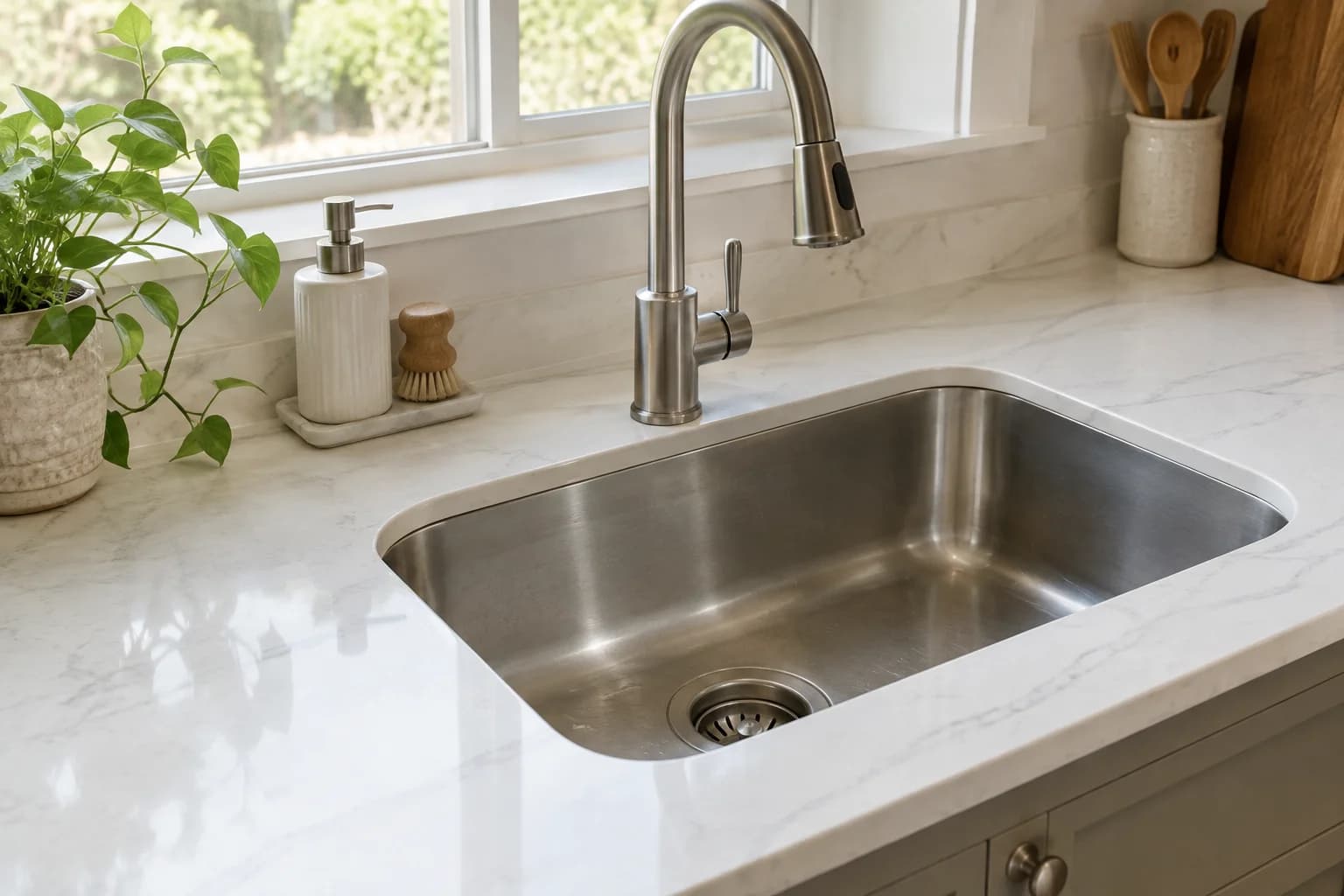
Start with what's safe to use: Which Cleaners Are Safe on Stainless Steel (And Which Wreck It), followed by Why Bleach Permanently Pits Stainless Steel (And What to Use Instead). Next, learn the technique behind every job with How to Find the Grain Direction on Stainless Steel Appliances.
With that foundation, move to daily sink care: How to Clean a Kitchen Sink and Keep It That Way, then How to Clean a Stainless Steel Sink Without Wrecking It, followed by How to Clean a Kitchen Sink Drain: What Actually Works and Clean Faucet Head Buildup in Under an Hour With Vinegar.
From there, extend the same care to cooking surfaces with Clean Stainless Steel Stove Top Without Scratching: The Right Way and How to Clean a Burnt Stainless Steel Pan Without Ruining It.
Finally, if damage has already set in, read Remove Rust from Stainless Steel Without Wrecking the Finish and How to Remove Scratches from Stainless Steel Without Making It Worse.
Questions these articles answer
- Can I use bleach to clean my stainless steel sink?
- How often should I deep clean my kitchen sink?
- Is it safe to use chemical drain cleaners like Drano regularly?
- Why should I avoid steel wool when scrubbing rust off stainless steel?
- Why does grain direction matter so much when removing scratches?
- What cleaning tools and products should I never use on a stainless steel stovetop?
- Are burns and discoloration on stainless steel pans permanent?
Where this category stops
This category covers sinks, drains, faucets, and stainless steel cooking and appliance surfaces themselves. For the finish on other stainless steel appliances beyond the sink and stovetop, see Appliance Cleaning. For water marks where a sink meets a stone counter, see Stone & Countertops. For limescale on chrome fixtures elsewhere in the home, see Bathroom Cleaning.