How to Remove Paint from Wood Floors Without Wrecking Them
Part of Floor Cleaning · article 10 of 10
On this page
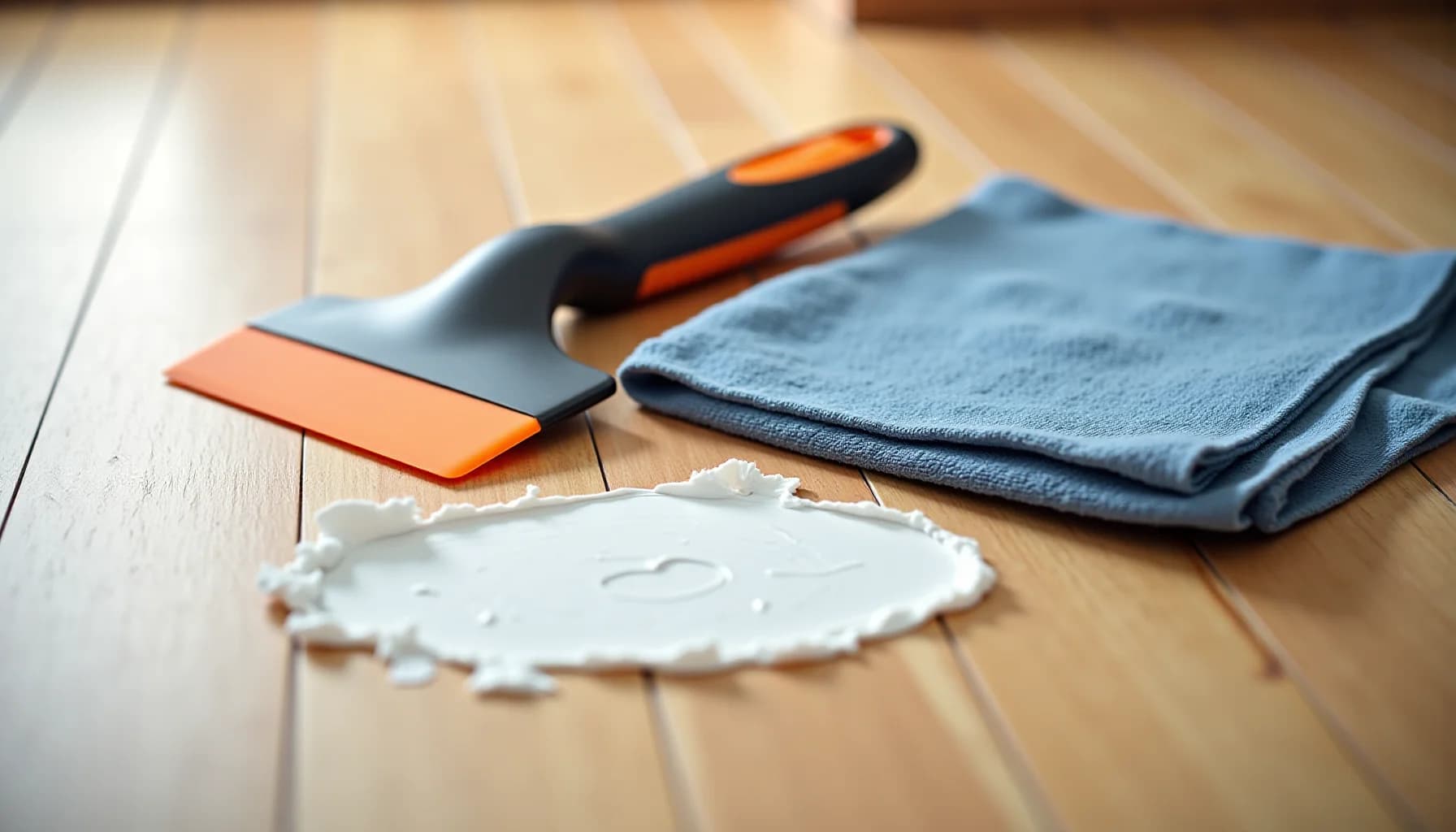
Start with a plastic scraper or putty knife to lift as much dried paint as possible, then match your next step to the paint type. For latex or water-based paint, dampen a clean cloth with warm soapy water and rub the stain gently; if that stalls, rubbing alcohol cuts through the residue without harming most finishes. Oil-based paint needs a chemical stripper or paint thinner, applied carefully and only in a well-ventilated space with gloves, goggles, and a mask. Before you reach for any solvent, identify your floor's finish: polyurethane can tolerate stronger treatments, but wax-finished wood cannot handle chemical removers or heat, so warm soapy water is your ceiling there. If the floor is in a home built before 1980, test for lead paint before doing anything that creates dust. Sanding lead paint without a HEPA-shrouded sander kicks up toxic particles; the safer route is chemical stripping, working wet throughout. For standard projects with multiple paint layers, strip first to pull the bulk of the finish, then follow with light sanding to smooth the surface, a combination that protects the wood grain far better than sanding alone.
What type of paint, floor finish, and lead risk are you dealing with?
Before you touch a scraper or open a bottle of stripper, you need answers to three questions: what kind of paint landed on your floor, what finish is protecting the wood, and how old is the house?
Paint type. Water-based paints, including latex and acrylic, respond well to soap-and-water methods and rubbing alcohol solutions. Oil-based paints are a different problem entirely: they cure harder and need either a dedicated chemical stripper or mineral spirits to break down. If you can't find a paint can lid or recall what was used, try dabbing the dried spill with rubbing alcohol on a rag. If the paint softens and lifts slightly, it's water-based. If nothing happens, assume oil-based.
Floor finish. Polyurethane-finished hardwood is relatively forgiving and can handle rubbing alcohol, paint thinners, and mild chemical removers without damage. Wax-finished solid wood is far more vulnerable: harsh chemicals strip the wax coating along with the paint, leaving the wood exposed and blotchy. Shellac-finished floors fall between the two and need careful spot-testing before any solvent is applied. If you're unsure what finish your floor has, the guide at which cleaner is safe for your floor finish walks through identification by floor type.
Lead paint risk. If your home was built before 1980, treat any existing paint layers as potentially lead-containing until proven otherwise. Homes built before 1940 carry the highest risk, with nearly 90 percent found to contain lead paint. Pick up a lead test kit from a hardware store before you scrape or sand anything. A positive result changes your entire approach.
How do you remove fresh latex paint from wood floors without chemicals?
Test for lead paint before you touch anything
If your home was built before 1980, assume the paint contains lead. Nearly 90 percent of homes built before 1940 have lead-laden paint, and exposure can raise blood pressure, stress the nervous system, and damage memory, with children at greatest risk.
Identify your paint type and floor finish
Water-based latex paint is easier to remove than oil-based paint, so confirm which you have before choosing a method. Also check your floor finish: polyurethane can handle rubbing alcohol or chemical removers, while wax-finished floors require gentle warm soapy water and cannot tolerate harsh chemicals or heat.
Start gentle, then escalate only if needed
Use a plastic scraper or putty knife to lift as much dried paint as possible, then dampen a clean rag in warm water mixed with a few drops of mild dish soap and rub the stain gently. If paint remains, apply a splatter remover directly to the spot, let it sit 1 to 5 minutes, and scrape carefully with a plastic putty knife.
Use proper safety measures if chemical strippers or lead paint are involved
When using chemical strippers, work in a well-ventilated area and wear gloves, goggles, and a mask, as these products contain harmful VOCs. If lead paint is present, work wet to minimize dust, avoid sanding without a shroud and HEPA vacuum attachment, and clean up with a HEPA-equipped vacuum only: standard household vacuums cannot trap lead dust particles.
When should you reach for a chemical stripper or heat gun?
Before you start
- Identify your floor finish (polyurethane, wax, or shellac) and your paint type (latex or oil-based) before gathering any supplies, since the wrong remover can damage the floor
- Test your home for lead paint if the house was built before 1980 — this single result determines every tool, product, and safety step you will use
- Gather your protective gear: chemical-resistant gloves, safety goggles, and a mask rated for fumes, plus open windows and doors to ensure good ventilation before any products come out
- Remove rugs, furniture, and pets from the room, and set out only the tools you need — plastic scraper or putty knife, clean rags, and mild dish soap — so the area stays clear and safe to work in
Soap and water will handle a fresh latex spill, but dried oil-based paint is a different problem entirely. Once it has cured, it bonds to the wood surface at a molecular level, and gentle scrubbing will do little more than frustrate you. That is the point where chemical strippers or heat guns earn their place.
Chemical strippers work best when you are dealing with oil-based paint, multiple coats of old finish, or any stubborn residue that mechanical scraping has failed to shift. For a splatter remover product, apply it directly to the dried paint, let it dwell for one to five minutes, then lift the softened paint away with a plastic putty knife. Avoid metal scrapers here; they are far more likely to gouge the wood. One important caveat: caustic strippers can raise the grain or alter the color of some wood species, so you may need a light sanding pass afterward to restore a smooth surface. Always work in a well-ventilated area and wear gloves, goggles, and a mask, since chemical strippers contain VOCs that accumulate quickly in enclosed spaces.
Before you choose a stripper, confirm your floor's finish type. Knowing which cleaner is safe for your floor finish matters here because wax-finished floors cannot tolerate chemical removers at all; they will strip the protective wax along with the paint. Polyurethane-finished floors are far more forgiving.
A heat gun is an alternative for localized spots, softening the paint so it can be scraped away cleanly. Keep the gun moving at all times and hold it several inches from the surface to avoid scorching the wood. Never use an open flame torch; beyond the fire risk, it creates hazardous combustion byproducts, particularly if older paint layers are involved.
Should you strip or sand heavily painted hardwood floors?
For a floor with multiple layers of old paint, chemical stripping almost always makes more sense than going straight to sandpaper. A chemical stripper penetrates through each painted layer simultaneously, leaving the wood's grain intact and reducing the number of passes you need to make across the floor. Sanding, by contrast, doesn't just remove the finish — it removes a layer of the wood itself. On a floor that has been painted two or three times over decades, the abrasive passes required to reach bare wood can thin boards enough to make them structurally vulnerable, and once that wood is gone, there is no putting it back.
The mistake that causes permanent damage is using a belt sander aggressively in one spot. Even a brief pause while the sander is running can gouge a visible depression into the board, and hardwood floors can only be refinished a finite number of times before the tongue-and-groove joints are compromised.
That said, sanding has a genuine role after stripping. A chemical stripper can raise the wood's grain or slightly alter its color, and a light sanding pass after the stripper is cleaned away smoothes the surface and prepares it for a new finish. The combination of both methods is how most experienced flooring contractors actually work: strip the bulk, sand to refine.
Stop and call a professional if the floor has more than three layers of paint, if any boards already show signs of warping or splitting, or if lead paint is a possibility. At that point, the margin for error is too narrow for a first-time DIY attempt.
Frequently asked questions
Does it matter whether the paint is latex or oil-based?
Can I use chemical strippers on a wax-finished hardwood floor?
Why is lead paint such a big concern for older homes?
Is sanding a safe way to remove lead paint from wood floors?
What should you do if the paint contains lead?
Once you confirm or strongly suspect lead paint, the way you work changes completely. The core principle is to keep everything wet. Dampening the surface before and during removal binds dust particles to the material so they cannot become airborne. Dry scraping, machine sanding without a HEPA attachment, open-flame torching, and sandblasting all generate fine particulate that carries lead through the air and settles on every surface in the room. Avoid all of those methods.
When you sand, use equipment fitted with a shroud and a HEPA vacuum attachment, and wet-sand any stripped surface afterward. For cleanup, run a HEPA-equipped vacuum over every surface in the work area, including walls, baseboards, and windowsills. A standard household vacuum or shop vacuum will not trap lead dust particles; the exhaust simply redistributes them. This is not a workaround situation.
Debris, including rags, plastic sheeting, and scraped material, should be double-bagged in heavy plastic before disposal in household trash. Do not shake drop cloths or let them drag through other rooms.
Build the habit of treating any home built before 1980 as a lead-risk environment by default, even if you cannot see obvious deterioration. If the scope of work is large, or if children or pregnant women live in the home, bringing in a certified professional is the more sensible path.
How this article was made
Researched and written with AI assistance. What gets published is a human editorial decision. Grounded in 8 cited sources.
Edited by Claire Mercier, Editor. The guides are written with AI assistance.
Sources (8)
- What Home Owners Need to Know About Removing Lead-Based Paint
- How to Remove Paint from Hardwood Floors – Bruce Flooring
- How to Remove Paint from Wood Floors with Tub O' Towels
- Don's Room Progress- How to remove paint from wood floors - at home with Ashley
- Paint stripper
- Stripping Painted Floors – Preservation Trust of Vermont
- Paint Splatter Remover for Hardwoods - Goof Off
- How to Remove Paint from Wood Flooring - This Old House