Realistic Cleaning Schedule: 28 Tasks Split by Day and Daily Habit
Part of Cleaning Schedules · article 4 of 4
On this page
20 weekly tasks spread from Monday to Sunday, plus 8 daily tasks (28 in all). Each day of the plan takes 18 min to 20 min; the longest is Monday at 20 min. The daily tasks add 10 min a day.
The weekly plan
Monday 20 min
- Vacuum living room rug
- Dust shelves and tables
- Wipe light switches and doorknobs
Tuesday 18 min
- Clean toilet bowl and seat
- Scrub shower walls and door
Wednesday 20 min
- Wash bathroom floor
- Dust bedroom furniture
- Change bed linens
Thursday 20 min
- Clean kitchen appliance exteriors
- Sanitize cutting boards and sink
- Wipe baseboards in hallway
Friday 20 min
- Vacuum stairs and hallway
- Dust ceiling fan blades
- Wipe entry door and mat
Saturday 20 min
- Mop kitchen floor
- Clean refrigerator shelves
Sunday 20 min
- Dust television and electronics with a dry microfiber cloth
- Wash kitchen towels and rags
- Tidy entry closet and shoe rack
- Water houseplants and wipe pots
Every day
- Wipe kitchen counters after cooking
- Rinse dishes or load dishwasher
- Wipe down stovetop
- Make beds
- Put away stray items
- Wipe bathroom sink
- Take out full trash bags
- Sweep high-traffic entry spot

What does a realistic daily and weekly cleaning routine actually look like?
The plan in this article gives you a fixed structure: eight short daily habits that run every day, plus weekly tasks spread across Monday through Sunday, with each day's block landing between 18 and 20 minutes. That structure works because it separates maintenance from cleaning. The daily habits, which total 10 minutes, stop mess from building into a problem. The weekly tasks handle anything that genuinely needs a deeper pass.
If your schedule is tight, keep every daily habit and drop the weekly task that feels lowest-stakes for your home. Dusting ceiling fan blades on Friday or tidying the entry closet on Sunday, for example, can slide to every other week without visible consequences. The daily tasks are non-negotiable precisely because skipping them twice in a row means the weekly tasks take twice as long.
If you have a large household, assign specific daily habits to specific people rather than adding extra tasks. One person wipes the stovetop; another sweeps the entry spot. The plan stays the same length; it just distributes across hands.
In a smaller home, some weekly tasks will finish early. Use the leftover minutes on a surface that gets overlooked, such as cleaning grout on tile floors, rather than adding new recurring tasks that bloat the schedule.
If you work full-time, batch Tuesday and Wednesday if Monday evenings are genuinely free, or swap Saturday and Sunday tasks based on which day you have more energy. The zones are designed to be self-contained, so reordering them costs nothing as long as each task still happens once a week.
What if you only have a few minutes to spare?
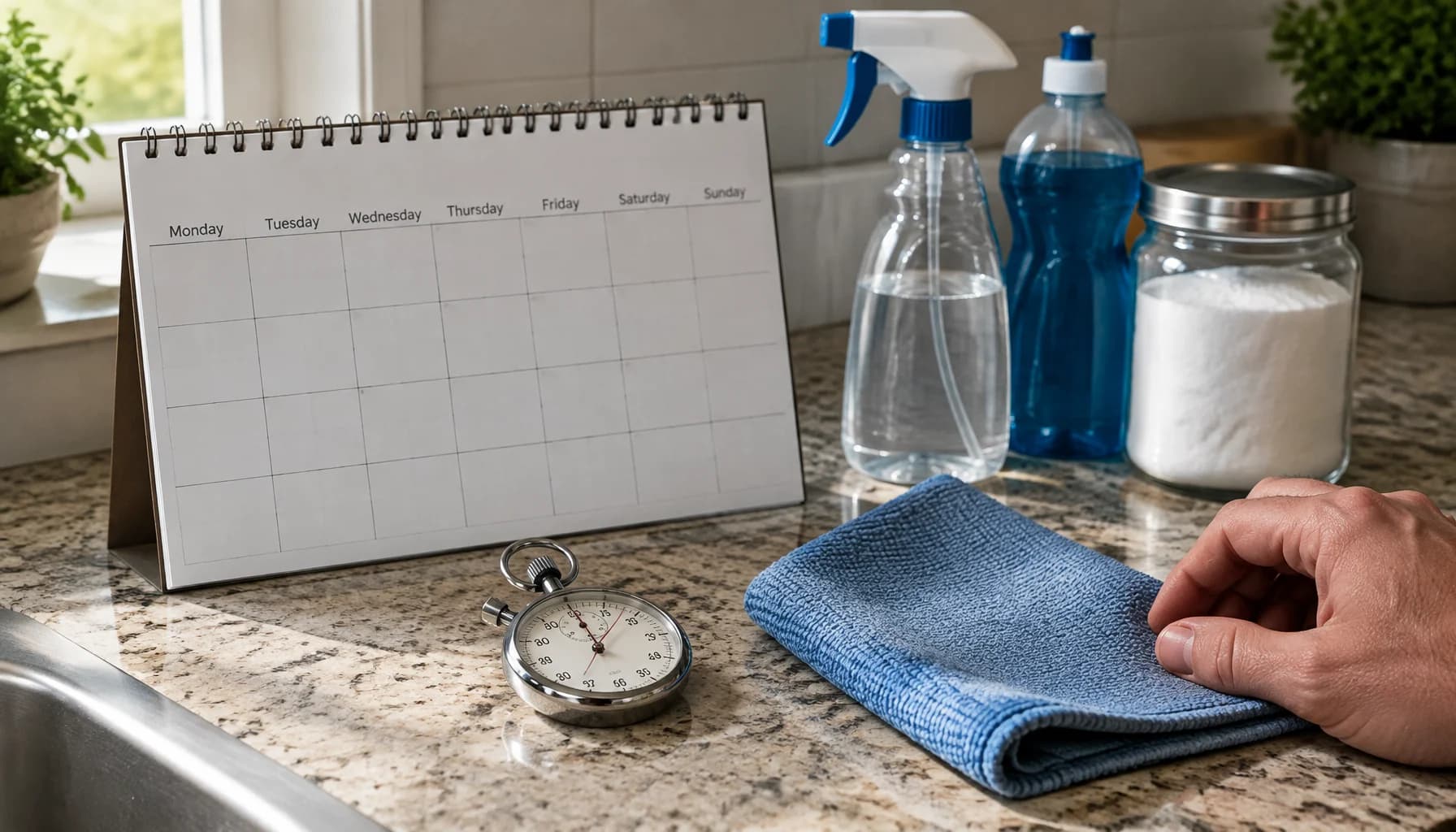
When the weekly block feels out of reach, the daily habits carry the load. The eight daily tasks in this plan total 10 minutes, and keeping them intact means surfaces never reach the point where a weekly task turns into a two-hour rescue job. That is the shortcut: consistency on the small things protects your time on the bigger ones.
For the weekly tasks, some can stretch to every other week without visible consequences. Dusting ceiling fan blades on Friday or tidying the entry closet on Sunday are low-stakes enough to skip on a busy week and pick up the following one. The toilet and stovetop are not in that category, but wooden blinds and the entry mat are.
A monthly touch-up pass takes almost no time if the weekly tasks have been happening. Wipe the top of the refrigerator, run a damp cloth along wooden blind slats, and pour hot water down the kitchen drain. Nothing here requires products or prep. The goal is catching the slow-build grime that weekly tasks are too frequent to bother with and too infrequent to catch on their own.
Frequently asked questions
What is a simple house cleaning schedule?
What does a minimalist cleaning schedule look like?
What is a lazy cleaning schedule?
What is an easy house cleaning schedule?
What is a simple cleaning schedule for beginners?
What is the easiest cleaning schedule to actually stick to?
How this article was made
Researched and written with AI assistance. What gets published is a human editorial decision.
Edited by Claire Mercier, Editor. The guides are written with AI assistance.