How to Clean Wooden Blinds Without Warping the Slats
Part of Windows & Glass · article 4 of 7
On this page
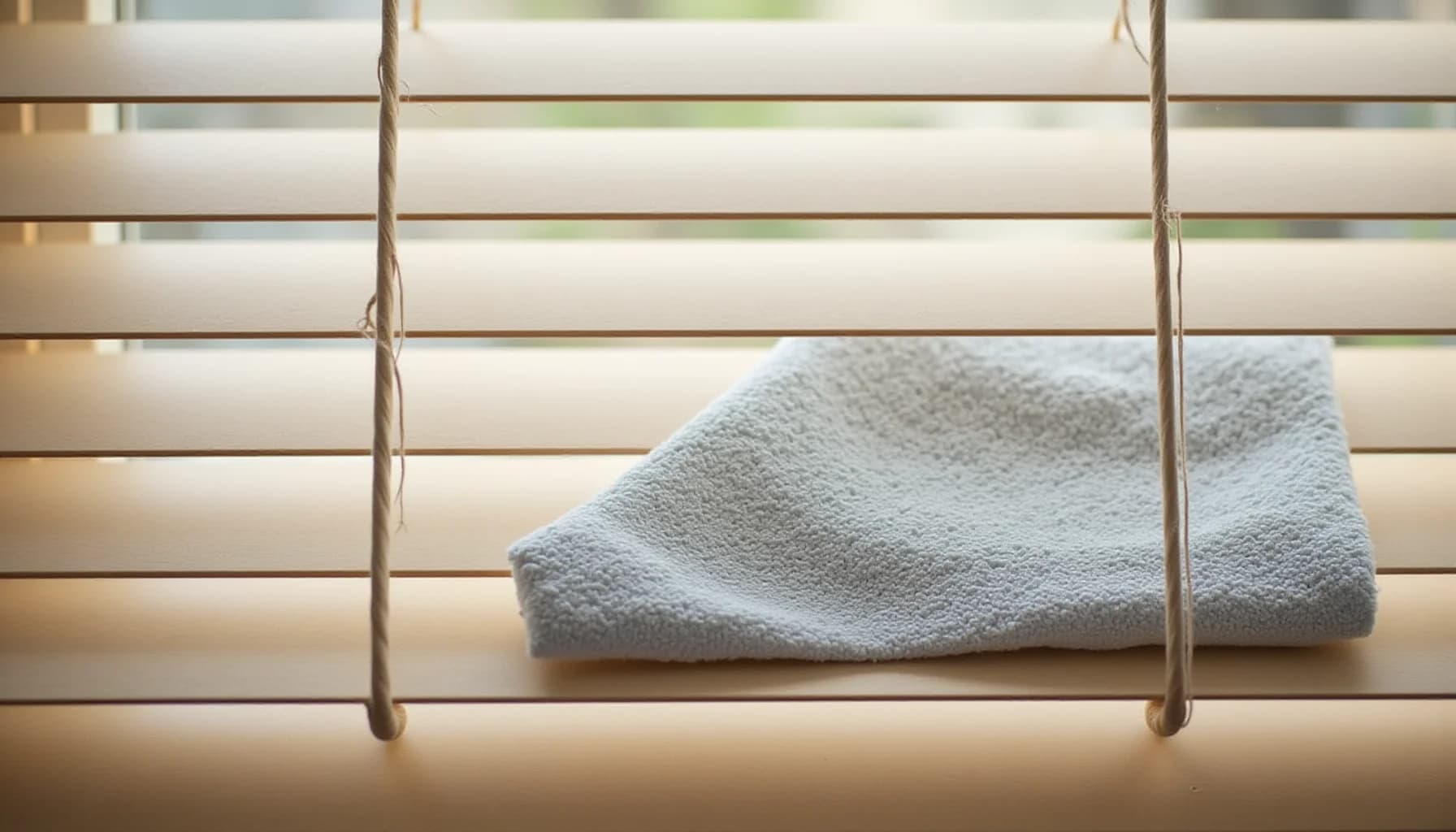
Keep the slats flat by keeping them dry: for real wood blinds, moisture is the enemy, and the right approach is always dry first, damp only if needed. Close the slats, then sweep a microfiber cloth or feather duster downward along the grain every few weeks. If dust has built up into grime, wring a cloth until barely damp, wipe each slat from top to bottom with the grain, then immediately dry with a clean cloth. Never let water pool or drip. Skip bleach, ammonia-based sprays, abrasive scrubbers, and steam cleaners entirely — each one attacks the protective finish and opens the wood to moisture damage underneath.
Are your blinds real wood or faux wood?
Before you reach for any cloth or cleaner, you need to know what you're actually working with. Real wood and faux wood (composite) blinds look similar at a glance but respond to moisture in completely opposite ways, and using the wrong method on the wrong material causes permanent damage.
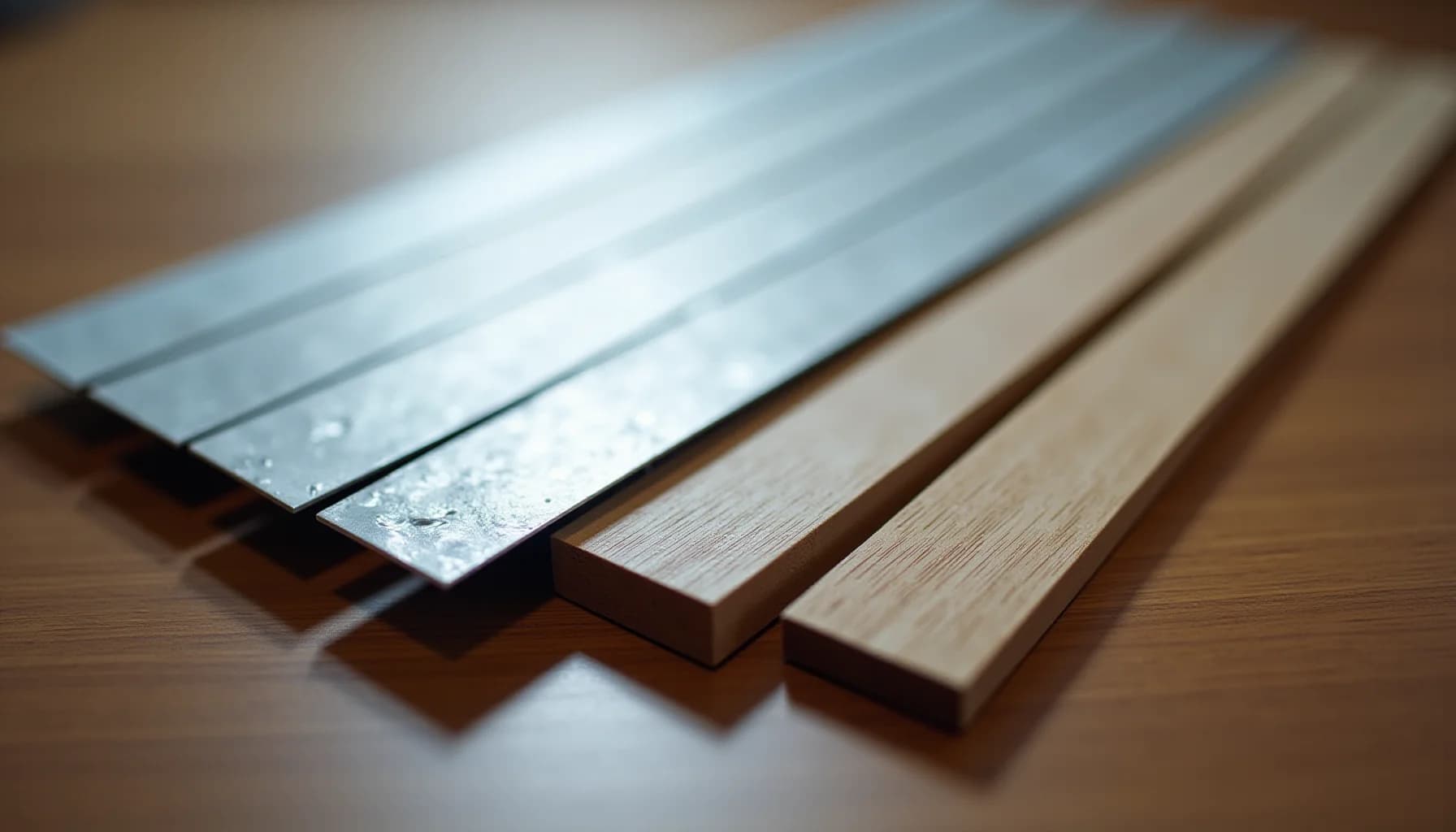
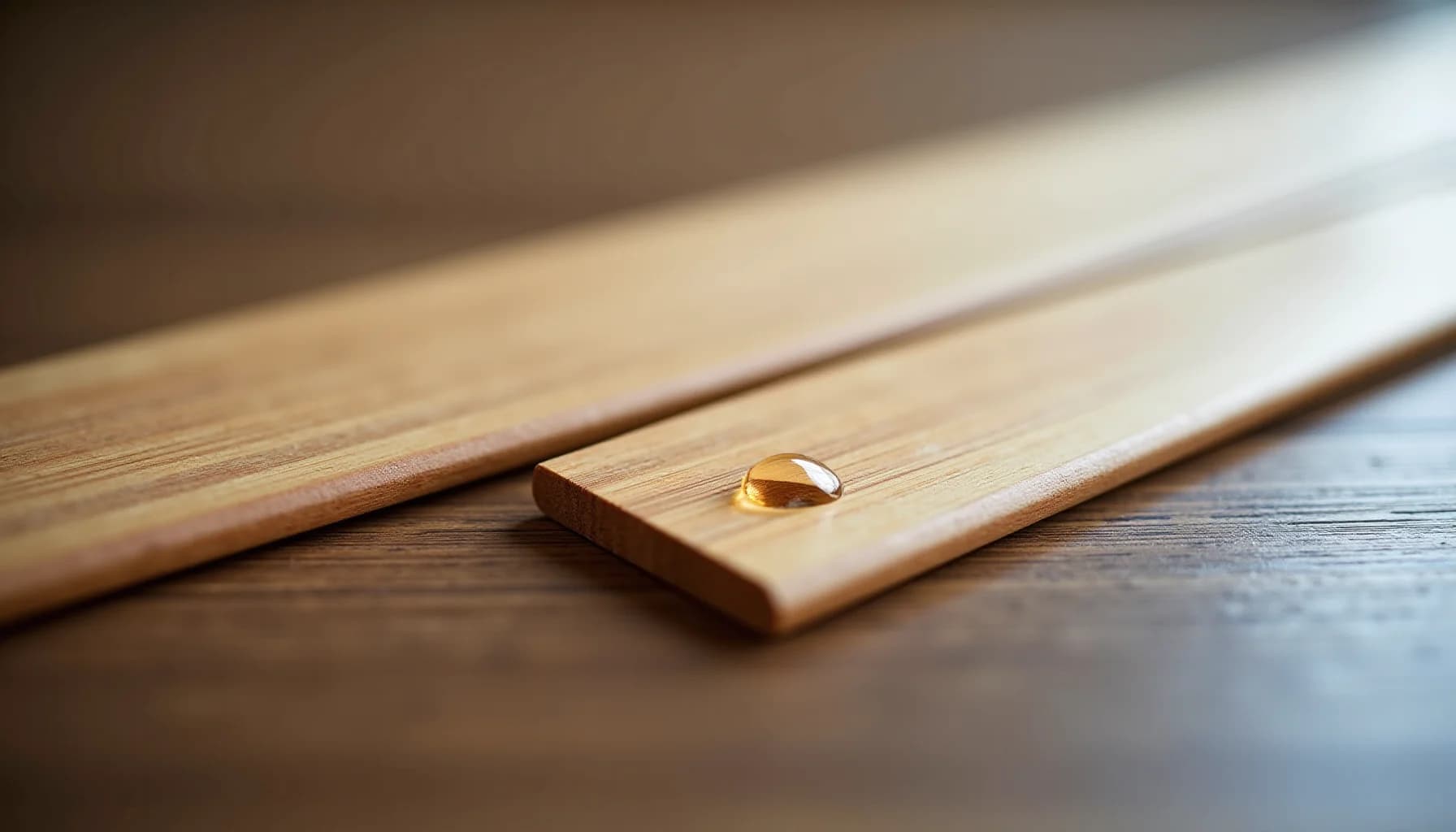
Three quick checks will settle it. First, lift one end of the blind by hand. Real wood slats feel noticeably lighter; faux wood has a denser, heavier feel because it's made from a composite material wrapped in vinyl or foil. Second, look closely at the grain. Real wood has a natural, irregular pattern that varies from slat to slat. Faux wood has a printed grain that repeats in a consistent, uniform way. Third, place a single drop of water on an inconspicuous slat and watch what happens. Real wood absorbs it slightly within a few seconds, leaving a faint darkened spot. Faux wood beads the droplet up and repels it completely.
If you're still uncertain after these three tests, check any original packaging, receipts, or manufacturer labels on the headrail. Many headrails have a small sticker identifying the material. You can also check the article How to Identify Your Blind Material Before You Clean It for a more detailed breakdown by blind type.
Getting this identification right before you start is not optional. Every cleaning decision that follows, from how much moisture to use to which tools to pick up, depends entirely on which category your blinds fall into.
What tools work best for dusting real wood blinds?
Identify your blind material before touching a cloth
Lift a slat gently: real wood feels noticeably lighter than faux wood composite. Confirm by placing a water droplet on the surface, real wood absorbs it slightly while faux wood repels it completely, because the two materials require completely different cleaning approaches.
Dust every slat with a dry microfiber cloth or soft vacuum attachment
Close the slats in one direction and sweep downward along the wood grain, then reverse the slats and repeat for the other side. If vacuuming, fit a soft upholstery brush attachment and set suction to low, since high suction can pull slats out of alignment.
Spot-clean stubborn grime with a barely damp cloth, then dry immediately
Wring a microfiber cloth until it feels almost dry, never wet, and wipe each slat from top to bottom in one direction using light pressure. Follow at once with a clean, dry cloth to remove any remaining moisture, as water left on the surface seeps into seams and causes warping or finish damage.
Condition stained real wood slats once or twice a year
Apply a small amount of lemon oil or wood preservative to a cloth first, then wipe each slat lightly. Using too much product creates a residue that attracts dust faster, so one or two applications per year is sufficient to protect the finish and restore luster.
How wet is too wet when spot-cleaning real wood blinds?
Before you start
- Identify your blind type before grabbing any cleaning supplies: lift a slat to check weight, inspect the grain pattern, and place a water droplet on a slat to see whether it absorbs or beads off
- Gather your tools: a feather duster or microfiber cloth, a soft upholstery brush vacuum attachment, a bowl of warm water with a small amount of mild dish soap or equal-parts white vinegar solution, and several dry cloths for immediate drying
- Move furniture, curtains, or décor away from the window so you have clear, unobstructed access to both sides of every slat without knocking anything over
- Keep bleach-based sprays, ammonia cleaners, abrasive scrubbers, and steam cleaners well out of reach so you can't accidentally grab the wrong product mid-task
The single most important rule for spot-cleaning real wood blinds is the distinction between damp and wet. A cloth that drips, or even feels noticeably moist against your palm, carries enough water to seep into the wood grain, swell the fibers, and warp a slat that was perfectly flat before you started. The cloth should feel barely cool to the touch after wringing, nothing more.
To get there, fill a bowl with warm water and add a small amount of mild dish soap, or use a 50/50 mix of white vinegar and warm water for stubborn grime. Submerge a microfiber cloth, then wring it out firmly, twice if needed, until no water falls when you squeeze it hard. That is your working cloth.
Hold each slat steady with one hand and wipe with the other, following the direction of the wood grain rather than working across it. Use light, deliberate strokes rather than scrubbing back and forth. For a stuck-on spot, press the cloth gently against it for a few seconds to loosen the residue before wiping, rather than bearing down with more pressure.
As soon as you finish each slat, follow immediately with a second dry microfiber cloth to pull away any remaining surface moisture. Do not let the dampness sit, even briefly. Moisture that lingers on the finish long enough will start working through any micro-scratches or seams.
The vinegar solution is useful for persistent marks, but treat it as a targeted fix rather than a routine wipe-down. Because it is mildly acidic, repeated use on the same areas can gradually affect the protective topcoat, so wring the cloth especially dry and limit it to problem spots only.
Can you clean faux wood blinds with water and soap?
Yes, faux wood blinds handle water and mild soap without any risk of swelling or warping. The material is engineered to repel moisture rather than absorb it, so a damp rag with a small amount of gentle dish soap is all you need for routine grime.
The method is straightforward: add a drop or two of mild liquid detergent to a bowl of warm water, dampen a clean microfiber cloth in the solution, wring it out so it is wet but not dripping, and wipe each slat from one end to the other. Work top to bottom so any residue falls onto slats you have not yet cleaned. For weekly upkeep between those wipe-downs, a feather duster is enough to clear loose dust before it bonds to the surface.
One thing to avoid: leaving pooled water sitting in the headrail or on the tilt mechanism. The slats themselves can handle the moisture, but standing water in the hardware can corrode metal parts or loosen plastic fittings over time. Give the blinds a quick pass with a dry cloth after washing, particularly around the top rail and cord eyelets.
Avoid bleach or any cleaner with ammonia. Neither is necessary for standard household grime on faux wood, and both can fade the printed wood-grain finish, leaving the slats looking patchy and dull, damage that cannot be reversed.
If the finish has already lifted, the surface is peeling, or slats are cracking rather than simply dirty, cleaning will not help. At that point, individual slat replacement or a full set replacement is the right call, not more scrubbing.
Frequently asked questions
How do I know if my blinds are real wood or faux wood before cleaning?
Can I use water to clean real wood blinds?
Is it safe to use vinegar on real wood blinds?
How often should I clean wooden blinds?
How often should you condition and polish real wood blinds?
Real wood blinds benefit from occasional conditioning, not frequent treatment. Apply lemon oil or a dedicated wood preservative once or twice a year, and that is enough. Going beyond that frequency causes buildup that turns the surface tacky and attracts dust faster than bare wood ever would.
The method matters as much as the schedule. Apply the conditioner to a clean, soft cloth first, then wipe the slats. Never spray or pour product directly onto the slats. A thin, even coat worked into the grain is all you need. Buff away any excess before it sits too long. The same logic applies to furniture polish: a little protects the finish, too much undermines it.
Placement is another habit worth locking in early. Real wood slats sit in stable, low-humidity rooms without complaint, but bathrooms and kitchens are a different matter. Steam from a shower or cooking condensation keeps the surrounding air damp for long stretches, and wood absorbs that ambient moisture over time just as readily as it absorbs liquid water. If your home has blinds in those rooms already, faux wood is the practical swap. For rooms where real wood makes sense, keeping interior humidity consistent, roughly between 35 and 55 percent, is the single best thing you can do to extend slat life between conditioning treatments.
How this article was made
Researched and written with AI assistance. What gets published is a human editorial decision. Grounded in 8 cited sources.
Edited by Claire Mercier, Editor. The guides are written with AI assistance.
Sources (8)
- How to clean wooden blinds | Hillarys™
- How to Clean Wood Blinds Like a Pro | THE BLINDS SPOT
- How to Clean Wooden Blinds | Budget Blinds
- How to Properly Clean Wood Blinds [Step-by-Step] | Norman USA
- How to Clean Wood Blinds - Hunter Douglas
- How to Clean Wood Blinds: The Ultimate Step-by-Step Guide – Factory Direct Blinds
- How to Clean Faux Wood Blinds Properly | Allure
- Most Effective How to Clean Wooden Blinds: Easy Steps for a Professional Look