Homemade Cleaning Solutions: Quick Vinegar Spray That Lasts a Month
Part of Homemade Cleaners · article 1 of 8
On this page
All-Purpose Vinegar Glass & Tile Cleaner
Combine white vinegar and water first, then add dish soap and cornstarch to make 2 cups in 3 min; keeps up to 1 month. Use on glass, tile and chrome, not marble or granite.
Ingredients
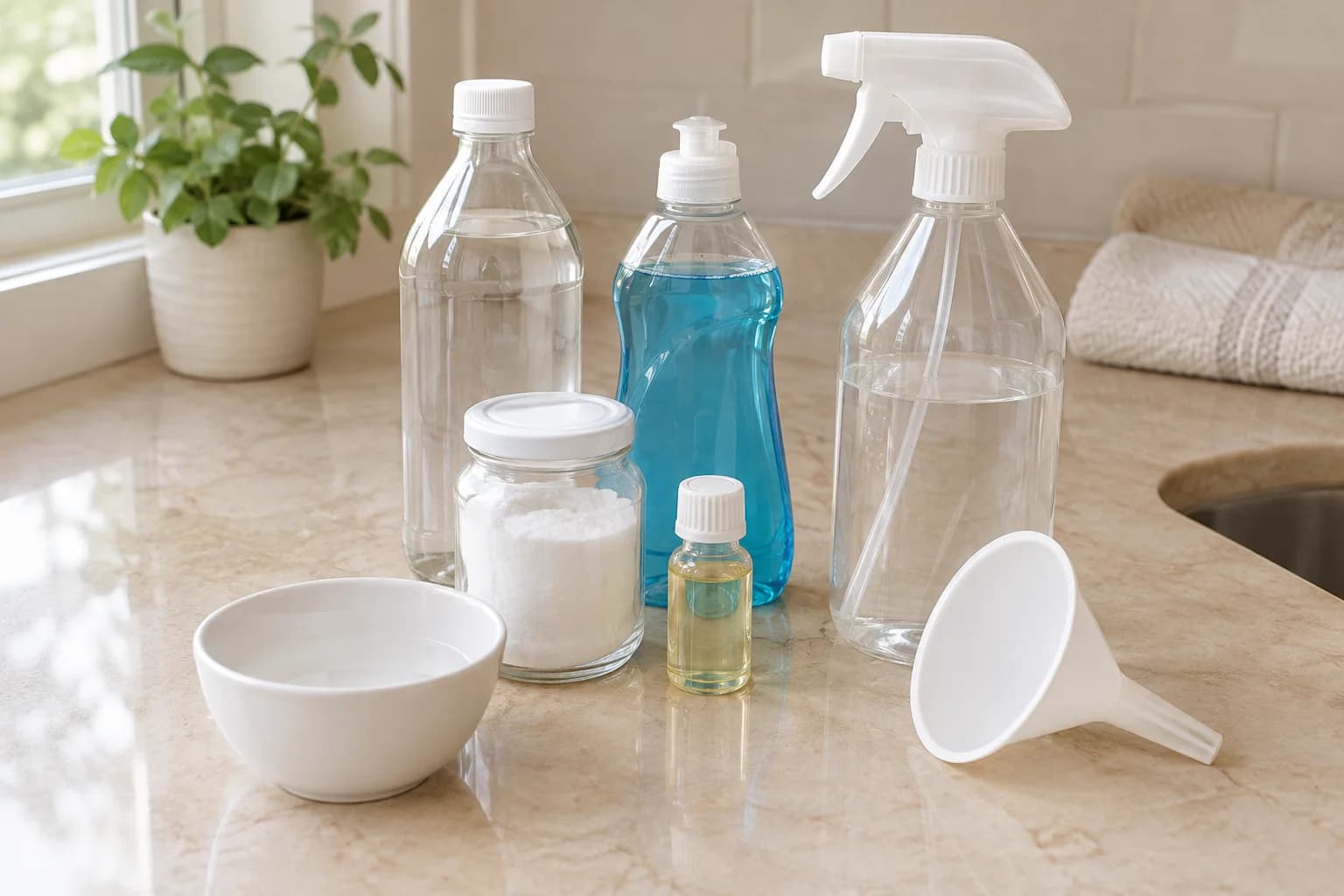
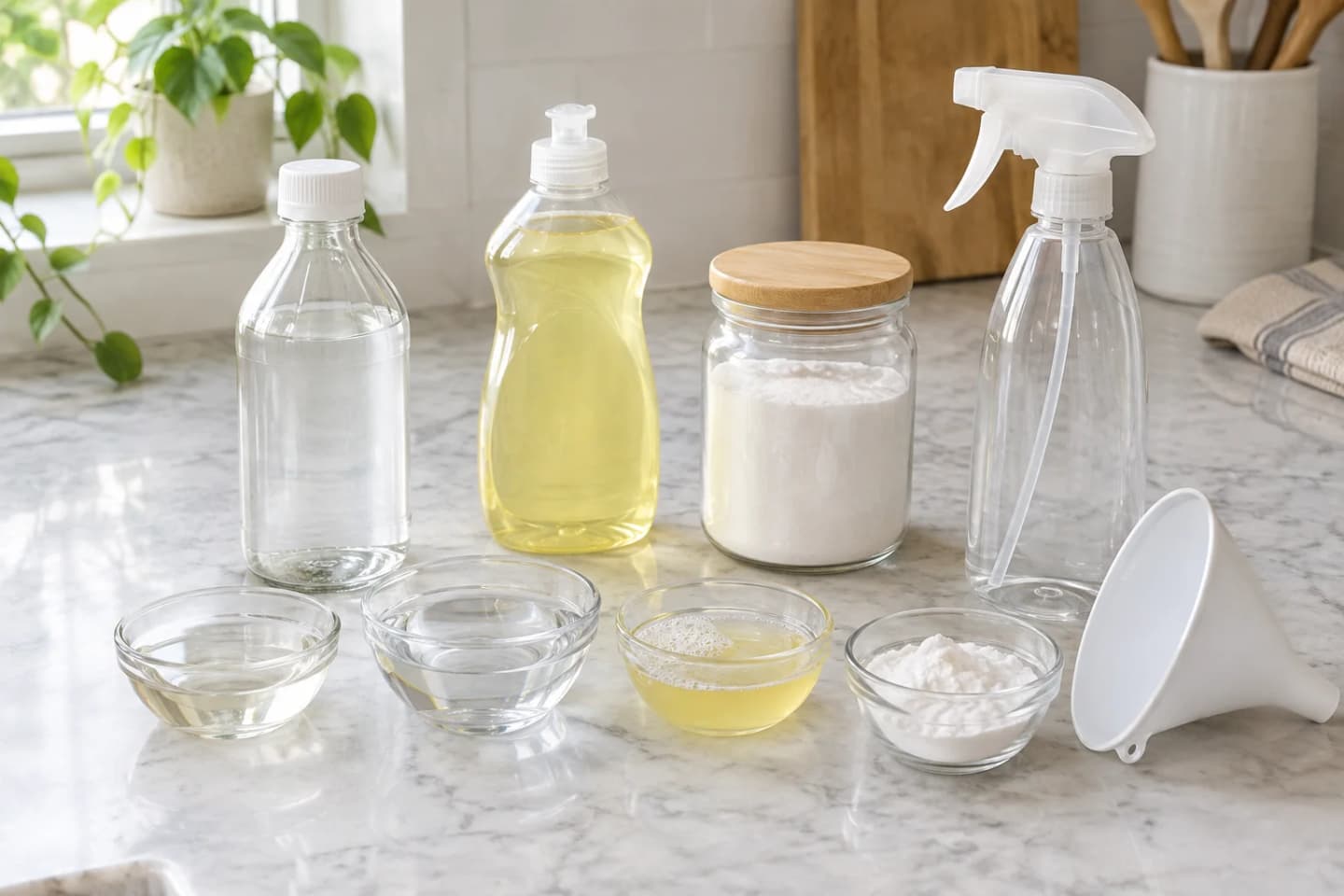
- 1 cup white vinegar — cuts grease and dissolves mineral deposits (or lemon juice)
- 1 cup water — dilutes the acid for safe use on surfaces
- 1 teaspoon dish soap — lifts grease and grime
- 1 tablespoon cornstarch — reduces streaking on glass
You need
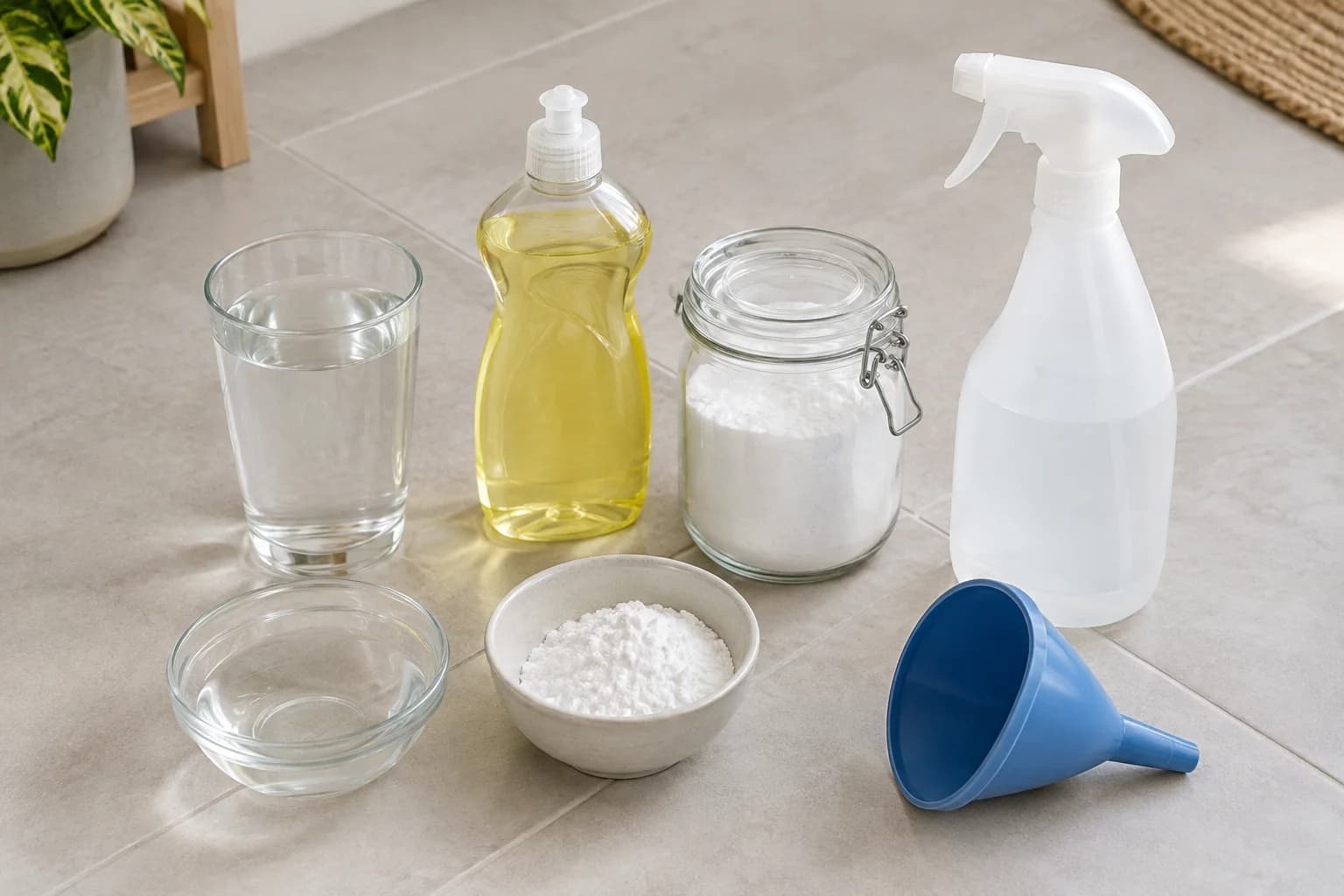
- spray bottle
- lint-free cloth or microfiber cloth
- funnel
Make it
- Pour the vinegar and water into the spray bottle using the funnel.
- Add the dish soap and cornstarch.
- Close the bottle and shake gently until the cornstarch is fully dissolved.
- Shake again lightly before each use since cornstarch can settle.
- Spray onto the glass, tile or chrome surface and wipe dry with the cloth.
Precautions Ventilate the room while spraying, avoid contact with eyes, and keep the labeled spray bottle out of reach of children. Do not use this on marble, granite or other natural stone, as the acid can etch the surface.
Fizzing Scrub Paste for Tubs and Grout
Mix baking soda and hydrogen peroxide first, then stir in dish soap to make 1 cup in 5 min; use it the same day. Scrub onto tub and grout stains, then rinse.
Ingredients
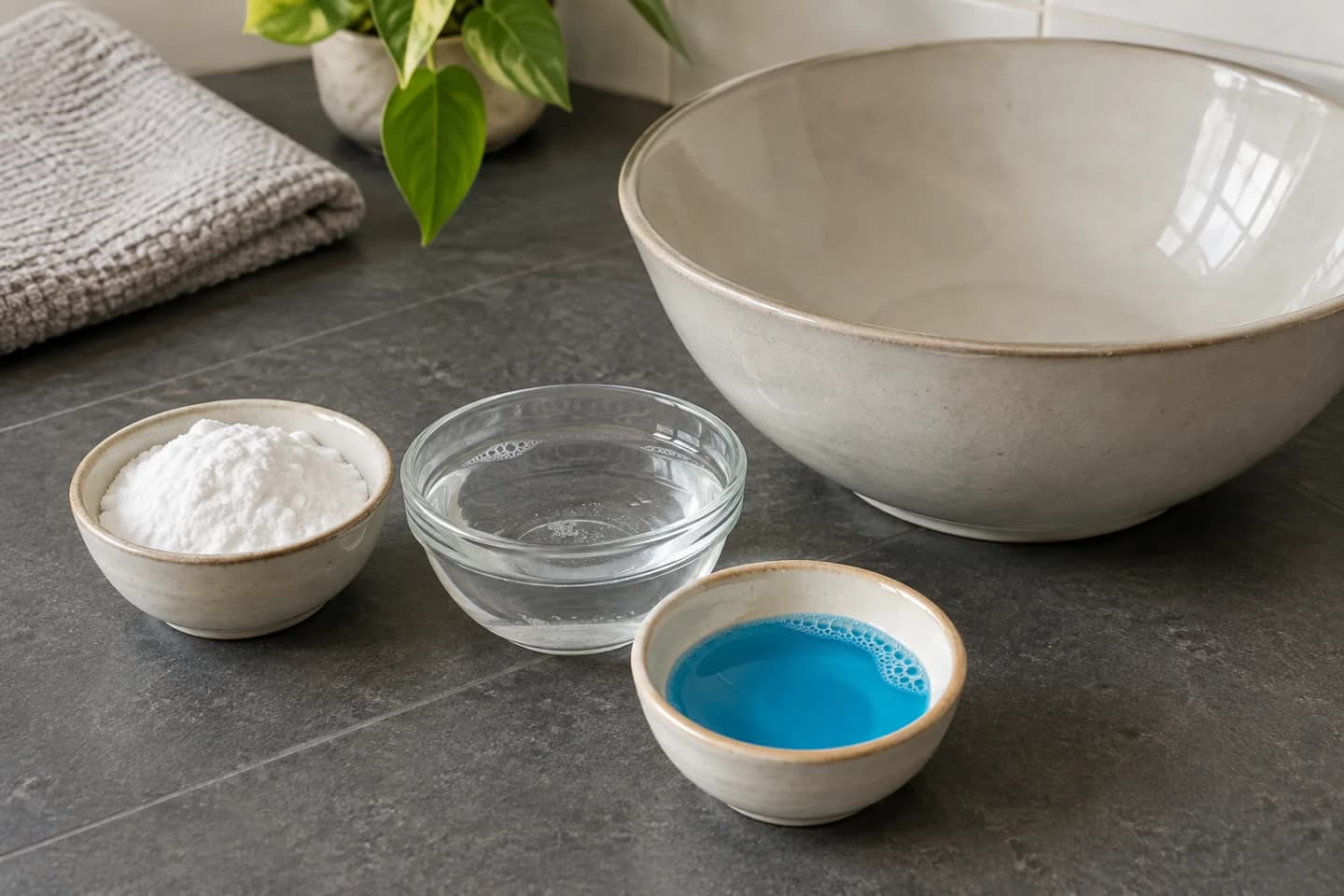
- 1/2 cup baking soda — mild abrasive that lifts grime
- 1/4 cup hydrogen peroxide — bubbling action helps loosen stains and disinfect (or oxygen bleach dissolved in water)
- 1 tablespoon dish soap — boosts grease-cutting power
You need
- mixing bowl
- scrub brush or old toothbrush
- rubber gloves
Make it
- Put the baking soda in the mixing bowl.
- Add the hydrogen peroxide slowly, letting it fizz.
- Stir in the dish soap until a spreadable paste forms.
- Apply immediately to the stained surface with the scrub brush.
- Scrub, let sit for a few minutes, then rinse thoroughly with water.
Precautions Wear rubber gloves since hydrogen peroxide can irritate skin, work in a ventilated space, and mix only the amount you need since it loses effectiveness and must be used the same day. Keep unused hydrogen peroxide bottle out of reach of children and labeled clearly.
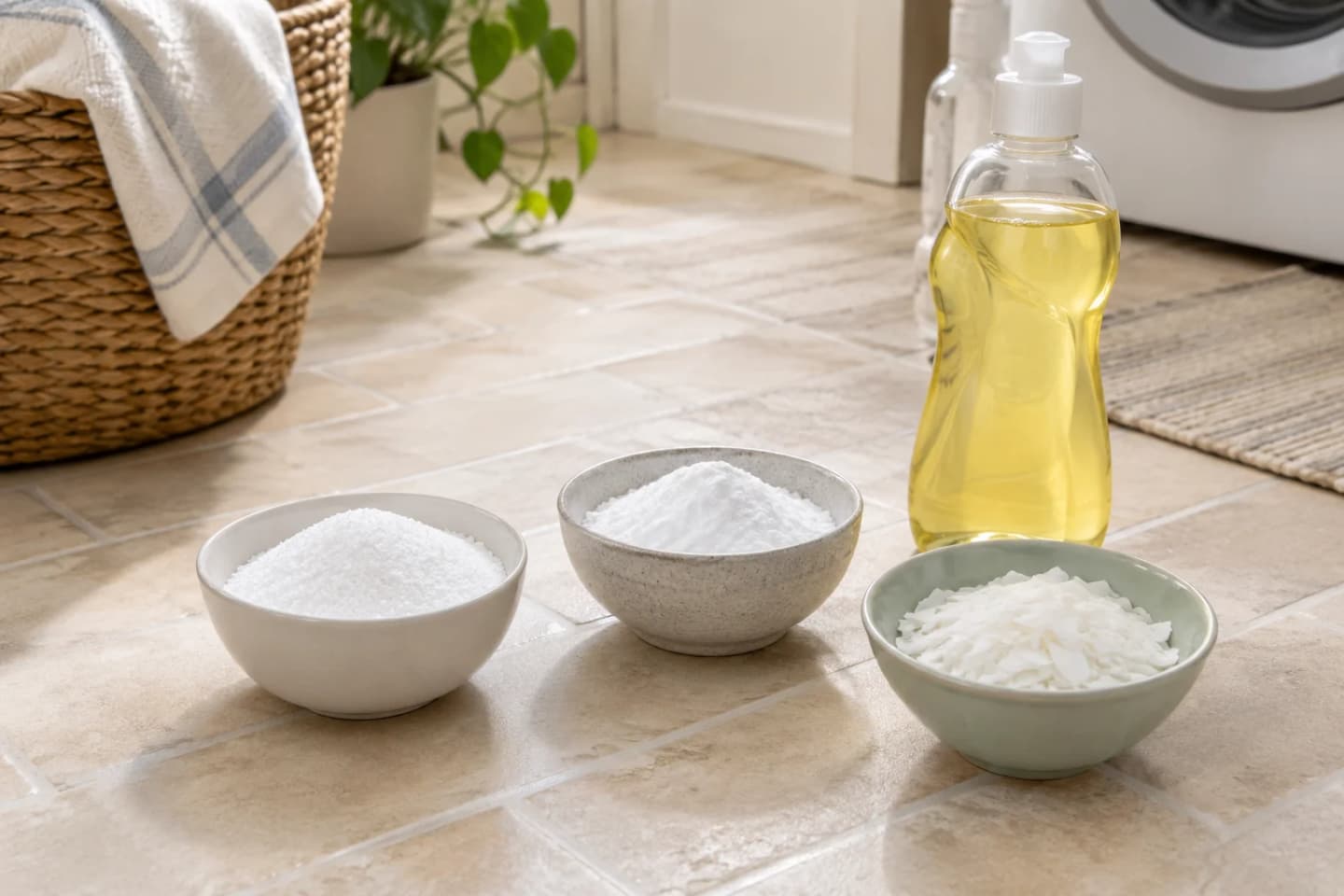
All-Floor Degreasing Powder Mix
Combine borax, baking soda and dish soap flakes first to make 3 cups dry mix in 4 min; keeps up to 6 months. Dissolve in water and mop sealed tile, linoleum or vinyl floors.
Ingredients
- 1 cup borax — deodorizes and boosts cleaning power (or washing soda)
- 1 cup baking soda — mild abrasive and odor absorber
- 1 cup dish soap flakes — grease-cutting surfactant (or powdered laundry detergent)
You need
- flexible squeeze bottle or resealable bag
- mixing bowl
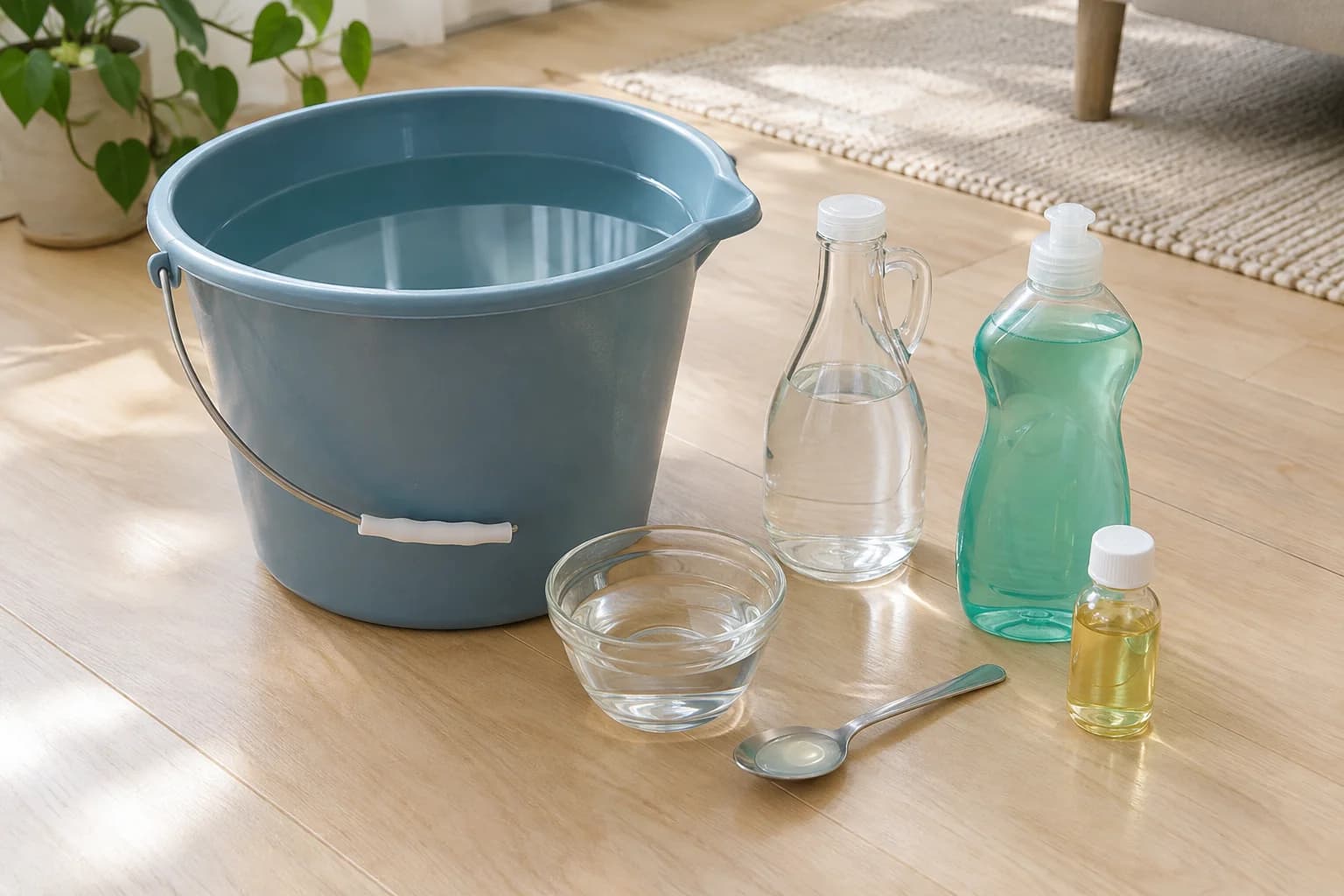
- mop and bucket
- measuring cup
Make it
- Combine the borax, baking soda and dish soap flakes in the mixing bowl.
- Stir thoroughly until evenly blended with no clumps.
- Transfer the dry mix into a flexible squeeze bottle for storage.
- To use, dissolve 2 tablespoons of the powder in 1 gallon of warm water in the mop bucket.
- Mop the floor as usual and let air dry.
Precautions Wear gloves when handling borax since it can irritate skin, avoid inhaling the dry powder, and store the labeled flexible bottle out of reach of children. Keep the bottle tightly closed between uses to prevent moisture from clumping the powder.
Which Homemade Cleaning Solution Fits Which Job?
The vinegar spray earns its spot as the everyday go-to: it handles glass, tile, and chrome, cutting through fingerprints, water spots, and soap scum while the cornstarch keeps it from streaking on windows and mirrors. It is the one to reach for on shower doors, countertops, and mirrors, but it is not for marble, granite, or other natural stone, since the vinegar's acidity will etch those surfaces over time. If you're chasing a streak-free finish on glass specifically, this is the formula built for that job (see also The Right Way to Clean a Mirror Without Leaving Streaks for technique tips).
The fizzing scrub paste is a different tool entirely: it is made to tackle stuck-on grime in tubs and grout lines, where the hydrogen peroxide's bubbling action loosens buildup that a spray alone can't budge. It works best on textured, porous surfaces that can handle scrubbing, not on polished glass or chrome, where the baking soda's mild abrasiveness could dull the shine. Because it loses potency fast, mix it only when you're ready to scrub the same day, not as a stockpiled cleaner.
The degreasing powder mix is built for floors, not countertops or glass. Once dissolved in a bucket of warm water, it cuts through the greasy film that accumulates on sealed tile, linoleum, and vinyl, particularly in kitchens. It is not meant to be used full-strength or sprayed directly on surfaces; it needs dilution first. Because it stores dry for months, it suits homeowners who mop on a regular schedule rather than needing a single-use batch.
Storage and Safety: Shelf Life, Labeling, and Handling Precautions
Shelf life varies by recipe, so label each container the day you make it with the contents and the date. The vinegar glass and tile spray keeps up to 1 month in a spray bottle; write "Vinegar Glass & Tile Cleaner" and the mix date directly on the bottle. The fizzing tub and grout paste loses its bubbling power quickly, so mix only what you'll use and treat it as a same-day product, don't store leftovers. The floor degreasing powder keeps up to 6 months in a flexible squeeze bottle or resealable bag, but it needs a tight seal between uses since moisture will clump it, so label it with both the contents and an expiration date six months out.
Store all three out of reach of children and pets, ideally on a high shelf or in a locked cabinet rather than under an open sink. Wear rubber gloves when handling the hydrogen peroxide paste or the borax powder mix, since both can irritate skin with repeated contact. Ventilate the room, open a window or run a fan, whenever you spray the vinegar solution or scrub with the peroxide paste, and avoid breathing in the dry borax and baking soda powder while mixing it. Never combine leftover hydrogen peroxide paste with other cleaners in the same container.
Frequently asked questions
How do you make a homemade all-purpose cleaner?
What is a good DIY cleaning spray for glass and tile?
What is the homemade all-purpose cleaner recipe and how long does it last?
Can you use the vinegar spray on marble or granite countertops?
Why does the vinegar cleaner include cornstarch?
How this article was made
Edited by Claire Mercier, Editor. The guides are written with AI assistance.