How to Clean Your Room Fast: 20 Hacks by Zone
Part of Bedroom & Tidying · article 4 of 4
Get 20 hacks across 4 zones, 10 done in 5 minutes or less, the quickest just 2 min. Start with whichever zone bothers you most, then knock out the fastest hacks first.
On this page
Whole Room
Clearing surfaces before dusting matters because loose items just get pushed around otherwise. Deodorize the trash can while you wait for the baking soda sprinkle to settle on the carpet. Screens look clean once there's no visible smudge under direct light, not just at a glance.
1. Clear surfaces with a three-bin sort
10 min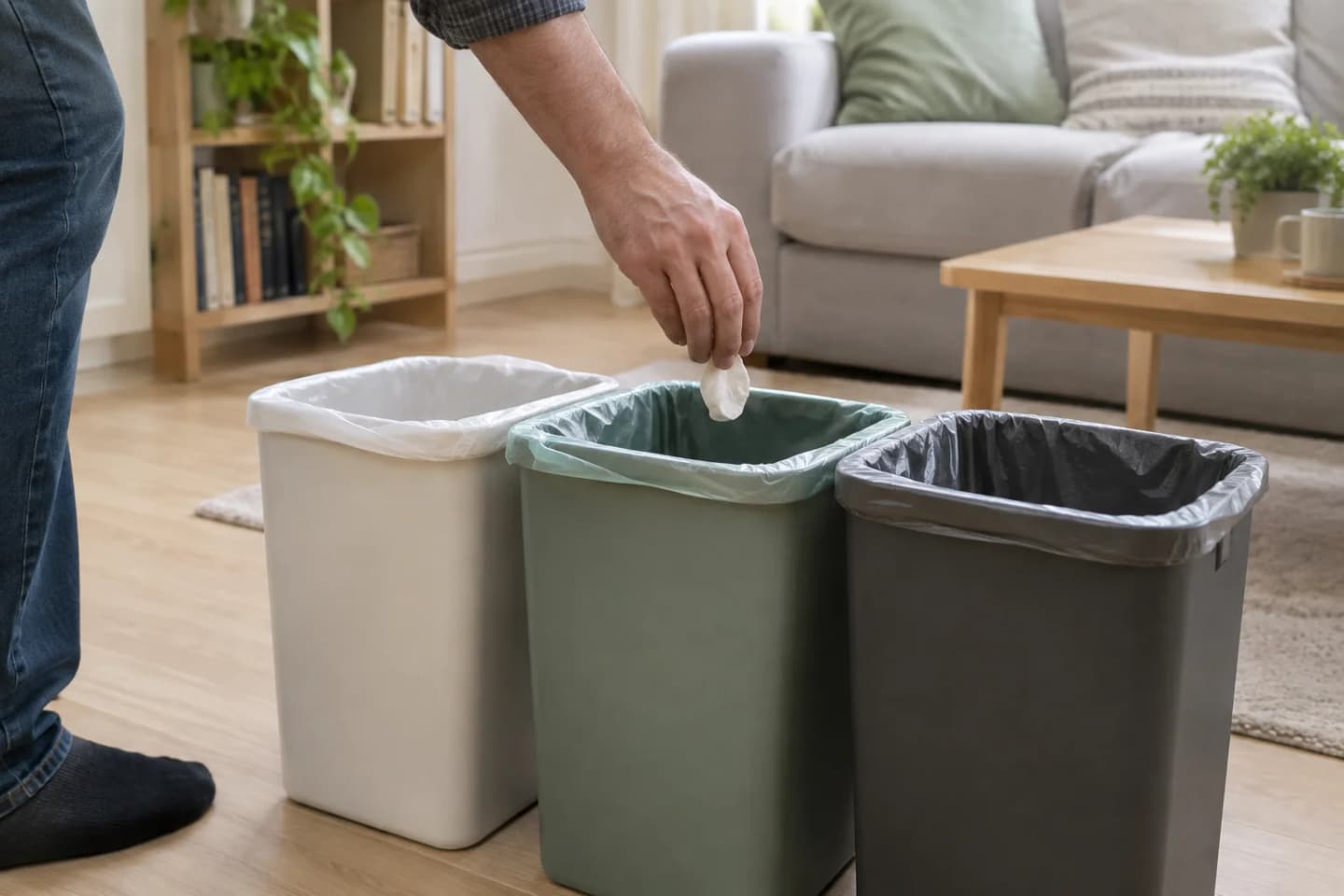
You need
- bin or basket (3)
How
Sort loose items into three bins labeled put away, trash, and relocate. Carry each bin to its destination once full instead of making multiple trips. This clears every surface before you start wiping.
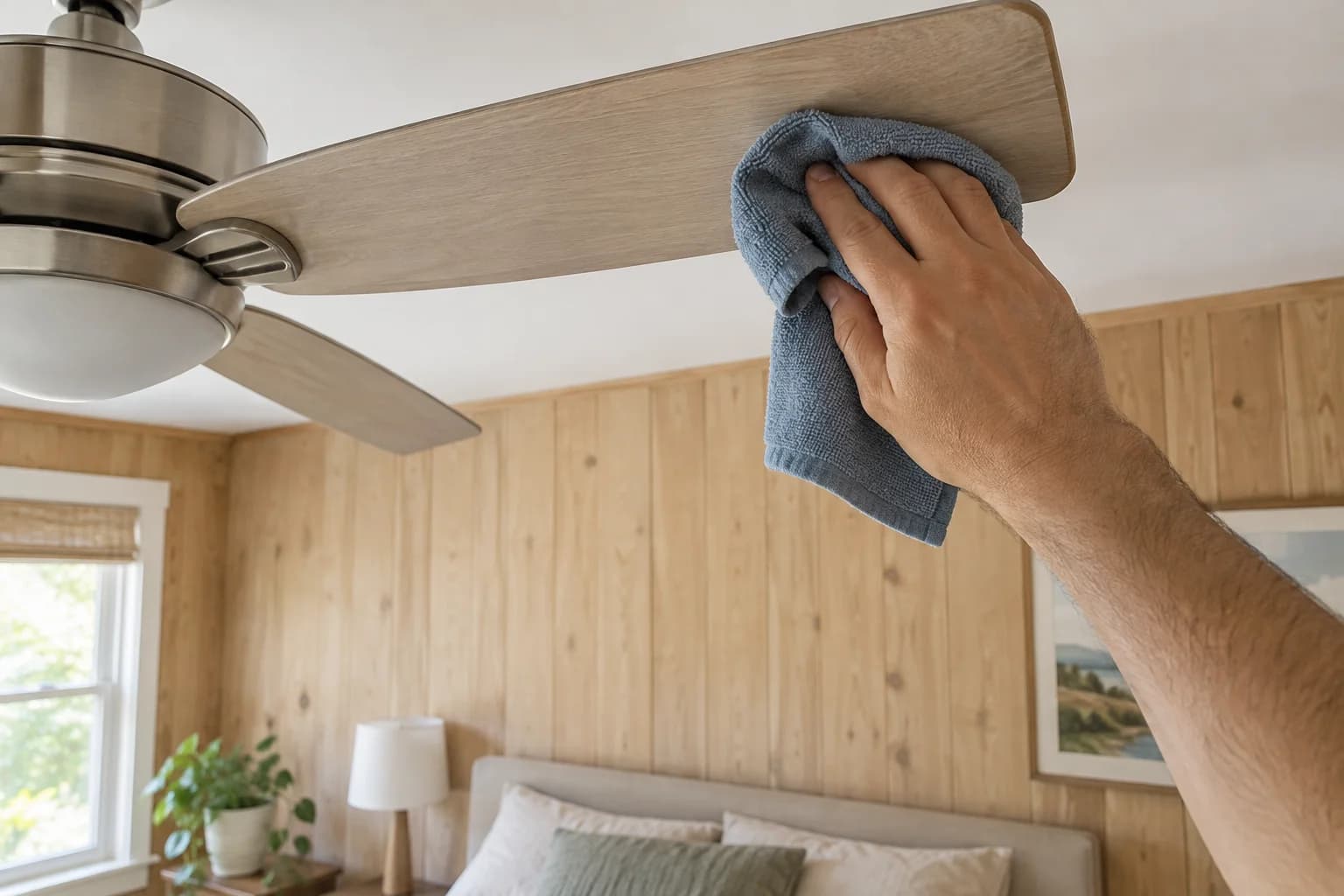
2. Dust high to low with a microfiber cloth
8 minYou need
- microfiber cloth (1)
How
Start at the highest surfaces like shelves and tops of furniture, then work down to desks and dressers, finishing at the floor. Dust settles downward, so this order prevents redoing lower surfaces. Shake the cloth outside when it gets loaded.
3. Wipe desks and dressers with a vinegar solution
5 minYou need
- white vinegar (1/4 cup)
- water (1 cup)
- spray bottle (1)
How
Combine vinegar and water in a spray bottle and mist wood, laminate, or glass surfaces. Wipe clean with a microfiber cloth in one direction. Skip this on marble or granite tops and use a pH-neutral cleaner instead.
Do not use on natural stone surfaces.
4. Freshen the air with a baking soda sprinkle
12 minYou need
- baking soda (2 tablespoons)
How
Sprinkle baking soda lightly over the carpet or rug and let it sit for 10 minutes to absorb odors. Vacuum it up thoroughly afterward. This also helps lift surface dust trapped in fibers.
5. Deodorize the trash can with baking soda
2 min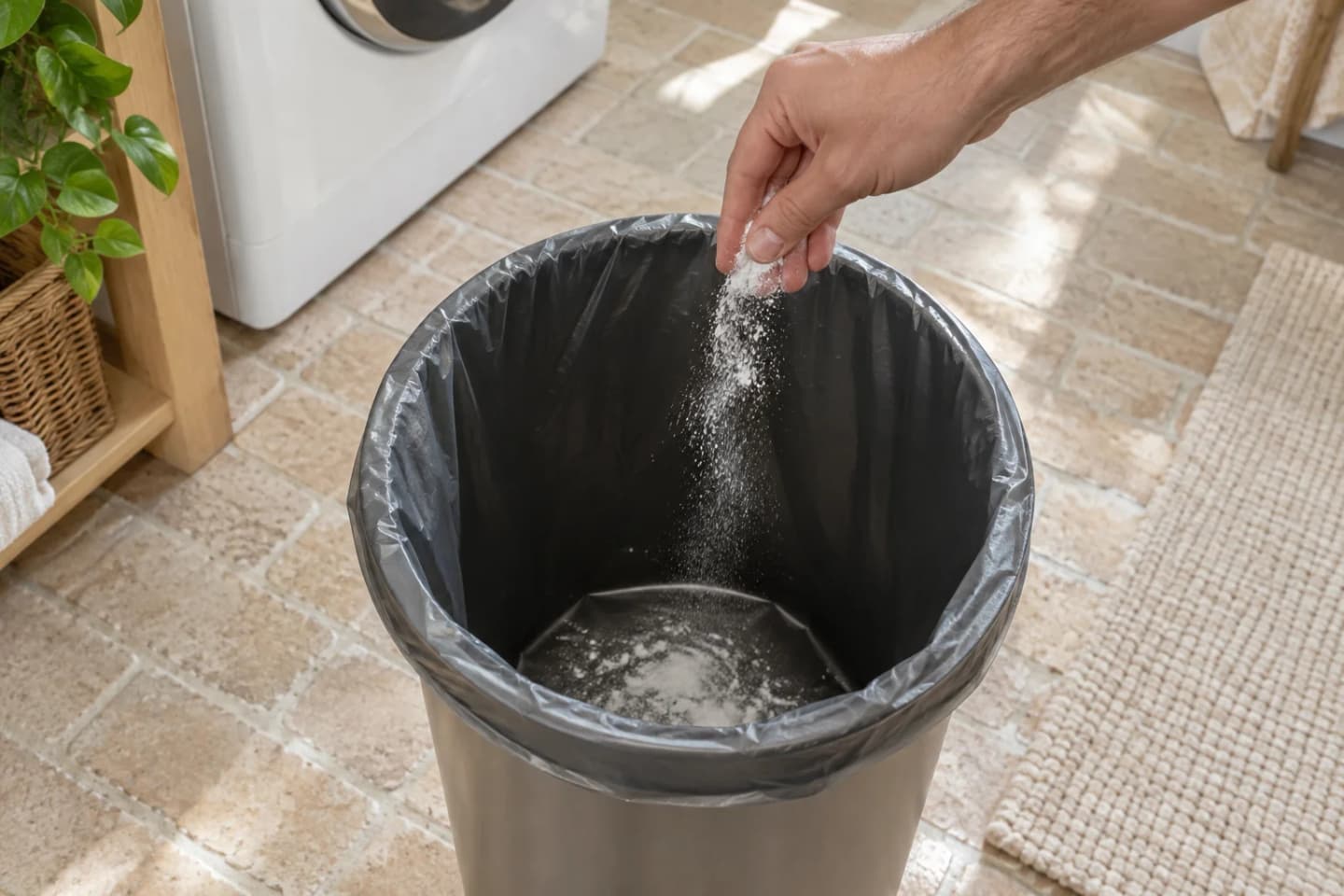
You need
- baking soda (1 tablespoon)
How
Empty the trash can, then sprinkle baking soda in the bottom before adding a new liner. This absorbs odors between full cleanings. Replace the sprinkle each time you take out the trash for ongoing freshness.
6. Wipe light switches and doorknobs last
3 minYou need
- dish soap (1 teaspoon)
- water (1 cup)
- cloth (1)
How
Mix dish soap into water and dampen a cloth to wipe light switches, doorknobs, and handles. These are touched often but easy to forget during a fast clean. Dry with a second cloth to avoid residue buildup.
7. Clean screens with a dry microfiber cloth only
3 minYou need
- microfiber cloth (1)
How
Wipe TV, monitor, or tablet screens with a dry microfiber cloth in gentle circular motions. If needed, lightly dampen the cloth with water only, never spray liquid directly on the screen. This avoids streaks and protects the display coating.
Closet & Clothes
A common mistake is wiping shelves before clearing the clutter off them, which just spreads dust around piles of clothes. Do the hanger trick over weeks, not in one sitting, since it depends on what you actually wear. Shoes are freshened once they no longer smell when you first open them.
8. Speed-fold and stack loose clothes
7 minHow
Gather all loose clothing into one pile, then fold and stack by category: tops, bottoms, and other. Hang anything wrinkle-prone immediately. This keeps the floor clear without needing to put everything away perfectly yet.
9. Wipe closet shelves with a mild soap solution
6 min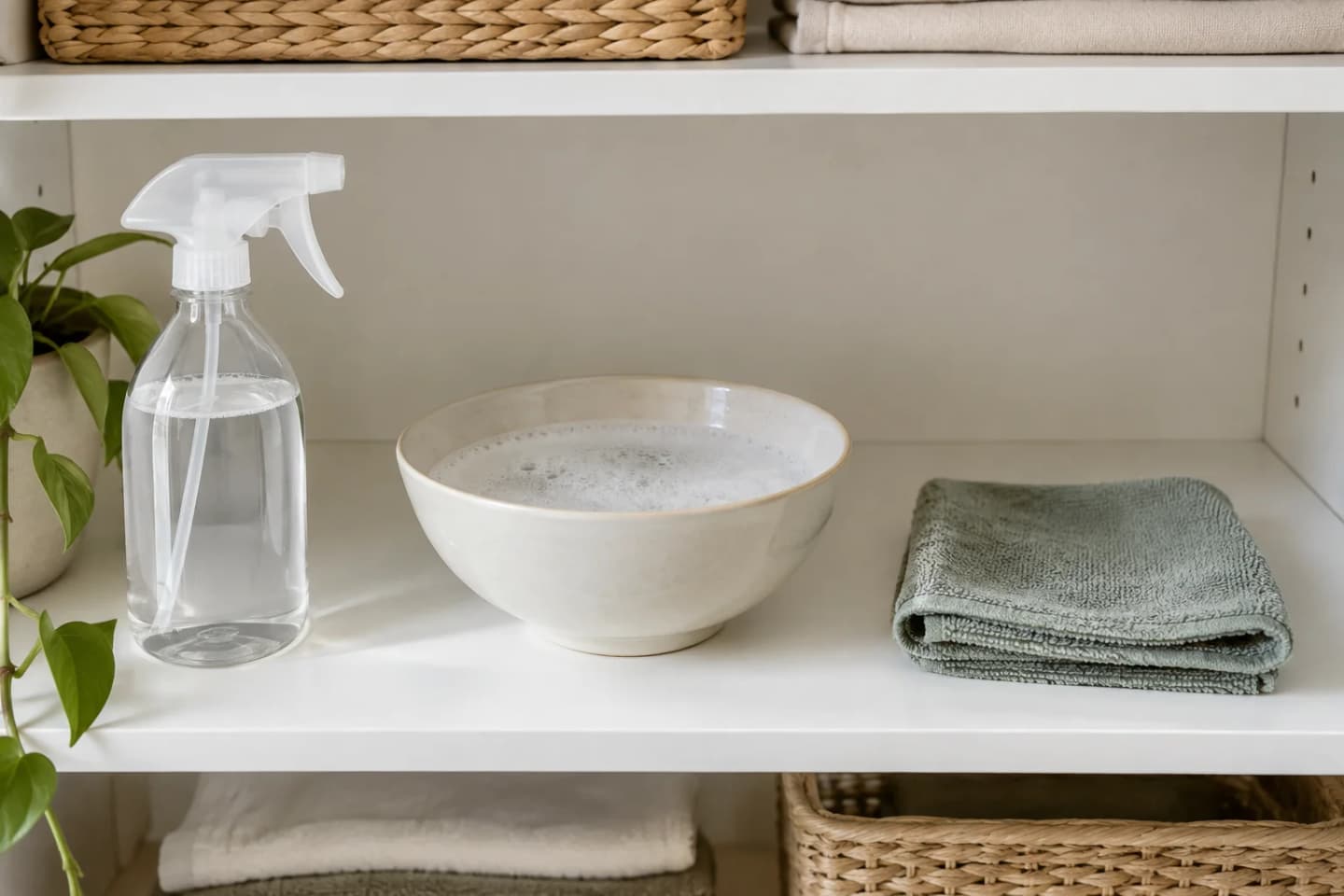
You need
- dish soap (1 teaspoon)
- water (2 cups)
- cloth (1)
How
Mix dish soap into water and dampen a cloth to wipe closet shelves and the floor. Dry with a second cloth to prevent moisture buildup. This clears dust that collects on shelf edges.
10. Freshen shoes with a baking soda pouch
2 minYou need
- baking soda (2 tablespoons)
- cloth pouch or sock (1)
How
Fill a cloth pouch or old sock with baking soda, tie it closed, and place one inside each shoe overnight. This absorbs odor without leaving residue. Remove before wearing.
11. Declutter hangers in one pass
3 minHow
Turn all hangers backward at the start of the season or cleanup. As you wear and rehang items normally, the backward ones reveal what you no longer use. Remove those during your fast clean to free up space.
Bed Area
Work from the headboard down to the mattress so dust falls onto surfaces you still plan to clean. Skipping the shake-out step before straightening sheets tends to leave wrinkles that stay visible even after tucking. Fabric headboards are done once the damp spot from spot-cleaning has fully dried.
12. Wipe down the nightstand and headboard
4 minYou need
- microfiber cloth (1)
- water (1 cup)
How
Lightly dampen a microfiber cloth with water and wipe the nightstand, headboard, and any lamp surfaces. Dry with a second pass of the cloth. This removes dust without needing extra product.
13. Shake and straighten bedding fast
5 min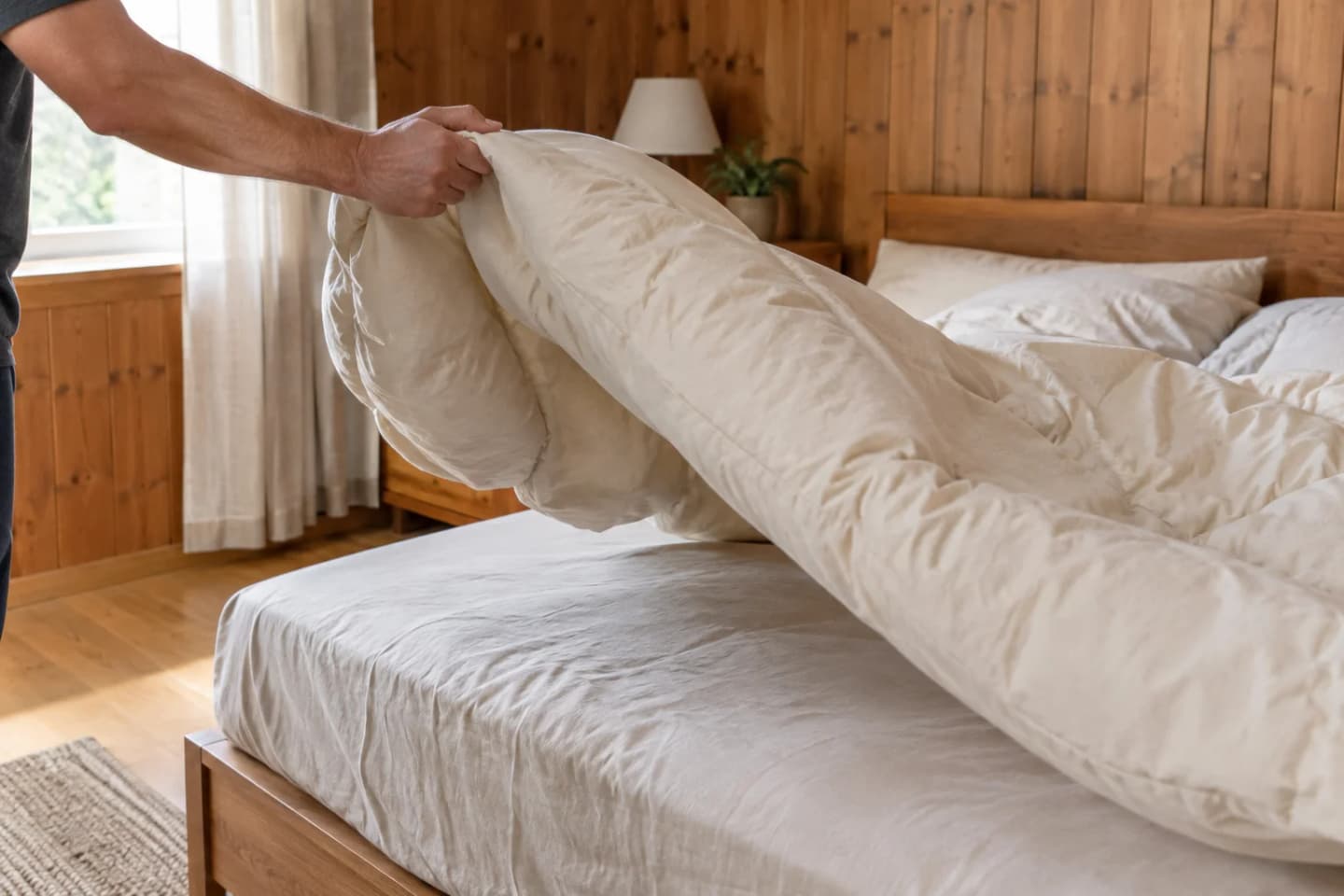
How
Strip the top sheet and comforter, shake them out away from the bed, then lay them back and tuck corners tightly. Fluff pillows last. This instantly makes the whole room look tidier.
14. Vacuum the mattress edges and seams
6 minYou need
- vacuum with upholstery attachment (1)
How
Strip the bed and vacuum along the seams, edges, and under any buttons where dust and skin cells collect. Move slowly in overlapping passes. Do this every time you change sheets for best results.
15. Spot-clean fabric headboards with dish soap
5 minYou need
- dish soap (1 teaspoon)
- water (1 cup)
- cloth (1)
How
Mix dish soap into water and dab a cloth onto stains on a fabric headboard. Blot rather than rub to avoid spreading the mark. Let it air dry fully before leaning against it.
Floor & Windows
Vacuuming always comes before mopping, since wet floors trap any dirt left behind instead of lifting it. A common mistake is spraying window cleaner directly onto nearby wood or stone sills instead of the glass itself. Streak-free glass shows no haze when you check it from an angle in daylight.
16. Wipe window sills with a vinegar spray
5 minYou need
- white vinegar (1/4 cup)
- water (1 cup)
- spray bottle (1)
How
Mix vinegar and water in a spray bottle and mist window sills and tracks. Wipe with a cloth or old toothbrush for tracks to lift dust and grime. This also cuts through light limescale on glass.
17. Vacuum before you sweep or mop
8 min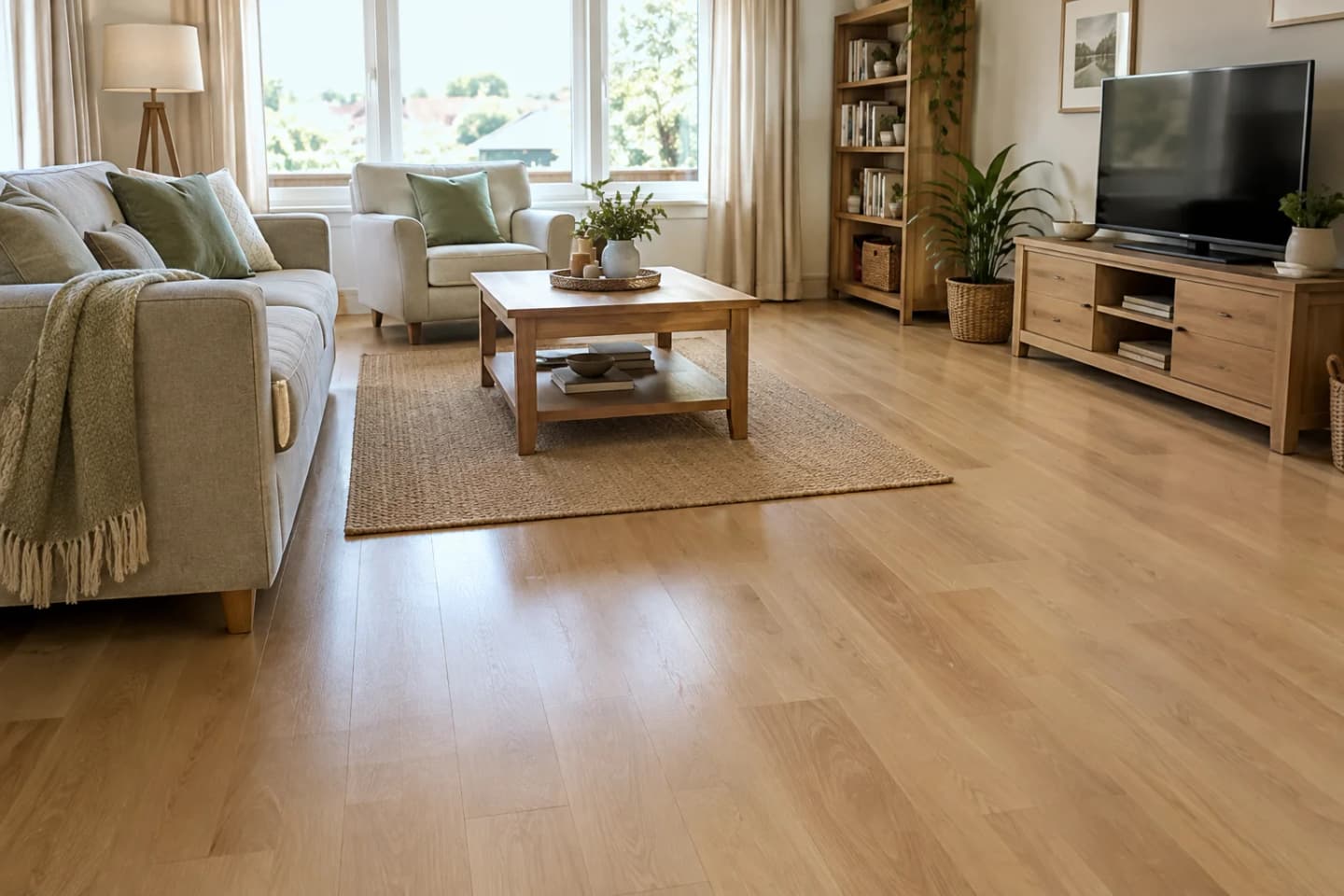
You need
- vacuum (1)
How
Vacuum the entire floor first, including corners and under furniture edges, to remove loose dirt and hair. This prevents smearing debris around when you mop afterward. Always do floors last in your cleaning order.
18. Mop hard floors with a diluted soap solution
10 minYou need
- dish soap (1 tablespoon)
- warm water (1 gallon)
- mop (1)
How
Mix dish soap into a bucket of warm water and mop in small sections, rinsing the mop head often. Let the floor air dry rather than walking on it right away. This works on sealed wood, tile, and laminate.
You need
- lemon juice (2 tablespoons)
- water (1 cup)
- spray bottle (1)
How
Combine lemon juice and water in a spray bottle and mist the glass. Wipe with a dry microfiber cloth using vertical strokes on one side and horizontal on the other to spot streaks easily. Avoid this mix on any nearby stone window sills.
Avoid use on natural stone surfaces.
You need
- microfiber cloth (1)
How
Run a dry microfiber cloth along baseboards in one continuous motion, flipping to a clean side as needed. The cloth's fibers grab dust without needing any spray. Do this before mopping so dust doesn't resettle on wet floors.
Why a Hack Didn't Work: Checking the Amount, the Surface, and the Time Left on It
Most failures trace back to one of three things. First, the amount: a hack that calls for a quick pass with a lint roller or a dab of dish soap won't cut it on a bigger mess, so double the product or repeat the pass before deciding it's not working. Second, the surface: a trick built for sealed hardwood or laminate can streak, dull, or even damage natural stone, unsealed wood, or delicate fabric, so check what the zone is actually made of before reapplying anything. If you're unsure what you're working with, matching the cleaner to the material matters more than the hack itself. Third, the time left on: wiping off a cleaner too soon, before it's had a chance to loosen grime, is the single most common reason a 2-minute hack looks like it failed. Give liquid or spray products the 30 to 60 seconds most need to work before you wipe, and don't rush a step meant to sit.
If a hack still fails after checking all three, it's usually a sign the zone needs more than a fast fix. At that point, skip ahead to a fuller routine, like the one in how to deep clean your room, rather than repeating a quick hack that isn't suited to the job.
How Do You Make Cleaning Your Room Fast a Habit? A Quick Routine Using the Fastest Hacks
Out of the full set of 20, ten take 5 minutes or less, and the quickest of all takes just 2 minutes. Those ten are what turn this from a one-time rescue mission into an actual habit. Pick three or four of them, the ones matched to your worst zones (bed, floor, surfaces, laundry), and run them in the same order every day, right before you leave the room in the morning or right before bed. Order matters less than repetition: your body learns the sequence and stops negotiating with itself. A realistic version looks like this: make the bed (2 minutes), clear the nightstand and dresser surfaces into a basket, corral stray clothes into the hamper, and do a 60-second floor scan for obvious trash or clutter. That's under 5 minutes total, done daily, and it prevents the buildup that makes a room feel like it needs a full overhaul. If you want the fuller version once a week, pair this daily pass with a weekly reset from a weekly cleaning schedule so nothing slowly piles up unnoticed.
Frequently asked questions
How can you quickly clean your room?
How do you clean your room in 15 minutes?
Which zone should you clean first for the fastest results?
What order should you clean a room in?
Why didn't a quick cleaning hack work on your room?
How this article was made
Edited by Claire Mercier, Editor. The guides are written with AI assistance.