Does Vinegar Work? How to Clean Windows Without Streaks
Part of Windows & Glass · article 8 of 8
On this page
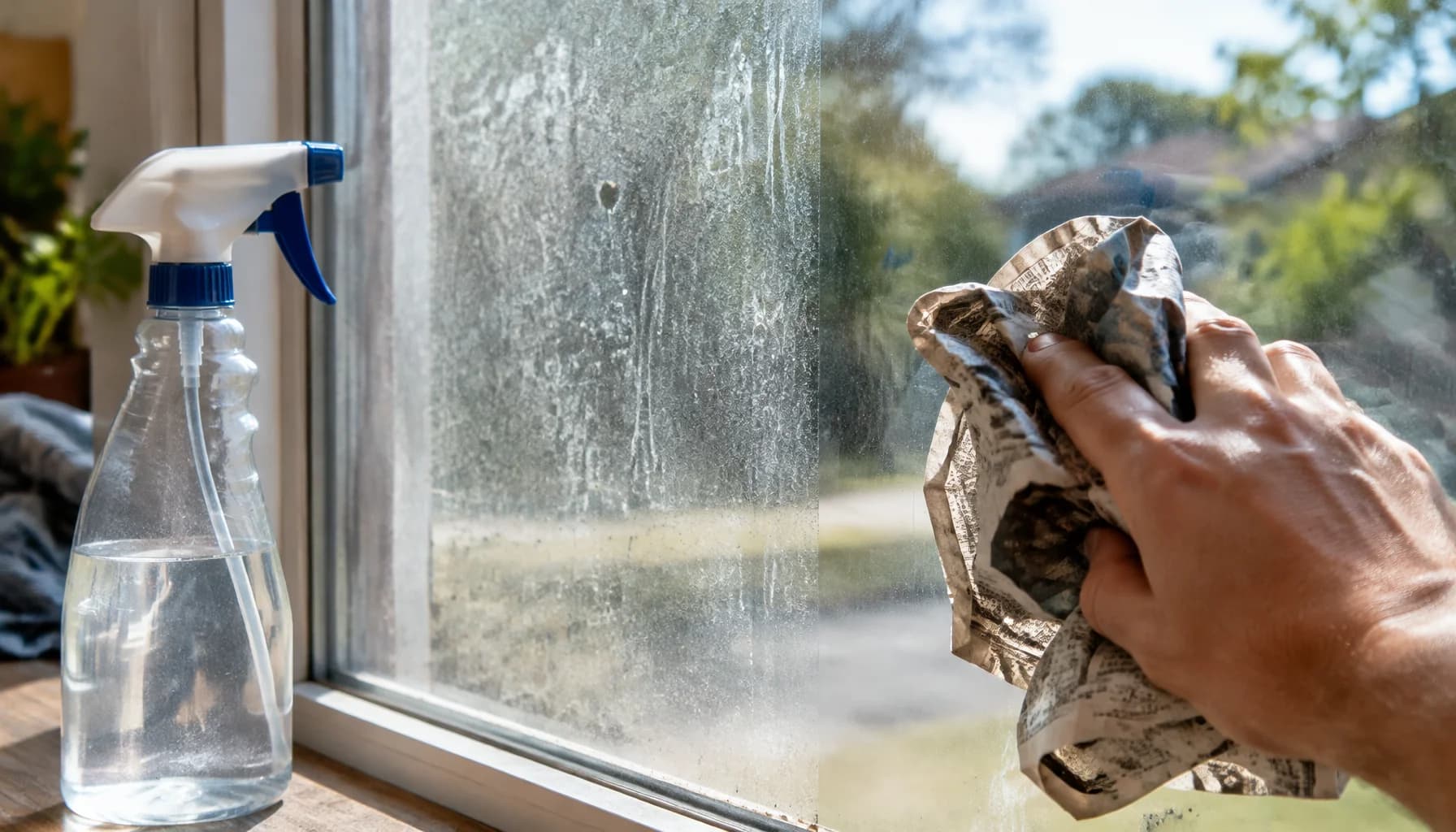
Mix 1 cup distilled vinegar with 1 cup water in a spray bottle, spray it onto the glass, then wipe dry with a paper towel, clean cloth, or wadded newspaper. For heavier lime or rust deposits on exterior glass, the publisher of pubs.nmsu.edu recommends a stronger solution: 1/4 cup cornstarch, 1/2 cup ammonia, and 1 cup vinegar. To track down remaining streaks after cleaning, rub the inside of the window in one direction and the outside in the other so you can tell which surface is responsible. Avoid using any vinegar-based cleaner on marble, granite, or travertine window sills, as the acid etches and dulls natural stone. If your window frames are plastic, skip vinegar and ammonia entirely: the publisher of cleaninginstitute.org notes that ammonia causes streaking and surface damage to plastic. A frame-by-frame guide to choosing the right cleaner for each window surface can help if you are dealing with mixed materials around the same opening.
Why do windows streak in the first place?
Streaks form because something is left behind on the glass after the liquid evaporates. That residue is almost always one of three things: soap film, mineral deposits from tap water, or fine particles of dust and grime that the cleaning cloth smeared rather than removed.
Soap is the most common culprit. Many commercial window sprays contain surfactants that do a good job lifting grease but leave a thin, hazy film if you do not remove every trace before the surface dries. The faster your cleaner evaporates, the less time that film has to settle. This is one reason plain water fails so often: it evaporates slowly, giving dissolved minerals in tap water time to crystallize into white spots.
Dirty tools cause as many streaks as bad chemistry. A cloth that carries its own dust, or a paper towel that sheds lint, deposits new material on every pass. Technique matters too: wiping in a single circular motion spreads residue rather than lifting it. The publisher of pubs.nmsu.edu specifically recommends rubbing the inside of a window in one direction and the outside in another, so you can tell immediately which side any remaining streak is on.
Surface preparation is the step most people skip. Wiping loose dust and grime off the glass before applying any liquid prevents you from grinding abrasive particles across the surface and then trapping them in a wet smear. Start dry, then go wet, and you remove two of the three main causes of streaks before you open a single bottle. The same logic applies when you clean a mirror without leaving streaks, since glass is glass regardless of where it hangs.
What homemade vinegar cleaners actually work on windows?
Remove loose dirt first
Wipe the glass with a dry paper towel or soft cloth to lift surface soil before applying any liquid, so you are not spreading grit across the pane when you clean.
Mix your cleaning solution
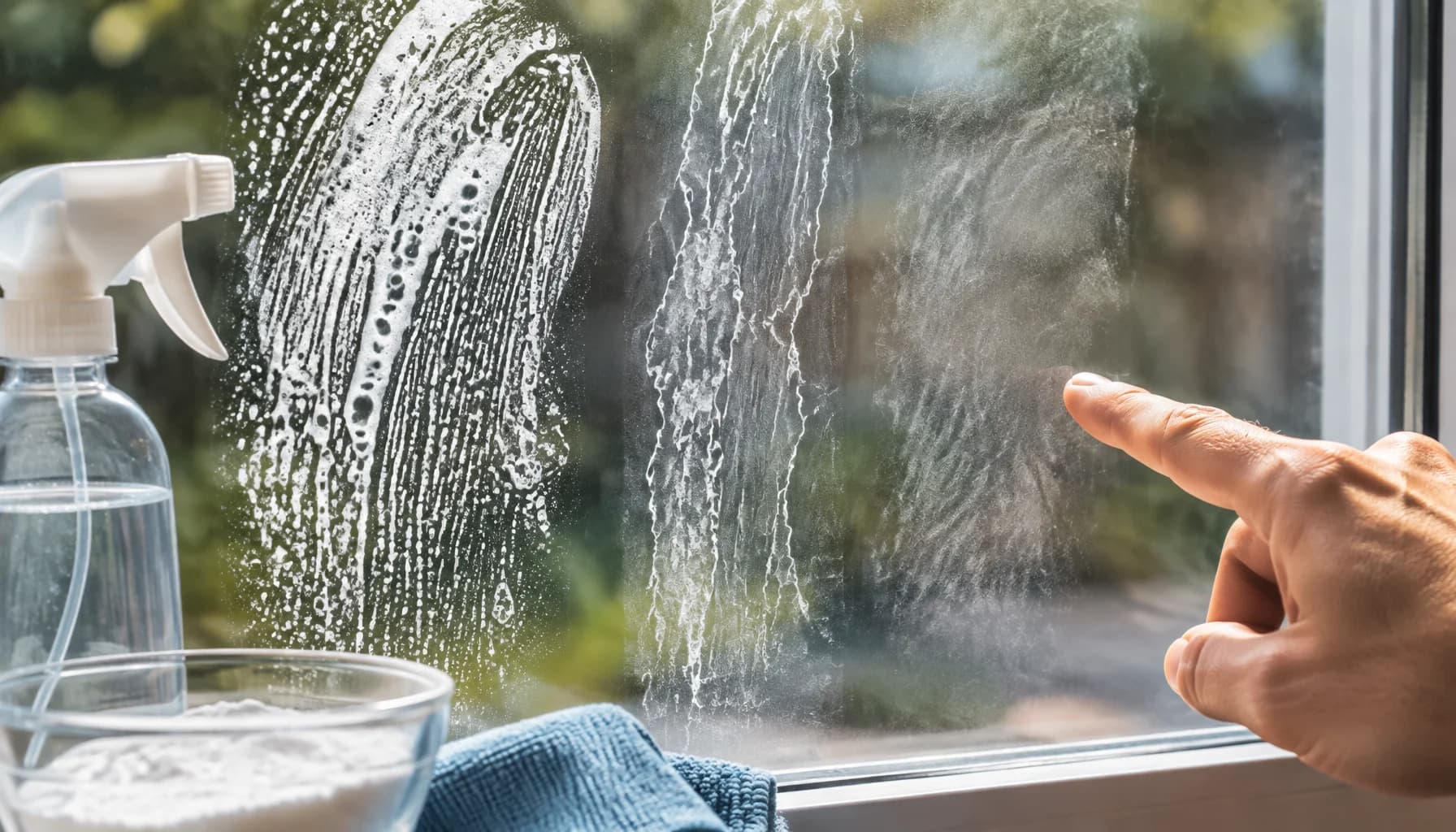
In a spray bottle, combine 1 cup distilled vinegar with 1 cup water. For heavier lime or rust deposits on exterior glass, mix 1/4 cup cornstarch, 1/2 cup ammonia, and 1 cup vinegar in a jar instead.
Apply the solution with a sponge or by spraying
Spray the diluted vinegar solution directly onto the glass, or apply the cornstarch-ammonia-vinegar mixture with a sponge, covering the entire surface evenly.
Rub in a single consistent direction
Work the cleaner across the glass using straight strokes. On windows with two sides you can access, rub the inside in one direction and the outside in another so you can tell exactly which side any remaining streaks are on.
Dry and polish immediately
Wipe the glass dry with a paper towel, clean cloth, or wadded newspaper before the solution can evaporate on its own. Leaving liquid to air-dry is the main cause of streaks.
Check for missed streaks in good light
Step back and view the glass from an angle in natural light. If streaks remain, note which side they are on, then buff that side only with a dry paper towel or clean cloth until the surface is clear.
Does dish soap and water work for streak-free windows?
Dish soap and water can clean windows effectively, but the ratio matters. Too much soap leaves a filmy residue that dries into streaks, which defeats the purpose. The right formula, drawn from tested household ratios, is 1/2 teaspoon of liquid dish soap combined with 1/4 cup of distilled vinegar and 2 cups of water.
To use it, soak a sponge or small cloth in the mixture, then wring out the excess liquid thoroughly before touching the glass. Excess liquid is one of the main causes of streaking: the more solution you leave on the pane, the more there is to dry unevenly. Wipe the glass with the damp sponge, then follow immediately with a dry paper towel or clean cloth to lift the moisture before it can settle into streaks.
Any leftover solution stores well in a glass jar with a tight-fitting lid, so you are not mixing a fresh batch every time.
One practical note: dish soap in this formula works as a surfactant that helps the solution spread evenly and release oily smudges from the glass surface. The vinegar provides mild acidity to cut through fingerprints and light grime. Together, they clean effectively without leaving behind the heavy residue that a stronger soap concentration would.
What this formula does not do well is remove stubborn mineral deposits, rust staining, or hard-water scale, especially on exterior glass. For those problems, vinegar-only solutions or the cornstarch-and-ammonia mixture covered in the previous section are better suited to the task.
Also worth knowing: this dish soap formula is for glass only. The publisher of cleaninginstitute.org advises against using ammonia-containing cleaners or general household cleaners on plastic window panels, as they can streak and damage the surface. Stick to a cleaner made specifically for plastic if any part of your window unit is acrylic or polycarbonate.
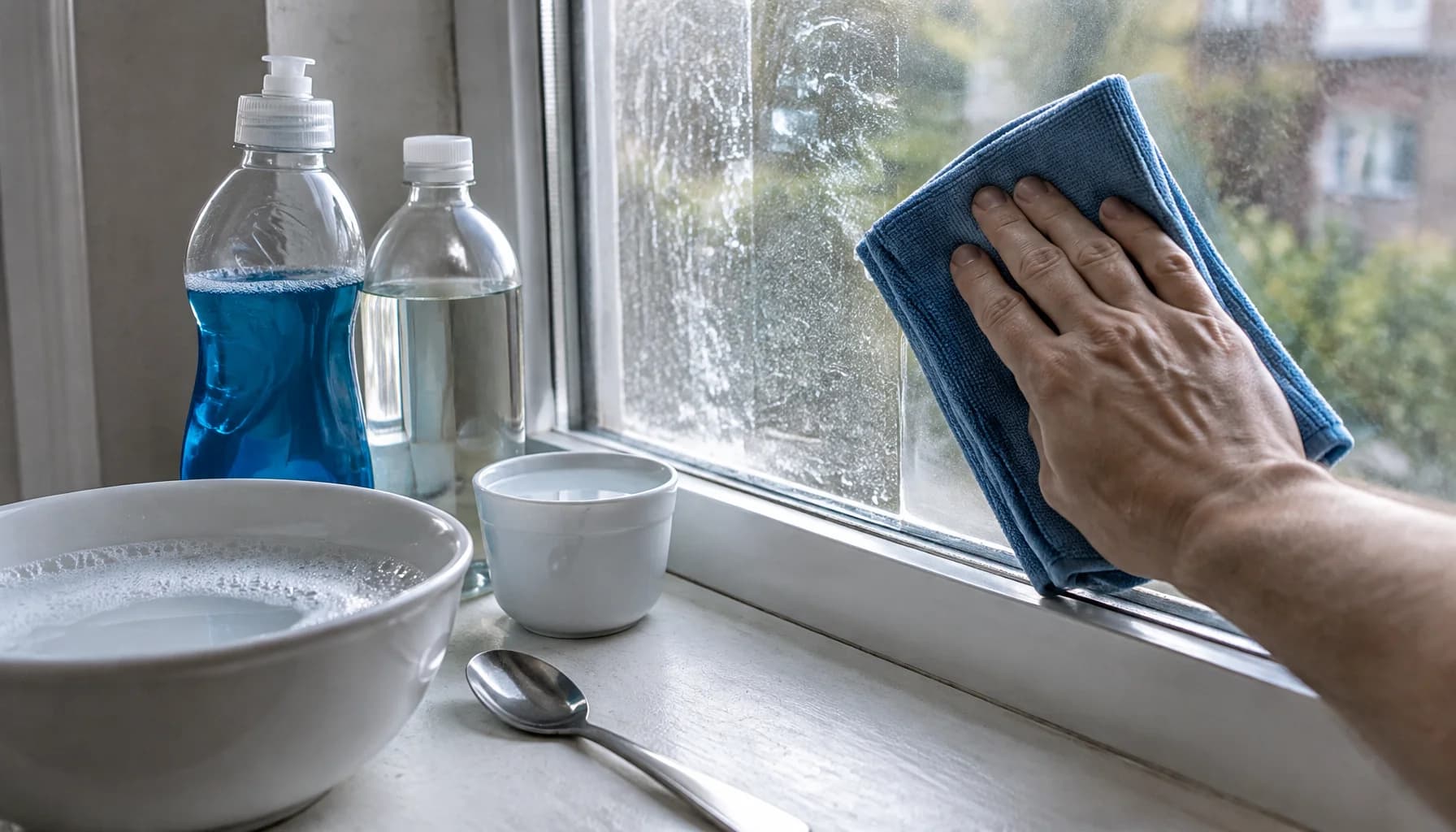
How do you apply, wipe, and dry window cleaner for a streak-free finish?
Before any liquid touches the glass, remove loose dust and surface soil with a dry paper towel or soft cloth. Skipping this step drags grit across the pane and leaves fine scratches that catch light and mimic streaks.
Once the glass is dry-wiped, apply your cleaning solution with a sponge, working it across the entire surface so you're not chasing dry spots. For the standard 1:1 mix, spray 1 cup distilled vinegar combined with 1 cup water directly onto the glass, then use the sponge to spread it evenly. If you're using the dish-soap formula instead, soak a sponge or small cloth in the mixture of 1/2 teaspoon liquid dish soap, 1/4 cup distilled vinegar, and 2 cups water, then wring out the excess before wiping, since a saturated sponge leaves too much liquid to dry cleanly.
Wipe direction matters more than most people expect. Rub the inside of the window in one direction, horizontal for example, and the outside in the opposite direction, vertically. That way, if a streak appears, you can tell at a glance which side of the glass it's on rather than re-cleaning both surfaces unnecessarily.
For the polish, paper towels, clean dry cloths, and wadded newspaper all work. Newspaper works because the dense, low-lint paper absorbs moisture without leaving fibers behind. Whichever you choose, rub dry immediately after applying the solution; letting it sit and evaporate on its own is the single most common cause of streaks.
The same logic applies if you're working on a mirror rather than a window. The technique transfers directly, and you can find a full breakdown in the right way to clean a mirror without leaving streaks.
What tools help you avoid streaks on windows?
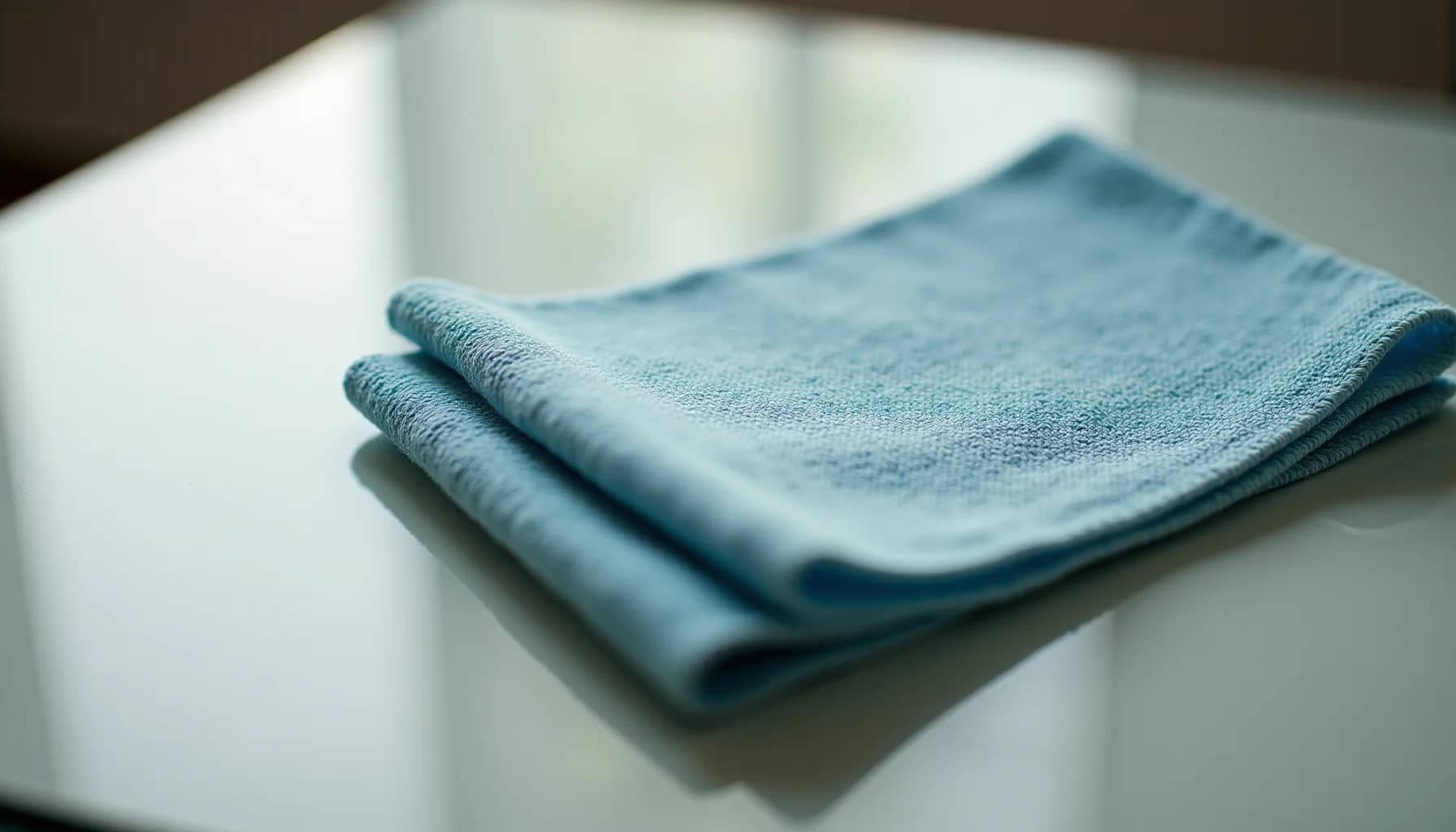
The materials you reach for matter as much as the cleaning solution itself. A paper towel is reliable for most panes: it absorbs liquid quickly and leaves no fibers behind. Wadded newspaper works on the same principle and has a slightly abrasive texture that polishes glass as it dries, which is why the publisher of pubs.nmsu.edu lists it alongside paper towels and clean cloths as a finishing tool. A soft cloth, either lint-free microfiber or a well-worn cotton rag, is the better choice for panes where you need more control, such as small divided lights or decorative leaded glass.
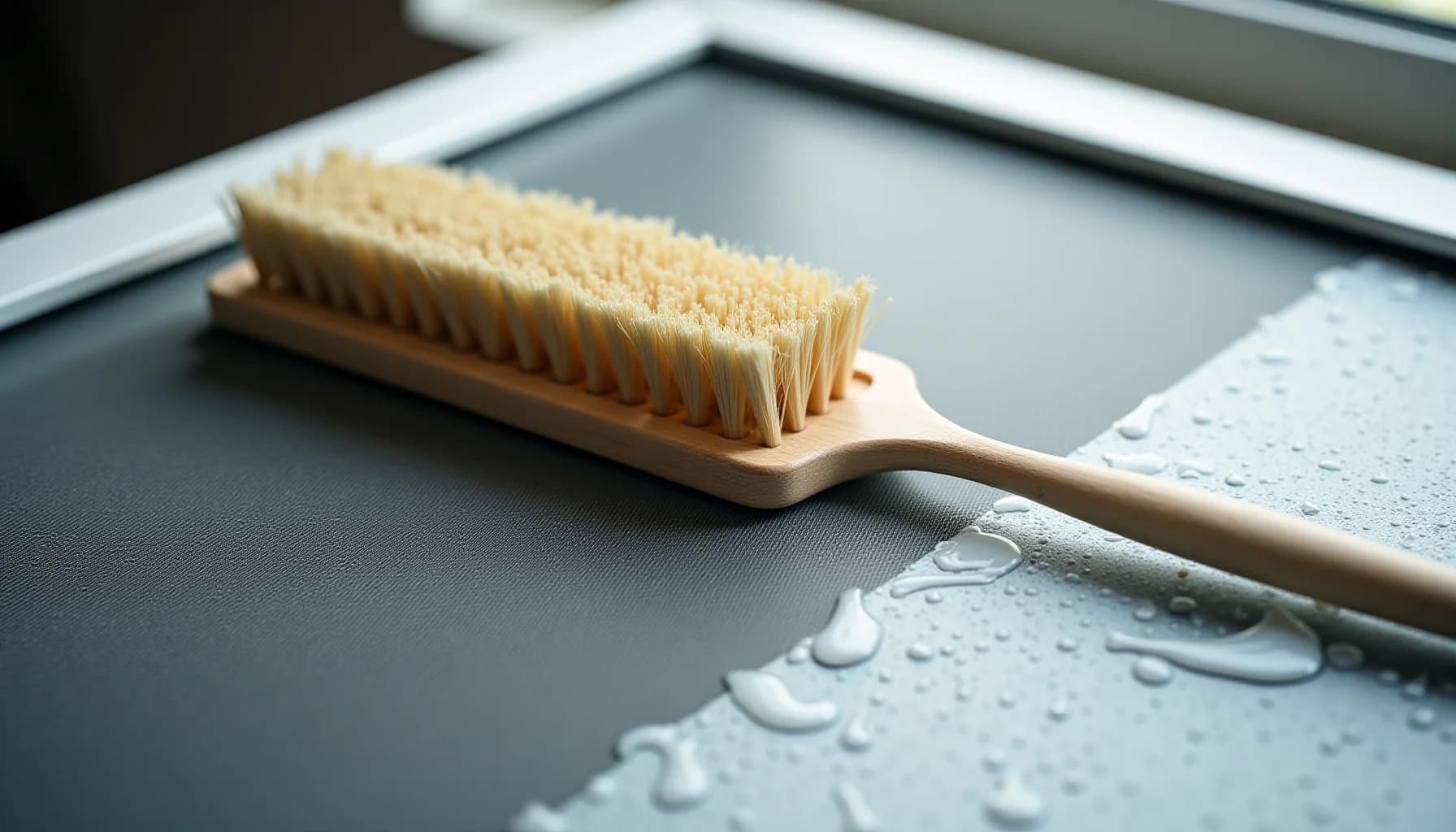
Avoid anything with a rough or scratchy surface. Steel wool, stiff scrub brushes, and abrasive pads will scratch glass permanently. That damage cannot be reversed by cleaning; it requires professional polishing or glass replacement. The same caution applies to plastic window glazing: the publisher of cleaninginstitute.org states plainly that abrasive substances damage or streak plastic, so use only a soft cloth on acrylic or polycarbonate panes.
For larger panes, a squeegee is the most effective streak-prevention tool available. Pull it in a single, overlapping stroke from top to bottom, wiping the blade with a clean cloth after each pass. Residue left on the blade re-deposits immediately and creates the streaks you are trying to avoid.
If a window has deep scratches in the glass, cracks near the frame, or fogging between double-pane units, stop cleaning and call a glazier. Those conditions signal seal failure or structural damage that no cleaning method will fix.
Frequently asked questions
What does streak-free window cleaning actually mean?
Can I use dish soap alone and water to clean windows without streaks?
Does distilled water help prevent streaks on windows?
Can I use a soft brush to clean windows before applying a vinegar solution?
What is the single most important step for cleaning windows without streaks?
Can you use ammonia-based glass cleaners on plastic window frames?
Ammonia is effective on glass, but it causes real problems on plastic window frames, sills, and surrounds. The publisher of cleaninginstitute.org states plainly that ammonia damages and streaks plastic, and recommends using cleaning products formulated specifically for plastics instead. That guidance applies directly to the vinyl and composite frames common on double-hung, casement, and slider windows across most US homes.
The issue is chemical, not cosmetic. Ammonia degrades plastic over time, clouding the surface, breaking down the finish, and leaving streaks that cannot be wiped away because they are structural rather than residue. A frame cleaned repeatedly with an ammonia-based solution can become permanently dull.
The practical fix is to keep your ammonia-containing window cleaner off the frame entirely. Work the glass in sections, keeping your cloth or sponge away from the edges where glass meets frame. If the frame itself needs cleaning, use a product made for plastics, or plain warm water with a drop of dish soap, rinsed and dried with a soft cloth.
If you are working around multiple window surfaces and are unsure which formula suits which material, a frame-by-frame guide to window surface cleaners can help you match the right product to each surface before you start, reducing the risk of accidental damage to frames, tracks, or surrounding trim.
How this article was made
Researched and written with AI assistance. What gets published is a human editorial decision. Grounded in 3 cited sources.
Edited by Claire Mercier, Editor. The guides are written with AI assistance.