Bedroom Cleaning Checklist: 30 Tasks From Ceiling to Closet
Part of Bedroom & Tidying · article 2 of 4
This checklist covers 30 tasks across 5 zones, about 4 h 17 min total. Start with the ceiling and upper surfaces zone, since dust falls downward onto everything below it.
On this page
Before you start
Gather a dry and a slightly damp microfiber cloth, a vacuum with upholstery and crevice attachments, a mop, a bucket, dish soap, oxygen bleach, and a pH-neutral cleaner. Work from the top of the room to the bottom and from the far corner toward the door so you do not walk over cleaned areas. Rinse any cloth between different products and let one product finish working before applying another. Open a window or turn on a fan for airflow while you clean.
Ceiling and upper surfaces 37 min
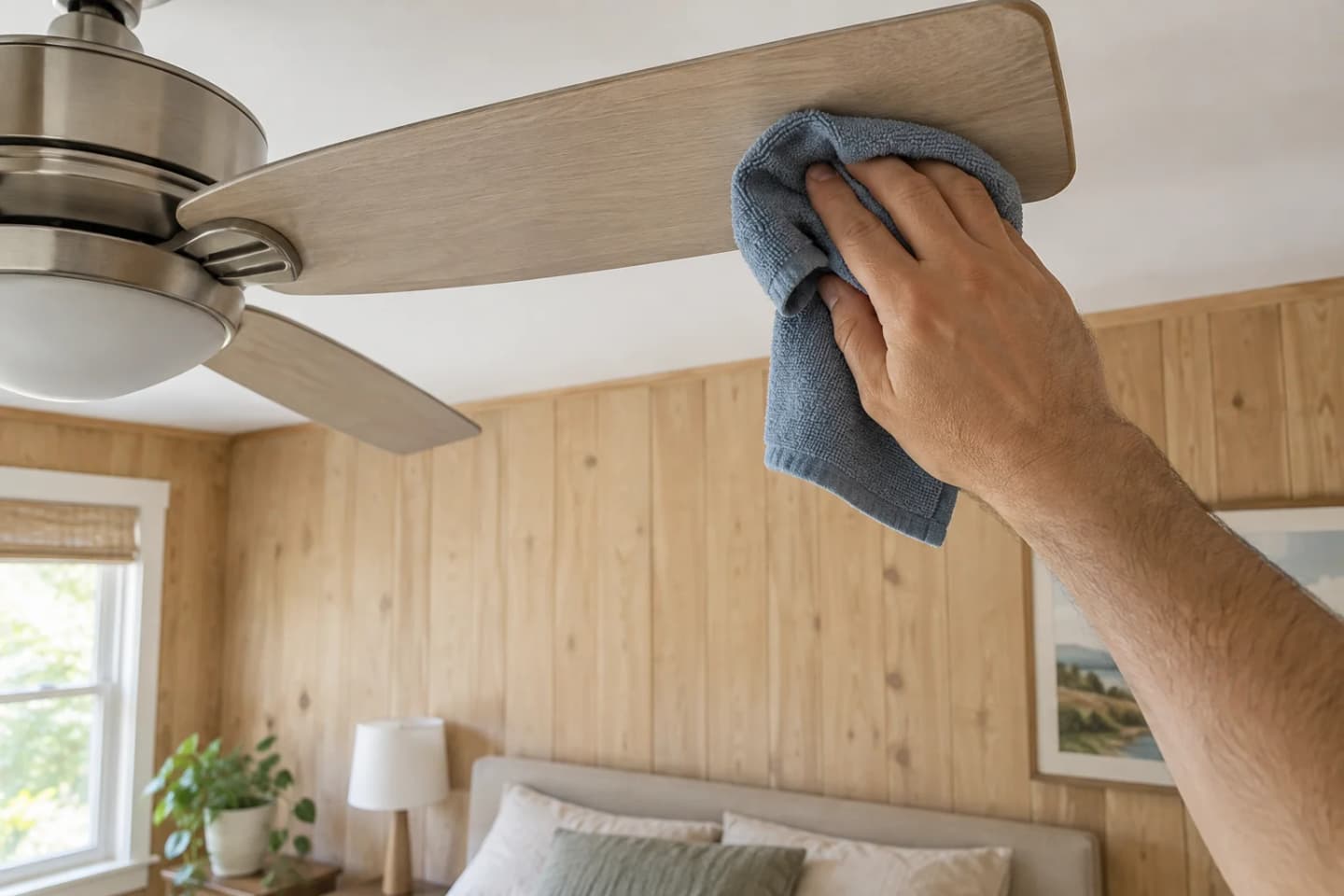
Starting here matters because any dust you knock loose from fans or vents settles on furniture and floors you have not cleaned yet. Skipping straight to dusting shelves without checking air vents first means you will likely need to redo that work. You know this zone is done when no visible dust clings to the fan blades or light fixtures.
- 8 min
- 5 min
- 6 min
- 7 min
- 5 min
- 6 min
Furniture and surfaces 48 min
By now the air has mostly settled, so wiping dressers and the headboard will not just stir dust back onto fresh surfaces. A common mistake is spraying liquid cleaner directly on a screen instead of wiping it with a dry cloth first. Drawers should close smoothly and surfaces should feel dry, not tacky, once you move on.
- 10 min
- 6 min
- 5 min
- 4 min
- 15 min
- 8 min
Bedding and fabrics 1 h 1 min
This is the longest stretch of the walk-through, so starting the wash cycle for bedding early lets it run while you tackle other tasks in the same zone. Treat mattress stains before vacuuming dries any remaining moisture into the fabric. Curtains and throw blankets are easy to forget here, but leaving them out defeats the purpose of refreshing the room's fabrics together.
- 10 min
- 10 min
- 12 min
- 15 min
- 4 min
- 10 min
Floors 52 min
Floors come after furniture and fabrics so that any dust or lint shaken loose earlier ends up here instead of back on clean surfaces. Vacuuming before mopping prevents loose dirt from turning into streaks once the floor is wet. Check baseboards closely, since scuffs there are often missed even when the rest of the floor looks spotless.
- 8 min
- 10 min
- 10 min
- 8 min
- 6 min
- 10 min
Closet and storage 59 min
Saving the closet for last avoids tracking dust from open bins back through a freshly cleaned room. Sorting clothing before wiping shelves keeps you from cleaning around piles you will just have to move again. A faint musty smell after airing out the space can mean moisture is trapped somewhere, so it is worth checking corners once more before closing the door.
- 20 min
- 10 min
- 6 min
- 8 min
- 5 min
- 10 min
How to Use This Bedroom Cleaning Checklist: One Big Push or One Zone a Week
All 30 tasks across the 5 zones work both as a single marathon session and as a slow-burn routine spread over a month. For the one-off push, block out the full 4 hours and 17 minutes, a weekend morning plus a free evening, and work zone by zone in order so you're not doubling back across the room. If that's too much in one go, tackle one zone a week instead: ceiling and walls one week, surfaces and furniture the next, then floors, windows, and finally bedding and fabrics, which carries the heaviest load at 1 hour and 1 minute and is worth its own dedicated session rather than squeezing it in alongside other tasks.
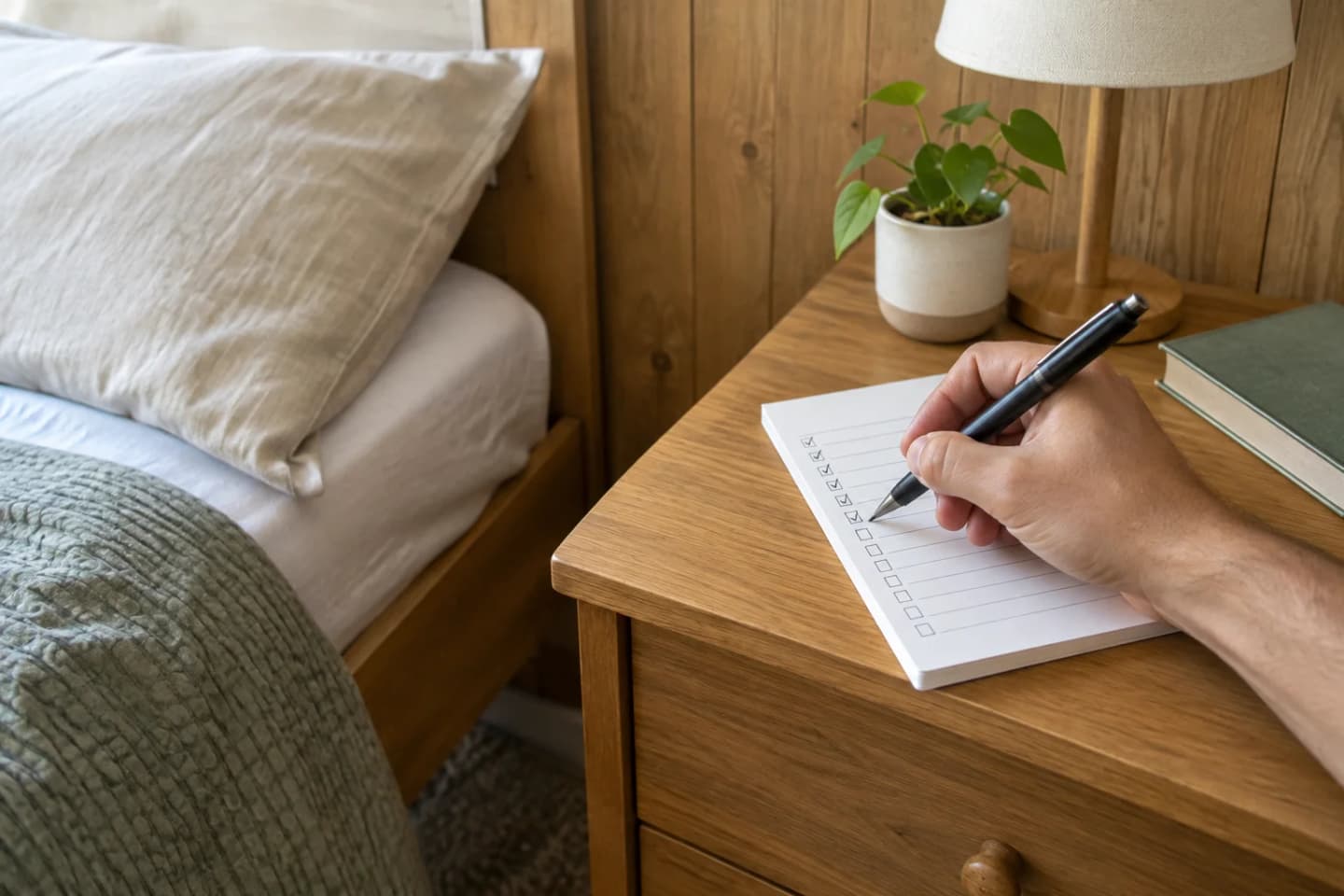
To tick off tasks, just work straight down the list within whichever zone you've chosen that day, checking each one as you finish rather than jumping around, since that's what keeps the time estimates accurate. If a task doesn't apply to your room (no ceiling fan, no closet door, whatever), skip it and move on rather than forcing it.
The checklist here is fixed to these 30 tasks, but you can build a version tailored to your own bedroom, adding a reading nook or removing a task that doesn't apply, using the same zone structure. If you want a blank framework to adapt room by room, the broader zone cleaning schedule lays out that same day-by-day approach across the whole house, which makes it easy to lift the format and fill in your own bedroom-specific tasks.
Short on Time? Which Tasks to Tackle First and Which Can Wait
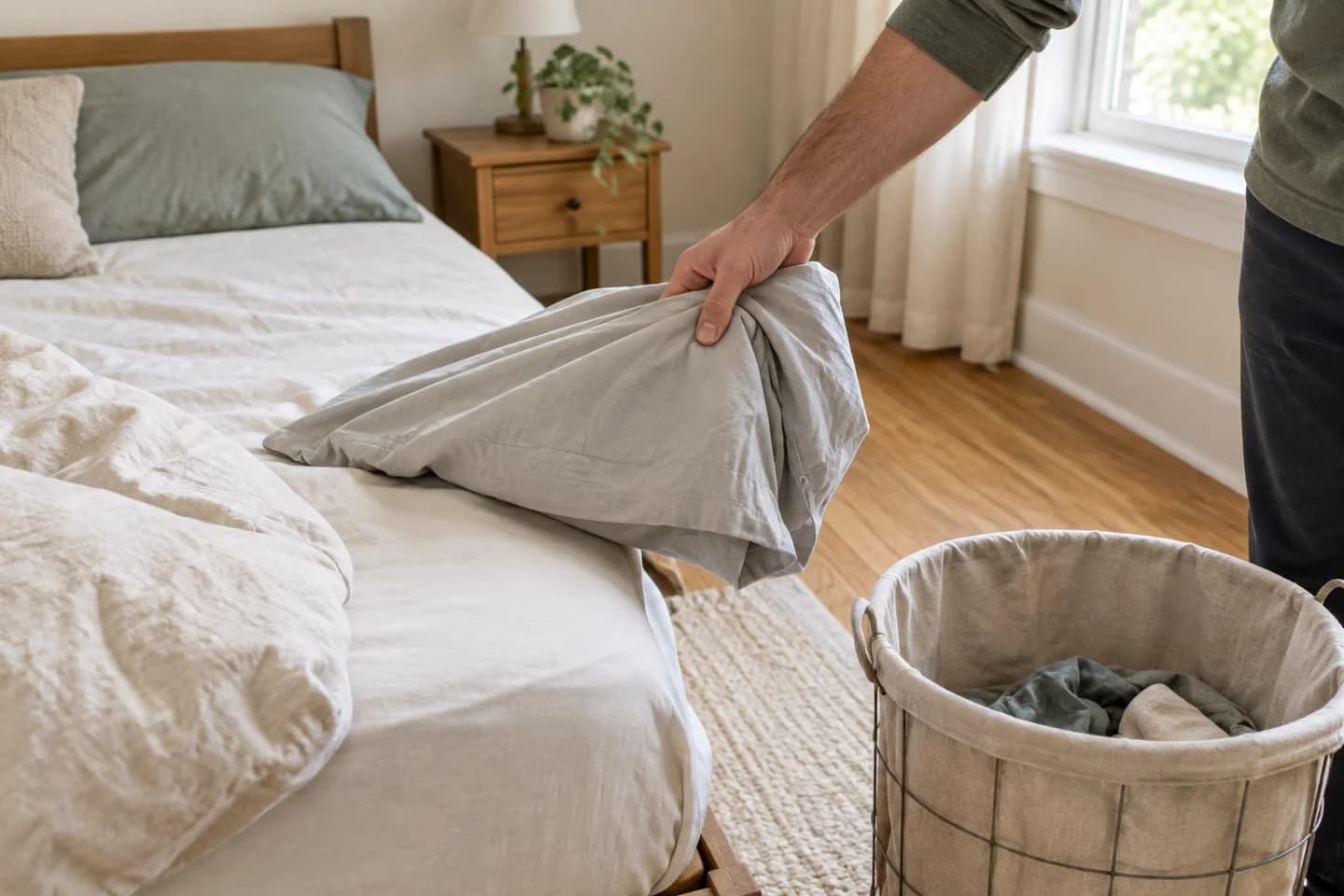
With 30 tasks spread across five zones, you don't need to finish everything to make the room feel clean. Start with Bedding and fabrics, the longest zone at 1 h 1 min: washing sheets, flipping or rotating the mattress, and laundering pillowcases do more for how a bedroom feels and smells than almost anything else, since this is where dust mites, sweat, and skin oils actually accumulate. After that, prioritize visible surfaces you touch daily: nightstands, dressers, and the floor near the bed, since clutter and dust there are what your eyes register as "messy" even when the rest of the room is fine.
What can wait: ceiling corners, baseboards, closet shelf interiors, and light fixture dusting. These accumulate slowly and won't affect air quality or appearance in the short run, so pushing them to next week or next month costs nothing. Inside-closet organizing also falls low on the urgency list unless you need something specific out of it today.
If you're deciding this task by task rather than zone by zone, a general room reset approach can help you triage faster across the whole space, not just the bedroom.
Frequently asked questions
What is a good room cleaning checklist to follow?
How do you clean your room using a step-by-step checklist?
What is a typical bedroom cleaning list, and which zone takes the longest?
How long does it take to clean a bedroom from top to bottom?
Why does the ceiling and upper surfaces zone come first?
How this article was made
Edited by Claire Mercier, Editor. The guides are written with AI assistance.