How to Identify Your Hard Floor Type Before You Clean It
On this page
| What You Observe | Floor Type | Cleaning Implication |
|---|---|---|
| Unique grain, knots; dense tap sound; solid edge cross-section | Solid hardwood | Damp mop only; no steam, no saturation |
| Layered edge (real wood veneer over plywood); unique grain on surface | Engineered hardwood | Damp mop only; avoid excess moisture |
| Repeated photographic pattern; HDF/sawdust edge; hard, cool feel | Laminate | No wet mopping; moisture causes irreversible swelling |
| Bendable plank; vinyl core at edge; soft, cushioned feel; 2–10 mm thick | Luxury vinyl plank (LVP) | Water-tolerant; standard vinyl-safe cleaner |
| Water beads instantly; hard, dense tap; no flex | Ceramic or porcelain tile | Water and standard tile cleaner safe |
| Color runs through full thickness; mesh backing visible underneath | Linoleum | Avoid harsh solvents; damp mop with pH-neutral cleaner |
Grab a coin and work through these checks in order, stopping as soon as one test is conclusive.
Tap first. Knock a knuckle on the surface. A dense, solid thud points toward tile, stone, or glued-down hardwood. A hollow echo means the floor is floating, which rules in laminate or vinyl immediately.
Look at the pattern. Crouch and scan several planks. Natural hardwood shows random grain variation, knots, and color shifts that never repeat. Laminate and vinyl repeat the same photographic image across multiple boards.
Check an edge or seam. This is the single most decisive test. Pry up a transition strip or find a chipped corner: a crumbly, sawdust-like core is HDF, meaning laminate; a smooth, uniformly colored, slightly flexible core is vinyl.
To separate vinyl from laminate by feel alone, try to flex a loose plank slightly. Vinyl bends; laminate snaps.
Drop one bead of water on an out-of-the-way spot. Ceramic and vinyl bead up. Wood finishes and laminate darken or absorb within a minute or two.
Run through all five checks and your floor type will be confirmed before you open a single cleaning product.
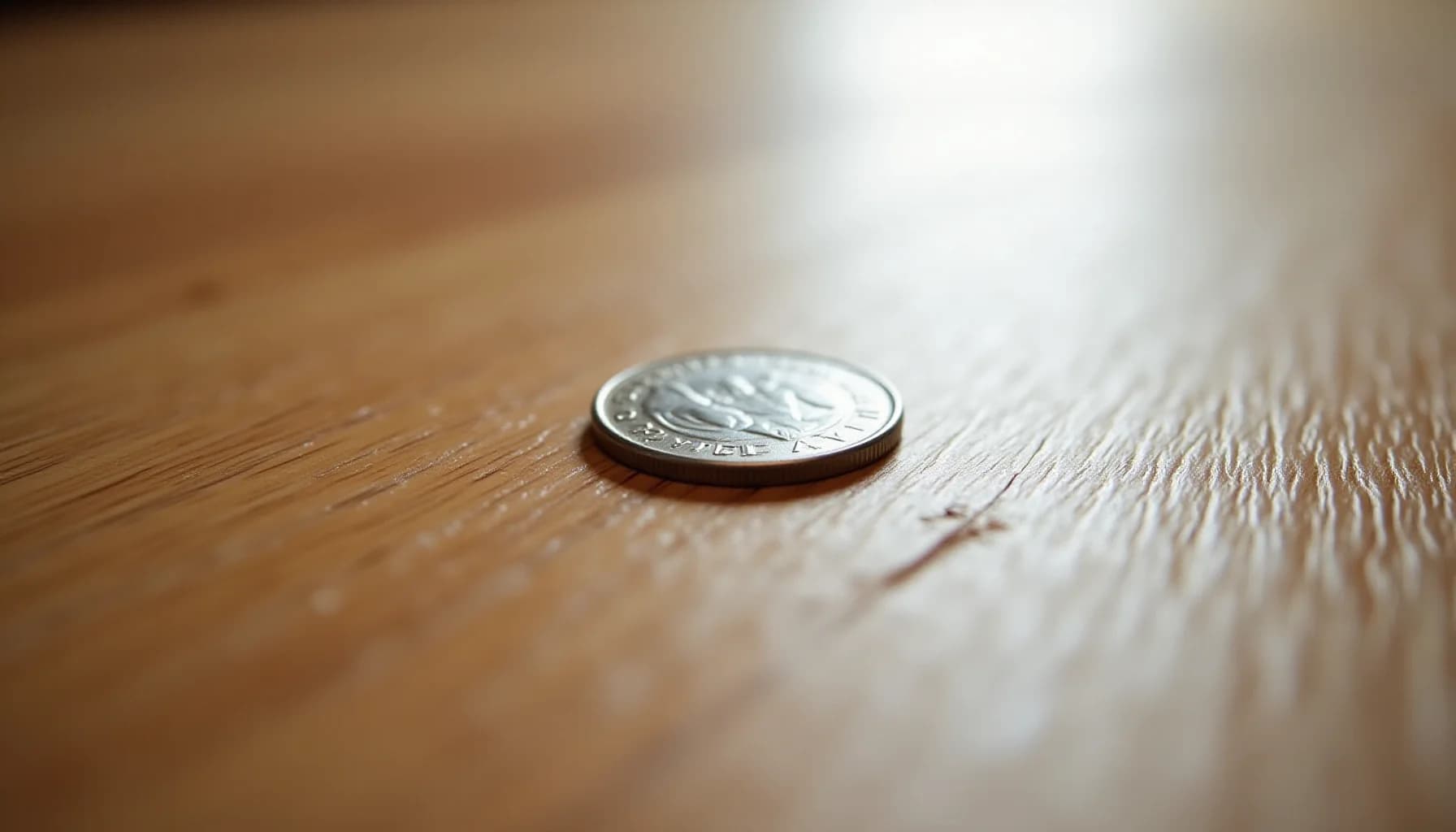
What do the surface, grain, and structure tell you about your floor type?
- Embossed-in-Register (EIR)
- A laminate flooring technique where the physical surface texture is precisely aligned with the printed grain pattern beneath it, so the raised and lowered areas match the visual wood or stone imagery. This alignment gives laminate a more realistic appearance than standard embossing.
The five main hard floor types, solid hardwood, engineered wood, laminate, luxury vinyl plank (LVP), and tile, each have structural and surface characteristics that set them apart from one another before you ever apply a cleaner.
Solid hardwood is milled from a single piece of timber, typically about 3/4 inch thick. Because it is one continuous piece, no layering is visible at an edge. Its surface carries genuinely unique grain variations: knots, color shifts, and grain lines that do not repeat across adjacent boards. Red oak, one of the most common species in US homes, displays a prominent, wavy grain with warm reddish-brown tones. White oak reads cooler, with a subtler, more even grain pattern.
Engineered wood is real wood with a genuine timber veneer on top, bonded over cross-ply plywood layers. The face looks identical to solid hardwood, but a cut edge reveals distinct compressed plies rather than one solid piece.
Laminate uses a photographic image of wood or stone printed beneath a clear wear layer, bonded to a high-density fiberboard (HDF) core. Its grain pattern repeats from plank to plank because every board is printed from the same image. A chipped edge exposes a sawdust-like interior.
Luxury vinyl plank has a vinyl core visible at the edge, uniform in color throughout its thickness. Boards flex slightly when you apply light pressure along their length. The overall profile runs between 2mm and 10mm thick.
Tile feels hard, cool, and entirely rigid underfoot, with grout lines that are absent in every plank-based floor.
What do your floor's edges and thickness reveal about its core material?
The most definitive test you can run on a hard floor requires no tools and no specialist knowledge: find an edge. Look at a threshold strip, a cut board near a doorway, or anywhere a plank has chipped. What you see in cross-section tells you more than any surface glance can.
A laminate plank will expose a core of compressed wood fiber, often described as high-density fiberboard. Scratch or chip that core and it crumbles like very dense sawdust. That matters enormously for cleaning: HDF absorbs moisture aggressively. Get water into those seams repeatedly and the core swells, the locking joints fail, and the floor lifts. There is no reversing that damage.
Vinyl planks look completely different at the edge. The interior is a solid, uniform vinyl material, typically with a color that runs consistently through the layer. Flex the plank slightly and it gives rather than snapping. Thickness is another reliable marker: vinyl profiles typically run 2mm to 10mm, and a plank measuring around 4mm through the edge is a strong indicator you are looking at vinyl rather than laminate, which commonly exceeds 8mm.
Solid hardwood presents as a single continuous piece of wood at the edge, typically close to 3/4 inch thick, with the same grain running all the way through. Engineered hardwood, by contrast, reveals distinct plywood layers beneath a genuine wood veneer on top. That layered construction is not a flaw or a sign of inferior material: the alternating grain direction of each ply actively resists the cupping and buckling that humidity causes in solid boards.
Misreading that edge profile can lead you to clean engineered hardwood with the aggressive moisture-stripping products suited to vinyl, or to flood laminate seams with the damp mop appropriate for tile. Getting this step right before you open any cleaning product is the difference between maintenance and repair.
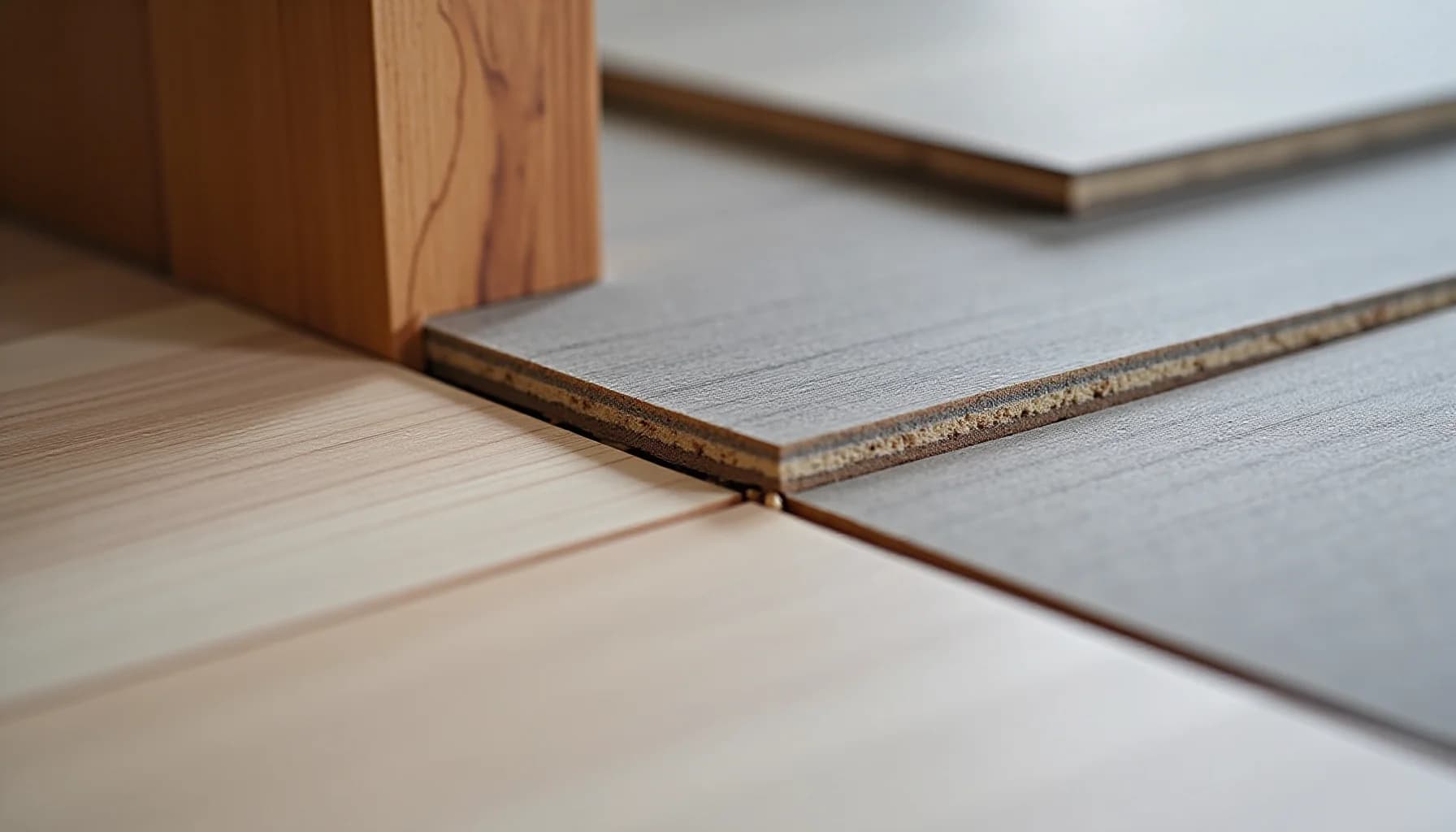
What do sound, flex, and water tests reveal about your floor type?
Still unsure?
- Look for repeated patterns across multiple planks — identical grain or stone imagery confirms a printed surface (laminate or vinyl), while unique knots and irregular grain variations confirm real wood.
- Tap a plank firmly with your knuckle: a dense, solid sound points to hardwood or tile, while a hollow or echoing sound indicates a floating laminate or vinyl installation.
- Inspect a cut edge, seam, or chipped corner — a sawdust-like HDF core means laminate, a bendable uniform-colored core means vinyl, visible layers of real wood veneer over plywood mean engineered hardwood, and a single solid piece roughly ¾ inch thick means solid hardwood.
- Place a small drop of water on a hidden area and wait several minutes — if the surface beads up, suspect ceramic, porcelain, or vinyl; if the finish darkens or absorbs the water, suspect hardwood or laminate, and consult a qualified flooring professional before cleaning if you still cannot confirm the type.
Does floor type really affect how you clean and maintain it?
Yes, floor type changes almost everything about how you clean it, and a few persistent myths make this harder than it needs to be.
Start with durability. Hardwood and tile, properly maintained, can last 50 years or more. Laminate and luxury vinyl plank typically top out at 15 to 25 years. That lifespan gap matters because it shapes how much effort a floor deserves and what products are worth investing in.
The biggest maintenance myth around hardwood is that water is always the enemy. Excessive moisture absolutely is, but a well-wrung damp mop on a sealed hardwood floor is fine. What genuinely damages hardwood is steam: the heat drives moisture into the wood fibers and causes buckling, warping, or swelling, even through a sealed finish. Laminate shares that sensitivity. Its HDF core swells when water penetrates seams, and that damage is permanent.
Vinyl, by contrast, is far more forgiving of moisture at the surface, though standing water forced under the planks is still a problem.
Engineered hardwood sits between solid wood and laminate in practice. Its cross-ply plywood core resists the cupping and gapping that humidity changes cause in solid boards, but it still carries a genuine wood face that responds to cleaning products the same way solid hardwood does.
Once you know which floor you have, the cleaning method follows directly from that. Getting the identification right first is what protects the floor.
How this article was made
Researched and written with AI assistance. What gets published is a human editorial decision. Grounded in 8 cited sources.
Edited by Claire Mercier, Editor. The guides are written with AI assistance.
Sources (8)
- A Quick Guide to Hard Flooring Categories | Cleanfax magazine
- Identify Your Hard Floor | WAXIE Sanitary Supply
- 5 Types of Hard Flooring: Hardwood, Tile, Laminate & More
- How to Tell What Type of Hardwood Floor You Have
- How to Tell What Type of Hardwood Floor You Have | Carpet Tech
- What's the Difference Between Hard Surface Flooring Types? | Amissville, VA | Early's Flooring Specialists & More
- How To Tell If You Have Laminate, Wood or Vinyl Floor? - Wood and Beyond Blog
- Laminate vs Hardwood vs Vinyl Flooring | 50Floor