Kitchen Cleaning Hacks: 19 Hacks From 2-Minute Fixes to Deep Cleans
Part of Cleaning Hacks & Tips · article 4 of 10
Start with whichever hack fits your time: 19 hacks cover the kitchen, and 2 of them take 5 minutes or less, the quickest just 2 min, so tackle those first between other tasks.
On this page
Kitchen
Work from the sink outward so grease and food residue do not spread back onto surfaces you already cleaned. Deodorize the fridge with baking soda is easy to forget since it works passively over weeks rather than giving instant results. If grout still looks dull after scrubbing, it usually means the solution needed more time to sit before rinsing.
You need
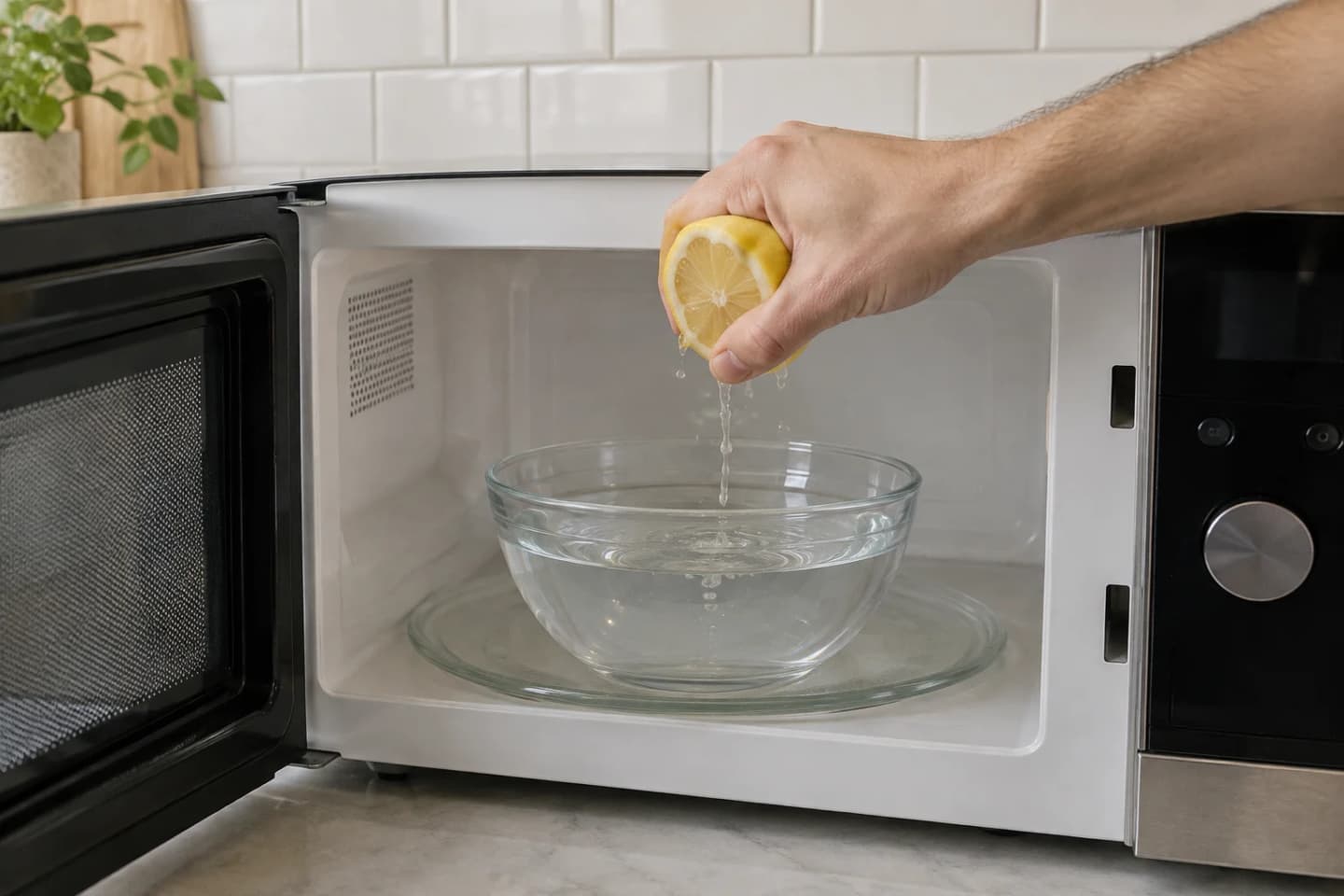
- water (1 cup)
- lemon (1/2)
- microwave-safe bowl (1)
How
Squeeze the lemon half into the water in the bowl and drop the rind in too. Microwave on high for 3 minutes, then leave the door closed for 5 more minutes so the steam loosens grime. Wipe the interior clean with a damp cloth or sponge.
The bowl and water will be very hot; use a towel or oven mitt to remove it.
2. Degrease the stovetop with baking soda paste
15 minYou need
- baking soda (3 tablespoons)
- water (1 tablespoon)
How
Mix the baking soda and water into a thick paste. Spread it over the stovetop and let it sit for 10 minutes to break down grease, then scrub gently with a damp sponge and wipe dry.
3. Descale the kettle with vinegar
30 minYou need
- white vinegar (1 cup)
- water (1 cup)
How
Combine the vinegar and water inside the kettle and bring it to a boil. Let the solution sit for 20 minutes, then pour it out and rinse the kettle thoroughly with clean water two or three times.
4. Freshen the garbage disposal with ice and citrus
5 minYou need
- ice cubes (1 cup)
- lemon or lime (1)
- coarse salt (2 tablespoons)
How
Cut the citrus into small chunks. Run cold water, then drop the ice, salt, and citrus pieces into the disposal while running it for about 30 seconds until the ice is gone.
Keep hands and utensils away from the disposal while it is running.

You need
- white vinegar (2 cups)
- dishwasher-safe cup (1)
How
Place the cup filled with vinegar on the top rack of the empty dishwasher. Run a hot water cycle so the vinegar circulates and dissolves grease and mineral buildup throughout the machine.
6. Clean the cutting board with coarse salt and lemon
10 minYou need
- coarse salt (2 tablespoons)
- lemon (1/2)
How
Sprinkle the salt evenly over the cutting board. Rub the cut side of the lemon over the salt in circular motions to lift stains and odors, then rinse the board with warm water and let it air dry.
7. Wipe down wood cutting boards with dish soap and oil
10 minYou need
- dish soap (1 teaspoon)
- warm water (1 cup)
- mineral oil (1 tablespoon)
How
Wash the board with the diluted dish soap and a sponge, then rinse and dry it completely. Once dry, rub the mineral oil into the wood with a clean cloth to condition and protect the surface.
8. Clean the coffee maker with vinegar
20 minYou need
- white vinegar (2 cups)
- water (2 cups)
How
Pour the vinegar and water mixture into the coffee maker's reservoir. Run a brew cycle, then run two more cycles with plain water to rinse out any vinegar taste.
9. Shine stainless steel appliances with vinegar and oil
10 min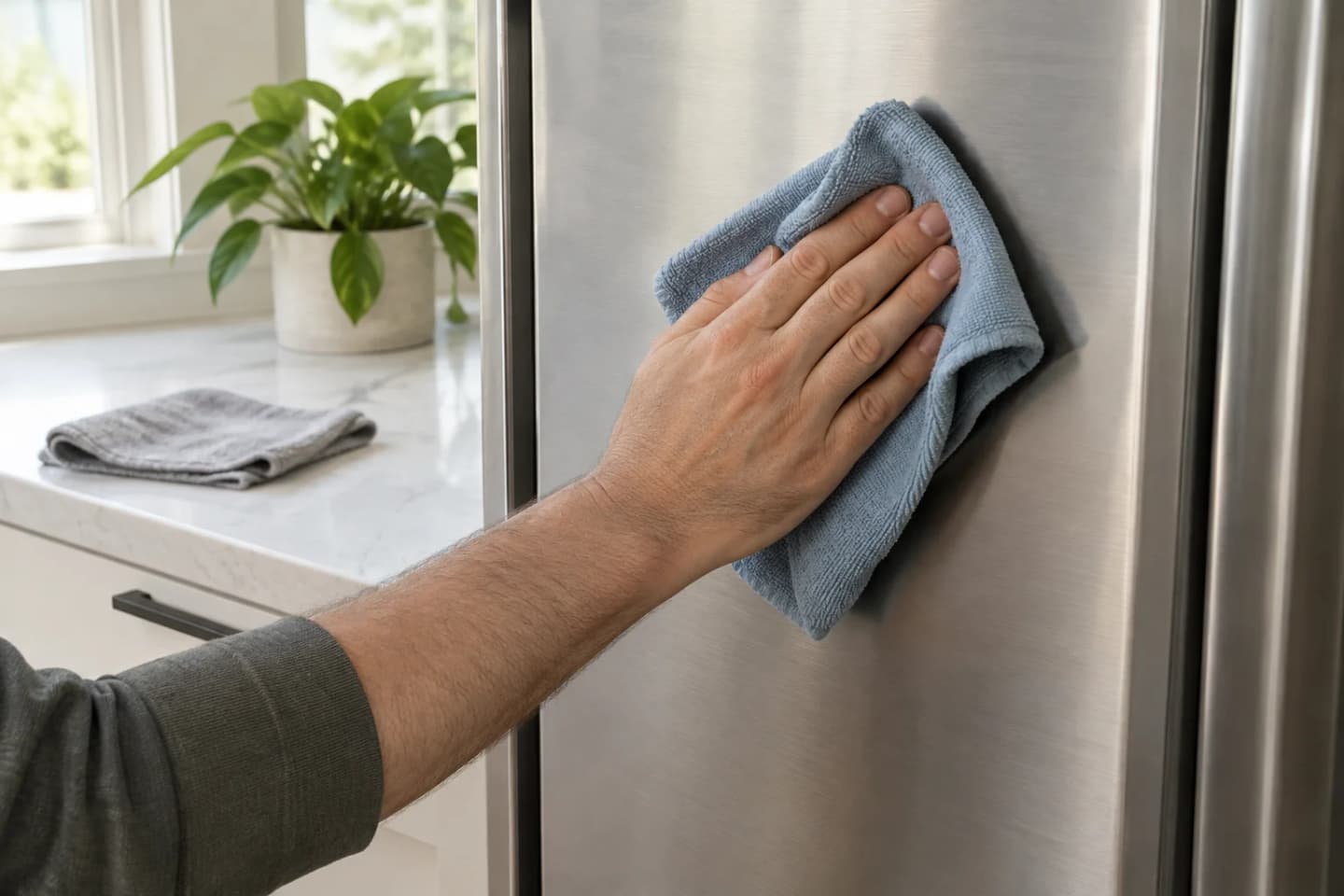
You need
- white vinegar (1/2 cup)
- olive oil (1 teaspoon)
- microfiber cloth (2)
How
Dampen one cloth with vinegar and wipe down the stainless steel in the direction of the grain to remove fingerprints and grease. Dry with a clean cloth, then add a few drops of olive oil to the second cloth and buff lightly for shine.
10. Scrub the sink with baking soda
10 minYou need
- baking soda (1/4 cup)
- sponge (1)
How
Sprinkle the baking soda directly over the damp sink surface. Scrub with the sponge in circular motions to lift stains and buildup, then rinse thoroughly with water.
11. Deodorize the fridge with baking soda
2 minYou need
- baking soda (1/2 cup)
- small open container (1)
How
Pour the baking soda into the open container and place it toward the back of the fridge. Leave it in place and replace it every 30 days to continuously absorb odors.
12. Clean the sink drain with baking soda and vinegar
15 minYou need
- baking soda (1/2 cup)
- white vinegar (1 cup)
- hot tap water (4 cups)
How
Pour the baking soda directly down the drain, then follow with the vinegar and let the mixture fizz for 10 minutes. Flush the drain with the hot tap water to clear loosened residue.
If the drain is PVC, use hot tap water rather than boiling water to avoid damaging the pipes.
13. Polish the faucet with lemon
10 min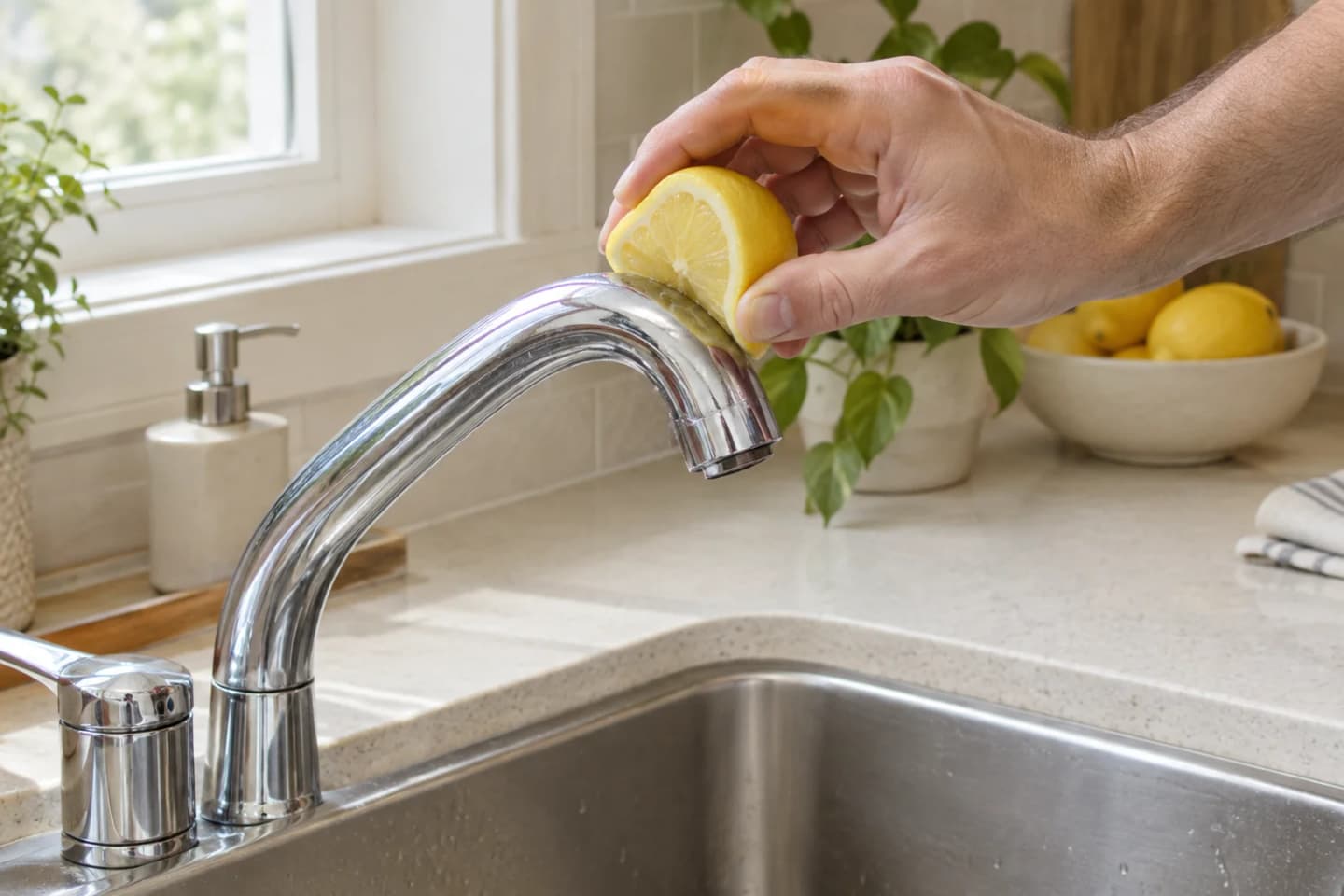
You need
- lemon (1/2)
How
Rub the cut side of the lemon directly over the faucet to dissolve limescale and water spots. Let the juice sit for 5 minutes, then rinse and buff dry with a cloth.
14. Degrease the range hood filter with dish soap
25 minYou need
- hot water (4 cups)
- dish soap (2 tablespoons)
- baking soda (1/4 cup)
How
Fill a sink or basin with the hot water, dish soap, and baking soda. Submerge the filter and let it soak for 15 minutes, then scrub with a brush, rinse, and let it air dry.
15. Clean the microwave turntable with dish soap
10 minYou need
- warm water (2 cups)
- dish soap (1 teaspoon)
How
Remove the turntable and soak it in the warm soapy water for 5 minutes. Wipe with a sponge to remove splatters, then rinse and dry before placing it back in the microwave.
16. Clean small appliance buttons and crevices with a cotton swab
10 minYou need
- warm water (1/2 cup)
- dish soap (1/2 teaspoon)
- cotton swab (2)
How
Dip a cotton swab into the warm soapy water and wring out excess liquid. Run it along buttons, knobs, and tight crevices on appliances to lift grime that a cloth cannot reach.
17. Remove pantry shelf grime with pH-neutral cleaner
15 min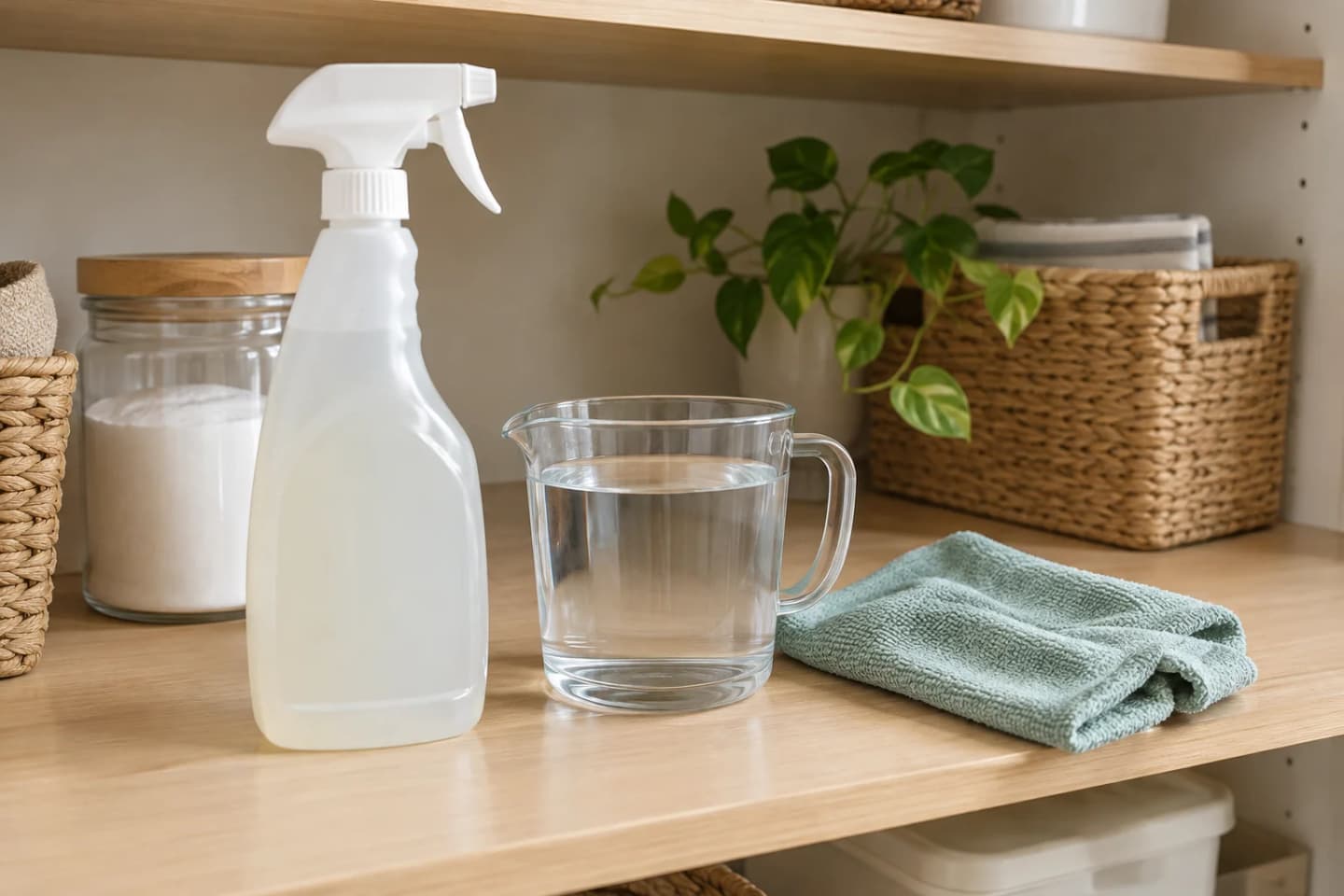
You need
- warm water (2 cups)
- pH-neutral cleaner (1 tablespoon)
How
Mix the cleaner with the warm water and wipe down pantry shelves, especially stone or laminate surfaces, with a damp cloth. Dry the shelves completely before restocking items.
18. Brighten grout on kitchen tile with oxygen bleach
20 minYou need
- oxygen bleach (2 tablespoons)
- warm water (2 cups)
- old toothbrush (1)
How
Dissolve the oxygen bleach in the warm water. Apply the solution to grout lines with the toothbrush, scrub in small circles, let sit for 10 minutes, then rinse with clean water.
19. Disinfect kitchen counters with diluted bleach
15 minYou need
- bleach (1 tablespoon)
- water (1 gallon)
How
Dilute the bleach in the water in a bucket or spray bottle. Wipe down sealed, non-stone countertops with the solution, let sit for 5 minutes, then rinse with clean water and dry.
Do not use on marble, granite, or other natural stone, and never mix bleach with other cleaning products; ventilate the room while using it.
Why a Kitchen Cleaning Hack Didn't Work and How to Fix It
Most failed hacks come down to one of three things: not enough product, the wrong surface, or not enough dwell time.
Amount is the most common culprit. A thin film of baking soda paste or a quick spritz of vinegar looks like it should work, but baked-on grease and set-in stains need a thick enough layer to actually soften the residue, not just wet it. If a paste dried out or slid off before it worked, use more and spread it thicker, about 1/8 inch over the stain.
Surface mismatches cause the second-most failures. Vinegar and lemon juice cut grease and limescale on glass, chrome, and tile, but they etch marble, granite, and other natural stone counters, leaving a dull patch that won't buff out. If you're working on stone, switch to a pH-neutral cleaner instead.
Time is the third factor. Most grease-cutting and stain-lifting hacks need 5 to 15 minutes of contact time to break down residue chemically before you wipe. Wiping after 30 seconds just moves the mess around. Set a timer rather than guessing, and check the specific hack's listed time since some, like the 2-minute fixes in this guide, work fast only because the mess is fresh, not baked on.
Building a Quick Routine From the Fastest Hacks
Out of the 19 hacks here, the two that take 5 minutes or less (the quickest clocks in at just 2 minutes) are the ones worth anchoring a daily habit around, not the deep-clean projects. Pick those two and pair them with whatever already happens in your kitchen every day: wiping the stovetop while water boils, or clearing the sink while coffee brews. Attaching a task to an existing routine works better than scheduling it separately, because you stop relying on memory.
A realistic version looks like this: run the 2-minute fix each morning before you leave the kitchen, add the second fast hack after dinner cleanup, and save the longer, deeper tasks for one weekend slot. Within two weeks, both fast habits stop feeling like chores and start feeling automatic, which is really the only way 19 hacks become sustainable instead of a one-time burst of effort. If you want to see how these fast habits fit into a broader cleaning rhythm, a weekly cleaning schedule can help you place the bigger kitchen tasks around them.
Frequently asked questions
What are some quick kitchen cleaning tips to get started?
What's the best way to clean kitchen floors?
How often should I replace the baking soda in my fridge?
Can I use vinegar on all kitchen surfaces?
Why didn't my kitchen cleaning hack work the first time?
How this article was made
Edited by Claire Mercier, Editor. The guides are written with AI assistance.