Sofa Cleaning Hacks: 20 Fixes From Quick Blots to Deep Cleans
Part of Cleaning Hacks & Tips · article 7 of 10
Start with Blot fresh spills with a clean cloth before they set, the quickest at 3 minutes, then move to deeper cleaning; 6 of these 20 hacks take 5 minutes or less.
On this page
Living room
Start by checking what the sofa is made of, since leather, suede, and fabric each need different treatments like Buff leather scuffs with a soft dry cloth or Wipe down suede with a dry suede brush. A common mistake is soaking fabric or suede when a light touch works better. You'll know a hack worked when the cushion looks refreshed and feels dry to the touch, not damp.
1. Vacuum the sofa cushions with a brush attachment
10 min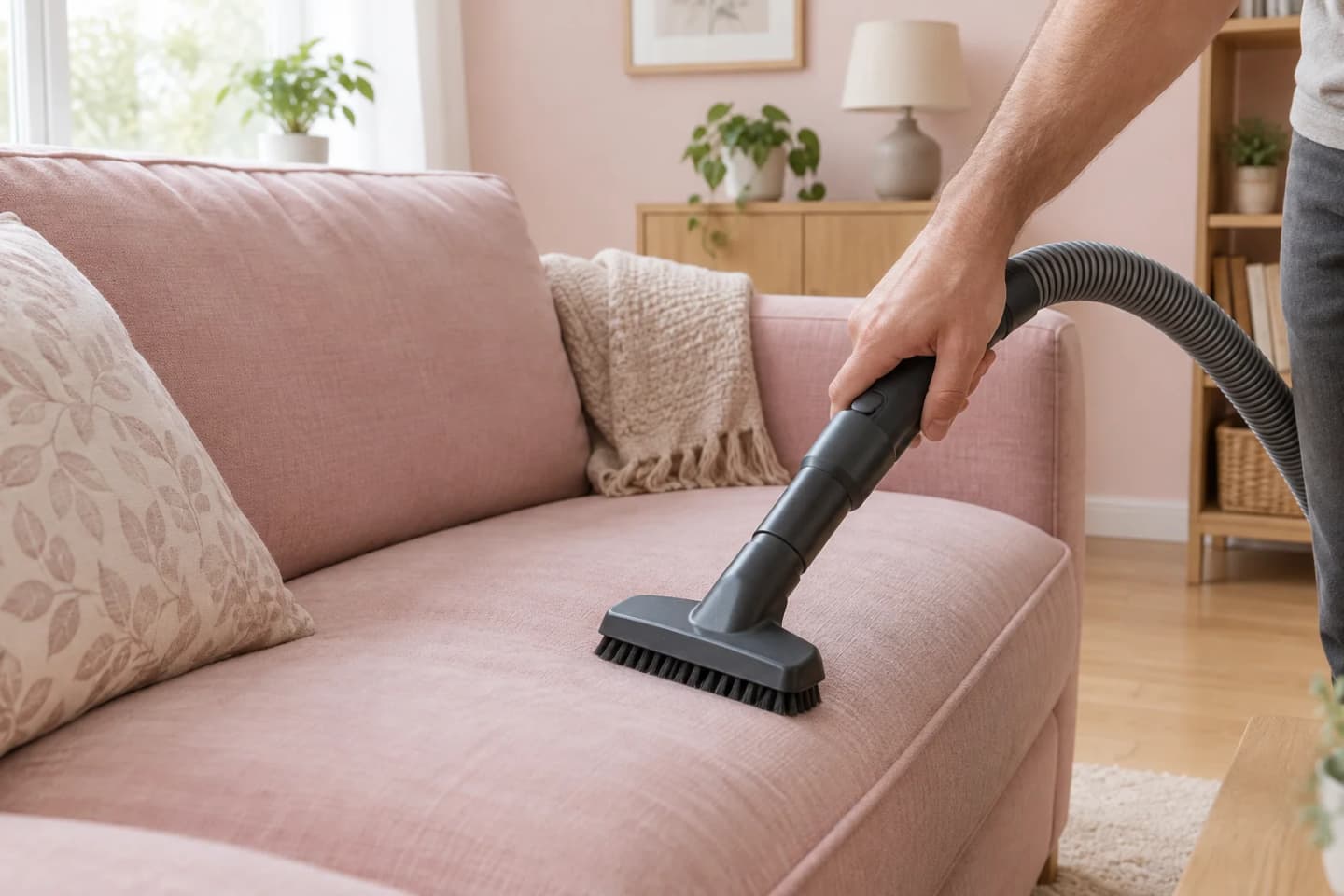
You need
- vacuum with brush attachment (1)
How
Remove all cushions and vacuum both sides, the seams, and the crevices where crumbs collect. Tilt the sofa to vacuum underneath and behind it as well. Work slowly to pull out embedded dust and pet hair.
2. Lift dust and hair with a rubber glove on the fabric
8 minYou need
- rubber glove (1 pair)
- water
How
Dampen the rubber glove slightly and put it on, then run your hand over the fabric in one direction. Hair and lint will roll into clumps you can lift off easily. Rinse the glove as needed and repeat over the whole surface.
You need
- baking soda (1/4 cup)
- vacuum (1)
How
Sprinkle baking soda evenly over the cushions and let it sit for 20 minutes to absorb odors. Vacuum it up thoroughly with a brush attachment. This works on fabric sofas, not on leather or suede.
4. Blot fresh spills with a clean cloth before they set
3 minYou need
- clean cloth (1)
How
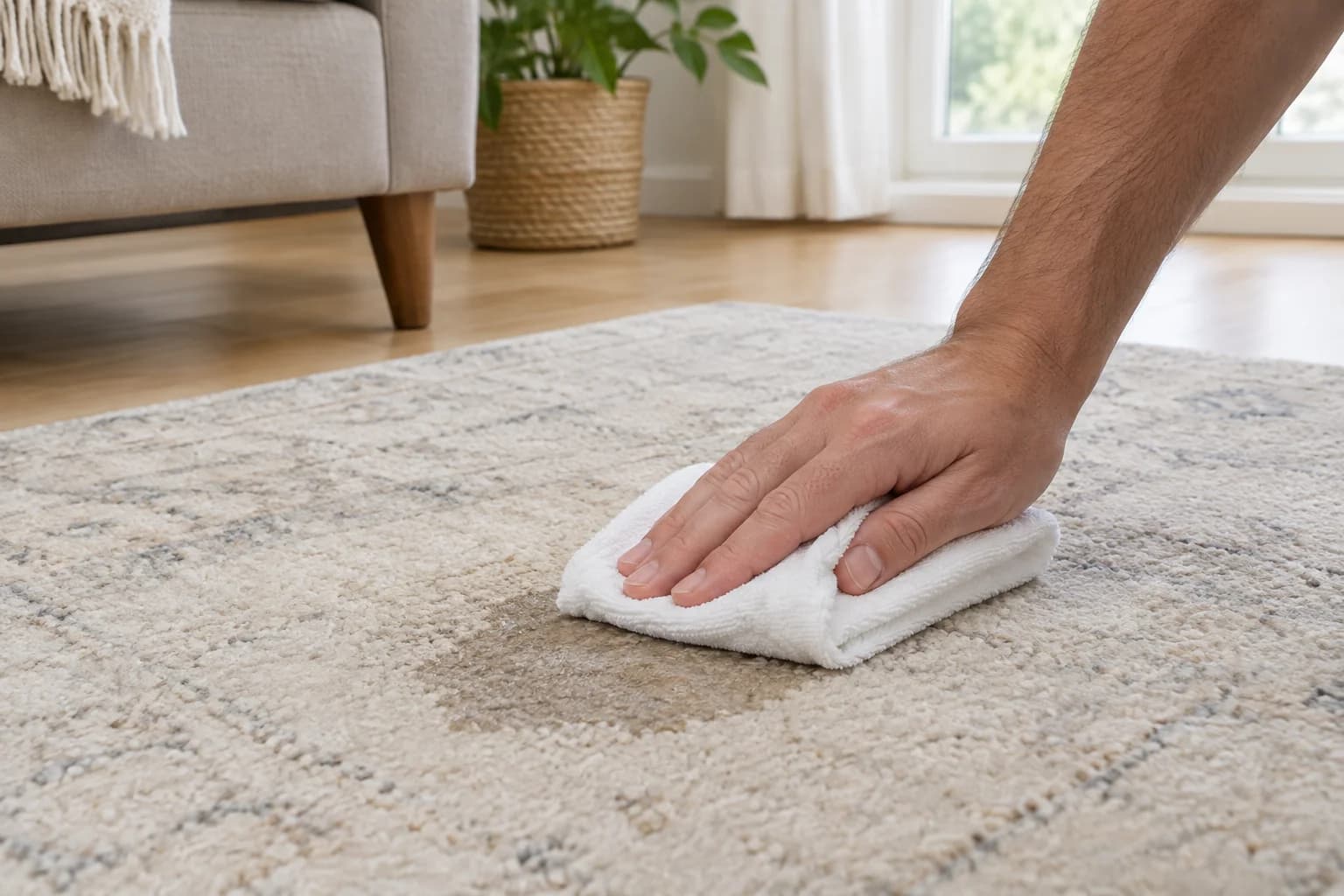
Press a dry cloth onto the spill immediately, working from the outside in to avoid spreading it. Replace the cloth with a dry section as it absorbs liquid. Never rub, since this pushes the stain deeper into the fibers.
You need
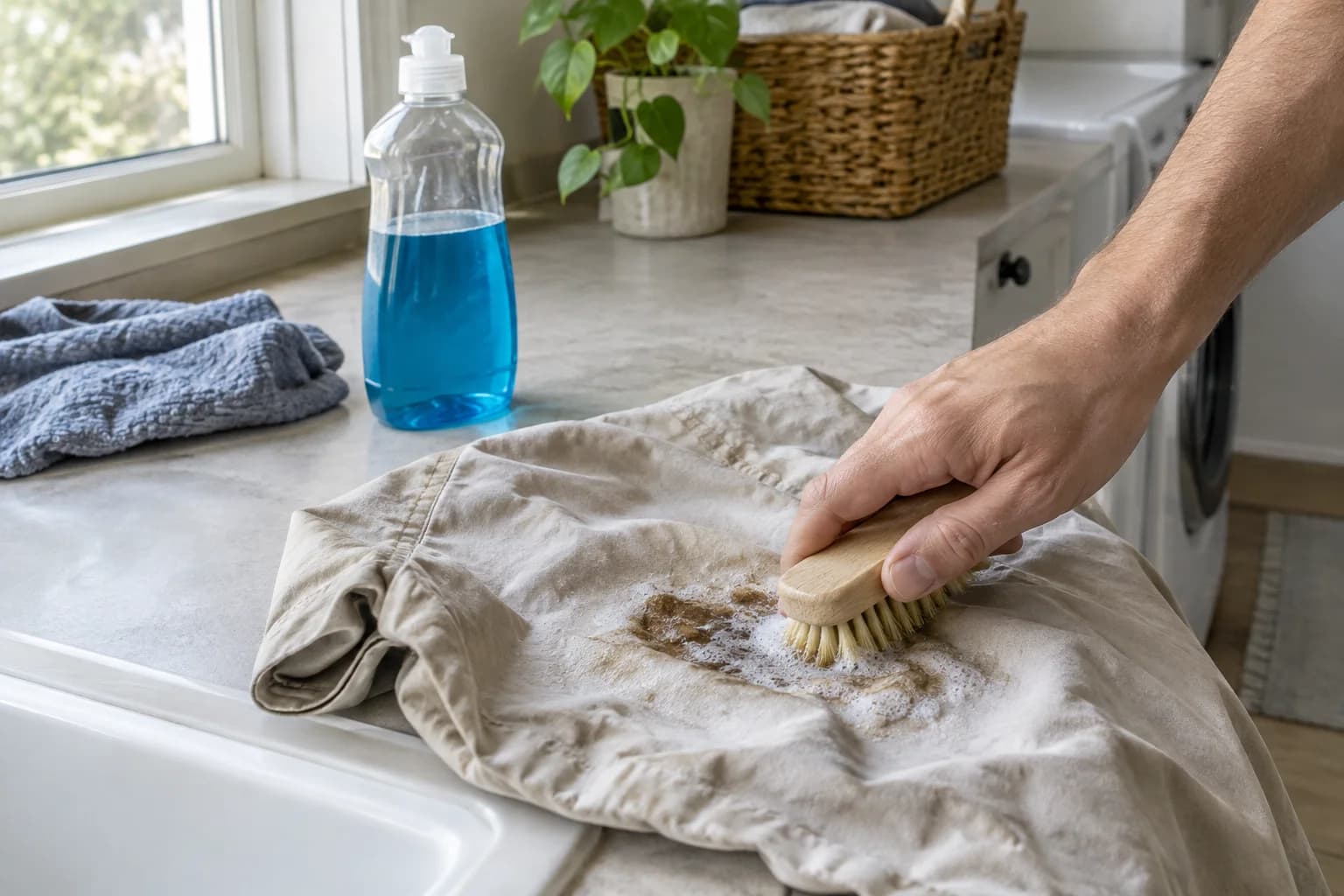
- dish soap (1 teaspoon)
- water (2 cups)
- clean cloth (1)
How
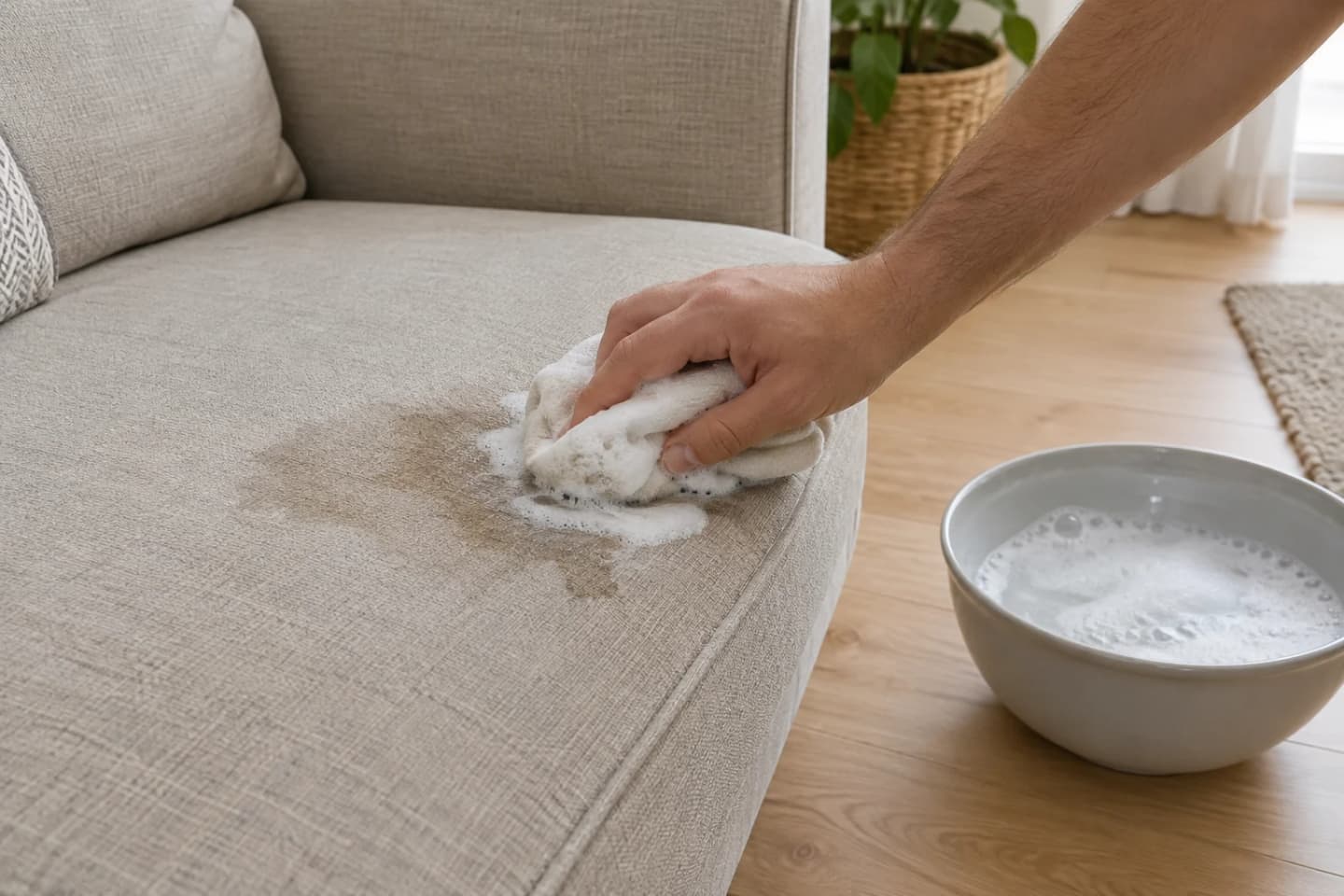
Mix dish soap with water in a bowl until slightly foamy. Dip a cloth in the foam only, not the liquid, and dab the stain gently. Blot with a cloth dampened in plain water to rinse, then blot dry with a towel.
Test on a hidden area first since not all fabrics are water-safe.
6. Lift grease stains from fabric with cornstarch
20 minYou need
- cornstarch (2 tablespoons)
How
Sprinkle cornstarch directly over a fresh grease stain and let it sit for 15 minutes to absorb the oil. Brush off gently with a dry cloth, then vacuum the area. Repeat if a faint mark remains.
You need
- white vinegar (1/4 cup)
- water (1 cup)
- spray bottle (1)
How
Combine vinegar and water in a spray bottle and mist lightly over the fabric, avoiding soaking it. Let the sofa air dry with windows open to clear the smell. This helps neutralize odors trapped in the fibers.
Test on a hidden spot first and avoid using on silk or velvet.
8. Steam clean fabric cushions to loosen embedded dirt
20 minYou need
- handheld steamer (1)
- clean cloth (1)
How
Hold the steamer a few inches from the fabric and move it slowly across the surface to loosen dirt and sanitize. Wipe the area with a dry cloth right after to absorb moisture. Let the sofa air dry fully before use.
Keep steam away from wood trim and skin.
9. Remove pet hair with a damp squeegee pass
10 min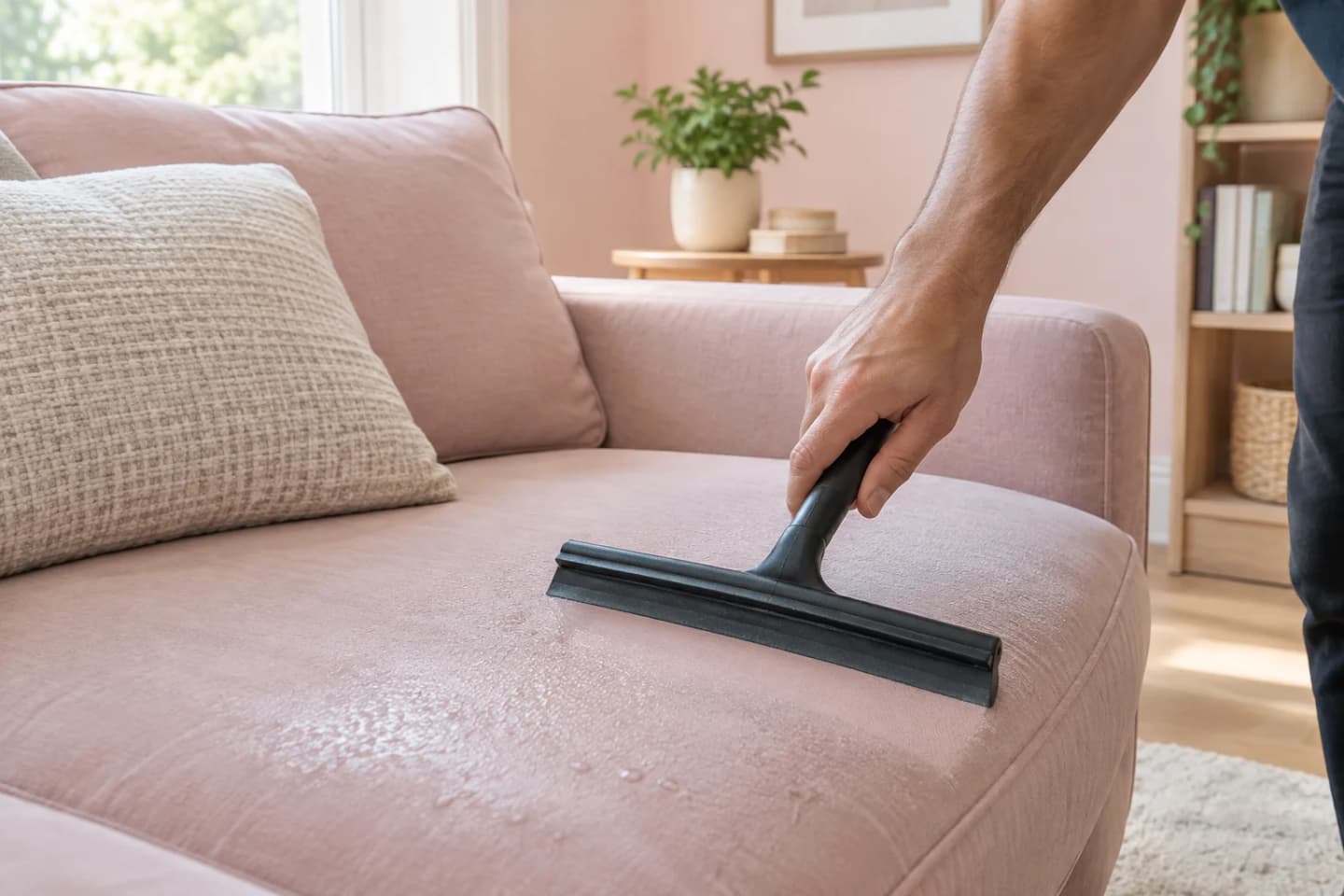
You need
- rubber squeegee (1)
- water
How
Lightly mist the fabric with water, then drag a rubber squeegee across the sofa in long strokes. Hair gathers into rows you can pick up by hand or vacuum. Repeat on cushions and the backrest.
10. Deodorize the sofa overnight with baking soda and essential oil
15 minYou need
- baking soda (1/2 cup)
- essential oil (3 drops)
- vacuum (1)
How
Mix baking soda with a few drops of essential oil in a bowl until evenly combined. Sprinkle over the cushions and leave overnight for deep odor absorption. Vacuum thoroughly the next morning.
11. Condition a leather sofa with a mild soap wipe-down
15 minYou need
- dish soap (1/2 teaspoon)
- water (2 cups)
- soft cloth (2)
How
Mix dish soap with water and wipe the leather gently with a damp cloth, working in small sections. Wipe again with a cloth dampened in plain water to remove residue. Dry immediately with a dry cloth to prevent water spots.
Avoid soaking leather, as excess water can cause cracking.
12. Treat ink stains on leather with hand sanitizer
8 minYou need
- hand sanitizer gel (1 teaspoon)
- cotton swab (2)
How
Dab a small amount of hand sanitizer gel onto a cotton swab and gently dab the ink stain without rubbing. Wipe clean with a damp cloth once the ink lifts. Follow with a dry cloth to buff the leather.
Test in a hidden spot first since leather finishes vary.
13. Buff leather scuffs with a soft dry cloth
5 min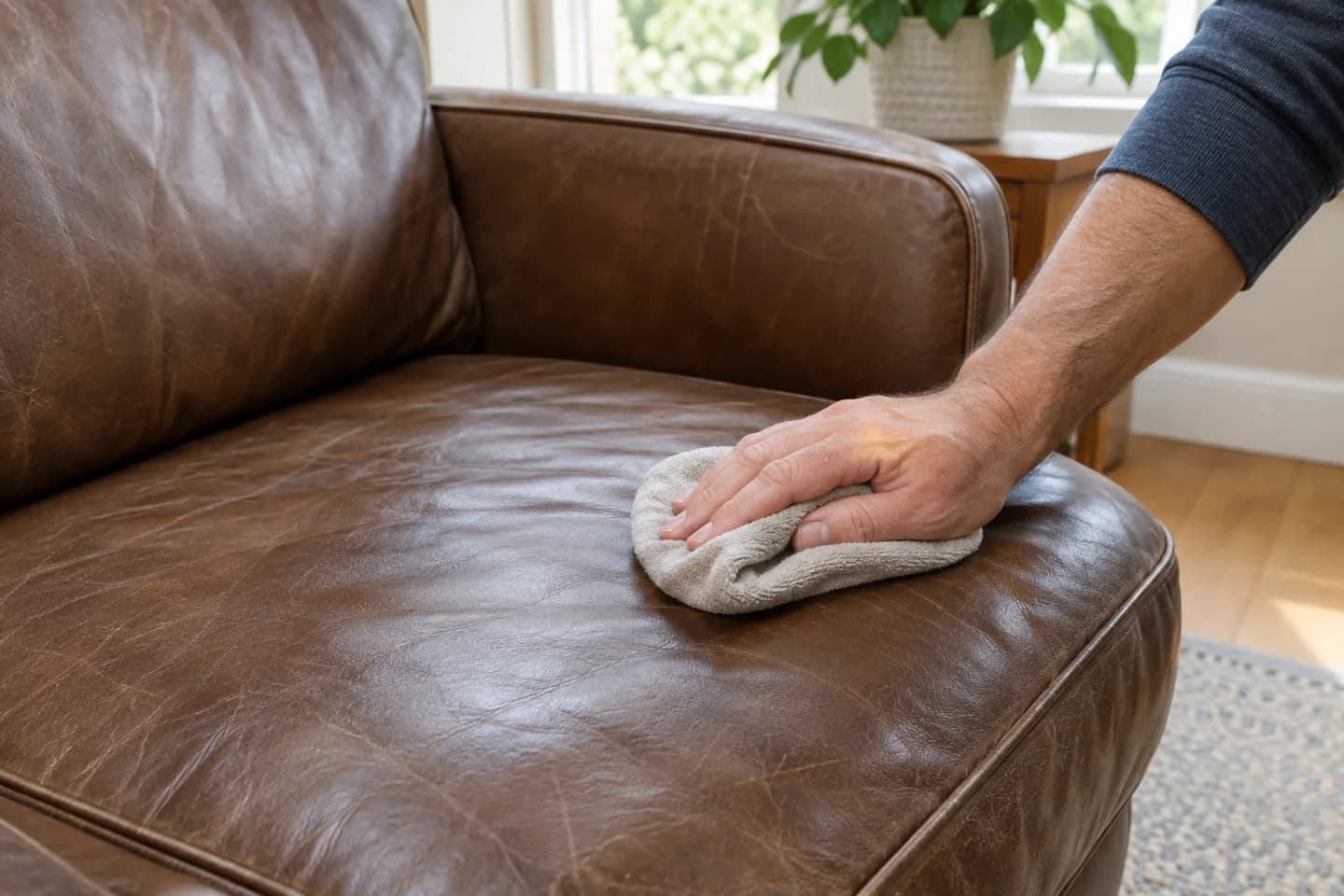
You need
- soft cloth (1)
How
Rub the scuffed area in small circular motions with a dry soft cloth. Light scuffs often buff out within a minute or two. For stubborn marks, repeat with slightly more pressure.
14. Wipe down suede with a dry suede brush
10 minYou need
- suede brush (1)
How
Brush the suede in one consistent direction to lift dirt and restore the nap. Work over the entire surface, including seams and corners. Avoid any liquid, since water can leave permanent marks on suede.
15. Wipe wooden sofa legs with a damp cloth and dry immediately
5 minYou need
- damp cloth (1)
- dry cloth (1)
How
Wipe the wooden legs and trim with a slightly damp cloth to remove dust and grime. Dry immediately with a separate dry cloth to prevent water marks. Repeat weekly to keep the wood looking fresh.
16. Clean metal sofa legs with a vinegar wipe
5 minYou need
- white vinegar (2 tablespoons)
- water (1 cup)
- soft cloth (1)
How
Mix vinegar with water and dampen a cloth with the solution. Wipe the metal legs to remove dust and tarnish, then dry with a separate cloth. This restores shine without scratching the metal.
17. Vacuum under the sofa to prevent dust buildup
5 min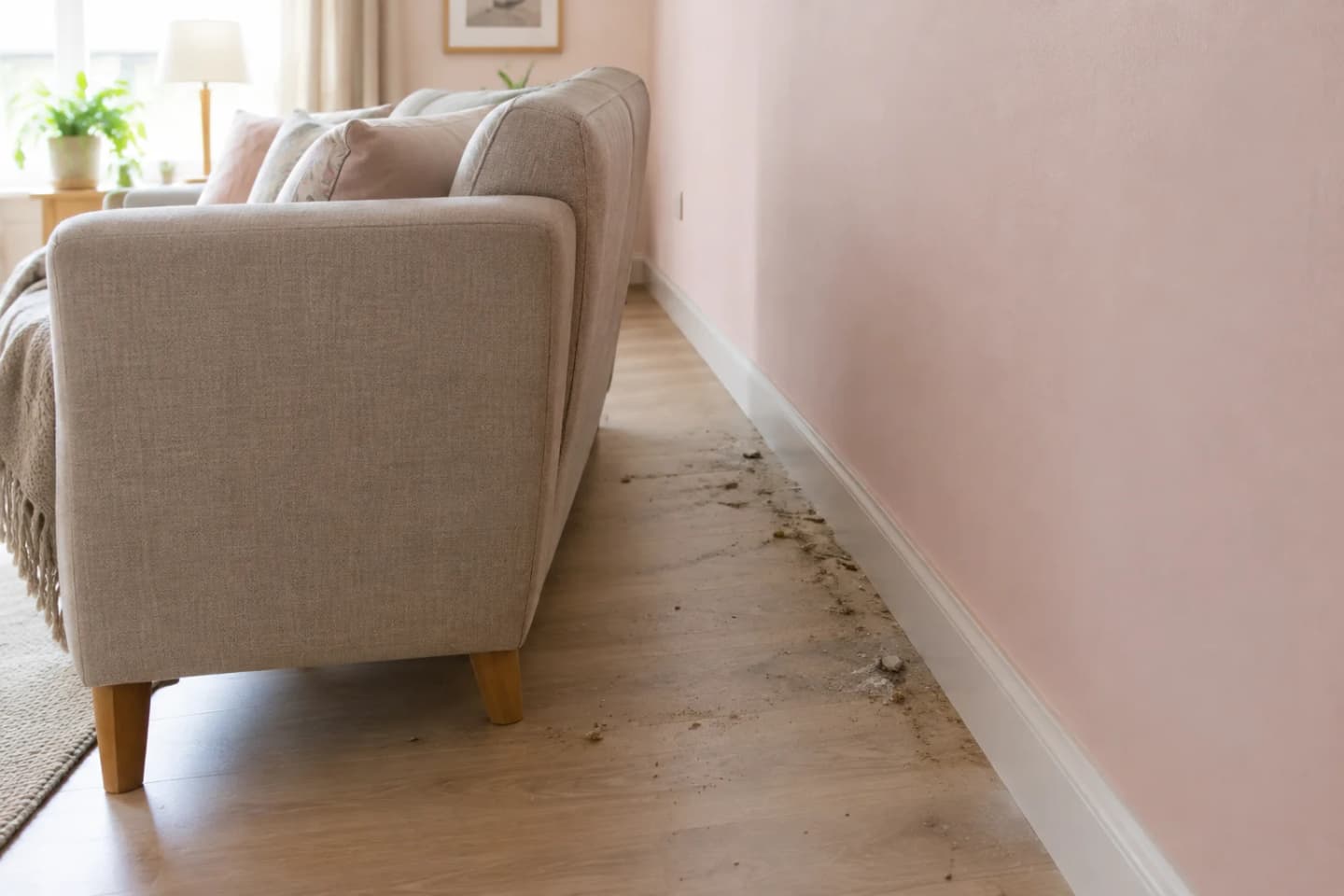
You need
- vacuum with crevice tool (1)
How
Move the sofa away from the wall and vacuum underneath with a crevice tool, reaching into corners. Dust and debris accumulate here quickly and can transfer back onto the fabric. Do this every time you vacuum the living room.
18. Protect the sofa arms with a vinegar wipe for everyday grime
5 minYou need
- white vinegar (1 tablespoon)
- water (1 cup)
- cloth (1)
How
Mix vinegar with water and dampen a cloth, then wipe the armrests where hands and skin oils build up most. Let the fabric air dry fully before sitting. Do this weekly on fabric sofas to prevent dulling.
Avoid on silk, velvet, or leather upholstery.
19. Remove candle wax from fabric with an ice cube
15 minYou need
- ice cube (1)
- butter knife (1)
How
Hold an ice cube in a bag against the wax until it hardens completely. Gently scrape the wax off with the dull edge of a butter knife. Vacuum any remaining crumbs from the fabric.
Avoid applying ice directly to leather or suede.
20. Freshen a fabric sofa with an unplugged fan airing session
30 minYou need
- fan (1)
How
Open nearby windows and point a fan toward the sofa for continuous airflow. This helps evaporate trapped moisture and odors after cleaning. Run it for at least 30 minutes for best results.
Why Some Sofa Cleaning Hacks Don't Work (And How to Fix Them)
Most failures trace back to one of three things: too little product, the wrong method for the surface, or not enough time for the fix to actually work.
On fabric stains, a blot that "doesn't work" often just needs more dwell time. Reapply your solution, press a clean cloth over it, and let it sit 5 to 10 minutes before blotting again instead of scrubbing right away. If a dry method like baking soda for odors falls flat, the usual culprit is rushing it: it needs at least 15 to 20 minutes, ideally a few hours, to absorb odor molecules before vacuuming, not a quick 3-minute pass.
On leather, water-based fabric fixes can leave rings or dull the surface because leather isn't porous the same way upholstery fabric is. Switch to a leather-specific cleaner or conditioner and test it on a hidden spot first. If a cleaned area looks blotchy afterward, it's frequently a drying issue: let leather air-dry fully, away from direct heat or sunlight, before judging the result or applying conditioner.
For deep-clean methods using a cleaning solution and a brush, check the amount next: too little solution won't lift embedded soil, but too much can oversaturate the cushion fill and lead to musty odors if it doesn't dry within 24 hours. A fan or open window speeds drying and prevents that setback.
Turning the Fastest Fixes Into a Daily, Weekly and Monthly Sofa Routine
A sofa stays clean with momentum, not effort, so build the routine around the 6 fixes that take 5 minutes or less (the quickest is a 3-minute pass with the vacuum crevice tool). Daily: before you sit down for the evening, run a rubber glove or a squeegee over the cushions to lift pet hair and crumbs, a 3-to-5-minute habit that pays off more than any weekly deep clean. Weekly: vacuum the whole sofa, including under cushions and in the back crevices, then wipe down wooden legs and arms with a barely damp cloth to catch grime before it builds up. Pick one evening, maybe while you're already tidying the living room, and treat it as fixed. Monthly: sprinkle baking soda over the fabric, let it sit 15 to 20 minutes to absorb odors, then vacuum it off, and open the windows for an hour afterward to air the room and the cushions out. Stack these four habits on top of each other, in that order of frequency, and the deeper fixes in this list become rare instead of routine. If you're building a broader household rhythm, a weekly cleaning schedule can help anchor sofa care to a day you already clean.
Frequently asked questions
What are some quick couch cleaning hacks for everyday maintenance?
How do you deep clean a couch at home?
How do you get odors out of a couch without washing it?
Can you use vinegar to clean a fabric couch?
How do you clean a leather couch safely?
How this article was made
Edited by Claire Mercier, Editor. The guides are written with AI assistance.