Window Cleaning Hacks: 20 Fixes From a 5-Minute Wipe to Deep Cleans
Part of Cleaning Hacks & Tips · article 9 of 10
Start with the quickest of these 20 hacks across 4 zones, just 5 minutes, then work through the rest as time allows; 4 take 5 minutes or less.
On this page
Windows
Glass shows every streak, so order matters: wash first, then buff dry before the surface spots. If corners stay grimy after a full wipe, a cotton swab reaches what a cloth cannot.
1. Wash glass streak-free with vinegar water
10 min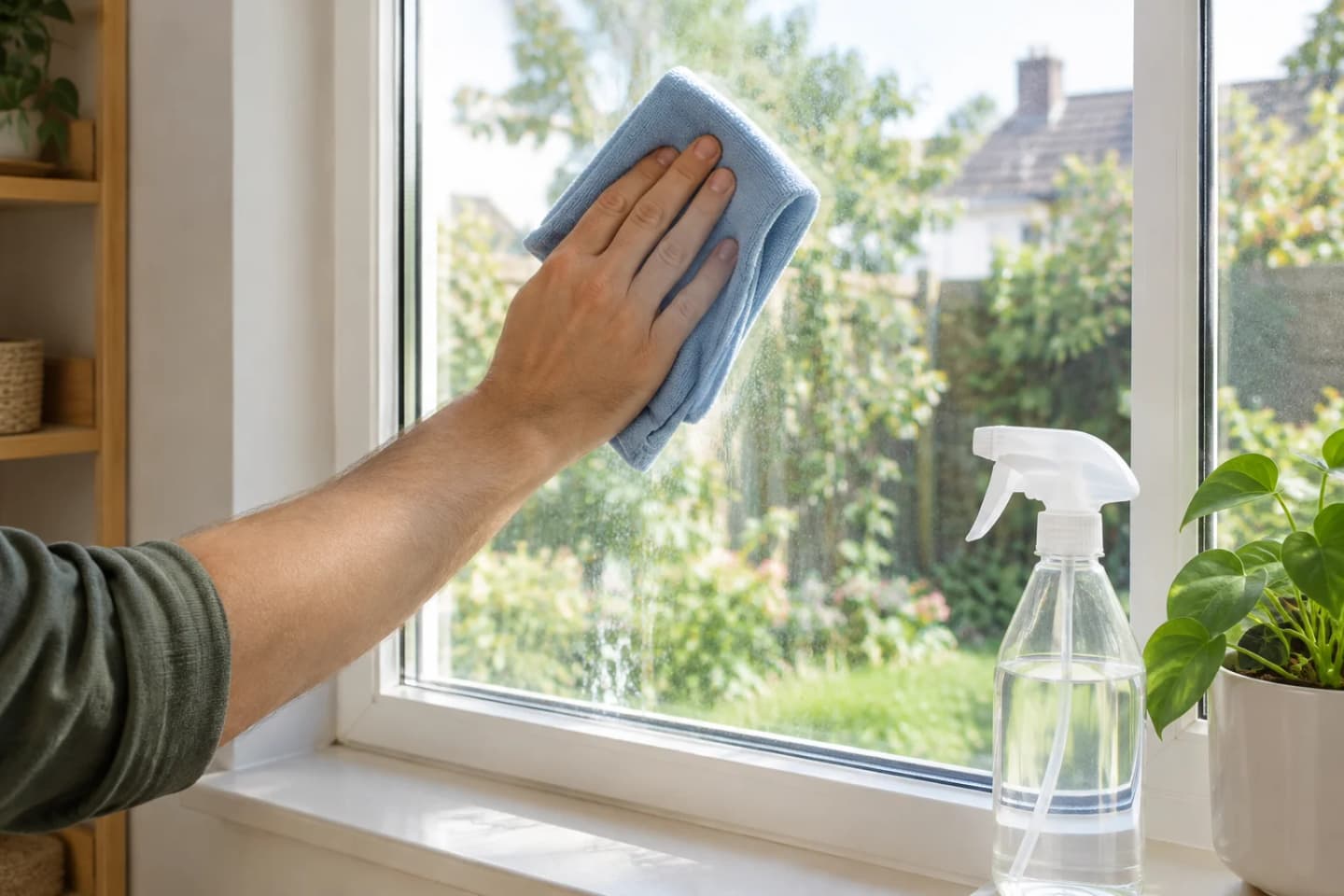
You need
- white vinegar (1/2 cup)
- water (2 cups)
- spray bottle (1)
How
Combine the vinegar and water in a spray bottle and shake gently. Spray onto the glass and wipe with a lint-free cloth or squeegee, working top to bottom. Buff any remaining streaks with a dry section of the cloth.
2. Squeegee windows dry for a spot-free finish
10 minYou need
- squeegee (1)
- dish soap (1 teaspoon)
- water (1 gallon)
How
Mix the dish soap into the water in a bucket. Apply with a sponge, then pull the squeegee across the glass in one continuous stroke, wiping the blade dry after each pass. Finish by drying the edges with a cloth.
3. Polish glass shiny with newspaper
8 minYou need
- newspaper (2 sheets)
- white vinegar (1/4 cup)
- water (1 cup)
How
Mix vinegar and water in a spray bottle and mist the glass lightly. Crumple newspaper and rub the glass in circular motions until dry and shiny. The ink helps buff away streaks better than paper towels.
4. Clean window corners with a cotton swab
6 minYou need
- cotton swab (4)
- white vinegar (1 tablespoon)
- water (1 cup)
How
Mix the vinegar and water in a small bowl and dip a cotton swab into it. Run the swab along tight corners and grooves where grime builds up. Replace swabs as they get dirty.
5. Remove paint splatters from glass with a razor scraper
10 min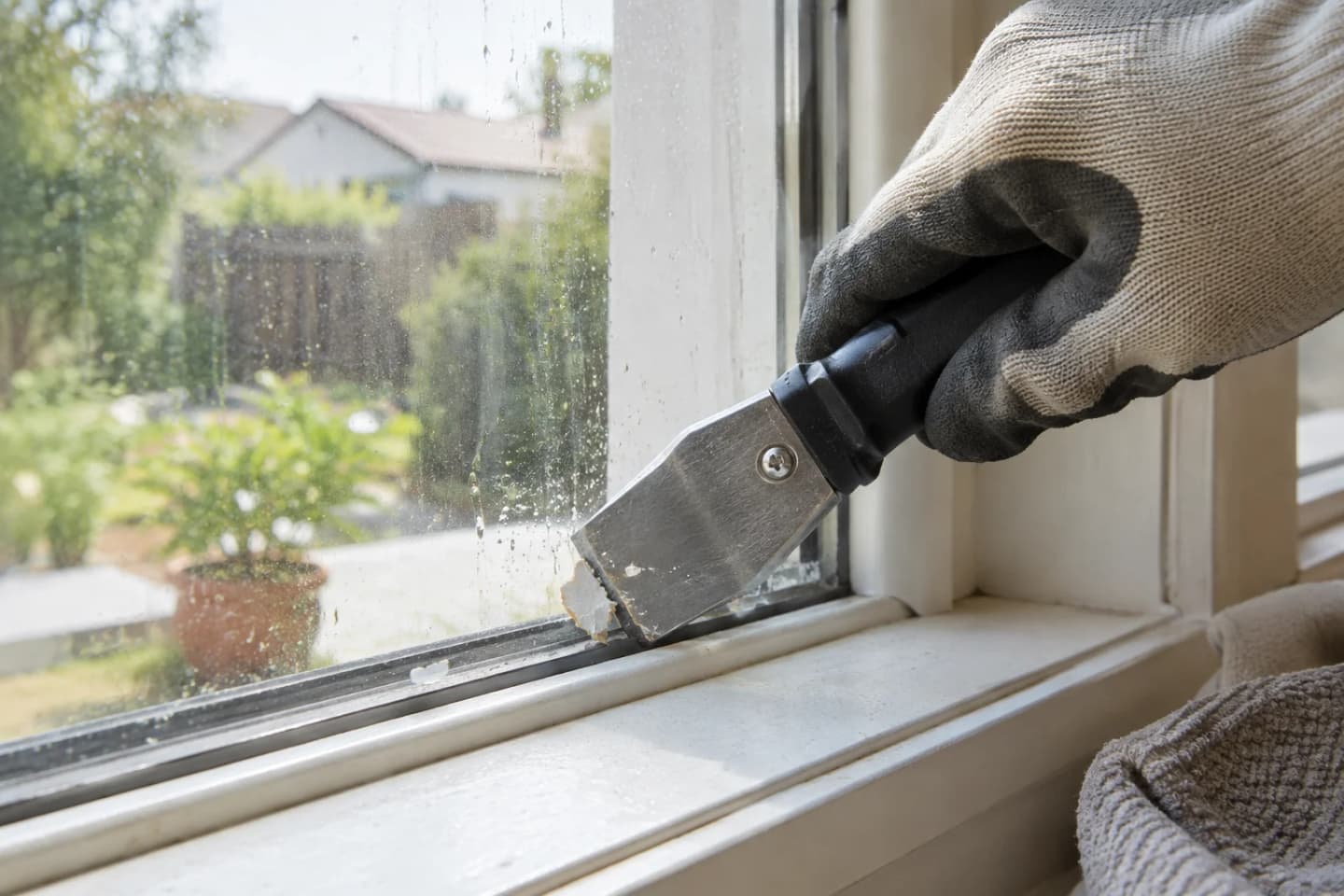
You need
- razor scraper (1)
- water (1 cup)
How
Wet the glass with water to lubricate the surface. Hold the razor scraper at a low angle and gently push to lift off dried paint specks. Wipe away residue with a damp cloth afterward.
Use a razor scraper only on flat glass, not on tempered or tinted windows, and keep fingers clear of the blade.
Window Frames
Frames trap grime in seams and grooves that a quick wipe won't touch, so loosen dirt before rinsing it away. Wood frames need extra care, since trapped moisture there can lead to mildew.
6. Brighten window frames with baking soda paste
10 minYou need
- baking soda (3 tablespoons)
- water (1 tablespoon)
- soft brush (1)
How
Mix baking soda and water into a thick paste. Apply to the frame with a soft brush and scrub gently to lift dirt and grime. Wipe clean with a damp cloth.
7. Clean vinyl frames with dish soap solution
8 minYou need
- dish soap (1 tablespoon)
- warm water (2 cups)
- sponge (1)
How
Mix dish soap into warm water. Wipe the vinyl frame with a soapy sponge, paying attention to seams and corners. Rinse with a clean damp cloth and dry.
8. Remove mildew from wood frames with oxygen bleach
15 minYou need
- oxygen bleach (2 tablespoons)
- warm water (2 cups)
- soft brush (1)
How
Dissolve the oxygen bleach in warm water. Scrub the mildewed area with a soft brush dipped in the solution, then wipe with a clean damp cloth. Let the frame air dry fully.
9. Reach dust in frame grooves with an old toothbrush
6 min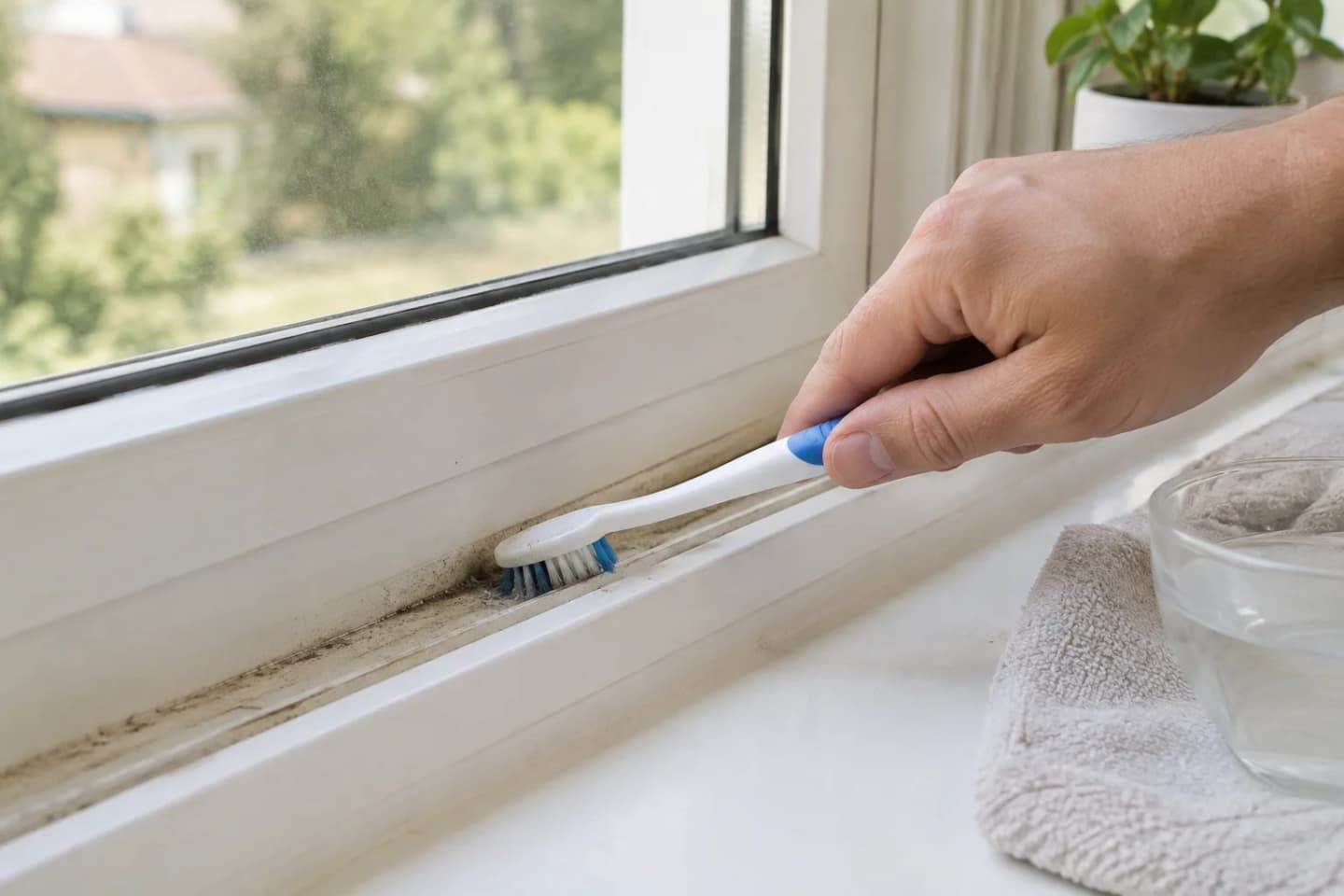
You need
- toothbrush (1)
- water (1 cup)
How
Dampen the toothbrush bristles with water. Scrub along the grooves and corners of the frame to loosen dust and debris. Wipe away loosened dirt with a dry cloth.
10. Freshen aluminum frames with vinegar water
7 minYou need
- white vinegar (1/4 cup)
- water (1 cup)
- cloth (1)
How
Mix the vinegar and water in a spray bottle. Spray onto the aluminum frame and wipe with a cloth to remove grime and restore shine. Dry with a separate cloth to prevent spotting.
Window Tracks
Tracks collect packed dirt and debris that resist a simple wipe, so loosen it before scrubbing. Drying thoroughly afterward matters, since leftover moisture in tight grooves invites mold.
11. Clear tracks with a vacuum crevice tool
5 minYou need
- vacuum with crevice tool (1)
How
Attach the crevice tool to the vacuum. Run it slowly along the track to suck up loose dirt, dead insects, and debris. Repeat on both sides of the track.
12. Scrub tracks clean with a toothbrush and vinegar water
10 minYou need
- white vinegar (1/2 cup)
- water (1/2 cup)
- toothbrush (1)
How
Mix the vinegar and water in a small container. Dip the toothbrush in the solution and scrub along the track to loosen built-up grime. Wipe out the debris with a damp cloth.
13. Lift stuck dirt from tracks with a butter knife and cloth
8 min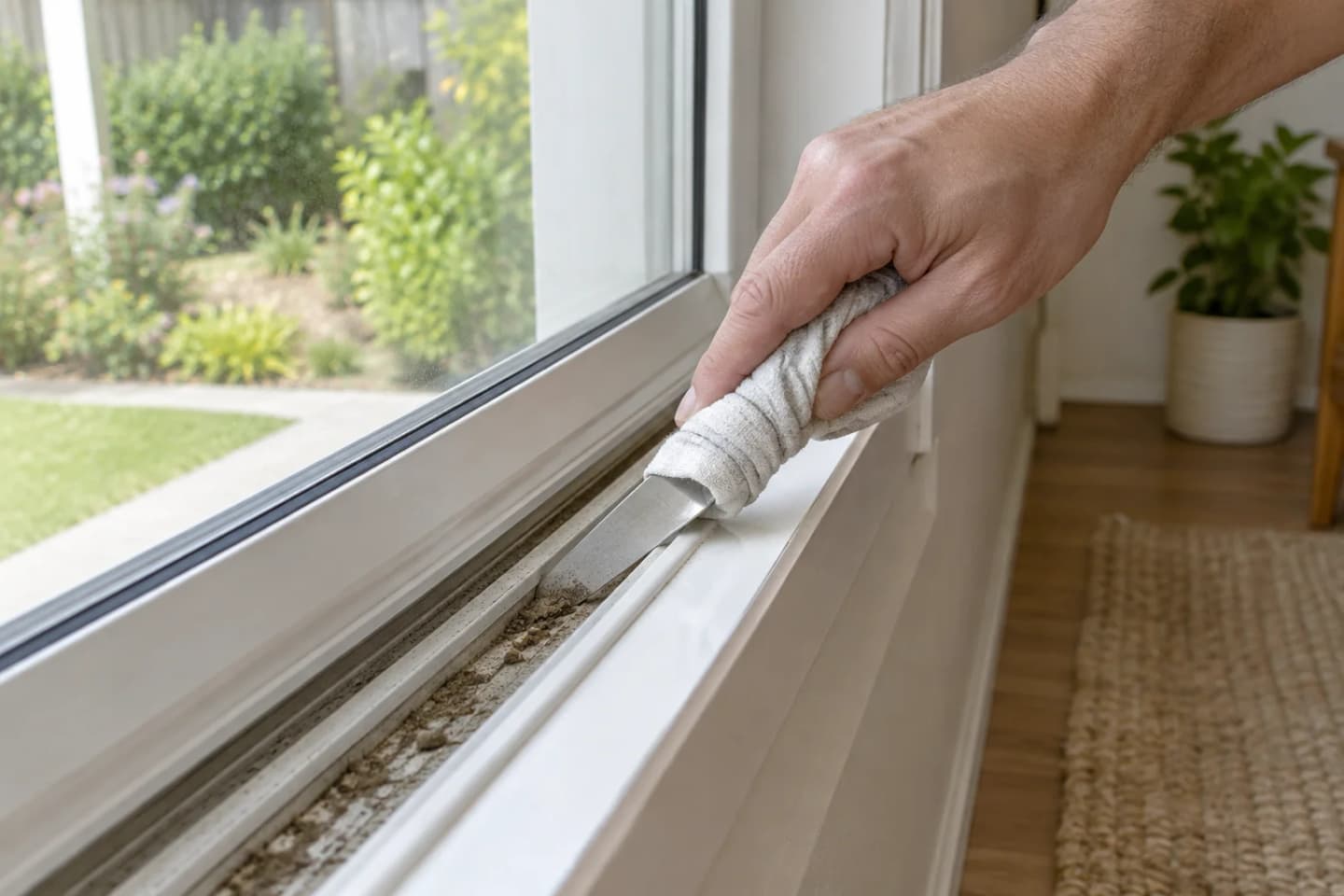
You need
- butter knife (1)
- cloth (1)
How
Wrap the butter knife tip with a cloth. Run it along the track to scrape out packed dirt without scratching the metal. Follow with a vacuum pass to remove loosened debris.
You need
- hair dryer (1)
How
After washing the track with soapy water, set the hair dryer to a low, cool setting. Aim it along the track to dry out moisture quickly and prevent mold. Move it slowly end to end.
15. Deep clean tracks with baking soda and vinegar
12 minYou need
- baking soda (2 tablespoons)
- white vinegar (1/4 cup)
- toothbrush (1)
How
Sprinkle baking soda along the track, then pour the vinegar over it and let the fizzing action loosen grime for 5 minutes. Scrub with the toothbrush, then wipe out the residue with a damp cloth.
Window Screens
Screens are fragile, so remove loose dust before any wet cleaning touches the mesh. Letting them dry completely before reinstalling avoids trapping moisture against the window.
You need
- dish soap (1 teaspoon)
- warm water (2 cups)
- soft brush (1)
How
Mix the dish soap into warm water. Dip the soft brush into the solution and scrub the screen mesh gently on both sides. Rinse with a hose or damp cloth and let air dry.
17. Vacuum screens before washing to remove loose dust
5 min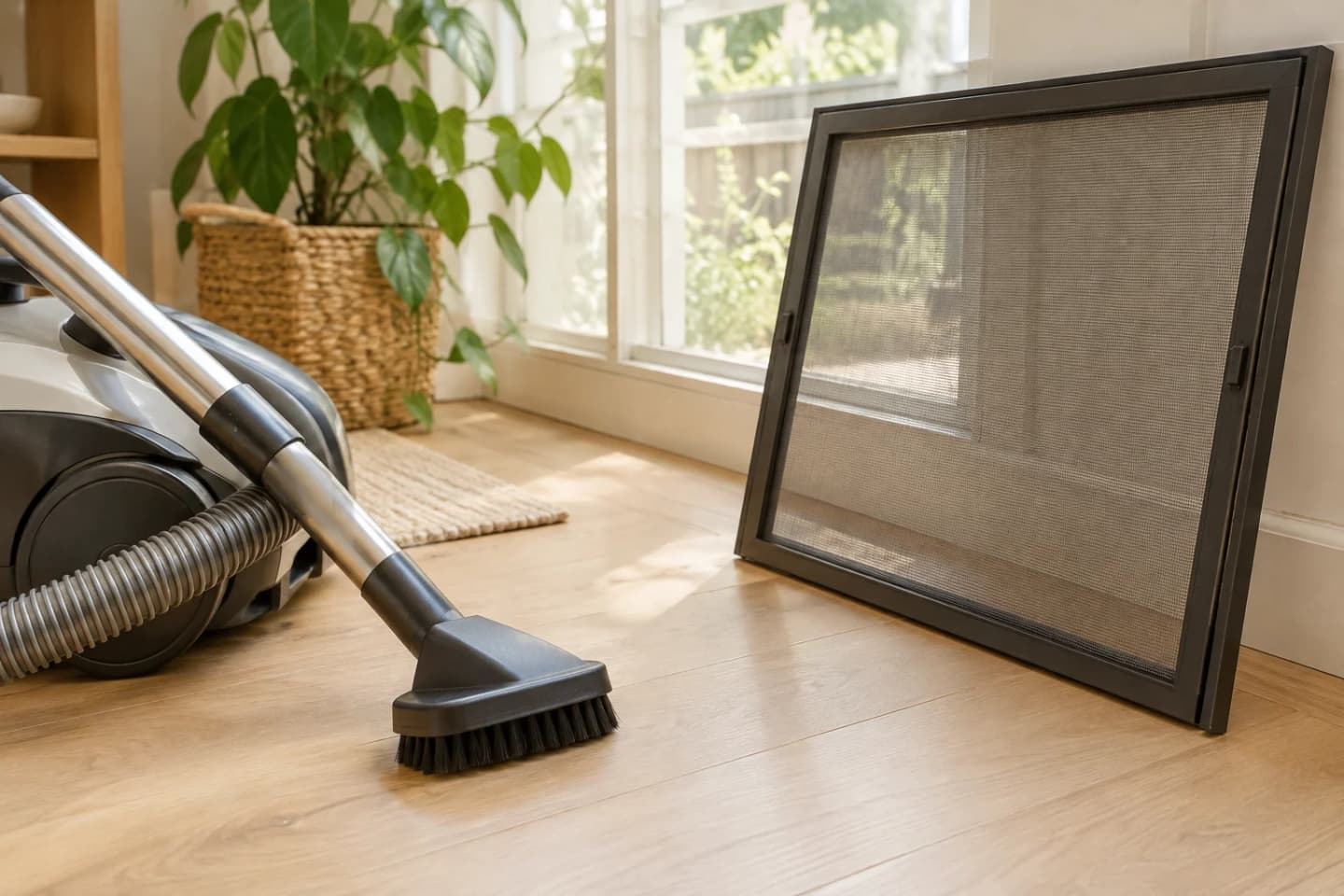
You need
- vacuum with brush attachment (1)
How
Attach the brush tool to the vacuum. Run it over both sides of the screen to pull out loose dust and debris before wet cleaning. This keeps the wash water cleaner and the mesh from clogging.
18. Remove screens and hose them down outdoors
15 minYou need
- garden hose (1)
- dish soap (1 teaspoon)
- water (1 gallon)
How
Remove the screens and lean them against a flat surface outdoors. Rinse with the hose, then scrub lightly with a soapy sponge and rinse again until the water runs clear. Let them dry fully before reinstalling.
19. Lift pet hair off screens with a lint roller
5 minYou need
- lint roller (1)
How
Roll the lint roller firmly over the screen mesh in overlapping passes. This picks up pet hair and fine dust that a brush might miss. Use on dry screens before a deeper wash.
20. Refresh screens with a vinegar water spray
10 minYou need
- white vinegar (1/2 cup)
- water (2 cups)
- spray bottle (1)
How
Mix the vinegar and water in a spray bottle. Spray evenly over the screen mesh and let sit for 5 minutes to loosen grime. Rinse with a hose or wipe with a damp cloth.
Why a Window Cleaning Hack Didn't Work: Amount, Surface, and Timing Fixes
Out of 20 hacks, a handful still fall flat, and it's almost always one of three reasons. The first is amount: too little vinegar or dish soap solution leaves grime half-dissolved, so the cloth just drags it around instead of lifting it. Use a full, visible coat on the glass rather than a light mist, and give it a second pass if the first wipe looks streaky. The second is surface mismatch: a hack that works on glass can fail or even damage a different material, such as using an acidic solution on a stone sill or a painted wood frame, where it dulls the finish instead of cleaning it. Check what the frame and sill are actually made of before applying anything beyond plain glass; a quick look at a frame-by-frame guide to window cleaners can save a redo. The third is timing: wiping off a solution too soon, before it has a chance to break down dirt or film, leaves residue behind, while leaving it on too long lets it dry and re-deposit streaks. As a general rule, let cleaner sit 30 to 60 seconds on heavily soiled glass before wiping, and always finish with a dry microfiber pass. If streaking is the recurring problem rather than leftover grime, the cause is usually technique, not the product.
How Do You Turn These Hacks Into a Routine? Build One Around the 5-Minute Fixes
Out of 20 fixes in this collection, 4 take 5 minutes or less, and those four are what make a routine stick. Pick one entry point: Monday morning, before guests arrive, or right after you wipe down kitchen counters. Keep a microfiber cloth and your spray mixture staged under the sink or in a caddy so there's no setup time standing between you and the glass. Start with just the entry doors and the window nearest your main sitting area. That's a 5-minute pass, not a whole-house project, and finishing it gives you the payoff that makes you repeat it next week. Once that's automatic, layer in a second fast fix, maybe wiping sills while you're already there with a damp cloth. Deep cleans (tracks, screens, full exteriors) go on a separate monthly or seasonal slot, not into the weekly habit, so the quick wipe never feels like it's opening the door to a bigger chore. If you're building this into a broader rotation, a weekly cleaning schedule gives you a slot to drop these 5-minute fixes into without having to think about timing each week.
Frequently asked questions
What are the best window cleaning tips for a streak-free finish?
What are some good outside window cleaning hacks?
How often should you clean your windows?
Can you use vinegar on all window surfaces?
What household items work best for cleaning window tracks?
How this article was made
Edited by Claire Mercier, Editor. The guides are written with AI assistance.