Why Water Ruins Some Upholstery Fabrics (And How to Stop It)
Part of Fabric & Carpet Care · article 4 of 14
On this page
Use distilled water, not tap water, for any upholstery cleaning you attempt yourself. The single condition that flips this: if your care tag shows an "S" or "X" code, water of any kind is off-limits and a professional cleaner is the only safe option.
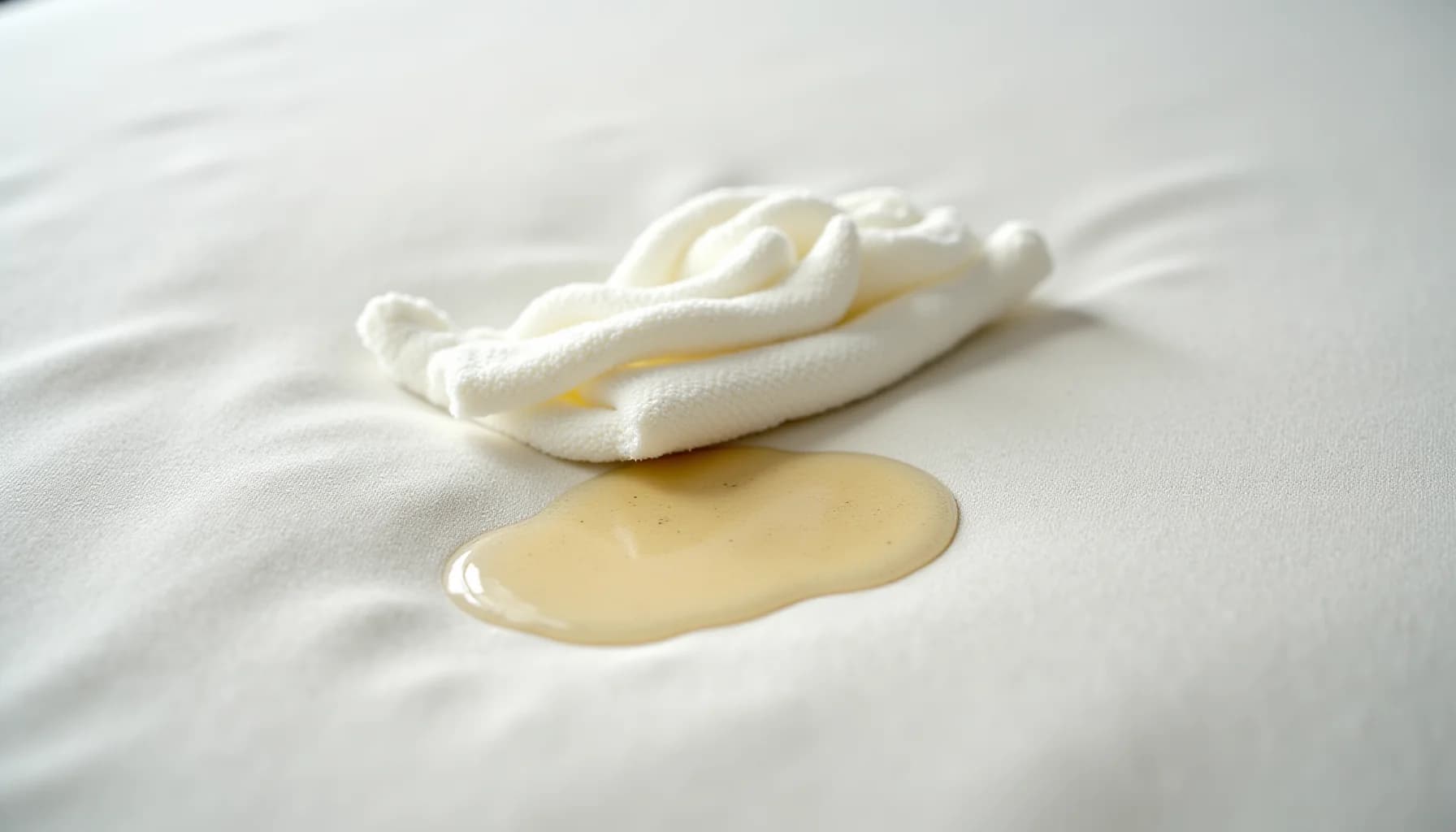
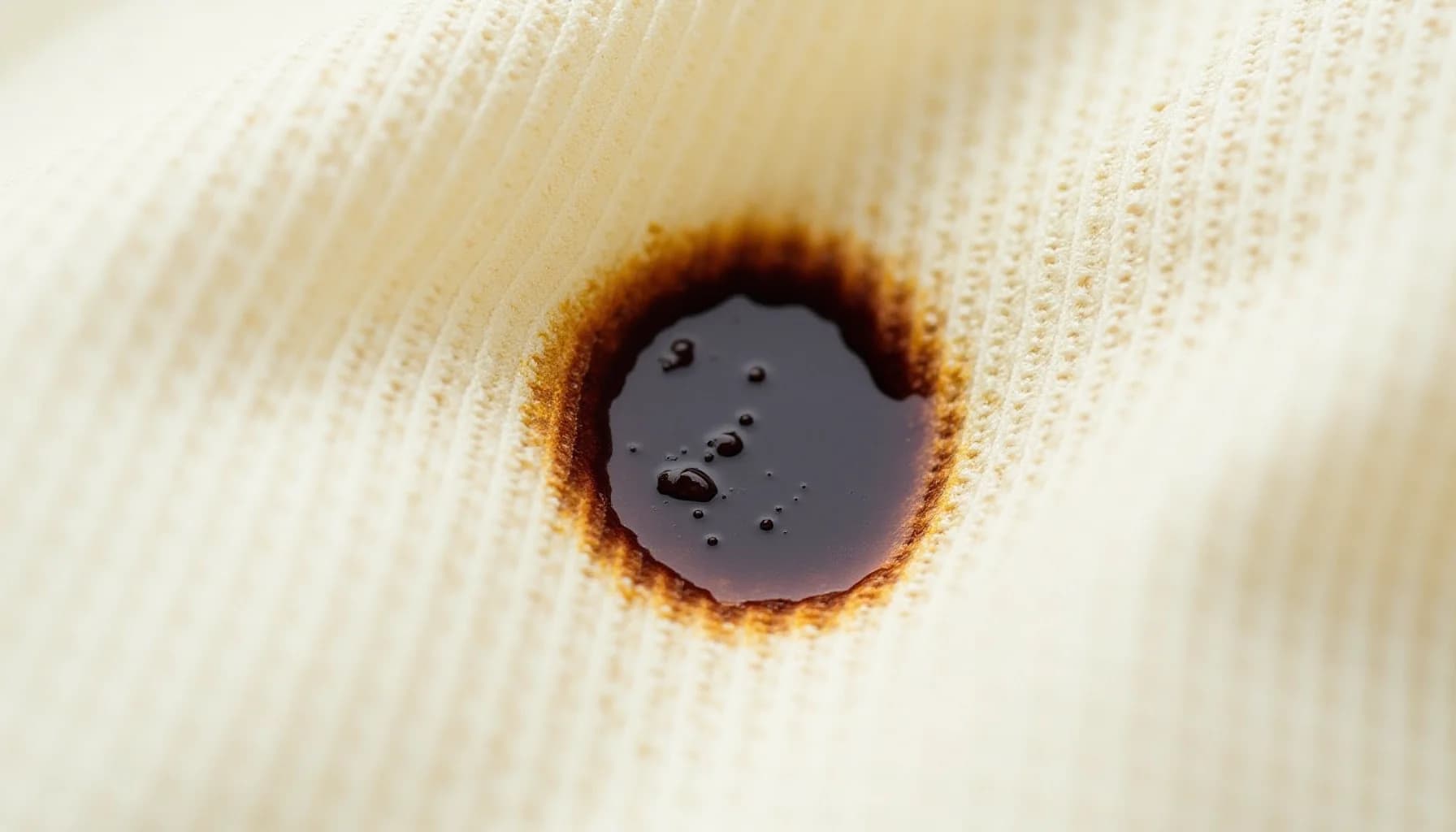
Water ruins upholstery not because it is inherently corrosive, but because of what it carries and leaves behind. Tap water contains calcium, magnesium, and other dissolved minerals. As the water evaporates, it pulls dust, body oils, and those minerals toward the drying edge, where they concentrate into a visible ring exactly where moisture stopped. Natural fibers like cotton and linen absorb water faster and sit most at risk: they can yellow or brown as they dry, a reaction called cellulosic browning. Meanwhile, moisture trapped inside cushion padding creates ideal conditions for mold growth within 24 to 48 hours, and mold actively deteriorates organic fibers such as silk and wool. Applying a fabric protector reduces absorption by up to 75%, giving you a meaningful buffer before any spill can set.
Why does water leave a ring on upholstery fabric?
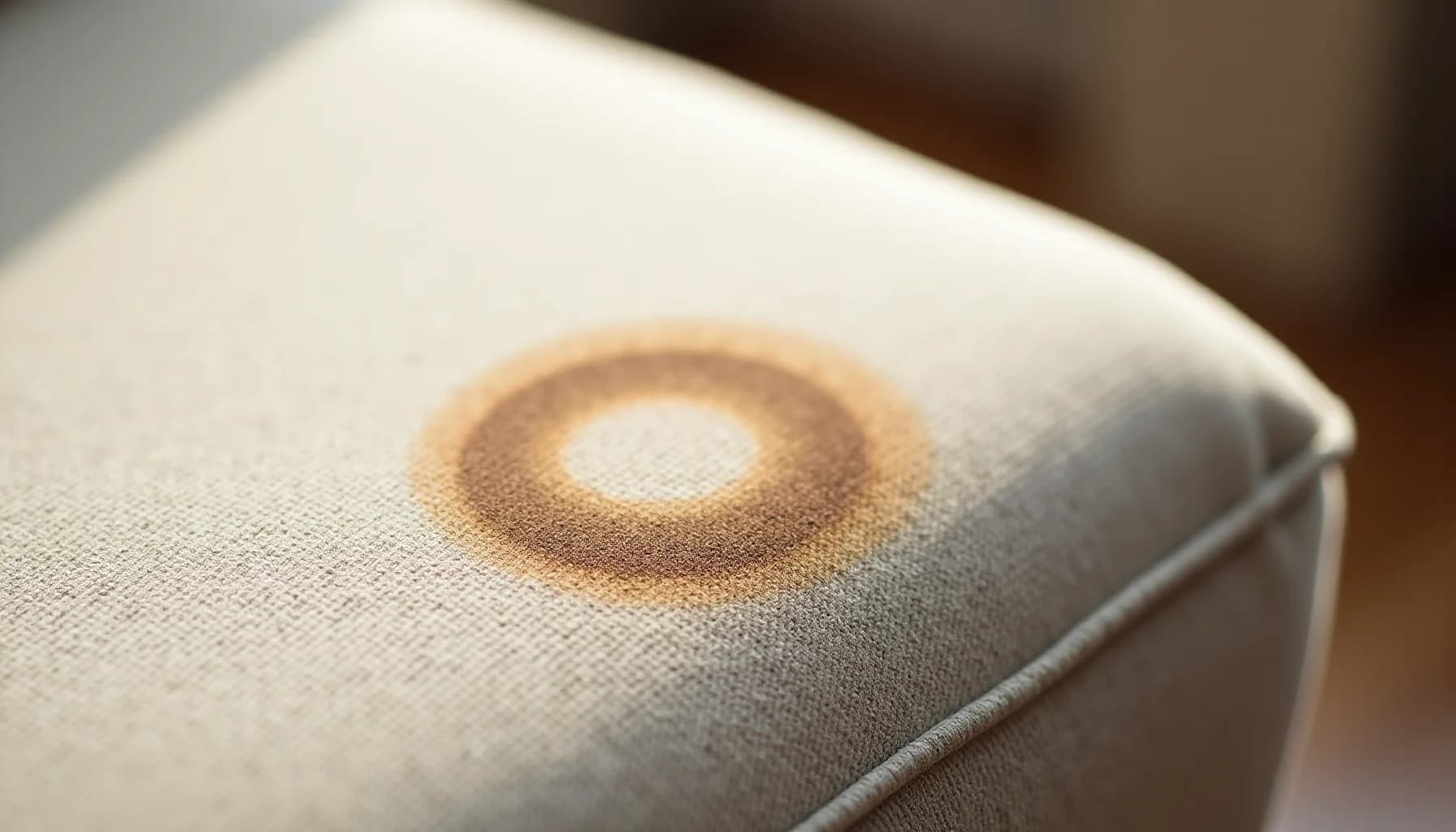
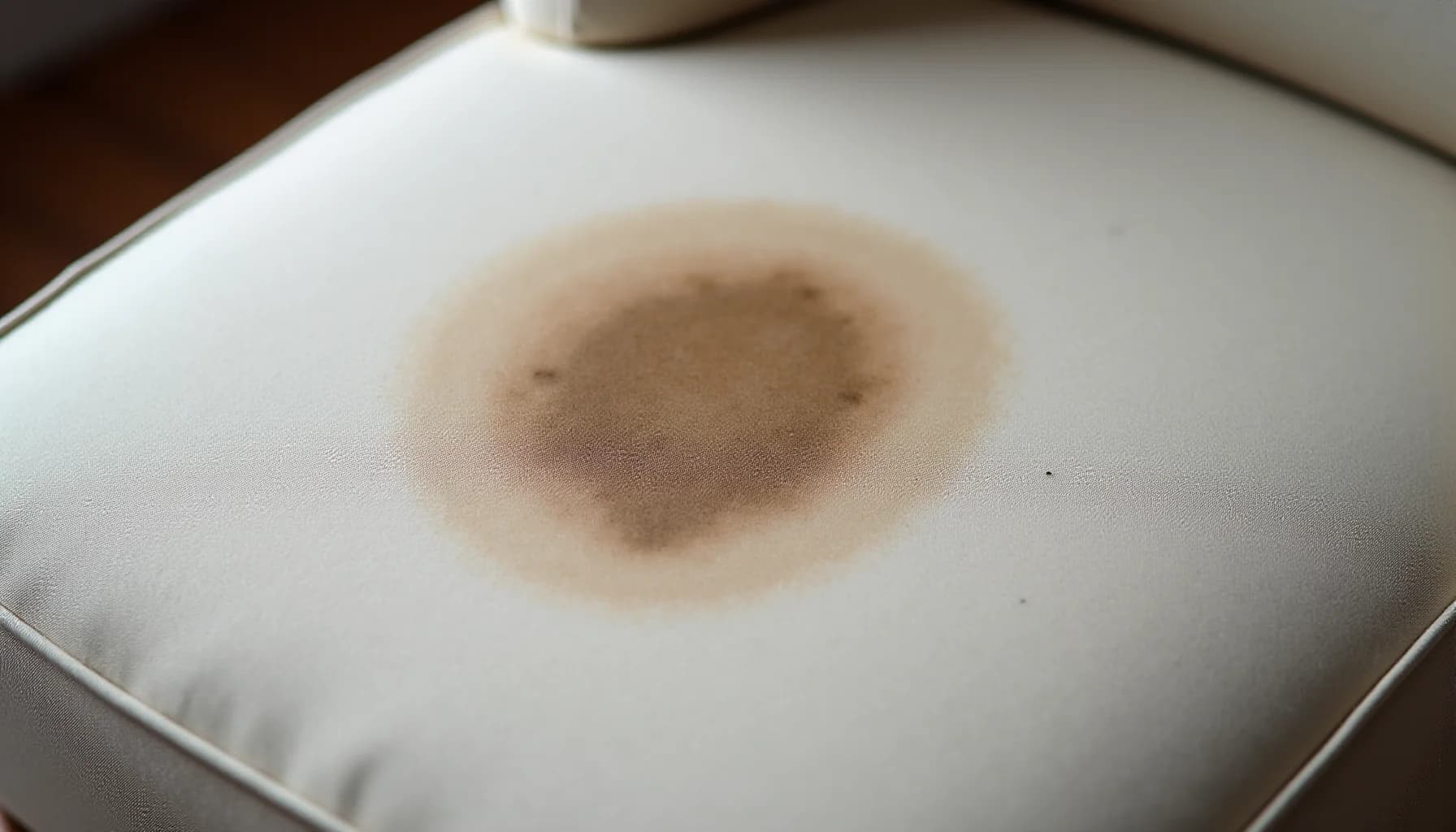
The ring that appears on upholstery after water dries is not a water stain in the way most people picture one. The water itself is gone. What remains is everything the water carried with it on its way out.
Upholstery fabric collects a steady accumulation of dust, body oils, and airborne particles that are not always visible to the naked eye. When water soaks into the fabric, it does not sit still. As evaporation begins at the outer edge of the wet area, the moisture still underneath moves outward to replace it. That outward movement carries dissolved minerals from the water, plus the oils and soil already trapped in the fibers, toward the boundary between wet and dry fabric. When evaporation finally finishes at that boundary, all of those transported materials deposit in a concentrated line exactly where the moisture stopped. The result is the ring: a visible circle of mineral residue and accumulated soil at the drying edge, while the center of the original wet area looks relatively clean.
Tap water makes this worse than distilled water would, because it contains calcium, magnesium, and other dissolved minerals that leave a harder, more defined deposit when they dry. Distilled water lacks those minerals, but it can still produce a ring by picking up whatever residue already exists in the fabric and relocating it to the drying edge.
This means the choice a homeowner faces is not simply "wet" versus "dry." It is whether to control exactly where the drying edge forms, and what the water carries when it moves. A wide, feathered cleaning approach that avoids a sharp wet-to-dry boundary is trying to solve the same physics problem: if there is no concentrated drying edge, there is no concentrated deposit, and no ring forms.
Which Fabric Types Are Most Vulnerable to Water Damage?
Not all upholstery fabrics respond to water the same way, and knowing which materials sit at the highest risk changes how urgently you need to act after a spill.
Natural fibers, particularly cotton and linen, are the most vulnerable. Both absorb water quickly, which allows moisture to penetrate deep into the weave rather than sitting near the surface where it can be blotted away. As the water evaporates, it pulls dust, body oils, and dissolved compounds toward the outer edge of the wet area, depositing them in a visible ring. Cotton and linen are also prone to cellulosic browning, a chemical reaction that produces yellowing or brownish discoloration as the fabric dries. This browning sometimes appears alongside a darker ring and can be mistaken for a dye problem. If you own a cotton sofa or linen accent chair, speed matters most: the longer moisture sits, the deeper the browning reaction sets.
Rayon and viscose present a separate category of difficulty. These fibers are manufactured from cellulose, so they share the browning risk, but the bigger complication is that most rayon upholstery is labeled "Dry Clean Only." Standard dry-cleaning solvents cannot lift water-based rings from rayon, which means a water stain on a rayon piece is almost always a job for a professional fabric cleaning company. Attempting DIY methods on rayon, including rewetting the area to "blend" the ring, typically deepens the damage.
Pile fabrics such as velvet and chenille are generally more forgiving. True water rings rarely form on these unless the pile is made from rayon or viscose, at which point the concerns above apply in full. The texture of the pile itself tends to break up the sharp drying edge that causes a visible ring on flat-woven fabrics.
Silk and wool occupy a high-risk category for a different reason: both are organic protein fibers that mold deteriorates readily, making prolonged moisture exposure a structural threat beyond surface staining alone.
Pros
- Fabric protector treatments can reduce stain absorption by up to 75%, significantly lowering water damage risk
- Synthetic upholstery fabrics are naturally less absorbent, making them more resistant to water marks when cleaned promptly
- Care label codes (W, S, WS, X) give homeowners clear guidance on safe cleaning methods, preventing accidental damage
Cons
- Water stains can form even from pure water by pulling embedded dust and body oils to the drying edge as a visible mineral ring
- Natural fibers like cotton and linen absorb water rapidly, making them vulnerable to deep-set stains and cellulosic browning
- Mold growth can begin inside cushions and padding within 24 to 48 hours, and standard home drying methods rarely remove moisture fully
What happens inside your cushions if moisture isn't fully removed within 48 hours?
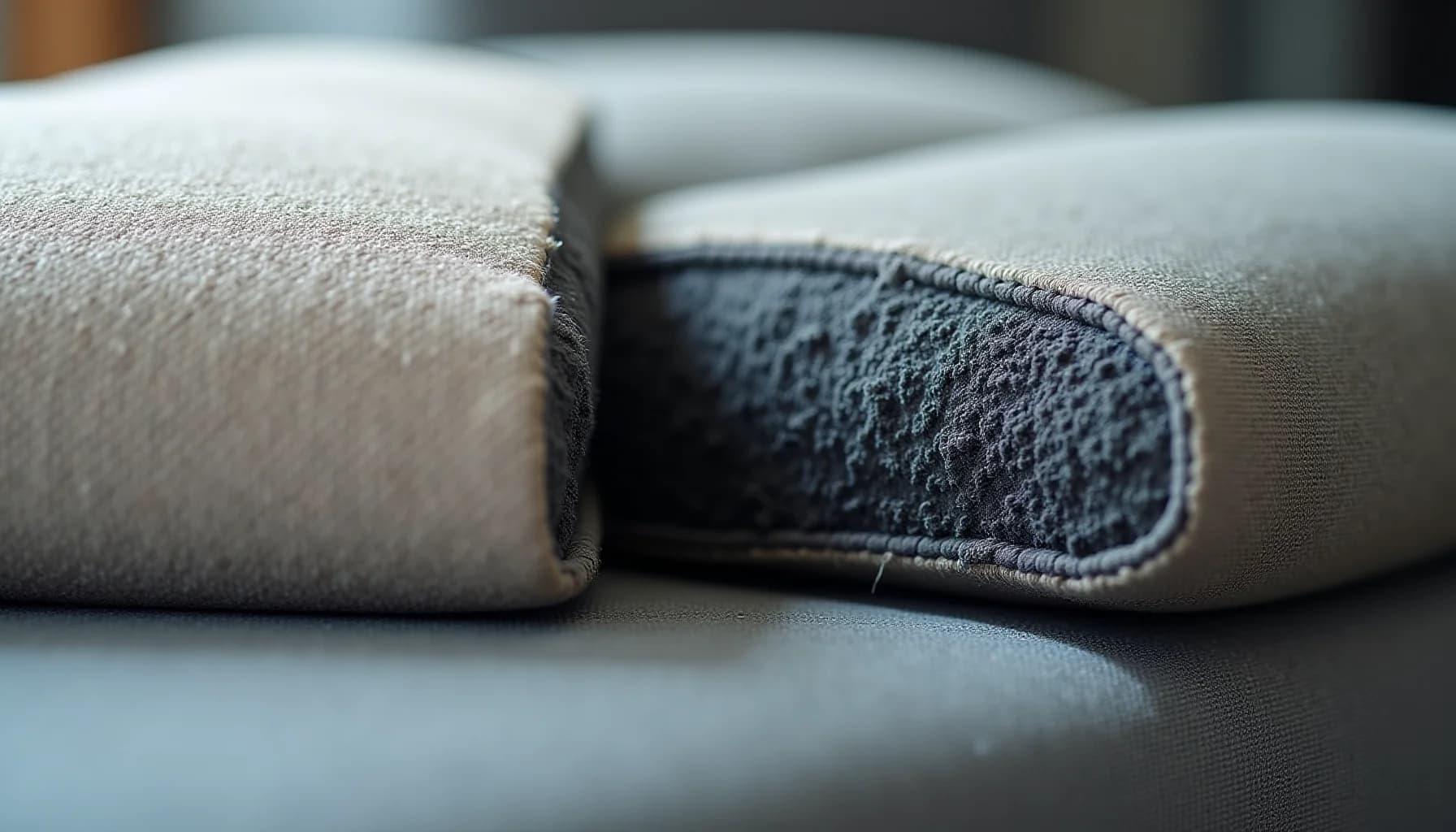
Blotting the surface dry gives you a false sense of security. What you can feel or see on the upholstery fabric is only part of the picture. Beneath the surface, inside the foam padding and cushion fill, water that soaked through the outer fabric sits trapped in a dense, dark, poorly ventilated environment, exactly the conditions mold needs to establish itself. Within 24 to 48 hours of a soaking incident, mold spores, which are present in virtually every indoor environment, can begin to colonize that interior moisture. Fans and open windows help evaporate surface dampness, but they cannot pull water from the center of a four-inch foam cushion.
The consequences are more serious than a musty smell. Mold actively deteriorates organic fibers, and upholstered furniture frequently contains materials made from organic sources: wool, silk, cotton batting, and natural fiber blends. These break down under sustained mold growth far faster than synthetic fills. By the time a faint odor appears, biological activity inside the cushion is already underway, and surface cleaning products reach none of it.
The only reliable solution at that stage is professional drying equipment, specifically low-pressure extraction tools or desiccant drying systems that draw moisture out from the interior rather than just accelerating evaporation at the surface. If you already manage moisture problems elsewhere in your home, the same principle applies: the visible surface is rarely where the problem lives. For homeowners dealing with recurring indoor mold, understanding how to remove mold from bathroom ceiling and keep it gone illustrates how persistent mold is once it has an organic surface and trapped moisture to work with.
If a cushion has been wet for more than 48 hours and smells musty, treat it as contaminated. Drying it further at home will stop new growth, but it will not reverse existing colonization.
What do the care label codes on your upholstery actually mean?
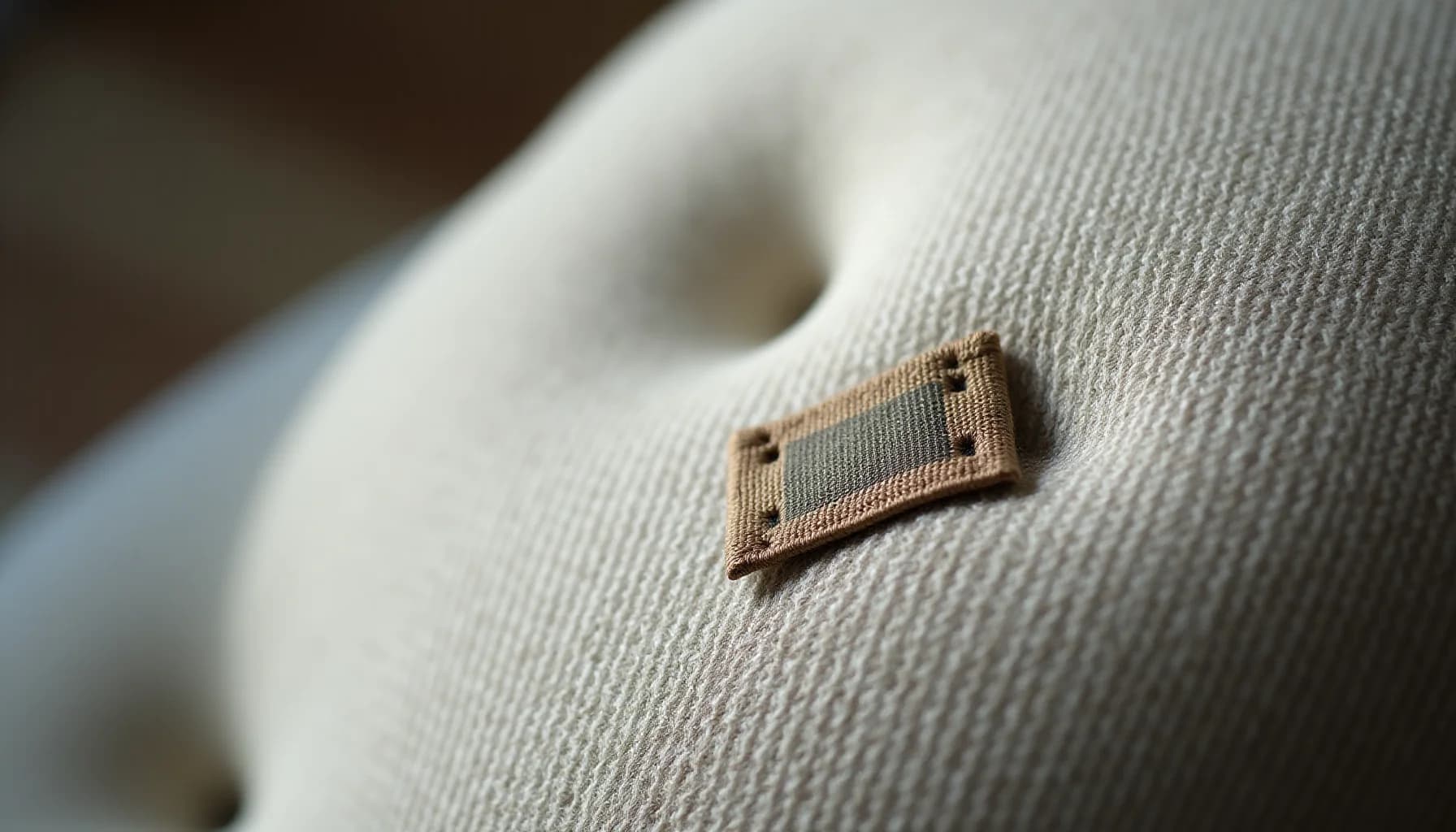
The small tag tucked under a cushion or along a seam carries four possible letter codes, and each one tells you something specific about which cleaning agents are safe on that fabric.
W means water-based cleaners only. A steam cleaner or water-based upholstery shampoo is fine here, and this is generally the easiest code to work with at home.
S means solvent-based cleaners only. No water. This code appears frequently on natural fibers and delicate weaves that are vulnerable to cellulosic browning or water ring formation. If you introduce moisture to an S-coded fabric, you risk creating the very staining you are trying to remove.
WS (sometimes written SW) means both water-based and solvent-based products are safe, giving you the most flexibility.
X means neither. Vacuuming only. Any liquid, including plain water, risks permanent damage. If an X-coded piece gets soaked, professional dry-cleaning is the only realistic path forward.
Rayon and viscose fabrics deserve particular attention: they are almost always coded S or X, and water-based cleaning will not lift water rings from them. It tends to make the marks worse. For those pieces, a well-reviewed professional upholstery cleaner is the sensible choice rather than a DIY attempt.
Before reaching for any product, check the code. If the tag is missing or unreadable, treat the piece as X until you can identify the fiber content, then decide accordingly. The code is the first filter, not the last step.
Frequently asked questions
Can plain water really stain upholstery fabric?
Which fabrics are most at risk from water damage?
How quickly can water damage turn into a mold problem?
Does a fabric protector actually help prevent water stains?
Can fabric protector coatings actually prevent water damage to your upholstery?
Yes, fabric protector coatings genuinely do what the label claims, and for most upholstered pieces in a busy household, applying one is the right call.
The mechanism is straightforward. A water-repellent treatment bonds to individual fibers and creates a barrier that causes water to bead up and roll off the surface rather than soaking in. Because the liquid never penetrates deeply, it cannot begin pulling dust, body oils, or minerals toward a drying edge. There is no drying edge to speak of. According to research published in the Textile Research Journal, fabric protectors can reduce stain absorption by up to 75%, which is a meaningful margin when you consider how quickly a spill on an untreated cotton sofa can spread and set.
The protection extends beyond the visible fabric layer. When water is blocked at the surface, the foam cushioning underneath stays dry. That matters because saturated foam is extremely difficult to dry without professional equipment, and damp foam creates exactly the warm, dark, enclosed environment where mold colonizes within 24 to 48 hours.
Fabric guards also provide a degree of UV screening and mildew resistance, two benefits that compound over time on furniture near windows.
The one exception: rayon and viscose pile fabrics such as velvet need professional assessment before any coating is applied, since these fibers respond unpredictably to topical treatments. For everything else, cotton, linen, polyester blends, and microfiber, a quality fabric protector is the most cost-effective preventive step available.
How this article was made
Researched and written with AI assistance. What gets published is a human editorial decision. Grounded in 8 cited sources.
Edited by Claire Mercier, Editor. The guides are written with AI assistance.
Sources (8)
- www.nps.gov
- How to Remove Water Stains From Upholstery - Fabric Protection Ultra-Guard
- How to Get Rid of Water Spots from Upholstery - Blog
- Water Damage Impact: What Gets Ruined?
- How to protect your outdoor upholstery fabric - Overstock Fabric – OverStock Upholstery Fabrics
- How To Protect Upholstery From Wear And Damage | Renaissance Custom Upholstery Company
- Why Water Stains a Sofa (and How to Remove Them the Right Way) - Knight's Coastal Cleaning Solutions
- Water Damaged Furniture: What You Need to Know About Restoration