How to Clean Blinds Without Streaks, Warping, or Wasted Time
Part of Windows & Glass · article 1 of 7
On this page
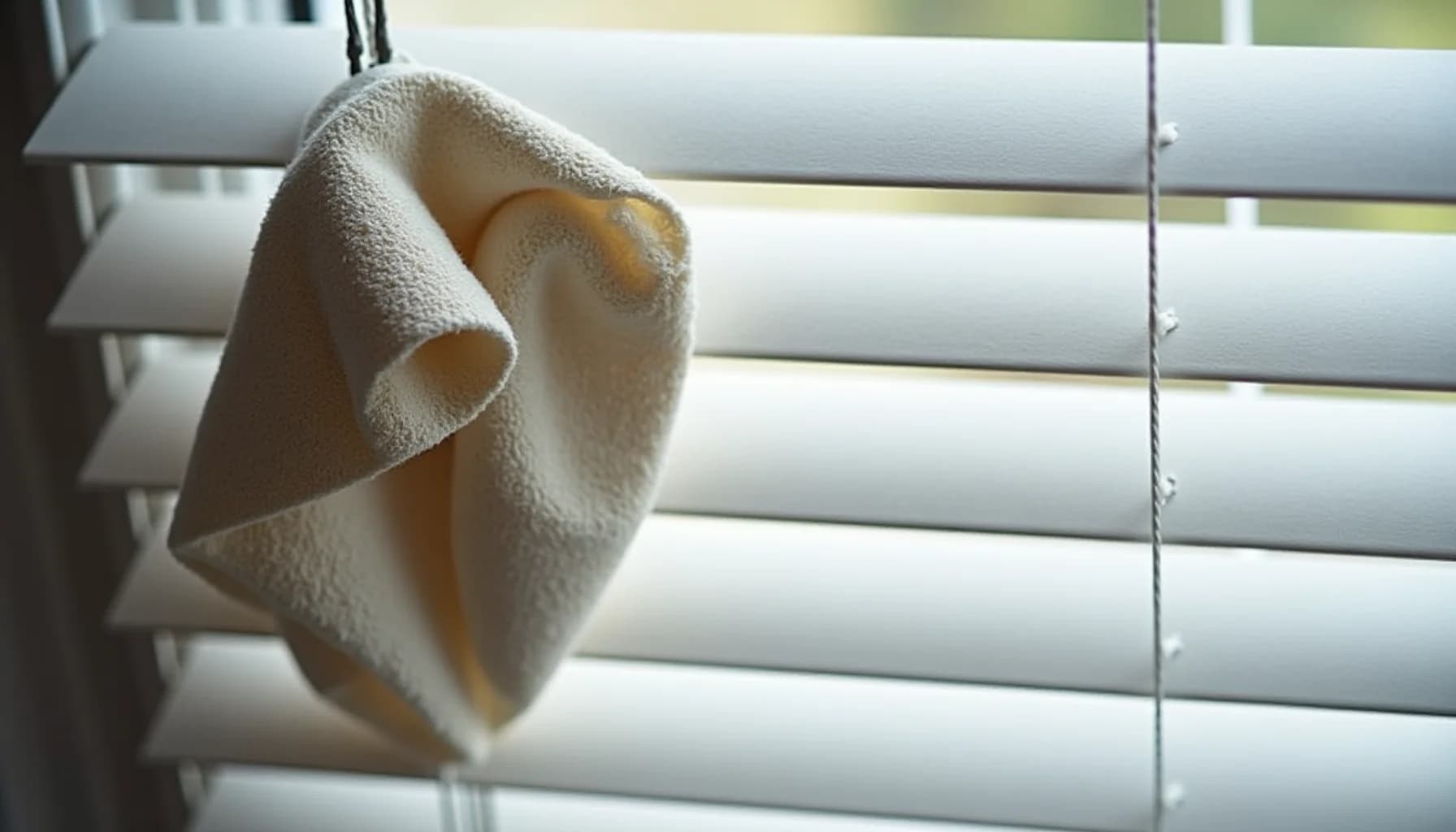
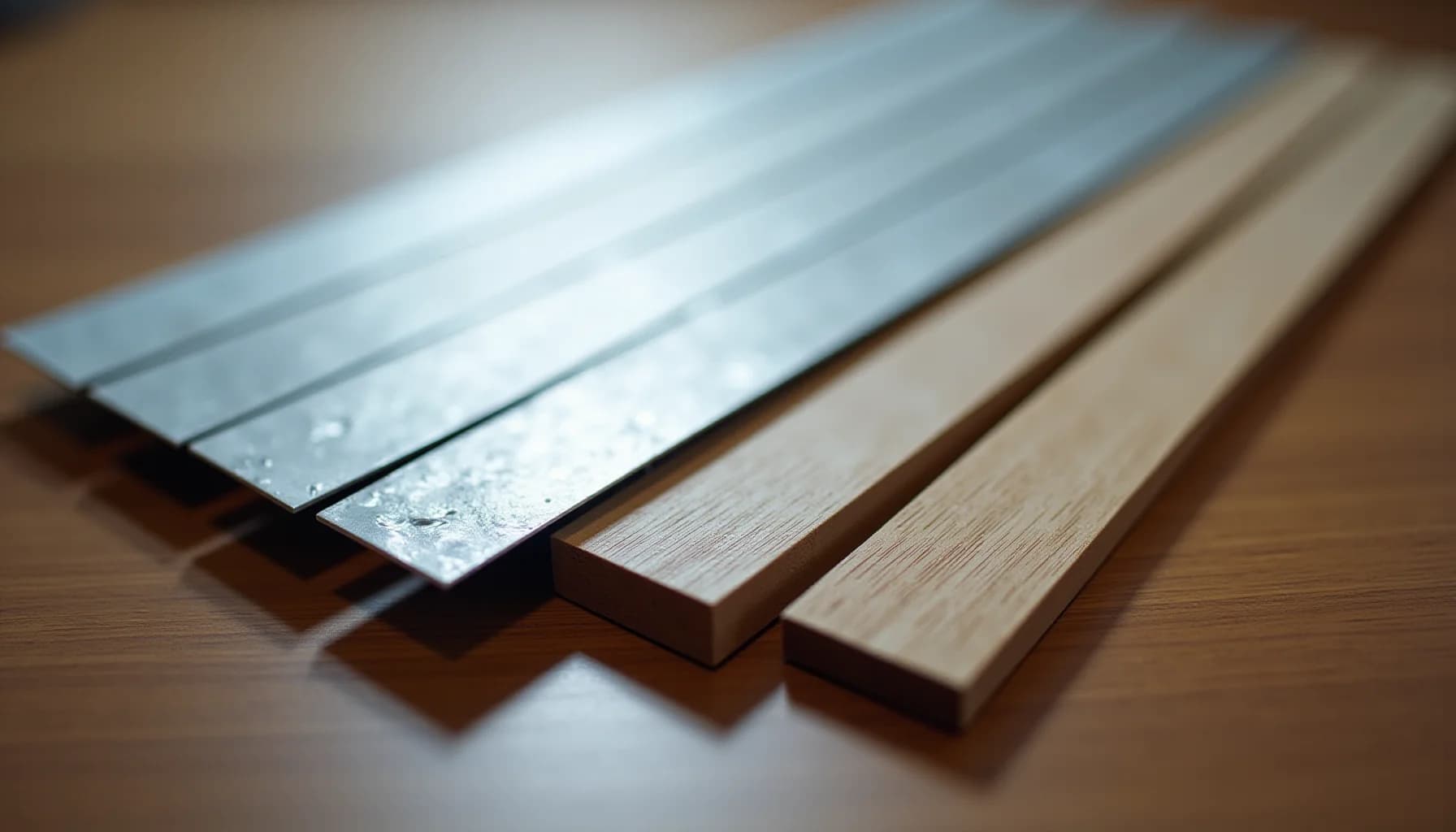
Always dust blinds before you apply any liquid, and always work from top to bottom. Spraying a cleaner onto dusty slats turns the dust into muddy streaks that are far harder to remove than the original grime. Instead, run a dry microfiber cloth or a vacuum with a soft brush attachment across each slat first, then follow up with a cloth dampened in a 1:1 mix of warm water and white vinegar plus a small squirt of dish soap if the slats still need it. If you are unsure what your blinds are made of, check out how to identify your blind material before reaching for any liquid at all, because the material dictates everything. Wood blinds should never get wet; moisture warps the slats and strips the finish over time. Use a soft sock lightly misted with wood polish instead. Bleach and ammonia-based cleaners damage vinyl, aluminum, and wood alike, so skip them entirely. For fabric blinds, the vacuum alone is the right tool.
Why do dirty blinds affect your home's air quality?
Blinds sit directly in the path of every air current that moves through a room. As air flows past window treatments, horizontal slats and fabric folds act like passive filters, trapping dust, pollen, pet dander, and mold spores that would otherwise stay suspended in the air you breathe. The problem is that, unlike a furnace filter you swap out on a schedule, blinds hold that accumulated material indefinitely unless you actively remove it.
Over time, that buildup becomes a slow release mechanism. Every time a breeze comes through an open window, or someone adjusts the blinds, particles that have settled into the slats get disturbed and re-enter the room's air. For anyone with seasonal allergies or sensitivity to pet dander, that redistribution matters. Rooms with neglected blinds also tend to develop a faint musty smell, a sign that dust and possibly mold spores have accumulated enough to affect the atmosphere.
The material your blinds are made of affects how readily they hold allergens. Fabric blinds, including honeycomb and Roman styles, trap particles in their fibers more stubbornly than smooth aluminum or vinyl slats. If you are unsure what your blinds are made of, identifying your blind material before you clean it is a useful first step, since the right cleaning tool depends entirely on the surface.
A microfiber duster or a vacuum with a soft brush attachment, used every one to two weeks, is enough to stop allergens from building to the point where they affect air quality. That level of maintenance takes under a minute per blind, making it one of the lowest-effort ways to reduce airborne irritants in your home.
Does blind material determine how you clean them?
Dust first, always dry
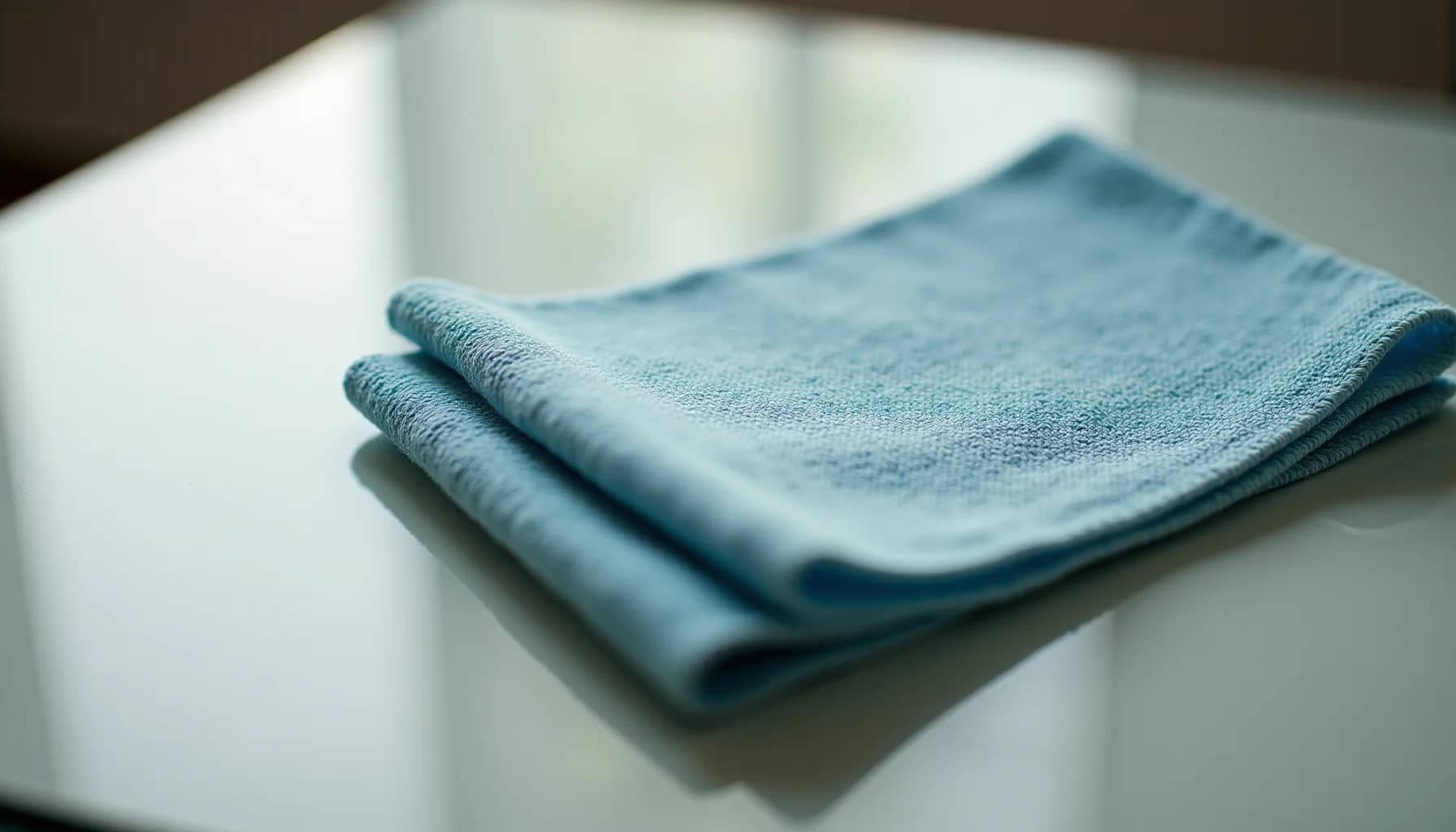
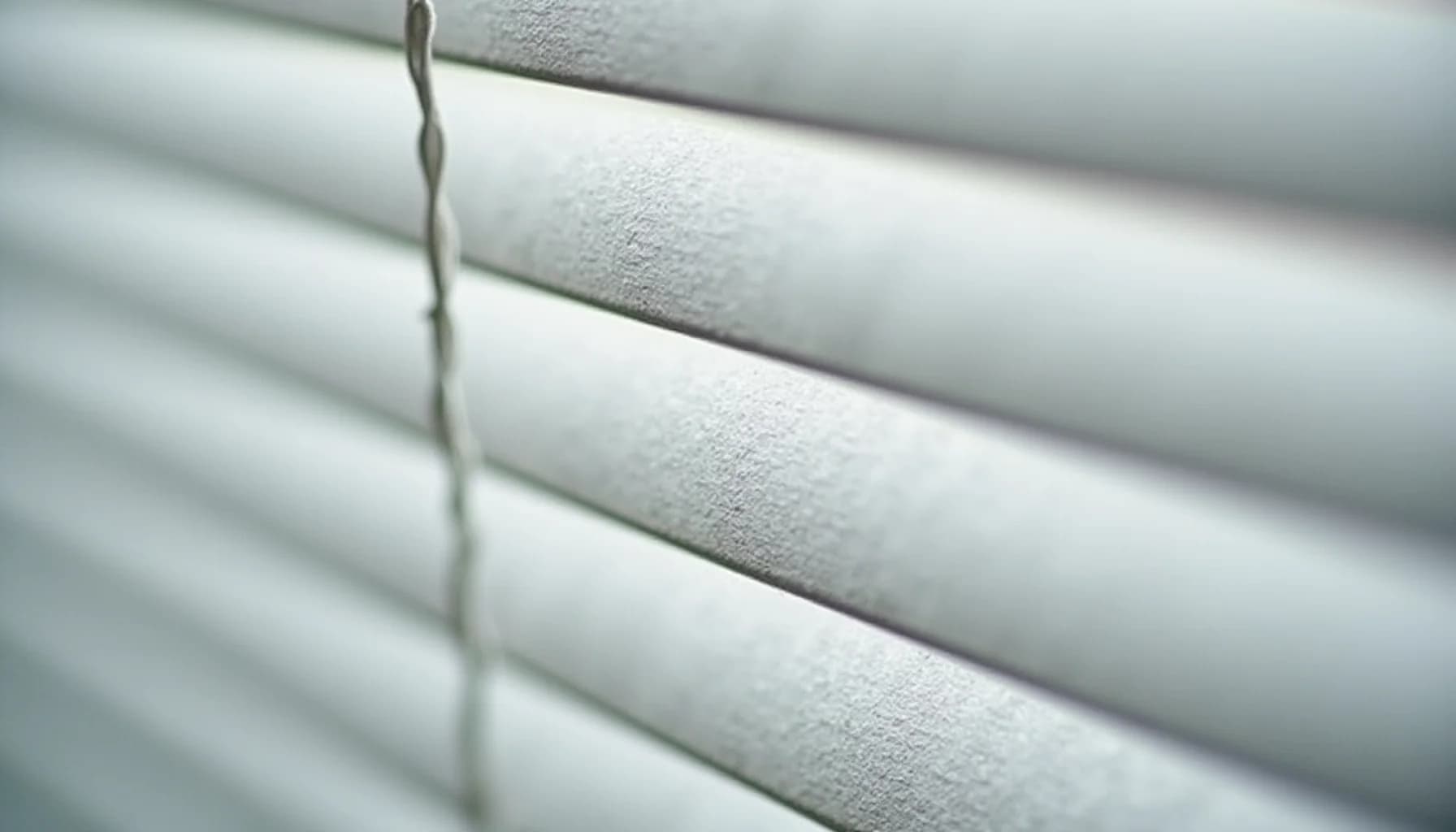
Close the slats so they lie flat, then wipe each one from top to bottom using a microfiber cloth, a window blind duster, or a vacuum with a soft brush attachment. Removing loose dust before any moisture touches the blinds prevents dust and water from mixing into muddy streaks that are far harder to clear.
Use the tong trick to clean both sides at once
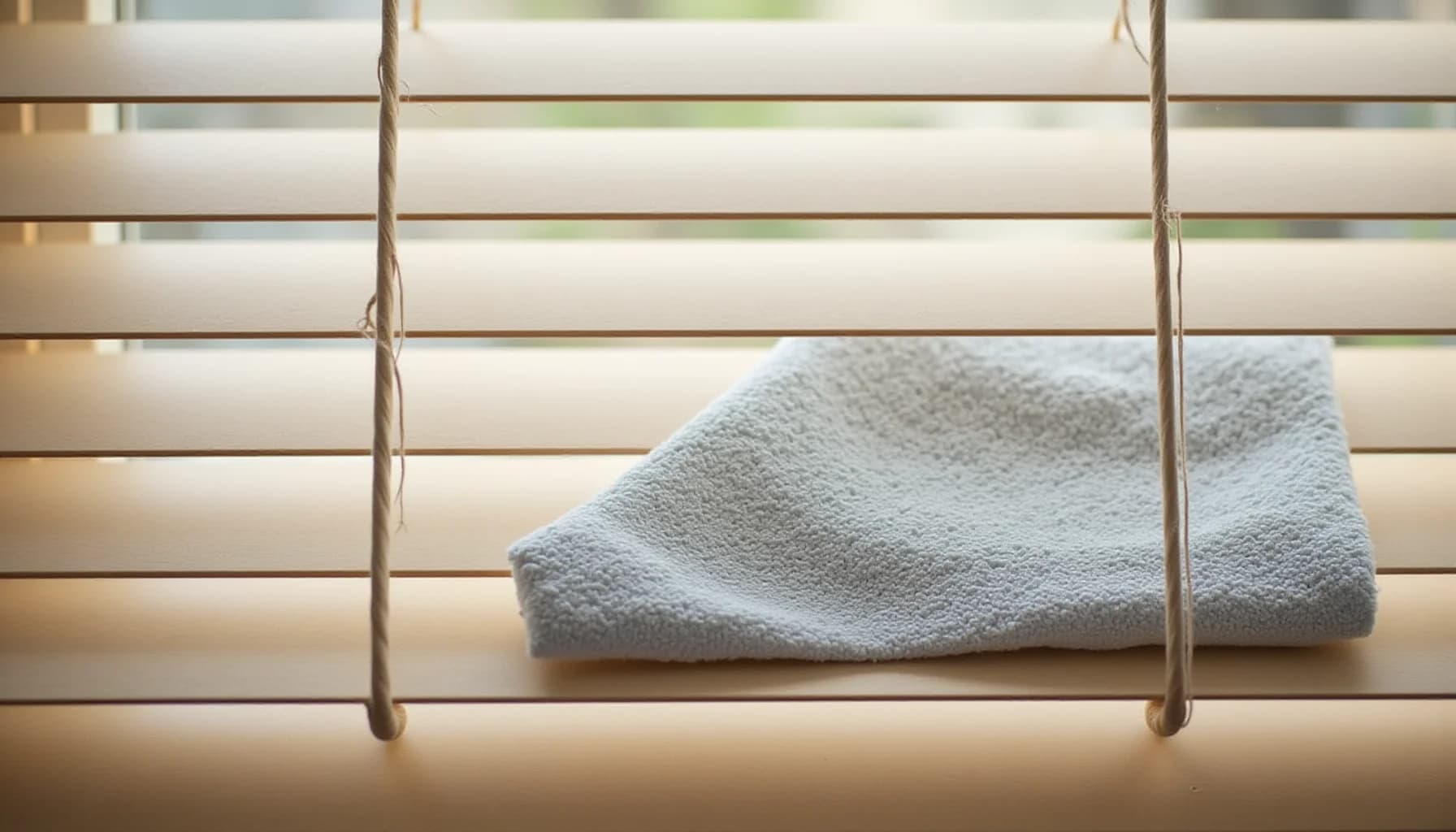
Wrap a microfiber cloth or an old sock around each arm of a pair of metal kitchen tongs and secure them with rubber bands, then clamp the tong onto a slat and slide it across. This cleans both faces of the slat in one pass, cutting your cleaning time roughly in half.
Wet-clean vinyl, aluminum, and faux-wood slats with a gentle solution
Dip a microfiber cloth or clean sock into a 1:1 mix of white vinegar and warm water with a small squirt of dish soap, wring it out well, then wipe each slat working from top to bottom. Spray the cloth, not the blinds, so moisture stays controlled and streaks stay minimal.
Soak badly soiled non-wood blinds in the bathtub
Fill the tub with warm water, half a cup of vinegar, and half a cup of baking soda, then submerge the blinds and let them soak for one to two hours. Rinse in clean water, dry gently with a clean towel, and re-hang only once they are fully dry.
Clean wooden blinds with polish only, no water
Put a soft sock over your hand, spray it lightly with wood polish, and wipe each slat from top to bottom, blade by blade. Water warps wood over time, and harsh chemicals such as bleach or ammonia strip the finish, so keep moisture and strong cleaners away from wooden slats entirely.
Vacuum fabric and vertical blinds on a regular schedule
Run a vacuum with a soft brush attachment from top to bottom on fabric blinds every time you vacuum your floors, then tilt the slats the opposite way and repeat to catch both sides. Light dusting every one to two weeks takes under a minute and prevents the deep buildup that makes annual deep cleaning far more difficult.
How often should you clean your blinds?
A simple two-tier schedule keeps blinds manageable without turning maintenance into a project.
The first tier is light dusting, done every one to two weeks. For most blinds, this takes less than a minute per window: close the slats flat, run a microfiber cloth or duster across each one, and you are done. The key is not waiting until you can see the dust. By the time a layer is visible, it has already compacted and bonded with any moisture in the air, making removal noticeably harder. Treating dusting as a quick add-on to your regular housework, the same way you might give fabric blinds a once-over every time you vacuum your floors, prevents that buildup from ever reaching the stubborn stage. Kitchens and bathrooms deserve slightly more attention here: cooking oils and humidity accelerate grime accumulation, so blinds in those rooms may need a wipe-down every two weeks rather than every two.
The second tier is a deeper clean, which most blinds only need once a year. This is where you bring in the wet cloth, the vinegar-and-water solution, or, for very dirty non-wood blinds, a full bathtub soak with warm water, half a cup of vinegar, and half a cup of baking soda for one to two hours. Plan for drying time before re-hanging; rushing this step leaves moisture trapped against the headrail, which can cause rusting and mechanism damage.
The practical takeaway is that the two tiers work together. Regular light dusting means your annual deep clean goes faster and produces better results, because you are removing a thin seasonal layer rather than months of compressed grime. Skipping the weekly pass and relying solely on the annual soak is exactly the pattern that makes people believe blinds are difficult to clean. They are not. The difficulty is almost always the result of infrequent attention, not the cleaning itself.
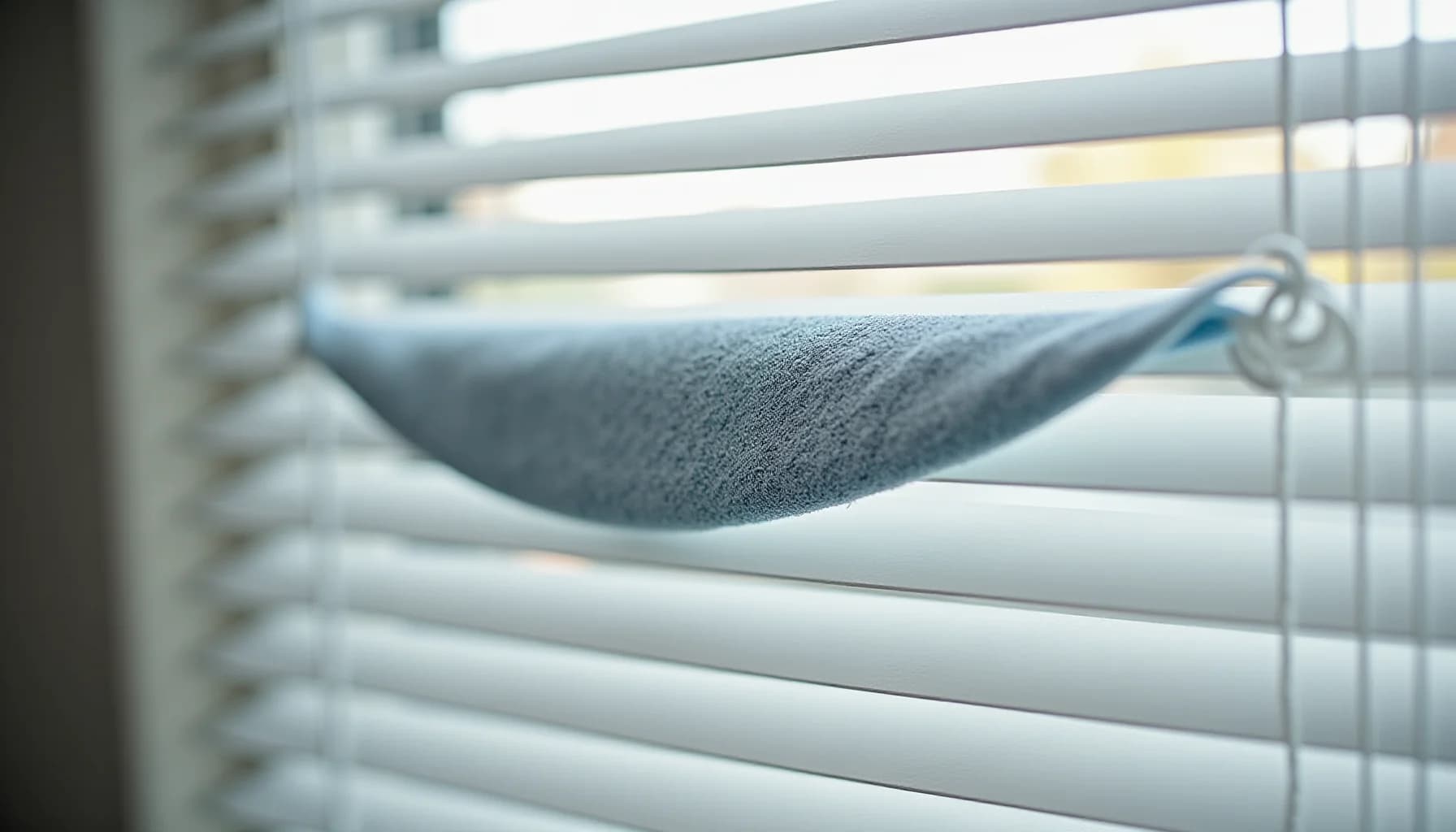
How do you wet clean vinyl and aluminum blinds?
Before reaching for any liquid, make sure the blinds are fully extended and the slats tilted to about three-quarters closed. This angle exposes the surface of each slat without letting them overlap, so you won't miss patches in the middle. Critically, dust the slats first with a dry microfiber cloth or a vacuum on its lowest suction setting. Skipping this step is where most streaks come from: moisture hits loose dust and turns it into muddy smears that are far harder to shift than the original grime.
Once the dry dust is gone, mix equal parts white vinegar and warm water in a bowl, then add a small squirt of dish soap. Dip a clean microfiber cloth or a cotton sock into the solution and wring it out well; the cloth should be damp, not dripping. Spray nothing directly onto the slats. Wipe each slat from the center outward, working from the top of the blind down toward the bottom so any dislodged particles fall onto areas you haven't cleaned yet.
For blinds that are heavily soiled and cannot simply be wiped clean, a bathtub soak is the most effective option. Fill the tub with warm water, half a cup of white vinegar, and half a cup of baking soda. Submerge the blinds and let them soak for one to two hours. Rinse thoroughly with clean water and dry gently with a towel before re-hanging. Do not skip the drying step: hanging wet blinds traps moisture inside the headrail, which can cause rusting and may void your warranty.
Steer clear of bleach and ammonia-based cleaners. Both can pit or discolor aluminum slats and degrade the finish on vinyl over time.
Blind-cleaning mistakes that make the job harder
The single most damaging mistake is spraying cleaner directly onto the slats before removing loose dust. The moisture binds instantly with accumulated particles and dries into muddy streaks that are genuinely harder to remove than the original dust. Always dry-dust first with a microfiber cloth or soft brush attachment, then apply any solution lightly to the cloth, never the blind itself.
Submerging wooden blinds in water causes irreversible warping. Wood expands unevenly as it absorbs moisture, and once the slats bow or twist, no amount of drying corrects the damage. The same applies to blinds with metal headrails: water trapped inside the housing promotes rust that degrades the tilt mechanism permanently. If you are uncertain whether your blinds contain wood components or a metal headrail, identify your blind material before you clean it so you know exactly what you are working with.
Bleach and ammonia-based cleaners strip finish from wood, discolor vinyl, and pit aluminum. The damage is not always visible on the first use, but the protective surface deteriorates progressively until cracking or discoloration appears that cannot be reversed. Use a 1:1 vinegar-and-warm-water solution with a small drop of dish soap instead.
Cleaning from the bottom up is a time-wasting error: dislodged dust falls onto slats you have already wiped, forcing you to repeat the work. Always start at the top and move downward.
If the headrail is visibly rusted, the tilt rod no longer engages, or the blind has water damage that has distorted the ladder cords or slats structurally, stop cleaning and consult a blind repair or replacement specialist. Surface cleaning cannot fix mechanical failure, and forcing a damaged mechanism risks the blind falling from its mounting.
Frequently asked questions
How often should I clean my blinds?
Can I soak all types of blinds in water to deep clean them?
What is the best way to clean fabric blinds like Roman or cellular shades?
Why do my blinds look streaky after I clean them?
What tools and homemade solutions work best for cleaning blinds?
The right tool makes the difference between a clean slat and a smeared one. A regular cloth or paper towel tends to push dust around rather than lift it, so swap those out for a microfiber cloth or a vacuum with a soft brush attachment. Microfiber grabs particles rather than redistributing them, which is exactly what you want on horizontal slats that accumulate dust quickly.
For cleaning both sides of a slat in one pass, the tong method is worth adopting as a weekly habit. Wrap a microfiber cloth or an old sock around each arm of a pair of metal kitchen tongs and secure them with rubber bands. Clamp onto a slat and slide from one end to the other, cleaning the top and underside simultaneously and cutting your cleaning time roughly in half.
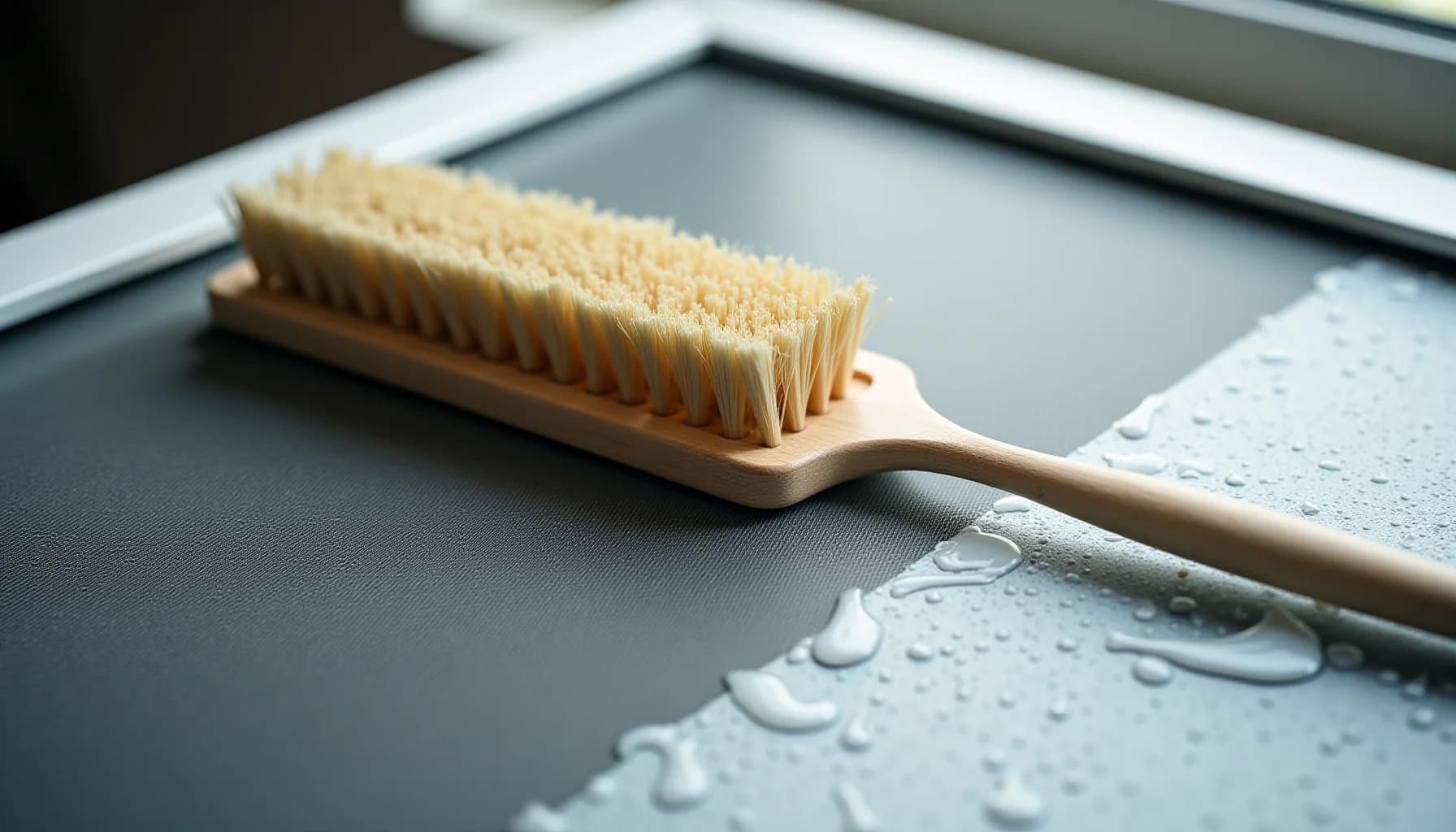
For fabric blinds, the vacuum's soft brush attachment is your go-to. Run it top to bottom, then tilt the slats and repeat on the opposite side.
For non-wood blinds that need a wet wipe-down, a homemade solution works well: equal parts white vinegar and warm water with a small squirt of dish soap. Dip a microfiber cloth or clean sock into the mix, wring it out so it is damp rather than wet, and wipe each slat. If you are unsure what your blinds are made of before choosing a solution, identifying your blind material first will save you from accidental damage.
Never spray solution directly onto the blinds. Apply it to the cloth instead, or you risk mixing moisture with loose dust and creating streaks that are harder to remove than the original grime.
How this article was made
Researched and written with AI assistance. What gets published is a human editorial decision. Grounded in 8 cited sources.
Edited by Claire Mercier, Editor. The guides are written with AI assistance.
Sources (8)
- tab05b sample cleaning guide
- How to Clean Blinds: A Step-by-Step Guide | COIT Cleaning and Restoration
- How to Deep Clean Different Types of Blinds
- Best Way to Clean Blinds Quickly and Safely
- How to Clean Blinds
- Your membership has expired
- There's Only One Way You Should Be Cleaning Your Blinds
- How to Clean Blinds so They Go From Sad to Spotless