Zone Cleaning Schedule: 31 Tasks by Room, Day by Day
Part of Cleaning Schedules · article 7 of 8
23 weekly tasks run Monday through Sunday alongside 8 daily tasks, 31 tasks total, each day taking 20 minutes and daily tasks adding 10 minutes a day. Start with Wipe kitchen counters and stovetop before anything else.
On this page
Every day
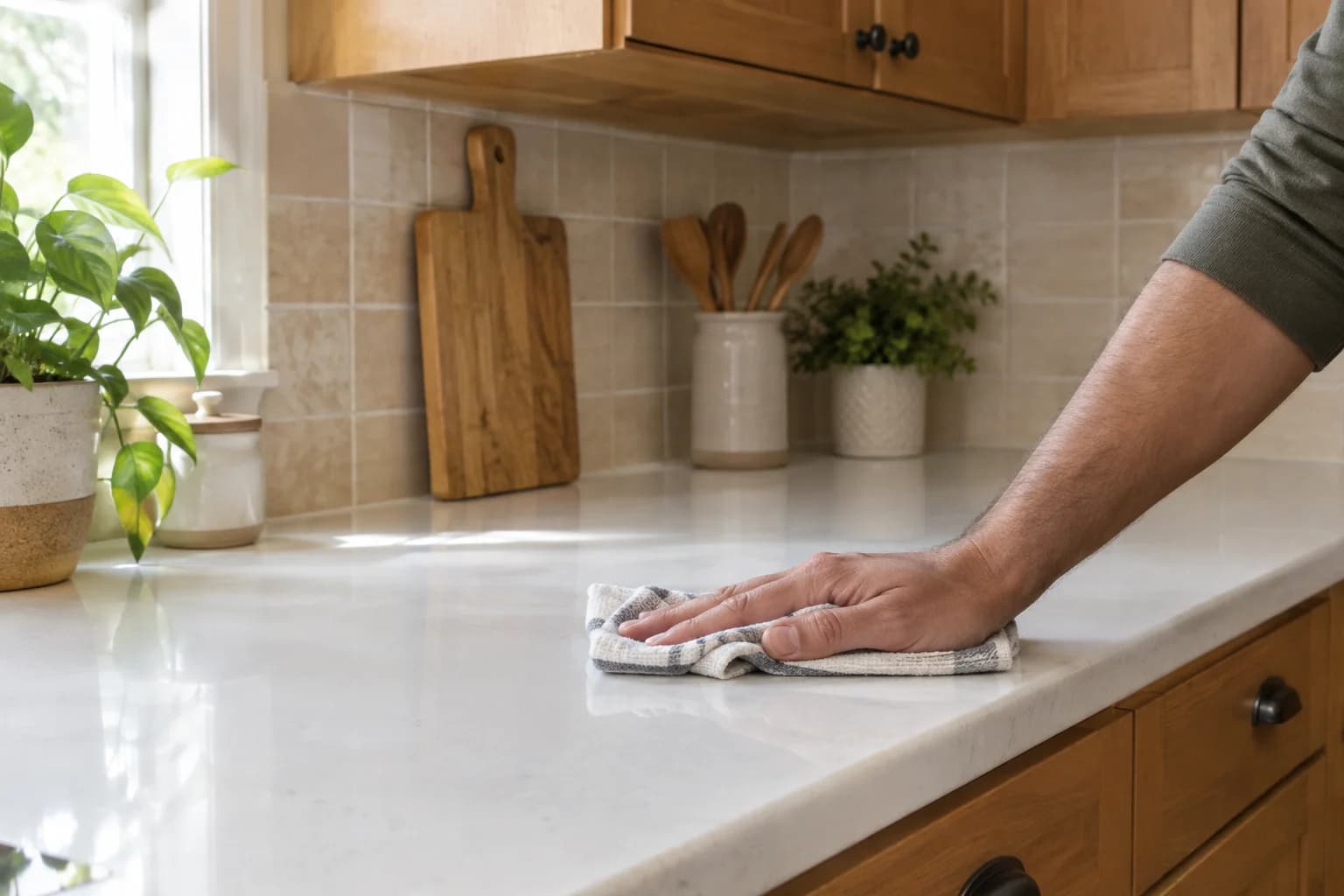
These short tasks catch messes before they set, so grease and toothpaste splatters never build up into a scrubbing job. Doing Wipe kitchen counters and stovetop right after cooking takes less effort than waiting until evening. You know it worked when counters stay clean between weekly deep cleans.
- 2 min
- 2 min
- 1 min
- 1 min
- 1 min
- 1 min
- 1 min
- 1 min
The weekly plan
Each weekday targets one main zone so attention rotates through the whole house without repeating the same room twice. Saturday mixes several smaller zones, like Entryway and Hallway, because those spaces need less time individually. Skipping a day just pushes that zone's grime into the following week, so catching up matters more than doing it perfectly.
Monday 20 min
- 5 min
- 4 min
- 6 min
- 5 min
Tuesday 20 min
- 6 min
- 4 min
- 6 min
- 4 min
Wednesday 20 min
- 6 min
- 8 min
- 6 min
Thursday 20 min
- 7 min
- 7 min
- 3 min
- 3 min
Friday 20 min
- 10 min
- 10 min
Saturday 20 min
- 6 min
- 8 min
- 6 min
Sunday 20 min
- 6 min
- 6 min
- 8 min
Adapting the Zone Cleaning Schedule to Your Life: Busy Weeks, Big Households, Small Homes
If your week is tight on time, keep the 8 daily tasks exactly as they are since those 10 minutes a day protect you from buildup, but cut the weekly list down to the 3 or 4 tasks that matter most per room: kitchen sink, bathroom surfaces, floors. Push the rest, like baseboards or window tracks, to the following week rather than skipping them outright, so nothing gets permanently dropped from the rotation.
In a large household, the 20 minutes per day assigned to each zone will likely run short, since more people means more mess in shared spaces like the kitchen and main bathroom. Split tasks by person instead of doing them solo: one person handles dishes and counters while another runs through the living room pass. The 23 weekly tasks stay the same, but you're covering them with more hands, so the time per person actually drops.
A small home, such as a one-bedroom apartment or condo, usually has fewer zones to rotate through, so merge days instead of forcing seven distinct zones. Combine living room and entryway into one day, and kitchen and dining area into another, so you're left with four or five working sessions instead of seven, each still around 20 minutes.
With a full-time job, mornings and evenings are the constraint, not the task list itself. Move anything that needs daylight or a long drying window, like glass or floors, to a single weekend session, and reserve weeknights for the quick daily tasks only. If you want a version built around this kind of limited window from the start, the realistic cleaning schedule lays out tasks sized for exactly that.
How Do You Put This Schedule to Work Week After Week?
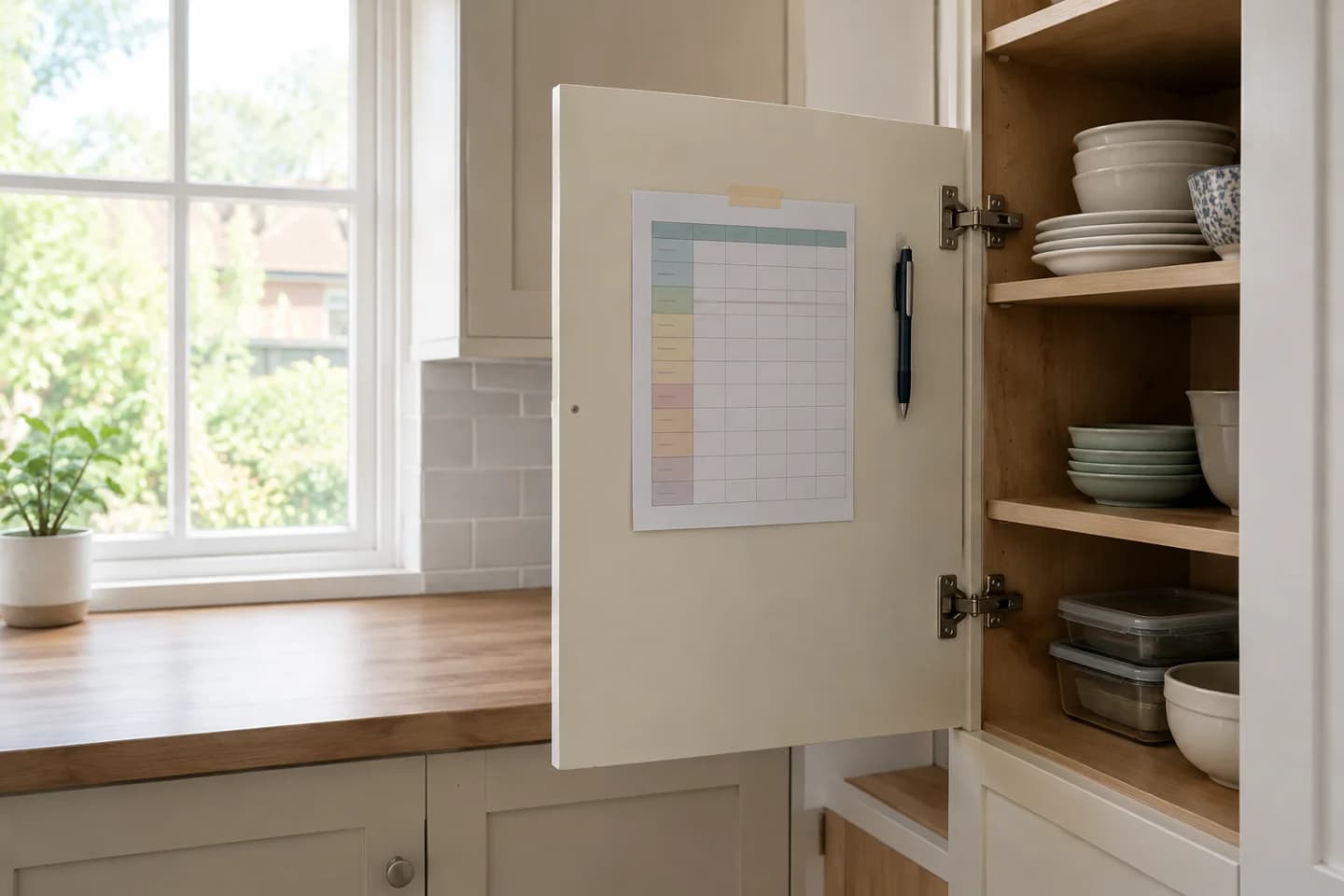
Print the whole thing out on one sheet, tape it inside a cabinet door or pin it to the fridge, and keep a pen nearby so ticking a box takes no extra thought. Each of the 23 weekly tasks lands on a specific day from Monday to Sunday, and the 8 daily tasks repeat every single day, so your sheet effectively tracks all 31 jobs at once. Once Sunday's last box is checked, don't start a new sheet: just wipe it clean (or print a fresh copy) and run the same seven days again. That repetition is what makes the schedule stick, since you stop deciding what to clean and just follow the grid.
If your household doesn't match the room list as printed, use the blank version instead. Leave the day columns intact but swap in your own tasks, room by room, so the structure stays but the content fits your actual home. This is also the better starting point if you'd rather build a schedule from scratch; for a version organized by week instead of by zone, the weekly cleaning schedule lays out the same 31 tasks differently.
Frequently asked questions
What is zone cleaning?
What should a zone cleaning checklist include?
How long does zone cleaning take each day?
Can you do zone cleaning if you live alone or in a small apartment?
What happens if you miss a day on the zone cleaning schedule?
How this article was made
Edited by Claire Mercier, Editor. The guides are written with AI assistance.