Family Cleaning Schedule: 29 Tasks Split Daily and Weekly
Part of Cleaning Schedules · article 8 of 8
This plan lists 29 tasks total: 21 weekly tasks spread Monday through Sunday plus 8 daily tasks. Start with the daily tasks, which take 15 minutes a day, then follow each day's weekly tasks, staying within 25 to 30 minutes.
On this page
Every day
Do these 8 tasks in the order listed so kitchen and entryway stay reset before clutter builds elsewhere. Spot-wipe spills on floors catches hazards before they're forgotten. If counters, sinks, and beds all look clear by evening, the day's routine is done.
- 3 min
- 2 min
- 2 min
- 2 min
- 2 min
- 2 min
- 1 min
- 1 min
The weekly plan
Each day pairs a heavier task with lighter ones so no single day feels overloaded, even though Friday through Sunday run longer than the rest. Skipping Wednesday's kitchen floor mop is the most common slip, since grease buildup gets harder to remove the longer it sits. You'll know a day's plan succeeded when its zones show no visible dust, residue, or clutter left behind.
Monday 25 min
- 10 min
- 10 min
- 5 min
Tuesday 28 min
- 8 min
- 10 min
- 10 min
Wednesday 25 min
- 5 min
- 8 min
- 12 min
Thursday 25 min
- 5 min
- 10 min
- 10 min
Friday 30 min
- 10 min
- 10 min
- 10 min
Saturday 30 min
- 10 min
- 15 min
- 5 min
Sunday 30 min
- 10 min
- 10 min
- 10 min
How to Adapt Your Family Cleaning Schedule to Fit Your Situation
If you're short on time most days, keep the 8 daily tasks but trim them to the two-minute version: wipe counters, start the dishwasher, do a quick toy and shoe sweep. Then fold the 21 weekly tasks into just two sessions, one on Saturday and one on Wednesday, covering 10 to 11 tasks each, rather than spreading small chunks across all seven days. You'll still land under 30 minutes a day on the days you clean, just on fewer days.
A larger household (five or more people, multiple kids) generates more laundry, dishes, and bathroom use, so split the weekly list by person or by floor instead of doing it all yourself. Assign one family member the upstairs bathroom and another the kitchen floor, and let the daily tasks double as chore-chart items for kids old enough to wipe a counter or load a hamper. The total task count stays at 29, but the minutes per person drop.
In a small home or apartment, several weekly tasks naturally merge because there's less square footage to cover. Combine "vacuum living areas" with "vacuum bedrooms" into one pass, and skip separate sessions for rooms you don't have, like a mudroom or a formal dining room. This can shrink the weekly list closer to 15 or 16 tasks without skipping anything that actually gets dirty.
If you work full time, move any task that needs daylight or extended drying time, like washing windows or deep-cleaning floors, to a weekend slot, and keep weeknights limited to the 15 minutes of daily tasks plus one quick five-minute add-on. For floor care specifics on a tight weeknight window, the guide to cleaning LVP flooring covers fast methods that fit after work.
How Do You Put the Schedule to Work Week After Week?
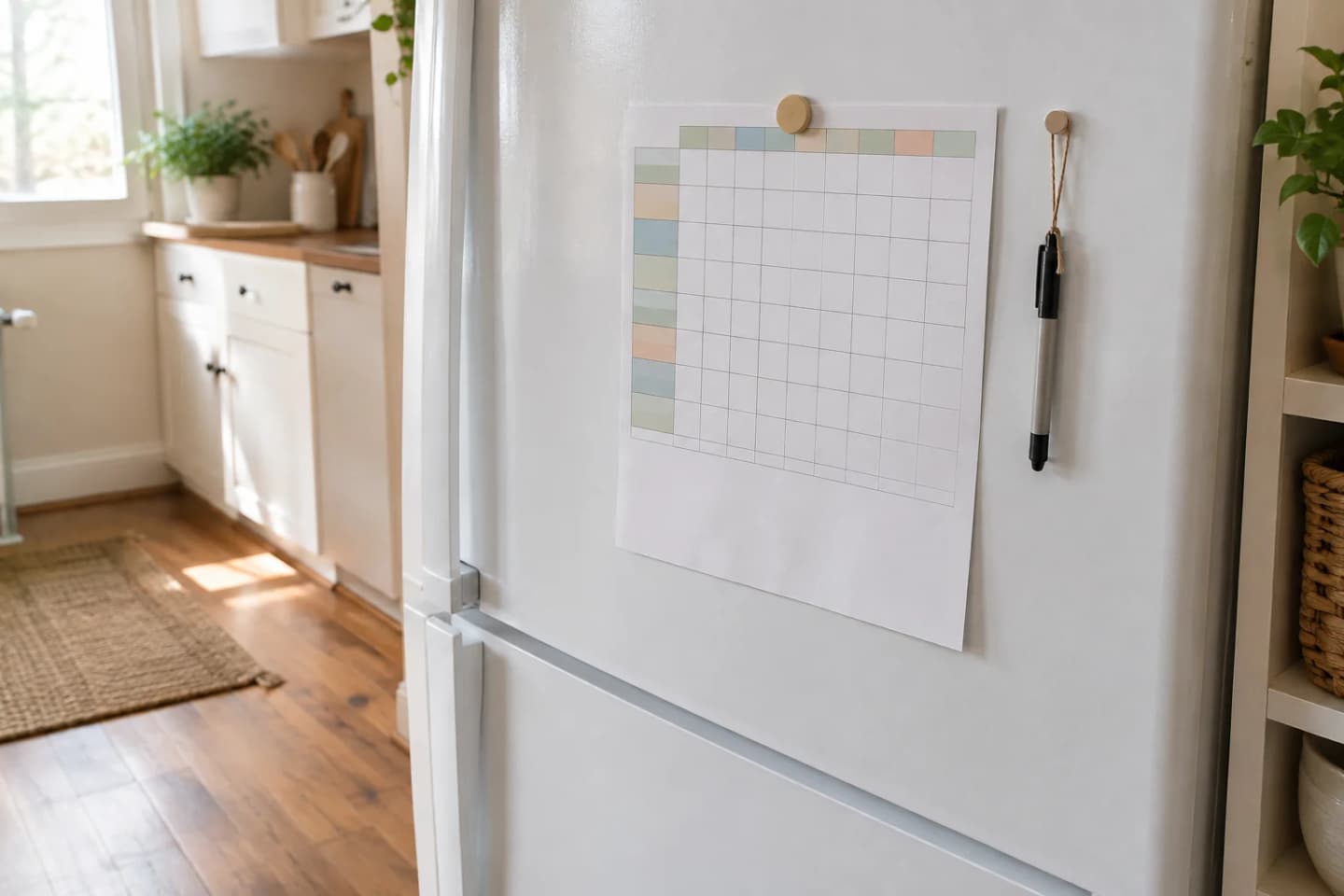
Print the grid and post it where the family actually gathers, the fridge door or the inside of a cabinet, not a drawer where it gets forgotten. Each person checks off their own tasks as they finish them, so at a glance everyone can see what's done and what's still open for the day or the week. When Sunday closes out the 21 weekly tasks, wipe the sheet clean, or print a fresh copy, and start the cycle again Monday morning. The 8 daily tasks reset every single day regardless of where the week stands, so they get their own checkmarks even on a day when no weekly task is scheduled.
If the printed layout doesn't match how your household actually runs, use the blank version instead. Swap in the chores your family deals with, assign them to the days that make sense for your work and school schedule, and build a list that holds up over time instead of one you abandon after two weeks. A schedule only works if the tasks on it match the mess you actually make, so don't be afraid to rename, reorder, or drop items from the template.
Frequently asked questions
What is a good house cleaning schedule for a family?
How long should daily cleaning tasks take for a family?
How do I divide cleaning chores among family members?
What should I do if I don't have time to clean every day?
How should a cleaning schedule change for a small apartment versus a large house?
How this article was made
Edited by Claire Mercier, Editor. The guides are written with AI assistance.