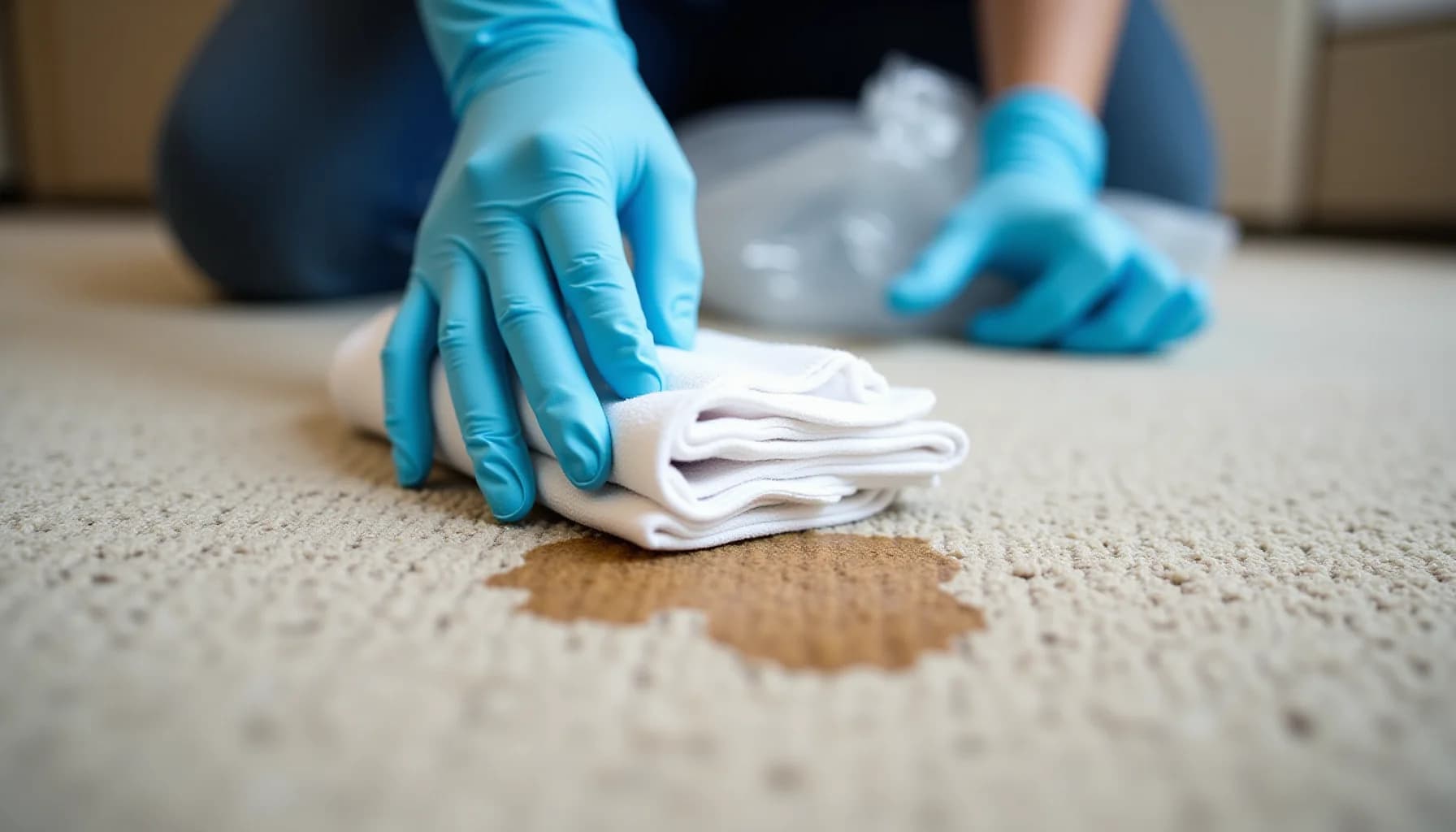
How Long Does It Take Carpet to Dry After Cleaning (and Faster)
Part of Fabric & Carpet Care · article 16 of 16
Most carpets dry within 6 to 24 hours after cleaning, though that window stretches toward 48 hours if the padding underneath absorbed a significant amount of water. Staying under 48 hours matters because, as the EPA notes, mold will not grow if wet or damp materials are dried within that timeframe, making speed a practical concern rather than just a comfort issue, especially if you want to avoid the mold problems that saturated carpet backing can cause.
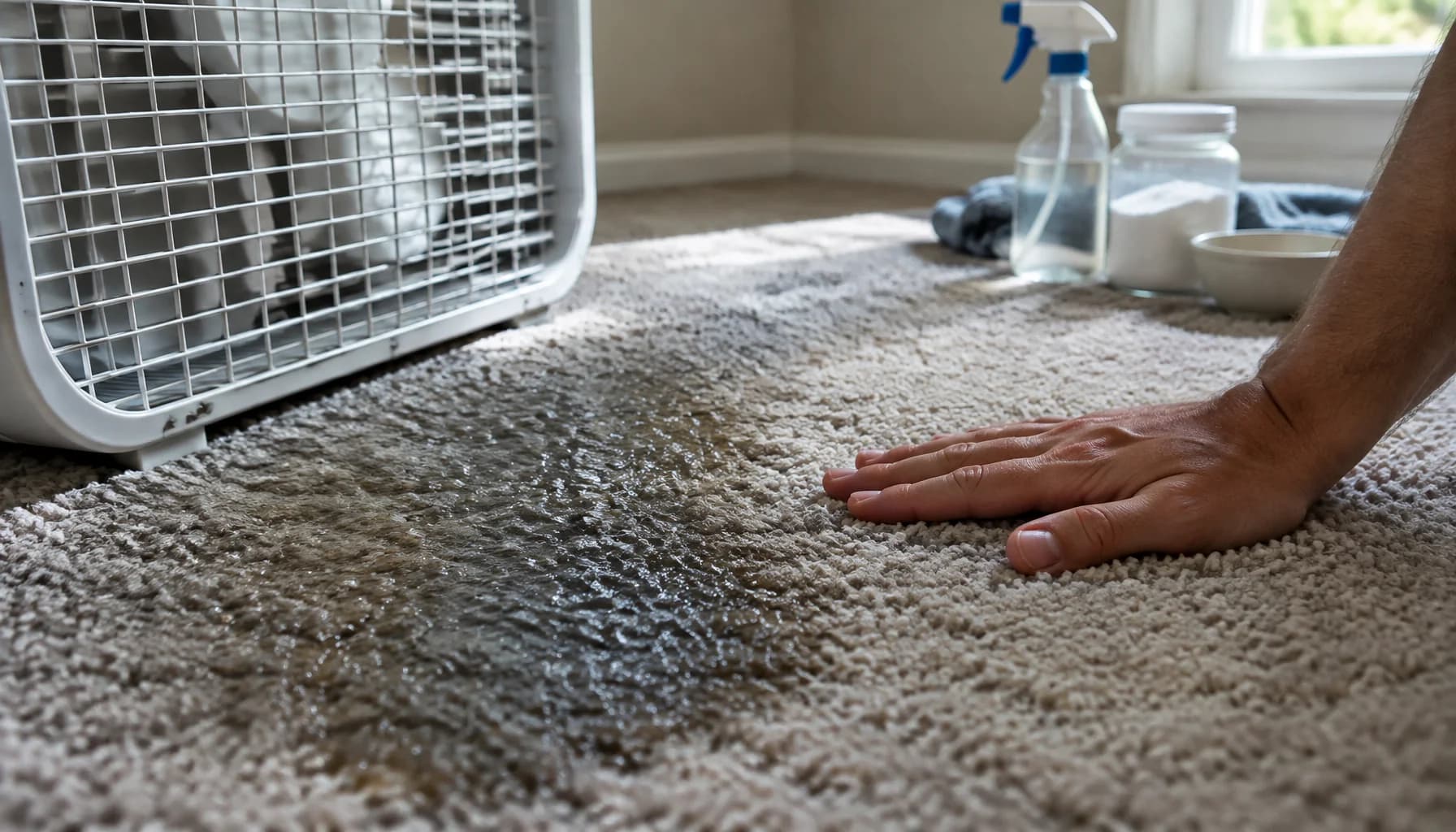
What happens if carpet stays wet beyond 48 hours?
The reason the 24-to-48-hour window matters is not aesthetic; it is biological. Mold spores are present in virtually every home, and they need only three things to colonize: a food source (carpet fiber and backing qualify), warmth, and sustained moisture. The EPA states plainly that mold will not grow if wet or damp materials are dried within 24 to 48 hours. Cross that threshold and the conditions tip in mold's favor, not gradually but reliably.
Carpet is especially vulnerable because of its structure. Water that soaks through the face fibers reaches the backing, then the pad beneath it, and both layers hold moisture far longer than the surface suggests. You can walk across a carpet that feels merely damp on top while the pad underneath is still saturated enough to support growth. That is why pulling the carpet up and drying the pad separately is not optional if significant water is involved; wet-vacuuming the surface alone will not bring either layer dry within the window.
Once mold has established itself in carpet or padding, the calculus changes completely. Because carpet is porous, mold grows into the empty spaces and crevices of the fibers rather than sitting on the surface, which means scrubbing, as you would with a hard surface, cannot reach it. The EPA notes that absorbent materials like carpet may have to be discarded if they become moldy, because the mold may be difficult or impossible to remove completely. If you are uncertain whether your carpet has crossed that line, the detail in how to remove mold from carpet, and when replacement is the right call will help you assess it accurately.
Padding almost always warrants replacement once it has been wet long enough for growth to begin, even if the carpet itself can be salvaged. It is dense, slow to dry, and holds contamination where you cannot see or reach it.
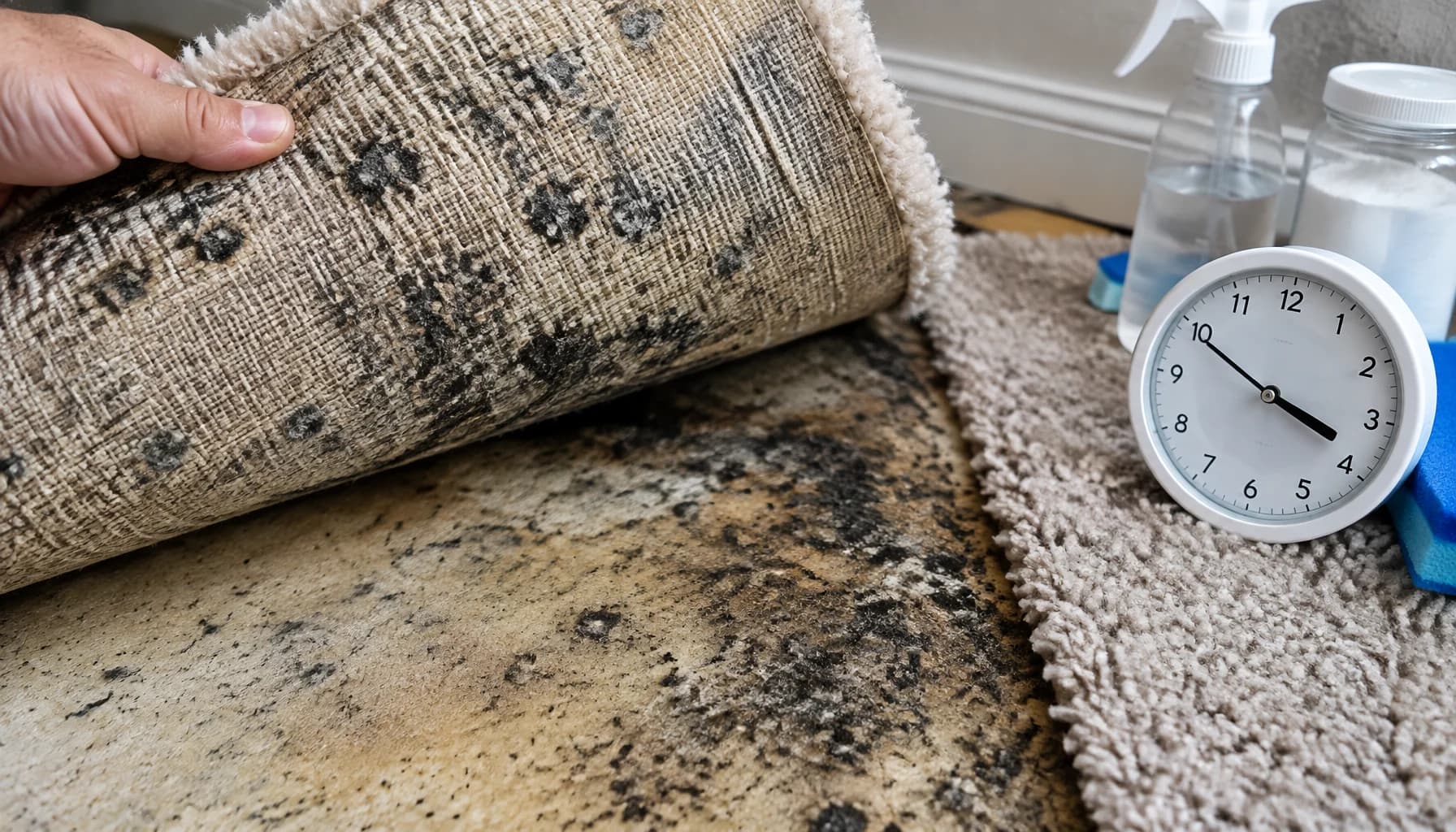
How Do You Speed Up Carpet Drying After Cleaning?
Start with wet vacuuming the moment cleaning is done. A wet vacuum pulls water out of the fiber pile before it can work its way down into the backing. Use it only while the carpet is still visibly wet; running a wet vacuum over dry or nearly dry carpet can scatter mold spores rather than removing them.
Wet vacuuming alone will not finish the job, though. The next step is to pull the carpet off the floor entirely, then lift the pad underneath it. Both pieces need to be separated because the pad acts like a sponge and holds far more moisture than the surface fibers suggest. With the carpet and pad lying flat or draped over sawhorses, aim at least one box fan directly across each surface. Moving air strips moisture from the fibers continuously, which is what cuts drying time down toward the low end of the 6-to-24-hour range. If you are concerned about what excess moisture can do to an already damp area, the guidance on how to remove mold from carpet covers what happens when backing stays wet too long.
Add a dehumidifier to the room where the pieces are drying. The dehumidifier pulls the moisture the fans drive off the carpet out of the air entirely, so the air itself keeps accepting more evaporation rather than stalling once it becomes saturated. In a closed room without a dehumidifier, humidity rises quickly and slows the whole process considerably.
Keep doors and windows open if outdoor humidity is below indoor humidity, and run a ceiling fan overhead if the room has one. Every measure compounds the others: the wet vacuum removes bulk water, the fan moves drier air across wet fibers, and the dehumidifier keeps that air capable of absorbing more. Once both the carpet and the pad feel dry to the touch throughout, reinstall them. The goal is to reach that point within 48 hours of cleaning.
How this article was made
Researched and written with AI assistance. What gets published is a human editorial decision. Grounded in 3 cited sources.
Edited by Claire Mercier, Editor. The guides are written with AI assistance.