How to Clean a Rug Without a Carpet Cleaner: 5 Real Fixes
Part of Fabric & Carpet Care · article 15 of 15
On this page
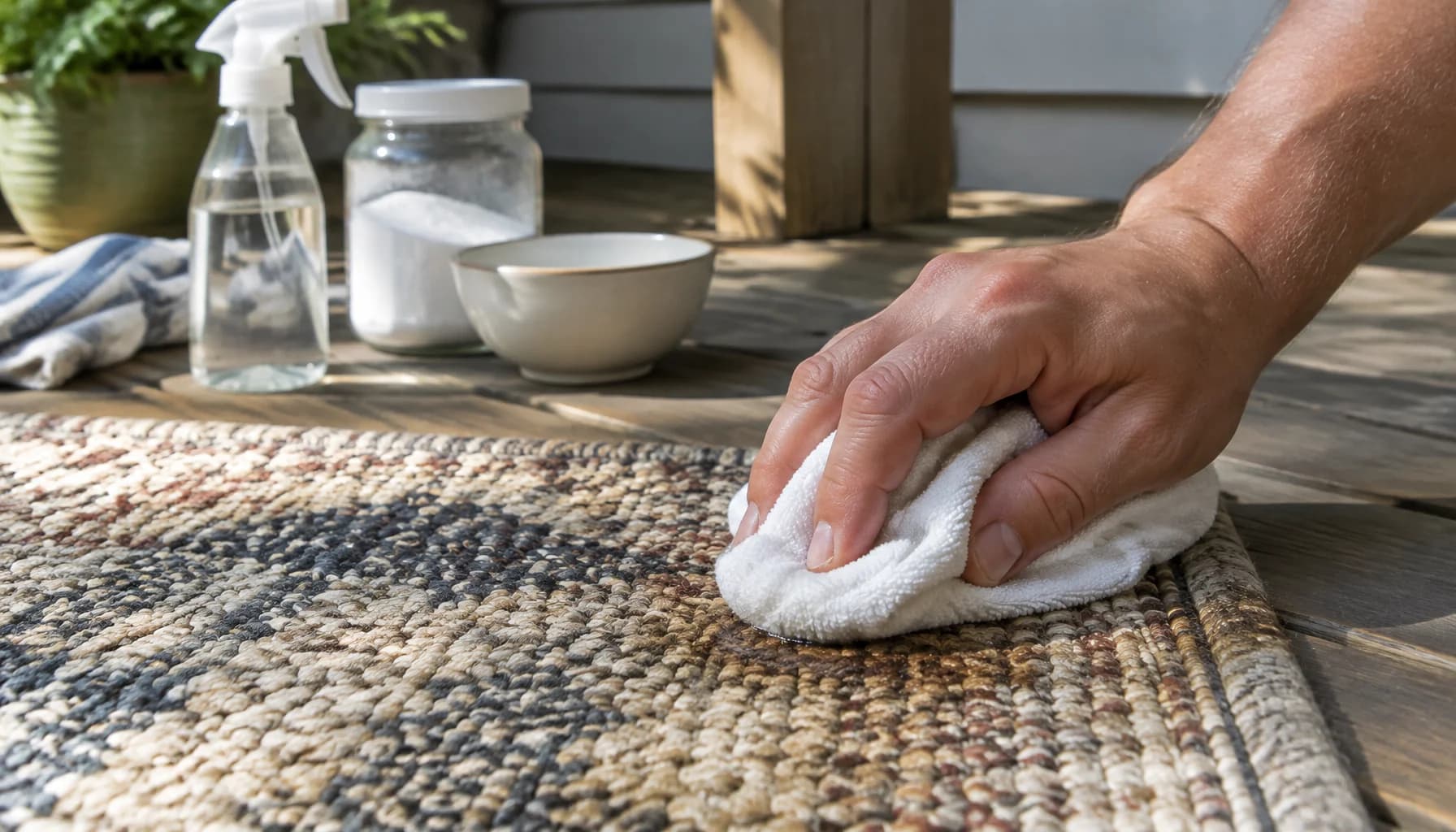
You can clean a rug without a machine using solutions you already have at home, as long as you work on a sunny day, keep windows open, and avoid soaking the fibers. Too much moisture trapped at the base leads to mildew. Before treating any area, test your chosen solution on a hidden spot to check for discoloration.
For general stains, mix 1/4 teaspoon of liquid dish soap with 1 cup of lukewarm water, sponge the spot, then rinse thoroughly. Detergent residue left in the pile attracts soil quickly. For tougher spots, sponge with 1 cup white vinegar mixed with 2 cups water. Never mix chlorine bleach with vinegar or ammonia: the combination releases toxic fumes.
Before you start cleaning: timing, testing, and moisture control
Good prep work prevents the two most common DIY rug-cleaning mistakes: setting a stain deeper with the wrong product, and leaving so much moisture in the pile that mildew takes hold before the rug dries.
Pick the right day. Clean the rug on a sunny day and open the windows before you begin. Moving air and natural warmth cut drying time significantly, and a faster-drying rug is far less likely to develop the musty smell that comes from moisture sitting too long in the backing and padding beneath the fibers. If you have a wool or natural-fiber rug, the stakes are even higher, because those materials hold water longer than synthetic piles, so read up on the particular limits of wool before you start.
Test before you treat. Whatever cleaning solution you plan to use, apply a small amount to a hidden corner, such as a tucked-away edge near a wall, and wait a few minutes. Look for color transfer onto your cloth, any lightening of the dye, or texture change in the pile. Skipping this step on a patterned or vintage rug is how permanent discoloration happens.
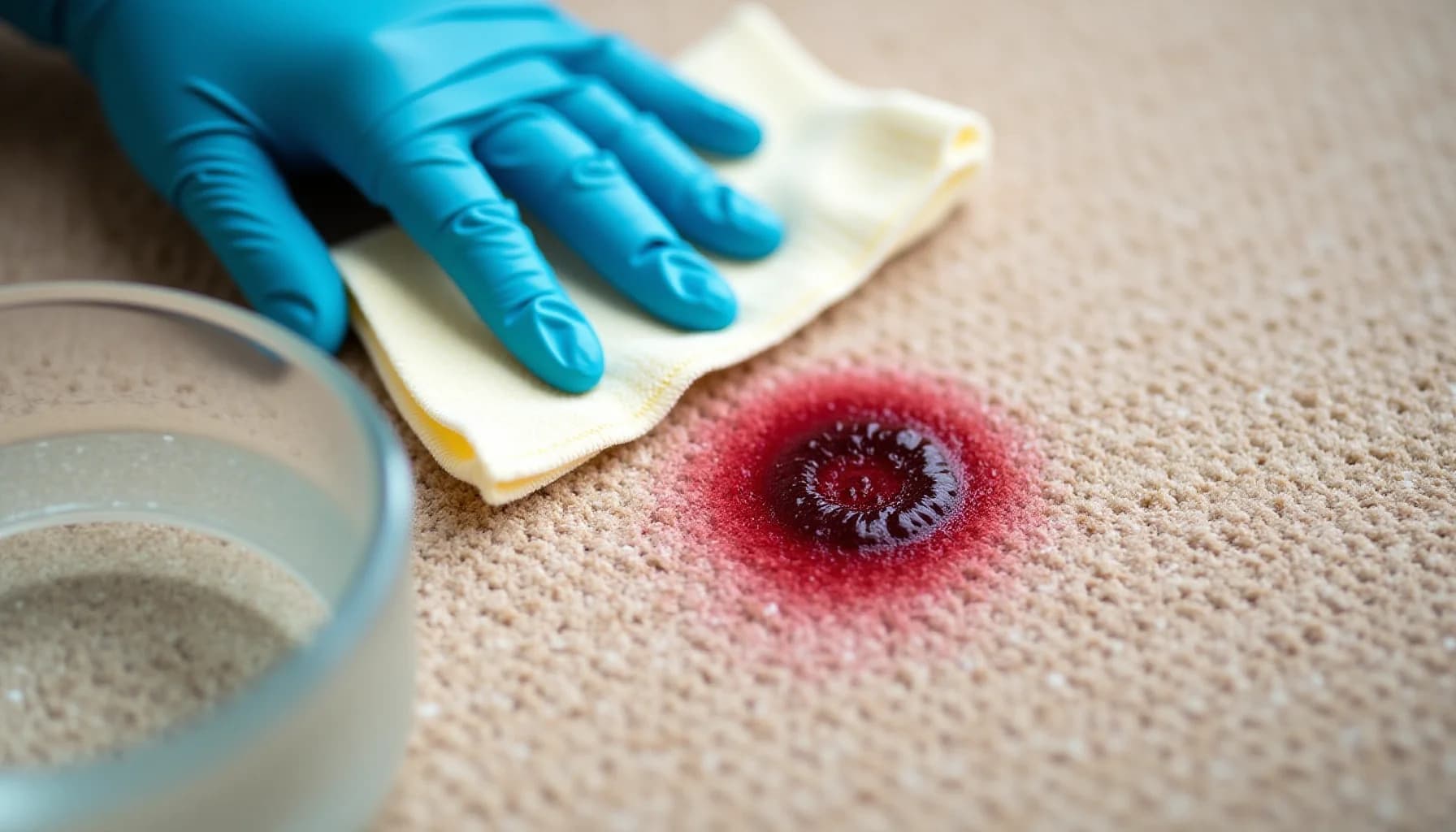
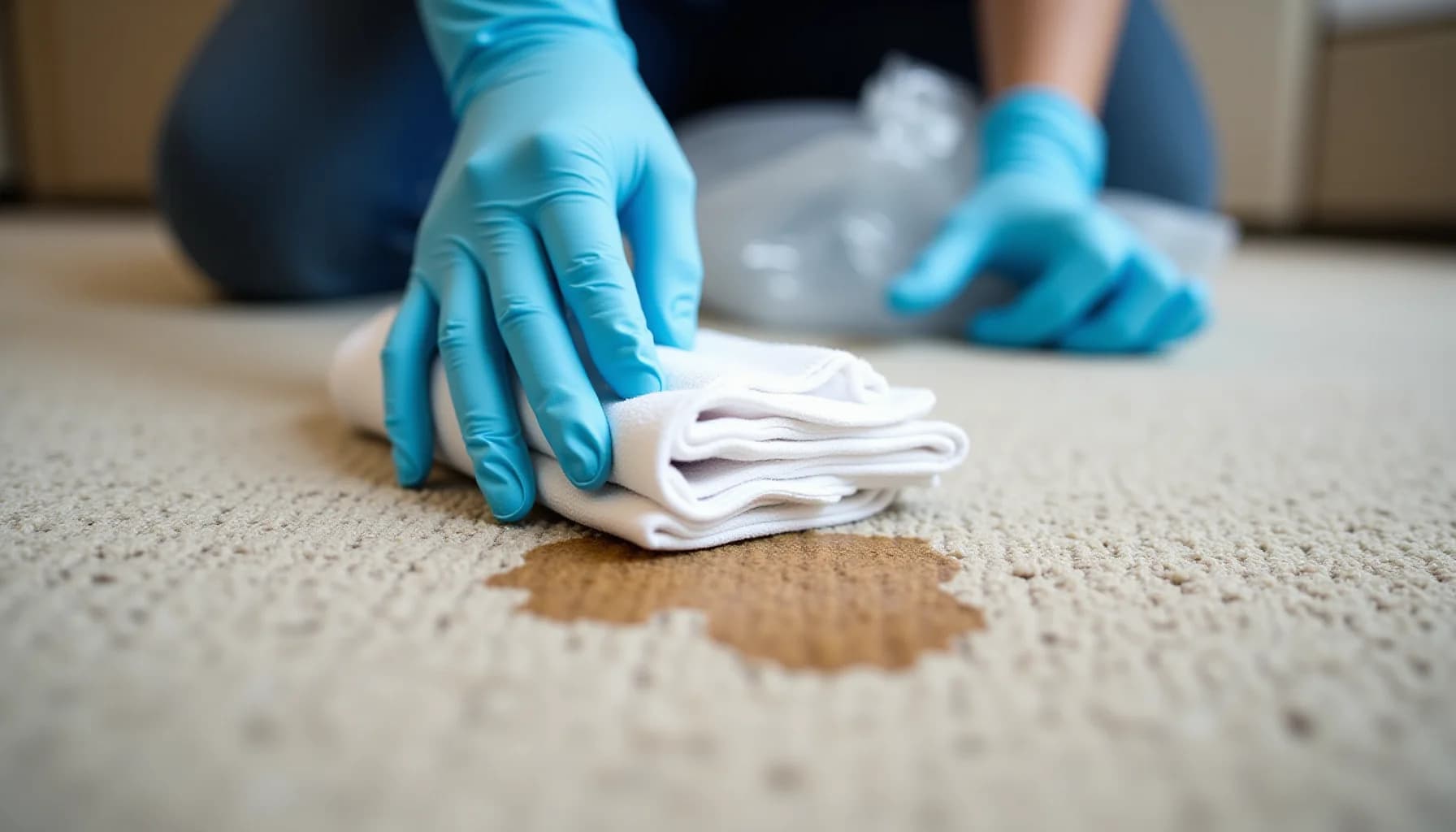
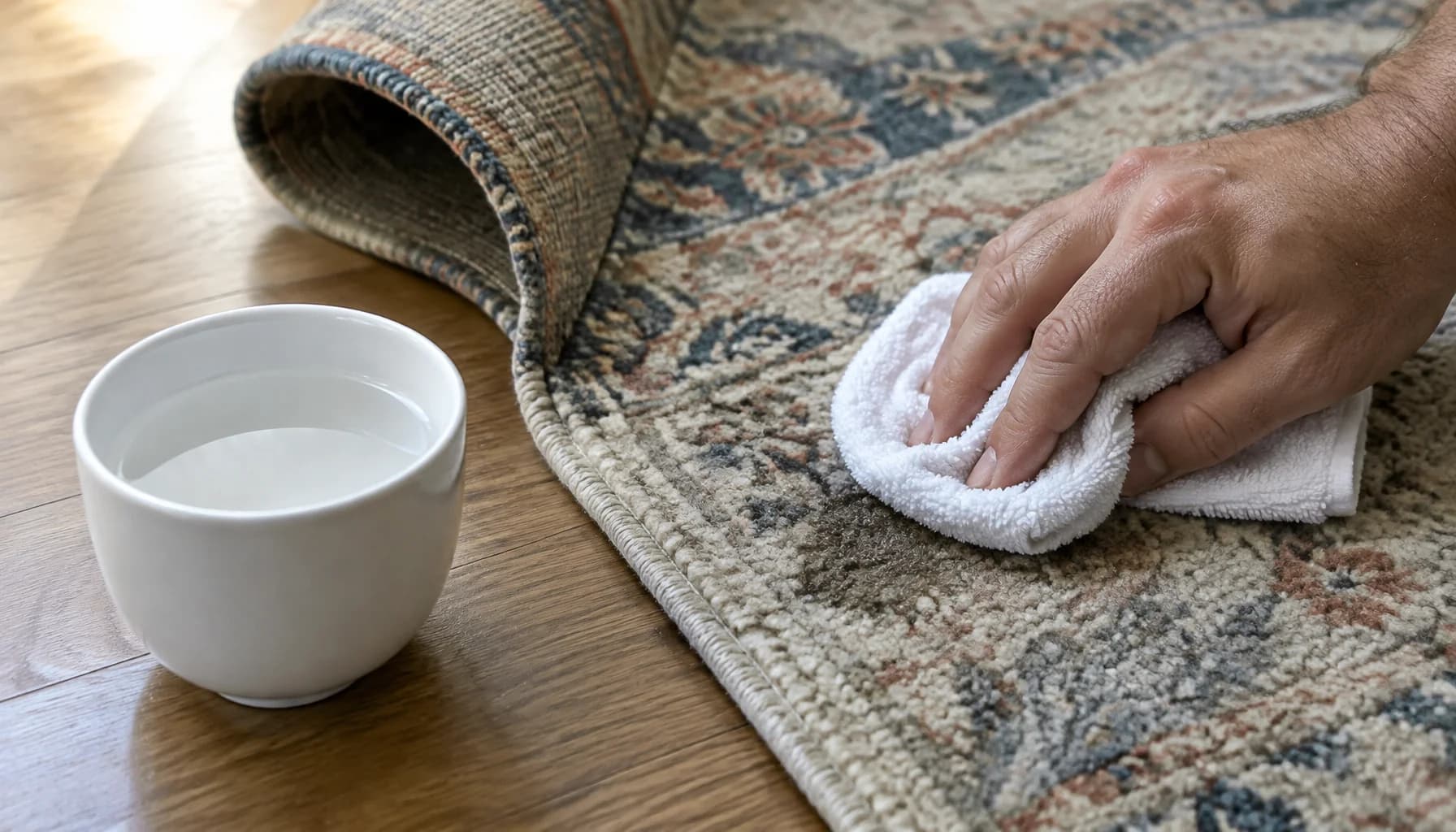
Control how much liquid you use. Sponge solutions onto the stained area rather than pouring them on. The goal is to dampen the fibers, not saturate them. Soaking a rug pushes moisture through to the backing and the subfloor beneath, where it cannot evaporate quickly, and mildew can establish itself within 24 to 48 hours. Use a clean white cloth or sponge, work from the outer edge of the stain inward to avoid spreading it, and blot rather than scrub.
What Can You Use to Clean a Rug Without a Carpet Cleaner?
Pick a sunny day and open the windows
Work on a dry, sunny day and open every nearby window before you start. Moving air pulls moisture out of the rug fibers; without it, dampness can reach the backing and mildew can establish itself within 24 to 48 hours.
Test your cleaner on a hidden spot first
Apply a small amount of whichever solution you plan to use to an inconspicuous area, wait a few minutes, and blot dry. Check for any color change or fiber damage before treating the visible stain.
Treat general stains with a dish soap solution
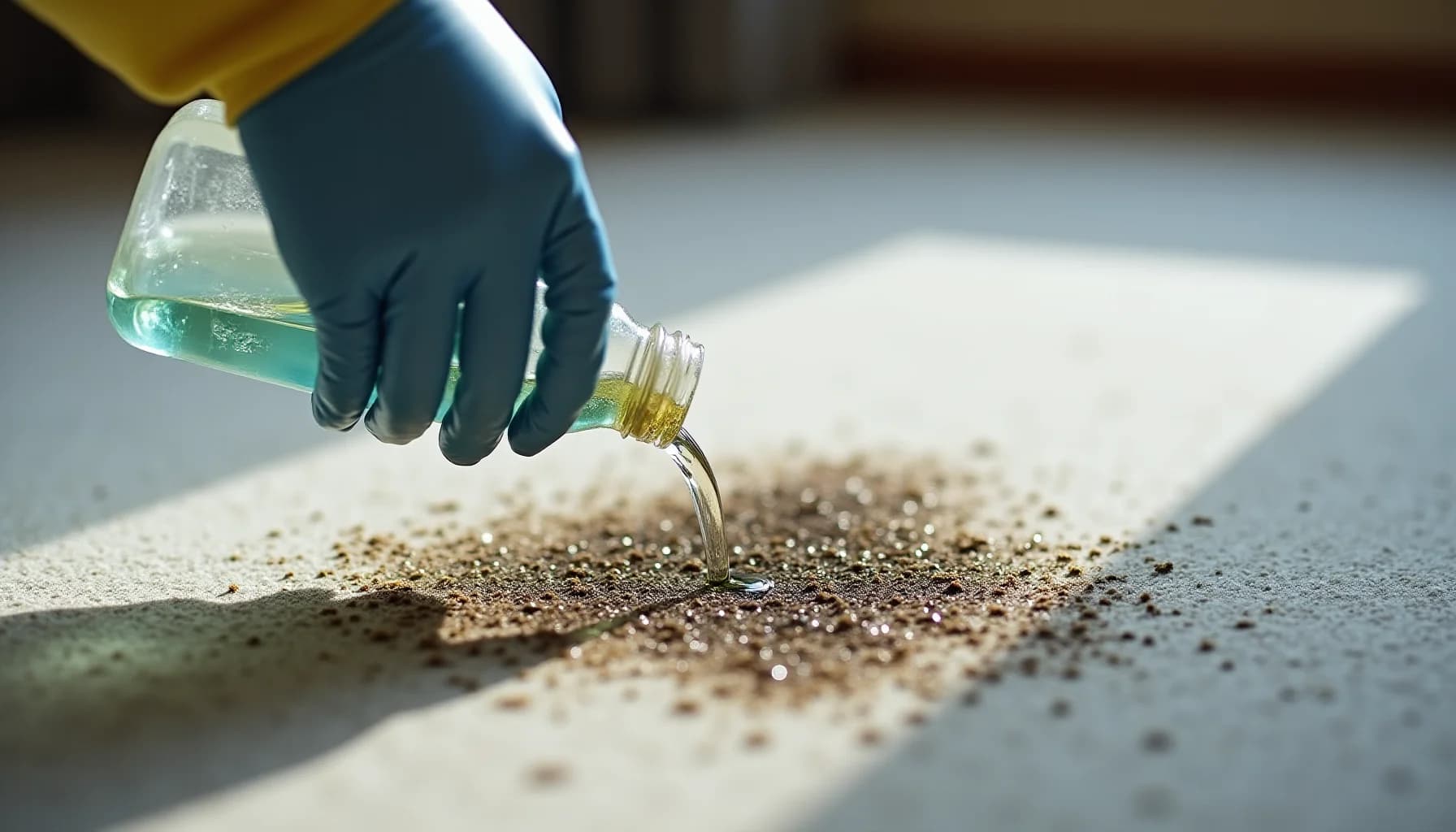
Mix 1/4 teaspoon of liquid dish soap with 1 cup of lukewarm water, then sponge the solution onto the stained area using light strokes. Rinse thoroughly afterward, because soap residue left in the fibers attracts dirt and causes rapid resoiling.
Tackle tougher spots with a vinegar and water solution
For stains that resist dish soap, sponge the area with 1 cup of white vinegar mixed with 2 cups of water. Work from the outer edge of the stain inward to keep it from spreading.
Use a borax paste on set-in or stubborn stains
Mix 1/4 cup borax, 1/4 cup salt, and 1/4 cup vinegar into a paste, spread it over the stain, and leave it for a few hours. Once it has dried, vacuum up the residue completely.
Keep moisture to a minimum throughout
Sponge and blot rather than pour or scrub, and never saturate the rug. Soaking pushes moisture through to the backing and the subfloor beneath, where it cannot evaporate quickly, creating the conditions for mildew growth.
What Paste Recipes Remove Stubborn Carpet Stains Without a Carpet Cleaner?
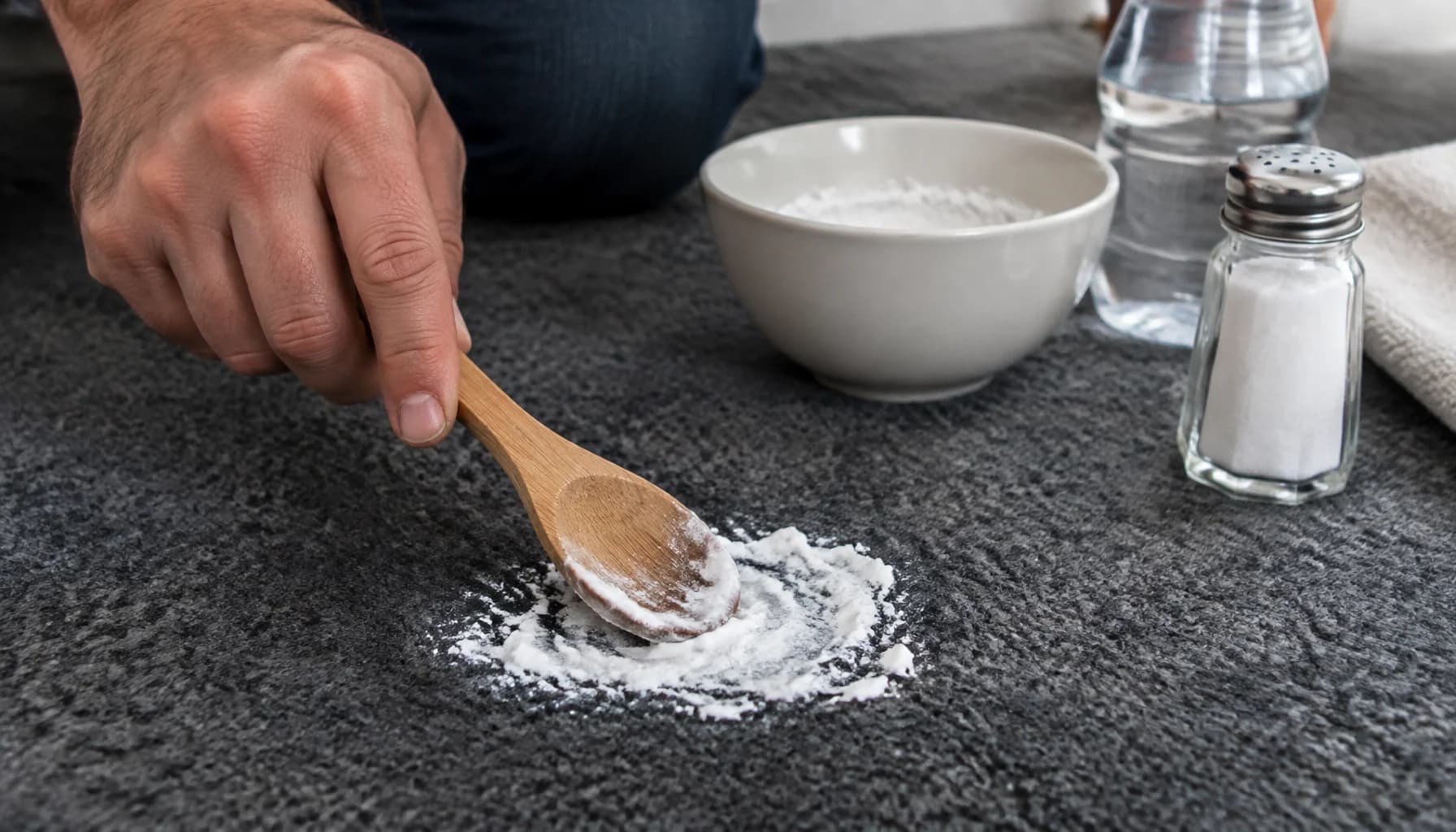
When liquid dish soap and plain water aren't enough, two paste-based formulas can pull stubborn stains out of carpet fibers without any powered equipment.
The first is a vinegar-salt paste. Combine 1/2 cup white vinegar, 2 tablespoons salt, and 1/2 cup water, then work the mixture into the stained area with a sponge or soft brush. The salt acts as a mild abrasive and draws moisture upward while the vinegar breaks down residue left in the fibers. Let the paste sit long enough to penetrate, then blot and rinse with cold water.
The second formula handles tougher, set-in stains. Mix 1/4 cup borax, 1/4 cup salt, and 1/4 cup vinegar into a paste, spread it over the stain, and leave it for a few hours. Borax is a mineral compound that softens and lifts organic matter, while the salt helps absorb it and the vinegar works on odor-causing residue. After the paste has dried or nearly dried, vacuum it up thoroughly. This combination is particularly useful for stains with both a color and an odor component, such as pet accidents or food spills that have had time to set. For blood stains specifically, the approach differs enough that the full method is covered in Remove Blood From Carpet Fast: The Methods That Actually Work.
Before applying either paste, test it on a hidden corner of the rug first. Some dyes, especially in wool or hand-knotted rugs, react to vinegar's acidity. If you have a wool rug, check the specific guidance in How to Clean a Wool Rug Without Ruining It before proceeding.
Apply paste only to the stained area. Keep the surrounding fibers as dry as possible, and always rinse thoroughly once the paste has done its work, since any residue left in the pile will attract fresh soil faster than a clean surface would.
What household recipes handle mold and drain buildup near rugs?
Two spots near a rug create the kind of secondary mess that works back into the fibers: slow drain buildup that splashes dirty water onto nearby bathroom or laundry rugs, and surface mold that spreads from grout or baseboards. Both respond well to the same pantry ingredients, used correctly.
For a sluggish drain close to a rug, pour 1/2 cup of baking soda directly into the drain opening, followed by 1/2 cup of white vinegar. Let the fizzing reaction work for 15 minutes, then flush with boiling water to clear the loosened residue. The reaction works because baking soda is alkaline and vinegar is acidic; together they produce carbon dioxide bubbles that agitate debris clinging to pipe walls. Because the two combine in an open drain rather than a sealed container, pressure cannot build to dangerous levels. Keeping the drain clear reduces the splashing that saturates a nearby rug edge and feeds mold growth in the backing. For a deeper look at keeping drains clear, How to Clean a Kitchen Sink Drain: What Actually Works covers the full method.
For mold on hard surfaces adjacent to a rug, mix one part 3% hydrogen peroxide with two parts water, spray it directly onto the affected surface, and wait a full hour before wiping. Hydrogen peroxide kills mold by releasing oxygen radicals that break down the cell walls of the fungus. This formula works on grout, tile, and sealed baseboards without releasing the harsh fumes that stronger chemicals produce. If mold has already reached the rug fibers themselves, the problem requires a dedicated approach: How to Remove Mold from Carpet (And When to Replace It) explains how to assess whether the damage is reversible.
Always keep hydrogen peroxide and vinegar in separate containers. Applied one at a time to a surface they perform well; combined in the same bottle they form peracetic acid, which irritates the eyes and respiratory tract.
How do you remove dirt and debris from a rug without a vacuum cleaner?
Before any liquid touches a rug, loose dirt must come out dry. Wet cleaning grinds dry soil deeper into the pile and turns dust particles into a gritty paste that abrades fibers from the inside. Once that paste dries and hardens at the base of the tufts, it cannot be fully rinsed out.
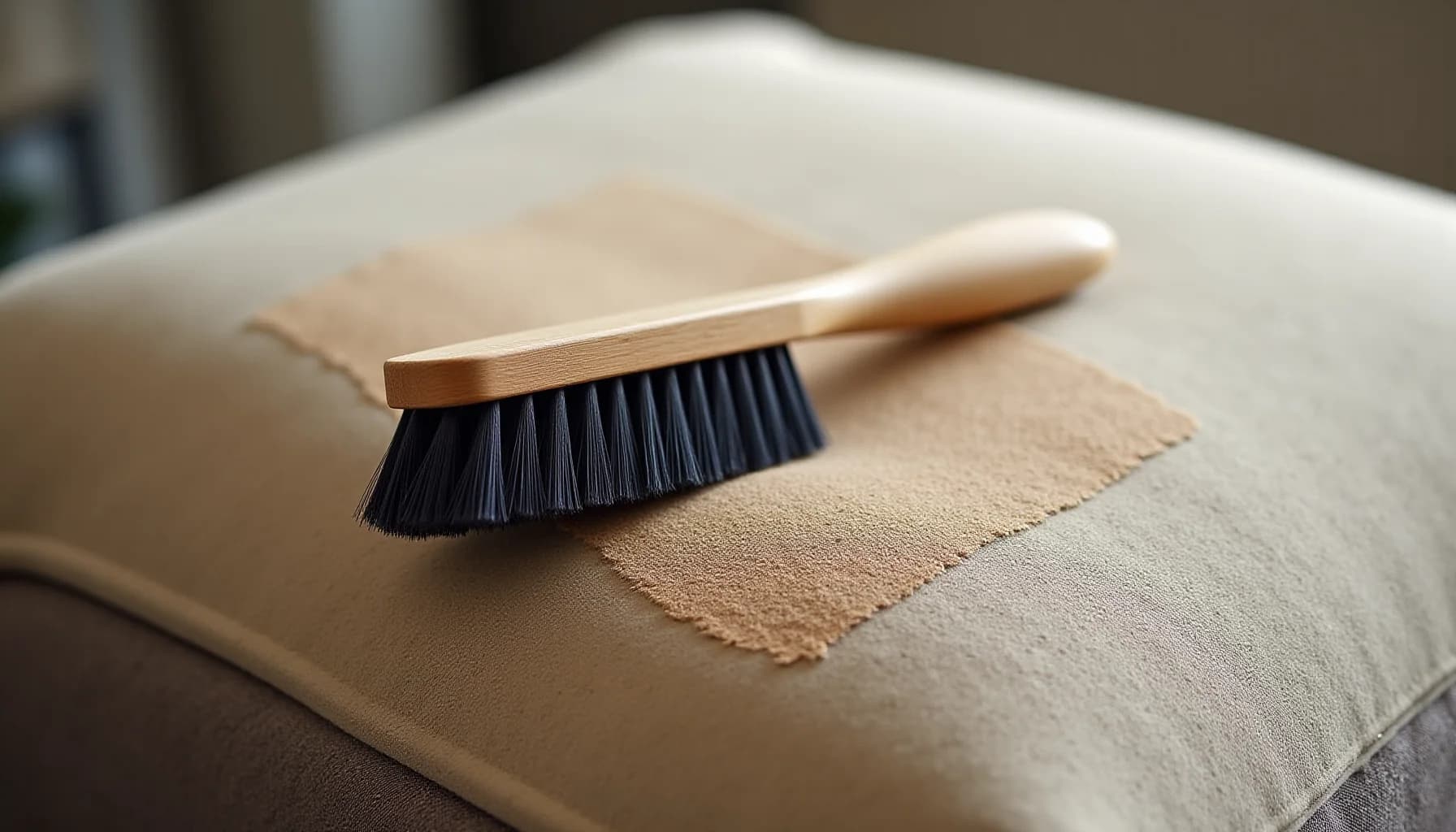
The simplest tool is a stiff-bristled brush or a dry carpet beater. Take the rug outside, drape it over a railing or a clean fence, and beat it firmly from the back side. Working from the back drives embedded grit forward and out through the face of the pile rather than pushing it deeper. Repeat the pass at least twice, moving along the length of the rug so you cover every section.
For a rug that must stay on the floor, use a stiff brush to sweep debris toward a dustpan, always moving in the direction of the pile, not against it. Brushing hard against the grain on a looped or cut-pile rug risks snagging and pulling individual fibers, which causes permanent distortion that no amount of cleaning will fix. If you are dealing with a delicate fiber such as wool, use a softer brush and lighter strokes. The specific risks and fiber-safe techniques for wool rugs are different enough to warrant separate attention before you proceed.
Stop and call a professional if the rug has a heavily soiled backing, visible mold growth, or fiber damage you can feel with your hand. Those conditions are beyond what any manual pre-cleaning method can address safely.
Frequently asked questions
How to clean carpet without a carpet cleaner?
How to wash carpets without a carpet cleaner?
How to clean carpet without a vacuum cleaner?
Is it safe to mix baking soda and vinegar on a carpet?
What household cleaners should you never mix?
The combinations that cause the most harm in home cleaning are easy to stumble into when you're working through a stubborn rug stain and grabbing whatever is under the sink. Three pairings matter most.
Bleach with vinegar, or bleach with ammonia, releases toxic gases. Mixed with an acid such as vinegar, chlorine bleach produces chlorine gas; mixed with ammonia it produces chloramine vapors. Both are harmful to breathe, and the reaction happens quickly at room temperature. Keep bleach completely separate from every other cleaner you use on a rug, and never assume that rinsing between steps makes the surface safe for a second product.
Hydrogen peroxide and vinegar should never be combined in the same container. Stored or mixed together, the two form peracetic acid, which irritates the eyes, skin, and lungs. If you want to use both on a mold problem in carpet fibers, apply one, let the surface dry, then apply the other.
Baking soda and vinegar are safe to use in the drain-cleaning method described elsewhere in this article, specifically 1/2 cup of baking soda followed by 1/2 cup of white vinegar poured into an open drain. The key word is open: the fizzing reaction in a sealed bottle builds pressure and can rupture the container.
Before using any of these products on your rug, test each one separately on a hidden area to check for discoloration.
How this article was made
Researched and written with AI assistance. What gets published is a human editorial decision. Grounded in 2 cited sources.
Edited by Claire Mercier, Editor. The guides are written with AI assistance.