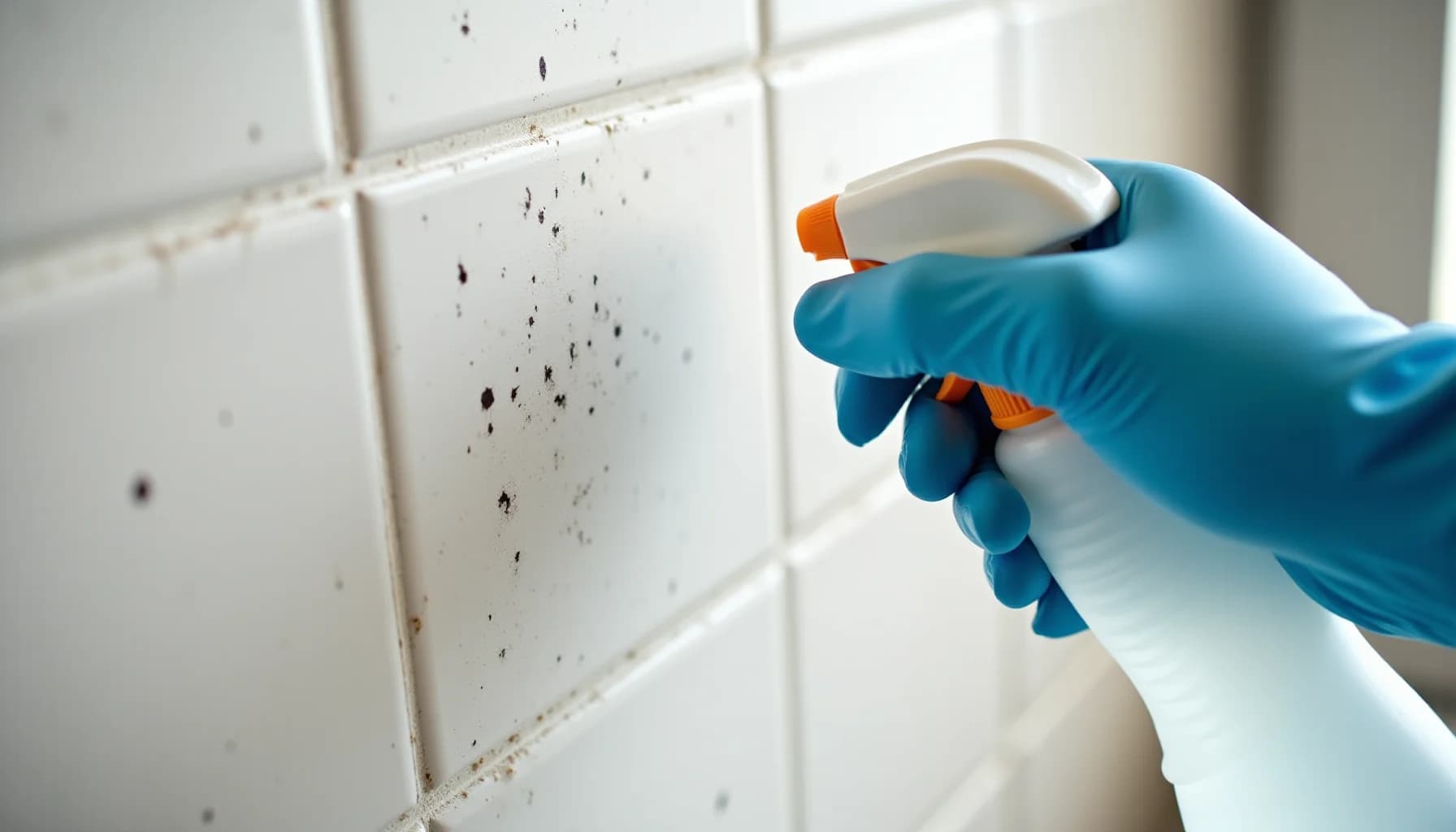
How to Remove Mold from Bathroom Ceiling (and Keep It Gone)
Part of Bathroom Cleaning · article 10 of 16
On this page
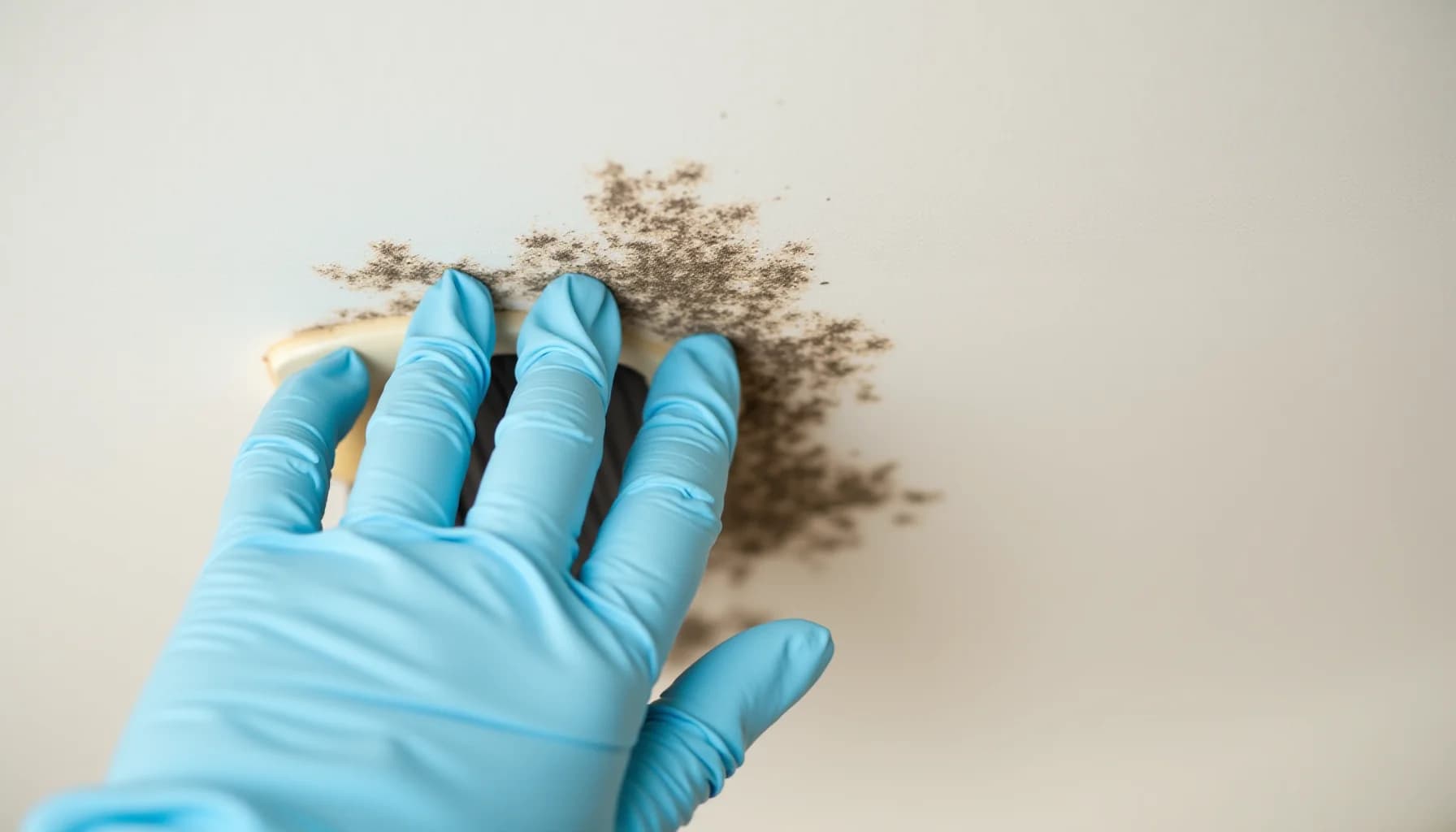
Spray the moldy area generously with undiluted white vinegar, let it sit for 15 minutes, then scrub with a soft-bristle brush working from the outside of the patch inward. Vinegar kills roughly 82% of mold species and is the safest starting point for most bathroom ceilings. A bleach solution, one part bleach to three parts water, works as an alternative. Never mix the two, and never combine vinegar with hydrogen peroxide: that reaction produces peracetic acid, which irritates the eyes, skin, and respiratory tract.
Is that growth on your ceiling mold or mildew, and can you safely remove it yourself?
Before grabbing a scrub brush, it pays to confirm what you're actually dealing with. Mildew and mold are both fungal growths, but they behave differently and respond to different levels of intervention. Mildew typically appears as flat, powdery patches in light gray or white, stays on the surface, and is generally straightforward to clean. Mold tends to look darker, fuzzier, or greenish-black, and can work its way below the paint layer into drywall.
A quick bleach test helps settle the question: dab a small amount of household bleach directly onto the spot and watch for one to two minutes. If the patch lightens, you're most likely dealing with mildew. If the color holds, treat it as mold and proceed accordingly.
Also worth knowing: not every dark ceiling patch is the notorious Stachybotrys chartarum (true black mold). Several mold species appear dark green or black, and a visual check alone won't tell you which type you have. What matters more for your immediate decision is depth and area.
The EPA sets a clear DIY threshold: if the affected area is smaller than 3 feet by 3 feet (9 square feet), removal is generally safe to handle yourself, provided the mold hasn't penetrated below the paint surface into the drywall, insulation, or framing. Press gently around the edges of the growth. Soft, spongy, or crumbling drywall signals deeper penetration and means the job is beyond DIY territory.
If the patch exceeds 10 square feet, keeps returning after cleaning, or has clearly soaked into the substrate, contact a licensed mold abatement specialist rather than attempting removal yourself. For mold that has spread into the shower area as well, that separate surface often needs its own targeted treatment alongside whatever is happening overhead.
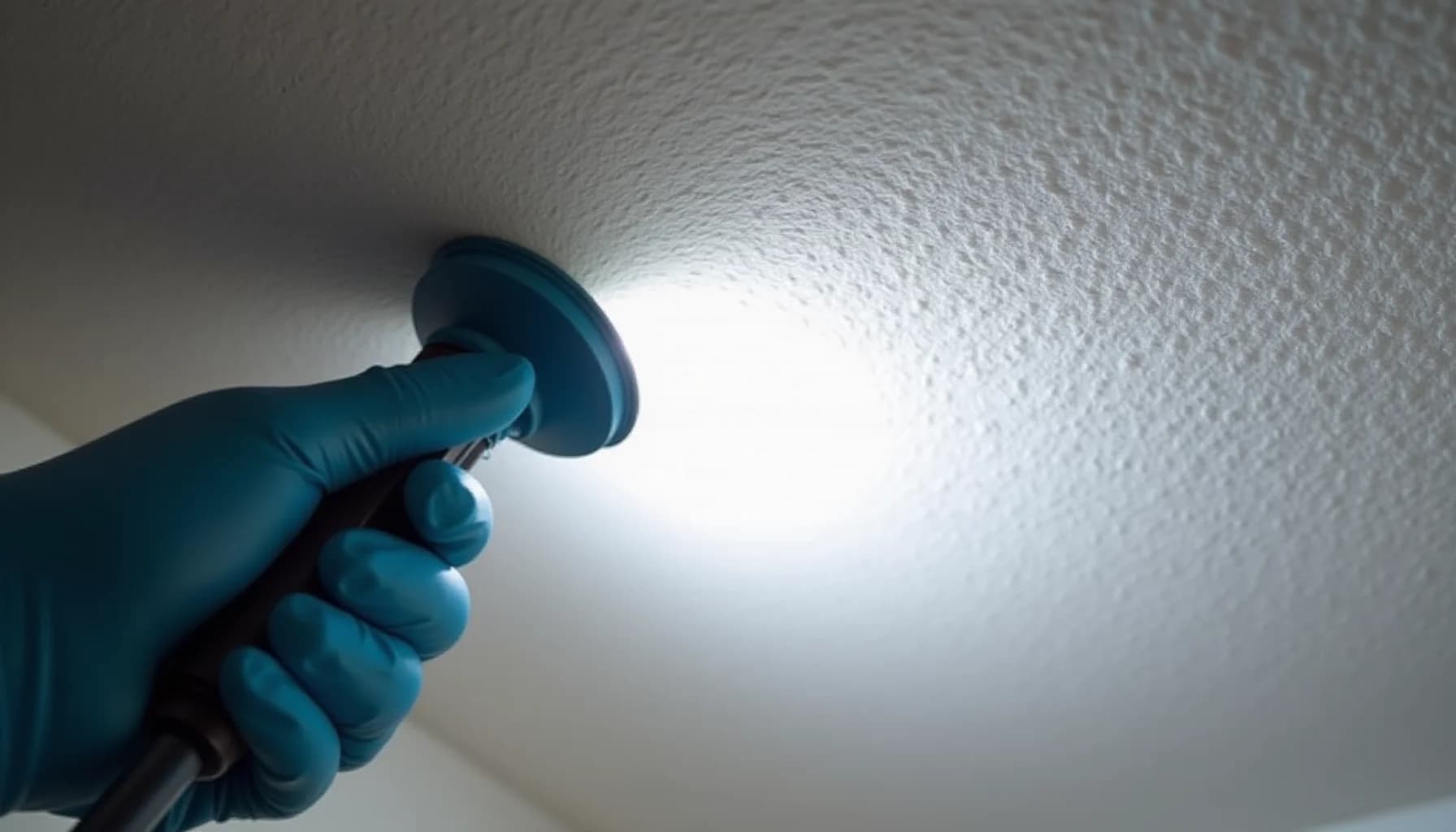
What protective gear and ventilation setup do you need before cleaning bathroom ceiling mold?
Check the size and depth of the mold patch
If the mold covers more than a 3x3-foot (9-square-foot) area, has soaked into the drywall, or keeps coming back, stop and call a mold abatement specialist. For smaller surface patches, confirm you are dealing with mold and not mildew by dabbing a drop of household bleach on the spot: if it lightens within 1 to 2 minutes, it is likely mildew; if the color stays the same, it is likely mold.
Put on your protective gear and ventilate the room
Before touching anything, put on an N95 mask, safety goggles, rubber gloves, and old clothing you can wash immediately afterward. Turn on the exhaust fan and open a window so disturbed spores are carried out of the space while you work.
Choose and prepare your cleaning solution
For a bleach solution, mix one part bleach with three parts water in a spray bottle. For a natural option, use undiluted white vinegar, which kills roughly 82 percent of mold species, or a 3 percent hydrogen peroxide solution. Never mix vinegar and hydrogen peroxide together, as the combination creates peracetic acid, which irritates the eyes, skin, and respiratory system.
Apply the solution and let it dwell
Spray the moldy area generously with your chosen solution and let it sit for at least 15 minutes so it can penetrate and kill the mold. Do not rinse it off early, as dwell time is what makes the treatment effective.
Scrub from the outside in, then allow the ceiling to dry
Using a soft-bristle brush, scrub the mold patch starting at the outer edge and working toward the center to avoid spreading spores outward. If you used vinegar, give the area a light second spray and allow it to air dry completely rather than wiping it away.
Fix the humidity problem to stop mold from returning
Keep bathroom humidity between 30 and 50 percent by running the exhaust fan during every shower and for at least 15 to 20 minutes after. Size your fan correctly: a 100-square-foot bathroom needs a fan rated at around 100 CFM. Inspect caulking, plumbing, and the roof for slow leaks, because if mold returns after cleaning, a moisture source, not your cleaning technique, is the real problem.
Which cleaning solution should you use to remove bathroom ceiling mold?
Three solutions work reliably for bathroom ceiling mold: a diluted bleach mix, undiluted white vinegar, and hydrogen peroxide. Each has a specific application method, and two of them should never be combined.
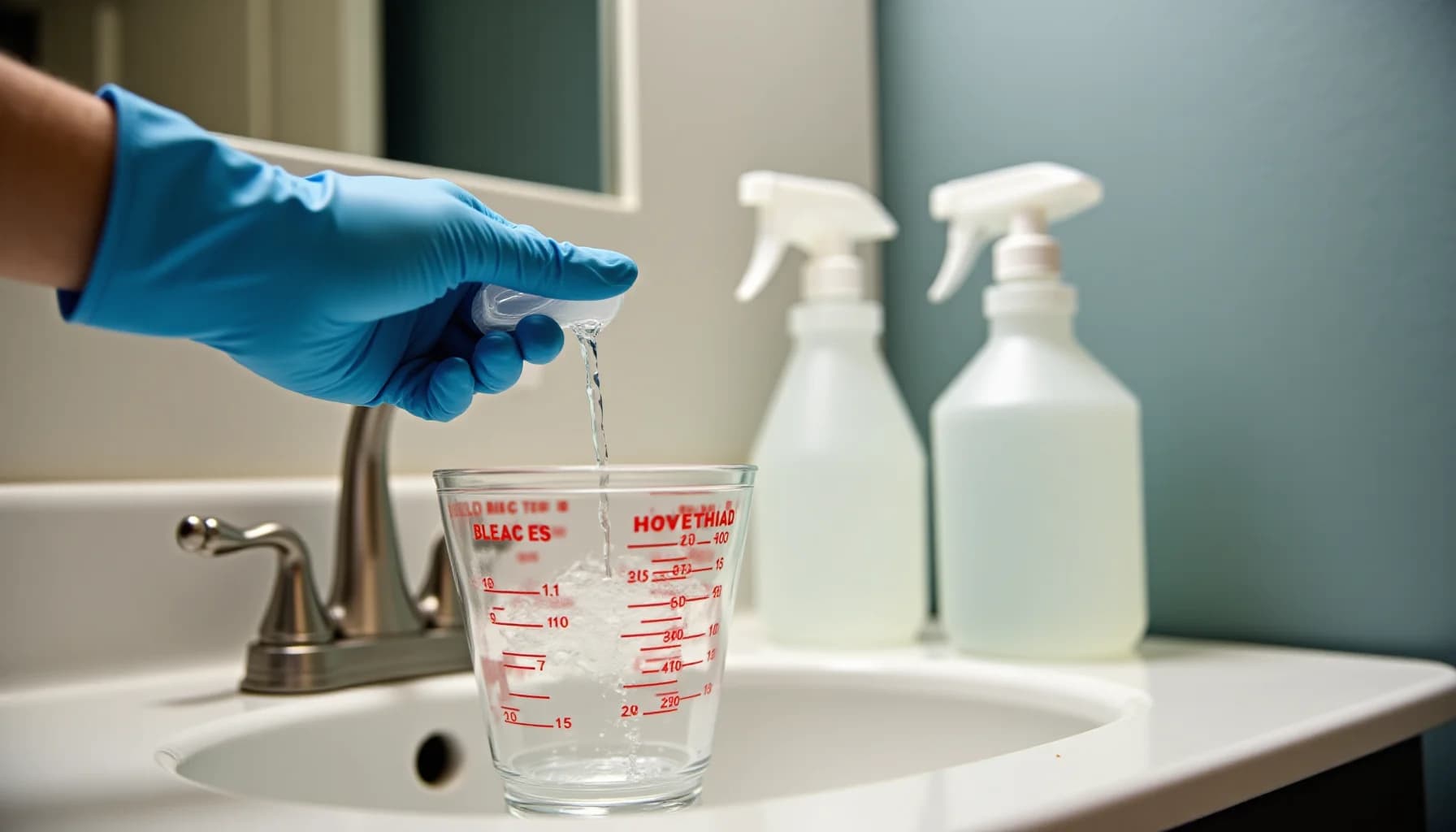
Bleach solution is the most aggressive option. Mix one part household bleach with three parts water, pour it into a spray bottle, and shake well before use. Apply it generously to the affected area, let it dwell for several minutes, then scrub with a soft-bristle brush. Work from the outer edge of the mold patch inward rather than outward, which limits the spread of disturbed spores. Bleach is effective at killing surface mold and lightening staining, but it can be harsh on paint finishes, so rinse lightly and allow the ceiling to dry fully afterward.
White vinegar is a strong first-line option for less severe growth. Studies show it kills approximately 82% of mold species. Spray undiluted white vinegar directly onto the moldy surface, let it sit for 15 minutes, then scrub and follow with a light second spray. Leave it to air dry rather than rinsing. The smell dissipates as it dries. Vinegar is gentler on surfaces and better tolerated in enclosed spaces than bleach.
Hydrogen peroxide (3% solution, the standard drugstore concentration) also kills mold effectively and produces less fume than bleach. Spray it directly onto the ceiling, allow it to sit, then scrub and wipe clean.
One firm warning: never mix vinegar and hydrogen peroxide. Combined, they form peracetic acid, a compound that irritates the eyes, skin, and respiratory system. Choose one solution and stick with it. Similarly, mixing bleach with vinegar releases chlorine gas, which is genuinely dangerous in a small, enclosed bathroom.
If mold has appeared in the shower enclosure below as well, the guidance on how to clean shower mold covers the technique differences for tile and grout surfaces where these same solutions behave differently.
Why does bathroom humidity cause ceiling mold, and what numbers should you target?
Mold spores are always present in the air around you. They become a problem only when they find what they need to settle and multiply: moisture, warmth, and something organic to feed on, such as dust or the paper facing on drywall. Your bathroom ceiling gives them all three.
The numbers explain why ceilings are the first place mold appears. A family of four taking daily showers introduces roughly 4 gallons of water vapor into the bathroom each week. Steam rises, and the ceiling, which is often the coolest surface in the room, is where that vapor condenses. Bathrooms routinely hit 70% relative humidity or higher during a shower. Mold begins developing within 24 to 48 hours of moisture exposure, and visible colonies can form within 3 to 12 days under those conditions. The threshold that triggers rapid growth is 60% relative humidity. Once the air stays above that level for any sustained period, the biology works against you.
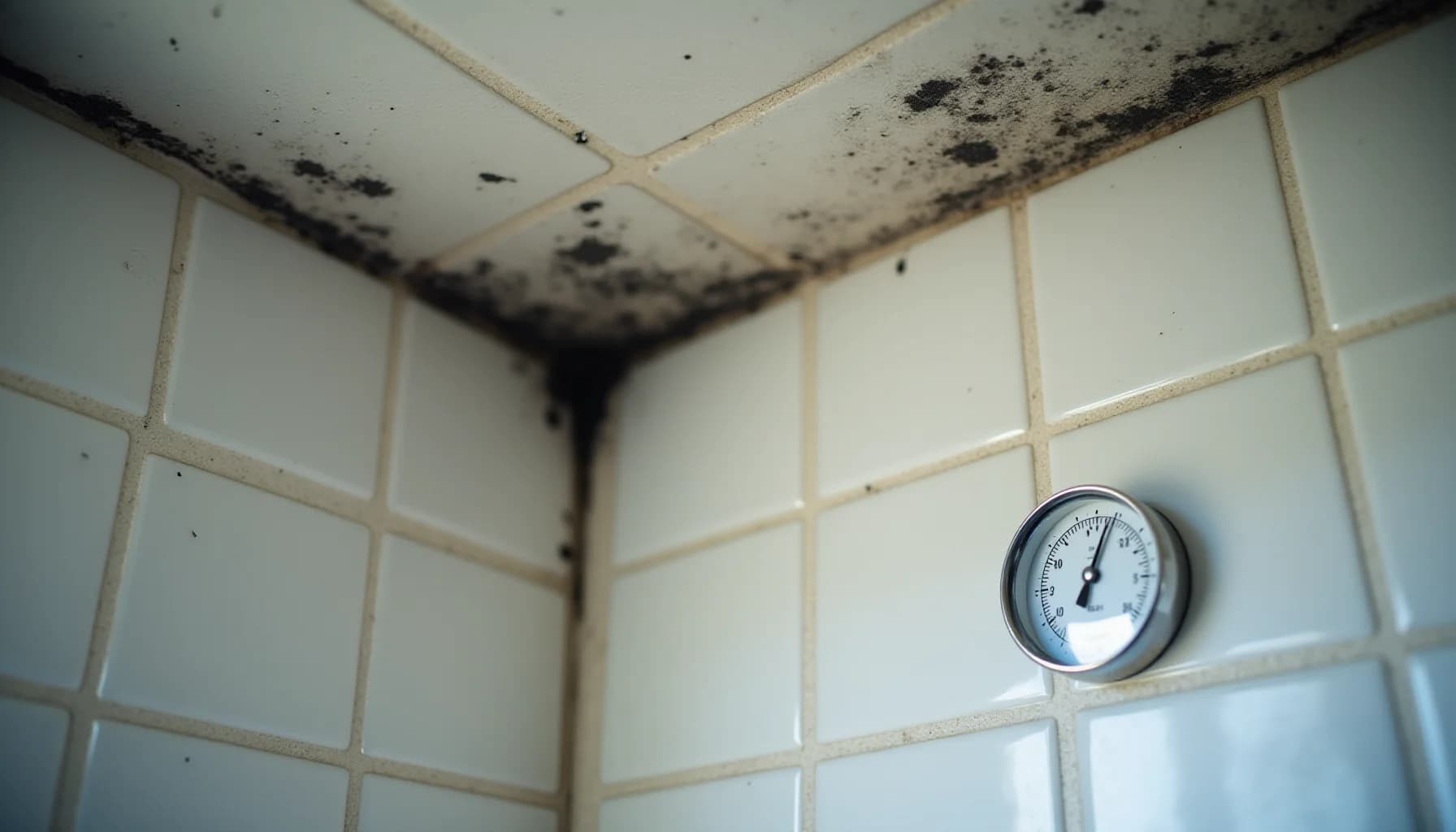
The target range that stops mold at the source is 30% to 50% relative humidity, with 35% to 45% being the practical sweet spot that balances comfort with mold prevention. A hygrometer, available at most hardware stores for under $15, lets you monitor the actual number rather than guess.
Ventilation is the other side of the equation. Most homeowners shut off the exhaust fan within 5 minutes of finishing a shower, which is far too soon. The fan should run during the shower and for at least 15 to 20 minutes afterward to clear residual moisture before it condenses. Fan sizing matters too: a general rule is 1 CFM per square foot of bathroom space, meaning a 100-square-foot bathroom needs a fan rated at roughly 100 CFM.
If mold keeps returning after cleaning, the humidity problem has not been solved. Cleaning is only the visible part of the fix.
How long should you run your bathroom exhaust fan after a shower?
Most homeowners shut off the exhaust fan the moment they step out of the shower. That single habit is one of the most common reasons bathroom ceiling mold keeps coming back, because the air inside the bathroom is still saturated with water vapor long after the water stops running. Cutting the fan off within five minutes traps that residual moisture, which then condenses on the cooler ceiling surface and feeds whatever spores are already present.
The correct practice is to run the exhaust fan during the entire shower and for at least 15 to 20 minutes afterward. A family of four taking daily showers can push up to 4 gallons of water vapor into a bathroom each week. Without adequate airflow, that moisture lingers and keeps humidity above the 60% threshold at which mold grows rapidly.
Fan sizing matters just as much as run time. A fan that is too small for the room will spin away without actually clearing the air. The standard guideline is one CFM (cubic foot per minute) per square foot of bathroom space. A 100-square-foot bathroom needs a fan rated at roughly 100 CFM. Many builders install the minimum-code 50 CFM fan regardless of bathroom size, which is undersized for anything larger than a small half-bath.
If you are addressing mold that has taken hold around the shower stall as well as the ceiling, the guidance on how to clean shower mold covers the specific methods for those surfaces.
Frequently asked questions
When should I call a professional instead of removing bathroom ceiling mold myself?
What is the best cleaning solution for mold on a bathroom ceiling?
Is it safe to mix vinegar and hydrogen peroxide when cleaning mold?
Why does mold keep coming back on my bathroom ceiling even after I clean it?
How do you stop bathroom ceiling mold from coming back?
Cleaning the mold off your ceiling solves today's problem. What you do every week determines whether it comes back.
Start with a humidity monitor, sometimes called a hygrometer, which you can pick up for under $15 at most hardware stores. Mount one in the bathroom and check it after showers. Your target is 30% to 50% relative humidity; anything above 60% is actively feeding mold. If readings regularly stay elevated, a small bathroom dehumidifier running after showers can pull that moisture down faster than a fan alone.
Speaking of fans, run yours during every shower and keep it going for at least 20 minutes after you step out. Most homeowners switch it off within five minutes, which leaves residual moisture to condense right back onto the ceiling. If your fan is undersized, check its CFM rating against your bathroom square footage: a 100-square-foot bathroom needs roughly 100 CFM.
Once a month, inspect the caulking around the tub and shower surround. Failing caulk lets water wick upward into the ceiling structure, feeding mold from below even when the surface looks dry. Cleaning grout lines on a regular schedule also removes the organic buildup that mold feeds on.
If mold returns within weeks of a thorough cleaning, the ceiling is not the problem; the moisture source is. Recurring growth in the same spot usually means a slow plumbing leak, a roof issue, or persistent inadequate ventilation, none of which a scrub brush will fix. That pattern warrants a professional moisture assessment rather than another round of cleaning.
How this article was made
Researched and written with AI assistance. What gets published is a human editorial decision. Grounded in 8 cited sources.
Edited by Claire Mercier, Editor. The guides are written with AI assistance.
Sources (8)
- INDOORAIRQUALITY 1 CONTROLLING MOLD GROWTH IN THE HOME THE
- Use These Top Methods to Eliminate Mold on the Bathroom Ceiling
- How to Remove Mold from Bathroom Ceilings - Taskrabbit
- How to Get Rid of Mold on Ceilings | SERVPRO
- How to Remove Mold from a Bathroom Ceiling | Family Handyman
- How To Get Rid Of Mold In Bathroom Ceiling ? Step-By-Step Guide – AlorairCrawlspace
- How to Remove Mold from Bathroom Ceiling – Modland
- Tips for Preventing and Removing Mold on Bathroom Ceilings