How to Remove Mold from Carpet (And When to Replace It)
Part of Fabric & Carpet Care · article 11 of 14
On this page
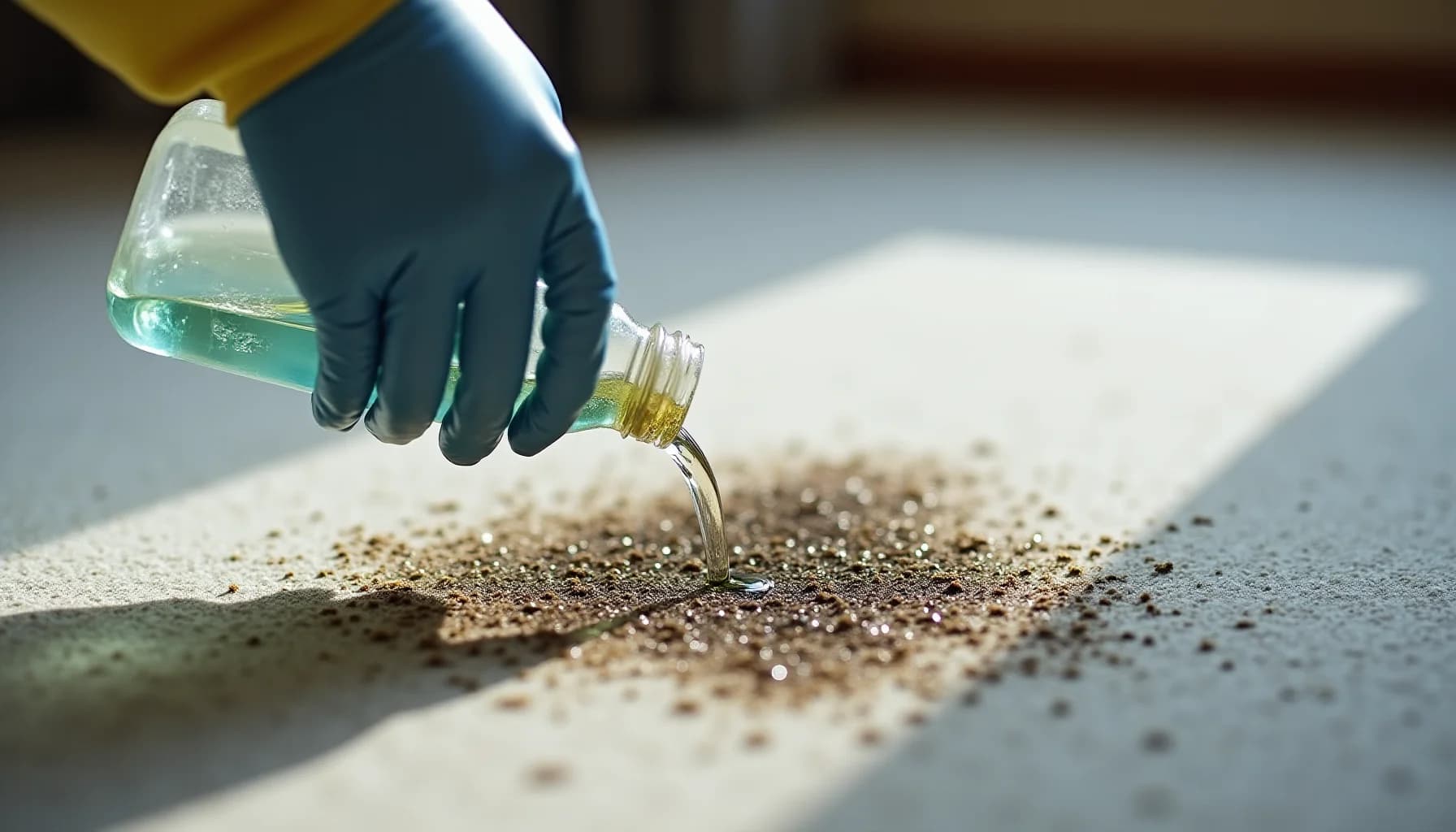
Apply undiluted white vinegar directly to the moldy area, let it sit, then blot it dry. Follow with a HEPA vacuum to pull up any remaining spores. Do not scrub, and do not use a regular vacuum cleaner; both actions scatter spores into the air rather than capturing them. For a more detailed look at how vinegar performs against mold, see how vinegar cleans mold in practice. These methods reduce surface contamination and musty odor, but none eliminate mold completely from carpet fibers and backing. Some spores will remain regardless of method.
Why mold never fully comes out of carpet
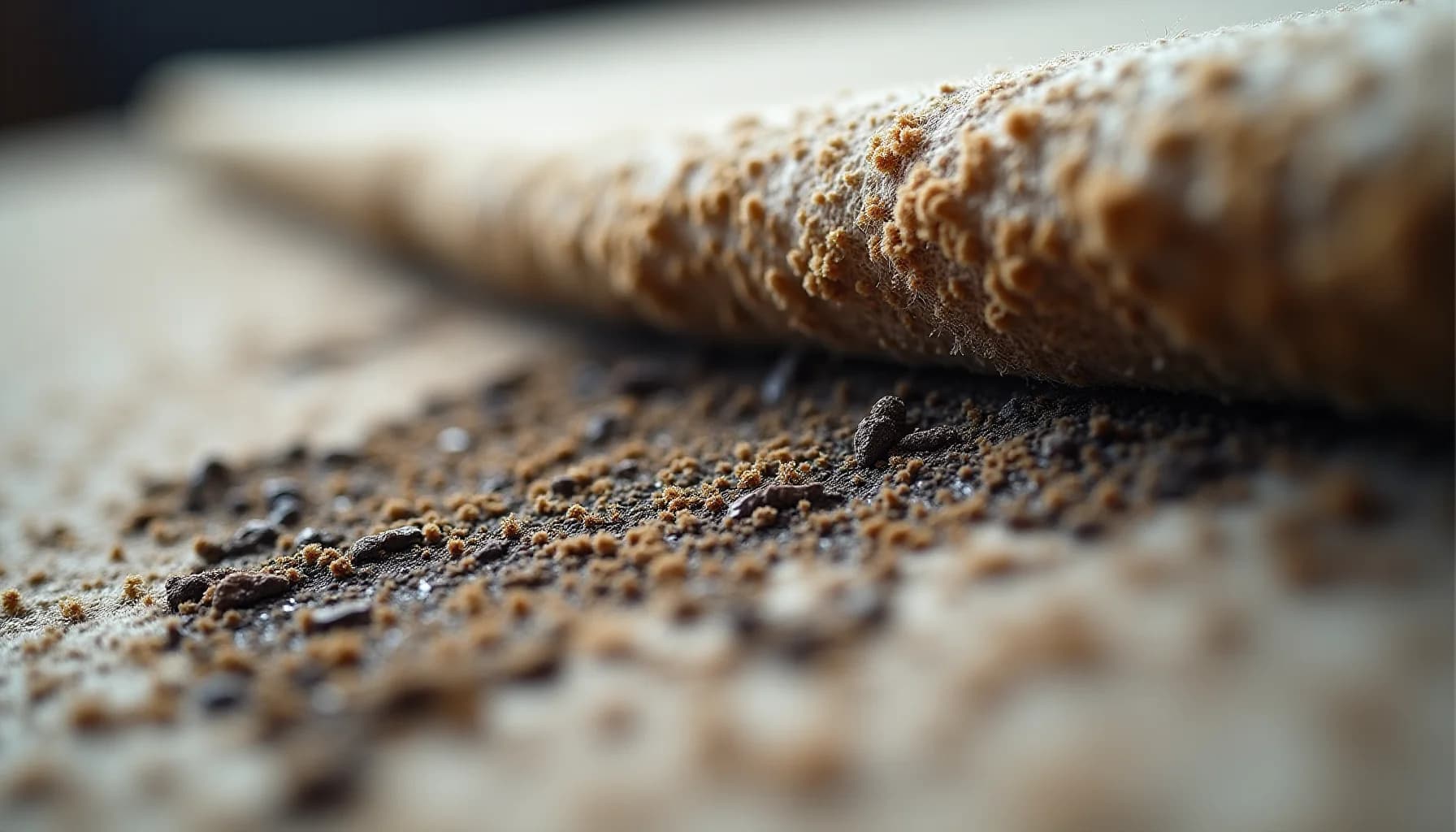
The physics of carpet construction work against you from the moment mold takes hold. Mold spores measure as small as three microns, small enough to slip between individual carpet fibers and work their way into the primary and secondary backing layers where no brush, spray bottle, or consumer-grade vacuum can reach them. Scrubbing the face yarn, the part you walk on, does nothing to address what has already migrated deeper.
Synthetic carpet fiber is not consumed by mold, which sounds reassuring until you understand what that actually means: the mold skips the surface and attacks the backing instead. By the time you notice visible growth on top, the backing layers are often already compromised, and the padding beneath has been acting like a sponge, holding moisture and feeding the colony for days.
This is why even the most thorough cleaning methods fall short. Steam cleaning at the correct dwell time, at least 12 seconds per area, achieves roughly 90 percent mold destruction. The HEPA sandwich method, running a HEPA-filtered vacuum, then wet cleaning, then a second HEPA pass, is considered professional-grade practice. Yet even under optimal conditions, studies confirm that no method removes 100 percent of mold or mold spores from carpet. Some contamination always remains embedded in the structure.
White vinegar applied undiluted and baking soda will reduce odor and kill some surface mold, but they cannot penetrate to where the real problem lives. For readers dealing with mold in other porous household surfaces, how vinegar actually performs against mold is worth understanding before assuming any home remedy will deliver complete results.
How quickly does mold grow in wet carpet?
Assess the damage before touching anything
Check how many square feet are affected, how long the carpet has been wet, and whether the padding underneath feels damp or shows visible growth. DIY cleaning is only realistic when the area is under 10 square feet, the carpet has been wet fewer than 48 hours, the padding is dry, no occupant is immunocompromised, and the moisture source has been fixed. If any one of those conditions fails, skip cleaning and plan for replacement.
Put on proper safety gear
Before disturbing any mold, wear nitrile gloves, safety goggles, and an N95 or higher respirator mask. Cleaning mold releases large numbers of spores into the air, and the process may involve chemical cleaners that produce fumes.
Dry the area as fast as possible
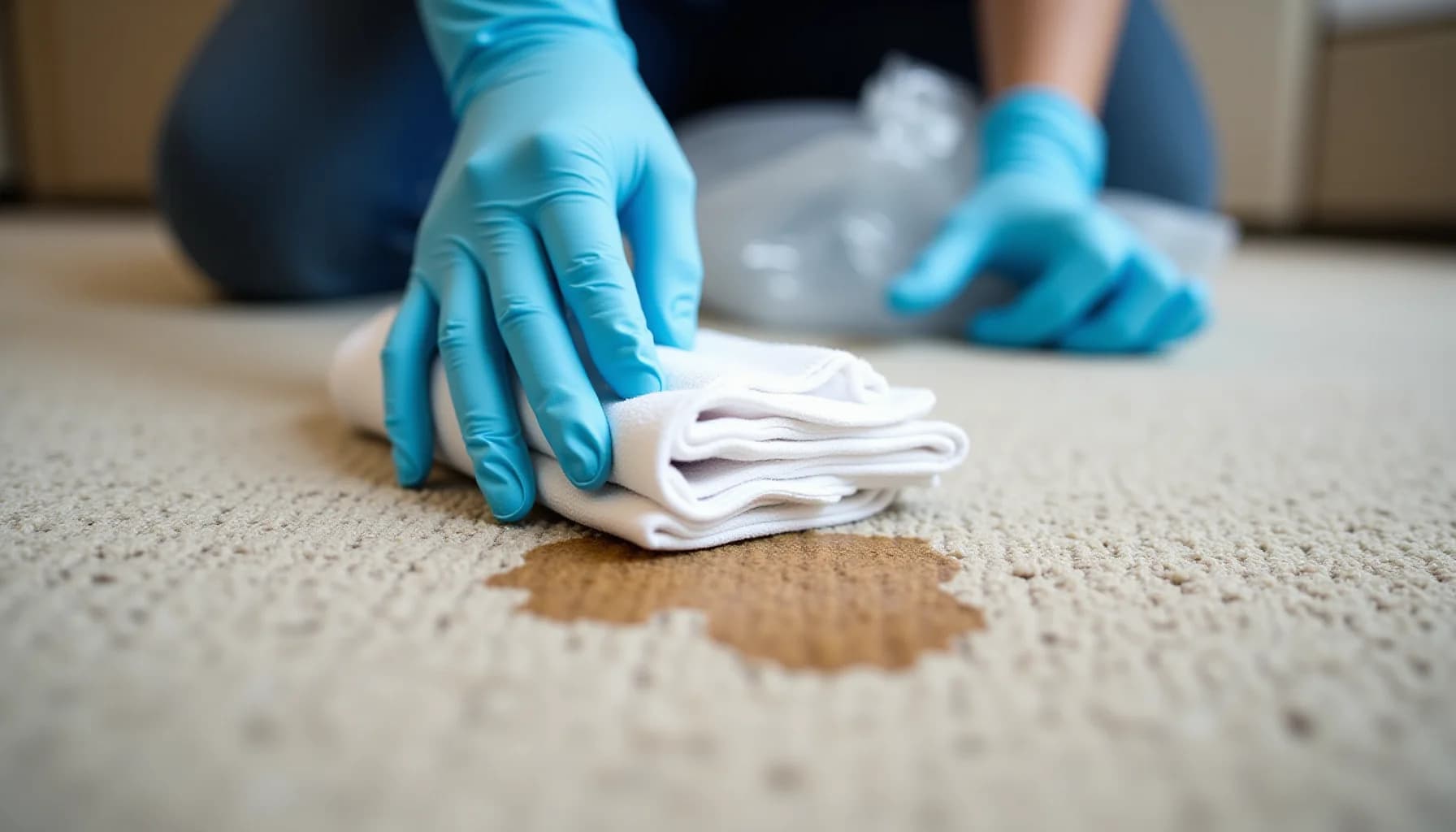
Use a wet-dry vacuum to extract standing moisture, then run a dehumidifier and fans to bring humidity below 60 percent. Do not use a standard brush or household vacuum, as this disperses spores into the air. The padding beneath acts like a sponge and can release moisture for days, so check that the underside of the carpet and the subfloor are also drying out.
Apply a cleaning agent to the affected surface
For a small, early-caught area, apply undiluted white vinegar directly to the mold and let it dwell before blotting. Vinegar kills some mold and reduces musty odors, but it will not eliminate all spores. For a more thorough approach, follow the HEPA sandwich method: vacuum the area with a HEPA-filtered vacuum, apply your wet cleaner, then vacuum again with the HEPA vacuum once dry.
Steam clean with careful technique, then dry completely
If using a steam cleaner, apply steam for a minimum of 12 seconds on each section of carpet to achieve roughly 90 percent mold destruction. Work in small zones. Immediately afterward, extract as much moisture as possible, because a carpet left wet from steam cleaning can develop a fresh mold or mildew problem within the same 24 to 48 hour window.
Decide whether the result is good enough, or replace the carpet
Even the most thorough cleaning leaves some mold or spores behind in the fibers and backing layers. If the padding or subfloor showed any damage, the carpet was wet for more than 72 hours, or the water source was a sewer backup or floodwater, the carpet is not salvageable and must be replaced. New carpet installation costs around $1,000, which can increase if subfloor damage requires repair.
Should you clean the moldy carpet or replace it?
The single most useful thing you can do with a moldy carpet is answer one question before you touch it: does this situation qualify for cleaning, or has it already crossed into replacement territory?
Five conditions must all be true at the same time for DIY cleaning to be a realistic option. The affected area must be under 10 square feet. The carpet must have been wet for fewer than 48 hours. The padding underneath must be dry and show no visible growth. No one in the household is immunocompromised or has asthma triggered by mold exposure. And the original moisture source must already be fixed. If even one of those conditions fails, cleaning becomes unreliable at best.
The 48-to-72-hour window is where the decision gets harder. If the carpet has been wet for more than 48 hours but the water was clean (a supply-line leak, not a flood), you are looking at roughly a 50/50 call between extraction and replacement. Push past 72 hours and replacement becomes the stronger choice. If the water involved any sewage, overland floodwater, or heavy storm runoff, the carpet is not salvageable regardless of how it looks. That category of water contamination puts the carpet beyond cleaning.
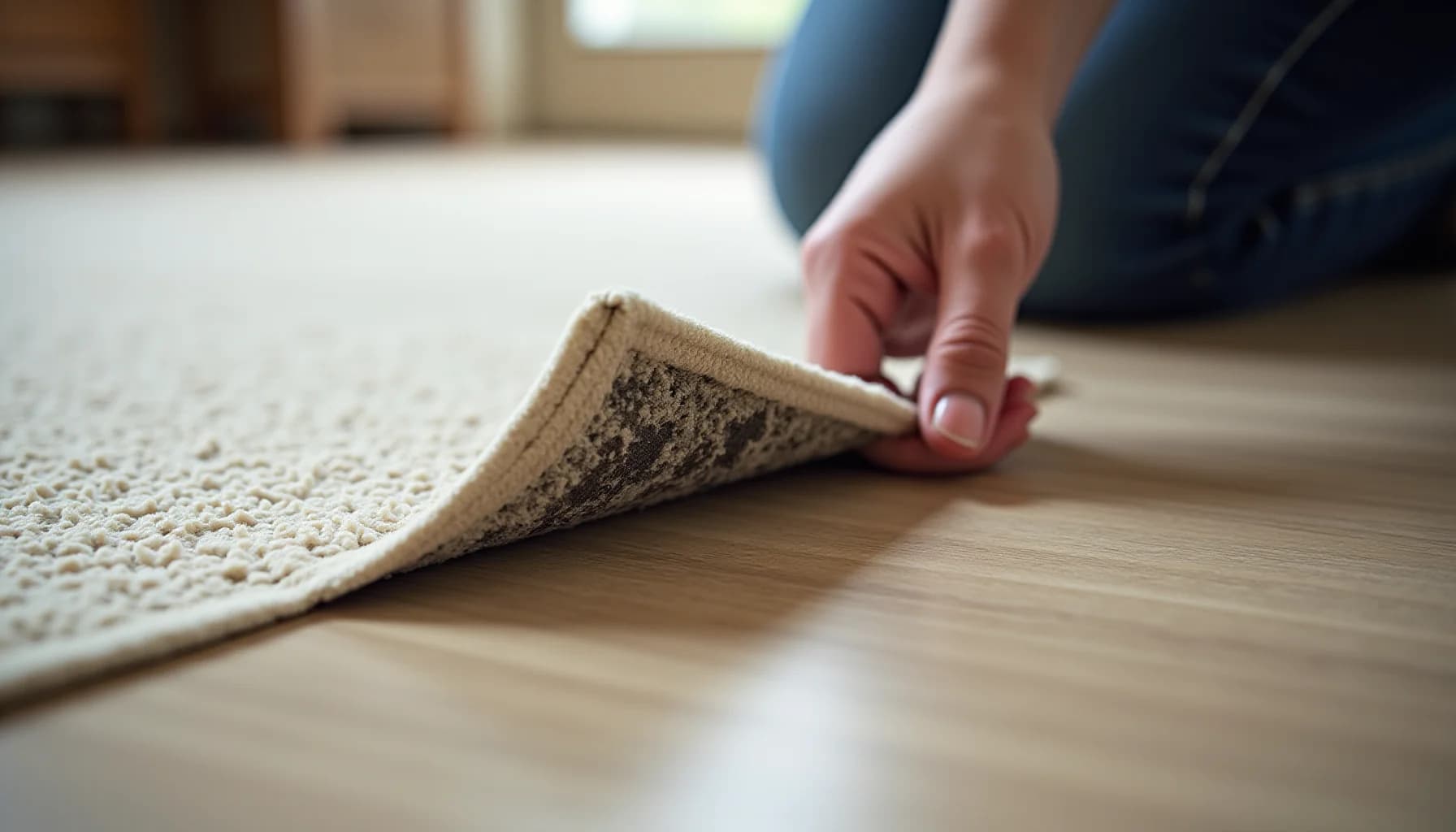
Padding complicates every assessment. It behaves like a sponge: even when the carpet surface feels dry to the touch, saturated padding can continue releasing moisture for days into the subfloor below. Mold growing in the backing and padding layers is rarely visible from above until growth is severe. Pulling back a corner of carpet to check the padding directly is more informative than any surface inspection.
Cost is also worth factoring in. New carpet installation runs around $1,000, and that figure rises if the subfloor has taken damage. Professional remediation for a large affected area can exceed that threshold quickly, while still leaving some mold behind, since even the best methods do not achieve complete removal from porous materials.
How do you clean a small mold spot on carpet yourself?
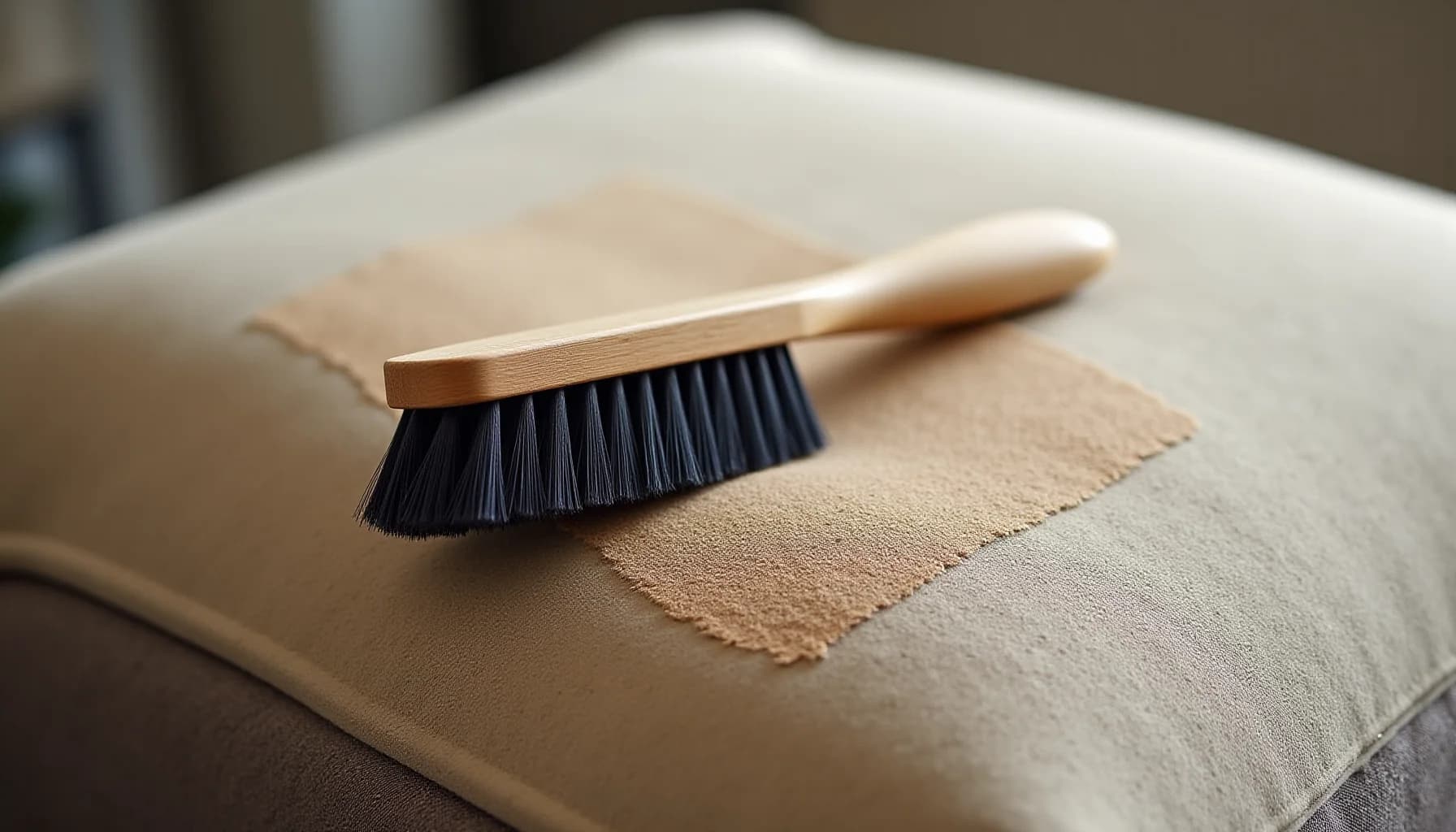
Before you reach for any cleaner, gear up properly. Gloves, safety goggles, and a respirator mask are non-negotiable; disturbing even a small mold colony releases spores into the air, and you will be breathing at floor level. Skip the dry brush and the standard vacuum entirely at this stage, as both scatter spores rather than capture them.
Start with a HEPA-filtered vacuum over the affected area. This first pass lifts loose surface spores before any moisture touches the carpet. A rented HEPA vacuum is worth the expense here, since a standard shop vac will exhaust fine spores straight back into the room.
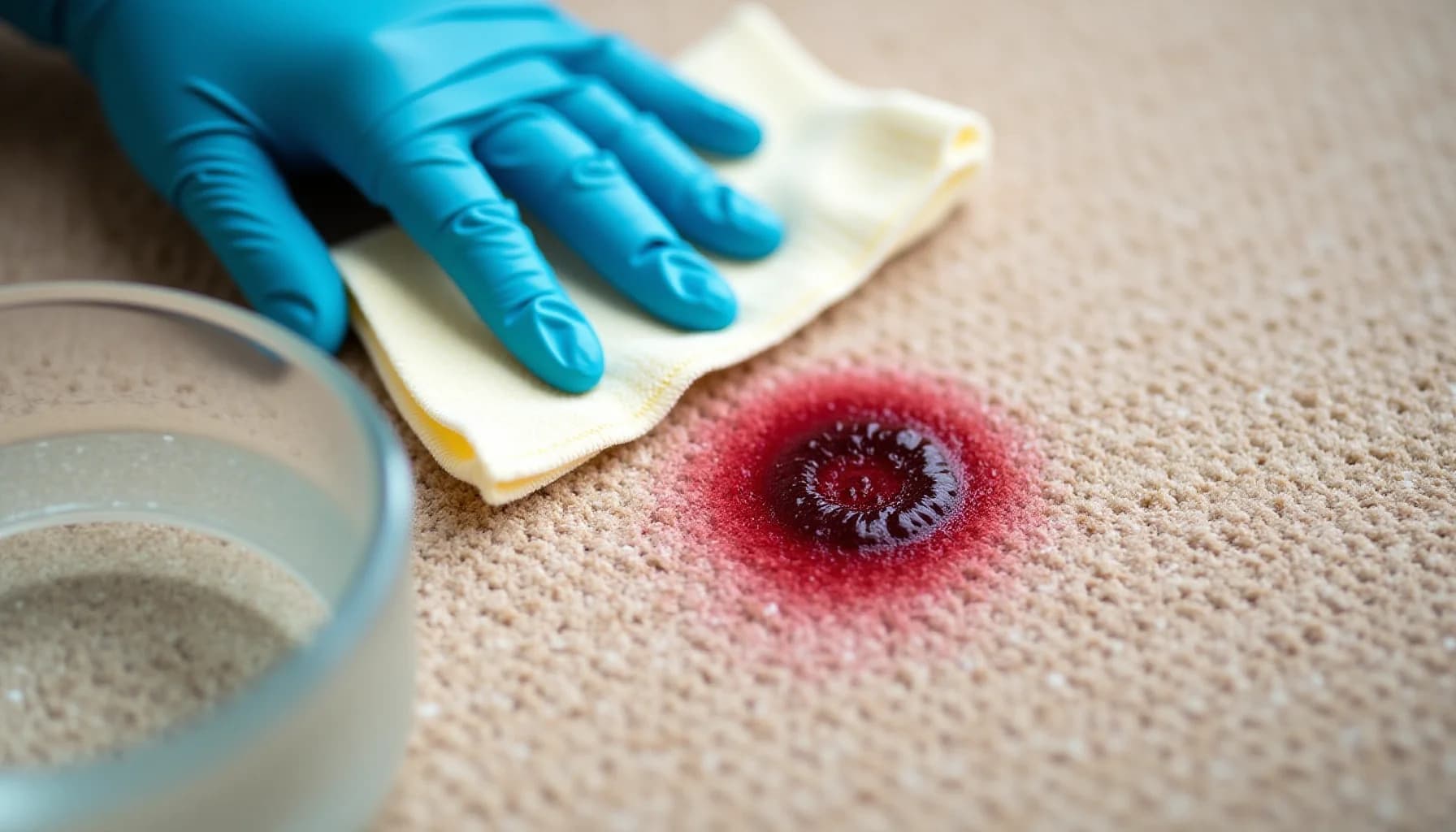
Next, apply undiluted white vinegar directly to the moldy spot. There is no need to dilute it. Let it soak for at least ten minutes before blotting, not scrubbing, with a clean white cloth. Work from the outer edge of the spot toward the center to avoid spreading contamination outward. Vinegar will kill some surface mold and neutralize the musty odor, though it will not eliminate every spore. For persistent spots, sprinkle baking soda over the damp area after blotting, let it sit for several hours, then vacuum it up with the HEPA vacuum again.
This three-pass sequence, HEPA vacuum, wet treatment, HEPA vacuum again, follows the logic of the professional "HEPA sandwich" approach and is the most reliable DIY method available. If you want to understand more about how vinegar performs against mold in practice, that comparison is worth reading before you decide on a cleaning agent.
After cleaning, drying speed is everything. Open windows, run fans directly over the area, and use a dehumidifier to bring room humidity below 60%. Any residual moisture left in the fibers or padding can restart the problem within a day or two.
| Method | Mold Kill Rate | Rewetting Risk | Best For |
|---|---|---|---|
| White vinegar (undiluted) | Partial — spores remain | Low | Odor reduction, small spots |
| Baking soda + vinegar | Partial — spores remain | Low | Odor removal, light surface mold |
| Steam cleaning | ~90% at 12+ sec per area | High — can re-trigger growth | Surface mold, synthetic carpet |
| HEPA vacuum (sandwich method) | Reduces spores, not 100% | None | Final step after wet cleaning |
| Sunlight exposure | Partial — not reliable alone | None | Combined with a cleaner only |
Who Is Most at Risk From Carpet Mold?
Not everyone in a household faces the same level of risk from carpet mold, and understanding who is most vulnerable should directly shape how urgently you act and whether you attempt any cleaning at all.
Children are at the sharpest end of the risk curve. Research shows that children living in moldy homes are 30 to 50 percent more likely to develop asthma than those in mold-free homes. A child's immune system and airways are still developing, making repeated spore exposure significantly more damaging over time than a one-time incident. If a child in your home has already been diagnosed with asthma, mold in the carpet is a direct trigger for attacks, not merely an irritant.
People with any form of respiratory allergy face compounding problems. Mold spores irritate the eyes, skin, nose, throat, and lungs even in individuals who have no prior mold allergy. For those who do have one, reactions can escalate quickly, particularly when spores are disturbed during cleaning.
Immunocompromised occupants, including anyone undergoing chemotherapy, living with HIV, or taking long-term immunosuppressant medications, face the most serious threat. For these individuals, even a modest mold presence in the home is not a DIY matter. If any occupant in your home is immunocompromised, that single fact overrides every other threshold: stop, do not attempt removal yourself, and call a certified mold remediation professional immediately. No square-footage calculation changes that calculus.
Frequently asked questions
How quickly can mold grow in wet carpet?
Can you ever fully remove mold from carpet?
When should I replace moldy carpet instead of cleaning it?
Is steam cleaning a safe method for killing carpet mold?
How can you stop carpet mold before it starts?
The most reliable defense against carpet mold is keeping indoor humidity between 30% and 60% year-round. Run a dehumidifier in basements, ground-floor rooms, or any space that tends to feel damp, especially during summer months. Check your hygrometer weekly; if you do not own one, they cost under $15 and take the guesswork out of moisture management.
Where you install carpet matters as much as how you maintain it. Avoid laying carpet in bathrooms or laundry rooms. The constant humidity in those rooms turns carpet into a mold reservoir faster than almost any other factor.
When you are choosing new carpet or replacing padding, look specifically for solid rubber-slab padding with anti-microbial properties. It costs slightly more than standard foam padding, but it resists moisture retention far better, which matters most in humid climates.
The most important weekly habit is simple: respond to any spill or leak immediately. Do not let water sit. Extract it, dry the top and bottom surfaces of the carpet, dry the padding, and dry the subfloor. Mold colonies can establish within 24 to 48 hours, so same-day action is not caution; it is the minimum.
Finally, run bathroom exhaust fans and kitchen range hoods consistently. Controlling airborne moisture at the source costs nothing and removes the conditions mold depends on to grow.
How this article was made
Researched and written with AI assistance. What gets published is a human editorial decision. Grounded in 8 cited sources.
Edited by Claire Mercier, Editor. The guides are written with AI assistance.
Sources (8)
- how do you treat mould affected areas
- Efficacy of three chemical disinfectants and steam against Clostridioides difficile endospores on nylon carpet with two different backing systems
- Probabilistic human health risk assessment of 1,3-butadiene and styrene exposure using Monte Carlo simulation technique in the carpet production industry
- Respiratory functions and health risk assessment in inhalational exposure to vinyl acetate in the process of carpet manufacturing using Monte Carlo simulations
- How to remove mould underneath carpet? - Bunnings Workshop community
- How to Get Mold Out of Carpets for Good | Carpet Mold Removal - Molekule
- Remove and replace your moldy carpet | American Family Insurance
- Carpet Mold: Identification, Prevention and Removal - InterNACHI®