How to Clean a Wool Rug Without Ruining It
Part of Fabric & Carpet Care · article 7 of 14
On this page
Clean a wool rug with cool water, a pH-neutral dish soap solution, and suction-only vacuuming, and it will last decades. Use bleach, an enzyme cleaner, an alkaline all-purpose spray, or a steam cleaner, and you can permanently shrink, felt, or dissolve the fibers. The core rule comes down to chemistry: wool is a protein fiber stable only in a narrow pH range of roughly 6.5 to 7.5. Stray outside that band with an alkaline cleaner and the solution attacks the protein structure itself, causing the shrinkage and color bleed that give wool its undeserved reputation for being hard to clean. For a broader look at which cleaning method is safe for your fabric, the fiber type is always the starting point.
Why wool rugs need different care than synthetics or cotton
Synthetic rugs, whether nylon, polypropylene, or polyester, are engineered to tolerate a wide range of cleaning chemicals, hot water extraction, and aggressive scrubbing. Cotton rugs can handle enzyme-based detergents and moderately alkaline cleaners. Wool is neither of those things. It is a protein fiber, structurally closer to human hair than to any synthetic, and that distinction drives every rule you need to follow.
The critical issue is pH. Wool's dyes and fiber structure are stable only within a narrow band, roughly pH 6.5 to 7.5. Most common household cleaners sit well outside that range. All-purpose spray cleaners, oxygen bleach products like OxiClean and Resolve, ammonia-based solutions, and enzyme cleaners are all alkaline enough to attack the protein bonds in the fiber itself. The result is irreversible: shrinkage, felting, color bleed, and a texture that no amount of re-cleaning can restore. Bleach is worse still. It does not just strip color from wool; it can literally dissolve the fiber.
Each wool fiber is naturally coated with lanolin, a waxy protective oil. Raw wool sheds liquid remarkably well because of it. Most processed wool rugs have lost much of that lanolin during manufacturing, which means they still benefit from proper care, but they no longer have that raw-fleece level of protection. This makes the choice of cleaning product more consequential, not less, compared to a synthetic rug where the fiber itself is chemically inert.
Heat compounds the problem. Steam cleaners and hot water extractors can cause wool fibers to felt together permanently, which is why the same rental carpet cleaner that works fine on a nylon area rug can ruin a wool one in a single pass. For a broader look at how fiber type should determine your cleaning method, the fiber guide covering which cleaning methods are safe for different fabrics is worth reviewing before you treat any natural-fiber textile.
How often should you vacuum a wool rug, and does your vacuum setting matter?
Vacuum weekly using suction only, no beater bar
Run your vacuum over high-traffic areas at least once a week and lower-traffic spots monthly. Turn off the rotating brush or beater bar, or select the bare-floor setting: embedded dirt acts like sandpaper on wool fibers, so consistent suction-only vacuuming is the single most protective habit you can build.
Rotate the rug every six months and lay a rug pad underneath
Flip the rug 180 degrees twice a year so wear distributes evenly across the pile. Place a non-slip rug pad beneath it from day one: the pad reduces abrasion against the subfloor, prevents sliding, and adds cushioning that extends the rug's life.
Blot fresh spills immediately with a clean white cloth
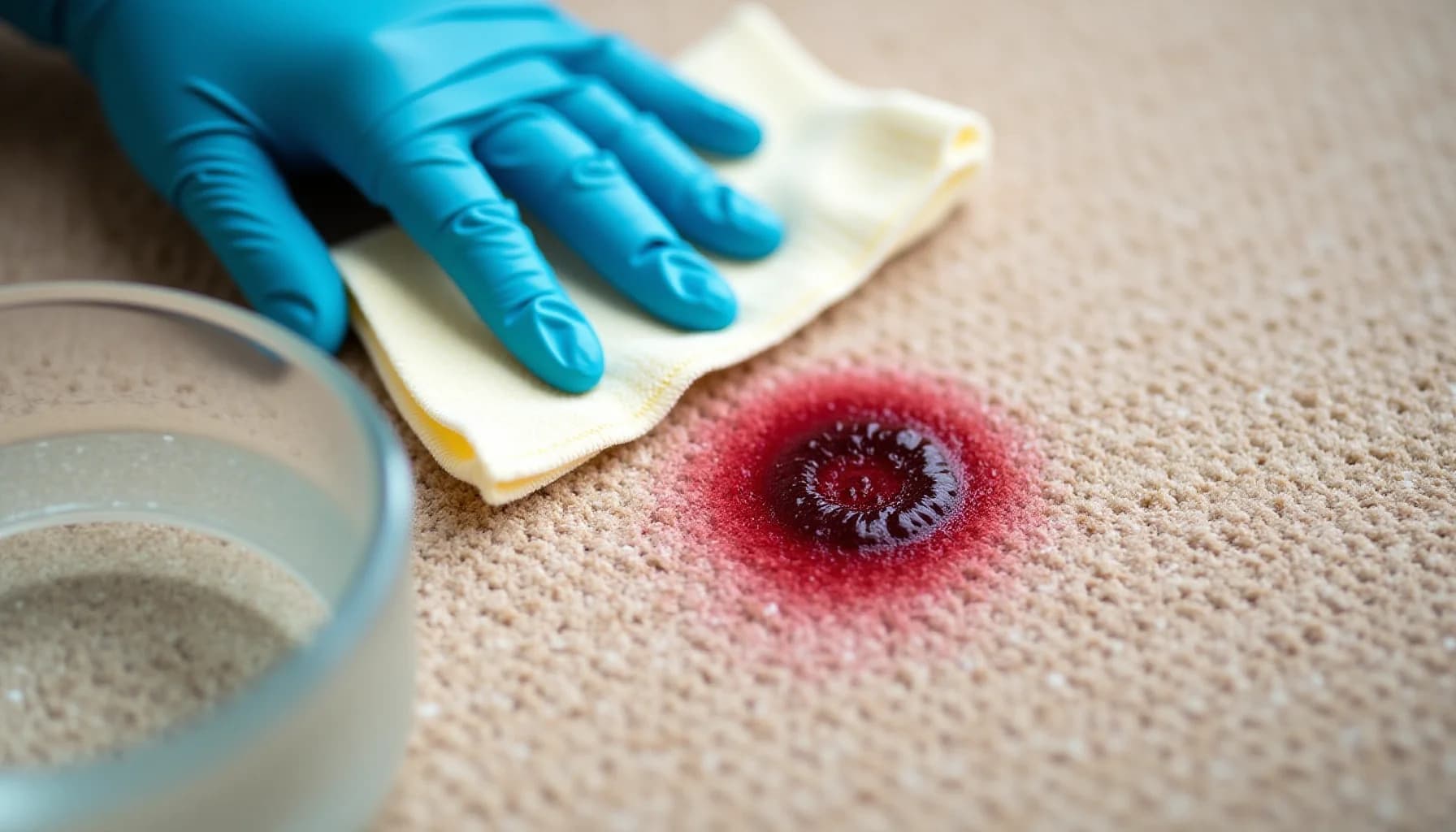
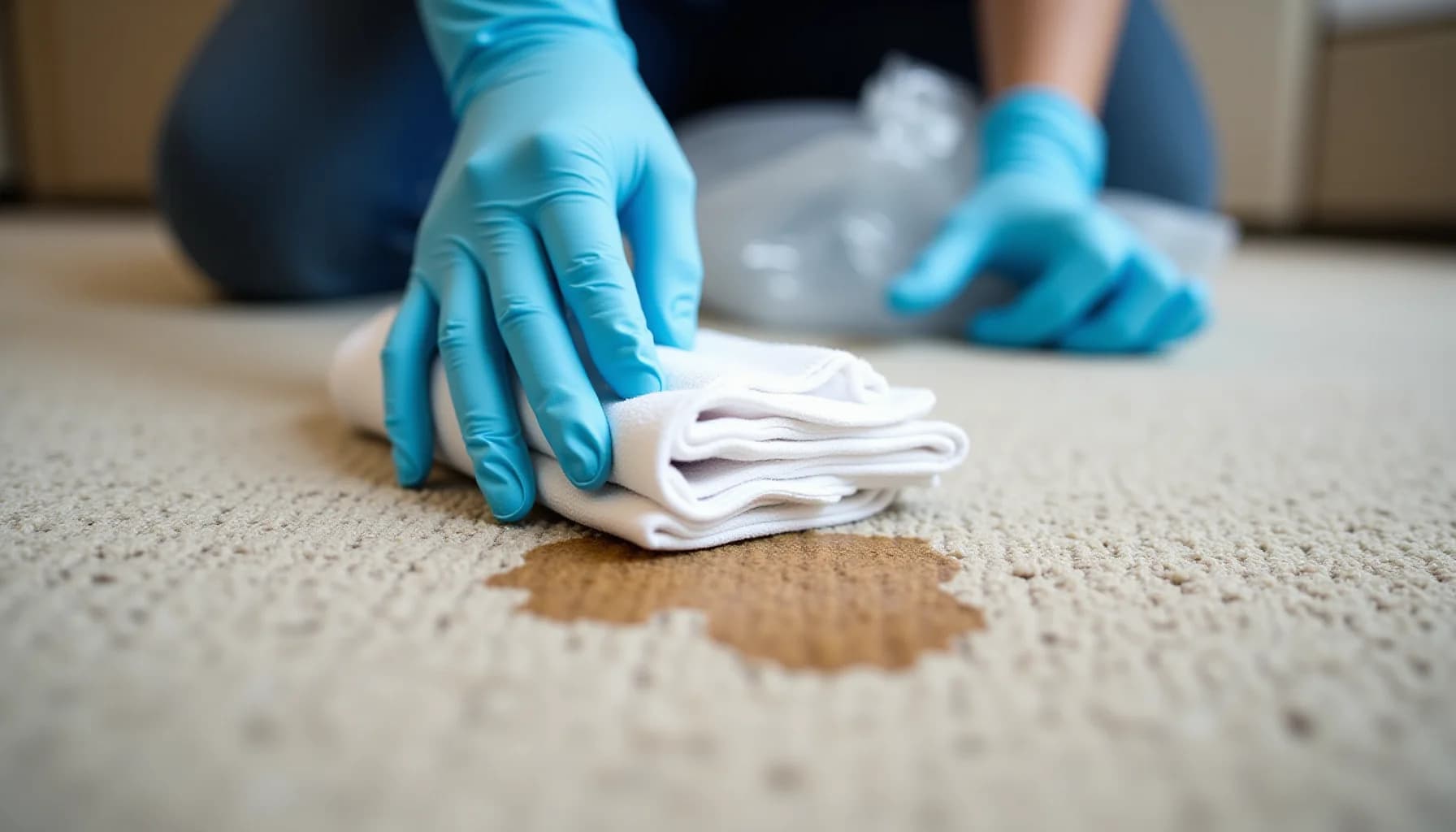
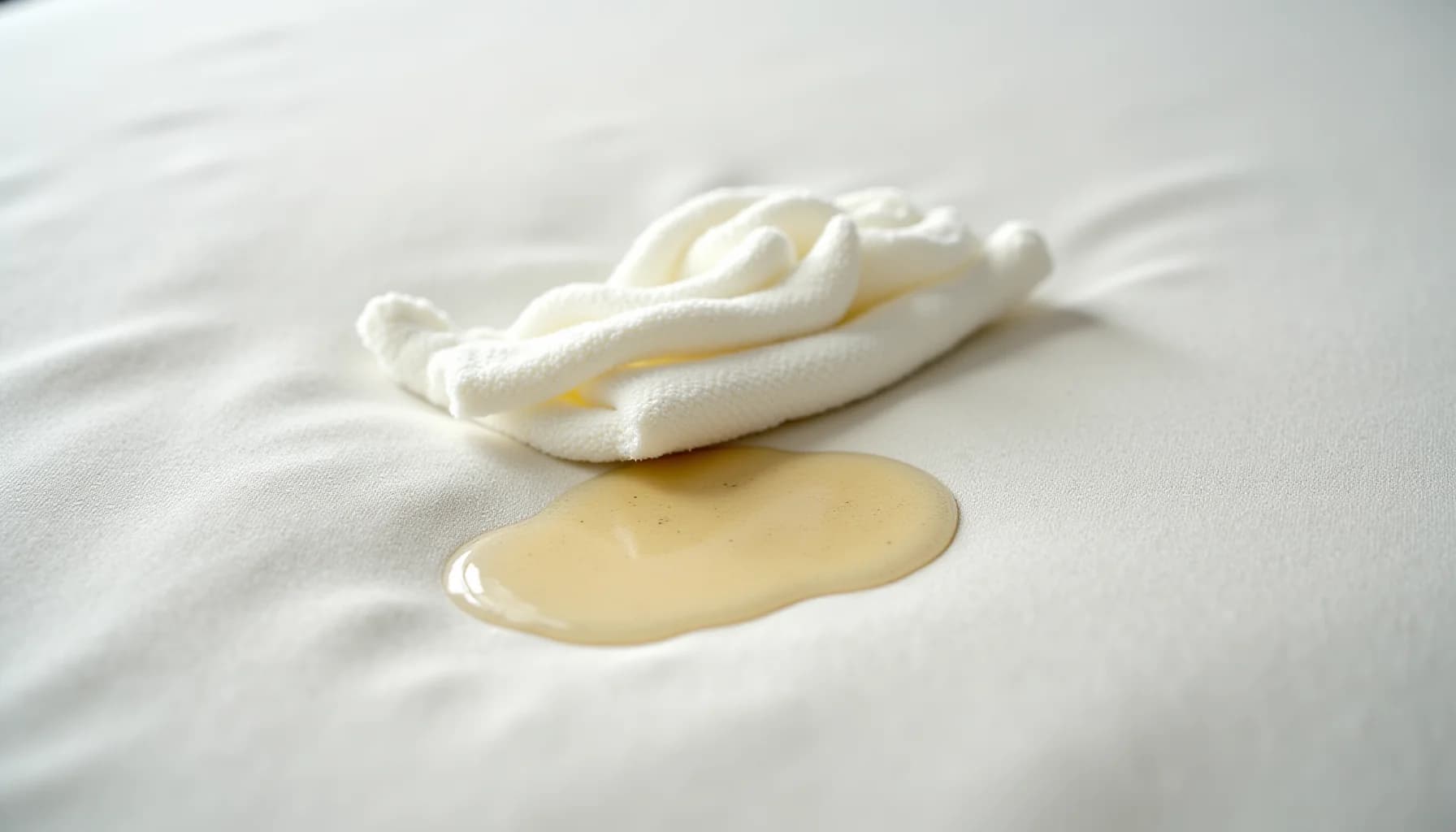
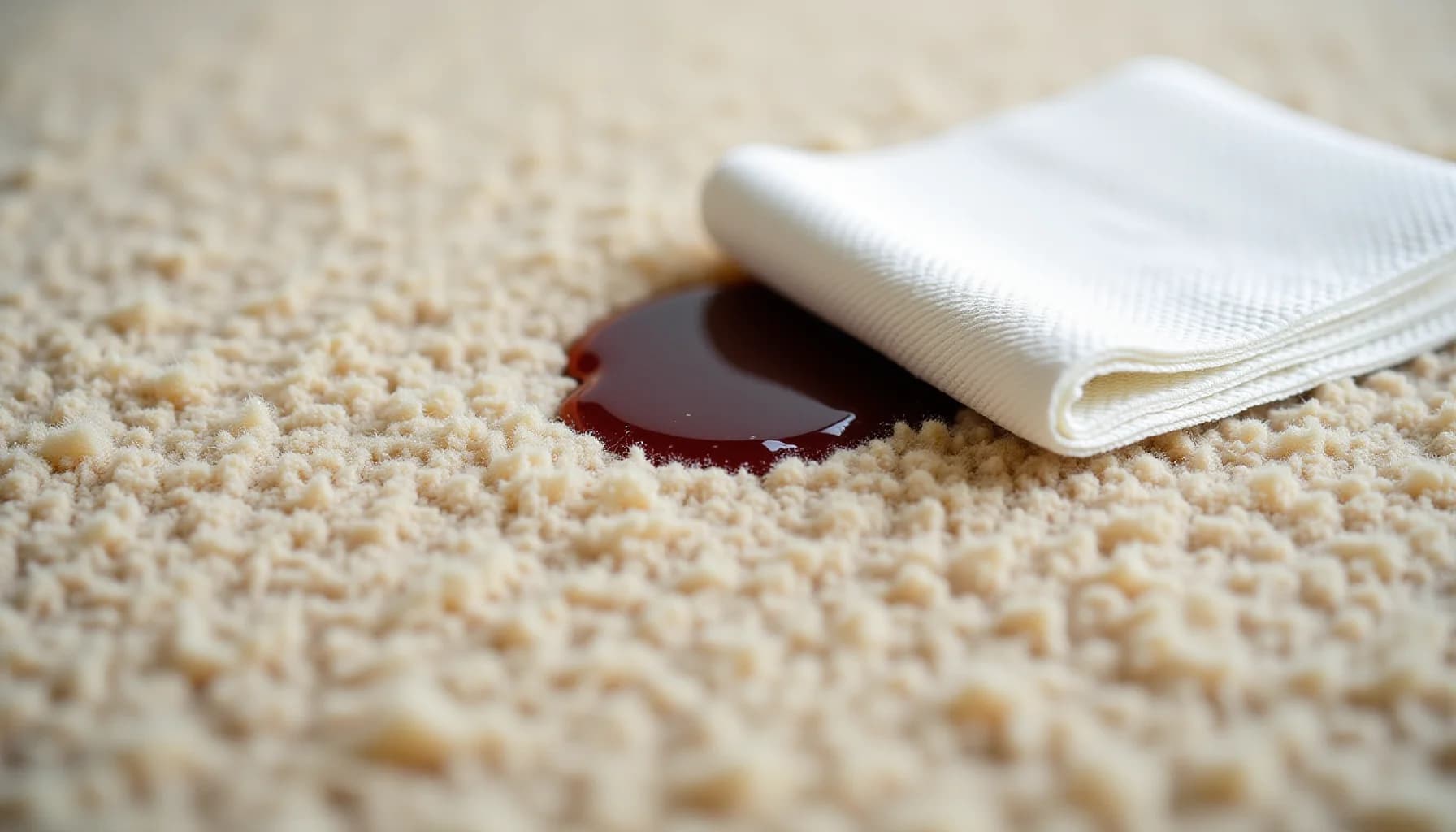
Wool's surface repels liquid, so act fast: press a clean white cloth firmly onto the spill and lift straight up, working from the outer edge toward the center. Never rub, and never use a colored towel, which can transfer dye to the wet fibers.
Mix a pH-neutral cleaning solution and apply it to the cloth, not the rug
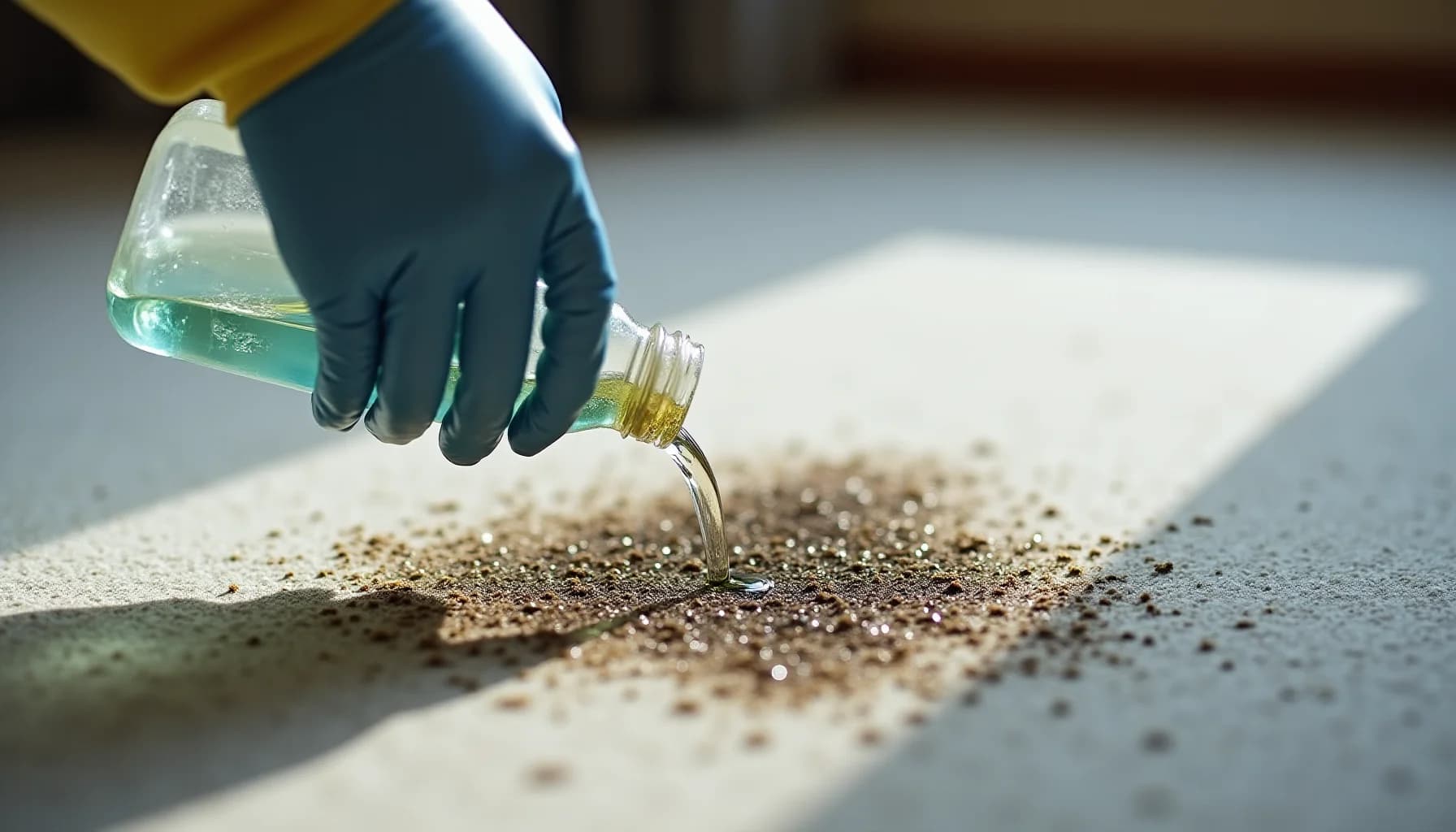
Combine one teaspoon of pH-neutral dish soap (no bleach, no enzymes) with one cup of cool water. Dampen a clean white cloth with the solution and blot the stained area gently, then follow with a second cloth dampened in plain cool water to rinse. Avoid saturating the rug: wool is absorbent and over-wetting causes the backing to wick back up and brown as it dries.
Dry the treated area rapidly with airflow
After blotting, place a fan or air mover aimed at the damp spot and keep the room well ventilated until the area is fully dry. Rapid drying prevents browning and discourages mold: slow air-drying in still air is the enemy here, not the water itself.
Schedule professional deep cleaning every one to three years
For regularly used rugs in households with children or pets, professional cleaning every one to two years is appropriate. Lower-traffic rooms can wait two to three years. Always confirm the cleaner uses pH-neutral, wool-safe chemistry and cool-water extraction: steam cleaning and hot-water extractors can shrink or felt wool fibers permanently.
What should you do the moment something spills on a wool rug?
Wool's natural lanolin coating gives spilled liquids a brief reprieve: rather than soaking straight in, they bead on the surface for a moment. That window is your best opportunity to limit any damage, so act immediately.
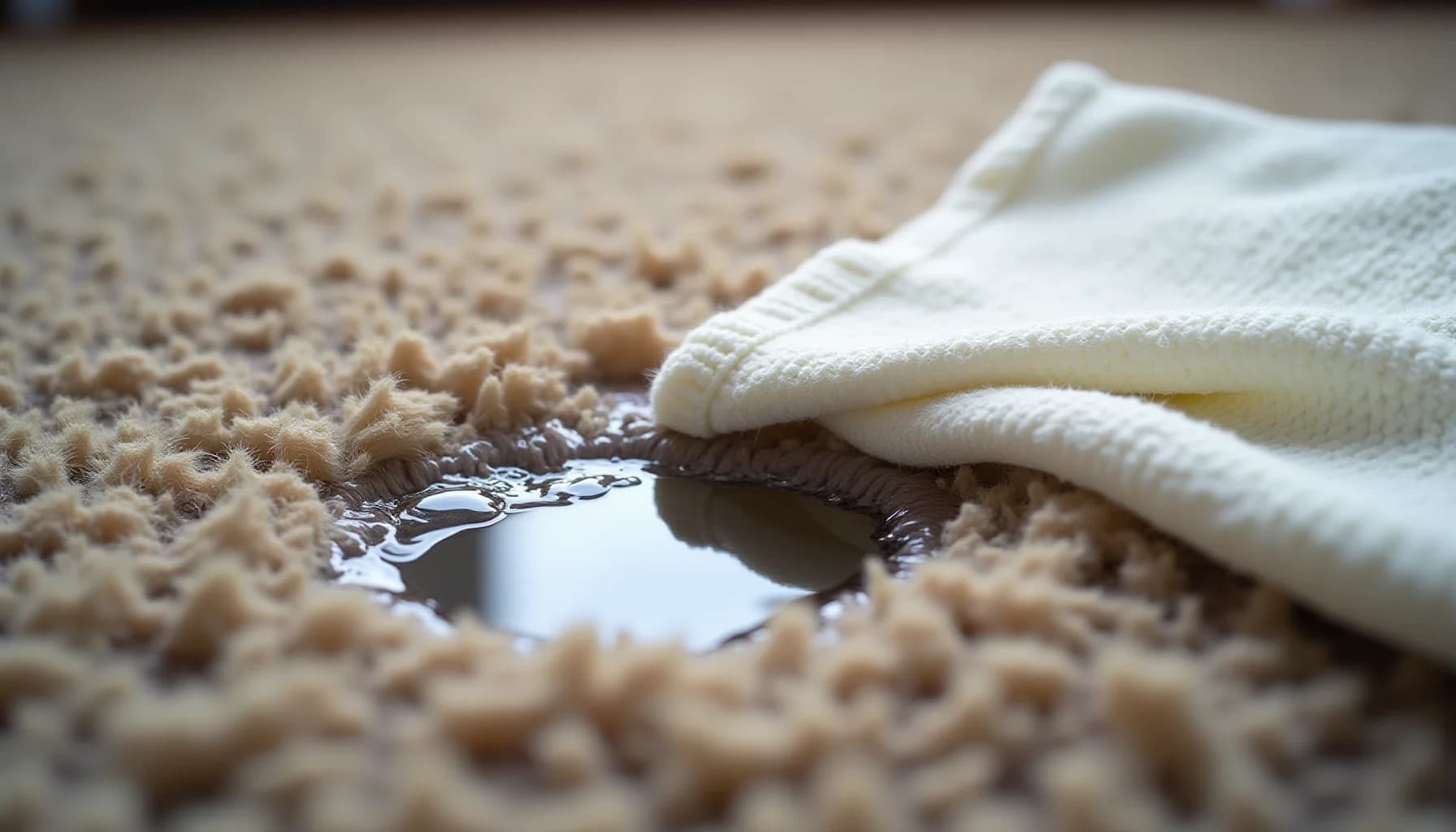
Grab a clean white cloth or white paper towels. Color matters here because dyed towels can transfer their own pigment onto wet wool fibers, adding a second problem to the first. Working from the outer edge of the spill toward the center, blot firmly and lift. Do not rub. Rubbing spreads the liquid outward and can distort or break the wool fibers at the surface, leaving a fuzzy, matted patch that no amount of later cleaning will fix.
If you are dealing with mud or dry dirt, resist the urge to blot at all. Let it dry completely, then vacuum it away. Wet mud smears deeper into the pile when you try to blot it fresh.
For liquid spills, once you have removed as much moisture as possible by blotting, mix your cleaning solution: one teaspoon of pH-neutral dish soap (check that it contains no bleach) in one cup of cool water. Apply a small amount of this solution to a fresh white cloth, not directly onto the rug. Press the cloth onto the stained area, blot, and repeat with a clean section of cloth each time. When the stain has lifted, blot again with plain cool water to rinse any soap residue from the fibers.
Dry the area quickly. Slow drying allows moisture to wick up from the rug's backing, which can cause browning at the surface. Direct a fan or air mover at the damp spot until it is fully dry to the touch.
Pet urine and dried urine stains are a separate matter. The ammonia compounds in urine penetrate deep into the foundation and can cause dye migration that DIY spot cleaning cannot safely reverse. For those, call a professional rug cleaner.
Why do pH-neutral cleaners and cool water matter for wool rugs?
Wool is a protein fiber, built from keratin, the same structural material as human hair. That biological origin is exactly why its chemistry rules are so specific.
Wool's dyes and fiber structure remain stable only within a narrow pH band, roughly 6.5 to 7.5, which is close to neutral. Push the pH above that range with an alkaline cleaner and the alkalinity attacks the protein chains directly. The result is shrinkage, felting (where the fibers lock together into a dense, matted mass), and color bleed that no amount of rinsing will reverse. This is the real reason harsh cleaners ruin wool rugs. It is not that wool is fragile by nature; it is that ordinary household cleaners were formulated for hard surfaces or synthetic fabrics, not protein fibers.
Common offenders include oxygen bleach products such as OxiClean or Resolve, general-purpose spray cleaners, enzyme-based stain removers, and anything containing ammonia. Bleach is in a category of its own: it does not just stain or weaken wool, it can dissolve the fiber structure entirely.
The practical formula for spot cleaning is straightforward. Mix one teaspoon of pH-neutral dish soap (check the label; it should specify no bleach and no enzymes) with one cup of cool water. Apply the solution to a clean white cloth first, then blot the stain. Never pour liquid directly onto the rug.
Cool water matters for similar reasons. Heat causes wool fibers to swell and interlock, which is the felting mechanism. Hot water and steam both trigger this, which is why steam cleaners and hot-water extractors are ruled out entirely. Cool water cleans without triggering that structural change. If you want to understand how fiber type shapes which cleaning methods are safe across your home textiles, the fiber-by-fiber breakdown in this cleaning method guide is worth reading before you reach for any product.
| Cleaner Type | Approx. pH | Effect on Wool | Safe to Use? |
|---|---|---|---|
| pH-neutral dish soap (no bleach) | 6.5–7.5 | Preserves fiber & dye structure | Yes |
| Alkaline all-purpose cleaner | High (>8) | Attacks protein, causes felting/shrinkage | No |
| Enzyme cleaner | Varies | Digests wool protein fibers | No |
| Oxygen bleach (OxiClean, Resolve) | Alkaline | Damages structure, color bleed risk | No |
| White vinegar (diluted) | ~3–4 | Mild risk; use sparingly, diluted only | With caution |
What are the biggest myths about cleaning wool rugs?
The most persistent myth is that wool rugs cannot be wet-cleaned without causing damage. That is simply false. Wool is a protein fiber, essentially hair, and like hair it cleans safely with water when the method is correct. Browning after cleaning is not the wool turning color. It is the rug's backing wicking moisture back up through the pile because the rug was over-saturated. Avoid that by applying solution to a cloth, not pouring it directly onto the rug, and by drying rapidly with air movement.
The second myth, and the more dangerous one, is that any cleaner will do as long as it says "stain remover." Wool's protein structure is stable only within a narrow pH window, roughly 6.5 to 7.5. An ordinary alkaline all-purpose cleaner pushes well past that range and attacks the fiber itself, producing felting, shrinkage, and color bleed that cannot be reversed. Bleach goes further: it can dissolve wool entirely. Enzyme cleaners, marketed heavily for pet stains, break down protein, which is exactly what wool is made of. Oxygen bleach products like OxiClean carry the same risk. None of these belong anywhere near a wool rug.
The third myth is that vacuuming damages the fibers. The opposite is true. Skipping vacuuming lets grit and dust grind against the wool with every footstep, acting exactly like sandpaper.
If a spill involves pet urine, or if any DIY attempt produces color change, felting, or a spreading stain, stop immediately and call a professional wool rug cleaner. Those outcomes signal chemistry or foundation damage that worsens with further DIY effort. The same applies for identifying which cleaning method is safe for your fiber type before you reach for any product.
Frequently asked questions
How often should I vacuum a wool rug?
What cleaning solution is safe for spot-cleaning a wool rug?
Why should I avoid alkaline cleaners on wool?
How often does a wool rug need professional cleaning?
How often does a wool rug need professional cleaning?
For most households, scheduling a professional wool rug cleaning every one to two years is the practical baseline. Push that to every two to three years if the rug sits in a low-traffic room, or pull it forward to once a year if you have children, pets, or anyone in the house with allergies. Rugs in genuinely low-traffic spaces, a guest bedroom or a formal sitting room used a few times a month, can often go four to five years between professional visits without harm.
What shifts the schedule faster than anything else is pet activity. Urine in particular penetrates through the pile and into the foundation of the rug, where it bonds to the fibers as it dries. DIY cleaning attempts at that stage risk permanent dye migration and structural damage, so a professional appointment should happen sooner rather than later rather than hoping a home remedy reaches deep enough.
When a cleaner does come in, expect them to test for colorfastness, use pH-controlled solutions in the 6.5 to 7.5 range, rinse with cool water only, and dry the rug rapidly with air movers. Slow drying leads to browning caused by moisture wicking back up through the backing, not through any fault of the wool itself. A reputable cleaner understands this and treats drying time as part of the job, not an afterthought.
How this article was made
Researched and written with AI assistance. What gets published is a human editorial decision. Grounded in 8 cited sources.
Edited by Claire Mercier, Editor. The guides are written with AI assistance.
Sources (8)
- Essential Wool Rug Care Tips: How to Clean & Protect Your Rug
- The Ultimate Guide on How to Clean Your Wool Rug
- How to Clean a Wool Rug: Expert Tips for Maintaining Your Covering – Lorena Canals | Official Website
- how to clean wool rug? | PriceScope
- How to Spot Clean Wool Rugs & Carpet– Bradford's Rug Gallery
- How to Clean a Wool Rug
- www.chairish.com
- Six Myths About Caring for Wool Carpeting Dispelled