Seven Ways to Identify Your Filter Type Before Cleaning It Wrong
Part of Air & HVAC · article 2 of 12
On this page
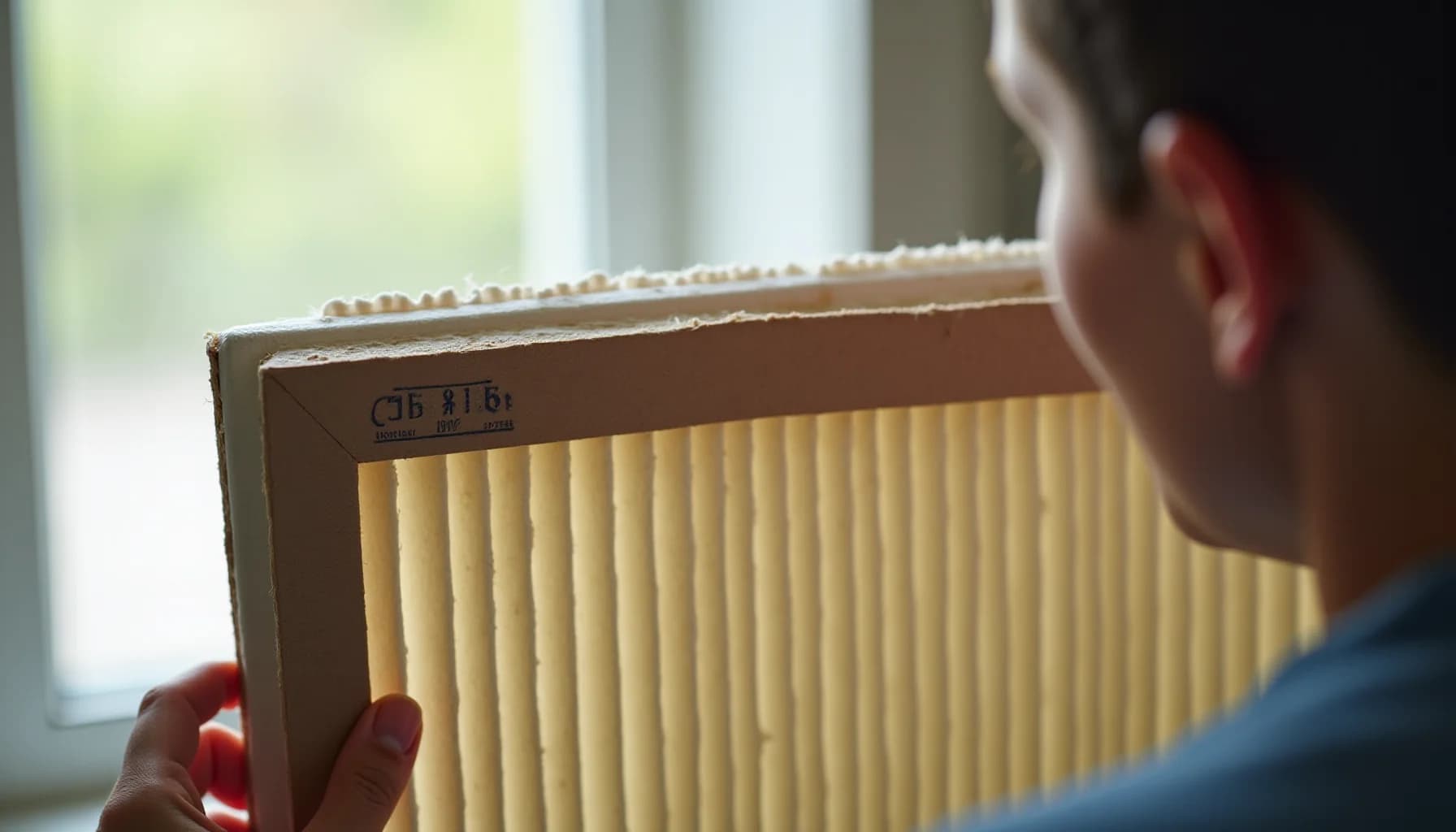
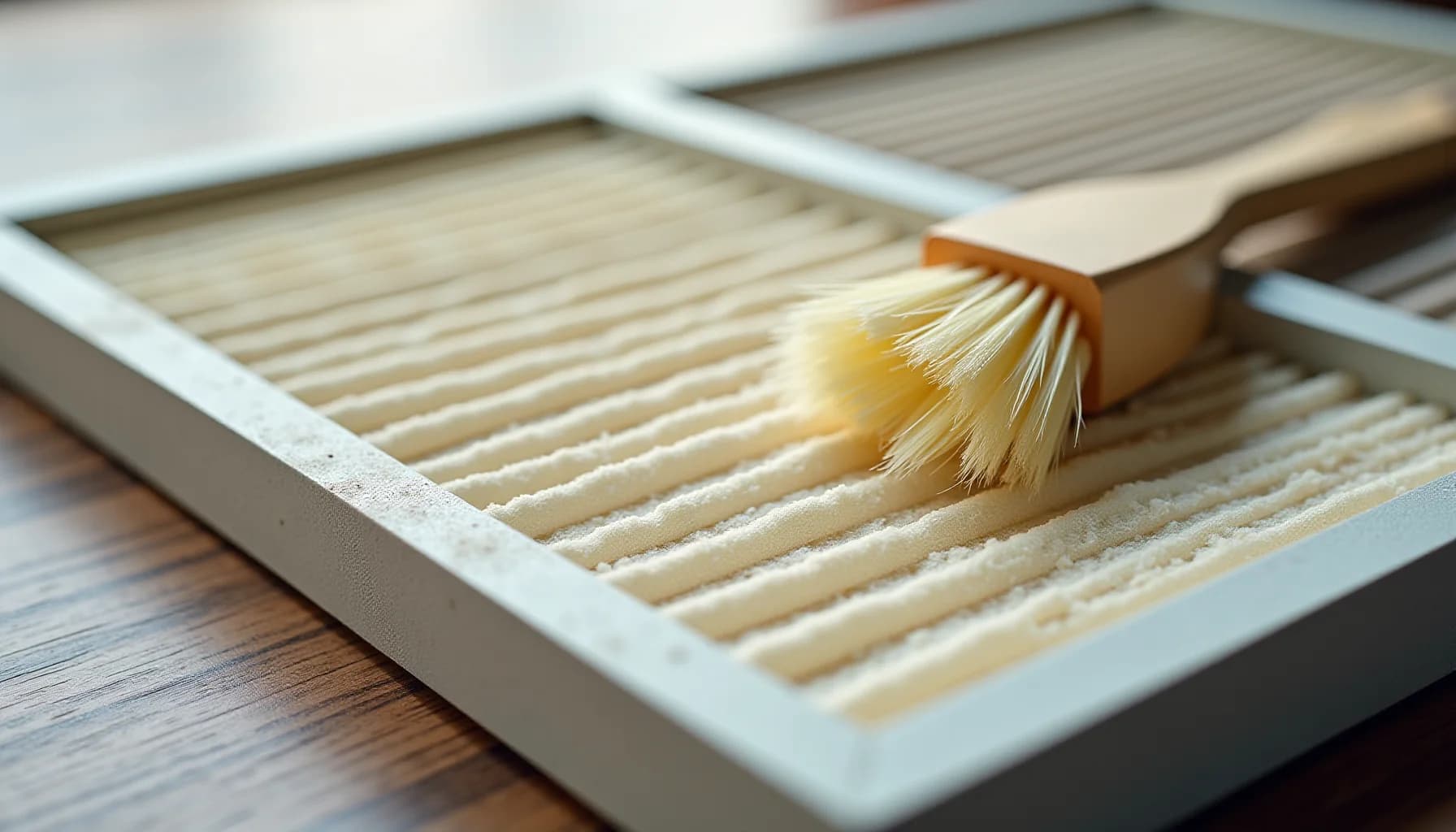
Start by locating the filter and reading any label printed directly on its frame or housing. Most HVAC filters have their nominal size and MERV rating stamped on the cardboard edge. That number tells you filtration strength: MERV 8 captures at least 70% of particles in the 3 to 10 micron range, MERV 11 captures at least 85%, and MERV 13 captures 90% or more. If the filter looks like layered gray padding, it is likely a 1-inch fiberglass type, disposable only. Accordion-folded material indicates a pleated filter, which may or may not be washable. A soft, sponge-like layer is a foam filter, almost always washable under lukewarm water. A thick, white, tightly pleated panel is a HEPA filter, which the U.S. Department of Energy defines as capturing at least 99.97% of particles as small as 0.3 microns. Do not rinse a paper vacuum filter expecting to reuse it: paper filters need replacement, not washing, and rinsing one destroys its structure and kills suction performance. Once you have identified the material visually, cross-check against your appliance manual before touching it with water. The manual is the only reliable source confirming whether your specific filter is washable, and skipping that step is where most cleaning mistakes begin.
Why does it matter which filter type you have before you start cleaning?
The filter type determines everything that comes next: whether you wash it or replace it, what water temperature to use, whether it needs to dry completely before reinstallation, and how long it should last before the next service. Get that identification wrong and you can permanently damage the filter, reduce your system's performance, or, in the case of a vacuum's paper filter, destroy it entirely with a single rinse.
Take a foam pre-motor filter from a bagless vacuum. It looks dirty, you rinse it under lukewarm water, let it dry, and it works fine. Now apply that same logic to a pleated paper cartridge filter in an upright vacuum and you have a filter that loses structural integrity, clogs, and cuts your vacuum's suction. Both filters sit in similar positions inside similar machines, but the correct action for one is the wrong action for the other.
The same principle applies to HVAC systems. A 1-inch fiberglass filter is disposable. An electrostatic pleated filter is designed to be washed and reused. If you try to wash a fiberglass filter, the media collapses and the filter stops working. If you simply throw away a washable electrostatic filter every 30 days, you are spending money unnecessarily and defeating the purpose of having that filter type.
Visible dirt also tells you very little on its own. A filter can look relatively clean and still be clogged with particles too small to see, or it can look gray and still have adequate airflow. Identification, not appearance, is the starting point for any cleaning decision.
What do the numbers and labels on your HVAC filter actually mean?
Locate the filter in your appliance
Find the filter access point for the system you are maintaining: the return air vent or air handler slot for HVAC, the pre-motor or post-motor housing for vacuums, and the under-sink canister or pitcher housing for water filters. Each appliance keeps its filter in a distinct location, so confirm you are working on the correct compartment before touching anything.
Read every label on the filter frame or housing
Check the cardboard frame of an HVAC filter for its nominal size and MERV rating, printed directly on the frame. On vacuum and water filters, look for manufacturer markings, model numbers, or the word 'washable' stamped on the filter body itself, since this label is the fastest way to confirm cleanability before you try anything else.
Identify the filter material by sight and feel
Match what you see to a known filter type: soft and sponge-like means foam, often washable; tightly folded paper or synthetic material means pleated, sometimes washable and sometimes not; a thick white pleated panel marked HEPA means it captures particles down to 0.3 microns; a thin black panel means carbon or charcoal, which must be replaced, not cleaned; layered metal mesh in a range hood means aluminum or stainless steel, which is washable.
Check the owner's manual for your specific model
Look up the filter section in the manual for your HVAC system, vacuum, or water filter unit, because manufacturer guidance is the only reliable source for whether your exact filter is washable, how to wash it, and how often to replace it. A filter that looks washable may still require replacement if the manual says so, and skipping this step can cause permanent damage or reduced performance.
Understand what your MERV rating means for HVAC filters
A MERV rating between 8 and 13 is the range most HVAC manufacturers recommend for residential use: MERV 8 captures at least 70% of particles in the 3 to 10 micron range, MERV 11 captures at least 85%, and MERV 13 captures 90% or more. Do not automatically choose the highest rating available, because denser, high-MERV filters restrict airflow and can strain or damage your blower motor over time.
Confirm cleanability before you rinse, tap, or vacuum the filter
Once you know the filter type and have read the manual, make a clear decision: foam and labeled-washable filters can be rinsed under lukewarm water and must dry completely before reinstallation to prevent mold; pleated paper vacuum filters and charcoal range hood or air purifier filters must be replaced, not cleaned; HEPA filters require individual manufacturer guidance before any cleaning attempt. Using the wrong method on any filter type reduces its efficiency or destroys it outright.
What do vacuum, air purifier, and range hood filters look like?
Each of these filters has a distinct look, and a few seconds of observation is usually enough to tell them apart once you know what you're checking for.
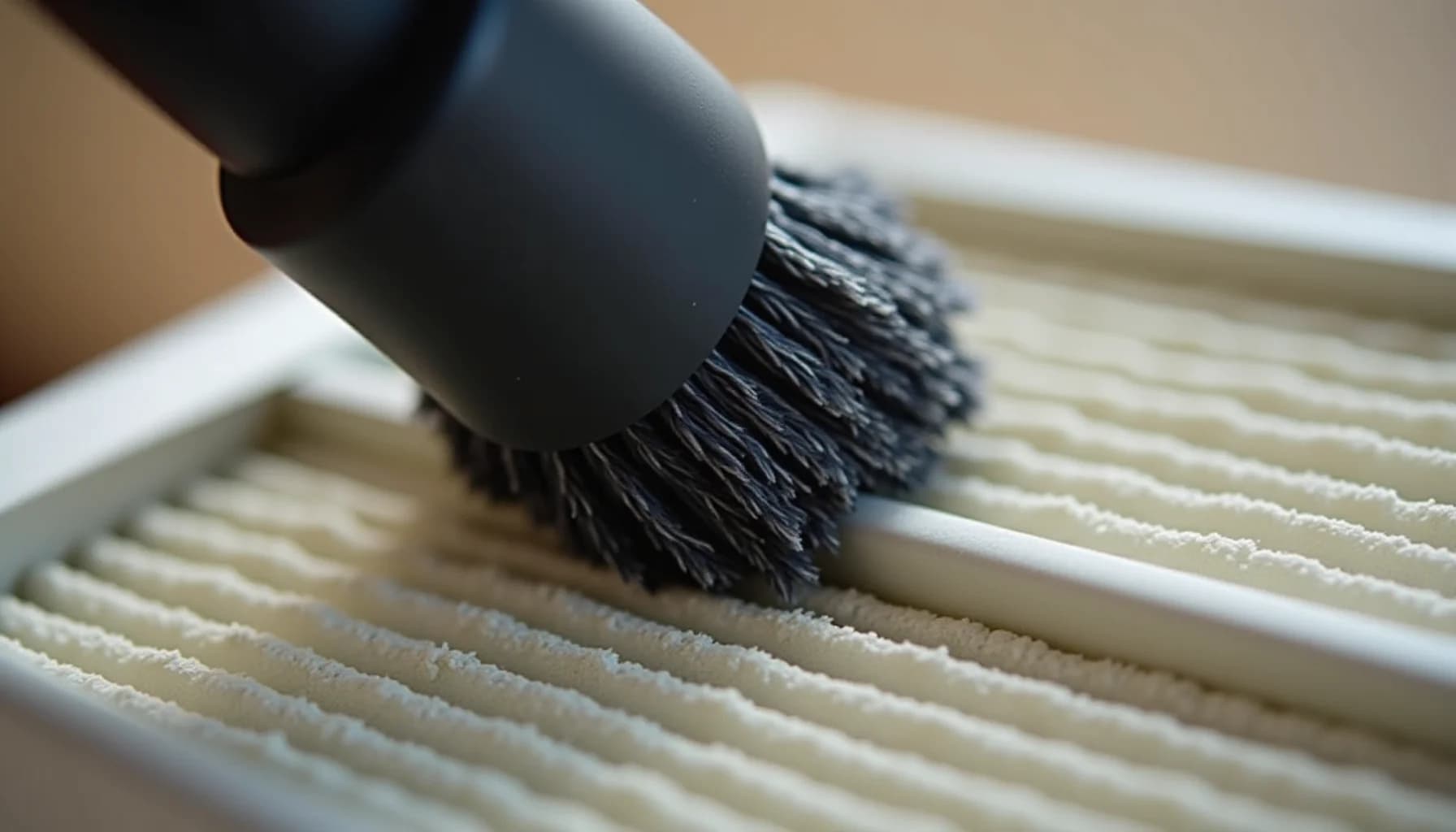
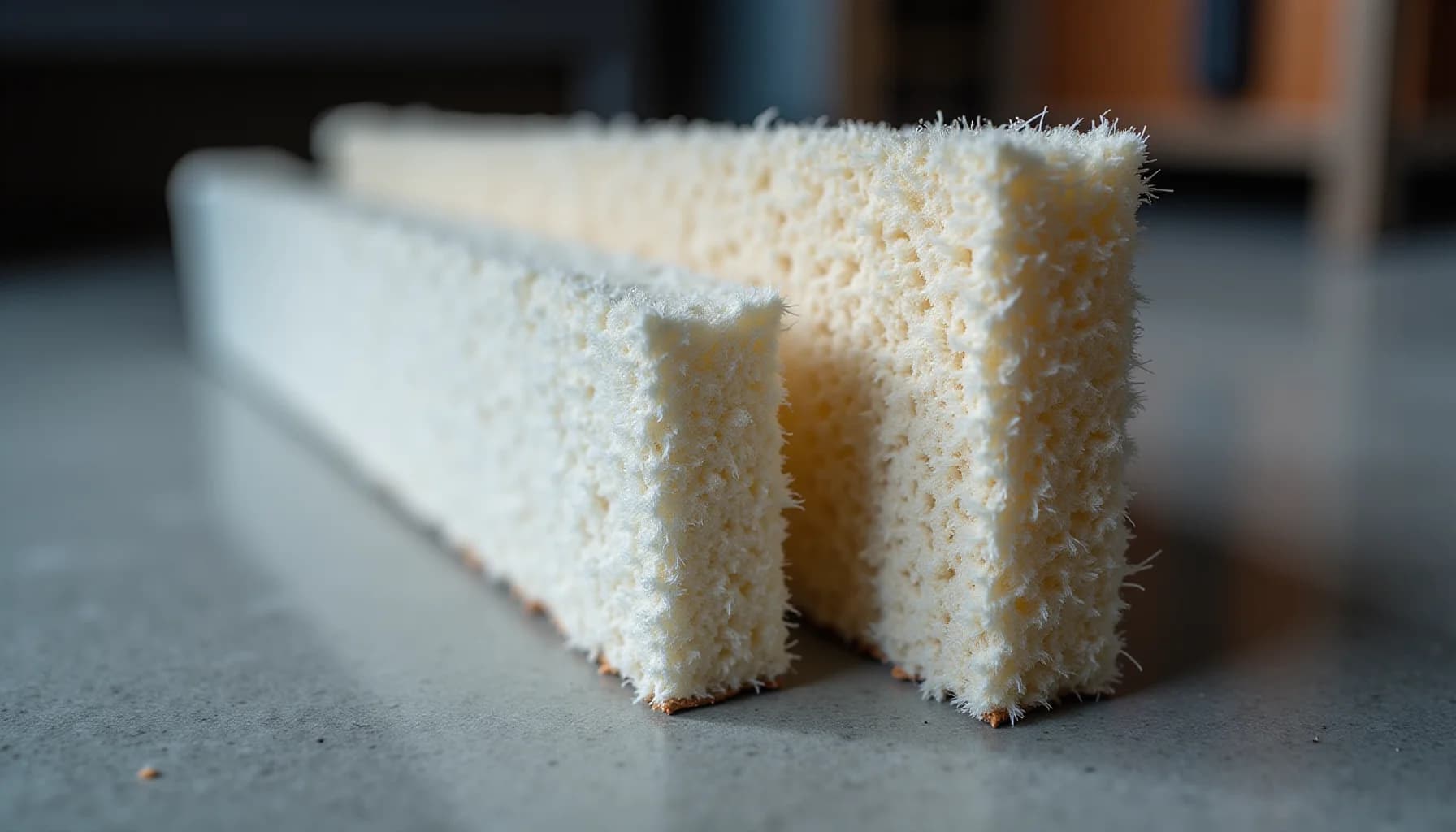
Vacuum filters fall into a handful of recognizable categories. Foam filters are soft and sponge-like, typically gray or black, and are most often found sitting just ahead of the motor in bagless uprights and canister models. Pleated paper or synthetic filters look exactly like a miniature version of an HVAC filter: folded material accordion-style into a cylinder or flat panel. These are common in upright and canister vacuums and trap fine dust effectively, but many are not washable, so the look can be deceiving. HEPA filters are also pleated but tend to be thicker, denser, and more rigid, and they're frequently housed in a dedicated sealed cassette to prevent air from bypassing the media. If your vacuum's filter carries a HEPA label, that designation has a defined standard: it captures at least 99.97% of particles as small as 0.3 microns, including dust, pollen, mold, and bacteria.
Air purifier filters usually stack in layers. The pre-filter, the outermost layer, looks like open mesh or thin foam and catches visible hair and large dust before it reaches anything finer. Behind it, the HEPA filter is thick, white, and tightly pleated. Carbon or activated carbon filters are easy to spot because they're black, often thin relative to the HEPA layer, and designed to absorb odors rather than capture particles. Washable air purifier filters are almost always labeled directly on the frame.
Range hood filters are a different category entirely. The most common type is a grease filter made of layered aluminum or stainless steel mesh, which looks like a fine metallic screen or grid. If your range hood uses a charcoal or carbon filter instead, it will be dark and often thinner. That distinction matters practically: mesh grease filters can be cleaned, while charcoal filters cannot and must be replaced outright.
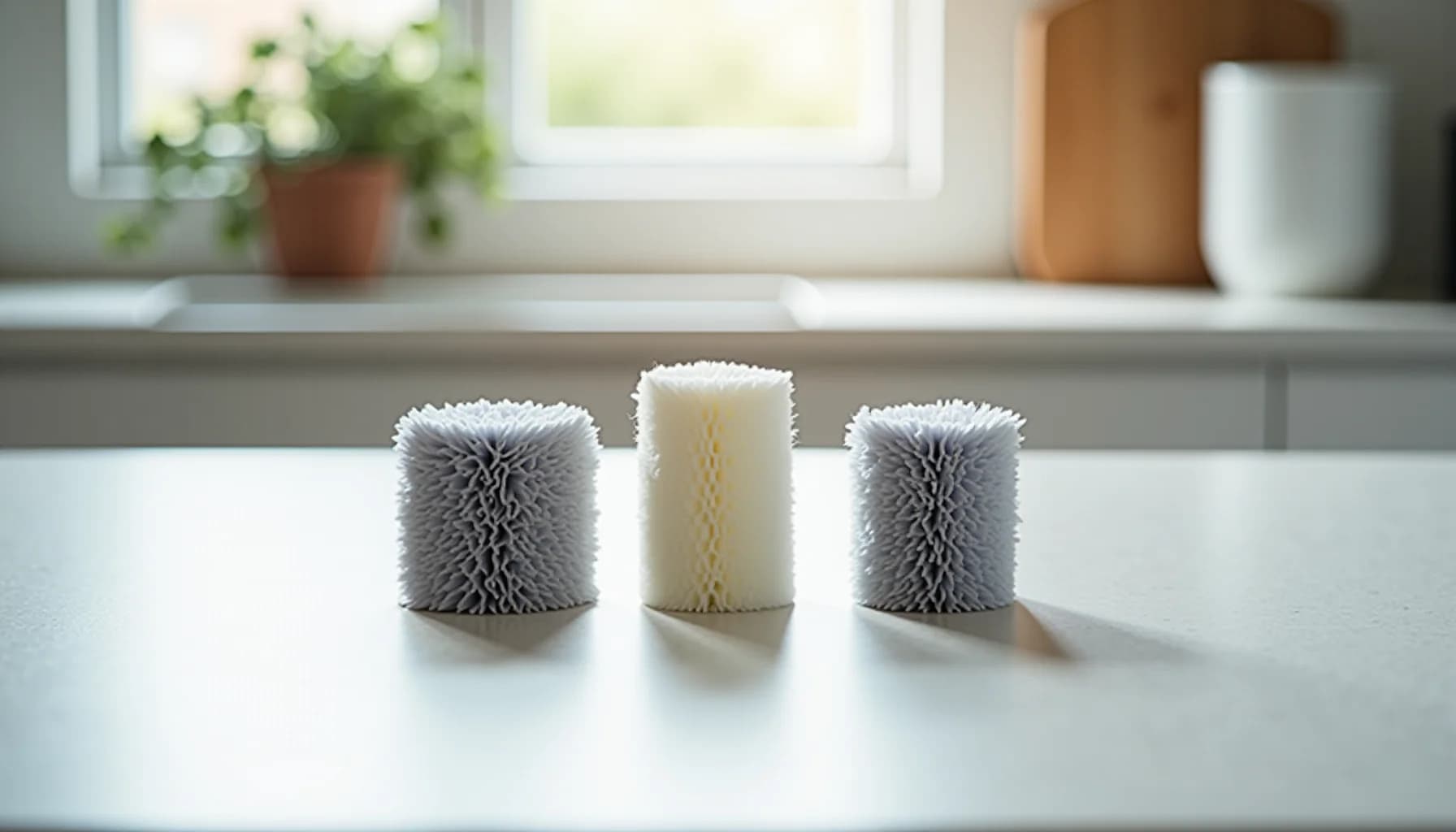
How do you identify your household water filter type?
Water filters tend to confuse homeowners more than any other filter type because the hardware is often hidden under a sink, inside a refrigerator door, or plumbed into a dedicated whole-house line. Start by locating the filter housing before you try to identify anything else.
Once you find it, look at the housing material and configuration. A reverse osmosis system is the most distinctive: it uses multiple canisters connected in sequence, typically installed under the kitchen sink, and often includes a dedicated faucet on the countertop. Each canister stage handles a different contaminant, so you will usually see two to four separate housings side by side. A UV system adds a cylindrical stainless steel chamber with a lamp inside, usually positioned after the other filter stages.
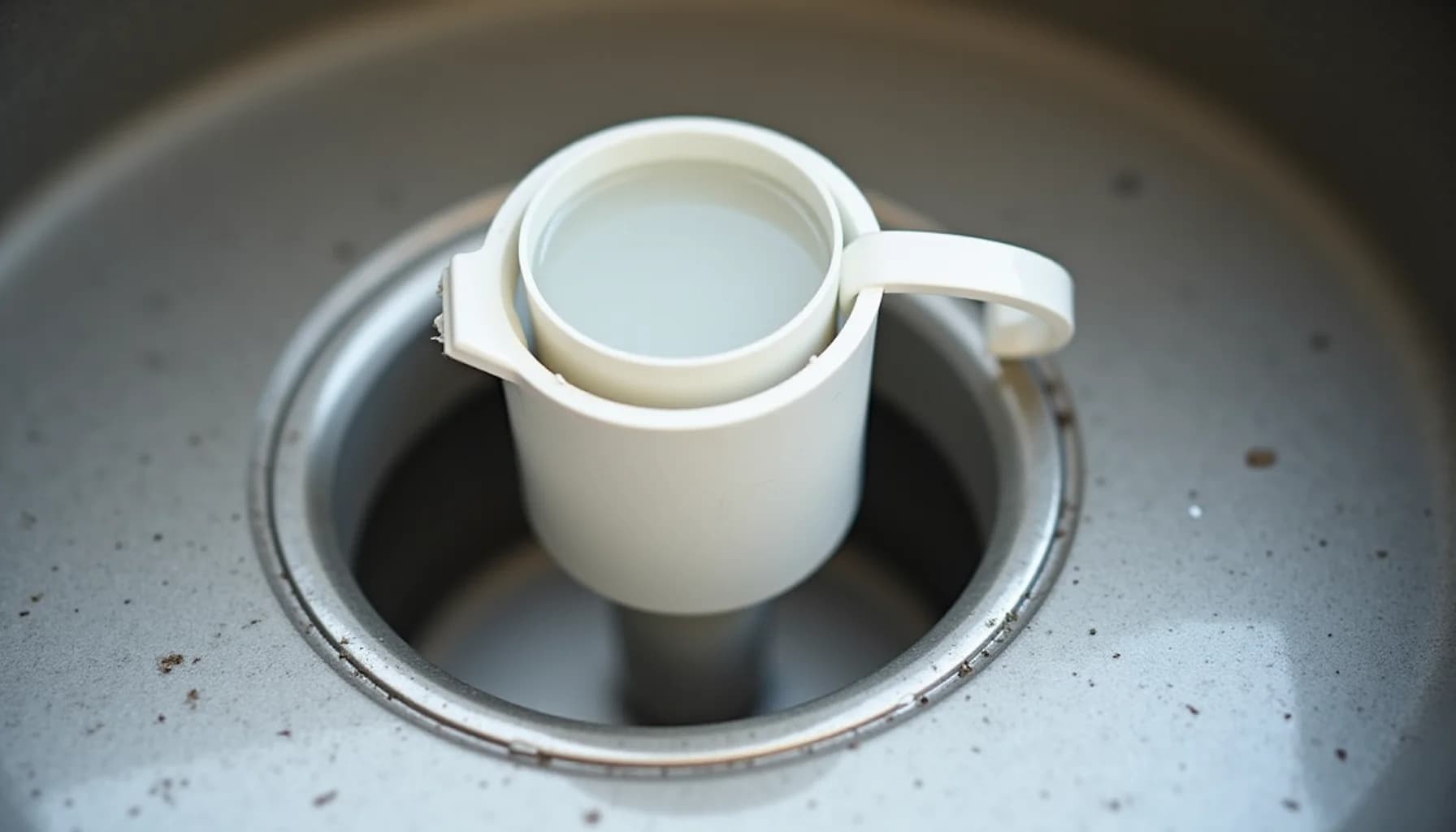
Carbon filters, the most common type in American homes, come in two forms. A whole-house carbon filter sits on the main supply line and uses a single large canister. Under-sink or countertop carbon units are smaller and feed only one faucet. The filter cartridge itself is made from materials like coconut shell, wood, or charcoal, and it absorbs chemicals as water passes through. Pitcher-style filters from brands like Brita or PUR use the same activated carbon principle in a replaceable cartridge you drop directly into the reservoir.
Ceramic filters are round or cylindrical, white or off-white, and slightly porous to the touch. They are reusable and can be cleaned, but they filter slowly and offer no protection against viruses or dissolved chemicals, so they are rarely used as a standalone solution in U.S. households.
Whatever you find, check the cartridge or housing for a model number and cross-reference it with the manufacturer's documentation before attempting any cleaning or replacement. The wrong cartridge, or the wrong cleaning method, changes what the filter actually removes from your water.
| Filter Type | Visual Appearance | Washable/Reusable | Key Limitation |
|---|---|---|---|
| Activated Carbon | Black or dark gray block or cartridge | No — replace when spent | Does not remove viruses |
| Ceramic | White or off-white porous cylinder or disc | Yes — rinse and reuse | Filters slowly; no virus protection |
| Reverse Osmosis | Multi-stage housing unit, semi-transparent membrane | No — membrane replaced periodically | Higher upfront cost and installation |
| UV (Ultraviolet) | Clear or opaque tube with UV lamp inside | No — lamp replaced on schedule | Does not remove chemicals or sediment |
Will a washable filter actually work in your system?
Not every HVAC system can simply accept a washable filter in place of its original disposable one. Some furnaces and air handlers are engineered around specific airflow resistance levels, and swapping in a washable filter without checking compatibility can strain the blower motor, reduce heating or cooling efficiency, and cause long-term mechanical damage. Before you make that switch, pull out your system's manual and confirm what filter types the manufacturer approves. If the manual is gone, call an HVAC professional rather than guess.
Performance is the other reality check. Washable HVAC filters typically top out at MERV 4 to MERV 8. That means they capture larger particles like lint and coarse dust reasonably well, but they struggle with pollen, pet dander, mold spores, and bacteria. A disposable filter rated MERV 11 or MERV 13 captures at least 85% to 90% of particles in the 3.0 to 10.0 micron range. A washable filter at the low end of that scale cannot match that.
The mistake that causes irreversible damage is washing a filter that was never meant to be washed. Pleated paper vacuum filters, for example, disintegrate when wet, permanently destroying their structure and dropping suction performance. Running a vacuum with a wet or damaged filter forces debris past the motor, which can burn it out entirely.
Washable filters also demand strict maintenance discipline. Reinstalling one before it has dried fully creates a mold risk inside the unit itself. If your schedule does not realistically allow monthly to bimonthly cleaning and full drying time, a disposable filter is the more practical choice.
Frequently asked questions
How do I know if my HVAC filter is washable or disposable?
What MERV rating should I choose for my home's HVAC system?
Can I wash my vacuum's filter to clean it?
Do I need to replace my range hood's charcoal filter or can I clean it?
How do you identify any household filter before cleaning it?
Start with the filter itself, not a cleaning product. Pull the filter out of its housing and set it somewhere with good light. Then work through these steps before you touch a brush or run any water:
1. Find the printed label. Most HVAC filters carry their nominal size and MERV rating directly on the cardboard frame. Write both down. The nominal dimensions are rounded figures, so the actual filter will measure roughly half to three-quarters of an inch smaller on each side.
2. Look at the material. Foam filters feel soft and spongy. Pleated filters, whether paper or synthetic, show visible accordion folds. Carbon and charcoal filters are typically black or dark gray. HEPA filters are dense, white, and pleated. Range hood mesh filters look like a fine metallic grid.
3. Check for a "washable" label. Manufacturers print this directly on the filter or its packaging when it applies. If you see no such label, assume it is disposable until the manual says otherwise.
4. Open the manual. The model number on your appliance unlocks the manufacturer's specific guidance on cleaning method, drying time, and replacement interval. No manual at hand? Search the model number online. This step is non-negotiable.
5. Confirm before acting. Only after completing steps one through four should you decide whether to rinse, vacuum, replace, or call a technician.
How this article was made
Researched and written with AI assistance. What gets published is a human editorial decision. Grounded in 8 cited sources.
Edited by Claire Mercier, Editor. The guides are written with AI assistance.
Sources (8)
- -1- 4130-1Y Specification SPECIFICATION FOR FILTERS, AIR (HVAC)
- What is a MERV rating?
- How To Clean Your Air Conditioner Filter | MRCOOL®
- How To Clean Vacuum Cleaner Filter - Blog - Discount Filters
- How to Clean Vacuum Filter: Step-by-Step Guide
- How to Clean a Vacuum Filter: Step-by-Step Guide for Any Vacuum | Dreame US
- How To Clean Any Pool Filter
- How to Clean Your Pool Filter - Latham Pool