Does Vinegar Clean a Humidifier? What It Does and What It Can't
Part of Air & HVAC · article 5 of 12
On this page
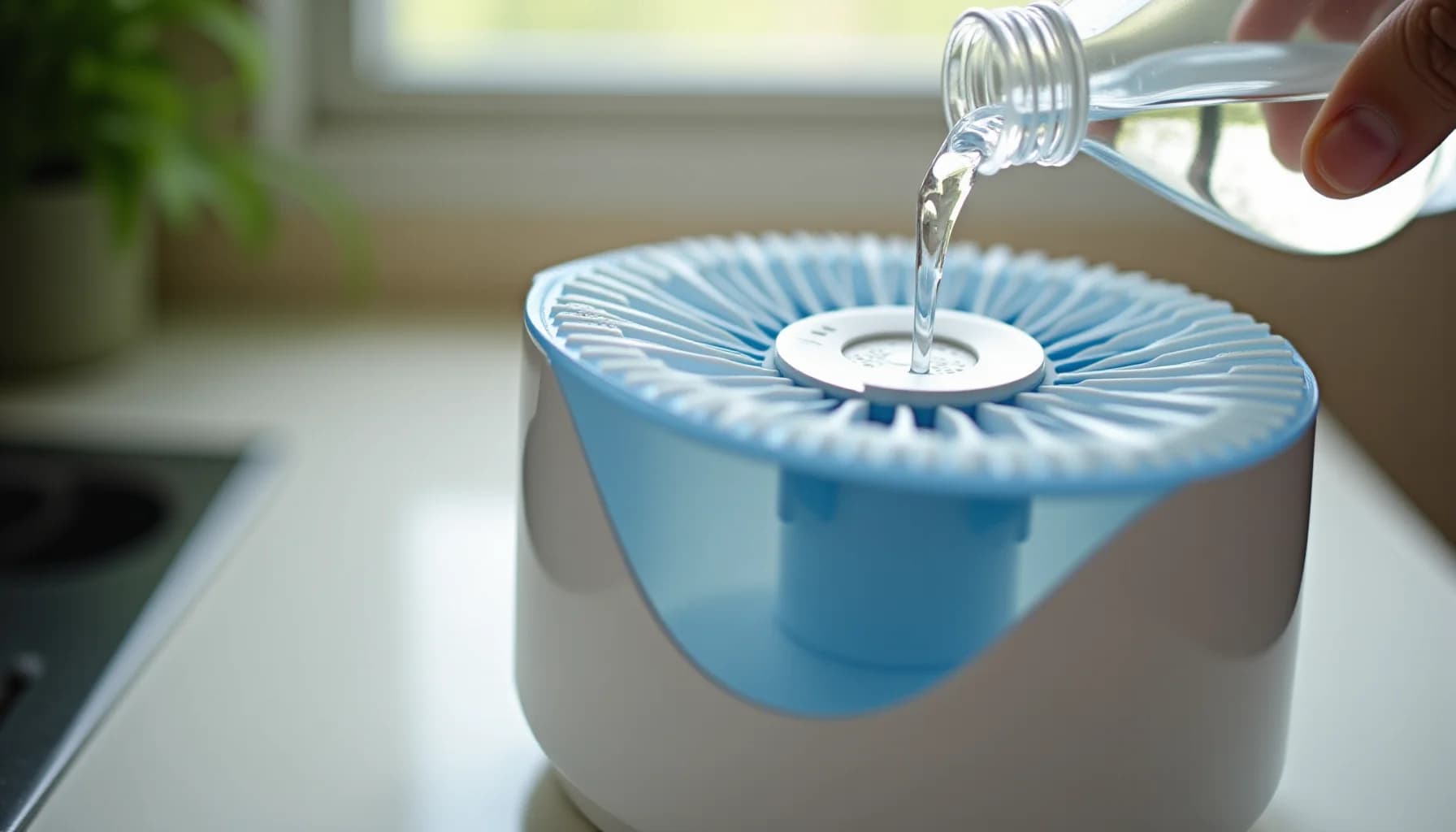
Choose 6% acidity white vinegar. Most readers should reach for it over the standard 5% bottle; the one condition that flips the choice is simple availability — if your store only carries 5%, use it rather than waiting.
White vinegar works on a humidifier because acetic acid reacts directly with alkaline mineral deposits, mainly calcium carbonate, breaking them apart on contact. That chemistry makes it reliable for scale removal and reasonably effective against bacteria. What it does not do well is kill mold or prevent biofilm from reforming quickly, so vinegar alone is not a complete solution for a visibly mold-affected unit. For that problem, cleaning mold with vinegar has real limits worth understanding before you assume one product covers everything.
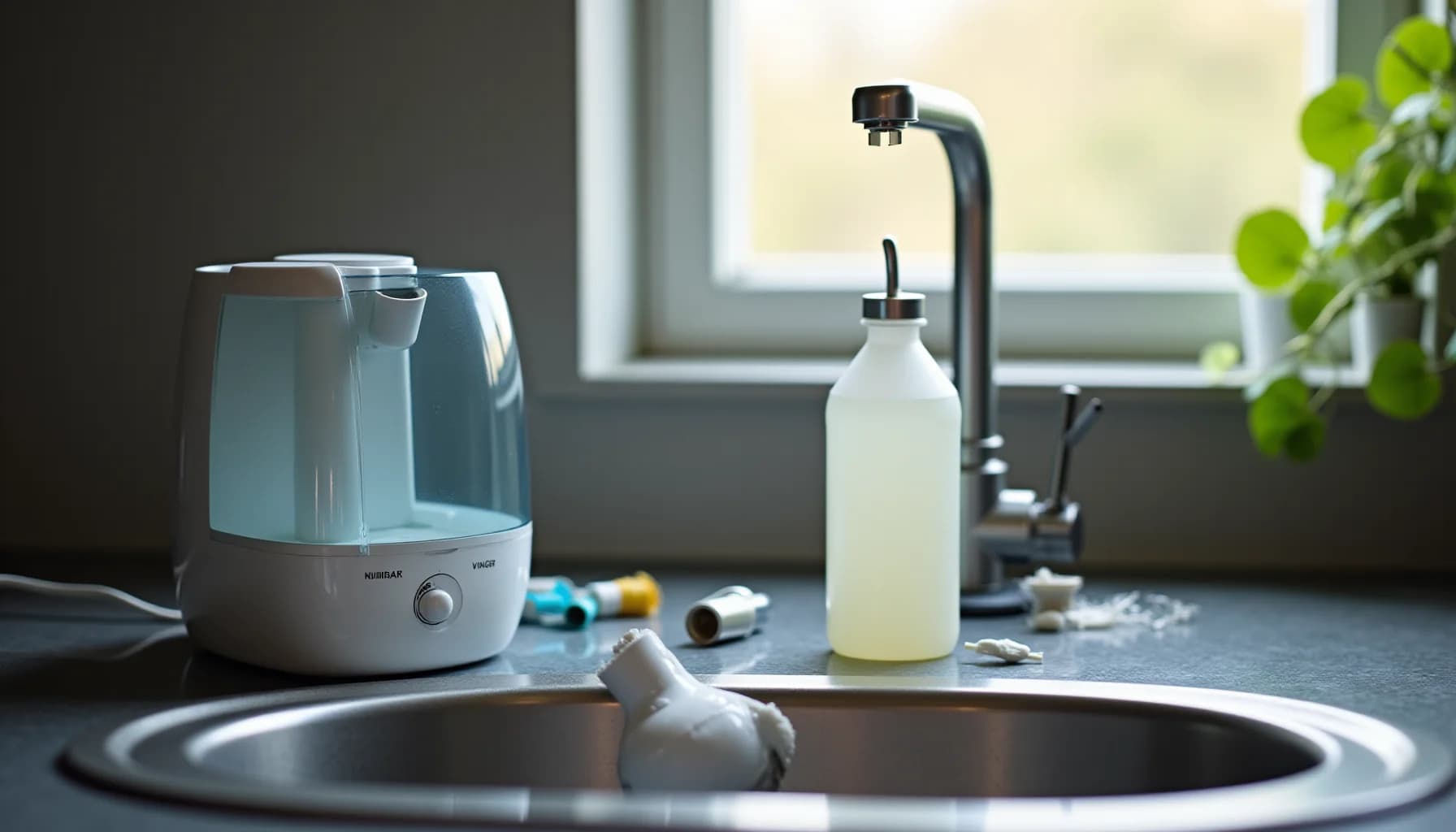
For the cleaning itself: unplug the humidifier, then fill the tank and base with equal parts white vinegar and water. Let it soak for at least 20 minutes, shaking or swishing the tank periodically. If scale is heavy, extend the soak to an hour. Use a toothbrush to scrub crevices and the well. Rinse thoroughly with fresh water until no vinegar smell remains, then towel-dry completely. Do not run the unit until the odor is fully gone.
Clean every three days during active daily use, per EPA and Mayo Clinic guidance. Hard water accelerates scale buildup, so households with hard water may need to clean more often or switch to distilled water. Never add vinegar to the tank while the humidifier is running, and never combine vinegar with bleach, which produces toxic chlorine gas.
What does vinegar actually do inside a humidifier?
Vinegar's cleaning power inside a humidifier comes down to a straightforward chemical reaction. The acetic acid in white vinegar is acidic enough to dissolve calcium carbonate, the mineral compound responsible for the chalky white scale that builds up on tank walls, bases, and heating elements. When the acid contacts those alkaline deposits, it breaks the mineral bonds and releases the scale so it can be rinsed away. Acetic acid also carries moderate antimicrobial properties, meaning it can reduce bacteria counts on surfaces it contacts directly and for long enough.
That last phrase matters. Vinegar works on contact during a soak. It does not work as a preventative additive. Running vinegar through your humidifier as a water treatment is not advised, because misting acidic water into the air creates its own respiratory irritation and does not solve the contamination problem at its source.
The bigger limitation is mold. White vinegar at 5% acetic acid is largely ineffective against mold colonies, and it does not prevent biofilm from reforming quickly after a clean. If you have visible mold growth, you are facing a problem vinegar alone cannot resolve. For a fuller picture of what that gap means in practice, how vinegar performs against mold across different surfaces shows where the acid holds up and where it falls short.
The practical upshot: vinegar is the right first tool for mineral scale and light bacterial buildup, but treating it as a complete solution overstates what a single acid can accomplish inside a humid, warm environment that bacteria and mold actively favor.
Does vinegar concentration affect how well it cleans your humidifier?
| Aspect | White vinegar (acetic acid) | Bleach |
|---|---|---|
| Mineral deposit removal | Effective — acetic acid dissolves calcium carbonate scale | Not noted as effective for mineral scale |
| Mold effectiveness | Largely ineffective against mold | More effective against mold |
| Risk to humidifier parts | Gentle on plastics and seals | Can degrade some plastics and seals |
| Safety when combined | Forms toxic chlorine gas if mixed with bleach | Forms toxic chlorine gas if mixed with vinegar |
How to clean your humidifier with vinegar step by step
Before you touch anything, unplug the humidifier and carry it to a sink. Water and electricity are an unambiguous hazard, and skipping this step voids any safety margin the rest of the process gives you.
Disassemble the unit completely. Remove the water tank, the base, any tray inserts, and the filter if your model has one. Set the filter aside. Vinegar should not soak a filter; it can degrade the material and won't help the way it helps hard surfaces.
Empty any standing water from the tank, then pour in enough undiluted white vinegar to coat the interior. A cup or two is usually sufficient. Cap the tank, shake it, and let it sit for 20 minutes, swishing the liquid every few minutes so it contacts every surface. For the base, pour in 1 cup of water mixed with 1 cup of white vinegar and let that sit for a full hour. The longer soak compensates for the awkward geometry of the base, where scale tends to accumulate in corners and around the heating element or ultrasonic plate.
If you can, choose a white vinegar with 6% acidity rather than the standard 5%. That one-percentage-point difference translates to roughly 20% more effectiveness against mineral scale, which matters if your tap water is hard and deposits have been building for a few weeks.
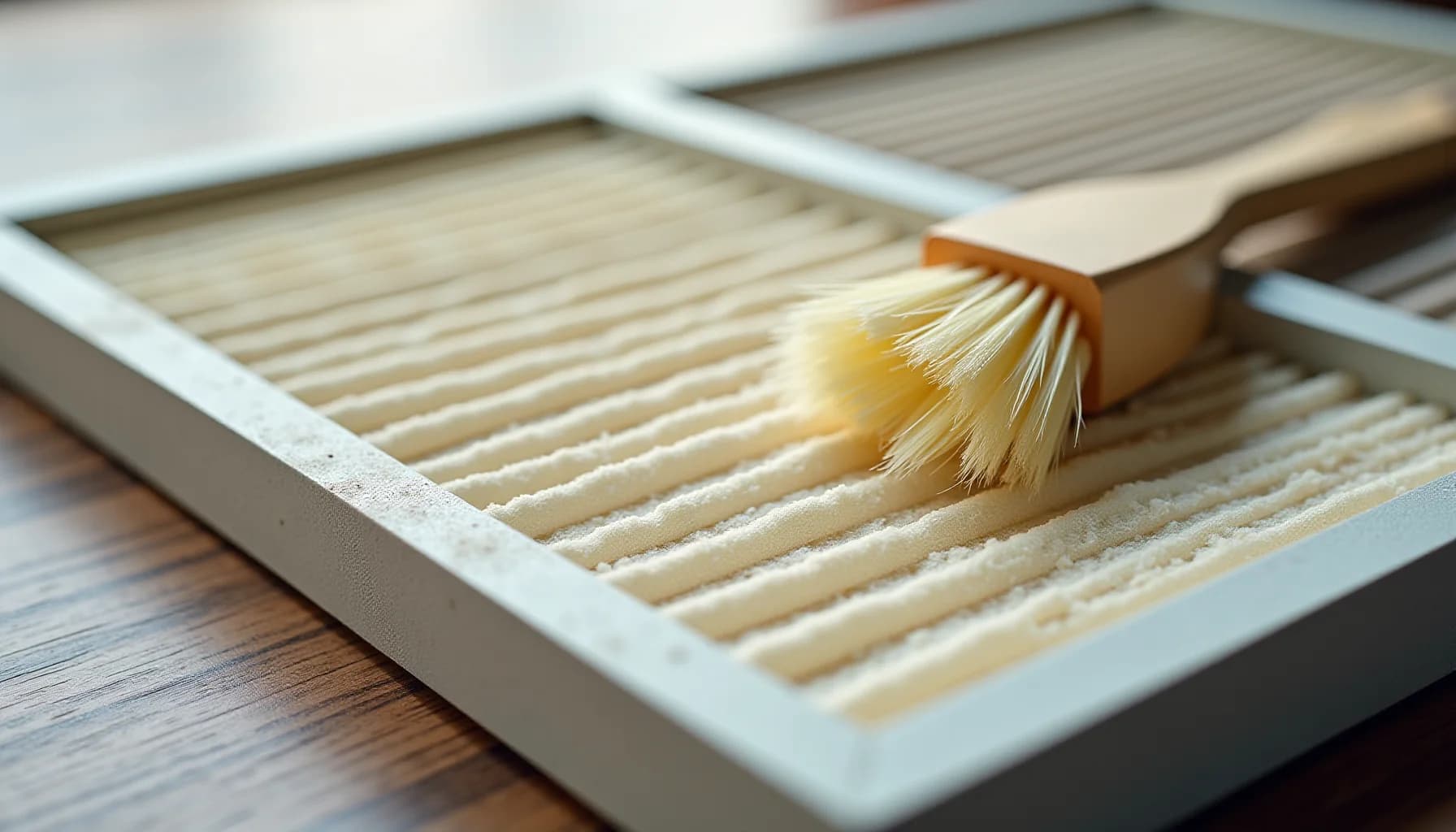
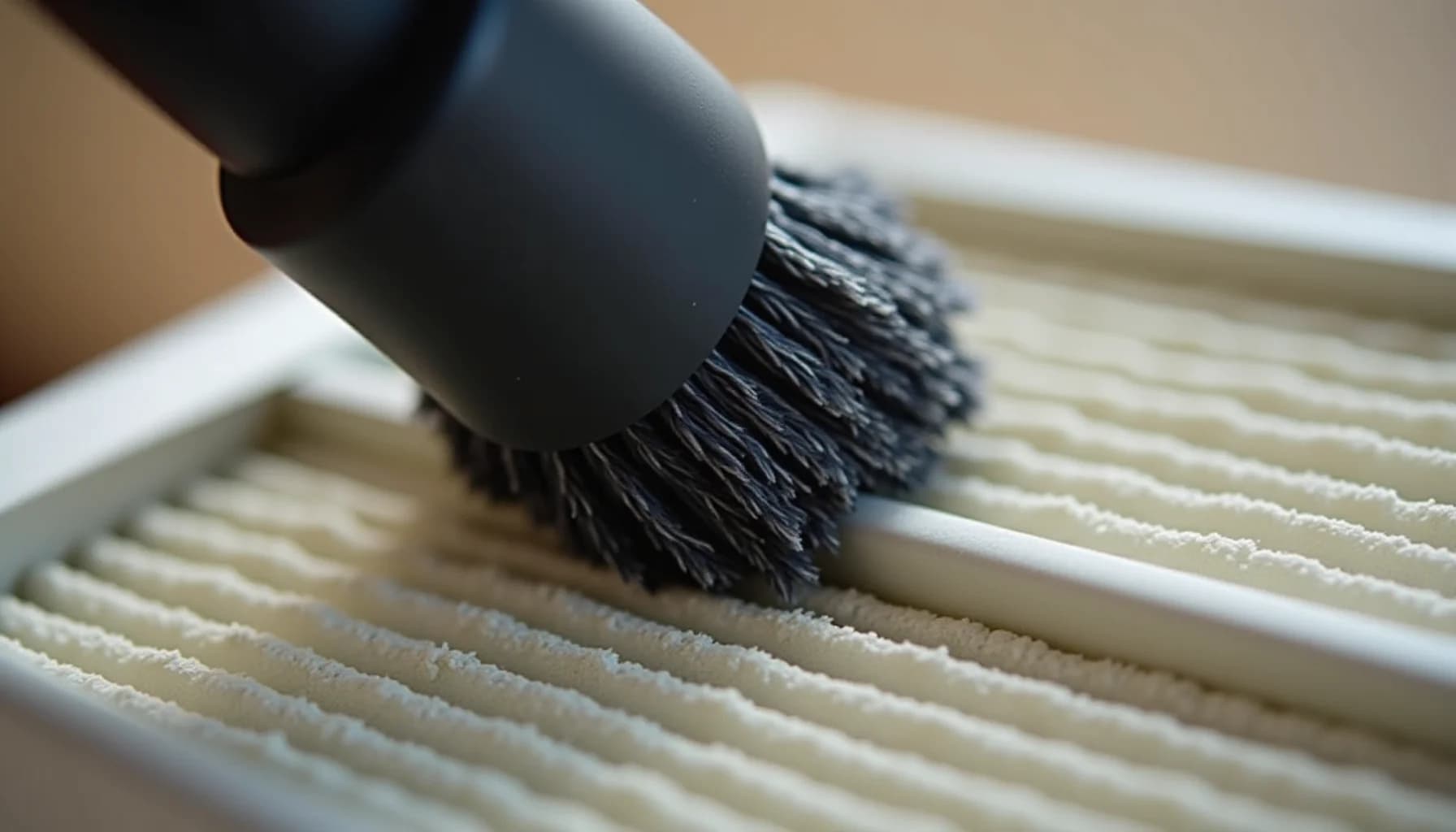
Once the soak time is up, use a soft toothbrush or a small bottle brush to scrub the scale loose from the base well and any crevices in the tank. Calcium deposits will feel gritty and white; keep scrubbing until the surface feels smooth.
Rinse both the tank and the base repeatedly with clean water. This step takes longer than most people expect. Keep rinsing until no vinegar smell remains at all, because operating the humidifier with any residual acidity means dispersing that into the air you breathe. Towel-dry all parts thoroughly before reassembling.
Pros
- Acetic acid effectively dissolves mineral scale and calcium carbonate deposits on contact
- Inexpensive, widely available household ingredient that is gentle on humidifier parts
- Six-percent acidity vinegar can be up to 20% more effective than standard five-percent versions
Cons
- Largely ineffective against mold and does not prevent biofilm from reforming quickly
- Must never be mixed with bleach, as the combination produces toxic chlorine gas
- Cannot be added to the water tank during operation—safe only as a cleaning soak, not a preventive treatment
How often should you clean your humidifier?
The honest answer is: more often than most people do it. The baseline most home care experts settle on is once a week, which works fine if you run the humidifier occasionally and your tap water is reasonably soft. But two authoritative sources, the EPA and the Mayo Clinic, both recommend cleaning every three days when the unit is in daily use. That gap between "weekly" and "every three days" is significant, and the right interval for your household sits somewhere between those two depending on a few specific variables.
Usage intensity is the first factor. A humidifier running eight or more hours a day in a heated bedroom all winter is a fundamentally different situation from one switched on a few evenings a week. Bacteria can begin multiplying in standing water within one to two days, so a machine in continuous use needs more frequent attention, not less.
Water type is the second factor, and it matters more than most homeowners expect. Hard water deposits mineral scale quickly, and if you live in an area with hard water you may find that weekly cleaning is not enough to prevent visible buildup between sessions. In that case, clean every three to four days, or switch to distilled water, which dramatically reduces scale formation and extends the time between deep cleans.
The third variable is who lives in your home. If anyone has asthma, allergies, or a compromised immune system, the every-three-days schedule is the right default, not an optional upgrade. Contaminated humidifiers have been linked to respiratory illness outbreaks in both home and healthcare settings, and that risk compounds quickly when cleaning is delayed.
Regardless of your deep-cleaning schedule, rinse the tank daily, towel it dry, and refill with fresh water. That single habit prevents the rapid bacterial growth that makes the weekly or three-day clean harder than it needs to be.
How should you store your humidifier between uses?
Between uses, the two decisions that matter most are how thoroughly you dry the unit and how long it sits with any moisture inside.
Start with the daily question. If you run your humidifier regularly, empty the tank each day, rinse it with fresh water, and towel-dry the interior before refilling. Bacteria can establish a foothold in as little as one to two days, so leaving standing water inside even overnight creates conditions for contamination to begin. This one habit does more to protect your household's air quality than any cleaning product.
For storage across longer gaps, whether seasonal or for a week or more, the bar rises. After your final deep clean with vinegar, rinse the tank and base until no vinegar smell remains, then let every component air-dry completely before reassembling. "Mostly dry" is not enough. Any residual moisture sealed inside a stored unit becomes a growing environment for mold, which vinegar is not well-positioned to address once it takes hold. If you want to understand that limitation more fully, how vinegar performs against mold in practice is worth reading before you put the unit away.
Once dry, store the humidifier in a clean, low-humidity space with the tank and base slightly separated or left off to allow air circulation.
The practical checklist before storage: fully cleaned, fully rinsed, fully dry, stored open enough to breathe.
Frequently asked questions
How long should I let vinegar soak in my humidifier?
Can I add vinegar to the water tank while the humidifier is running?
How often should I clean my humidifier with vinegar?
Does vinegar kill mold in a humidifier?
What should you never do when cleaning your humidifier?
Three rules matter most here, and breaking any one of them can damage either your health or the unit itself.
Never mix vinegar and bleach. This is the hardest line. Combining the two produces toxic chlorine gas, which is dangerous in an enclosed space and potentially deadly with sustained exposure. Most readers should pick one cleaning agent and stay with it. The exception is a humidifier with visible mold and heavy scale simultaneously: in that case, run a full vinegar soak first, rinse completely until all vinegar smell is gone, then, on a separate occasion, consider a dilute bleach treatment. Never apply them in the same session or back-to-back without thorough rinsing between.
Never add vinegar to the water tank during operation. Vinegar is for soaking and scrubbing only. Running it through the misting mechanism disperses acetic acid into the air you breathe, which is an irritant, not a treatment.
Never rush the rinse. Any vinegar residue left in the tank or base will be aerosolized when the unit runs. Rinse repeatedly with fresh water until no smell remains, then towel-dry. For the same reason, if you choose to use bleach at any point, be aware that it can degrade certain plastic seals and gaskets over time, compromising the watertight integrity of the unit.
Unplug the humidifier before any cleaning step, without exception. This applies to all appliances but is easy to overlook on a small countertop unit.
How this article was made
Researched and written with AI assistance. What gets published is a human editorial decision. Grounded in 8 cited sources.
Edited by Claire Mercier, Editor. The guides are written with AI assistance.
Sources (8)
- Use and Care of Home Humidifiers | US EPA
- Portable Humidifiers Need Regular Cleaning During Winter Months
- How to Clean Your Humidifier via @ConsumerReports
- How to Clean a Humidifier with Vinegar | Step-by-Step - The Everyday Farmhouse
- How to Clean a Humidifier to Avoid Mold Buildup | HGTV
- How to Clean Your Humidifier Properly: Step-by-Step Guide with Vinegar – Lacidoll
- How to clean a humidifier to help you breathe easy
- How to clean a humidifier to help you breathe easy