Why Bleach Permanently Pits Stainless Steel (And What to Use Instead)
Part of Kitchen Sinks & Steel · article 3 of 3
On this page
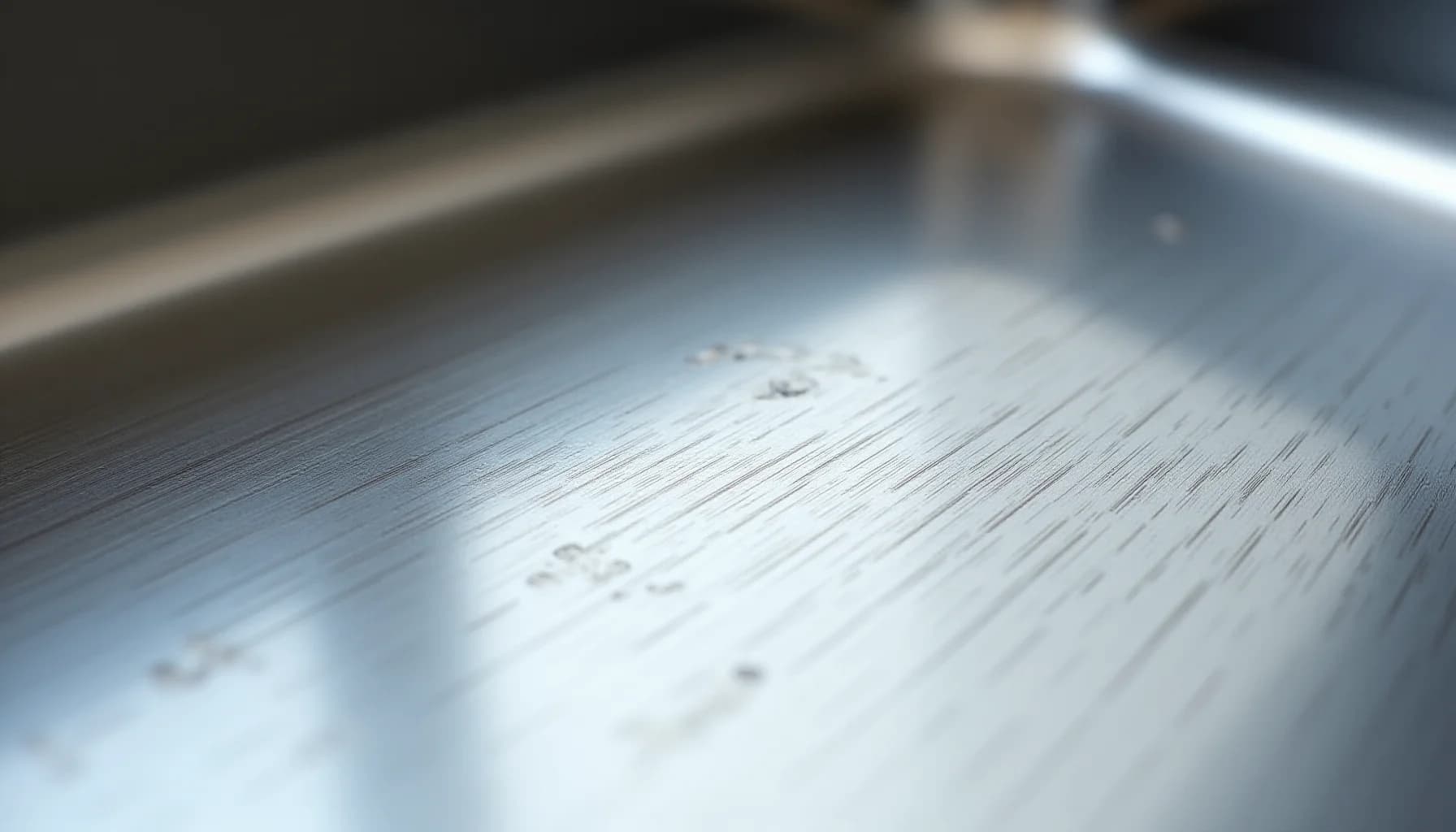
Stainless steel earns its reputation from a microscopically thin layer of chromium oxide that forms across its surface wherever chromium meets oxygen. This passive layer, invisible to the naked eye, is what keeps the metal from rusting under ordinary household conditions. Bleach disrupts that layer through electrochemical attack: the chloride ions in sodium hypochlorite seek out weak points in the chromium oxide film, breach it, and begin corroding the exposed metal underneath in discrete, concentrated spots rather than across the surface evenly. That localized attack is what produces pitting.
The critical point for homeowners is that once a pit forms, the corrosion accelerates inside it. Chloride ions concentrate at the bottom of each cavity, the local chemistry turns increasingly acidic, and the pit deepens faster than it widens. No household product reverses this. The only practical fixes, electropolishing or full surface buffing at a metal finishing shop, address the appearance rather than the lost metal.
A laboratory study exposing stainless steel coupons to bleach at a 1:10 dilution, the standard disinfection concentration used in pharmaceutical facilities, produced visible discoloration, corrosion, and pitting within eight weeks. The same result appeared at 1:50 dilution. Briefer contact or greater dilution slows the damage; it does not prevent it. If your cleaner choice matters on other surfaces too, which cleaners are safe for each appliance surface is worth reviewing before you reach for anything stronger than dish soap.
What do chloride ions actually do to stainless steel's protective layer?
Stainless steel earns its name from a microscopically thin layer of chromium oxide that sits on the surface of the metal. This passive layer, typically only a few nanometers thick, forms automatically when chromium in the steel reacts with oxygen in the air. It is self-healing under normal conditions: minor scratches expose fresh chromium, which oxidizes and repairs the barrier within hours. Bleach short-circuits that process entirely.
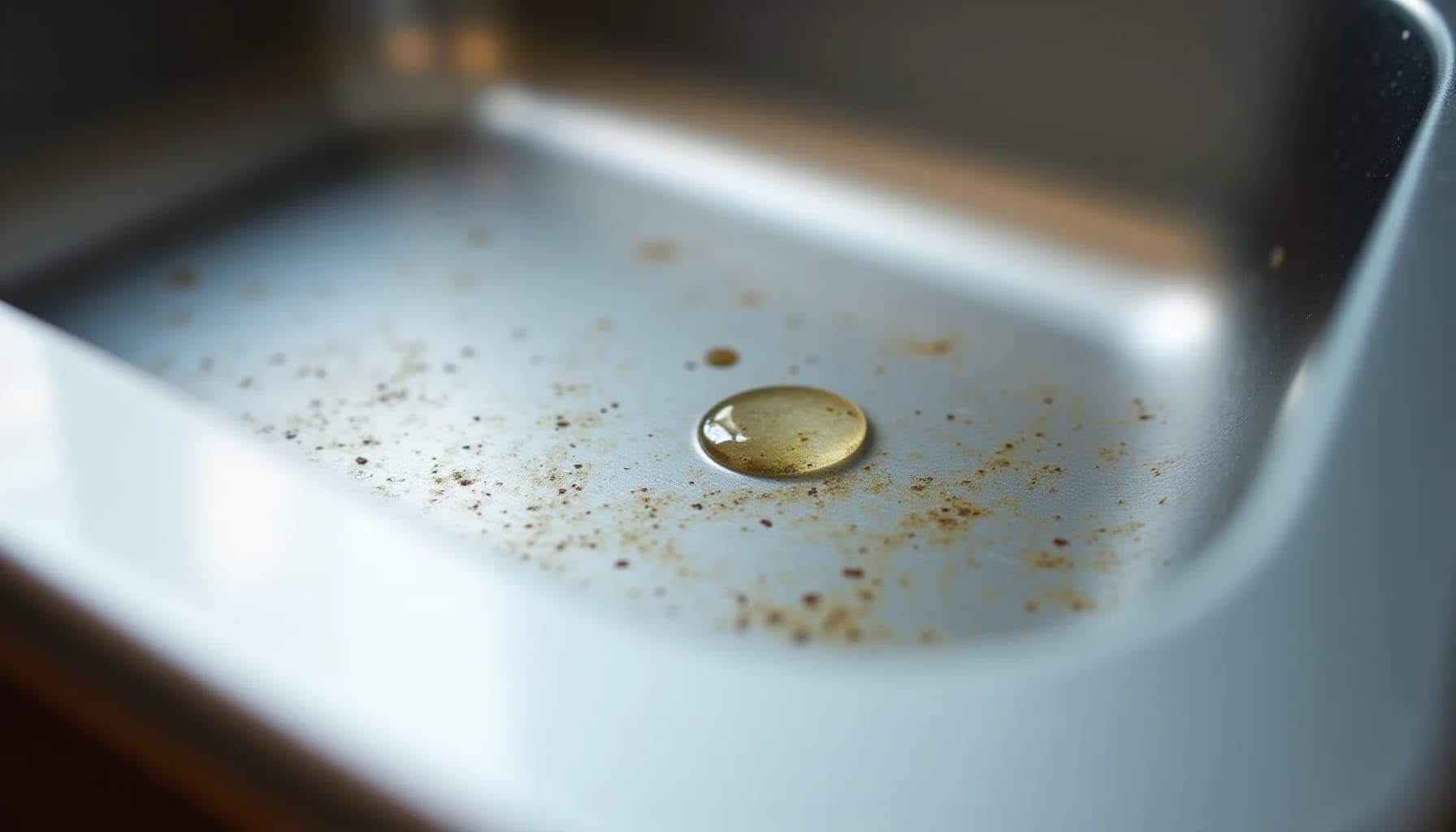
Household bleach contains sodium hypochlorite, and when it contacts stainless steel, it releases chloride ions into solution. Those ions are electrochemically aggressive toward chromium oxide. Rather than attacking the surface evenly, they seek out microscopic weak points, grain boundaries, surface defects, and areas where the passive layer is thinnest, and concentrate their attack there. This localized assault is what produces pitting rather than general surface corrosion. The chloride ions break down the chromium oxide at those focal points, exposing bare iron beneath, and an electrochemical cell forms between the exposed iron and the surrounding intact surface. That cell accelerates corrosion further, deepening the pit while leaving the surrounding area relatively untouched.
The visible evidence follows a predictable sequence. The earliest sign is small brownish-red spots, easy to mistake for water mineral deposits. As the passive layer continues to fail, the surface takes on a dull, uneven appearance in patches. If exposure continues, those spots develop into dark pits of varying size and depth. At that stage, once the pit has formed, the damage is permanent. The pit cannot be chemically reversed; the chromium oxide does not regenerate inside an active corrosion cavity the way it does on an undamaged surface. Longer contact and higher bleach concentrations accelerate the timeline, but even diluted solutions at a 1:10 ratio produce measurable corrosion, a finding confirmed in controlled laboratory testing on pharmaceutical-grade stainless steel coupons.
Can pitting damage ever be reversed?
Wipe down surfaces with dish soap and warm water first.
Mix a few drops of dish soap into warm water, then clean with a soft cloth. This handles grease and everyday grime without touching the chromium oxide layer that keeps stainless steel rust-free.
Tackle stubborn stains with Bar Keepers Friend.
Sprinkle Bar Keepers Friend onto a damp cloth and work it gently into the stained area, following the grain of the steel. Its oxalic acid lifts discoloration and restores lightly damaged surfaces without the chloride attack that bleach causes.
Disinfect with hydrogen peroxide when you need killing power.
Apply hydrogen peroxide directly to high-touch surfaces, let it sit for the contact time listed on the bottle, then wipe clean. It delivers strong disinfecting action on bacteria, mold, and mildew without chloride ions that pit the metal.
Switch to oxygen bleach for any chlorine-bleach habit you want to keep.
Choose products containing sodium percarbonate or hydrogen peroxide instead of sodium hypochlorite. These oxygen-based formulas clean and brighten without releasing the chloride ions responsible for pitting and passive-layer breakdown.
Does diluted bleach or high-grade steel keep your stainless safe?
Two assumptions lead most homeowners to feel safe using bleach on stainless steel. The first is that diluting it enough makes it harmless. The second is that upgrading to a higher-grade steel makes the surface immune. Both are wrong, and the laboratory evidence makes that uncomfortable to ignore.
On dilution: a study conducted on pharmaceutical and medical device equipment exposed stainless steel coupons to bleach at 1:10 and 1:50 dilutions over eight weeks. Both concentrations caused measurable corrosion and pitting. A 1:50 dilution is extremely weak by household standards, far weaker than most people mix bleach for kitchen or bathroom cleaning. If that ratio still damaged coupons in a controlled setting, the "quick wipe-down with diluted bleach" routine many homeowners rely on carries real risk, especially with repeated use over months.
On alloy grade: stainless steel with a higher concentration of molybdenum does resist the corrosion reaction better. The 316 and 316L grades, which contain molybdenum, are more common in kitchen sinks and appliances than 304L for exactly this reason. But resistance is not immunity. Even high-molybdenum alloys will eventually show damage under repeated chloride exposure. The practical difference is that degradation takes longer to appear, not that it never occurs. That delay is part of what makes the problem deceptive: the steel looks fine for weeks, then pitting and discoloration show up long after the cleaning habit is already established.
Dilution slows the damage. A better alloy slows the damage. Neither stops it.
What can you safely use to clean and disinfect stainless steel instead of bleach?
So it does not happen again
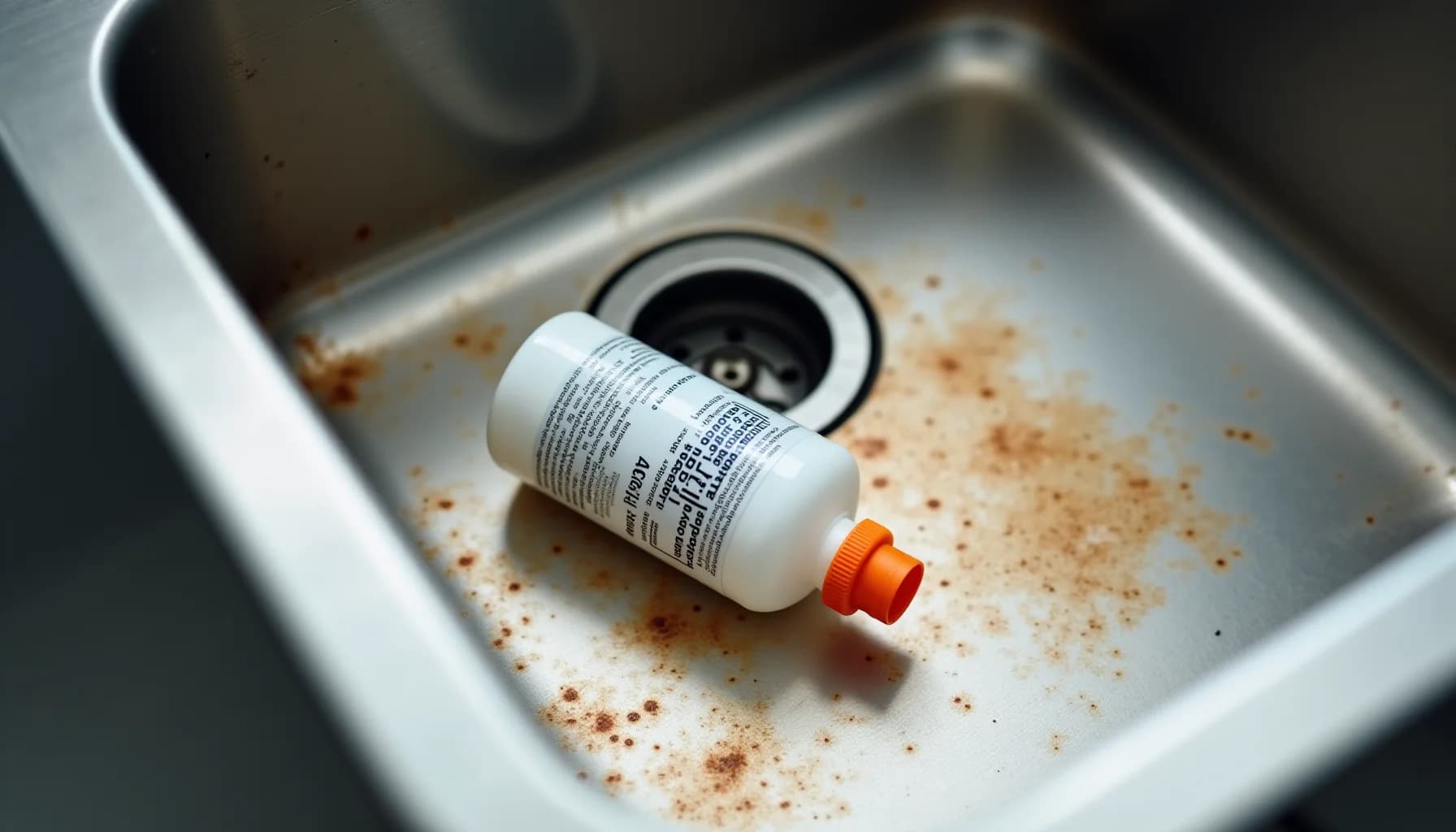
- Switch to dish soap and warm water for routine stainless steel cleaning, including sinks, appliances, and cookware
- Use hydrogen peroxide or an oxygen bleach product containing sodium percarbonate when you need to disinfect a stainless steel surface
- If you spot small dark or brownish-red spots on stainless steel, stop using any chlorine-based cleaner on that surface immediately
- For stubborn stains, apply Bar Keepers Friend as directed instead of reaching for bleach
- After any accidental bleach contact, rinse the stainless steel surface thoroughly with water right away and dry it completely to limit exposure time
How this article was made
Researched and written with AI assistance. What gets published is a human editorial decision. Grounded in 8 cited sources.
Edited by Claire Mercier, Editor. The guides are written with AI assistance.
Sources (8)
- Corrosion Behaviour of S32101 (1.4162—X2CrMnNiN21-5-1) Stainless Steel in Pulping Liquors
- Effect of HAc on the Metastable Pitting Corrosion of 304 SS in NaCl Solution
- Atomic-scale decoration for improving the pitting corrosion resistance of austenitic stainless steels
- stacks.cdc.gov
- extapps.dec.ny.gov
- Bleach Corrosion on Stainless Steel: Understanding and Preventing Damage - MFG Shop
- Can You Use Bleach on Stainless Steel? - MFG Shop
- Does bleach corrode stainless steel?