How to Clean a Burnt Stainless Steel Pan Without Ruining It
Part of Kitchen Sinks & Steel · article 10 of 11
On this page
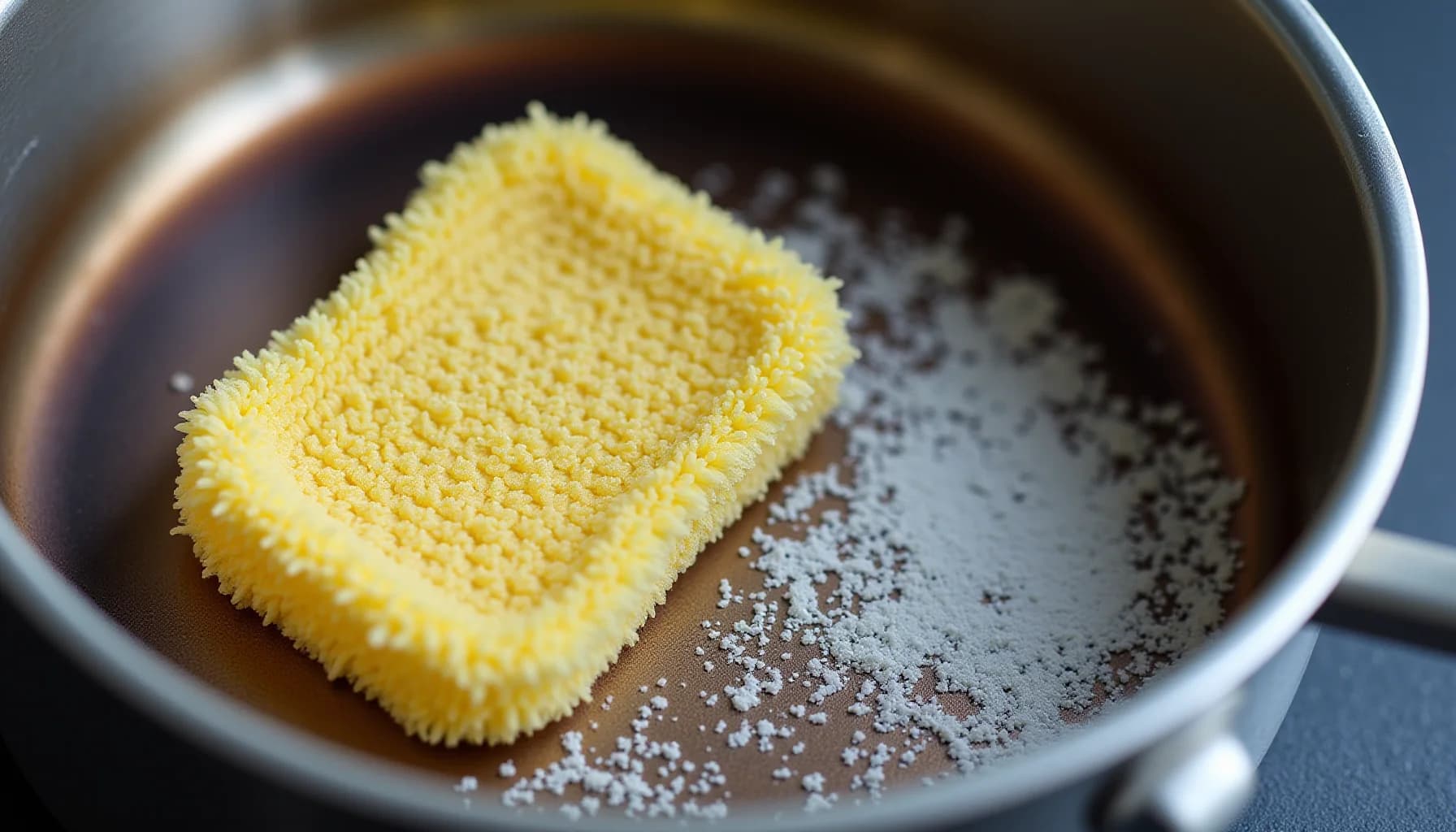
Boil 1 cup of water with 1 cup of white vinegar in the pan, turn off the heat, add 2 tablespoons of baking soda, then discard the liquid and scrub with a nylon pad. The reaction produces carbon dioxide bubbles that loosen stuck food without any abrasive force. For heavier burns, spread a baking soda and water paste across the bottom and leave it overnight before scrubbing. Bar Keepers Friend powder also works well on scorch marks. Always scrub in the direction of the grain to protect the finish. Never use steel wool, bleach, or salt; all three cause lasting damage. Skip cold water on a hot pan, too, since the thermal shock can warp the metal permanently.
Why does stainless steel burn in the first place?
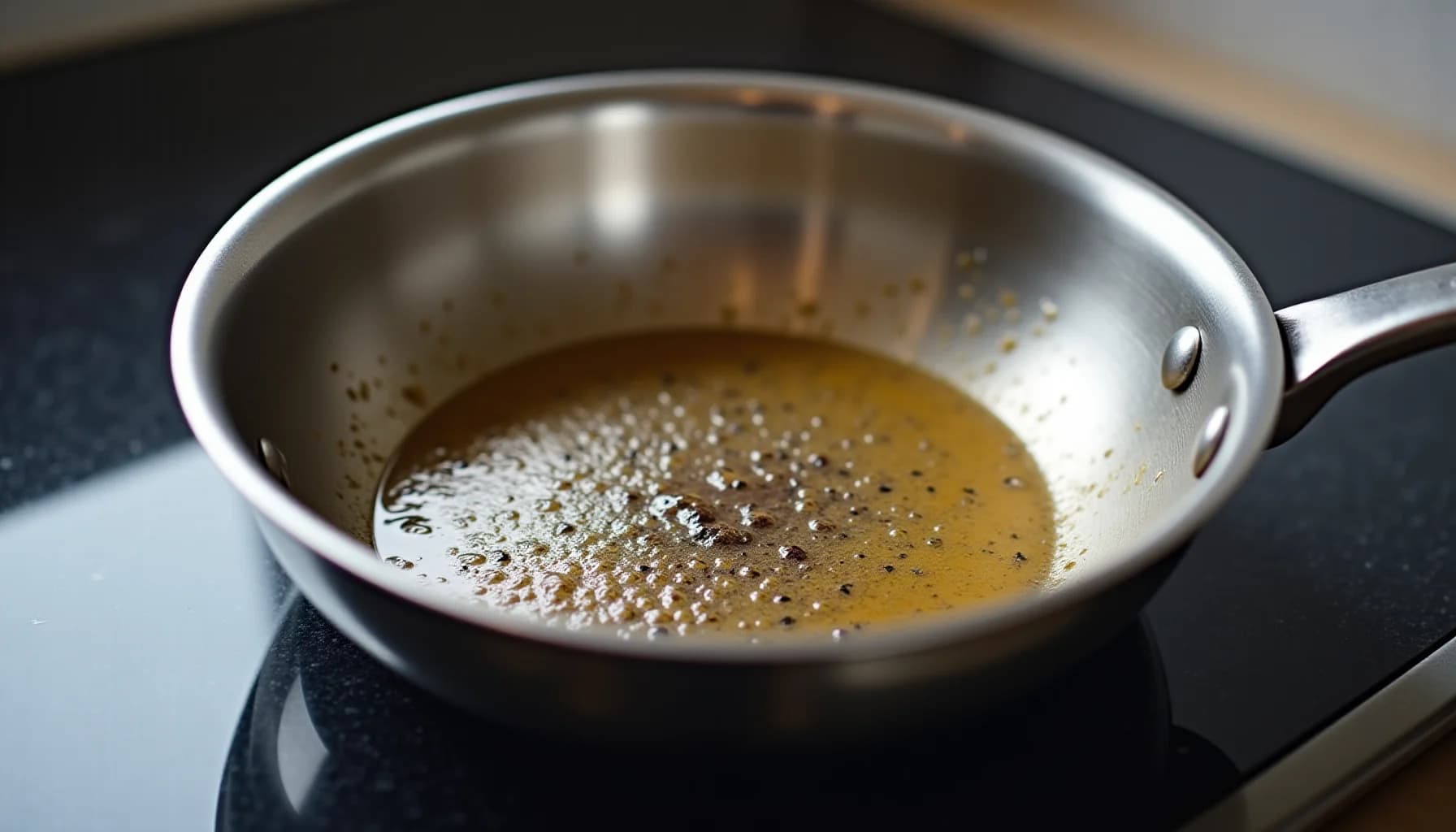
Stainless steel has no nonstick coating, which means the relationship between heat and food is more direct than it is in, say, a coated pan. When you crank the burner too high before adding food, oil can start to smoke and polymerize, bonding to the steel surface as a hard, dark layer. Polymerization is a chemical process: the oil's molecular structure breaks down under high heat and forms a tough, plastic-like film that clings to the metal. That film is what gives a pan that brownish, lacquered look even after a quick rinse.
Sticking and scorching happen for two other common reasons as well. First, cranking the heat causes whatever liquid is in the pan to evaporate almost instantly, leaving proteins and sugars with nowhere to go but the metal surface. Second, letting something simmer too long without enough liquid or stirring gives residue time to caramelize and then carbonize against the steel.
The consequences go beyond a pan that looks bad. When burnt residue builds up, it creates an uneven surface that disrupts how heat travels across the bottom of the pan. The result is hot spots, which means one part of your pan is scorching while another is barely warm enough to cook. That translates directly to unevenly cooked food: browned on one side, underdone on the other.
This is also worth noting for anyone who already keeps stainless steel surfaces clean around the kitchen: the same principle applies to cookware. The surface behaves predictably when it's clean and becomes unpredictable once residue starts accumulating.
Which cleaning method should you use based on how badly your pan is burnt?
Assess the damage and gather your supplies
Check whether the pan is warped, cracked, or deeply gouged. If it is not, the burn is salvageable. Gather what you need based on severity: water, dish soap, baking soda, white vinegar, a nylon sponge or brush, and a commercial powder cleaner such as Bar Keeper's Friend for heavy scorch marks.
Choose and apply the right cleaning method for the burn level
For light burns, fill the pan with hot water and a squirt of dish soap and soak for 30 to 60 minutes, then scrub. For moderate burns, add 1 cup of water and 1 cup of white vinegar to the pan, bring to a boil, turn off the heat, add 2 tablespoons of baking soda, and discard the liquid: the carbon dioxide bubbles produced when the acid and base combine help lift stuck residue. For heavy, carbonized burns, coat the bottom with a thin layer of warm water, sprinkle generously with baking soda to form a paste, and leave it overnight before scrubbing.
Scrub correctly to protect the surface finish
Always scrub in the direction of the grain, the faint parallel lines visible on the pan's surface, to avoid cross-scratching that dulls the finish permanently. Use a nylon sponge, nylon brush, or scouring pad rated safe for stainless steel. Never use steel wool, and never use bleach, which damages the metal and is unsafe near food contact surfaces.
Rinse, dry, and prevent future burns
Let the pan cool to a safe temperature before rinsing with warm water, not cold: pouring cold water onto a hot stainless steel pan can warp or crack the metal. Dry thoroughly after washing. Going forward, preheat the pan properly before adding oil, keep heat moderate, and clean promptly after each use to stop residue from polymerizing into stubborn stains.
Why does the baking soda and vinegar method actually work?
Before you start
- Gather your cleaning supplies before you start: water, dish soap, white vinegar, baking soda, and a nylon sponge or nylon brush
- Move steel wool pads and abrasive scrubbers off the counter so you are not tempted to grab them mid-clean
- Keep bleach and salt well out of reach — both can permanently damage stainless steel
- Allow the pan to cool completely before bringing it to the sink, so you are ready to add water without risking warping or cracking
The short answer is basic chemistry. Vinegar is a mild acid (acetic acid), and baking soda is a base (sodium bicarbonate). When you combine an acid and a base, they react and produce carbon dioxide gas. That CO₂ releases as thousands of tiny bubbles, and those bubbles are what do the physical work: they push upward against burnt food particles, breaking the bond between the residue and the pan's surface. It is a mechanical action as much as a chemical one.
There is a nuance worth understanding, though. The two ingredients do not need to be mixed together to be effective. The method that works best for a burnt stainless steel pan uses them in sequence, not simultaneously. You bring a cup of water and a cup of white vinegar to a boil in the pan first, letting the hot acidic solution work on the burnt layer. Then you take the pan off the heat and add two tablespoons of baking soda. That is the moment the reaction fires. The fizzing happens right where you need it, directly against the stubborn residue sitting on the pan's floor.
If you simply stirred both ingredients together in a bowl ahead of time, the reaction would spend itself in the air rather than against the grime. Timing the addition of baking soda after the heat is off preserves all that reactive energy for the actual cleaning work.
This same chemistry transfers well to other stainless steel surfaces. If you are dealing with discoloration or buildup on a stainless steel sink, the baking soda and vinegar approach holds up just as reliably there.
What should you never use on a stainless steel pan?
Four things will cause irreversible damage to a stainless steel pan, and each one works through a distinct mechanism worth understanding before you reach for the wrong product.
Steel wool and highly abrasive scrubbers score the surface with tiny scratches that dull the polished finish permanently. Once those grooves are cut in, food catches in them more readily, making every future cleaning harder. If your pan has already picked up light surface marks, removing scratches from stainless steel requires specific techniques, and preventing new ones starts here.
Bleach is the most dangerous mistake on this list, both for the pan and for you. It corrodes stainless steel at the surface, causing pitting that cannot be reversed, and any bleach residue left in a cooking vessel is a direct food safety hazard. Do not use it, diluted or otherwise.
Salt and salt water used repeatedly as a cleaning agent will pit the metal over time. The same corrosive effect that makes salt a problem for stainless steel sinks applies equally to your cookware.
Cold water on a hot pan causes thermal shock. The metal contracts unevenly and can warp or crack, destroying the flat base that makes even heat distribution possible. That damage is structural and permanent.
Finally, scrubbing against the grain rather than along it will leave crosshatch marks that catch grease and dull the surface. If the pan is already warped, cracked, or deeply gouged, no cleaning method corrects that. At that point, the pan needs replacing, not restoring.
Frequently asked questions
Are burns and discoloration on stainless steel pans permanent?
What causes food to burn and stick to a stainless steel pan?
What cleaning methods work best for a badly burnt stainless steel pan?
What should you never use to clean a burnt stainless steel pan?
How do you protect your stainless steel pan's finish after cleaning?
The single habit that protects a stainless steel pan's finish long-term is scrubbing with the grain, not against it. Stainless steel has a faint brushed pattern of fine lines running in one direction across the surface. Always move your sponge or nylon brush along those lines, never perpendicular to them. Scrubbing across the grain creates micro-scratches that catch grease, dull the polish, and make every future cleaning job harder. If you're unsure how to read that pattern on other stainless surfaces around your kitchen, finding the grain direction on stainless steel appliances follows the same logic and takes about thirty seconds to figure out.
Beyond technique, a few weekly habits do most of the protective work. Rinse and wash the pan promptly after each use rather than leaving it to sit with food residue drying onto the surface. Preheat the pan over medium heat before adding oil, and keep the heat moderate rather than cranking it, which is the main driver of polymerization and stubborn carbon buildup. Use enough oil so food doesn't make direct contact with bare steel for extended periods.
Steel wool and harsh abrasive pads belong nowhere near these pans. A soft nylon sponge handles most routine cleaning without any surface risk. Stick to those tools consistently and the pan's finish stays intact through years of regular use.
How this article was made
Researched and written with AI assistance. What gets published is a human editorial decision. Grounded in 8 cited sources.
Edited by Claire Mercier, Editor. The guides are written with AI assistance.
Sources (8)
- How to Clean a Burnt Stainless Steel Pan | Fast & Safe Methods | GreenPan US
- How to Clean a Burnt Pot or Pan with Baking Soda | Arm & Hammer
- I Tested 5 Ways to Clean Burnt Pans | The Kitchn
- How do I clean a burnt stainless steel frying pan or saucepan
- How to clean a stainless steel pan and make it gleam
- How to Clean Burnt & Discolored Stainless Steel Pans
- Burnt Stainless Steel Pan? Try a 1-Minute Lemon Fix Chefs Love | Homes and Gardens
- How to Clean a Burnt Stainless Steel Pan - Made In