How to Find the Grain Direction on Stainless Steel Appliances
Part of Kitchen Sinks & Steel · article 1 of 3
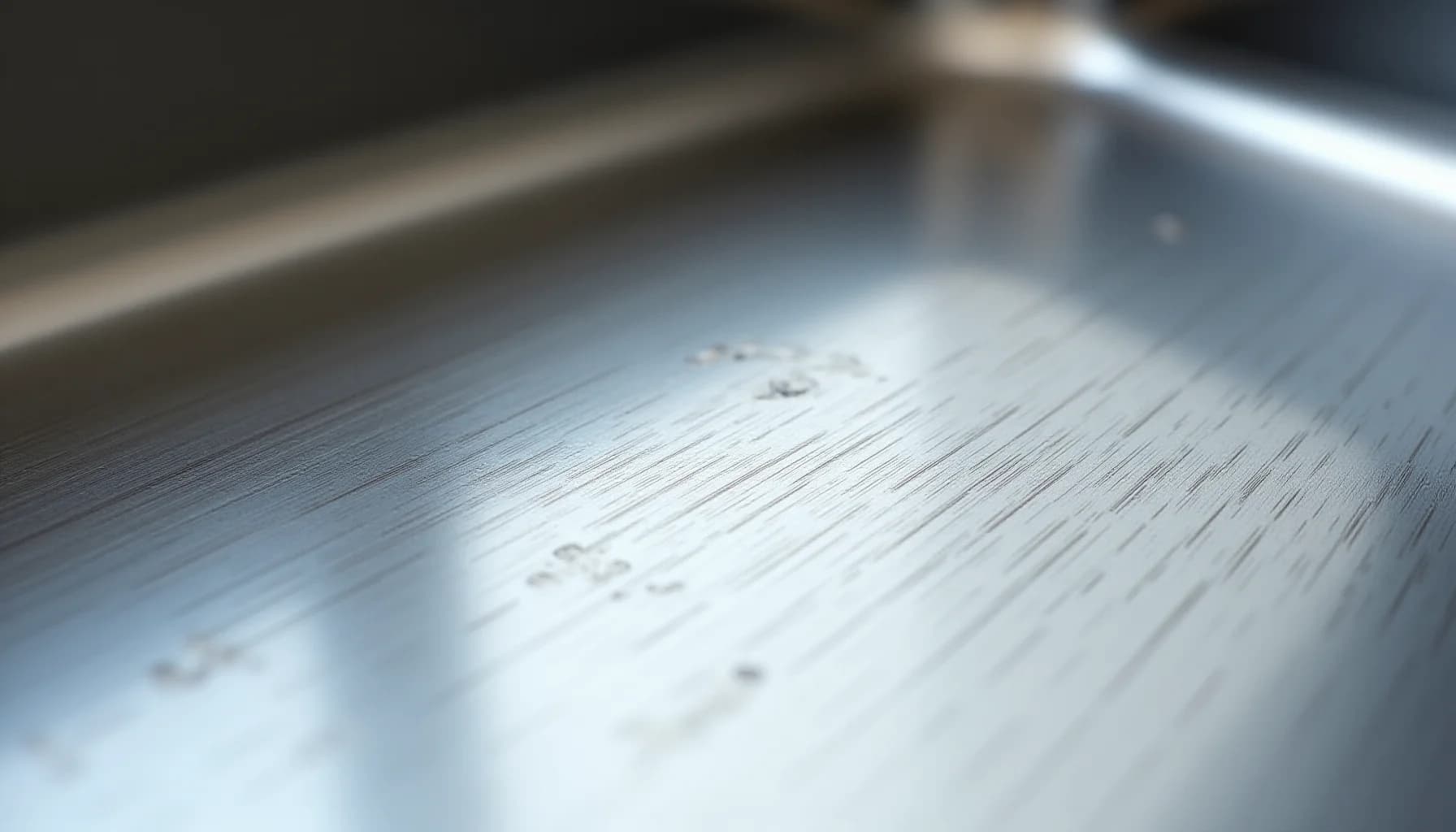
Look for faint parallel lines running either horizontally or vertically across the surface — use a magnifying glass on finishes where the lines are hard to spot, then note which direction they run before you wipe. Most refrigerators have vertical lines, so wipe up and down; dishwashers and ranges more often run side to side, so wipe left to right, and check each panel separately since grain direction can differ even on the same appliance.

How do you find the grain direction on a stainless steel appliance?
Stand a few inches back from the appliance in good light and look at the surface at a slight angle. You should see faint, parallel lines running across the steel, the result of the brushing or polishing process used during manufacturing. These lines are what homeowners call the grain. If they are too subtle to read clearly with the naked eye, hold a magnifying glass to the surface and the direction will become obvious.
Once you spot the lines, note whether they run horizontally (left to right across the panel) or vertically (top to bottom). That single observation tells you everything you need to know about which direction to wipe.
The pattern is not always consistent from one appliance to the next, or even from one panel to another on the same unit. Most refrigerators are finished with a vertical grain, so you would wipe up and down. Dishwasher fronts and range doors more commonly carry a horizontal grain, meaning your strokes should run side to side. The control panel on a range may run a different direction from the door below it, so check each section separately rather than assuming the whole appliance matches.
If you genuinely cannot see any lines, even with a magnifying glass, try running a dry microfiber cloth lightly across the surface in one direction, then the other. One pass will feel slightly smoother and leave less visible drag; that is the direction you are working with. This tactile check works particularly well on finishes that have been cleaned so many times that the visual pattern has become difficult to read under typical indoor lighting.

Does cleaning with the grain really reduce streaks?
Yes, cleaning with the grain genuinely reduces streaking, though the reason is more practical than dramatic. The brushed surface on stainless steel appliances is covered in microscopic parallel grooves left by the polishing or brushing process during manufacturing. When you wipe across those grooves, your cloth pushes cleaning solution and loosened grime sideways into them, where it sits and dries, leaving a cloudy or streaky residue. Wipe along the grooves instead, and the cloth moves material out of the channels rather than into them.
The technique itself is straightforward once you have identified which direction the lines run. Use a clean microfiber cloth, slightly dampened, and apply light, even pressure in single strokes that follow the grain from one end of the panel to the other. Avoid circular motions entirely. A circular wipe crosses the grain on every arc, depositing residue in grooves from multiple angles and making streaks worse rather than better.
One practical detail many homeowners miss: the grain direction can change between panels on the same appliance. Your refrigerator's door might run vertically while a trim strip along the bottom runs horizontally. Check each section before you start, not just once at eye level. If the lines are hard to see in ordinary light, hold a flashlight at a low angle to the surface and the grooves will show up clearly.
For the final buff, use a second dry microfiber cloth and again follow the grain. This is the step that removes the last film of moisture and any lingering product, and it is where grain direction matters most visually. A cloth dragged across the grain at this stage undoes most of the work you just did. The difference between a streaky result and a clean, even finish usually comes down to that last pass, not the cleaner you chose.
How this article was made
Researched and written with AI assistance. What gets published is a human editorial decision. Grounded in 8 cited sources.
Edited by Claire Mercier, Editor. The guides are written with AI assistance.
Sources (8)
- How do you find the direction of the grain in stainless steel? | Houzz Forum
- Grain direction in steel | KnifeDogs.com Forums
- Metal Grain Direction Test? | Eng-Tips
- 5 Things to Know About Cleaning Stainless Steel | The Kitchn
- How to tell the grain direction of steel: | The Hobby-Machinist
- How to Clean Stainless Steel Appliances in 4 Steps | KitchenAid
- How to Clean Stainless Steel Appliances: 2026 Guide | Sears Home Services
- 10 Surprising Ways to Clean Stainless Steel Appliances