Front-Load Washers and Mold: How to Clean One for Good
Part of Appliance Cleaning · article 12 of 13
On this page
Why are front-load washers more prone to mold and odor than top-loaders?
The design of a front-load washer works against you in one specific way: the door seals almost airtight to prevent water from escaping during the cycle. That tight seal is exactly what makes the machine water-efficient, but it also traps warm, humid air inside the drum after the wash ends. Any dark, warm, and moist environment is a breeding ground for mold and mildew, and the interior of a front-loader checks all three boxes every time you close the door on a finished load.
Water doesn't just sit in the drum. It lingers inside the rubber door gasket's folds, pools in the detergent dispenser tray, and clings to the drum's inner walls. Left undisturbed, that residual moisture gives mold spores exactly the foothold they need. The gasket is particularly problematic because its accordion-like folds trap lint, soap residue, and water in spots you can't see without pulling the rubber back manually.
Detergent habits make the situation worse. Front-loaders require high-efficiency (HE) detergent, but even HE formulas leave residue when you use more than the recommended amount. That soapy film, combined with minerals from hard water, coats the drum interior and gasket. The residue feeds mold spores and generates the sour, musty smell many owners attribute to the machine itself.
According to Consumer Reports, 16 percent of front-load washer owners reported mold, mildew, or odor issues, a figure that reflects how structural the problem is, not a matter of individual neglect. Top-loaders, by contrast, have open lids and gravity-assisted drainage that allow moisture to dissipate far more readily after each cycle.
How often should you clean each part of your front-load washer?
Pull out and rinse the detergent drawer
Remove the detergent dispenser tray completely and rinse it under warm water to clear detergent, bleach, and softener buildup. Do this weekly, because accumulated residue causes poor cleaning performance, odors, and leaks.
Scrub the door gasket with the right solution
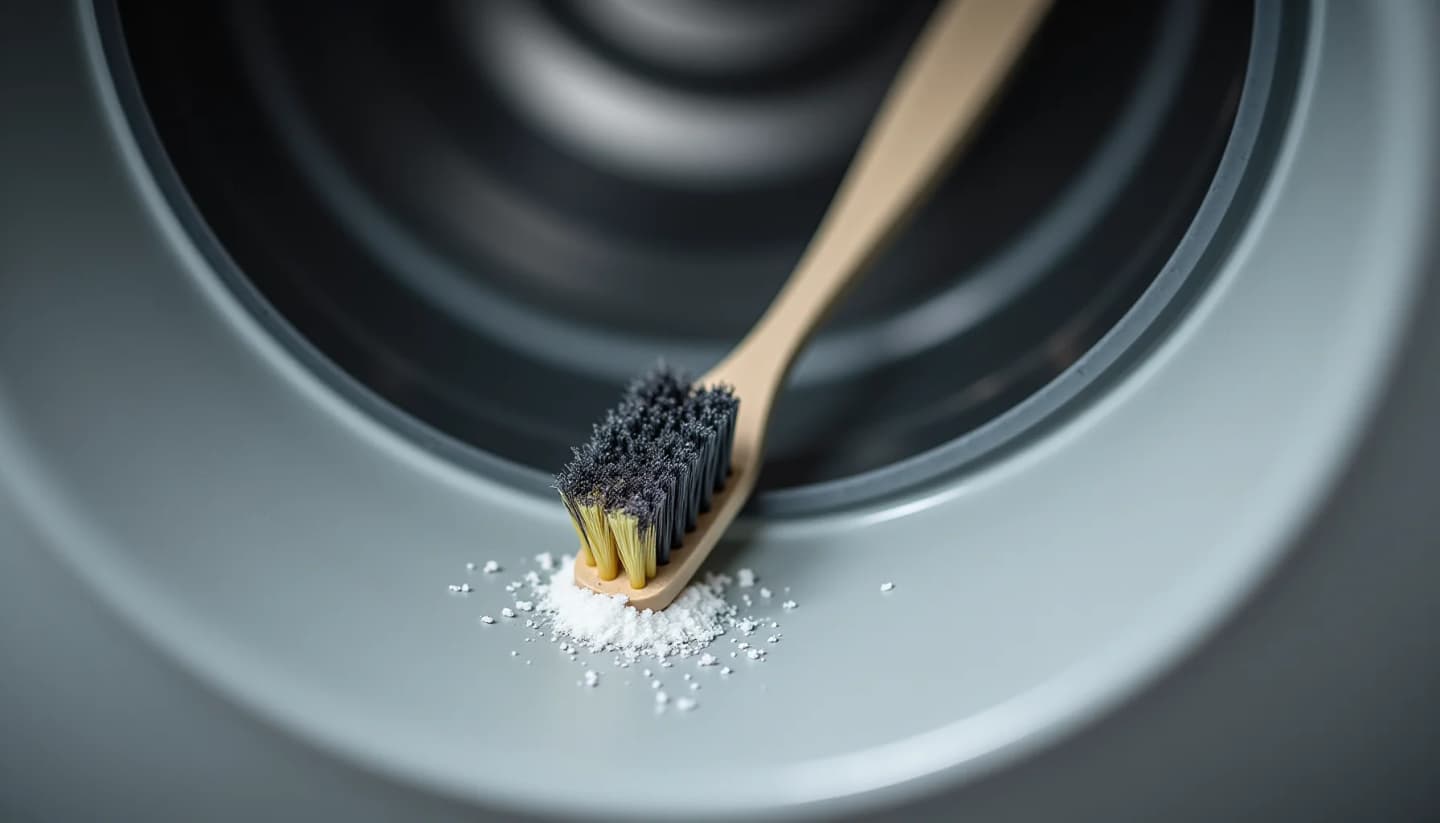
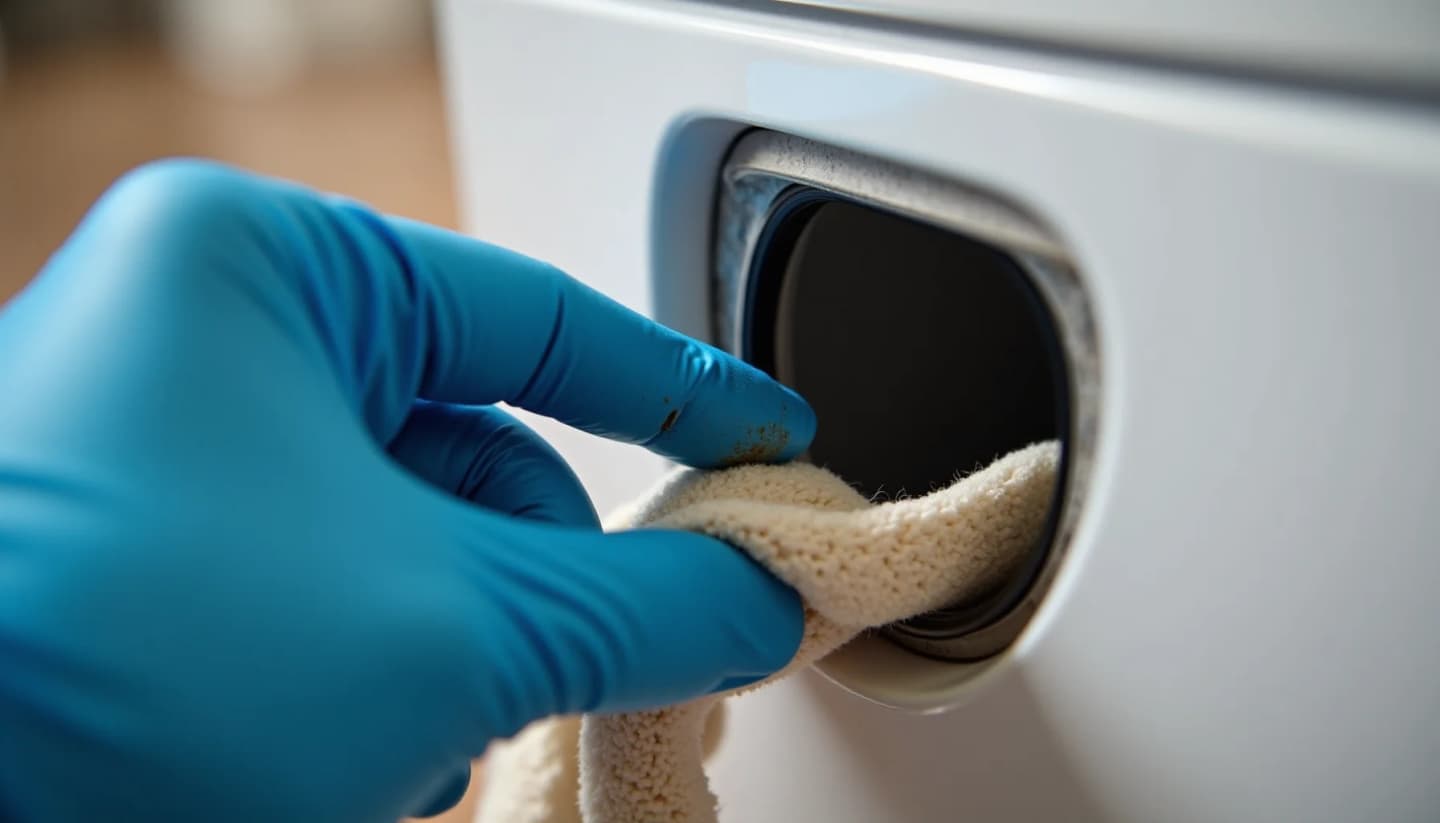
Peel back the rubber door seal and wipe out any trapped lint, hair, and moisture with a dry microfiber cloth. If you spot mold, scrub the affected area with an old toothbrush dipped in a solution of one part bleach and four parts water, but never use bleach and vinegar together on the same surface.
Run a drum-cleaning cycle with baking soda and vinegar
Sprinkle half a cup of baking soda directly into the drum, then pour two cups of white vinegar into the detergent tray. Select the hottest, longest cycle available or your machine's built-in clean cycle, which typically runs between an hour and an hour and a half.
Check and clean the pump filter
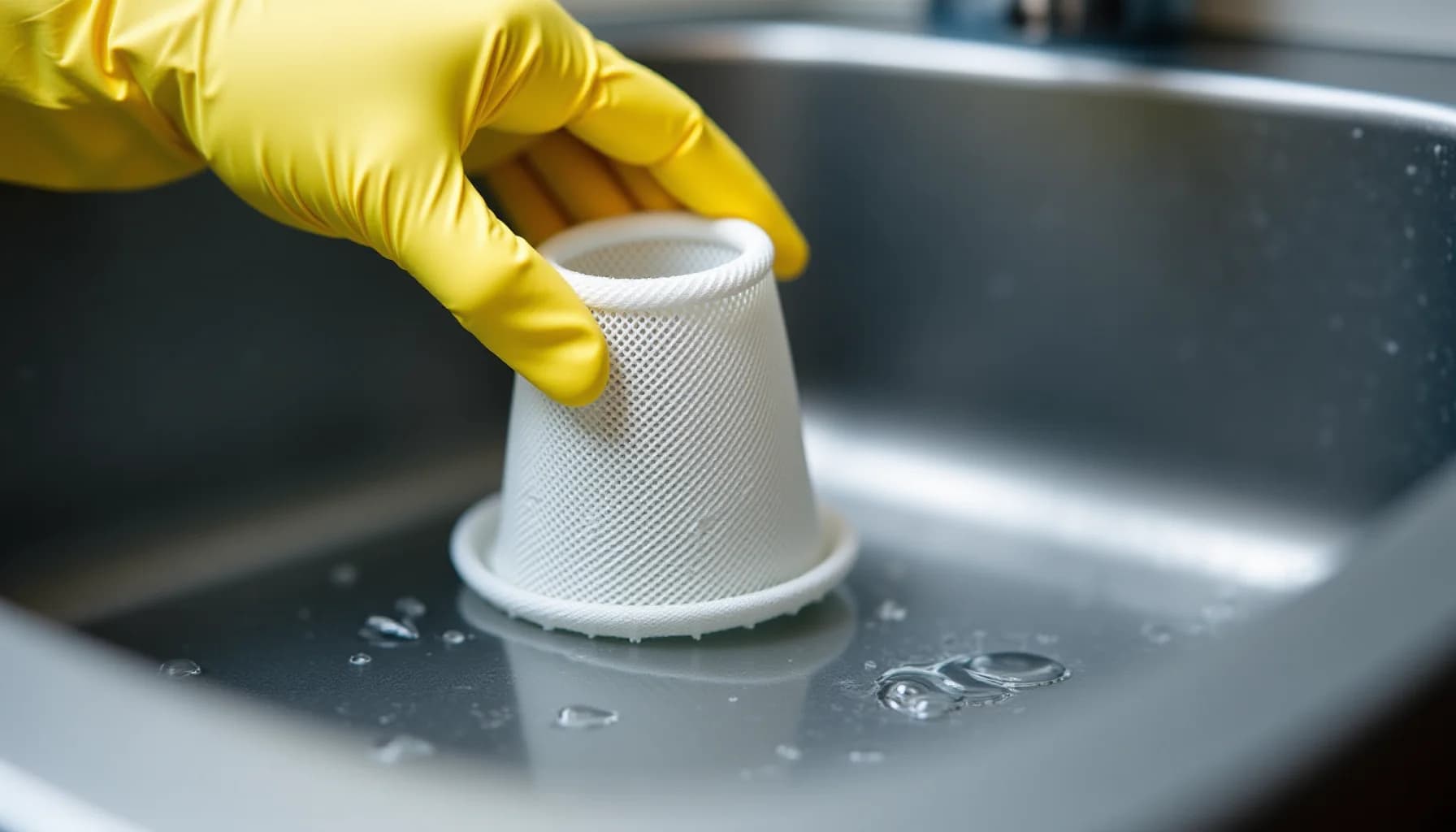
Locate the small access panel at the base of the washer, place a towel and shallow dish underneath, then unscrew the filter cap slowly to catch any water. Rinse the mesh filter under running water and reinstall it; do this every three months, and inspect the inlet hose mesh screens once or twice a year.
Wipe all surfaces dry before closing the door
After the cleaning cycle finishes, use a dry microfiber cloth to wipe the drum interior, the gasket folds, and the door glass so no standing moisture remains. Leaving moisture behind is the primary reason mold returns, even after a thorough clean.
Leave the door slightly ajar between every load
Push the door to a few inches open rather than latching it shut, which allows air to circulate and remaining moisture to evaporate. Combine this habit with using the correct amount of HE detergent and repeating the full cleaning routine every 30 cycles or once a month, whichever comes first.
How do you clean the drum, detergent dispenser, and door gasket on a front-load washer?
Cleaning all three components in the same session keeps the job manageable and ensures you're not re-contaminating a part you already cleaned.
Start with the detergent dispenser. Pull the drawer out completely. Most front-load dispensers release with a press-and-pull motion, though your owner's manual will confirm the exact method. Rinse the tray under warm running water and use an old toothbrush to work out any caked-on detergent, fabric softener residue, or bleach buildup from the compartment walls. Do the same inside the housing slot in the machine, where residue collects just as readily. Rinse thoroughly and let it air-dry before sliding it back in.
Move to the drum next. Sprinkle half a cup of baking soda directly into the drum. Pour two cups of white vinegar into the detergent tray. Run the machine on its hottest, longest cycle. Expect the cycle to run between one hour and one hour and a half. When it finishes, wipe the inside of the drum with a dry microfiber cloth to remove any remaining moisture or loosened residue. If your machine has a built-in ECO DRUM CLEAN or auto-clean cycle, that function heats water to between 140°F and 158°F and handles the drum and the gasket area simultaneously. Use it instead if it is available.
Finish with the door gasket. Pull back the rubber seal and check every fold for trapped lint, standing water, and discoloration. Wipe the folds down with a damp microfiber cloth. For stained areas, apply a small amount of white toothpaste to a dry cloth and rub it into the stained rubber. If you find visible mold, dip an old toothbrush into a solution of one part bleach to four parts water and scrub the affected spot. After any bleach treatment, wipe all surfaces thoroughly dry with a clean microfiber cloth before closing the door. Never use bleach and vinegar in the same cleaning session without fully wiping all traces of vinegar away first.

What cleaning agents are safe to use, and which combinations should you avoid?
Two household staples do most of the heavy lifting here: white vinegar and baking soda. Both are effective, widely available, and safe for the drum, gasket, and detergent tray of a front-load washer. For a standard drum clean, sprinkle half a cup of baking soda directly into the drum, then pour two cups of white vinegar into the detergent tray. Run a hot cycle and you have a straightforward, low-cost cleaning pass that cuts through soap scum and mineral deposits without harsh residue.
Bleach is the other legitimate option, particularly when visible mold is already present. A 10 percent bleach solution applied with an old toothbrush works well on affected gasket areas. A diluted mixture of one part bleach to four parts water is suitable for wiping down stained surfaces.
The one rule that cannot be overstated: never use bleach and vinegar together, in the same cycle or even in close sequence. On their own, both are effective cleaners. Combined, they produce chlorine gas, which is harmful to breathe and serves no cleaning purpose whatsoever. If you have used vinegar during a cycle, wipe every surface thoroughly and run a rinse cycle before introducing any bleach-based product. The same applies in reverse.
For readers unsure about which cleaning agents are safe on other appliance surfaces around the home, which cleaners are safe for each appliance surface is worth bookmarking as a general reference.
Commercial washing machine cleaning tablets are also a reasonable choice and are formulated to avoid these compatibility issues entirely. Whichever agent you use, avoid non-HE detergents and skip fabric softener during cleaning cycles, as both leave residue that compounds the buildup you are trying to remove.
What daily habits keep mold from forming in a front-load washer?
The single most damaging habit front-load washer owners practice is closing the door immediately after a cycle ends. Once that door clicks shut, residual moisture has nowhere to go. The drum, the gasket folds, and the detergent tray stay damp and warm, exactly the conditions that allow mold spores to establish themselves. Leave the door slightly ajar after every wash, not propped wide open, but open enough to let air circulate through the drum. A few inches is sufficient. Leaving it fully open over time can stress the hinge and cause the door to sag, which eventually compromises the seal.
The detergent tray is the second spot most owners overlook between loads. Residual softener and detergent pool in the tray compartments and begin feeding mold within days. Pull the drawer out after each wash and leave it open as well, so moisture evaporates rather than sitting.
Dosing matters more than most people realize. Using more detergent than the load requires does not make clothes cleaner. It leaves a soap film inside the drum that traps moisture and feeds mold spores between cycles. Use only HE-rated detergent, and measure it. If you are consistently finding residue or a sour smell returning within days of cleaning, excess detergent is almost certainly the culprit, and reducing your dose is the first fix to try before reaching for any cleaning product.
If sour odors persist after you have corrected these habits and completed a full cleaning cycle, stop troubleshooting on your own and call a certified appliance technician. Persistent odor after cleaning can indicate mold growth behind the drum or inside internal components that are not accessible without disassembly.
Does your washing machine have a filter or auto-clean cycle?
Most front-load washers have a small filter, usually located behind a access panel near the bottom front of the machine. Lint, coins, and debris collect there over time, and a clogged filter strains the pump and contributes to standing water, which feeds mold. Plan to check and clean it every three months. The mesh filter on the water inlet hose needs attention less often: once or twice a year is sufficient. Pull it out, rinse it under warm running water, and reinstall it before it has a chance to restrict water flow.
If your machine includes an ECO Drum Clean cycle or a similar auto-clean function, use it. These cycles heat the water to between 140°F and 158°F, hot enough to kill bacteria and loosen accumulated grime from the drum and rubber door gasket automatically. Run it regularly, at least in line with your monthly cleaning schedule, and it will do a significant share of the work for you.
When persistent odors remain after you have cleaned the drum, gasket, dispenser, and filter thoroughly, the problem may be deeper than surface maintenance can reach. Mold inside internal hoses or the pump housing requires a service technician. If a full cleaning cycle produces no improvement in smell, booking a professional inspection is the right next step rather than repeating the same cleaning indefinitely.
Frequently asked questions
How often should I clean my front-load washing machine?
Why does my front-load washer smell musty?
Is it safe to use both vinegar and bleach to clean my washer?
What is the simplest habit to prevent mold in a front-load washer?
How this article was made
Researched and written with AI assistance. What gets published is a human editorial decision. Grounded in 8 cited sources.
Edited by Claire Mercier, Editor. The guides are written with AI assistance.
Sources (8)
- How to Easily Clean A Washing Machine: Step by Step | The Good Guys
- How To Clean a Front Loading Washer: Fast & Easy Tips | Whirlpool
- How to Clean Your Washing Machine | AHS
- How to Clean Front Load Washer: Clean Your Washing Machine Naturally
- How to Clean a Front Load Washing Machine (Drum, Gasket, & Filter) | WDC Kitchen & Bath Center | Agoura Hills, La Quinta, Lomita, Moorpark, Oxnard, Santa Barbara, CA
- How To Remove And Clean The Detergent Drawer In The Front Load Washing Machine
- Check out the cleaning functions and sections on the front loading washing machine
- How do we clean the door seal/ bellow of the Front-loading washing machine?