Clean Granite Countertops the Right Way, Seal Intact
Part of Stone & Countertops · article 1 of 13
On this page
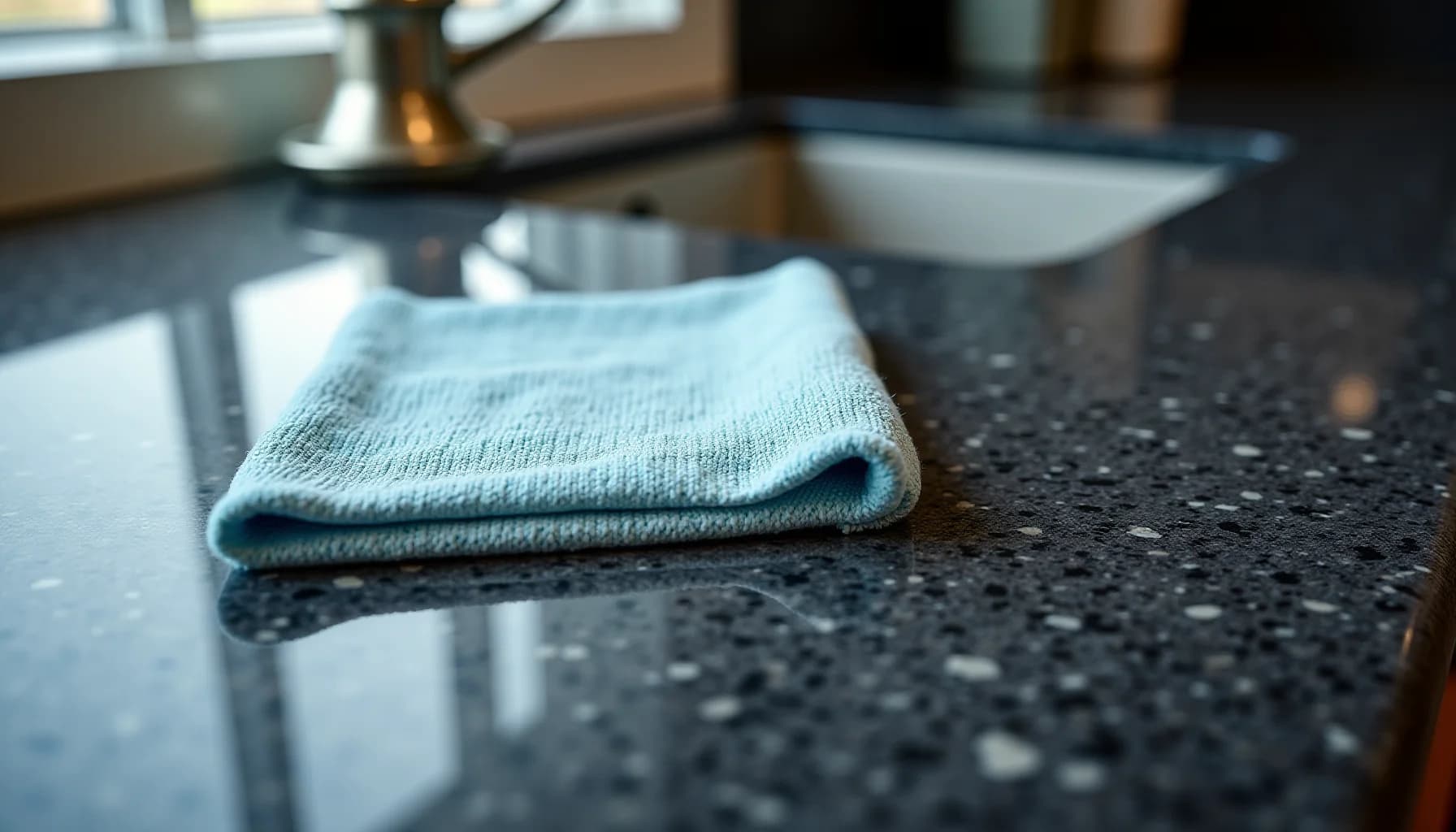
Wipe granite down daily with a nonabrasive cloth or sponge dipped in warm water and no more than half a tablespoon of mild dish soap, then dry immediately with a microfiber cloth to prevent streaking. That routine handles 95% of everyday cleanup. For disinfection, spray a 50/50 mix of water and rubbing alcohol, let it sit for 3 to 5 minutes, then wipe with a wet cloth and dry. Keep vinegar, bleach, hydrogen peroxide, and glass cleaner off the surface entirely: acidic cleaners degrade the sealant and etch the stone, leaving dull spots that require polishing powder or professional repair to fix. Steel wool and abrasive pads scratch granite permanently, so stick to soft cloths only. Blot spills immediately rather than wiping them across the surface.
What's the best way to clean granite countertops every day
The routine that works for most kitchens takes about two minutes and covers roughly 95% of what your granite sees on any given day.
Fill a small bowl or sink with warm water and add a small squeeze of mild dish soap, something like Dawn Original or a comparable pH-neutral formula. Keep the total amount of soap under half a tablespoon. More than that and you risk leaving behind a soapy film that builds up over repeated cleanings and gradually dulls the surface. Dip a nonabrasive sponge or a soft cotton cloth into the soapy water, wring it out so it's damp rather than dripping, and wipe down the countertop in smooth, overlapping passes.
Do not use anything with a scrubbing side, a green scouring pad, or any product marketed as a "heavy-duty" kitchen cleaner. These are too abrasive for granite and will scratch the surface. Stick to the soft sponge or a plain cotton cloth.
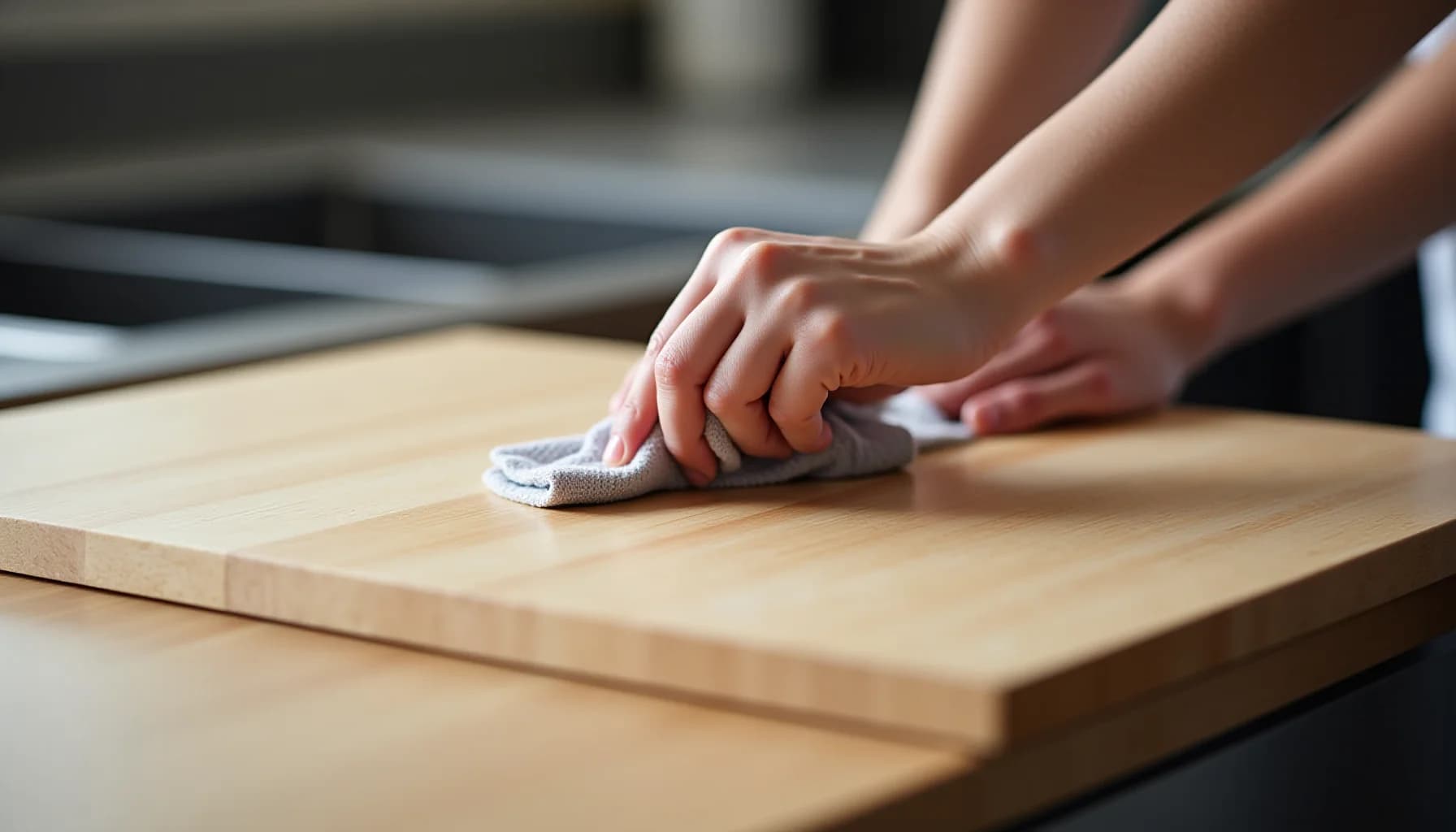
Once the surface is clean, dry it immediately with a clean microfiber cloth. This is the step most homeowners skip, and it's why they end up with water spots and streaking. A microfiber cloth absorbs moisture evenly and lifts residue without leaving lint behind.
One thing to keep firmly in mind: products you might instinctively reach for, such as multi-surface sprays or anything with ammonia, can quietly damage the sealant with repeated use. A quick read through which cleaners are safe on natural stone will help you rule out anything sitting under your sink that shouldn't go near the counter.
What cleaning products and tools should you avoid on granite?
Wipe down the surface with soap and warm water
Dip a nonabrasive sponge or cloth into warm water mixed with no more than half a tablespoon of mild dishwashing liquid, then wipe the countertop. Dry immediately with a microfiber cloth to prevent streaking.
Blot spills right away, do not wipe
As soon as a spill happens, press a clean cloth straight down onto it to absorb the liquid. Wiping spreads the mess and drives acidic substances deeper into the stone, risking permanent staining or etching.
Disinfect with a water and rubbing alcohol solution
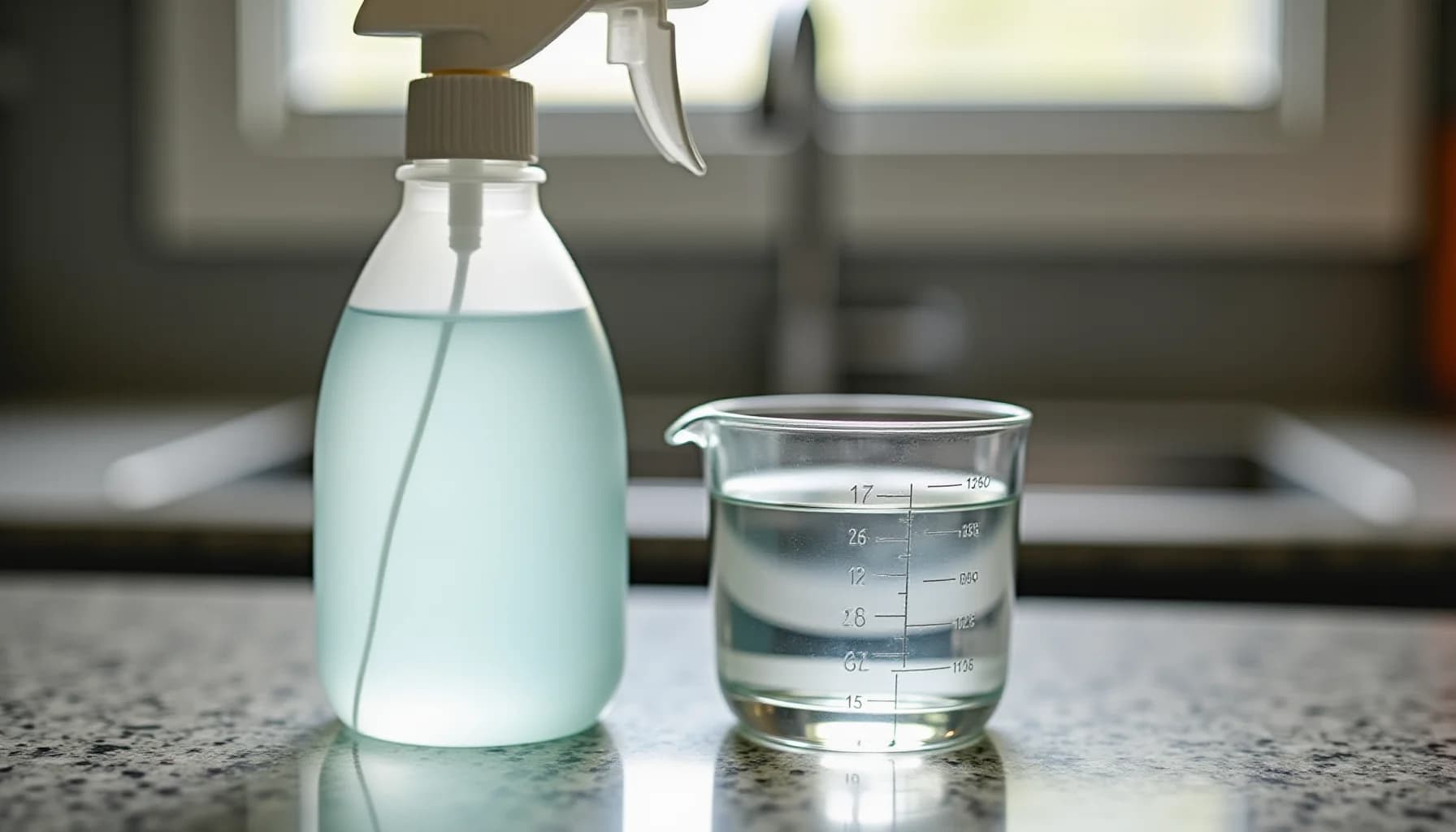
Mix a 50/50 solution of water and rubbing alcohol in a spray bottle and spritz the countertop. Let it sit for 3 to 5 minutes, wipe with a wet cloth, then dry with a microfiber cloth.
Test whether the seal needs refreshing
Drop a small amount of water onto the surface and watch what happens. If the drops soak in, the countertop needs to be resealed; if they bead up, the sealer is still doing its job.
Apply a penetrating sealer every 1 to 3 years
Clean the countertop thoroughly and let it dry completely, ideally for 24 hours. Apply granite sealer evenly with a soft cloth or applicator pad, let it penetrate for 15 to 20 minutes, wipe away any excess, and wait 24 hours before using the surface normally.
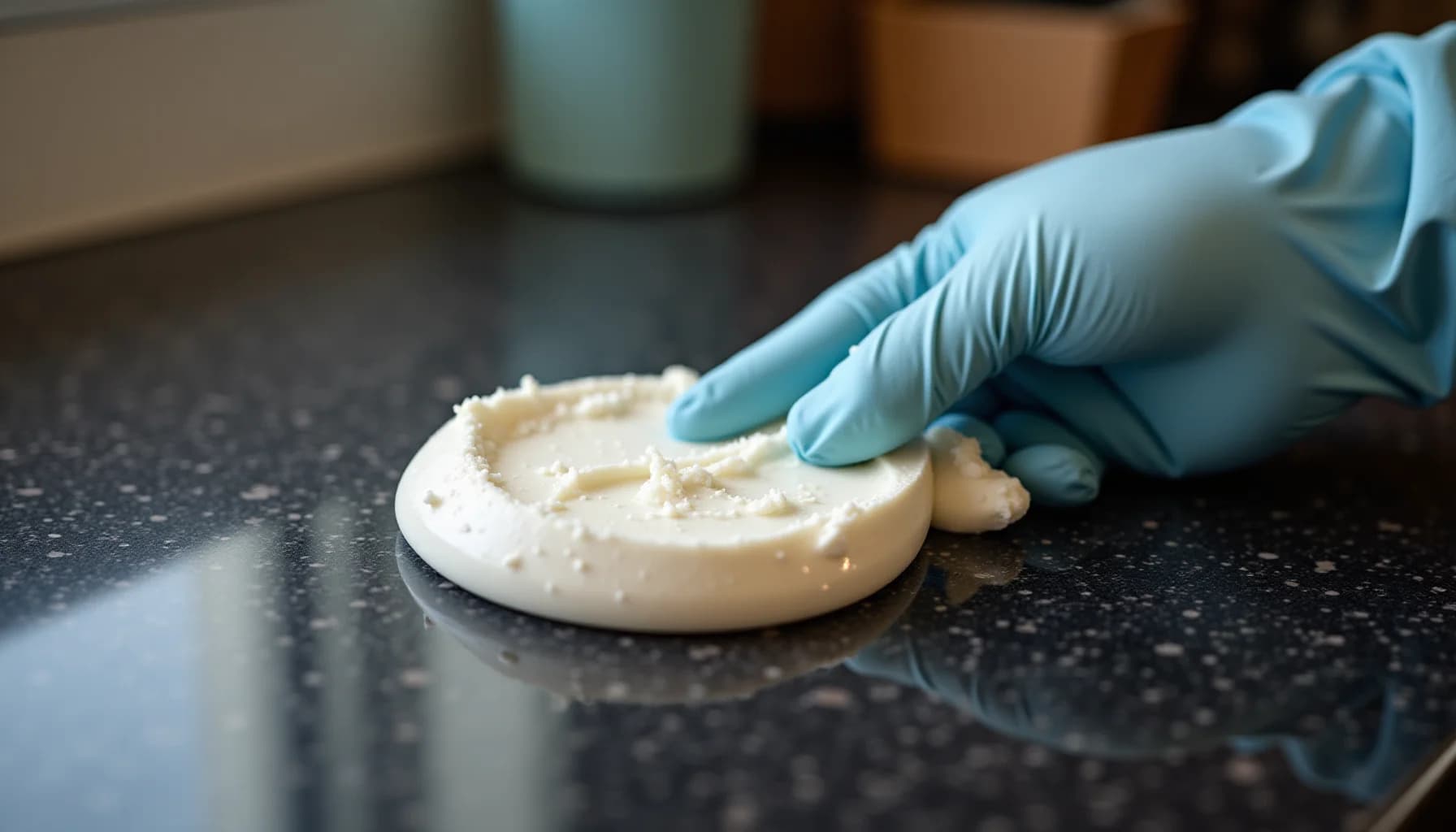
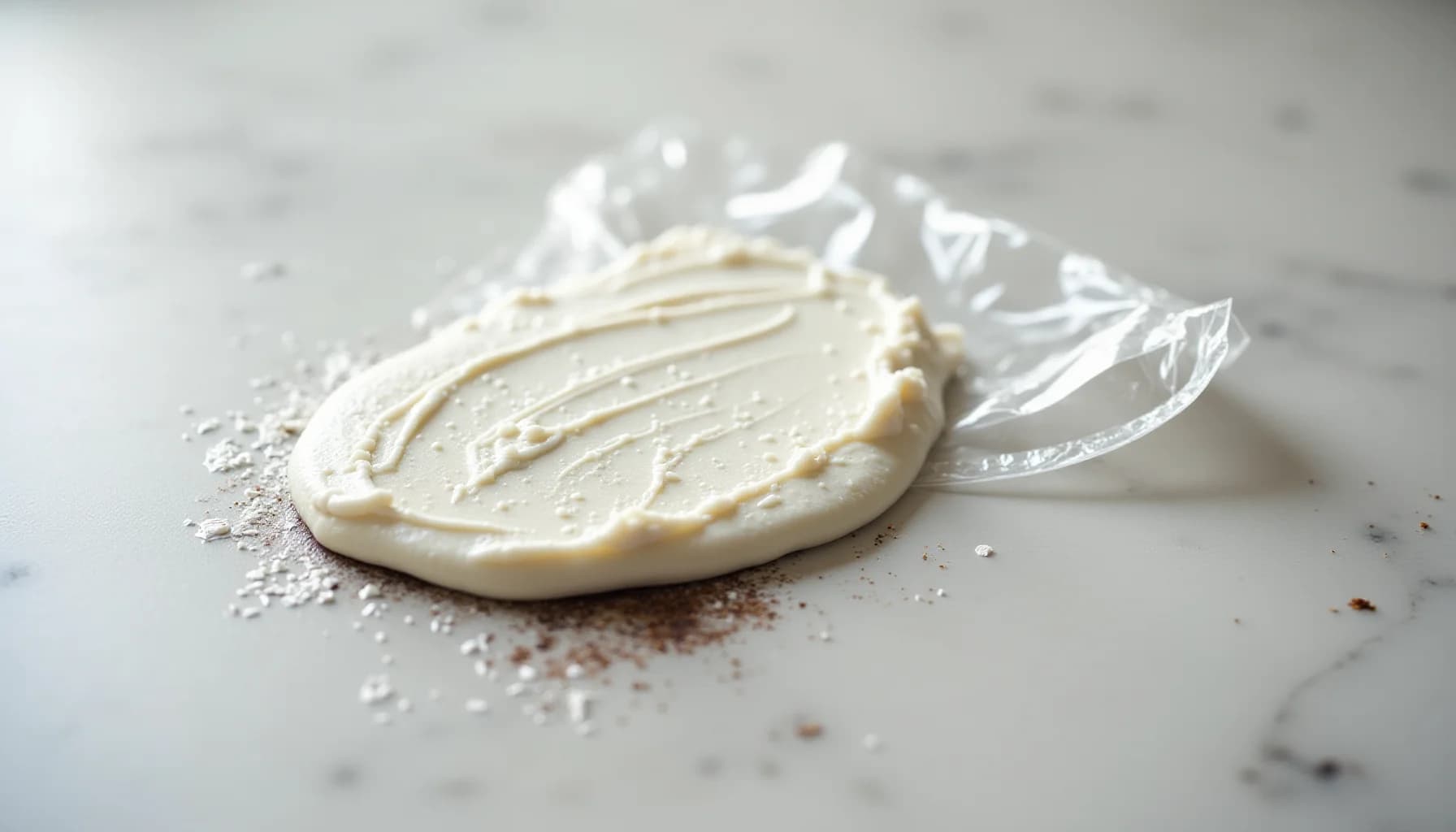
Remove etch marks with granite polishing powder
Wet the damaged area, sprinkle granite polishing powder over it, and buff with a damp cloth or buffing pad. Continue buffing until the dull etch spot disappears and the surface regains its shine.
How do you disinfect granite countertops safely?
Bleach, vinegar, and most commercial disinfecting sprays are off the table for granite. They either contain acids that etch the stone or harsh chemicals that degrade the sealant with repeated use. The safe, effective alternative is a 50/50 solution of rubbing alcohol and water.
To make it, pour equal parts isopropyl alcohol and plain water into a clean spray bottle. Shake gently to combine. Spray the solution evenly across the countertop surface, making sure you cover the full area you want to disinfect rather than spot-treating. Then leave it alone. The solution needs to sit on the surface for 3 to 5 minutes to do its work. Wiping it off immediately defeats the purpose.
After the dwell time is up, wipe the surface with a clean, wet cloth to remove the residue. Follow that immediately with a dry microfiber cloth. The microfiber step matters: skipping it leaves moisture sitting on the stone, and while sealed granite resists water well, there is no reason to leave it wet longer than necessary. Drying also prevents streaking, which rubbing alcohol can leave behind if it evaporates unevenly on a polished surface.
A few things to keep straight here. This method is for disinfection, not everyday cleaning. Your daily routine of warm water, a small amount of mild dish soap, and a microfiber dry-off handles the vast majority of kitchen messes without touching the sealant. Reserve the alcohol solution for situations where you genuinely need to kill pathogens, such as after handling raw meat on or near the counter surface.
Also worth knowing: if you are unsure whether a product you already own is safe to use on your granite, check which cleaners are safe on natural stone before reaching for anything beyond this two-ingredient solution. The wrong spray, used once too often, costs you the sealant you spent time and money applying.
Does Your Granite Need Resealing, and How Do You Apply Sealer?
The water-bead test is the simplest way to know whether your granite needs resealing. Drop a small amount of water, roughly a tablespoon, onto the countertop surface. If the droplets bead up and sit on top, the sealer is still doing its job and you can leave the surface alone. If the water soaks into the stone within a few minutes, that is your signal to reseal. Run this test in a few different spots, since granite is a natural material and porousness can vary even within the same slab.
When it is time to reseal, your choice of product matters. Penetrating sealers soak into the stone and protect it from within without altering how it looks, which is why they are the standard recommendation for granite. Topical sealers form a layer on the surface instead, which can interfere with granite's natural appearance over time.
Application is straightforward, but preparation is not optional. Clean the countertop thoroughly first, then let it dry completely. Twenty-four hours of drying time is ideal. A damp surface will prevent the sealer from penetrating properly. Once dry, apply the sealer evenly across the surface using a soft cloth or an applicator pad. Let it penetrate for 15 to 20 minutes, staying close to whatever the product label specifies. Before it dries on its own, wipe away any excess with a clean, dry cloth. Leaving pooled sealer to dry creates a hazy residue that is difficult to remove.
After application, keep the surface dry and avoid normal use for 24 hours. Most granite countertops sealed this way will not need resealing for another one to three years, depending on how heavily the surface is used.
| Sealer Type | How It Works | Effect on Appearance | Recommended for Granite |
|---|---|---|---|
| Penetrating sealer | Soaks into the stone, protects from within | Does not alter appearance | Yes |
| Topical sealer | Forms a protective layer on the surface | May change surface look | Not typically |
How do you handle spills and etch marks on granite?
The moment a spill lands on granite, your only job is to blot it, not wipe it. Wiping spreads the liquid across a wider area and pushes it into the pores; blotting lifts it straight up. Use a clean cloth or paper towel and press down firmly, working from the outer edge of the spill inward. This matters most with acidic liquids like citrus juice, tomato sauce, or vinegar, because acid starts attacking the sealer and the stone itself almost immediately. The faster you act, the less damage reaches the surface beneath the sealant.
If you miss a spill and come back to a dull, hazy spot on the granite, that is an etch mark, caused by acid stripping the polished surface. Soap and water will not fix this. Wet the damaged area with plain water, sprinkle granite polishing powder over it (available at most hardware stores), and rub with a damp cloth or a buffing pad using small circular motions. Continue until the dullness disappears and the sheen returns.
Stop and call a stone restoration professional if the etch covers a large portion of the countertop, if the surface feels physically rough or pitted after buffing, or if the damage cuts visibly into the stone rather than just dulling the finish. At that point, polishing powder is not enough, and forcing it will only wear the surface further. Professional re-polishing or honing is the only repair that holds.
Frequently asked questions
What is the safest way to clean granite countertops every day?
Which cleaning products should I never use on granite?
How do I know when my granite countertops need to be resealed?
How often do granite countertops actually need to be sealed?
Does Granite Really Stain Easily and Need Constant Upkeep?
Granite has a reputation it doesn't entirely deserve. Because it's a natural stone with visible pores, many homeowners assume it behaves like a sponge, soaking up olive oil, wine, and coffee at the first opportunity. That assumption is largely wrong. Properly sealed granite resists staining very well, and the porosity that worries people is far less of a practical problem than it sounds.
The "constant resealing" belief is equally outdated. Modern granite countertops typically need resealing once every one to three years, not monthly, and not even annually in many cases. The water-bead test tells you what you actually need to know: drop a small amount of water on the surface, and if it beads up and rolls off, the sealer is doing its job. If the water soaks straight in, it's time to reseal. That's a far simpler maintenance schedule than most homeowners expect.
Durability myths cut both ways. Some people assume granite is indestructible and skip trivets under hot pans, which risks thermal shock and cracking. Others treat it as impossibly fragile and over-maintain it. The reality sits between those two positions: granite is one of the hardest countertop materials available, but it chips under heavy impact and etches when acidic products are left on its surface. For a closer look at which cleaners are safe on natural stone and which wreck it, the distinction between pH-neutral and acidic products matters more than most manufacturer labels suggest.
How this article was made
Researched and written with AI assistance. What gets published is a human editorial decision. Grounded in 8 cited sources.
Edited by Claire Mercier, Editor. The guides are written with AI assistance.
Sources (8)
- How to Clean Granite Countertops
- How to Clean Countertops and Keep Them Looking Their Best
- The Right Way To Clean Granite Kitchen Countertops | Merry Maids
- The Ultimate Guide on How To Clean White Granite Countertop
- How to Clean Granite Countertops (Soap & Water Is All You Need)
- How To Clean Granite Countertops - BC Stone ✬
- How to Clean Granite Countertops
- How to Clean Granite Countertops—and Remove Stubborn Stains