Before You Clean Quartzite Countertops, Read This First
Part of Stone & Countertops · article 6 of 13
On this page
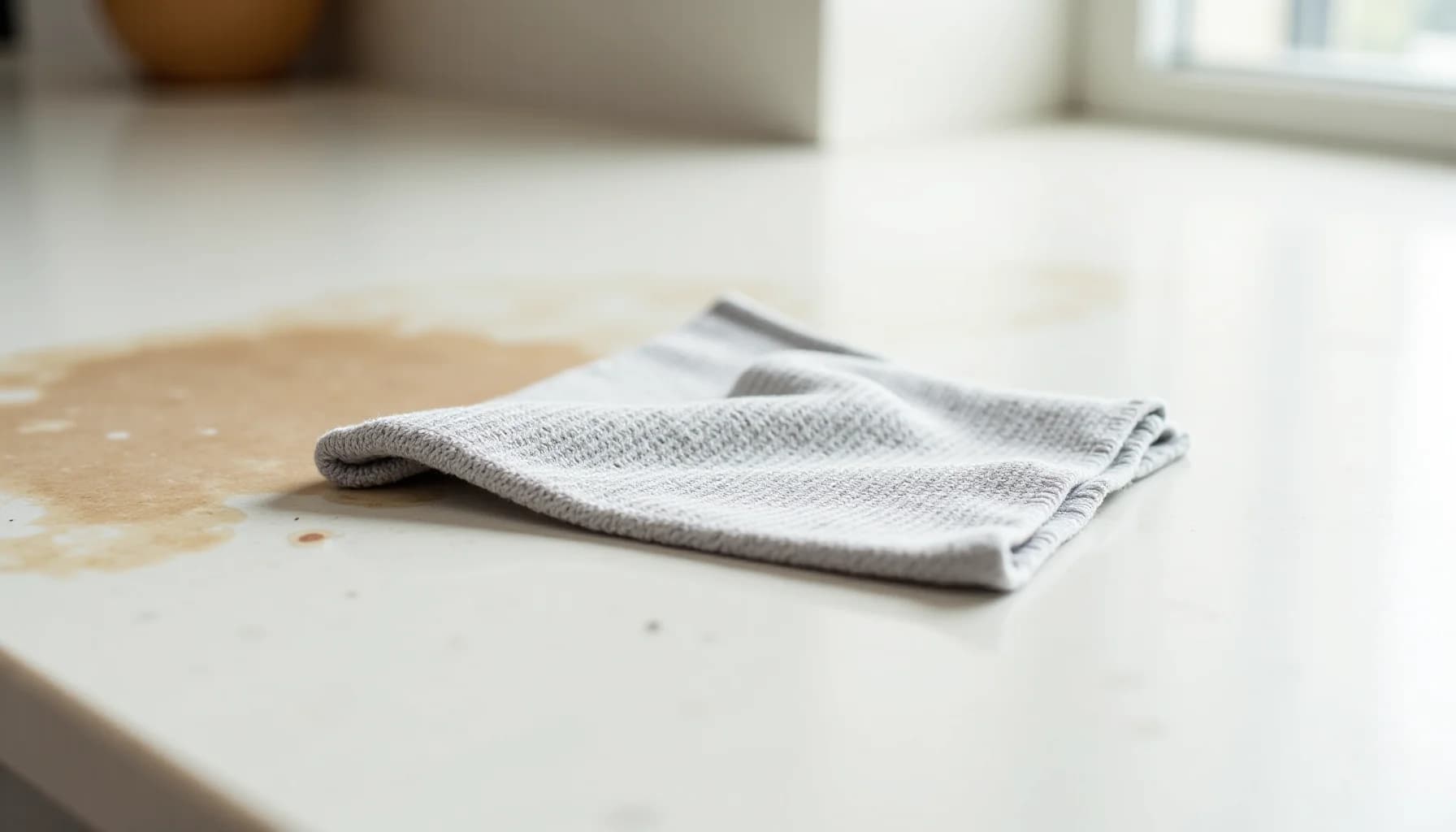
Wipe quartzite countertops with a soft microfiber cloth dampened with mild dish soap and warm water, then dry the surface completely. That combination handles the vast majority of daily messes without any risk to the stone. For tougher residue, a scrubby pad is safe to use — quartzite sits at 7 to 8 on the Mohs hardness scale, so it can take mild mechanical action. What it cannot take is acid. Vinegar, lemon juice, and bleach will etch the surface and degrade the protective seal; if you want to understand exactly why that damage is irreversible, vinegar permanently damages natural stone in ways that no re-sealing can fully correct. Ammonia-based cleaners cause the same problem and should stay off the counter entirely. Stick to pH-neutral stone cleaners or plain dish soap, and if you are ever uncertain whether a product is safe, check which cleaners are safe on natural stone before applying anything new.
Is quartzite the same as quartz countertops?
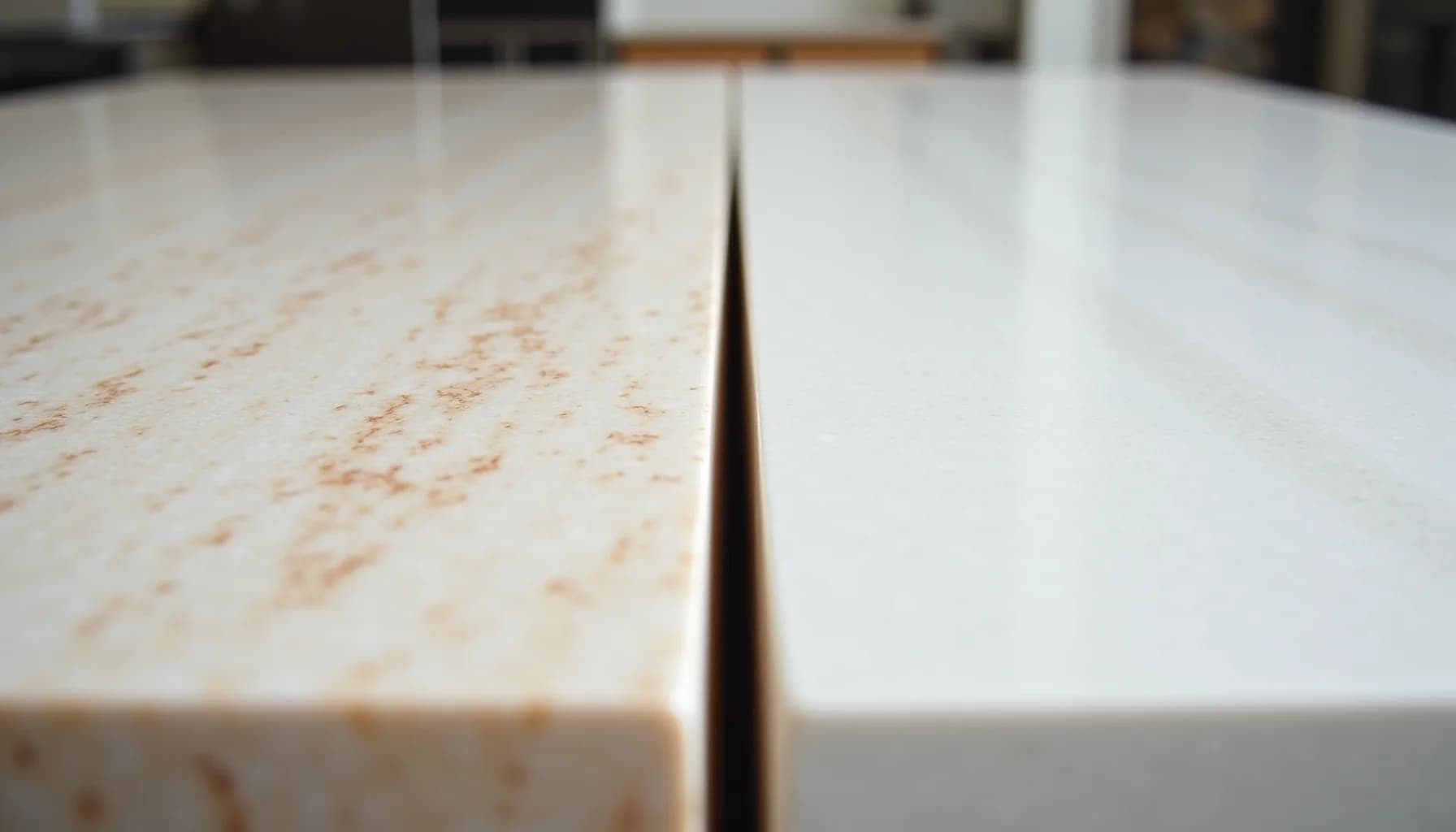
They look similar in showroom photos, and the names sound nearly identical, but quartzite and engineered quartz are fundamentally different materials with fundamentally different care requirements.
Quartzite is a natural metamorphic rock. It begins as sandstone, then gets subjected to intense heat and pressure deep within the earth over millions of years. That geological process fuses the sand grains into an extremely dense, crystalline stone that registers between 7 and 8 on the Mohs hardness scale. What comes out of the quarry is cut into slabs and installed essentially as nature made it.
Engineered quartz, sold under brand names like Silestone and Cambria, is a manufactured product. It combines crushed quartz crystals with epoxy resins and pigments, pressed into uniform slabs. The resin is the critical difference: it fills every pore in the material and produces a non-porous surface. That surface never needs sealing.
Quartzite has no such resin. It is porous, and some varieties are considerably more absorbent than others. If you have a denser slab, you may find it resists moisture well; if yours came from a more absorbent deposit, liquids can penetrate and stain permanently without a proper sealer in place. The assumption that all quartzite performs the same is one of the most common and costly mistakes homeowners make.
If you are unsure which material you actually have, the five reliable tests for identifying your stone countertop can settle the question before you commit to any care routine.
What should you use to clean quartzite countertops every day?
Wipe up spills the moment they happen
Blot liquids like wine, oil, and coffee immediately with a soft cloth. The sealer buys you time, but quartzite is porous and a spill left sitting can penetrate the stone and stain permanently.
Mix a few drops of mild dish soap into warm water
Add two or three drops of pH-neutral dish soap to a spray bottle filled with warm water. This simple solution handles the vast majority of daily messes without etching the stone or degrading its protective seal.
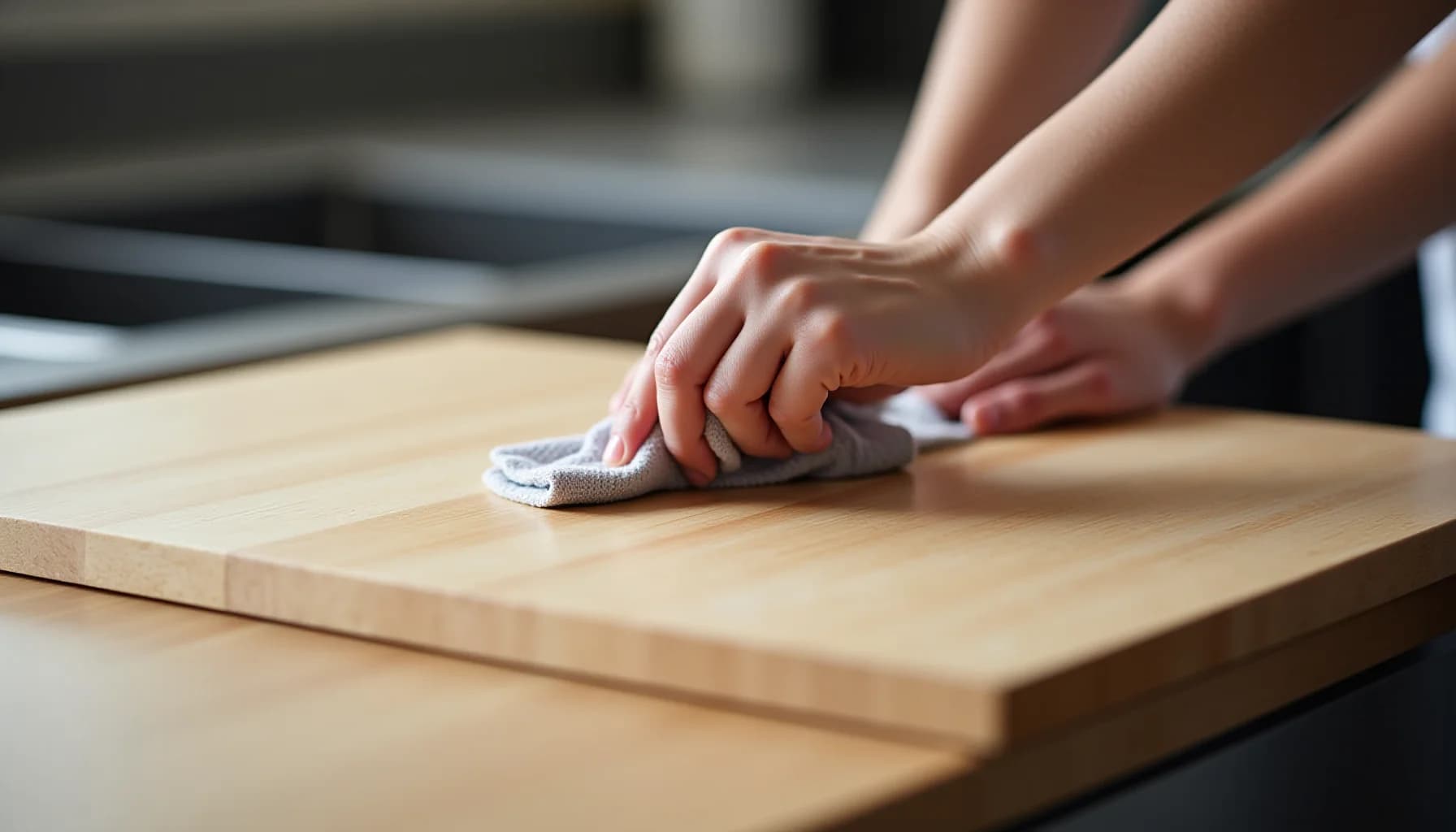
Wipe the surface with a soft microfiber cloth
Spray the solution directly onto the countertop and wipe with a damp microfiber cloth using gentle, circular passes. Never use abrasive scrub pads for routine cleaning, and keep vinegar, lemon juice, bleach, and ammonia-based products away from the surface entirely.
Dry the countertop thoroughly with a clean cloth
Go over the entire surface with a dry microfiber cloth after cleaning. Leaving moisture on unsealed or lightly sealed quartzite encourages absorption into the stone.
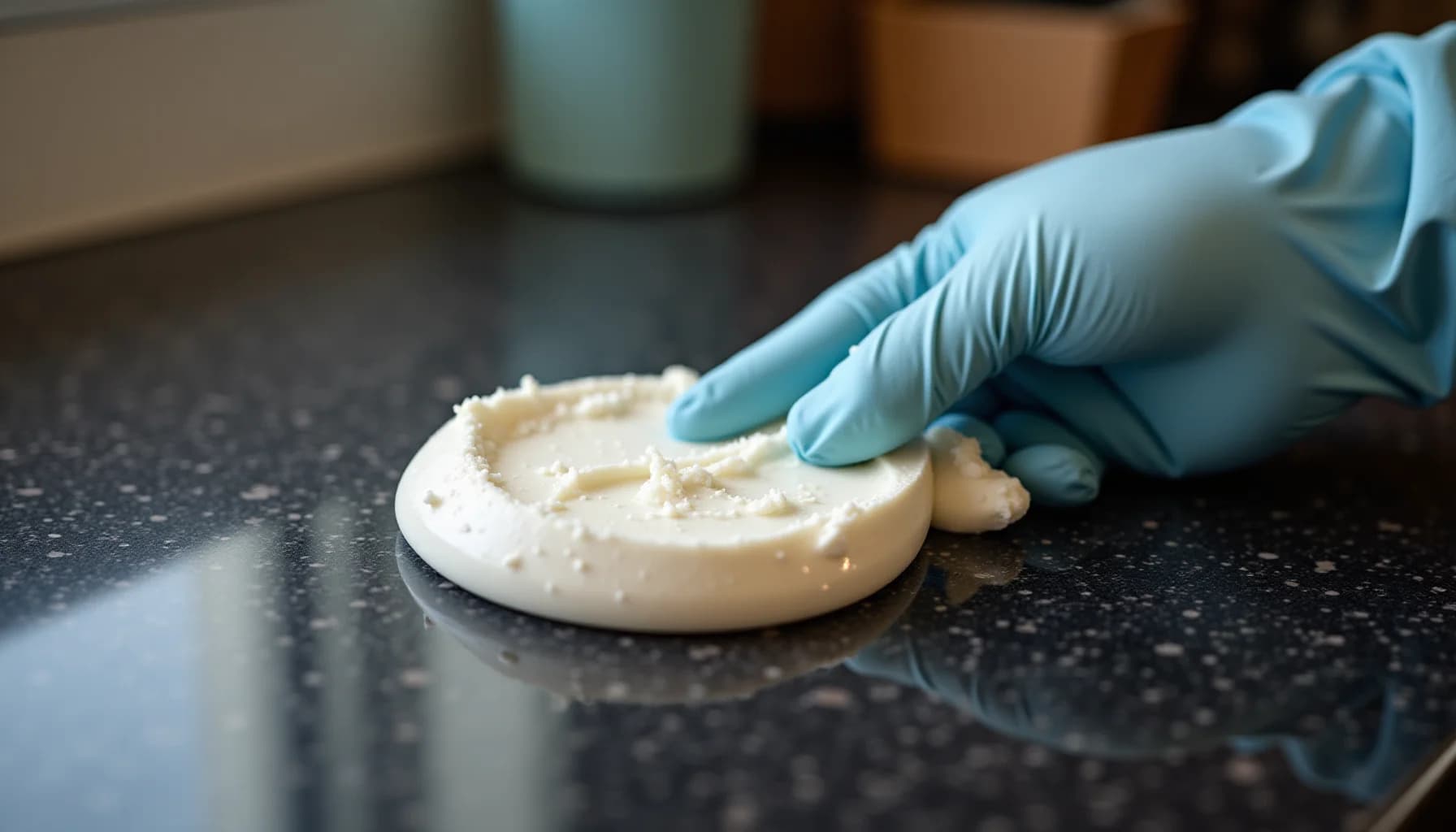
Treat stubborn stains with a baking soda paste
Mix baking soda and water into a thick paste, apply it to the stained area, and let it sit for several hours or overnight. Scrub gently with a soft brush, then rinse and dry the spot completely. Quartzite is hard enough, rating 7 to 8 on the Mohs scale, to tolerate this without scratching.
Reseal the surface at least once a year, or when water stops beading
Apply a quality impregnating stone sealer, not a topical coating, let it soak in for 10 to 15 minutes, wipe away the excess, and allow it to cure for 24 to 72 hours. If water no longer beads on the surface, resealing is overdue. Some more porous quartzite varieties need sealing every 6 to 12 months, while denser types may hold up for up to three years.
What cleaners will damage quartzite countertops?
The cleaners most likely to destroy quartzite are the ones people already have under their sinks: white vinegar, lemon juice, and bleach. All three are acidic or chemically aggressive enough to etch the stone's surface and break down the protective sealer that keeps moisture out. Vinegar is the most common offender because it gets recommended constantly as an all-purpose household cleaner. On quartzite, it acts more like a slow solvent. Vinegar corrodes natural stone sealers over time and degrades the finish of the stone itself, leaving the surface dull and increasingly vulnerable to staining with every application.
The damage mechanism is straightforward. Quartzite, as a porous natural stone, relies on its sealer as a first line of defense. Acidic cleaners don't just sit on top of that layer; they eat into it. Once the sealer is compromised, the stone beneath is exposed to whatever lands on the counter next. Lemon juice causes the same problem as vinegar, even in small amounts. A quick wipe with a lemon-soaked cloth, or a splash of citrus-based dish soap used repeatedly, adds up.
Bleach and ammonia-based cleaners fall into a separate category. They aren't strongly acidic, but they are chemically harsh enough to discolor quartzite and degrade the sealer bond over repeated use. Products marketed as "multi-surface" or "disinfecting" sprays often contain one or both. Check the label before reaching for them.
Abrasive scrubbing powders are another category to skip. While quartzite ranks between 7 and 8 on the Mohs hardness scale and can handle a scrubby pad on a stubborn stain, powdered cleansers introduce fine particles that can scratch the surface finish over time.
The practical standard to hold everything against: if a cleaner isn't pH-neutral, it has no business on quartzite. A full breakdown of which cleaners are safe on natural stone covers the broader category, but for quartzite specifically, mild dish soap and warm water is the routine that keeps the surface intact.
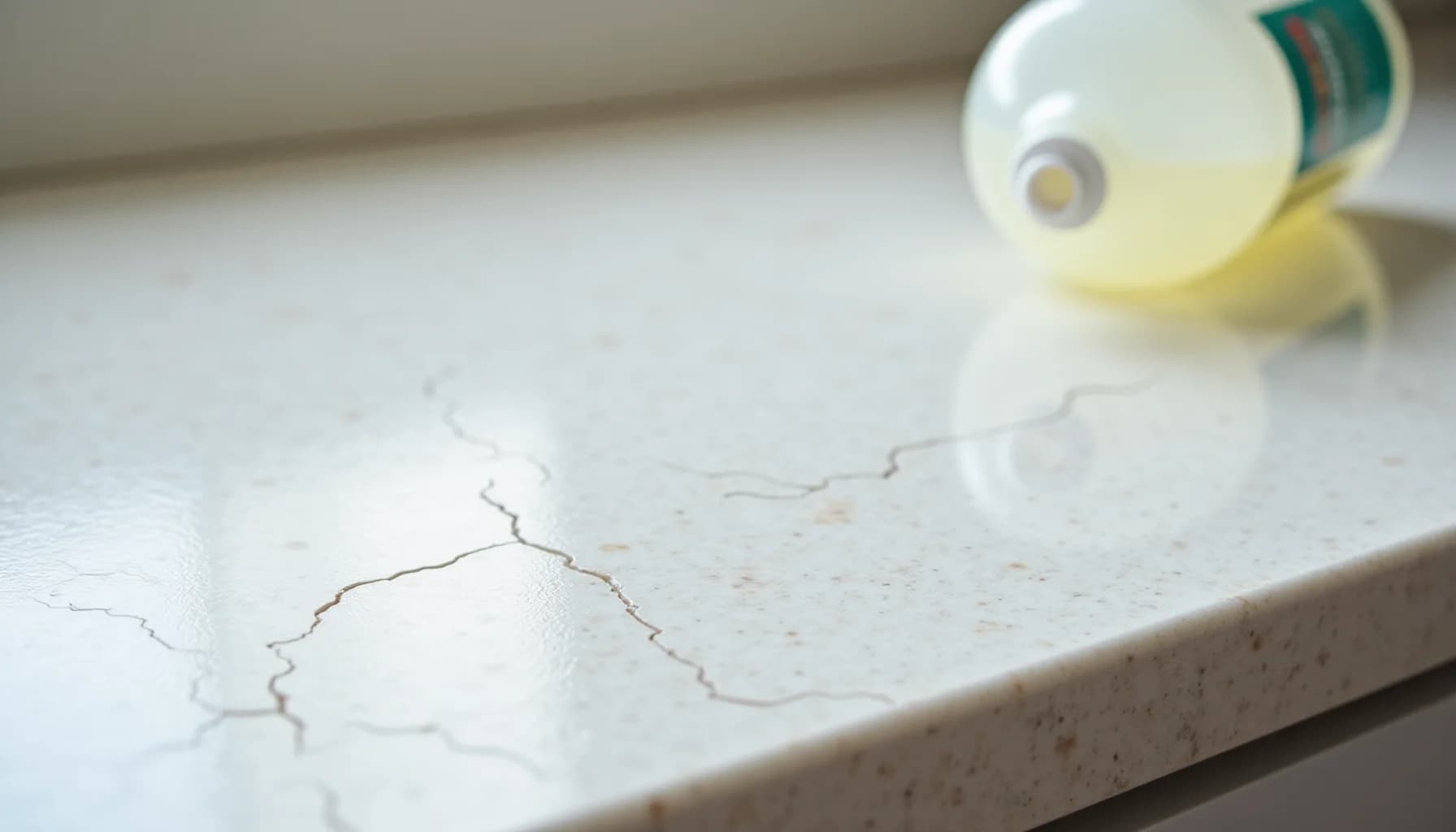
How often does quartzite need to be sealed?
Sealing frequency for quartzite is genuinely variable, and any single number you see online is a starting point rather than a fixed rule. Most installers and stone care professionals recommend sealing once a year as a baseline, with some sources putting the practical range between every six months and every three years depending on how heavily the surface is used. A kitchen counter that sees daily cooking, acidic prep work, and frequent spills needs attention closer to the six-to-twelve-month end of that range. A quartzite surface in a low-traffic bathroom may hold up fine for two or three years between applications.
The most reliable way to know whether your countertop needs sealing is the water bead test. Pour a small amount of water onto the surface and watch what happens. If it beads up and sits on top, the seal is doing its job. If the water soaks in and darkens the stone within a few minutes, the protective barrier has worn down and it is time to reseal.
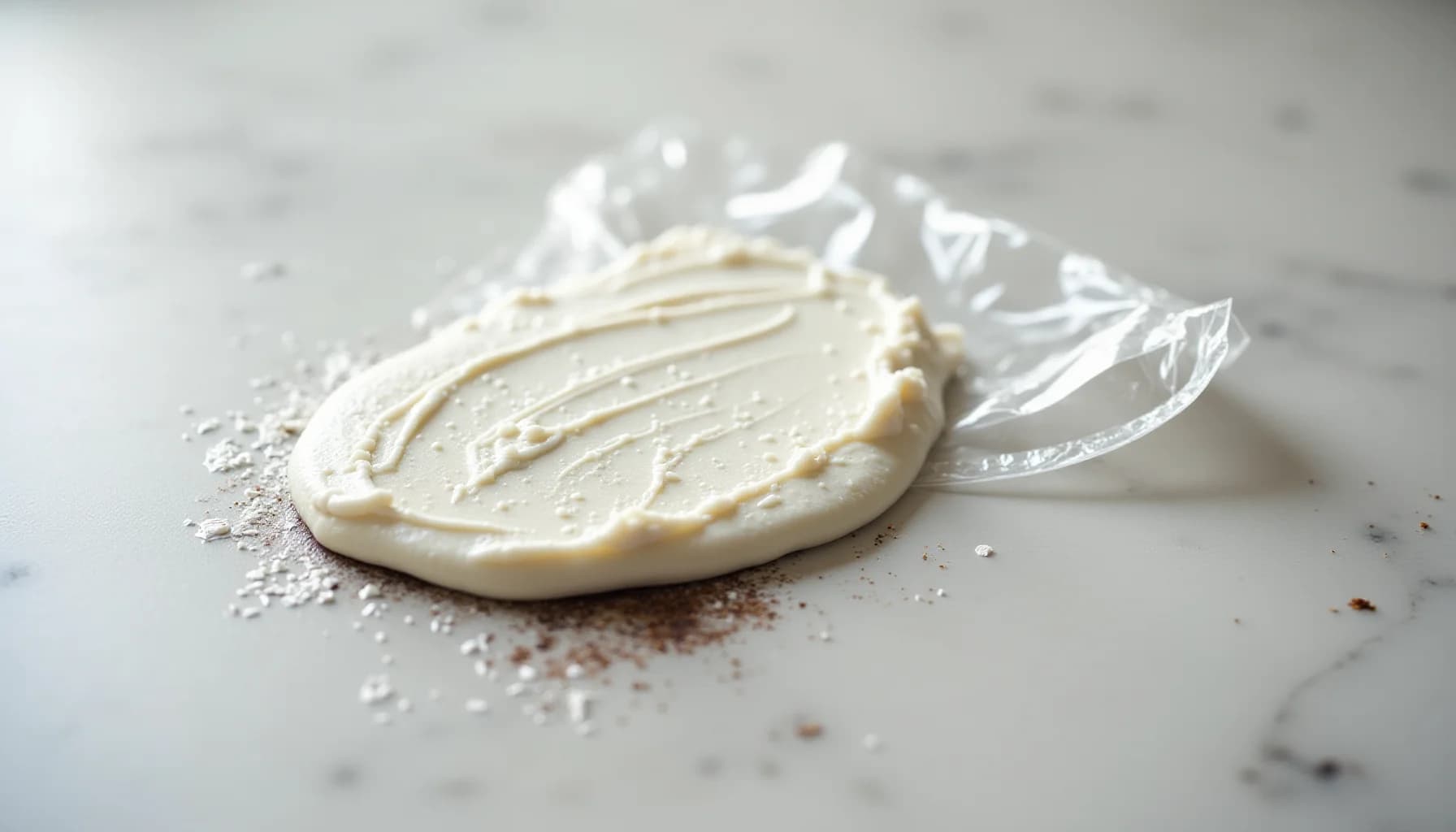
When you do seal, use an impregnating sealer rather than a topical coating. Impregnating sealers penetrate into the stone's pores and bond from within, which is more durable than a surface film that can peel or scratch off. You can find quality products at most home centers for $10 to $30. Apply the sealer, let it soak in for 10 to 15 minutes, wipe away the excess with a clean cloth, and then leave the surface alone for 24 to 72 hours while it cures fully. Avoid using the counter during that curing window.
One important caveat: not all quartzite is equally porous. Denser slabs absorb very little moisture, while more absorbent varieties can stain quickly if the seal lapses. If you are unsure how porous your particular stone is, identifying your stone countertop's characteristics before settling on a sealing schedule is worth the extra step.
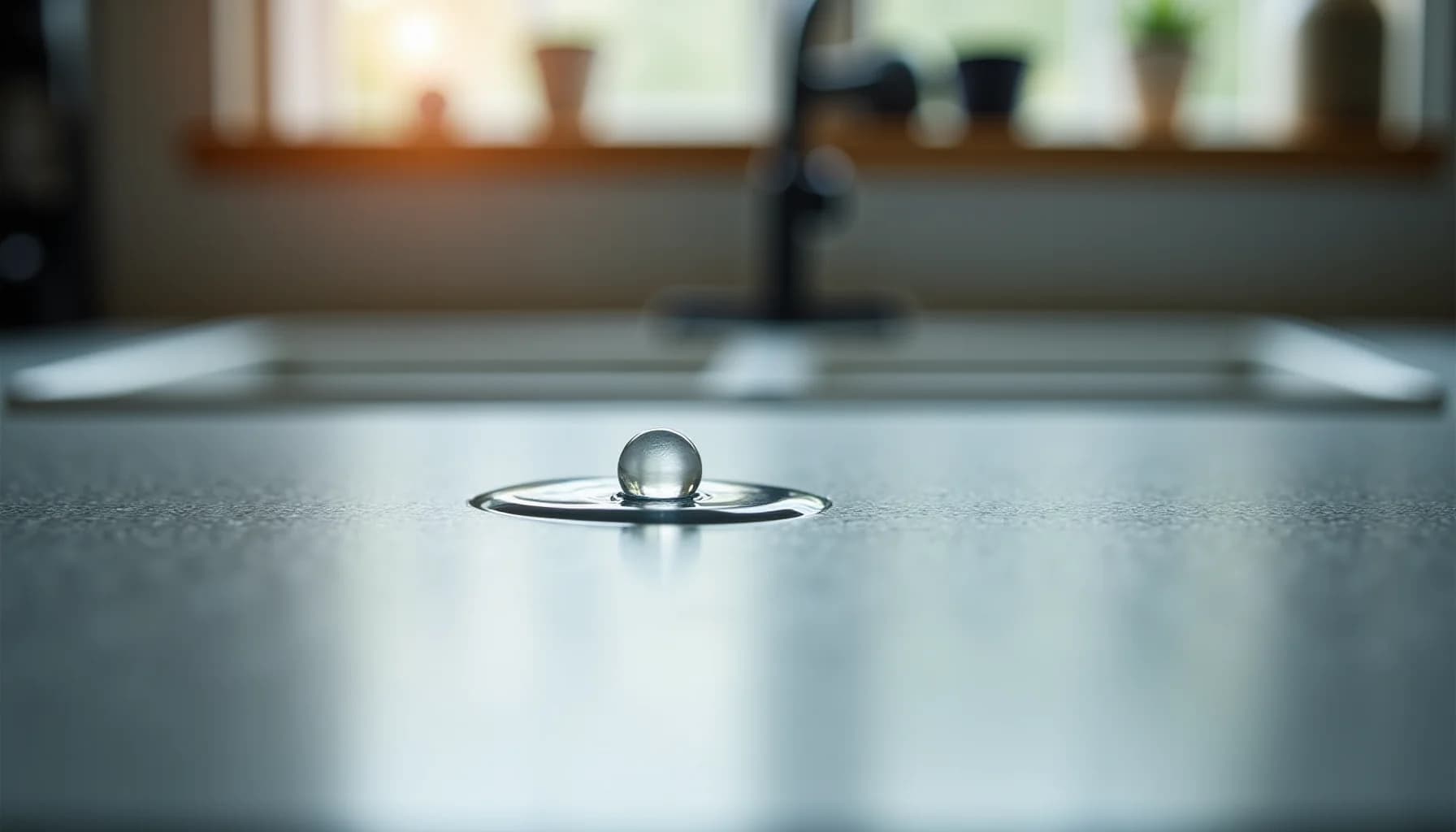
How do you handle spills and get rid of stubborn stains on quartzite?
Speed is your first line of defense. The moment coffee, oil, or anything acidic lands on quartzite, wipe it up with a soft cloth. The sealer on quartzite is not a permanent stain shield; it buys you time, measured in minutes, not hours. Once a liquid works past the sealer into the porous stone beneath, the discoloration is permanent. No surface scrubbing will reverse it.
Never reach for vinegar, lemon juice, or a bleach-based spray to tackle a fresh spill or a stain. These are among the cleaners that wreck natural stone: acids etch the surface and degrade the sealer simultaneously, so you end up with both a damaged finish and a stone that is now more vulnerable to the next spill. The damage is cumulative and irreversible.
For dried-on debris or a stain that didn't get wiped in time, make a paste of baking soda and water. Apply it directly to the stained area, leave it for several hours or overnight, then work it gently with a soft brush and rinse with warm water. A scrubby pad is safe here because quartzite registers between 7 and 8 on the Mohs hardness scale, dense enough to handle mild mechanical friction without scratching.
Stop and call a stone restoration professional if the stain covers a wide area, sits in a crack, or has clearly penetrated the stone rather than sitting on the surface. Professionals carry poultice compounds and re-honing equipment that no household product can replicate. Attempting to grind or aggressively abrade a deep stain yourself risks permanent surface damage that costs far more to fix than a professional call-out.
Frequently asked questions
Can I use vinegar or bleach to clean quartzite countertops?
How often do I need to seal quartzite countertops?
Is quartzite the same as quartz countertops, and does that change how I clean them?
What is the safest way to handle a spill on quartzite?
Is quartzite heat-resistant and scratch-resistant?
Quartzite sits between 7 and 8 on the Mohs hardness scale, which puts it slightly above engineered quartz at a 7. That edge matters in a working kitchen: everyday contact with keys, ceramic dishes, or utensil edges is unlikely to leave marks. For comparison, a standard kitchen knife blade registers around 5.5 to 6.5, so ordinary use poses little threat to the surface. This is one area where quartzite genuinely earns its reputation.
Heat resistance is another real strength. You can set a hot pan directly on quartzite without the surface scorching, cracking, or discoloring the way resin-bound engineered quartz can under sustained heat. That said, using trivets is still the smarter long-term habit. Repeated thermal shock from very hot cookware, even on a hard stone, can stress the surface over time.
The practical upside of these durability characteristics is that your weekly maintenance effort stays low. You are not nursing a fragile surface. Wipe it down with a damp microfiber cloth and mild dish soap after cooking, dry it thoroughly, and the stone handles the rest. The sealing schedule, not the daily cleaning, is where quartzite asks something of you. Build the habit of checking once a year whether water still beads on the surface, and you protect both the stone's durability and its finish.
How this article was made
Researched and written with AI assistance. What gets published is a human editorial decision. Grounded in 8 cited sources.
Edited by Claire Mercier, Editor. The guides are written with AI assistance.
Sources (8)
- How to Clean Quartzite Countertops | Daltile
- How to Clean Quartzite Countertops: An Easy Care Guide
- The Ultimate Guide To How To Clean Quartzite Countertops
- How to Clean Quartzite Countertops: Care & Sealing Guide | MSI
- Quartzite Countertop Cleaning: Top Do's and Don'ts
- How to Clean Quartzite Countertops the Right Way | Fabricator Tips
- Ultimate Guide to Caring for and Maintaining Quartzite
- How to Maintain Quartzite Countertops (2026 Guide) | Pro Tips