5 Reliable Tests to Identify Your Stone Countertop
Part of Stone & Countertops · article 2 of 13
On this page
Five tests, used in combination, will identify most stone countertops without professional help. Start visually: natural stone like granite or marble has random, non-repeating patterns across the slab, while engineered quartz looks noticeably uniform and consistent. Next, study the veining. Marble carries bold, dramatic veins with sharp contrast; granite shows a speckled, blurry grain made up of visible mineral crystals. If you need more certainty, try a scratch test on the underside of the slab using a knife tip. Marble scratches readily; granite and quartz resist it. For a chemical check, place one drop of distilled white vinegar on a hidden corner. A fizzle confirms calcareous stone, such as marble, travertine, or limestone. No reaction points to siliceous stone, such as granite, slate, or quartzite. Note that a sealed surface may suppress this reaction entirely. Finally, assess porosity: marble absorbs moisture quickly, quartzite resists it despite looking similar to marble. Color alone tells you nothing reliable, since granite, marble, and quartz all come in whites and grays. If your countertop sits alongside natural tile floors, identifying your tile type follows the same logic and some of the same tests.
Why does it matter which stone you have before you start cleaning?
Grab a bottle of white vinegar and set it on your marble countertop, and you may etch the surface before you have time to wipe it up. Do the same thing on granite or engineered quartz, and nothing happens. That single difference explains why identifying your countertop material is not a preliminary step you can skip. It is the step that determines whether your cleaning routine protects the surface or gradually destroys it.
The practical consequences are significant. Marble requires sealing every three to six months and reacts badly to any acidic cleaner, including many common household products. Granite needs sealing roughly once a year, though dense, dark slabs can go longer between applications. Engineered quartz needs no sealing at all, but it cannot tolerate a hot pan set directly on the surface, something granite handles without issue. Use the wrong product on the wrong stone, and you risk permanent etching, staining, or discoloration that no cleaner can reverse.
The same logic applies to specialty natural stones. If you have travertine tiles or slate elsewhere in your home, you already know that material identity dictates method. Countertops are no different.
Before you buy a sealer, reach for a cleaning spray, or follow any care advice, spend five minutes confirming what you actually have. The tests in this article require nothing more than a pocket knife, a few drops of distilled white vinegar, and good lighting. The identification work takes minutes. Getting it wrong can cost you the countertop.
Can you tell natural stone from engineered quartz just by looking?
Assess the Pattern Uniformity First
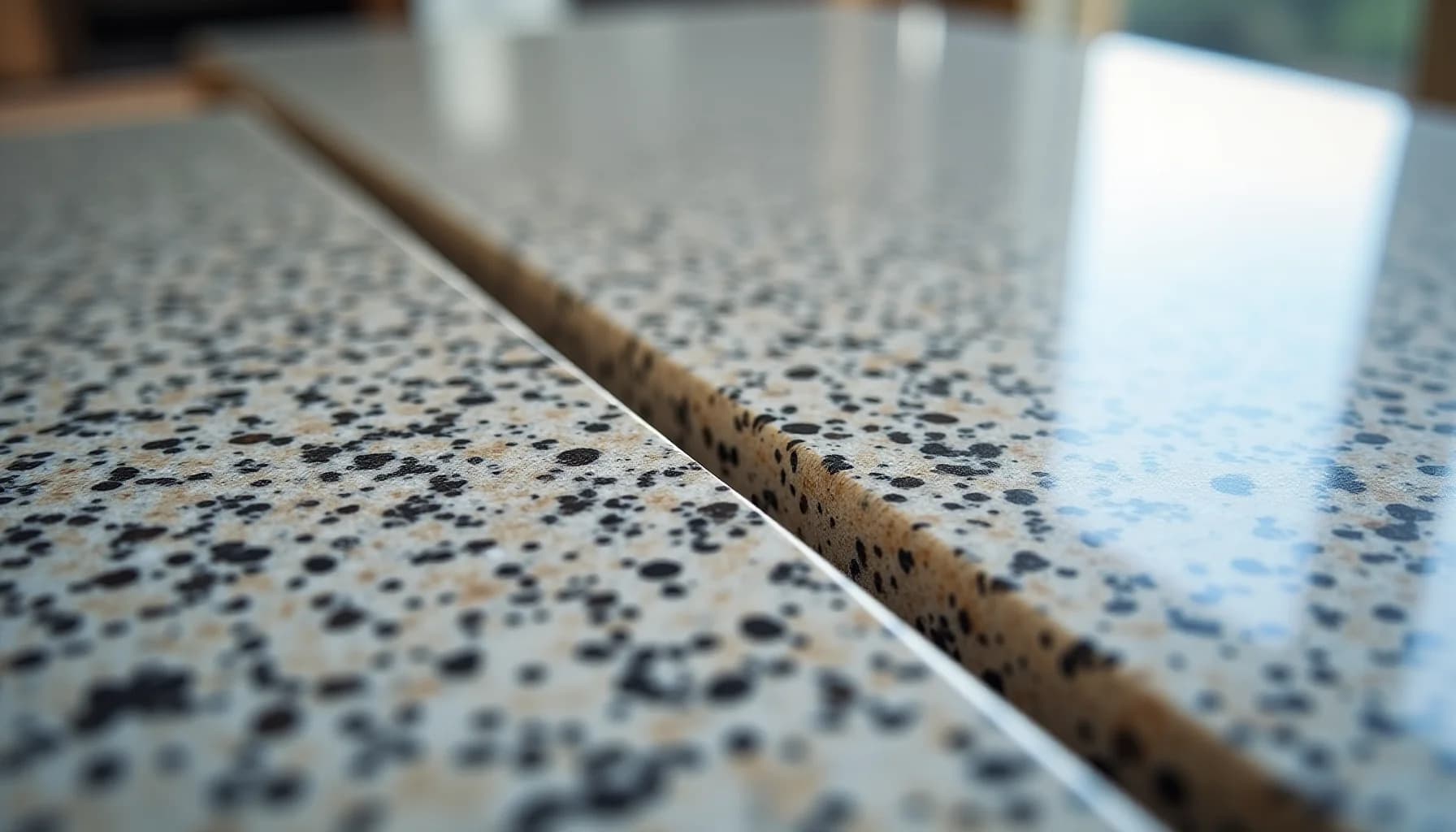
Stand back and look at the overall pattern across the surface. Natural stones such as granite, marble, and quartzite always show variation from one area to the next, while engineered quartz has a noticeably uniform, consistent appearance throughout the slab.
Study the Veining and Crystal Structure
Look closely at the surface detail. Marble shows dramatic, distinct veins with sharp color contrast, while granite appears speckled and grainy with larger visible crystals you can make out with the naked eye. Quartzite combines marble-like veining with a harder, less porous feel similar to granite.
Run the Scratch Test on a Hidden Edge
Use a sharp knife blade to scratch the underside of the slab or a hidden edge, never the visible surface. If the stone scratches easily, it is likely marble; if the blade leaves no mark, you are looking at granite, quartzite, or engineered quartz.
Apply the Vinegar Acid Test to a Discreet Spot
Place a single drop of distilled white vinegar on an inconspicuous corner. If the stone fizzes, it is calcareous, meaning marble, travertine, or limestone. No reaction points to a siliceous stone such as granite, quartzite, or slate. Note that this test may be inconclusive if the countertop has already been sealed.
Check Porosity by Observing the Surface
Look at the surface under good lighting and note whether moisture seems to absorb or bead. Marble is visibly porous and absorbs liquids readily, granite is less porous, and engineered quartz is fully non-porous. If your countertop has marble-like patterns but shows no porosity at all, quartzite is a strong possibility.
Use Your Results to Confirm the Correct Care Schedule
Once you have identified the material, match it to the right maintenance routine. Engineered quartz needs no sealing but cannot tolerate hot pans. Granite benefits from sealing every six to twelve months, varying by slab density. Marble requires sealing every three to six months and must be kept away from acidic foods and cleaners.
Can the scratch test and acid test tell you what stone you have?
These two tests work by targeting physical properties that differ sharply between stone types: hardness and calcium carbonate content.
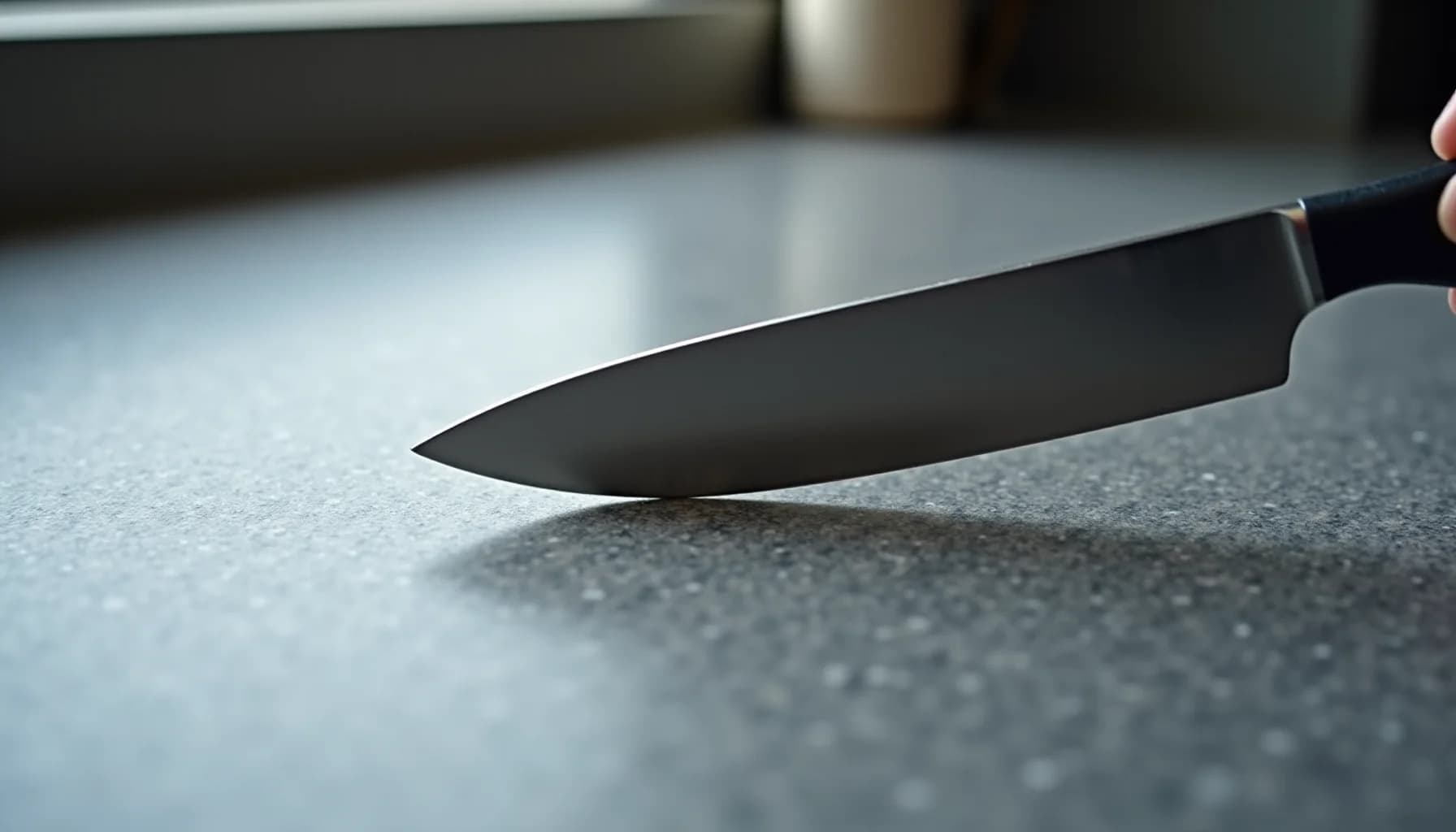
The scratch test is the more straightforward of the two. Take a standard steel pocket knife or kitchen knife and apply firm pressure to an inconspicuous spot, ideally the underside of the slab or a hidden edge near the cabinet. Marble sits low on the hardness scale and will show visible scratches with moderate pressure. Granite and quartzite, by contrast, are dense enough that most knife blades will skid across the surface without leaving a mark. If your countertop scratches readily, you almost certainly have marble. If the blade glances off without cutting into the surface, you are looking at granite, quartzite, or engineered quartz. This test will not reliably separate those three from each other, but it is highly effective for pulling marble out of the lineup.
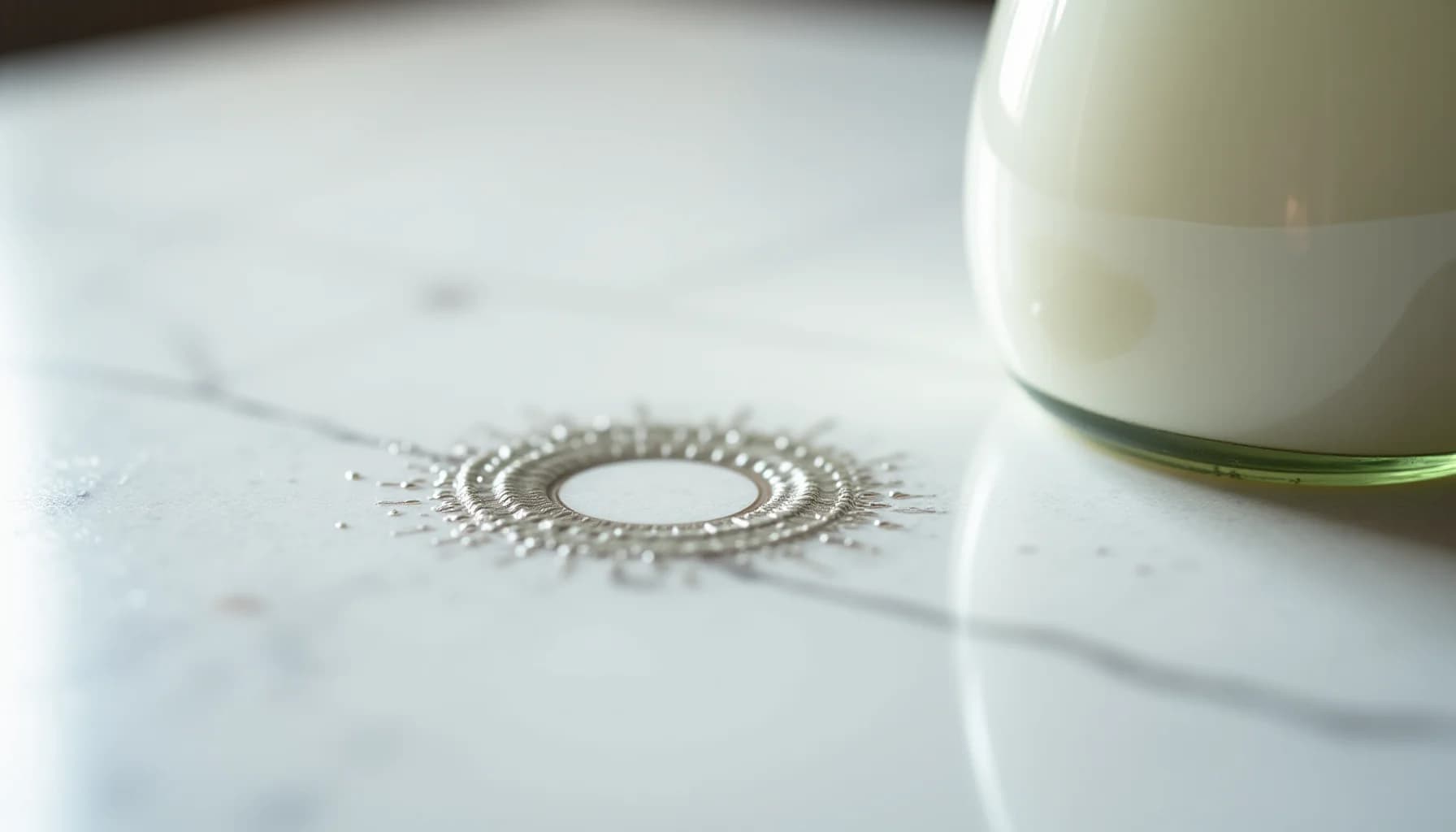
The acid test handles the next distinction. Place a single drop of distilled white vinegar on a discrete corner of the counter and watch for 30 to 60 seconds. If the surface fizzes or bubbles, the stone is calcareous, meaning it is composed primarily of calcium carbonate. Marble, travertine, and limestone all fall into this category. If nothing happens, the stone is siliceous, built mainly from quartz-like particles. Granite, quartzite, slate, and engineered quartz all belong to this group. One important limitation: if your countertop has been sealed recently, the sealer can block the vinegar from reaching the stone, producing a false negative. In that case, test a completely unsealed edge or skip this test until after the next cleaning cycle.
Used together, the two tests narrow things down considerably. Scratches easily and fizzes with vinegar: marble. Resists scratching and fizzes: possibly travertine or limestone. Resists both: granite, quartzite, or engineered quartz, which then requires closer visual inspection to separate.
What do color patterns, veining, and crystal structure tell you about your countertop?
Color is the most tempting starting point, but it will mislead you more often than not. Granite comes in tans, grays, golds, browns, whites, blues, and even peachy pinks. Marble is most commonly white, but the minerals running through it can produce gray, black, yellow, or pinkish tones. Engineered quartz manufacturers replicate all of those same palettes. Treating color as your primary clue is how homeowners end up misidentifying their stone and then applying the wrong cleaner or sealer.
Pattern and crystal structure are far more useful. Granite is what geologists call a phanerite rock, meaning its mineral crystals, feldspar, quartz, and mica among them, are large enough to see with the naked eye. Look closely and you will notice a speckled, grainy appearance where the individual crystals catch the light. The overall effect is blurry and diffuse rather than clean-edged. Marble, by contrast, forms its pattern through metamorphic pressure rather than crystallization, which produces the sweeping, high-contrast veins it is known for. Those veins have sharper, more dramatic edges than anything you will see in granite. If the countertop reads as intricate linework running across a field of color, marble is the more likely candidate.
Quartzite sits squarely between the two and is the hardest to call on appearance alone. Its patterns resemble marble's flowing lines, but its surface is dense and non-porous like granite. If the slab looks marble-like but shows no porosity and resists scratching, quartzite is a real possibility. Retailers sometimes mislabel it, so pulling the original fabricator's documentation is worth the effort.
Engineered quartz is identified not by what is present but by what is absent: the subtle inconsistency of nature. Every natural slab has small irregularities in grain, color depth, and vein direction. Engineered quartz looks almost too even. The pattern repeats or resolves into something that feels designed rather than grown. That quality of uniformity is the clearest visual signal that the material is manufactured rather than quarried.
| Stone Type | Veining / Pattern | Crystal / Surface Structure | Color Range |
|---|---|---|---|
| Granite | Speckled, blurry, non-repeating | Visible mineral crystals (phanerite); grainy | Tans, grays, whites, reds, browns, golds, blues |
| Marble | Dramatic, distinct veins; complex patterns | Smooth; no visible crystals | Mostly white; also gray, pink, yellow, black |
| Quartzite | Marble-like veining; detailed patterns | Dense, smooth; limited visible crystals | Limited range; whites and grays typical |
| Engineered Quartz | Uniform, consistent; minimal variation | No natural crystals; resin-based surface | Varies; engineered to mimic any stone |
How often does each stone type need sealing?
The answer depends entirely on which stone is sitting in your kitchen, and getting it wrong in either direction causes real problems. Under-sealing marble leaves it exposed to acid etching from lemon juice, vinegar, and tomato sauce, which eats into the calcium carbonate surface and leaves dull, frosted marks that no amount of scrubbing will reverse. Over-sealing dense granite wastes money and can leave a hazy residue that clouds the surface.
Marble needs sealing every 3 to 6 months. Its high porosity means liquids penetrate quickly. For daily cleaning, use only warm water and a pH-neutral soap. Never use vinegar, citrus-based sprays, or any all-purpose cleaner that contains acid or bleach. Those products etch marble on contact, and etching is a structural change to the stone surface, not a stain you can wipe away.
Granite needs sealing roughly every 6 to 12 months, though dense, dark slabs can hold a seal for several years. Lighter, more porous granites sit closer to the annual end of that range. Daily cleaning with mild dish soap and water is sufficient. Avoid bleach, which degrades the sealer prematurely.
Engineered quartz requires no sealing at all. It is non-porous. What it cannot tolerate is direct heat: placing a hot pan or pot directly on quartz causes irreversible discoloration or cracking. Always use a trivet.
Quartzite follows a schedule similar to granite, approximately once a year, though your fabricator's documentation is the most reliable guide, since quartzite is frequently mislabeled at retail.
If you notice persistent staining after proper sealing, surface pitting, or visible cracks developing from a heat event on quartz, stop treating it yourself and call a stone restoration professional. DIY grinding or polishing compounds applied incorrectly remove material permanently and can void any warranty on engineered surfaces.
Frequently asked questions
What is the quickest way to tell if my countertop is natural stone or engineered quartz?
Can I use the vinegar test on a sealed countertop?
How often does granite actually need to be sealed?
Is quartz really maintenance-free since it never needs sealing?
Do Stone Countertops Really Need That Much Maintenance?
The reputation stone countertops carry for being demanding is largely built on outdated information, and it shapes how homeowners treat their surfaces, often badly.
The most persistent myth is that all stone needs frequent, almost monthly sealing. In practice, a dense, dark granite slab can hold a seal for several years without attention. Lighter, more porous granites benefit from resealing annually, while marble genuinely does need attention every three to six months. Quartz, being engineered and non-porous, needs no sealing at all, ever. Treating all three the same wastes money and effort at best, and at worst leaves softer stones under-protected while you polish ones that didn't need it.
A second common fear is bacteria. Research cited by the Centers for Disease Control and Prevention found that properly sealed granite does not harbor bacteria at higher rates than synthetic countertop materials. Wiping down with mild soap and water daily is sufficient for routine hygiene across virtually all stone types.
The radiation concern follows a similar pattern: granite does contain trace amounts of naturally occurring radioactive elements, but the levels are negligible, comparable to everyday exposure from sunlight.
The genuinely useful habit to build is simple: mild soap, warm water, and a soft cloth every day. Acidic cleaners like vinegar belong nowhere near marble or limestone, and hot pans should always go on a trivet, especially over quartz, which lacks granite's heat resistance. Correct those three habits and most stone maintenance problems disappear before they start.
How this article was made
Researched and written with AI assistance. What gets published is a human editorial decision. Grounded in 8 cited sources.
Edited by Claire Mercier, Editor. The guides are written with AI assistance.
Sources (8)
- Types of Stone Countertops: Complete Guide to the Right Material
- Stone countertop Identifier
- Guide to Different Countertop Types | Countertop Pro's, Olympia Stone
- Types of Natural Stone Countertops: Pros, Cons & Costs
- Stone Countertop Identification and Care | World Stone Group
- How To Tell What Kind of Stone Counter Top You Have | MGC
- How to Tell What Kind of Countertop You Have - E&B Granite
- How To Pick The Best Countertops Stone Types | K.G. Stevens