The Right Way to Clean Quartz Countertops, Without the Damage
Part of Stone & Countertops · article 5 of 13
On this page
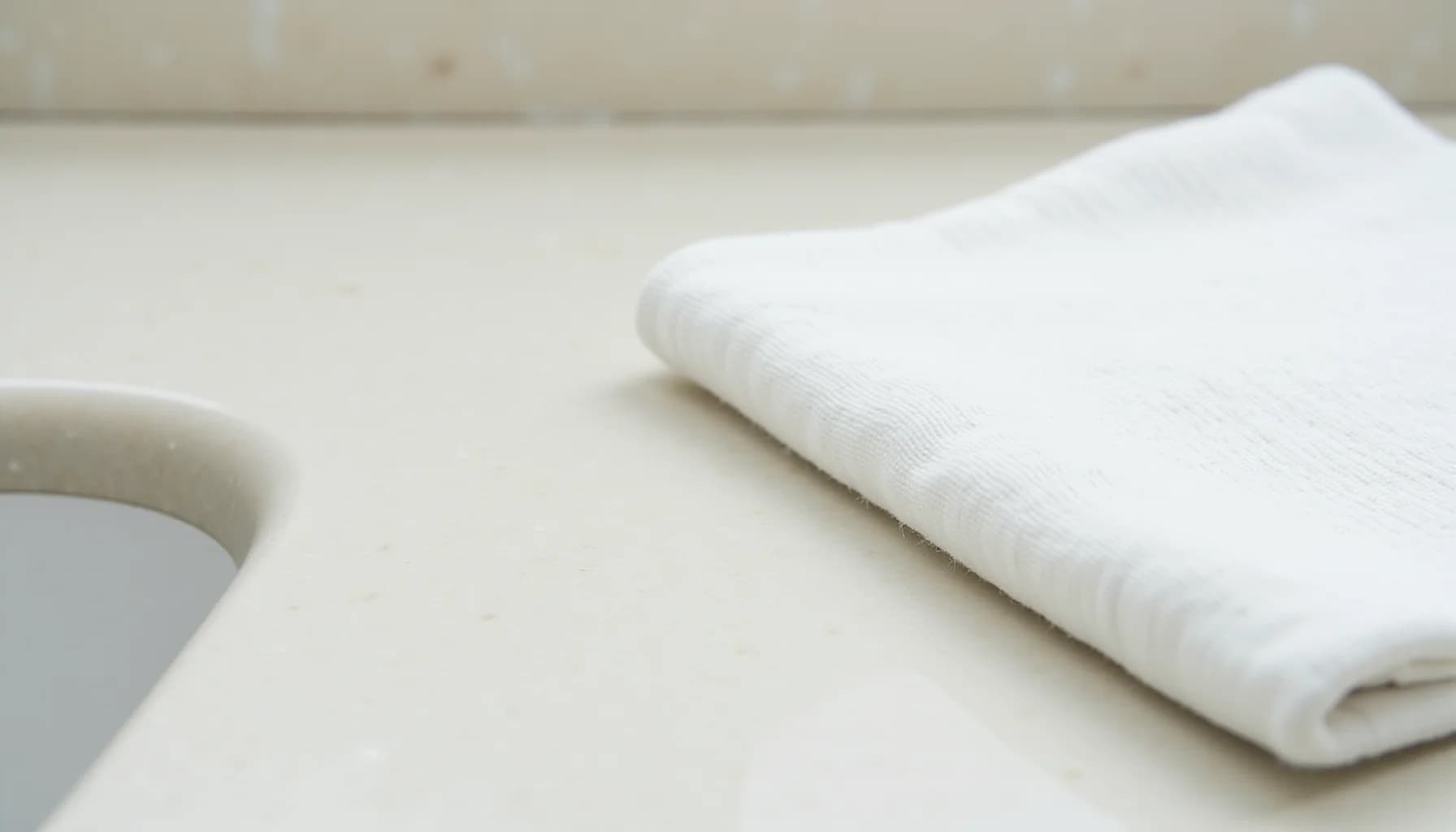
Warm water and a soft cloth handle routine quartz cleaning with no specialty products needed. Wipe the surface down, rinse off any soap residue, and dry it thoroughly — leftover detergent or hard minerals leave a filmy haze that is especially visible on white quartz. For grease or stubborn food residue, a small amount of dish soap, Simple Green, or a baking soda paste will lift the stain without harming the surface. Skip vinegar, bleach-based cleaners, and abrasive scrubbing pads entirely; vinegar's acidity attacks the resin binder, and bleach discolors it. Use a plastic scraper, never steel wool, on anything hardened. Always set a trivet under hot pans or appliances: the resin that makes quartz non-porous also makes it vulnerable to heat above roughly 150°F, and that damage is permanent.
What is quartz actually made of, and why does it matter for cleaning?
Quartz countertops are engineered composites, not slabs cut from a quarry. A typical slab is 90 to 95 percent ground quartz aggregate, bound together with 5 to 10 percent polymer resin, along with pigments and other additives. That ratio is the reason quartz behaves so differently from granite or marble on your counter, and it directly controls which cleaning products are safe and which cause permanent damage.
The resin is the key variable. It fills every microscopic gap between the quartz particles, producing a genuinely non-porous surface. Unlike natural stone countertops such as granite and marble, quartz has no open pores for liquids to penetrate. That is why bacteria, mold, and mildew cannot establish themselves in the surface, and why the countertop is considered food-safe without any additional treatment.
That same resin, however, has chemical and thermal limits that the quartz mineral itself would never have. Pure quartz is extremely hard and chemically stable. The polymer resin is neither. Acidic cleaners like vinegar attack the resin binder. Oxidizing agents like bleach discolor it. Sustained heat above roughly 150°F softens or scorches it. UV light degrades it over time. In every case, the damage is not to the stone particles but to the binder holding them together.
Understanding quartz as a resin-and-stone composite, rather than as a natural stone or a synthetic plastic, gives you an accurate mental model for every cleaning decision that follows.
What's the best way to clean quartz countertops every day?
Wipe up spills right away
Quartz is stain-resistant but not stain-proof. Coffee, wine, beet juice, turmeric, and fruit juice can all discolor the surface if left to sit, so blot and wipe spills as soon as they happen.
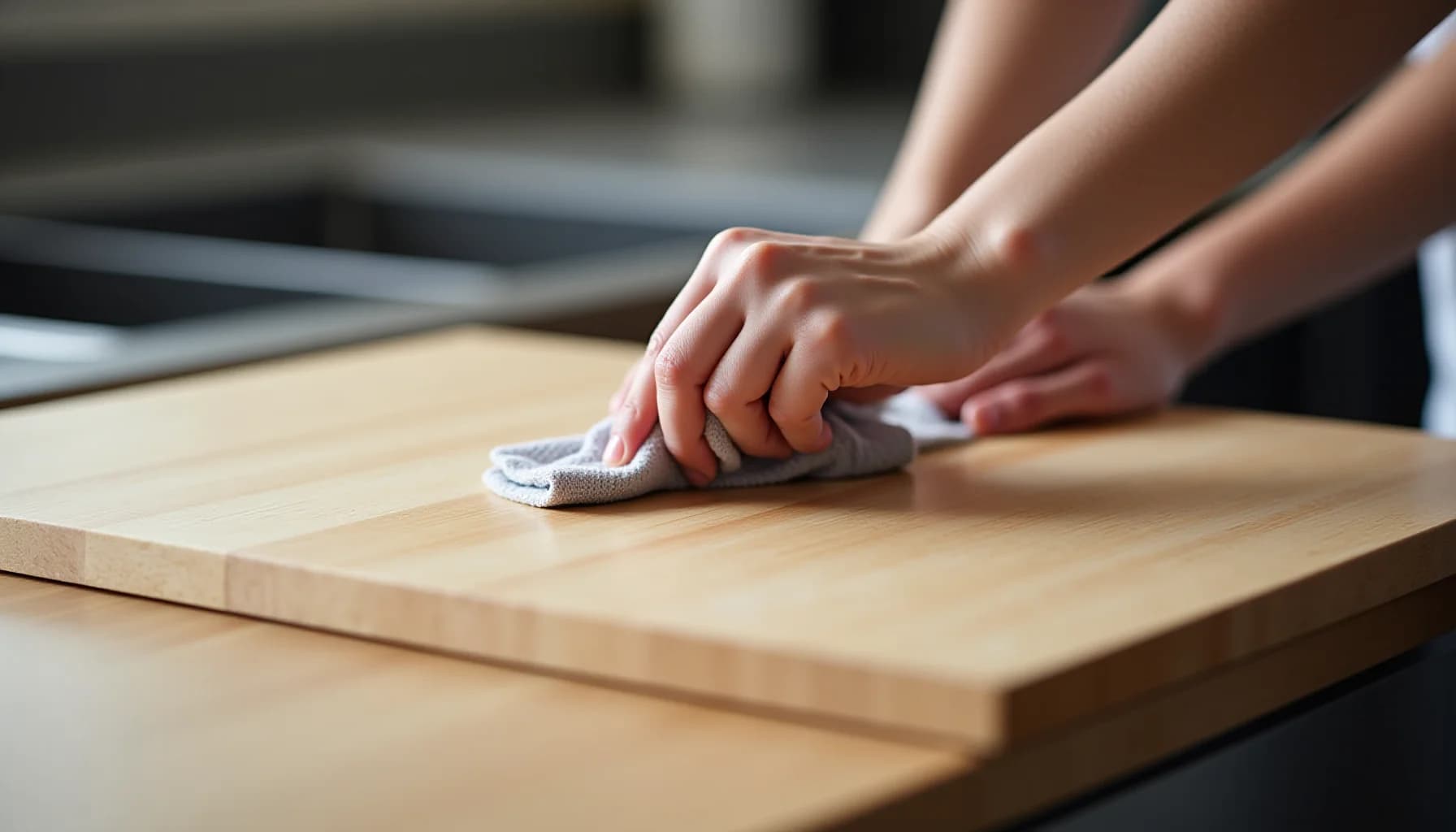
Clean daily with warm water and a soft cloth
For routine maintenance, dampen a soft cloth or sponge with warm water and wipe the entire surface. Rinse away any soap residue and dry with a clean cloth to prevent a filmy haze, which is especially visible on white quartz.
Use a mild liquid cleaner for grease or stubborn food residue
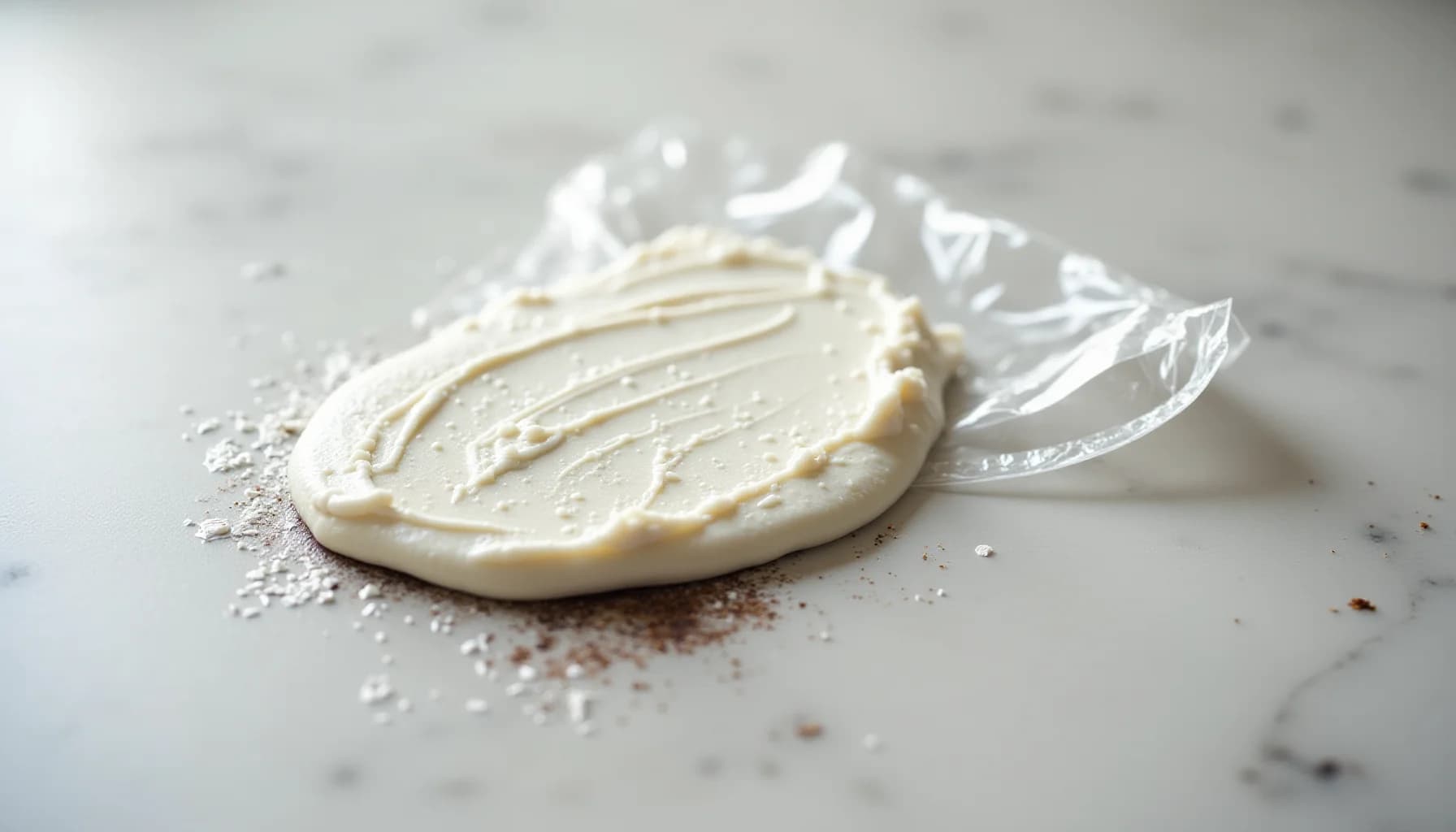
If warm water alone does not lift the mess, apply a small amount of dish soap, Simple Green, or a cleaner like Mr. Clean to a soft sponge. For dried-on food, soak the spot with soapy water first, then loosen it gently with a plastic or wooden utensil, never a metal scraper.
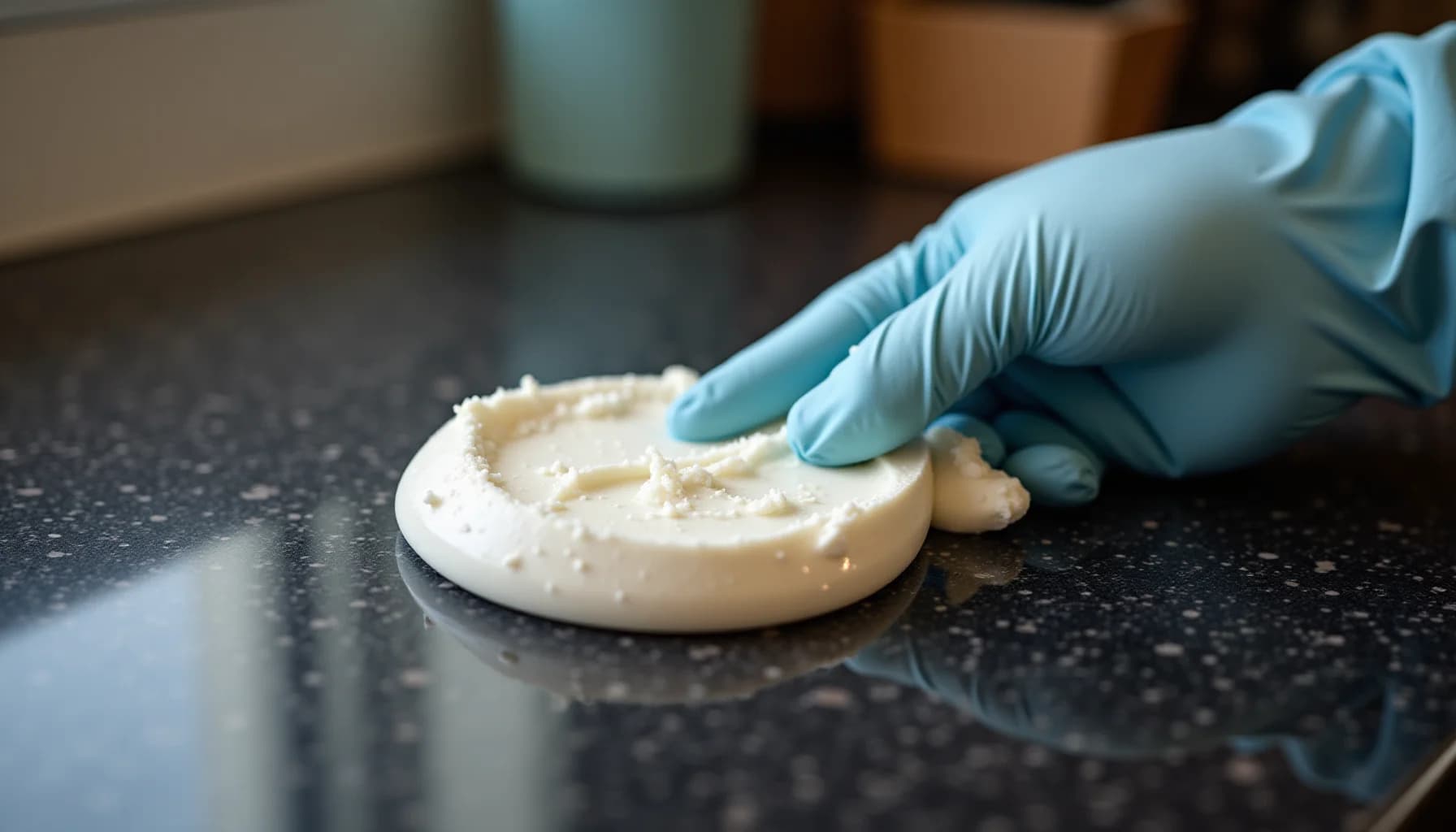
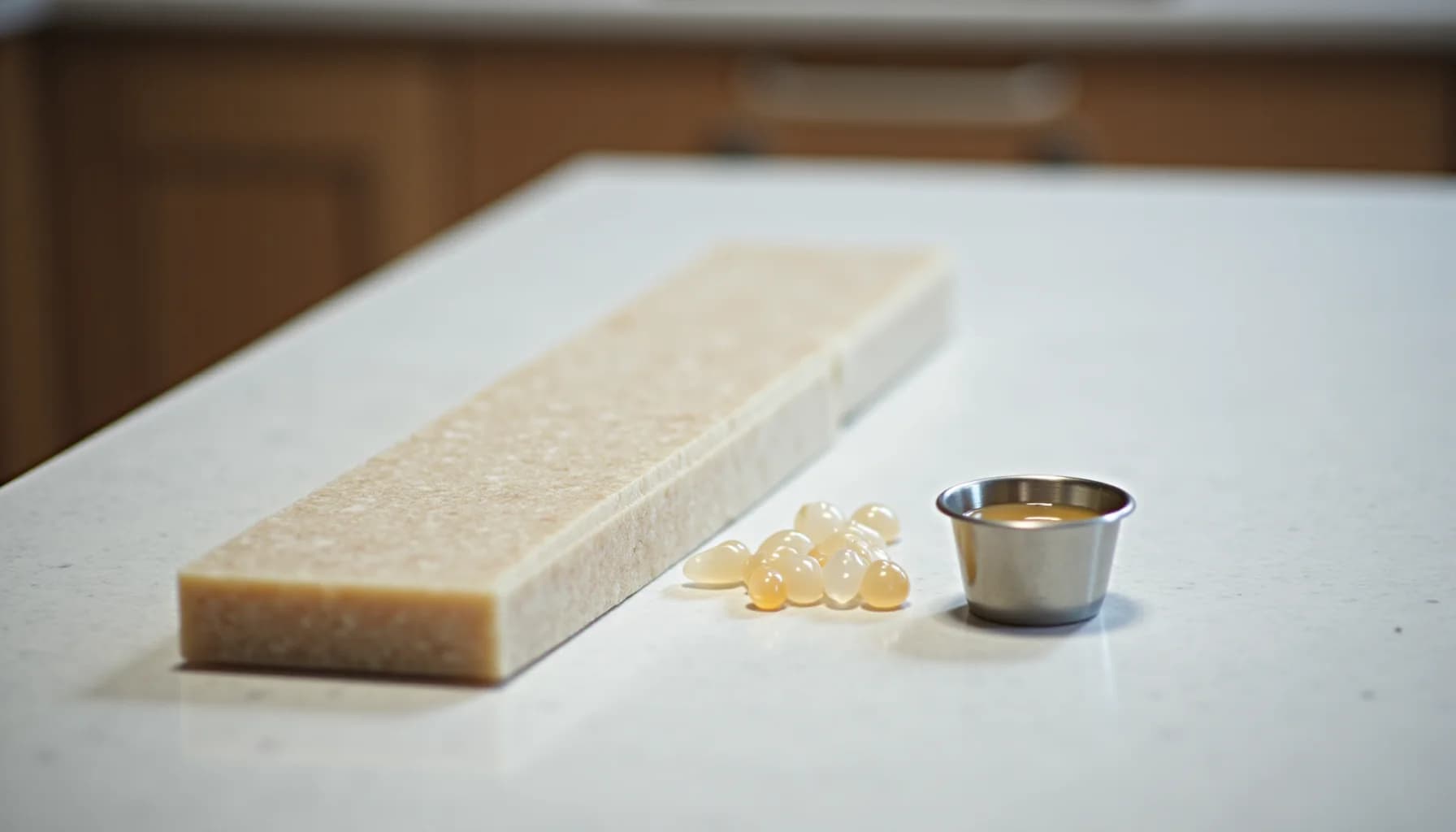
Treat tough stains with a baking soda paste
Mix baking soda with a little water to form a paste and apply it directly to the stain. Its mild abrasive action lifts grease and oil without scratching the resin binder; rinse thoroughly and dry once the stain is gone.
Always set hot items on a trivet or hot pad
Quartz is heat-resistant, not heat-proof. Temperatures above roughly 150 degrees Fahrenheit can scorch or crack the resin permanently, and even a mug of boiling water exceeds that threshold at its base, so use trivets or hot pads every time.
Skip the harsh products and abrasive tools entirely
Never use bleach, vinegar, drain cleaners, oven cleaners, steel wool, or stiff scrub brushes on quartz. These substances damage or discolor the resin binder and scratch the finish in ways that cannot be repaired.
What common household products will damage your quartz countertops?
The most damaging products in most households are the ones people reach for first when a surface looks dirty: bleach, vinegar, and heavy-duty abrasive cleaners. All three are wrong choices for quartz.
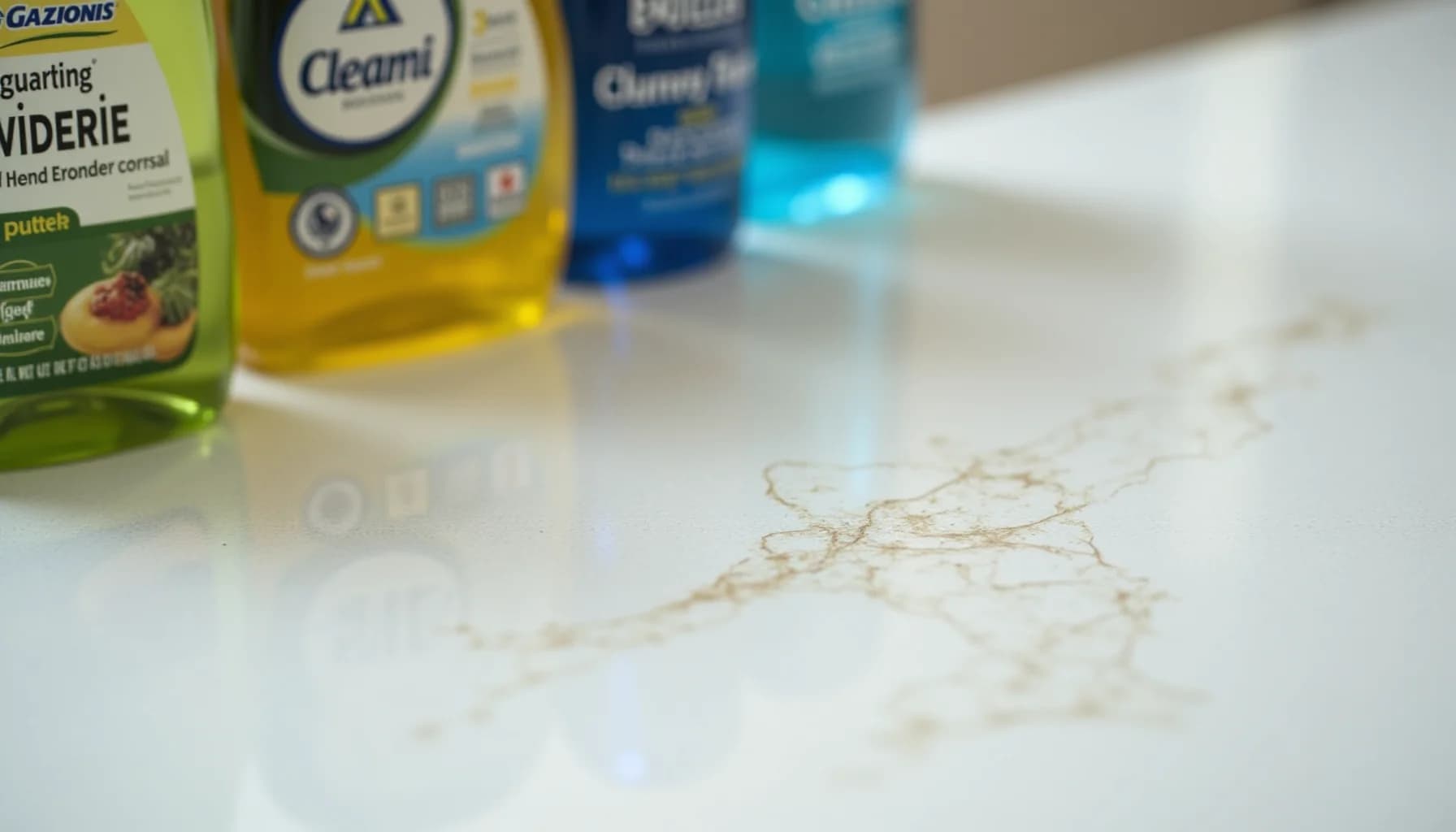
Bleach is the most commonly misapplied. Because quartz is non-porous and food-safe, homeowners assume a disinfecting wipe-down with a bleach solution is harmless. It is not. Bleach is a strong oxidizer that attacks the polymer resin binding the quartz aggregate together, causing discoloration and leaving dull, permanent spots. Any cleanser that lists bleach as an ingredient carries the same risk, including some bathroom sprays and multi-surface cleaners. Drain cleaners and oven cleaners fall into the same category: extreme pH on either end of the scale degrades the resin.
Vinegar gets recommended constantly for kitchen cleaning, and it works well on many surfaces. Quartz is not one of them. Its acidic nature can damage the resin binder and cause discoloration over time, even in diluted form. If you rely on vinegar elsewhere in your kitchen routine, keep it away from the countertop surface entirely. (The same acid-damage mechanism is why vinegar is equally destructive on natural stone, as covered in detail at why vinegar permanently damages natural stone.)
Abrasive tools are the third category to avoid. Steel wool and stiff-bristled scrub brushes feel like the logical answer to a stubborn stain, but they create fine scratches across the surface that are difficult or impossible to repair, and they are particularly damaging on darker, tight-grained colors. Gritty powder cleansers carry the same risk through their particulate action. If hardened food is stuck to the surface, soak it first with warm soapy water, then use a dull plastic or wooden utensil to lift it.
Nail polish remover, permanent markers, and ink should also be kept away from quartz. The solvents in nail polish remover can compromise the finish, and any of these substances left on the surface long enough can penetrate or stain in ways that cannot be reversed.
Will heat damage your quartz countertops?
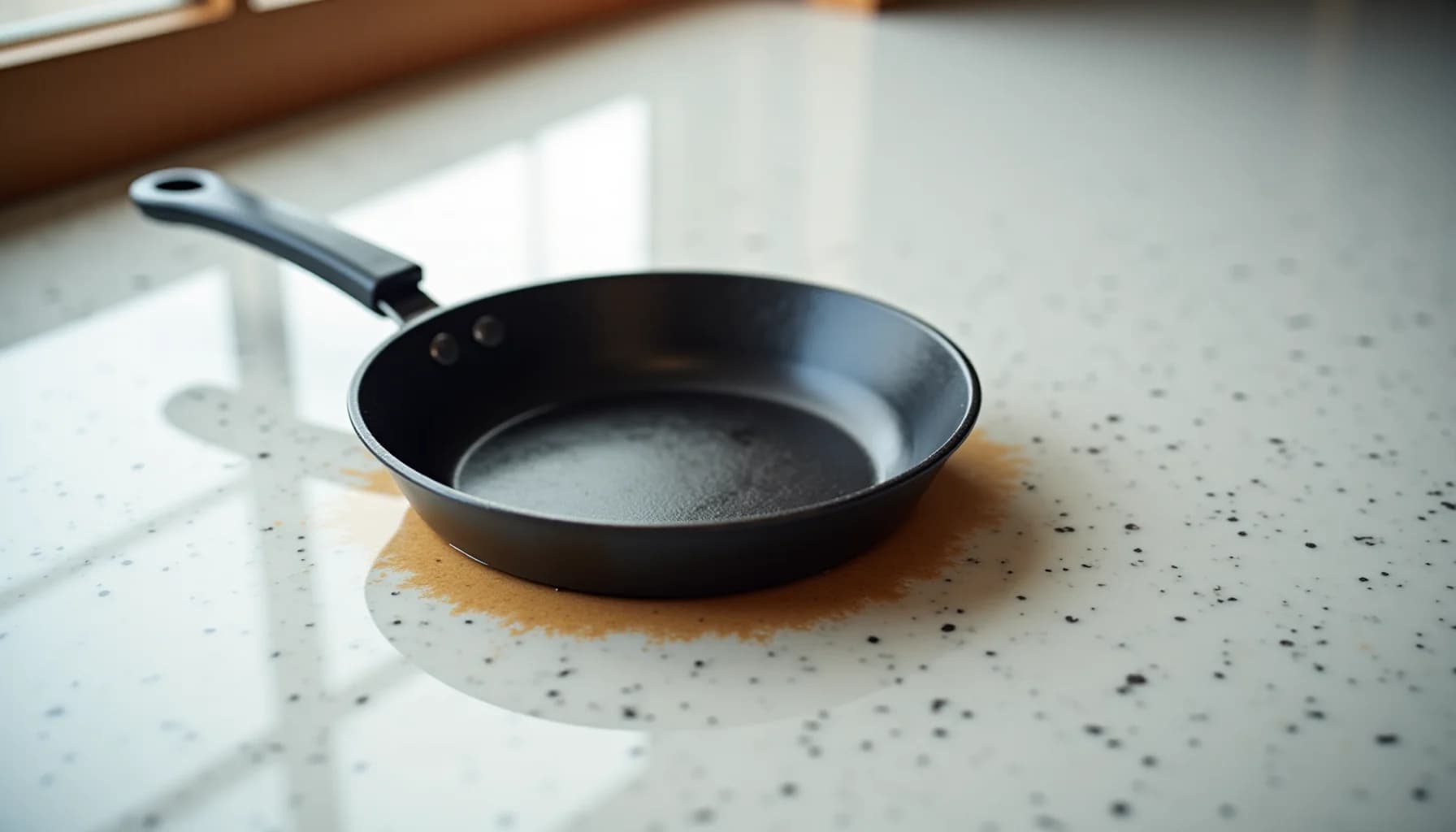
Quartz is heat-resistant, not heat-proof, and that distinction is where a lot of countertop damage happens. The resin that binds the quartz aggregate together is the weak point. Sustained or concentrated heat above roughly 150°F can soften that resin, leaving behind yellow or brown discoloration, dull spots, or even minor cracking. Some manufacturers cite thresholds closer to 300°F, but that higher figure assumes ideal, even heat distribution. Real-world kitchen use is rarely that clean.
Consider a standard coffee mug filled with boiling water. The water itself is 212°F, and the base of the mug transfers concentrated heat to a small surface area the moment you set it down. That repeated, localized contact is exactly the scenario that causes resin damage, and the result is permanent. There is no refinishing option, no sanding it out. The mark stays.
This is one of the sharpest contrasts between quartz and granite. Granite handles direct heat from hot pans without issue because it is natural stone with no resin component. Quartz simply is not built the same way, regardless of how it is marketed.
The fix is straightforward: use a trivet or a silicone hot pad under anything that holds or generates heat. That means cast iron skillets pulled from the oven, electric skillets, slow cookers, instant pots, and yes, even a fresh pot of coffee. Heated styling tools left on bathroom quartz vanities carry the same risk.
Most manufacturer warranties explicitly exclude heat damage caused by direct contact, so skipping the trivet does not just risk the surface; it voids your coverage. Keeping a few trivets within reach of your cooktop is a minor habit that protects a significant investment.
Will quartz countertops stain or scratch?
Quartz is stain-resistant, not stain-proof, and that distinction matters most in the first few minutes after a spill. The surface is non-porous, which means liquids cannot soak into the material itself, but that non-porous quality can create false confidence. Coffee, wine, tea, fruit juice, turmeric, beet juice, and food coloring can all leave discoloration if they sit long enough to form a sticky film on the resin. The fix is simple: wipe spills promptly. Once a stain has set into the resin binder, no common household cleaner will fully reverse it, and that is a permanent outcome.
Scratch resistance follows a similar pattern. Quartz handles normal kitchen use without marking, but the material is not impervious to deliberate force. Dark, tight-grained colors show scratches most visibly, and the damage is extremely difficult to repair. The specific mistake to avoid is using steel wool, stiff-bristled scrub brushes, or abrasive scouring pads to remove hardened food. Instead, soak the stuck residue in soapy water first, then use a plastic or wooden scraper to lift it gently. That approach removes debris without scoring the surface.
If you are facing a stain that plain water, mild dish soap, and a baking soda paste have all failed to shift, stop there. Escalating to stronger chemicals risks permanent resin damage. At that point, contact a certified countertop fabricator, not a general handyman, to assess whether a professional polishing compound can address the spot or whether the affected section requires replacement.
Frequently asked questions
Can I use vinegar to clean my quartz countertops?
Do quartz countertops need to be sealed like granite?
Can I set a hot pan directly on my quartz countertop?
Is quartz safe to use on an outdoor kitchen countertop?
Does quartz ever need to be sealed or polished?
The short answer is no, and that distinction saves you real time and money over the life of the countertop. Concrete, granite, and marble are all porous materials. Left unsealed, they absorb liquids, harbor bacteria, and etch from acidic spills. Keeping them in good shape means reapplying sealant periodically, sometimes once a year, sometimes more depending on use and stone type. If you've ever dealt with maintaining natural stone surfaces, you know the routine adds up in both product cost and effort.
Engineered quartz skips that cycle entirely. Because it's manufactured from roughly 90 to 95 percent ground quartz bound with polymer resin, the surface has no pores for liquid to penetrate. There is nothing for a sealant to fill, so applying one would accomplish nothing. Polishing compounds designed for granite or marble are equally unnecessary here.
The practical habit to build is simple: routine wiping with mild soap and water is your complete maintenance program. No annual sealing appointments, no specialty stone treatments sitting under the sink. For a busy kitchen, this is a genuine advantage. The countertop you install today requires the same straightforward care in ten years as it does in the first week, provided you protect it from heat and harsh chemicals covered elsewhere in this guide.
How this article was made
Researched and written with AI assistance. What gets published is a human editorial decision. Grounded in 8 cited sources.
Edited by Claire Mercier, Editor. The guides are written with AI assistance.
Sources (8)
- ONE Quartz Care & Maintenance Step-by-Step Guide | Daltile
- Quartz Countertop Care: Cleaning & Maintenance Tips
- Maintaining your quartz countertops | Quartz cleaning tips
- How to Clean Quartz Countertops (2026 Guide + Mistakes to Avoid)
- How to Clean and Maintain Quartz Countertops | Blasius Tips
- The Only How To Clean Quartz Countertops Guide You Will Ever Need
- 3 Ways to Get Rid of Stains on Your Quartz Countertop Without Damaging the Surface
- How to Clean Quartz Countertops (Without Damage)