Why Vinegar Permanently Damages Natural Stone: Stop Now
Part of Stone & Countertops · article 4 of 13
On this page
Stop using vinegar on natural stone. The answer is pH-neutral stone cleaner for virtually every homeowner, with the only exception being sealed ceramic or porcelain tile, where mild acidity causes no harm.
Vinegar is acetic acid, typically at 5% concentration. Marble, limestone, travertine, and slate are calcium-carbonate-based materials. Acid reacts with calcium carbonate on contact, dissolving the crystalline surface structure through a process called etching. The damage is not staining or discoloration you can scrub away; it is physical erosion of the stone itself. A single application can leave permanent dull patches. Repeated use steadily deepens that erosion. If your floors or counters include travertine tiles or slate tiles, the risk is identical: the mineral composition makes both equally vulnerable. Use a cleaner formulated for stone, follow the manufacturer's dilution instructions, and treat vinegar as permanently off-limits for these surfaces.
What happens when vinegar's acid meets stone minerals?
Vinegar is dilute acetic acid, typically 5% concentration in household white vinegar. Natural stones such as marble, limestone, travertine, and onyx are composed primarily of calcite (calcium carbonate, CaCO₃). Granite contains less calcite but still carries feldspar and other minerals vulnerable to acid over repeated exposure. The chemistry here is straightforward and unforgiving.
When acetic acid contacts calcite, it triggers an acid-base reaction: the acid donates hydrogen ions that break apart the carbonate structure. The products are calcium acetate (which dissolves into the liquid and rinses away), water, and carbon dioxide gas. That faint fizzing you might notice is not the cleaner "working." It is the stone itself dissolving. Calcium ions that were locked into the crystal lattice of your countertop or floor are being pulled out and carried down the drain permanently.
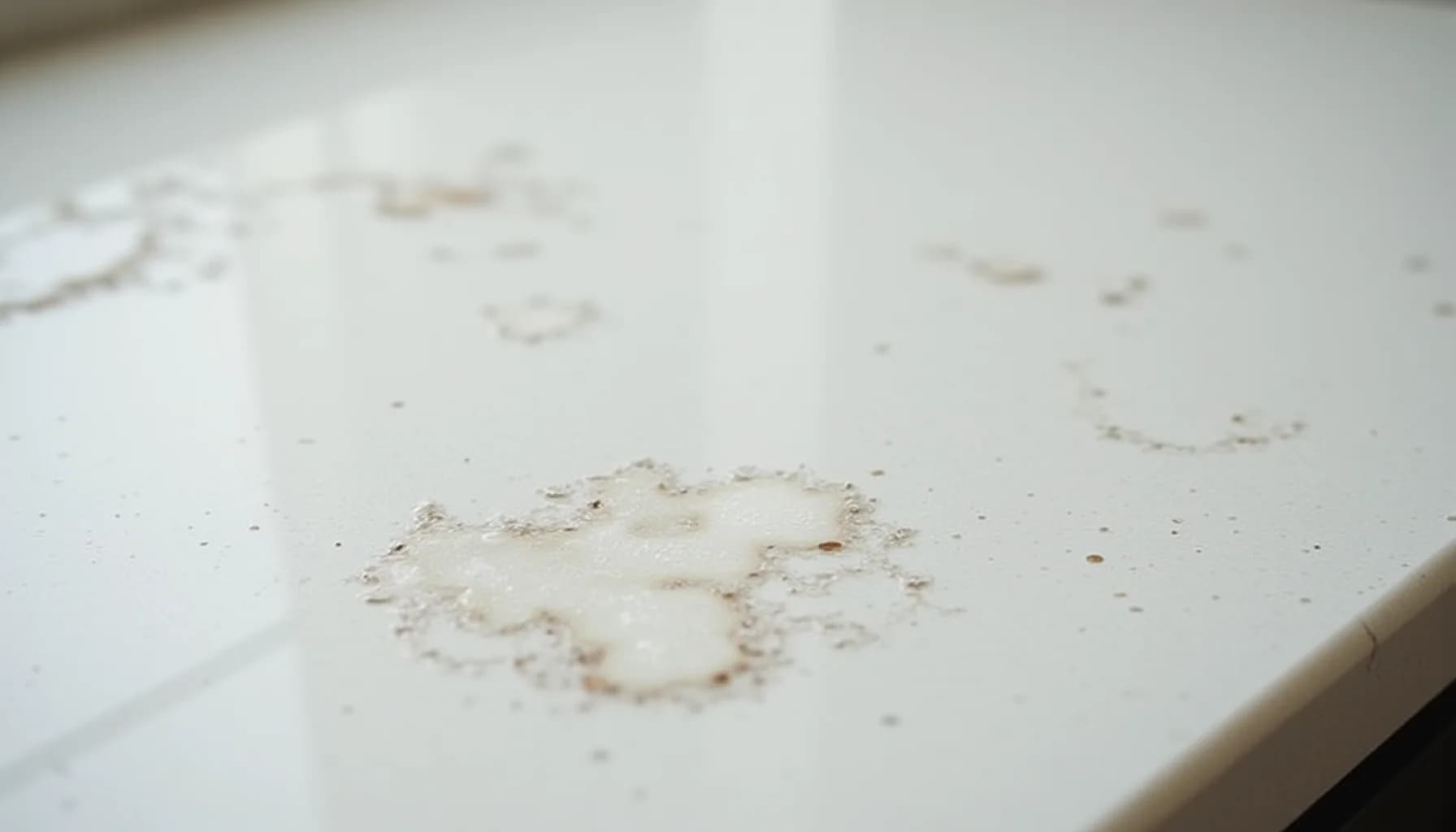
The visible result is etching: a dull, slightly pitted patch where the surface has lost its polished layer. On a honed marble counter, an etch mark looks like a water stain that won't buff out. On a polished travertine floor, it appears as a flat, matte patch against the surrounding sheen. Because the mineral loss is structural, no amount of re-cleaning reverses it. A stone restoration professional would need to mechanically re-grind and re-polish the surface to remove the damage, which on a standard kitchen counter can cost $200 to $500 or more depending on severity and square footage.
If you want to understand how travertine specifically reacts to common household cleaners, that detail matters before you reach for anything acidic near it.
How can you tell if acid has already damaged your natural stone?
Acid damage to natural stone rarely announces itself all at once. It tends to show up gradually, and homeowners often mistake the early signs for ordinary wear or a dull polish.
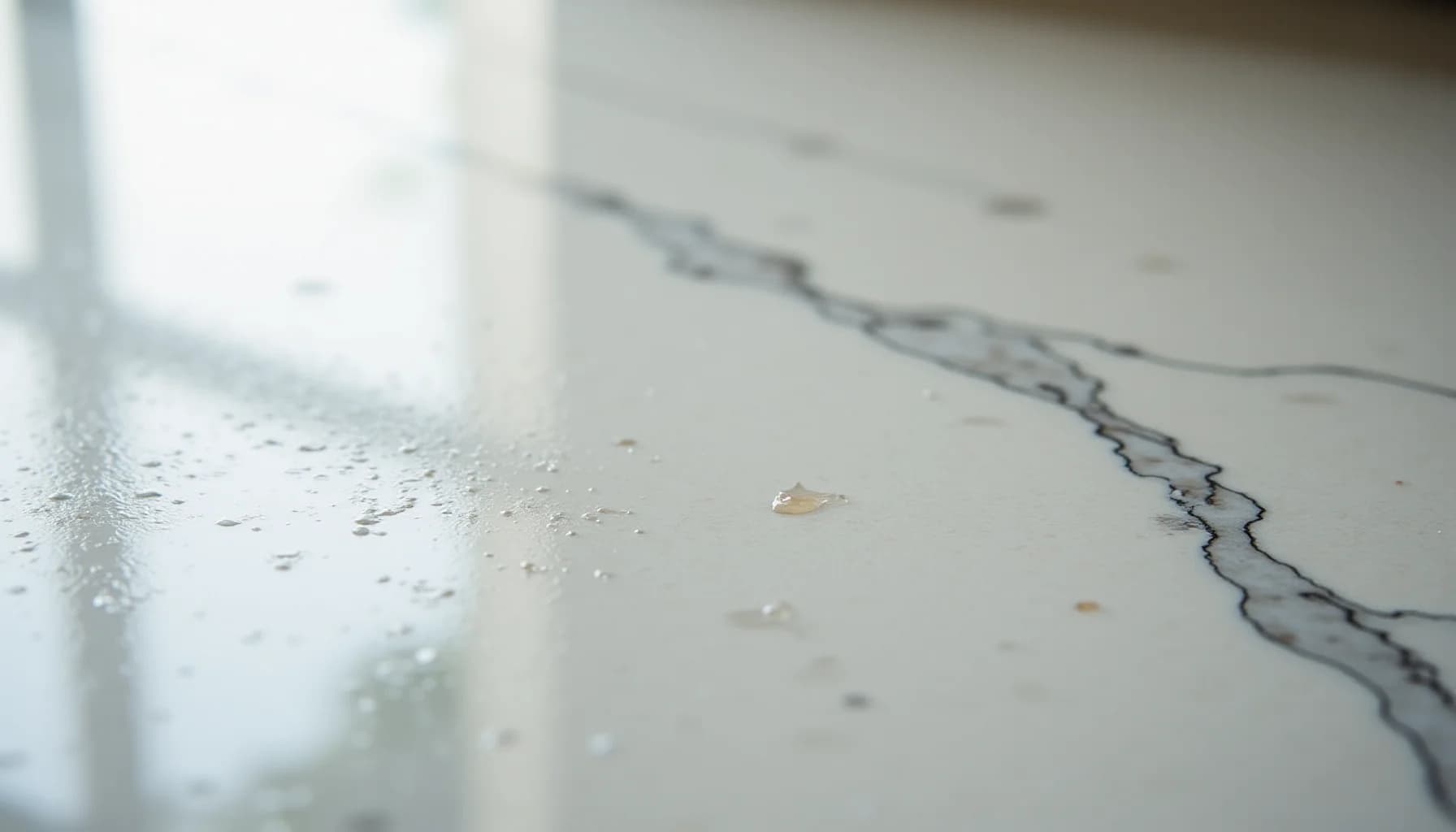
The most immediate signal is a change in surface texture. Run your fingertips across a marble, limestone, or travertine surface that has had vinegar sitting on it, even briefly. If it feels slightly rough, powdery, or pitted where it used to feel glassy, that is etching. You are feeling the physical removal of calcium carbonate from the surface. On polished marble countertops, this shows up visually as dull, hazy patches, often in the exact shape of a spill or a cleaning cloth's path. These patches do not wipe off. They are not residue. The stone itself is gone.
On travertine floors or walls, the damage can be harder to catch early. Travertine already has natural pits and voids in its surface, so new etching can blend in until the affected area becomes noticeably lighter or loses its sheen compared to surrounding tiles.
Structural damage goes deeper. If acid exposure has been repeated, look for pitting that is visible under raking light, meaning low-angle light from a flashlight held nearly parallel to the surface. You may also see micro-cracking or a soft, chalky texture that does not resolve with buffing. On slate, the layers can begin to flake or delaminate at the edges of the etched zone.
Color changes matter too. Many limestones and marbles will lighten or develop a bleached appearance in the damaged zone, because the mineral structure that reflects light has been chemically altered, not just scratched.
Pros
- Warns homeowners before costly irreversible etching occurs
- Helps protect expensive natural stone investments like marble and granite countertops
- Encourages use of pH-neutral cleaners that are safer for stone surfaces
Cons
- May overstate risk for very dilute or brief vinegar contact on harder stones like granite
- Leaves homeowners without a clear affordable alternative cleaning solution
- Could cause unnecessary panic about past cleaning habits that caused only minor surface dulling
Can the damage from vinegar be buffed or polished out?
The short answer is no, and understanding why requires looking at what acid actually does to stone at a structural level.
Natural stones like marble, limestone, travertine, and even some granites contain calcium carbonate as a primary mineral. When acetic acid contacts that mineral, it triggers a chemical reaction that dissolves the calcium carbonate itself. The surface you see afterward is not dirty or coated with a residue. The stone material is simply gone, converted into calcium acetate, water, and carbon dioxide gas. There is nothing left to buff back into place.
Polishing works by abrading microscopic surface irregularities until they are too small to scatter light. That process depends entirely on having intact, uniform stone beneath the abrasive. Acid etching creates a new surface layer that is both structurally weakened and texturally chaotic at the crystal level. Running a polishing pad over it removes more stone, and may temporarily restore some sheen to a very light etch, but it cannot rebuild the material the acid consumed. On travertine in particular, acid etching can penetrate into the natural voids beneath the surface — deeper than any buffer can reach.
For heavy etching, a stone restoration professional can re-hone the entire surface, grinding it down past the damage and re-polishing from scratch. On marble floors, that process typically costs $3 to $8 per square foot and removes a measurable thickness of stone each time. On countertops with thin slabs or on travertine tiles where the fill in the voids has also been compromised, even professional restoration has clear limits.
Mild etching on polished marble can sometimes be improved with a marble polishing powder, but improved is not the same as reversed. The chemistry has already run its course.
What should you use on natural stone instead of vinegar?
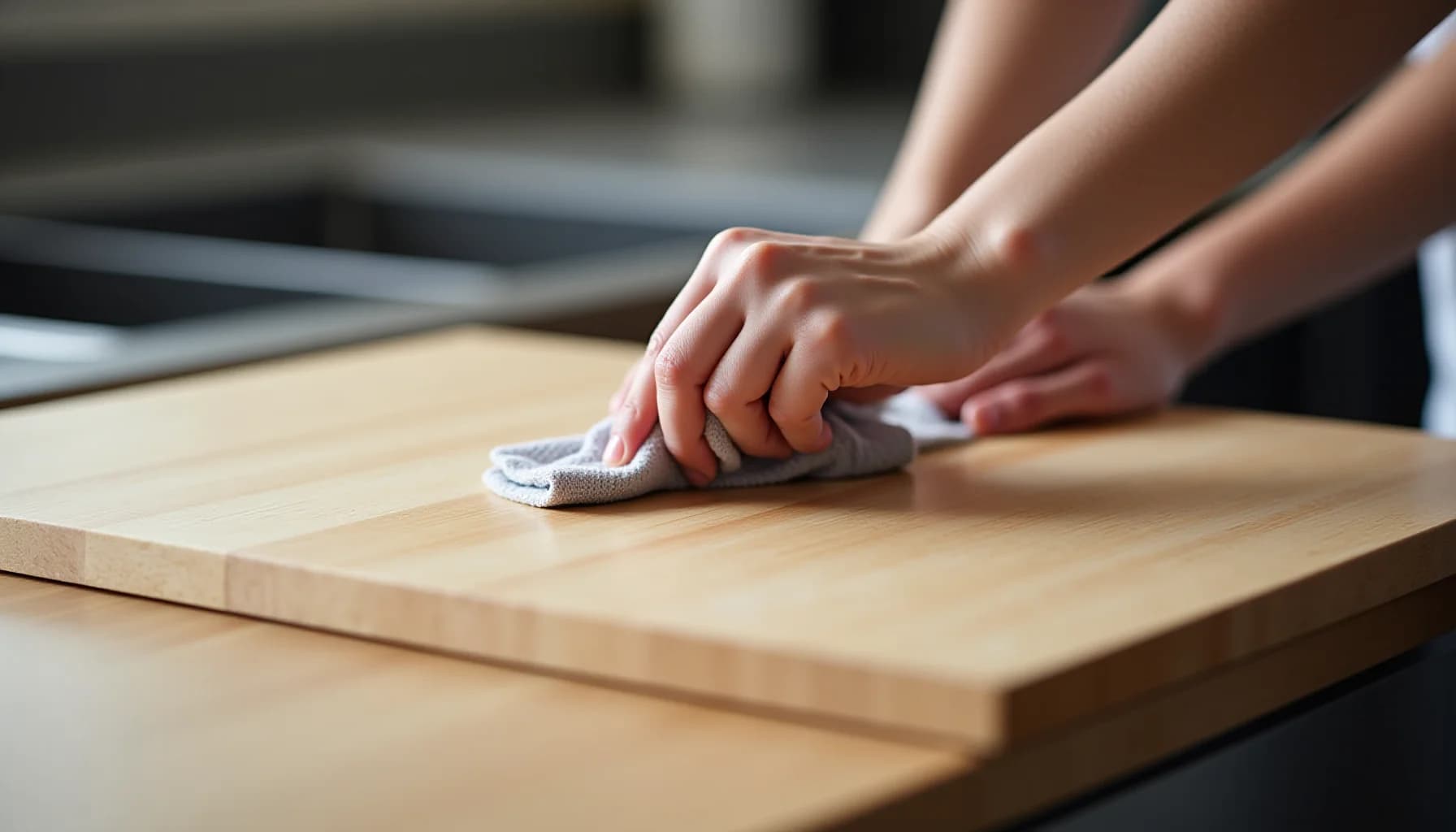
The safest daily cleaner for marble, limestone, travertine, slate, and most other natural stone is plain warm water with a few drops of pH-neutral dish soap, applied with a soft microfiber cloth and rinsed promptly. That single routine handles everyday grime without touching the stone's surface chemistry.
Before choosing anything beyond that, check two things in order. First, identify your specific stone, because dense slate tolerates more than porous travertine, and polished surfaces are more vulnerable than honed or brushed ones. Second, read the label of any product you're considering and confirm it explicitly states "pH-neutral" and "safe for natural stone." Formulas marketed as "stone cleaners" vary widely; some contain chelating agents or mild acids that will still etch over time.
If you have grout between stone tiles, keep in mind that the grout may need a different product than the stone itself. Cleaning and sealing grout requires its own approach, and mixing up the products is a common source of accidental stone damage.
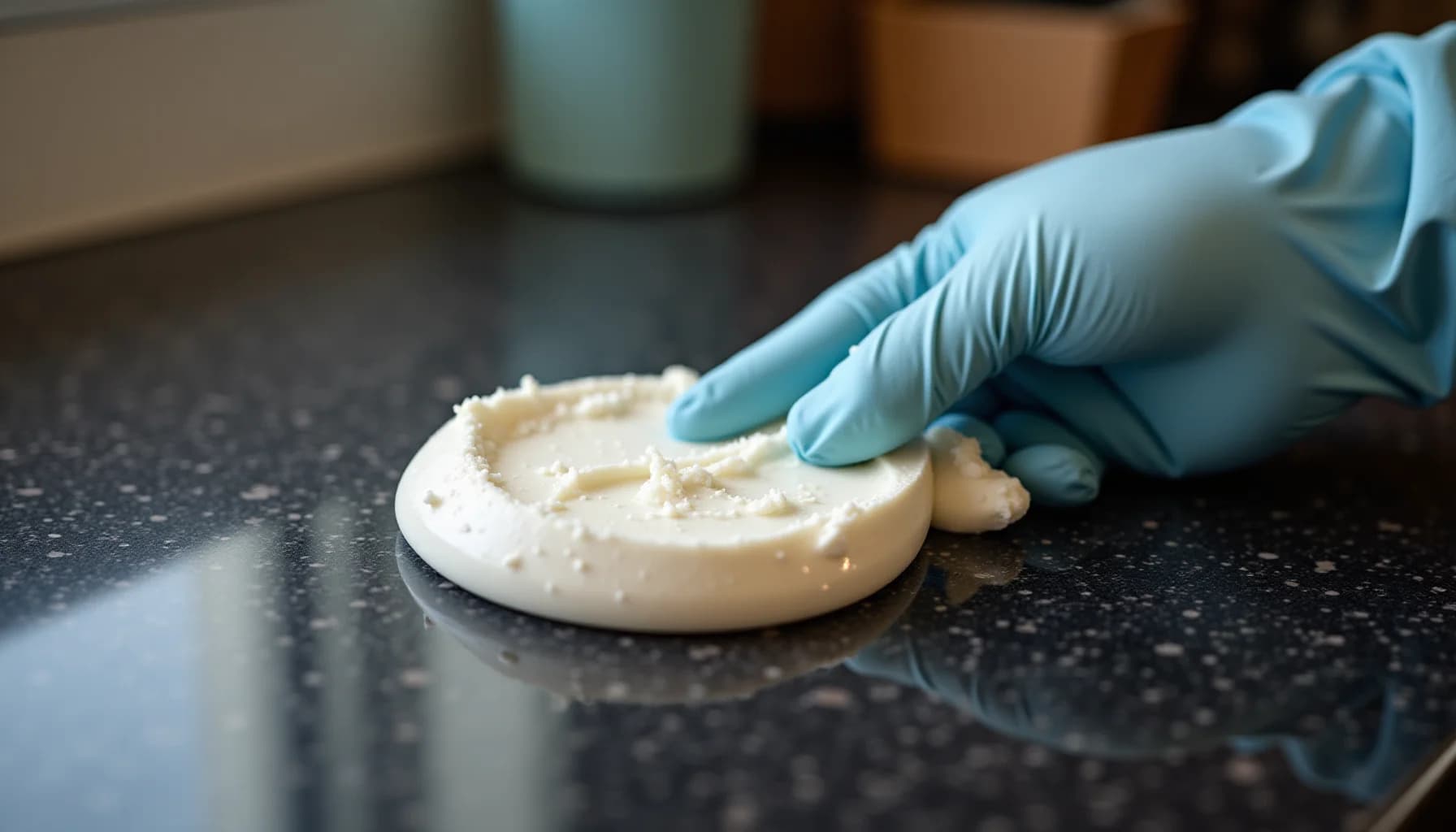
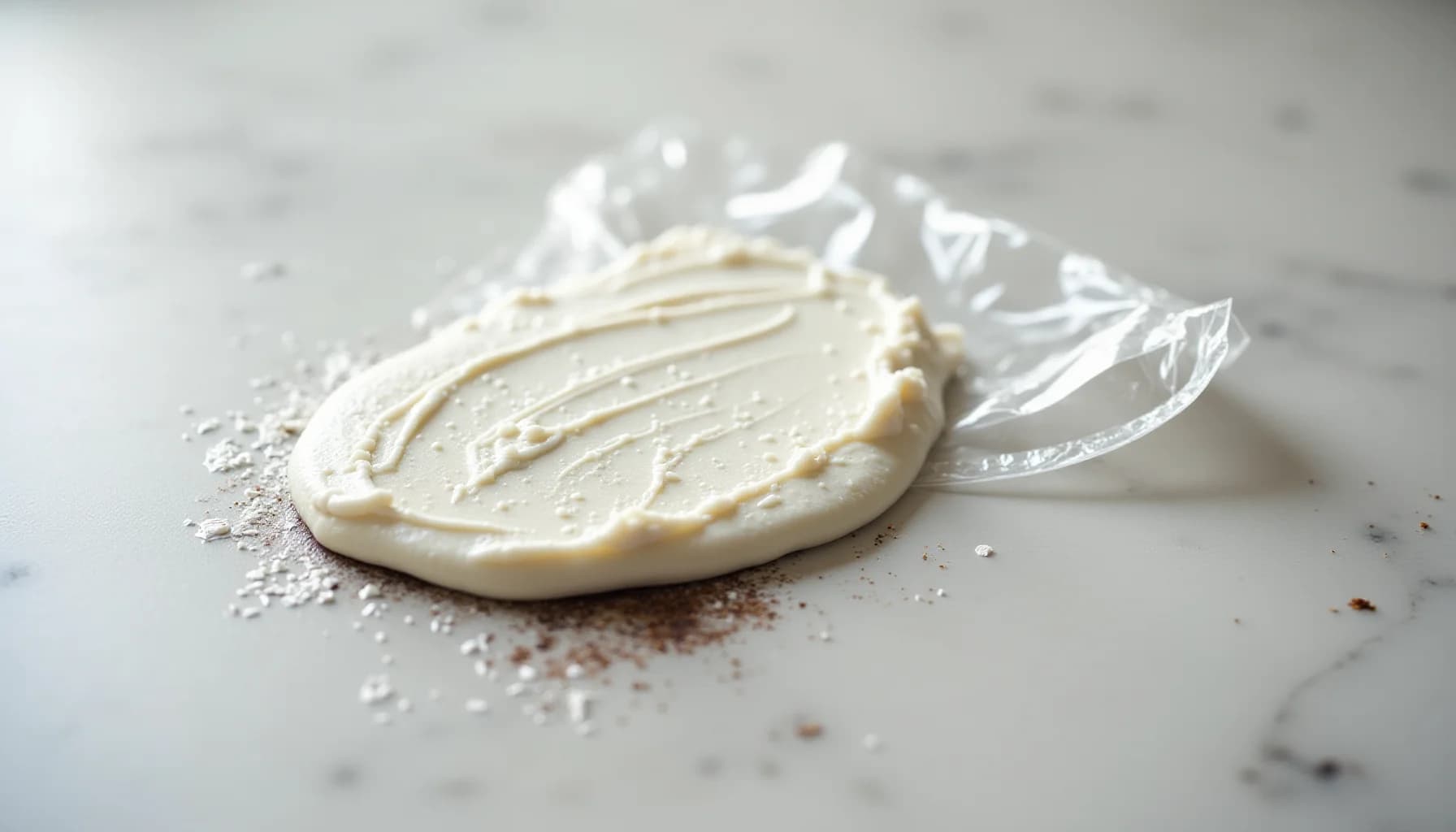
For stubborn residue, a paste of baking soda and water, left for a few minutes then rinsed thoroughly, is mild enough for most stones. Avoid anything with bleach on dark stones, as it can lighten them unevenly.
Sealing is the maintenance step that gives you the most protection long term. Most natural stone in kitchens and bathrooms should be resealed every 12 to 24 months, depending on use and porosity. A simple water-bead test tells you whether the seal is still holding: drop about a tablespoon of water on the surface and watch. If it beads up within a few minutes, the seal is intact. If it absorbs within 30 seconds, reseal soon.
Frequently asked questions
Why does vinegar damage natural stone?
Is the damage from vinegar on stone reversible?
Which types of natural stone are most at risk?
What should I use to clean natural stone safely instead of vinegar?
What should you do right away if vinegar spills on stone?
Speed is everything here. The moment vinegar hits marble, limestone, travertine, or any other calcium-based stone, the acid begins dissolving the surface. Every second counts.
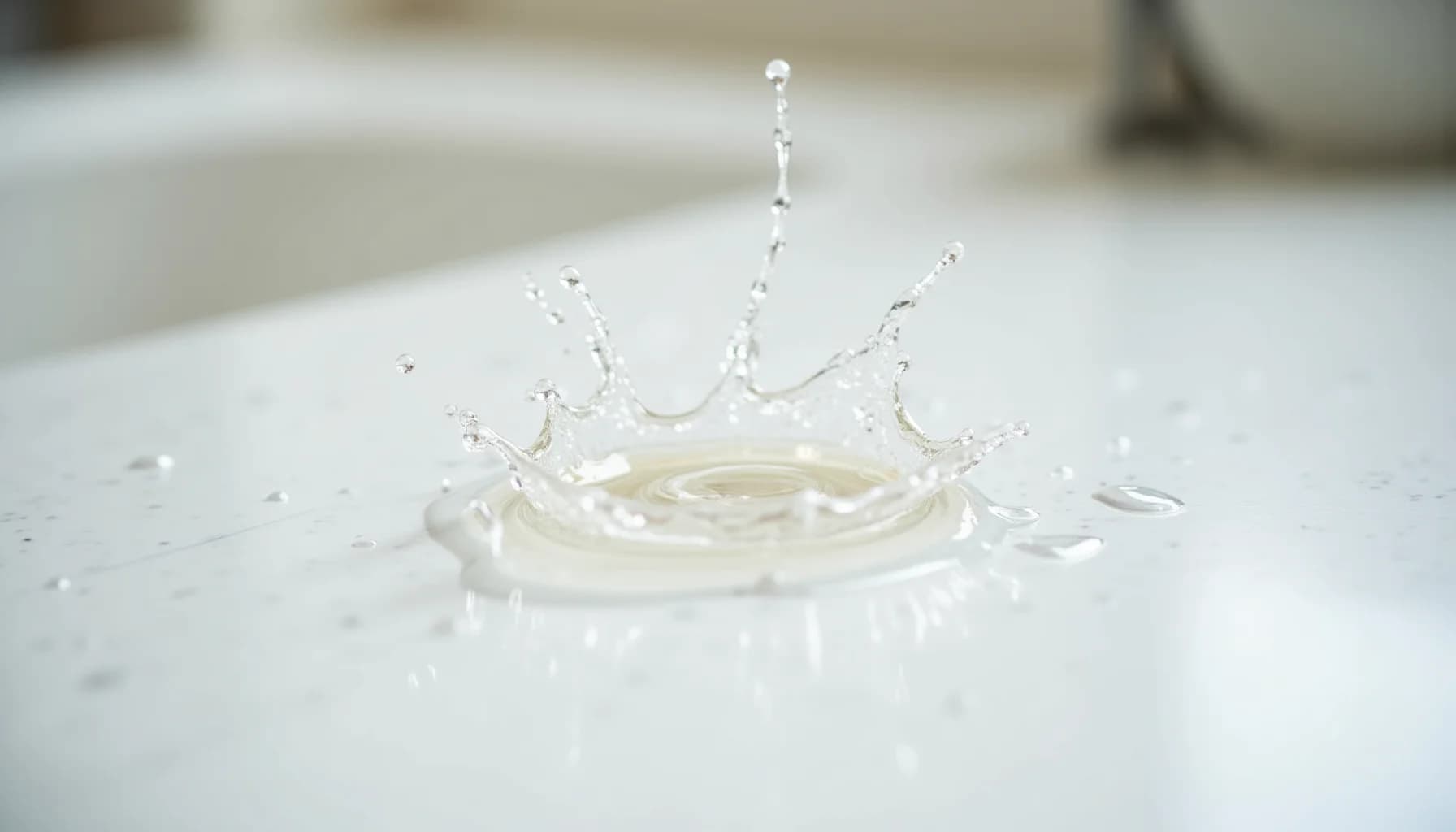
Blot the spill immediately with a clean, dry cloth. Do not wipe or spread it; press straight down and lift. Wiping drags the acid across a wider surface area and accelerates the damage. Work from the outer edge inward to contain the spill.
Once you have absorbed as much liquid as possible, flood the area with plain water. Use at least a cup of clean water poured directly over the affected spot, then blot again thoroughly. Repeat this rinse-and-blot cycle two or three times. The goal is dilution and removal, not just surface drying.
For most homeowners, this blot-rinse-blot method is the right move, full stop. The one exception is polished marble or limestone that receives a high-gloss seal: if you notice cloudiness or a matte patch after rinsing, the etch has already set, and you will need a marble polishing powder or a professional re-honing rather than further home treatment.
Do not apply baking soda, soap, or any other product in the immediate aftermath. Add neutralizers only after the acid has been fully rinsed away, otherwise you risk a foaming reaction that spreads residue further into the stone's pores.
How this article was made
Researched and written with AI assistance. What gets published is a human editorial decision. Grounded in 7 cited sources.
Edited by Claire Mercier, Editor. The guides are written with AI assistance.
Sources (7)
- Study on Mechanical Properties and Weakening Mechanism of Acid Corrosion Lamprophyre
- The Stone Floors You Can't Clean With Vinegar And Why - House Digest
- Is Vinegar a Good DIY Cleaning Solution for Granite?
- Don't Use Vinegar on Natural Stone! | Granite Heroes Advice
- Is Vinegar Safe for Natural Rock Stone? | Richburg Stone
- Vinegar on Limestone - Karimi Stone
- Can Vinegar Be Used Safely to Clean Natural Stone?