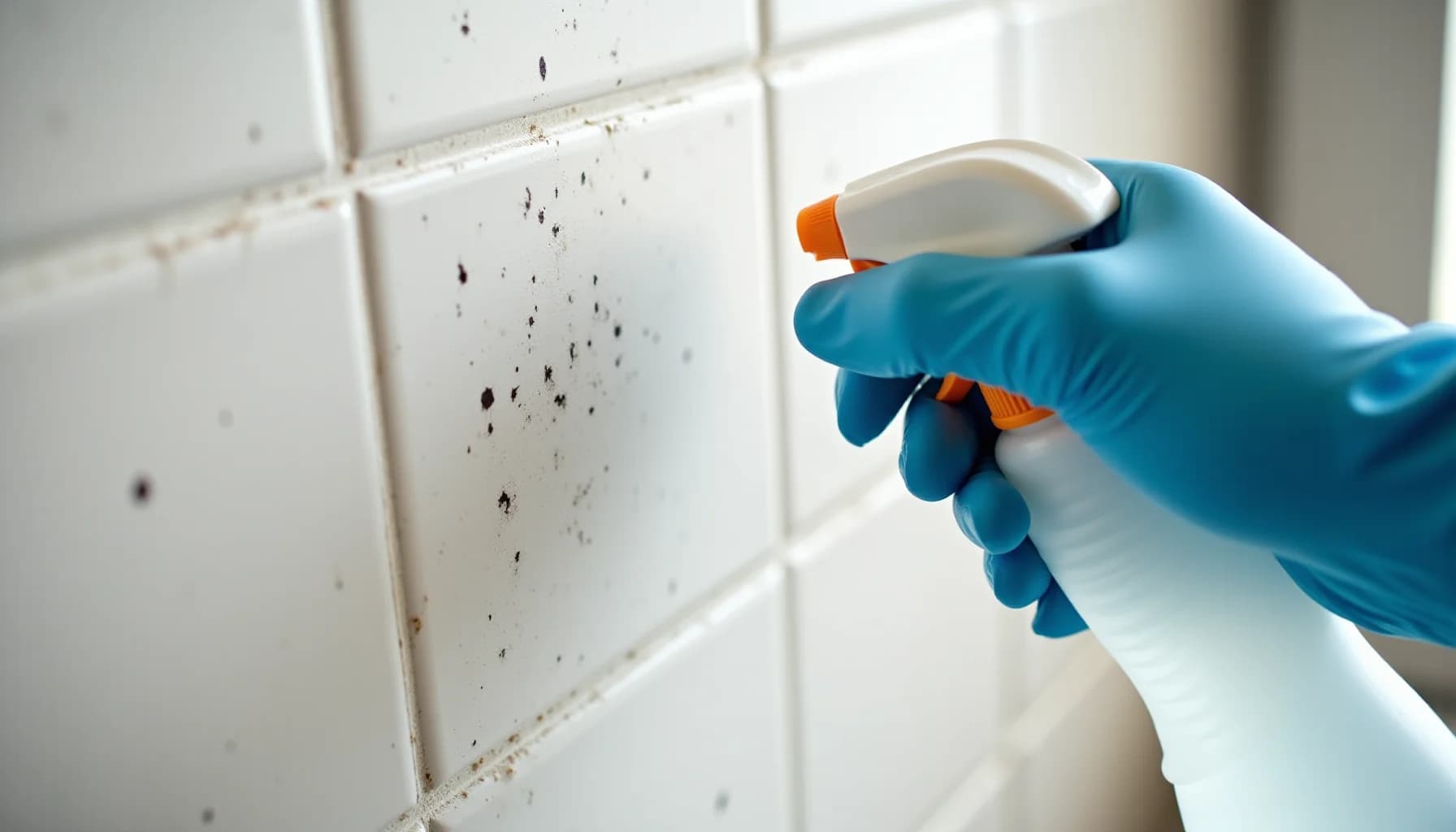
How to Clean a Shower Head With Vinegar (No Scrubbing)
Part of Bathroom Cleaning · article 12 of 16
On this page
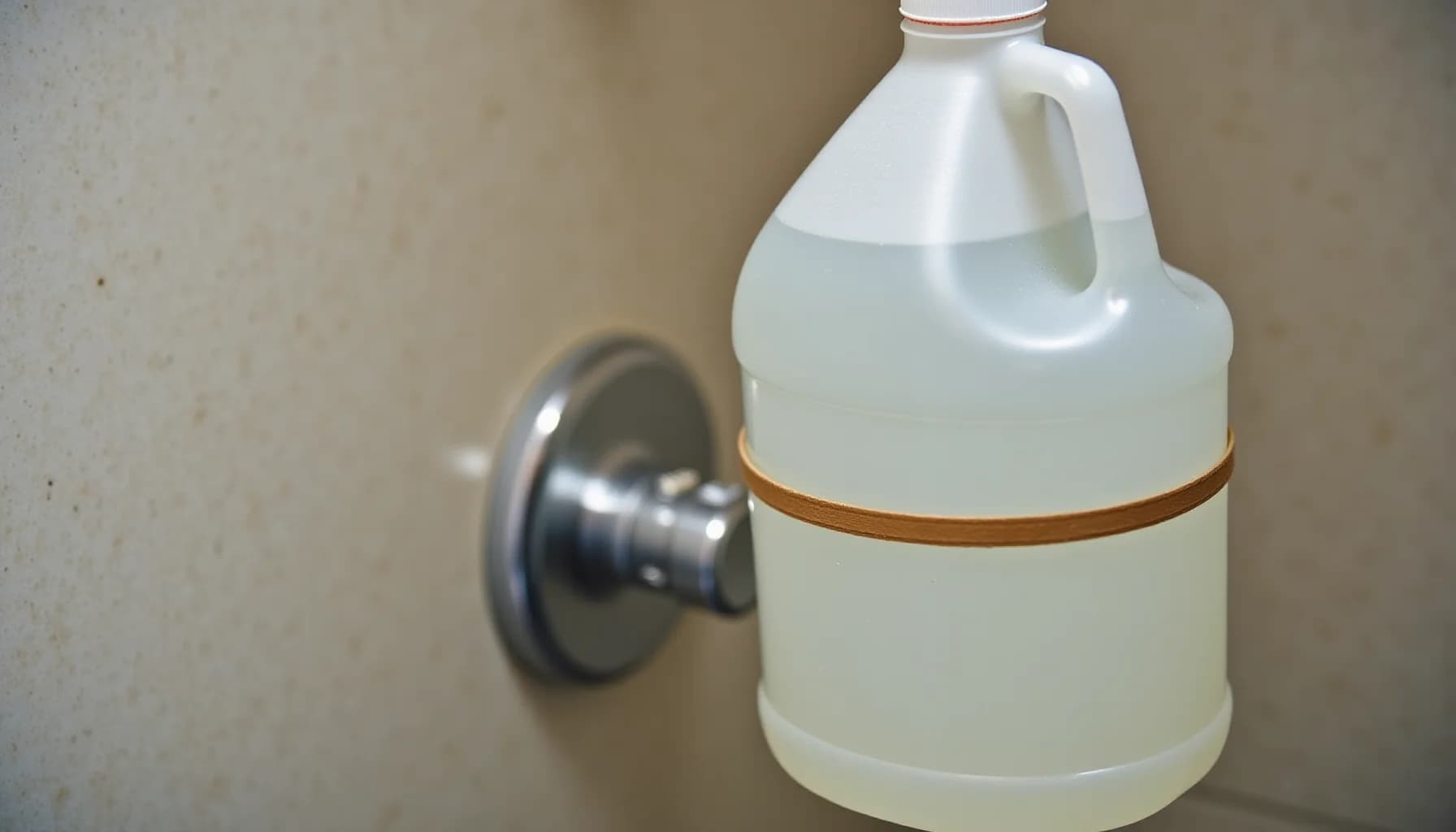
Soak, don't scrub: for most homeowners, the plastic-bag-and-rubber-band method is the right call. Fill a gallon zip-lock bag with undiluted white distilled vinegar, submerge the shower head face, secure the bag with a rubber band at the neck, and leave it for at least two hours, or overnight for heavy mineral buildup. The single condition that flips the choice: if your shower head is solid brass or gold-finished, switch to a 50/50 vinegar-water dilution, because straight acid can strip decorative coatings. Once the soak is done, run hot water for thirty seconds to flush loosened deposits clear.
Why do mineral deposits clog your shower head in the first place?
Most US municipal water supplies carry dissolved minerals, primarily calcium and magnesium carbonates, that are perfectly harmless to drink. The problem starts when that water hits your shower head's small spray nozzles and evaporates. The water leaves; the minerals stay. Over months, those deposits layer on top of each other, narrowing the openings until some nozzles trickle and others spray sideways entirely.
The chemistry behind vinegar's effectiveness is straightforward. Calcium and magnesium carbonates are alkaline compounds. White distilled vinegar is acetic acid, typically 5% concentration. Acid reacts with carbonate minerals and converts them into soluble salts, water, and carbon dioxide. That fizzing you see during the soak is the CO2 escaping as the deposit literally breaks apart at a molecular level. No scrubbing is necessary because the chemical reaction does the mechanical work for you.
The one decision worth thinking through before you start: do you remove the shower head and submerge it in a bowl, or do you fill a plastic bag with vinegar and secure it around the head while it stays mounted? Both methods deliver the same acetic acid to the same deposits, so the chemistry is identical. The real difference is contact time and convenience. A fully submerged head lets vinegar reach every internal channel and the underside of each nozzle. The bag method works fine for light buildup but can miss the internal passages where deposits accumulate earliest.
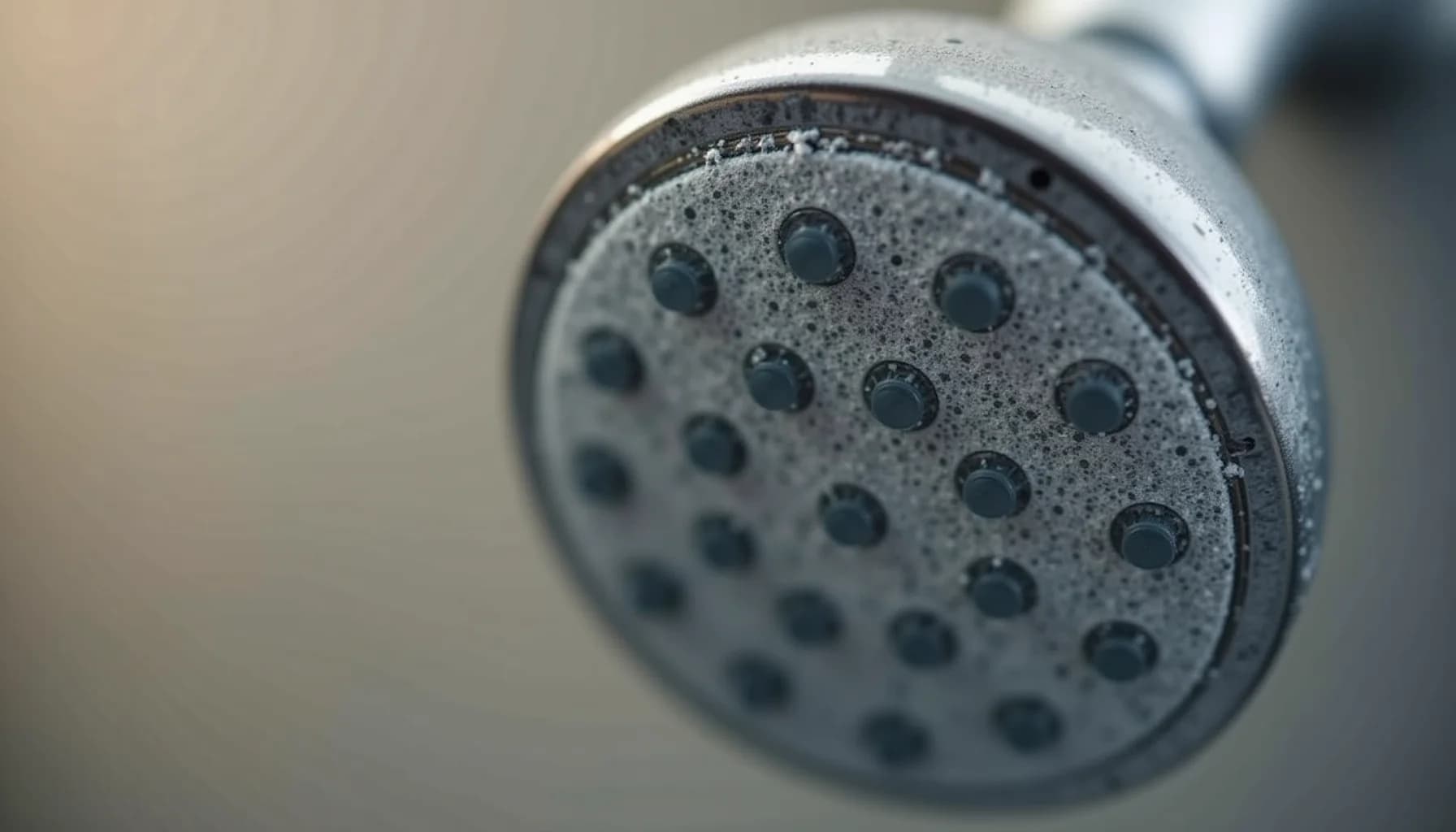
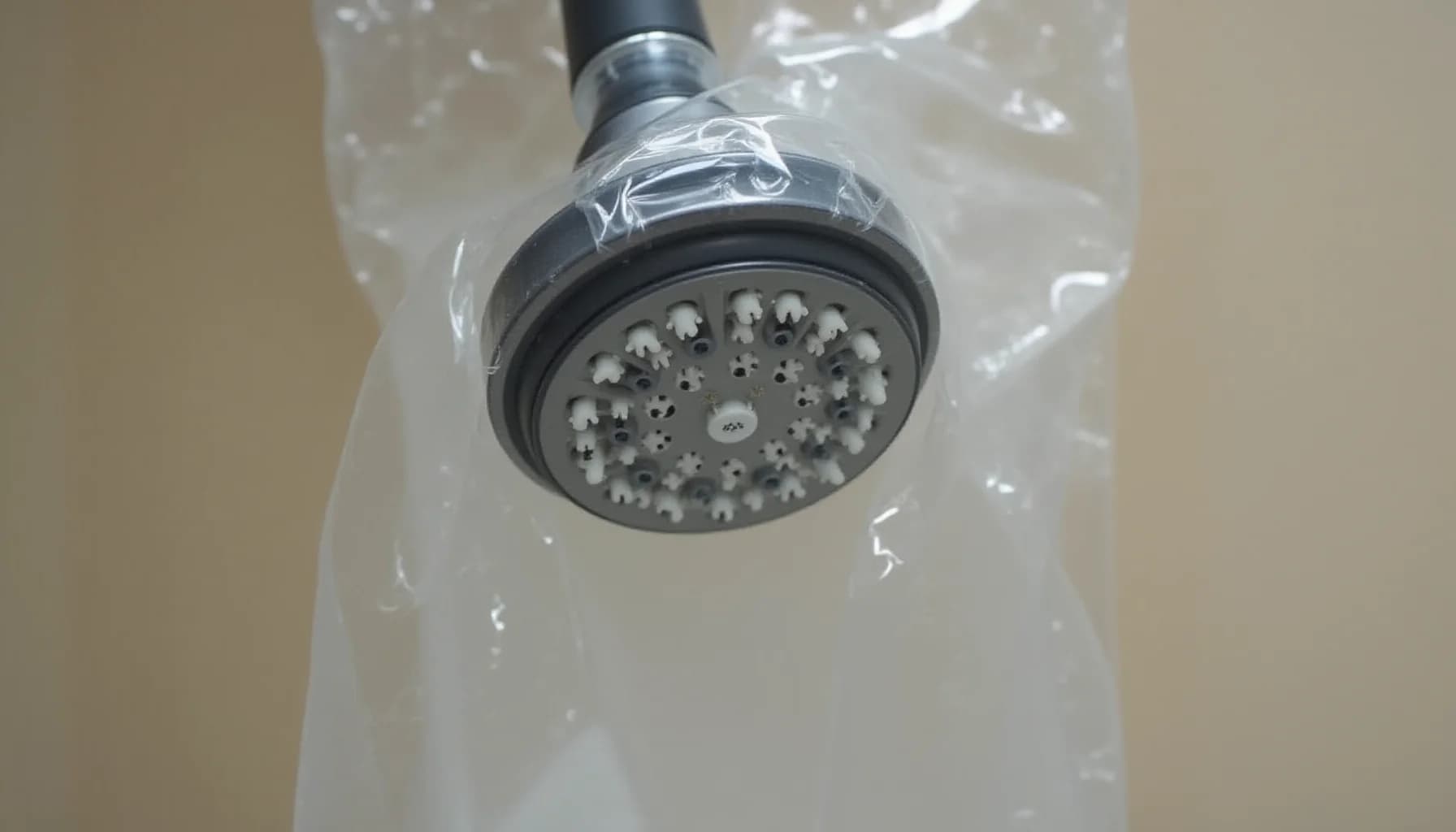
How do you soak a fixed shower head in a vinegar-filled bag?
Gather what you need before you start: a gallon of plain white distilled vinegar, a sturdy zip-top bag large enough to submerge the shower head face, a few rubber bands or a zip tie, and a measuring cup. Full-strength vinegar is the right call here if your shower head has heavy, crusty mineral deposits. If the buildup is mild, a 50/50 mix of vinegar and water works fine and is gentler on any chrome or nickel finish.
Fill the bag so the vinegar level will sit about an inch above the spray face once the head is submerged. Hold the bag up to the shower head dry first to gauge this, then remove it and pour accordingly. Slide the open bag up over the shower head so the face plate is completely submerged. Pull the top of the bag tight around the neck of the shower arm and secure it firmly with two or three rubber bands wrapped several times. Give the bag a gentle tug downward — it should hold without slipping.
Leave it in place for at least one hour for light scale. For stubborn, chalky buildup that has been accumulating for a year or more, let it soak for three to four hours. Overnight is unnecessary and can start to dull some metal finishes if left longer than eight hours.
When time is up, remove the bag carefully and pour the vinegar down the drain. Turn the shower on hot for 30 seconds to flush loosened mineral debris through the nozzles. If a few jets are still blocked, a toothpick pressed gently into each hole clears them without scratching. That is genuinely all the scrubbing this method requires.
Pros
- Uses a cheap, non-toxic household ingredient most homeowners already have
- Removes mineral deposits and limescale without any scrubbing effort
- Safe for most standard shower head finishes and materials
Cons
- Strong vinegar smell can linger in the bathroom during and after treatment
- May not fully dissolve heavy buildup on severely neglected shower heads
- Soaking time of several hours makes it a slow fix compared to commercial descalers
How do you remove and deep-clean a detachable shower head in a vinegar bath?
If your shower head unscrews from the arm, take it off completely and submerge it. This method lets vinegar reach every internal passage, not just the spray face, which makes it meaningfully more thorough than the bag method for heads with heavy buildup.
Start by placing a towel in the sink to protect the finish, then grip the shower arm with one hand and turn the head counterclockwise. Most heads unscrew by hand; if yours is stubborn, use a wrench but wrap the fitting with a cloth first to avoid scratching. Once it's off, check the rubber washer inside the coupling nut and set it somewhere safe so it doesn't go down the drain.
Fill a bowl or bucket with enough undiluted white distilled vinegar (5% acidity) to fully submerge the head. Lower the shower head in face-down so air bubbles escape and vinegar floods the internal chambers. Leave it for a minimum of two hours. For a head with years of mineral scale, overnight is better. The acidity dissolves calcium carbonate, and full submersion means no passage gets missed.
After soaking, hold the head under running water and turn it so water pushes through from the inlet side. You'll see loosened scale flush out of the nozzles. For any nozzles still clogged, press them with your fingertip or run a toothpick through the hole. Avoid metal picks, which enlarge the nozzle openings over time.
Before reattaching, wrap two or three turns of plumber's tape (PTFE tape) clockwise around the shower arm threads. This prevents leaks and makes removal easier next time. Hand-tighten the head, then give it a quarter-turn snug with a cloth-wrapped wrench. Run hot water for thirty seconds to flush any remaining vinegar from the system.
How long should you soak your shower head in vinegar?
The answer depends on two things you need to check before you set a timer: the finish on your shower head and the strength of the vinegar you are using.
Standard chrome and stainless steel fixtures are the most forgiving. Full-strength white distilled vinegar (5% acidity, the kind sold at every grocery store) is safe for up to eight hours on these finishes. Overnight soaks in the six-to-eight-hour range are fine for stubborn mineral buildup, though two to three hours is usually enough for routine maintenance.
Brushed nickel, oil-rubbed bronze, and matte black finishes require more caution. These coatings can pit or dull with prolonged acid exposure. Limit soaks to no more than 30 minutes, and dilute your vinegar to half-strength by mixing it 1:1 with water. Check the head at the 20-minute mark; if the finish looks unchanged, finishing out the half-hour is reasonable.
Plastic and ABS shower heads sit somewhere in between. Full-strength vinegar is fine on the plastic body itself, but if the fixture has any decorative plating over plastic, treat it like brushed nickel and keep the soak short.
Solid brass and gold-toned finishes are the most sensitive category. Skip vinegar entirely on these and use a manufacturer-approved descaler instead, since even diluted acetic acid can strip lacquered or PVD coatings permanently.
When in doubt, test a small hidden area for ten minutes and dry it thoroughly before committing to a full soak.
Frequently asked questions
How long should I leave vinegar on my shower head?
Do I need to remove the shower head to clean it with vinegar?
What type of vinegar works best for cleaning a shower head?
Is vinegar safe to use on all shower head finishes?
Rinsing, reassembling, and testing your shower head after soaking
Once the soak time is up, remove the bag carefully and let the vinegar drain back into it before discarding. Hold the shower head under warm running water for a full 30 to 60 seconds, rotating it so water flushes through every outlet hole. This step matters: any vinegar sitting inside the fixture will smell unpleasant the first time someone showers, and residue left in the nozzles can attract new mineral buildup faster than a clean surface would.
If you removed the shower head entirely, hand-tighten it back onto the shower arm first, then add a quarter-turn with pliers over a cloth to protect the finish. Do not overtighten. Wrap a fresh strip of Teflon tape on the threads before reattaching if the old tape looked worn or shredded during removal.
Turn the water on full pressure and let it run for about 20 seconds. Watch the spray pattern: all holes should fire evenly with consistent pressure. If a few nozzles still drip weakly or spray sideways, the deposits were heavier than a single soak could shift. A second overnight soak with fresh vinegar usually resolves it.
For most homeowners, the bag-over-the-head method is the right call. Only remove the fixture entirely if the spray pattern remains uneven after two rounds of soaking.
How this article was made
Researched and written with AI assistance. What gets published is a human editorial decision. Grounded in 7 cited sources.
Edited by Claire Mercier, Editor. The guides are written with AI assistance.