Why Mildew Keeps Coming Back, and How to Clean a Shower Curtain Liner
Part of Bathroom Cleaning · article 17 of 18
On this page
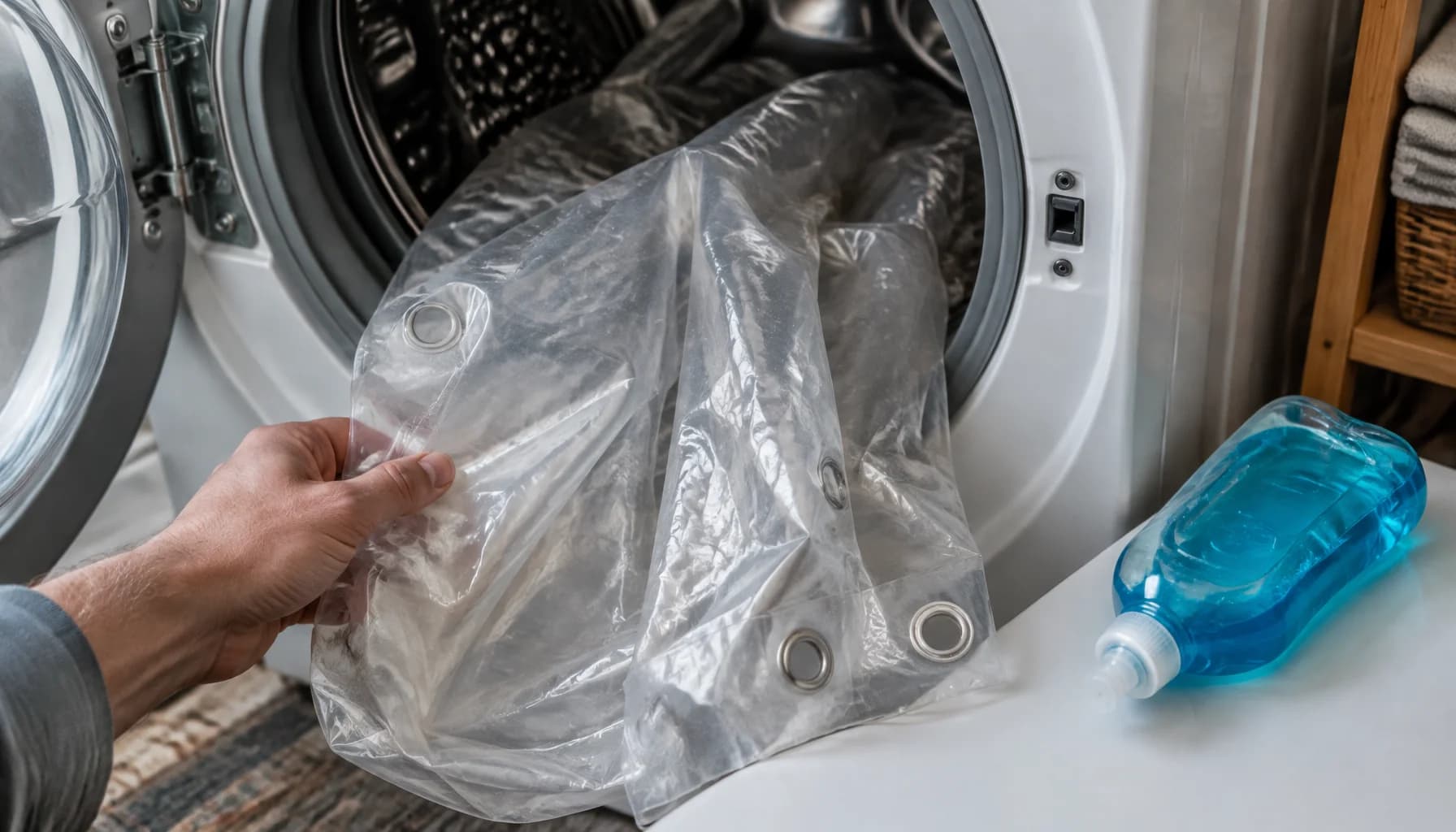
Wash a plastic or vinyl shower curtain liner in the washing machine on a gentle cycle with warm water and a small amount of liquid dish soap or oxygen bleach, then hang it back on the rod to air-dry. Never machine-dry a plastic liner; the heat warps and cracks it. Before washing, rinse any visible soap scum off by hand, because disinfectants work far less effectively on surfaces with visible grime. If mildew has taken hold, a diluted bleach solution (4 teaspoons of regular, unscented household bleach containing 5–9% sodium hypochlorite per quart of room-temperature water) can be applied to the liner, left visibly wet for at least one minute, then rinsed thoroughly. Do not mix that bleach solution with any other cleaner. Once the liner is back in place, leave the curtain spread open after every shower so the surface can air-dry fully. A daily shower spray applied to the liner and walls discourages mildew from recolonizing. If mildew keeps spreading to the shower walls and ceiling, the problem may extend beyond the liner itself.
How do you keep a shower curtain liner cleaner between washes?
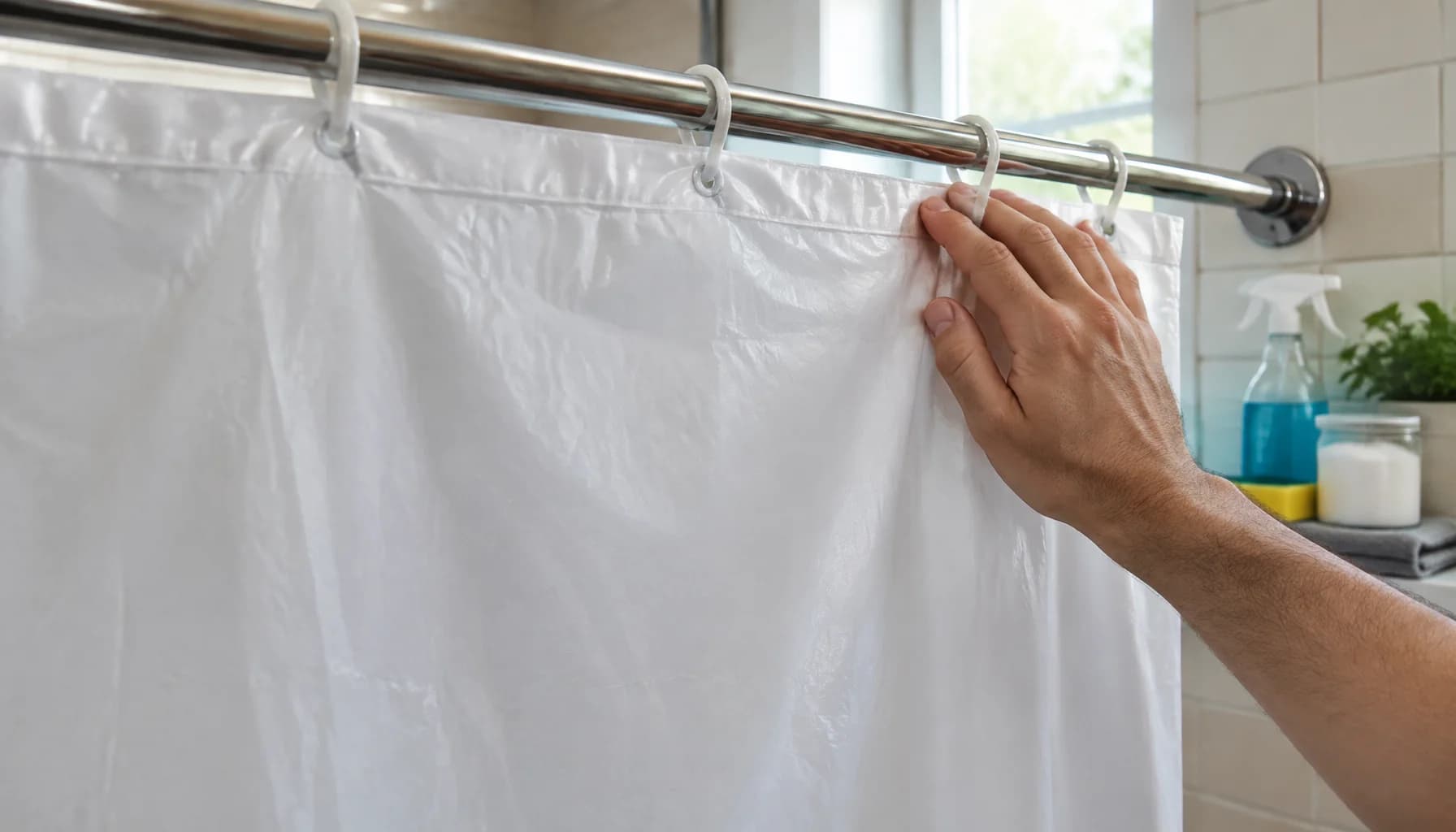
The single most effective thing you can do after every shower takes about three seconds: spread the liner flat across the rod so it hangs fully open rather than bunched at one end. A liner folded against itself traps moisture between the folds, and mildew only needs a persistently damp surface to take hold. Stretched open, the material air-dries completely before the next person showers, which removes the condition mildew needs to grow.
Once the liner is back in place, leave the curtain spread open after every shower so the surface can air-dry fully. If your bathroom has an exhaust fan, run it for at least 15 to 20 minutes after each shower to pull humid air out of the room rather than letting it condense on every surface, including the liner.
A daily shower spray applied to the liner and walls discourages mildew from recolonizing. These sprays, sold as no-rinse formulas in trigger bottles, work by leaving a thin film of active ingredient, typically a surfactant or mild antimicrobial, across the surface. You mist the liner from top to bottom immediately after your last shower of the day and walk away. Because you are not rinsing, the residue stays on the plastic long enough to interrupt mildew growth between weekly cleanings.
Keeping bathroom surfaces dry is part of a broader discipline. Wiping down the tub surround with a squeegee or a dry microfiber cloth after each shower reduces the standing moisture that feeds shower mold on walls and ceilings, and the same habit protects the liner at the same time.
How do you clean a plastic shower curtain liner with soap, bleach, and water?
Clean the liner surface before disinfecting
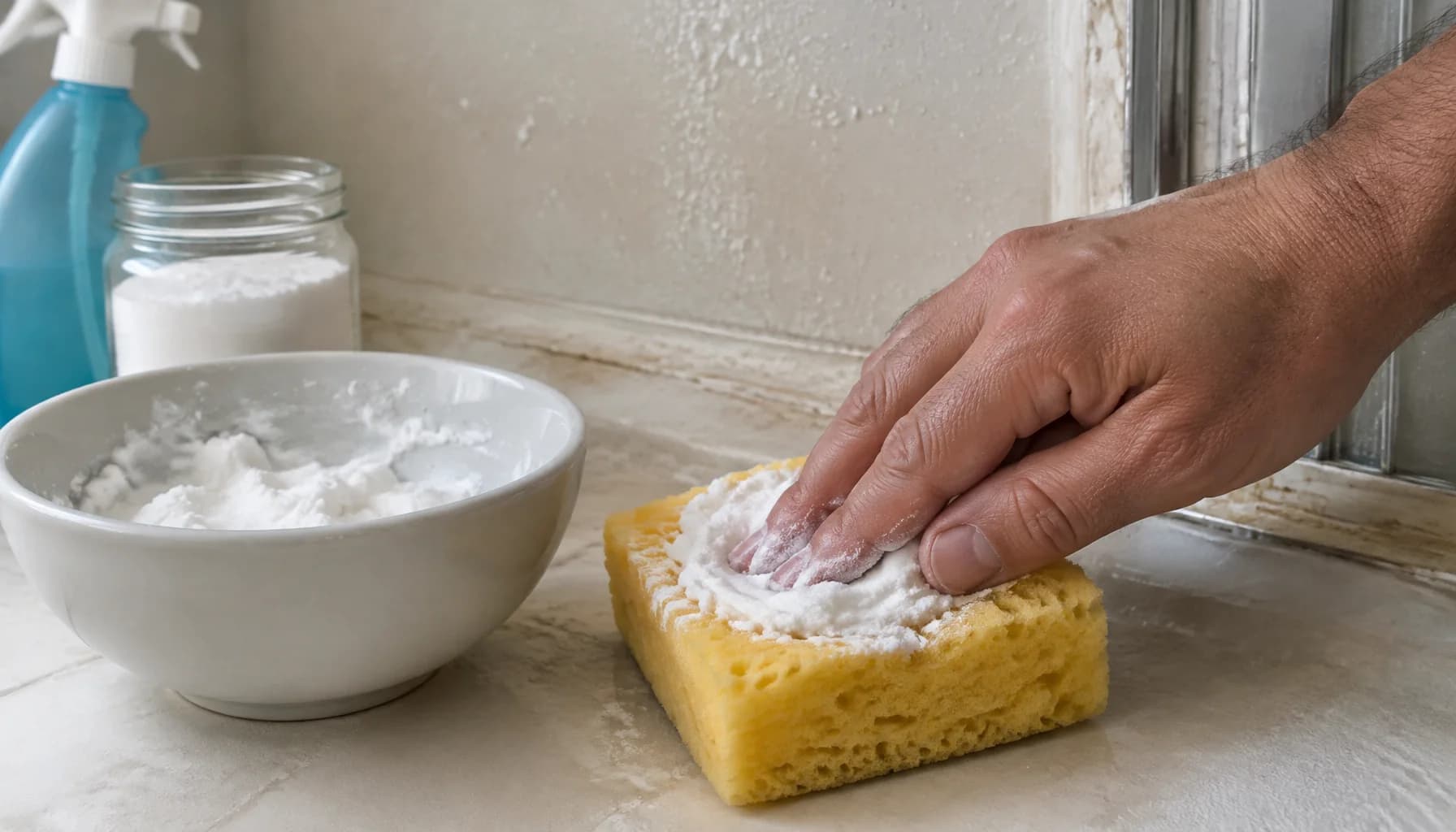
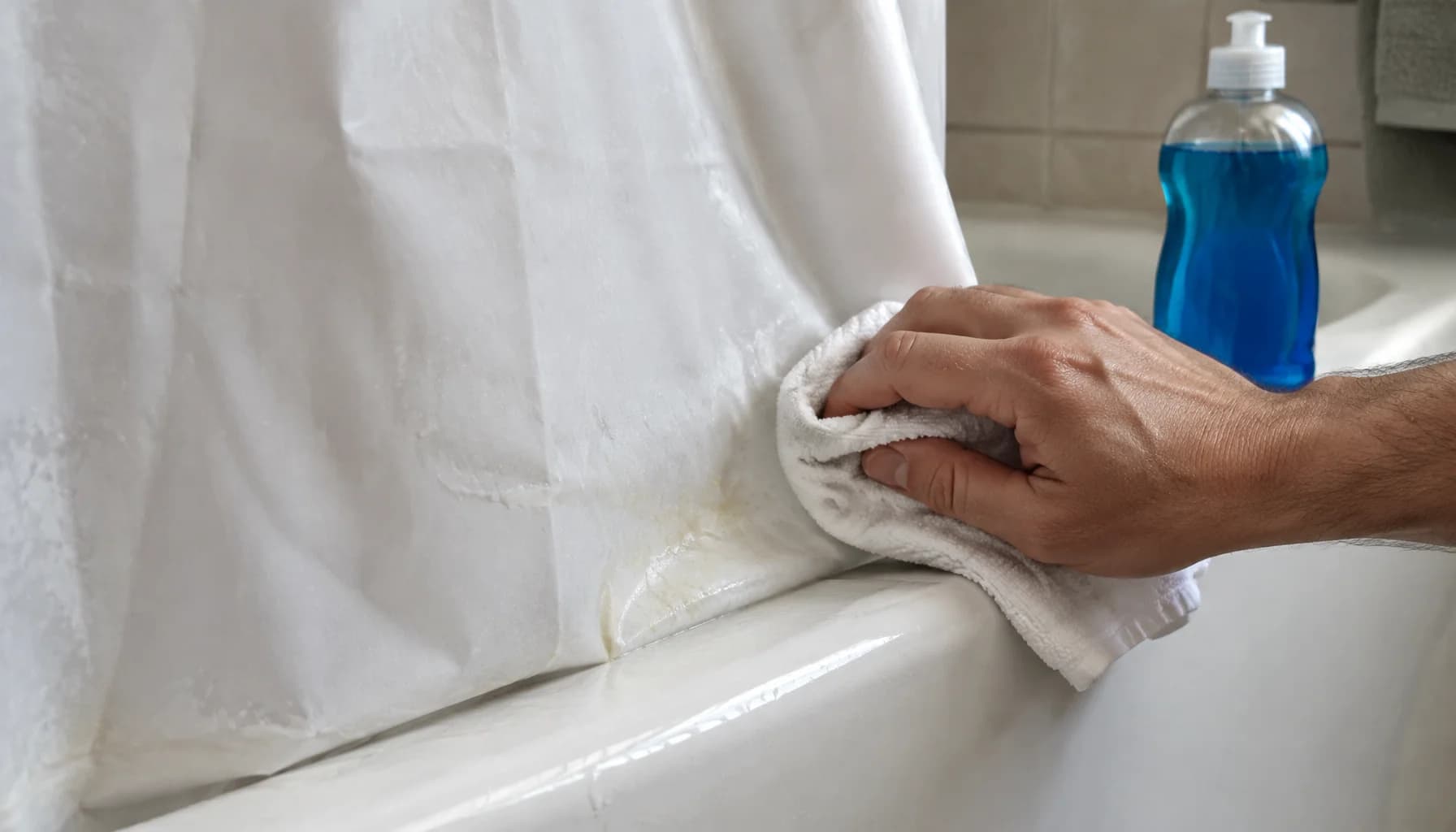
Wipe the liner with a household cleaner containing soap or detergent to remove visible dirt and soap scum first. Disinfecting over a dirty surface reduces the effectiveness of any bleach solution you apply next.
Mix a fresh bleach solution
Combine 4 teaspoons of regular, unscented household bleach containing 5 to 9% sodium hypochlorite with one quart of room-temperature water. Make the solution fresh each time you use it, because a bleach solution loses effectiveness after 24 hours.
Apply the solution and hold the contact time
Apply the diluted bleach solution to the liner and keep the surface visibly wet for at least one minute before rinsing thoroughly. Open windows or doors while you work so fresh air can enter the bathroom and reduce fume buildup.
Rehang the liner and spread it fully open
Once the liner is back in place, spread it flat across the rod so it hangs fully open rather than bunched at one end, allowing the surface to air-dry completely. Run the exhaust fan for at least 15 to 20 minutes after each shower to pull humid air out of the room.
Apply a daily shower spray between cleanings
Mist a daily shower spray onto the liner and surrounding walls after each shower, without rinsing it off. The residue stays on the surface long enough to interrupt mildew growth between weekly cleanings.
Keep surrounding surfaces dry after every shower
Wipe down the tub surround with a squeegee or a dry microfiber cloth after each shower to remove standing moisture that feeds mold on walls and ceilings. Drying the surrounding area protects the liner at the same time, since mildew spreads from wet neighboring surfaces.
How do you disinfect a shower curtain liner with bleach?
Before reaching for bleach, rinse any visible soap scum or debris off the liner. Bleach is a disinfectant, not a cleaner, and it works far less effectively on surfaces that are coated in grime. A quick rinse, or a wipe-down with a cloth and a drop of dish soap, removes that barrier first.
Open the bathroom window and door before you mix anything. Bleach releases fumes that accumulate quickly in a small, enclosed space, and good airflow keeps the concentration at a safe level throughout the process.
To make the solution, combine 4 teaspoons of regular, unscented household bleach containing 5 to 9% sodium hypochlorite with one quart of room-temperature water. Check the label: if the sodium hypochlorite percentage is not listed, or the product is labeled as splashless or laundry bleach, do not use it for disinfection. Those formulations are not effective for this purpose. Make the solution fresh each time you use it, because a bleach solution loses effectiveness after 24 hours.
Apply the diluted bleach solution to the liner and keep the surface visibly wet for at least one minute before rinsing thoroughly. That one-minute contact time is not a rough guideline; it is the minimum period the sodium hypochlorite needs to penetrate and kill mildew organisms. If the liner dries before the minute is up, apply more solution.
Once you have rinsed the liner completely, hang it spread fully open across the rod so it can air-dry. Mildew recolonizes quickly on plastic that stays damp in folds.
If mold has spread beyond the liner to the walls or ceiling of your shower, the approach is somewhat different. How to Clean Shower Mold (and Stop It Coming Back) covers that process in detail.
What safety rules should you follow before using bleach on the liner?
Bleach is effective at killing mildew organisms on a liner, but two rules must be followed before you apply a single drop.
Never mix bleach with any other cleaner or disinfectant. Combining bleach with products that contain ammonia, acids, or other active ingredients releases vapors that can cause serious respiratory harm. That rule extends to multi-purpose sprays, bathroom cleaners, and anything labeled as a disinfectant in its own right. If you used another product on the liner earlier in the day, rinse the surface thoroughly with plain water and let it dry before applying a bleach solution.
Pre-clean the liner before you disinfect it. This step is not optional. Soap scum, body oils, and mineral deposits form a physical barrier over mildew colonies. Bleach cannot penetrate that layer reliably, so it will not kill what it cannot reach. A quick rinse, or a wipe-down with a cloth and a drop of dish soap, removes that barrier first. Rinse the soap away completely before moving on, because any detergent residue left on the surface can react unpredictably with the bleach solution.
Ventilate the room before you start. Open the bathroom window and the door to allow fresh air to move through the space while you work. If your bathroom has an exhaust fan, run it for at least 15 to 20 minutes after each shower to pull humid air out of the room, and keep it running throughout the cleaning process as well.
Use only regular, unscented household bleach with a sodium hypochlorite concentration of 5 to 9%. Products outside that range, including some laundry bleach formulations and splashless varieties, are not appropriate for disinfection. If the concentration is not printed on the label, choose a different bottle.
How often should you wash and deep clean your shower curtain liner?
A weekly rinse is not the same as a deep clean, and treating them as equivalent is one of the most common reasons mildew keeps returning. The American Cleaning Institute places washing the shower curtain on a seasonal schedule, meaning roughly every three months under normal household use. A full deep clean, including soaking and disinfection with a diluted bleach solution, belongs there too. Yearly, that effort should be part of a broader bathroom deep clean that covers surfaces the weekly routine misses entirely.
In practice, three months is the outer limit, not a guarantee. If you see visible pink or black spotting before that point, waiting until the scheduled date lets the mildew root itself more deeply into the plastic. At that stage, surface wiping will not remove it, and you will need the full treatment: a quick rinse or a wipe-down with a cloth and a drop of dish soap to remove soap-scum residue first, then the diluted bleach solution, kept visibly wet on the surface for at least one minute.
Stop and replace the liner, rather than clean it, when the plastic has developed permanent grey or black staining that bleach does not lift after two full treatments, or when the material has turned brittle, cracked, or developed tears along the bottom hem where standing water pools. Mold that has penetrated a torn or cracked liner cannot be disinfected from the surface alone, and continued use spreads spores to surrounding walls and ceilings. If mold has already spread to those surfaces, that is a separate and more serious problem covered in how to remove mold from a bathroom ceiling.
Frequently asked questions
What is the best way to clean a shower curtain?
How do you clean a plastic shower curtain without ruining it?
How do you clean a shower liner that has mildew on it?
How often should you clean a shower curtain liner?
How do you keep a shower curtain liner mildew-free after cleaning?
The single most effective thing you can do after every shower takes about three seconds: spread the liner flat across the rod so it hangs fully open rather than bunched at one end. A folded liner traps moisture between its layers, and mildew can establish itself on a damp plastic surface in less time than most people expect.
If your bathroom has an exhaust fan, run it for at least 15 to 20 minutes after each shower to pull humid air out of the room rather than letting it condense on every surface, including the liner. Wiping down the tub surround with a squeegee or a dry microfiber cloth after each shower reduces the standing moisture that feeds mold on walls and ceilings, and the same habit protects the liner at the same time. If shower mold keeps appearing on surrounding surfaces, the liner is rarely the only problem: the two issues share the same cause.
Mist a daily shower spray onto the liner and surrounding walls after each shower, without rinsing it off. Because you are not rinsing, the residue stays on the plastic long enough to interrupt mildew growth between weekly cleanings.
A full wash belongs on a seasonal schedule, roughly every three months under normal household use. Between those deeper cleans, a weekly rinse and the daily spray applied without rinsing help keep mildew from taking hold on the surface. Treating a weekly rinse as equivalent to a deep clean is one of the most common reasons mildew keeps returning.
How this article was made
Researched and written with AI assistance. What gets published is a human editorial decision. Grounded in 2 cited sources.
Edited by Claire Mercier, Editor. The guides are written with AI assistance.