Remove Coffee Stain From Carpet Before It Sets for Good
Part of Fabric & Carpet Care · article 9 of 14
On this page
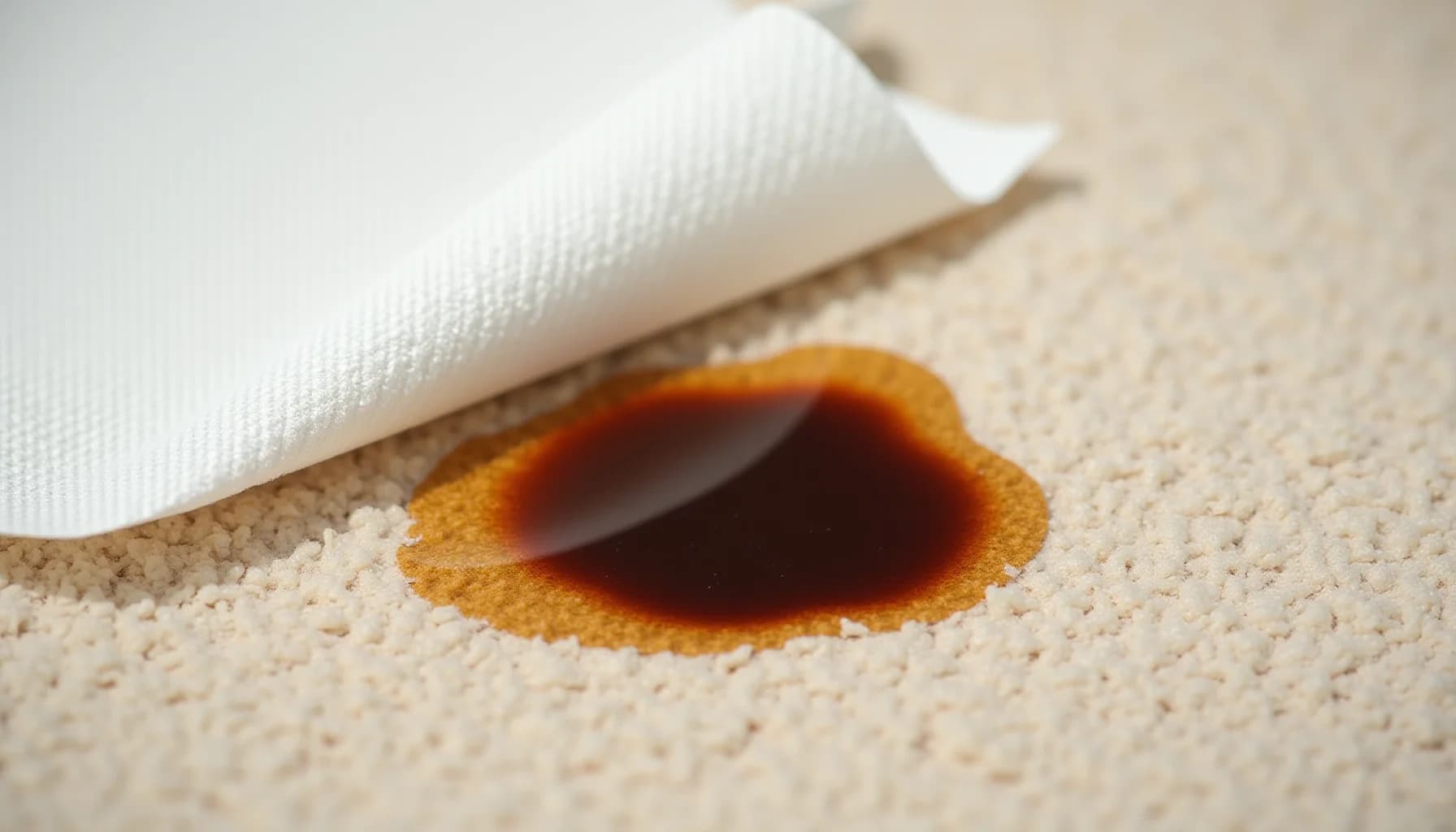
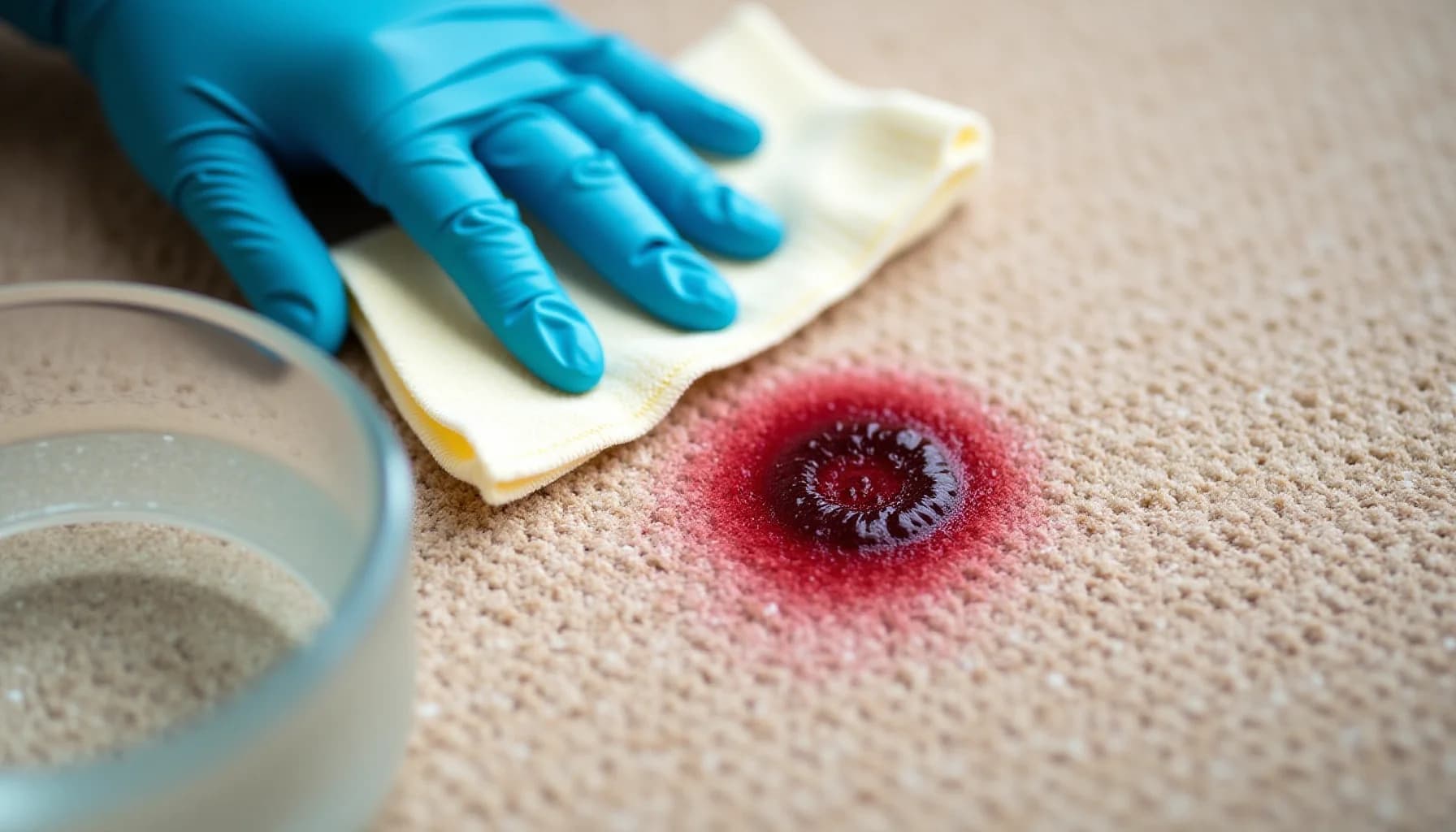
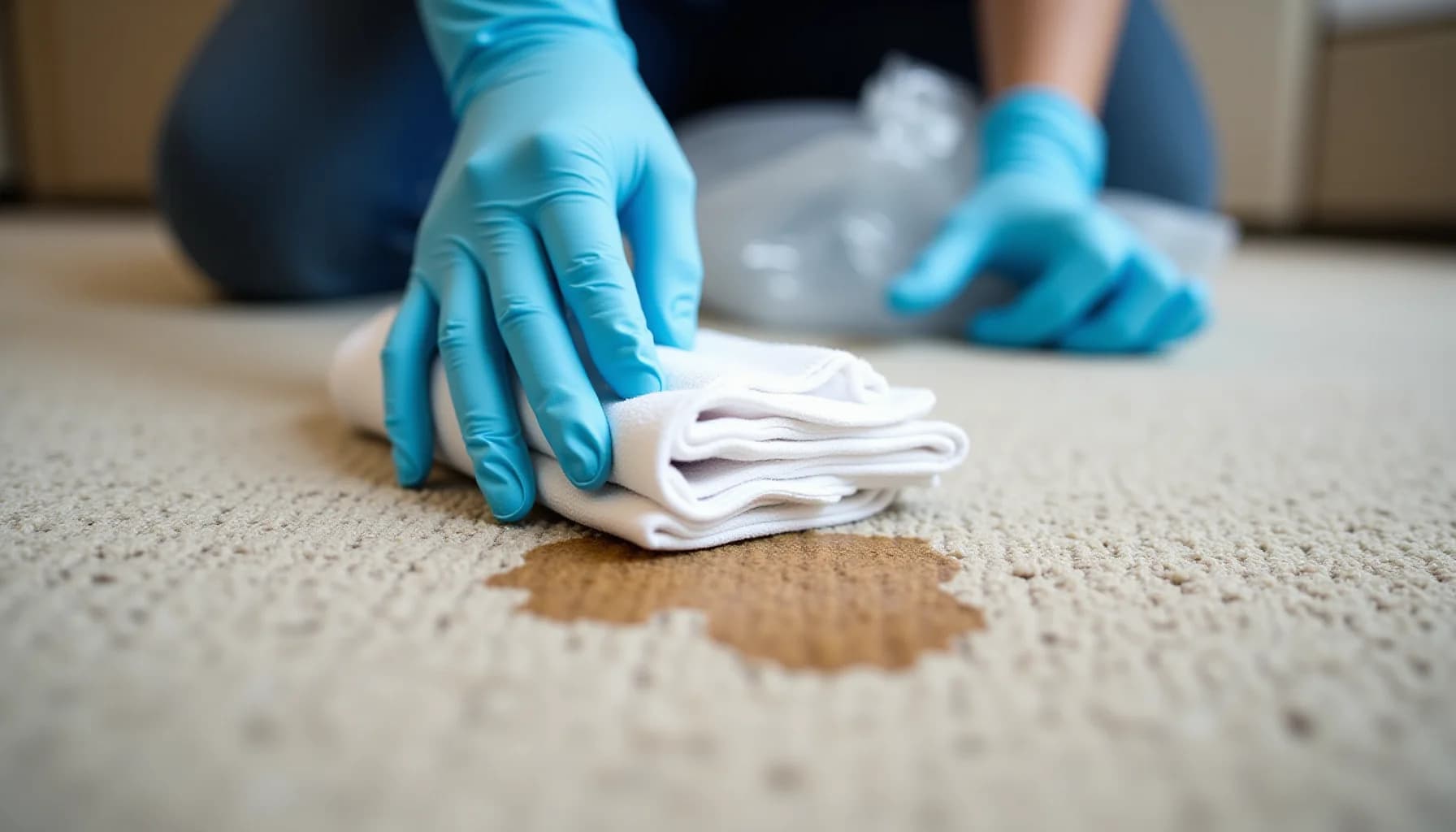
Blot the spill immediately with a clean white cloth or paper towels, working from the outer edge toward the center, and you can remove most coffee stains completely before they set. Coffee bonds to carpet fibers through tannins, the compounds that give it color, and those bonds strengthen fast, so acting within minutes is the difference between a quick cleanup and a permanent mark.
Use cold or lukewarm water only. Hot water drives tannins deeper into the fibers and locks the stain in place. For a fresh spill, mix 1/4 teaspoon of liquid dish soap with one cup of lukewarm water, spray lightly, and blot. Do not pour water directly onto the carpet; too much moisture saturates the backing and creates a secondary problem called wicking, where the stain resurfaces days later from below. Dry the area fast with a fan after cleaning to stop that from happening.
For stubborn stains, add one tablespoon of white vinegar to your dish soap solution. Vinegar helps break down the tannins without damaging fibers. On light-colored carpets only, a paste of one part hydrogen peroxide mixed with two parts baking soda, left for 10 to 15 minutes, can lift what soap alone cannot. Never use bleach on colored carpet; it causes permanent discoloration. Never scrub; it frays the fibers and spreads the stain wider. If the stain hasn't lightened after two attempts, stop and call a professional rather than risk setting it deeper, particularly on wool or any fiber that absorbs liquids more deeply than synthetics.
Why does coffee stain carpet so stubbornly?
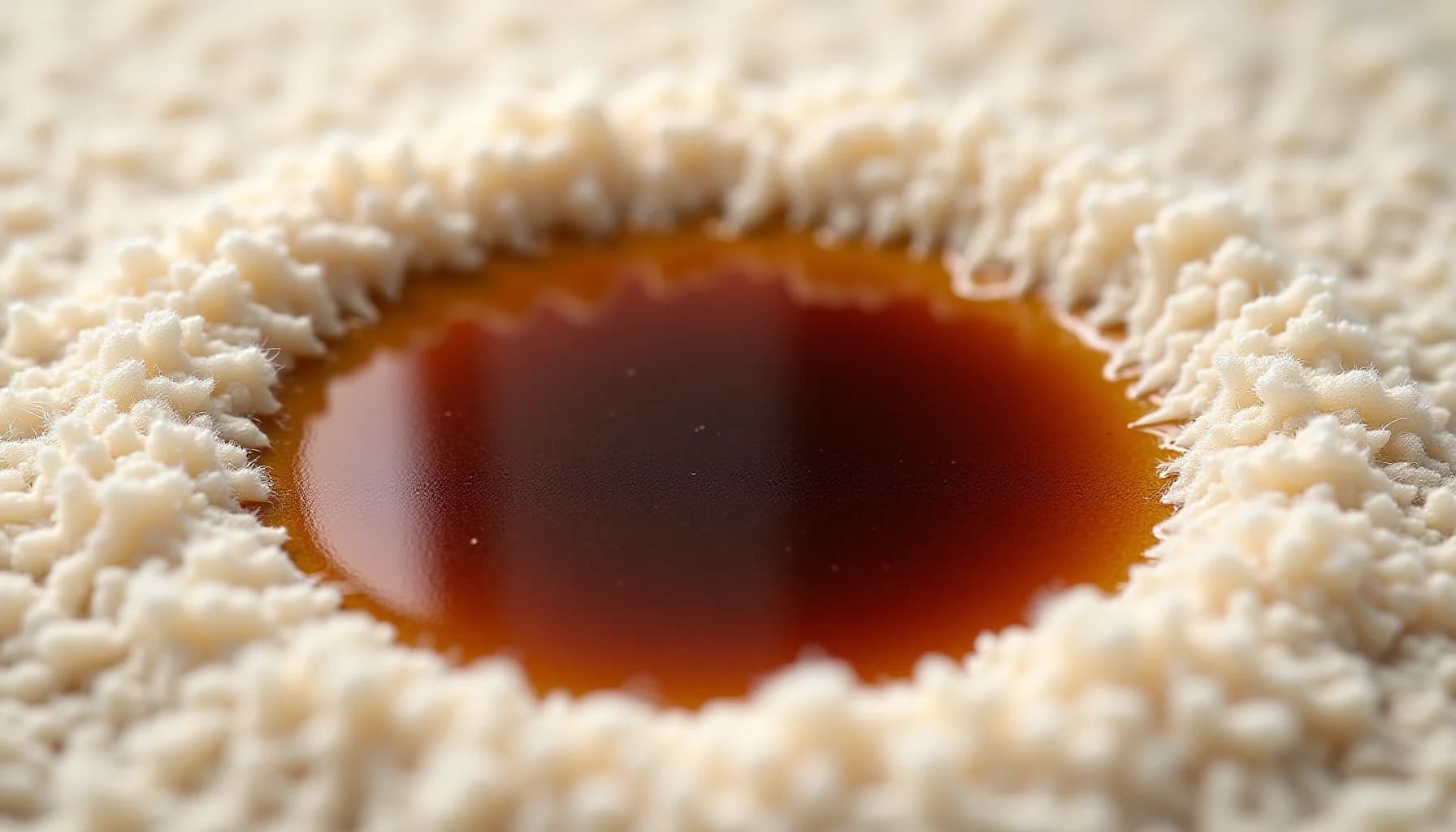
The culprit behind a coffee stain is not the liquid itself but the compounds dissolved in it. Coffee is rich in tannins, naturally occurring plant-based chemicals that give it both its color and its astringent bite. When coffee hits carpet fibers, those tannins bond chemically with the fiber strands, which is why a spill that looks like a simple brown puddle quickly becomes something far more resistant to plain water. The acidity of coffee accelerates this bonding, driving the tannins deeper into the fiber structure before most people have even grabbed a cloth.
The physical behavior of the liquid makes things worse. Coffee is thin and fast-moving, so it spreads outward and downward at the same time, wicking through the face fibers, past the primary backing, and into the secondary backing below. By the time a stain looks dry on the surface, the coffee may have traveled considerably deeper into the carpet pile.
Fiber type shapes how badly this goes. Wool absorbs liquids more deeply than synthetic fibers do, so a coffee spill on a wool rug is genuinely more serious than the same spill on a nylon or triexta carpet. Understanding which cleaning method is safe for your fabric before you reach for any cleaner matters here, because the wrong solvent on a sensitive fiber can cause damage that outlasts the original stain. If your coffee also contained milk or sugar, the stain is more complex still: proteins from milk and sugars each interact differently with fibers, raising the risk of discoloration and odor if the spill is not treated promptly.
What should you do the moment coffee hits the carpet?
Blot the spill immediately
Press a clean cloth or paper towels onto the spill, starting at the outer edges and working toward the center. This lifts the liquid without spreading it further into the fibers.
Apply your cleaning solution
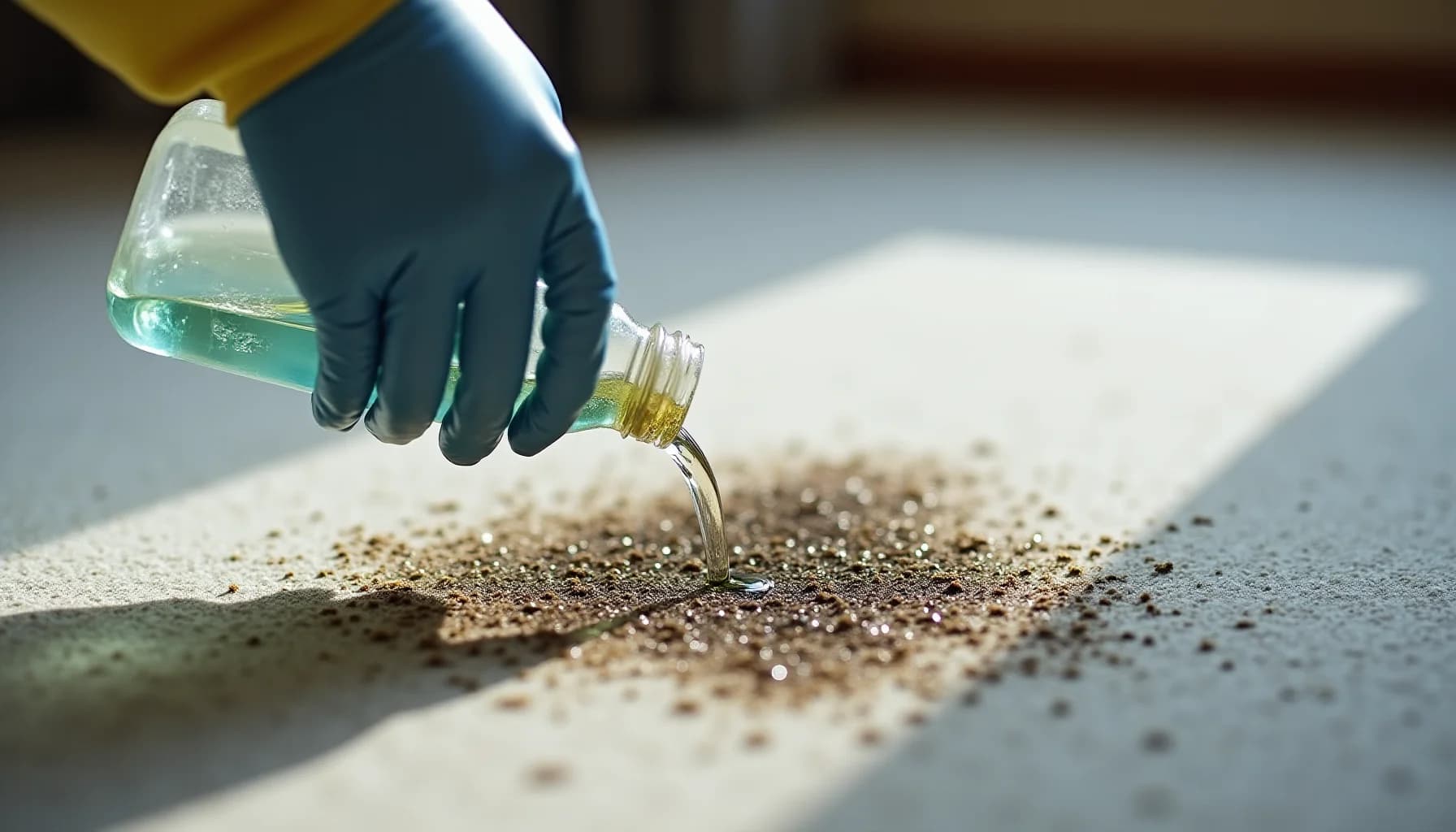
For a basic fresh stain, mix 1/4 teaspoon of liquid dish soap with 1 cup of lukewarm water in a spray bottle and apply it to the stain. For tougher stains, mix 1 tablespoon of liquid dish soap with 1 tablespoon of white vinegar in 2 cups of cold water, which helps break down the tannins bonded to the carpet fibers.
Work the solution in by blotting, not scrubbing
Apply the solution and blot repeatedly with a clean cloth, always moving from the outer edge inward. Scrubbing frays carpet fibers and drives the stain deeper, so keep the motion gentle and controlled.
Treat stubborn stains on light-colored carpet with a hydrogen peroxide paste
Mix one part hydrogen peroxide with two parts baking soda to form a paste, apply it directly to the remaining stain, and let it sit for 10 to 15 minutes before blotting it away. Use this method only on light-colored or white carpet, as hydrogen peroxide has bleaching properties that can discolor darker fibers.
Rinse with cold water and blot dry
Apply a small amount of cold water to the treated area to remove any cleaning solution residue, then blot firmly until the carpet feels nearly dry. Avoid over-wetting, as too much water can damage the carpet backing and promote wicking.
Dry the area completely to prevent wicking
Place a fan directly on the cleaned area until the carpet is fully dry, which stops moisture from drawing residual stain back up to the surface. If the stain reappears after drying, repeat the cleaning process once more before calling a professional.
What cleaning solutions actually remove coffee stains from carpet?
Four methods are worth knowing, each suited to a different level of stain severity. Start with the mildest and only escalate if needed.
Dish soap and water is the right first move for a fresh spill. Mix 1/4 teaspoon of liquid dishwashing detergent into one cup of lukewarm water and pour it into a spray bottle. Lightly mist the stained area, let it sit for a minute, then blot with a clean white cloth, working from the outer edge of the stain inward. Repeat until the stain lifts. One firm rule here: never use laundry detergent or automatic dishwasher detergent. Both contain chemicals that can permanently damage carpet fibers and backing.
Dish soap and white vinegar is the better choice when the spill contains milk or sugar, or if the basic soap method isn't cutting through the color. Mix one tablespoon of liquid dish soap with one tablespoon of white vinegar in two cups of cold water. The dish soap handles oils and sugars; the vinegar targets the tannins responsible for coffee's dark pigment. Apply the same way: light application, then blot.
Baking soda and vinegar works well on fresh stains if you prefer to avoid commercial products. Sprinkle baking soda directly over the wet stain, add a few drops of white vinegar, let the fizzing reaction work for a minute, then rinse with cold water and blot dry.
Hydrogen peroxide and baking soda paste is reserved for stubborn, older stains on light-colored or white carpets only. Mix one part hydrogen peroxide with two parts baking soda to form a paste, apply it directly to the stain, and leave it for 10 to 15 minutes before blotting and rinsing. The peroxide breaks down dark tannins while the baking soda lifts discoloration and absorbs odor. Skip this entirely on colored carpets: the bleaching properties that make it effective will also strip dye from the fibers.
Whichever solution you use, keep the carpet as lightly dampened as possible throughout. Over-wetting forces moisture deep into the backing, which creates a separate problem entirely.
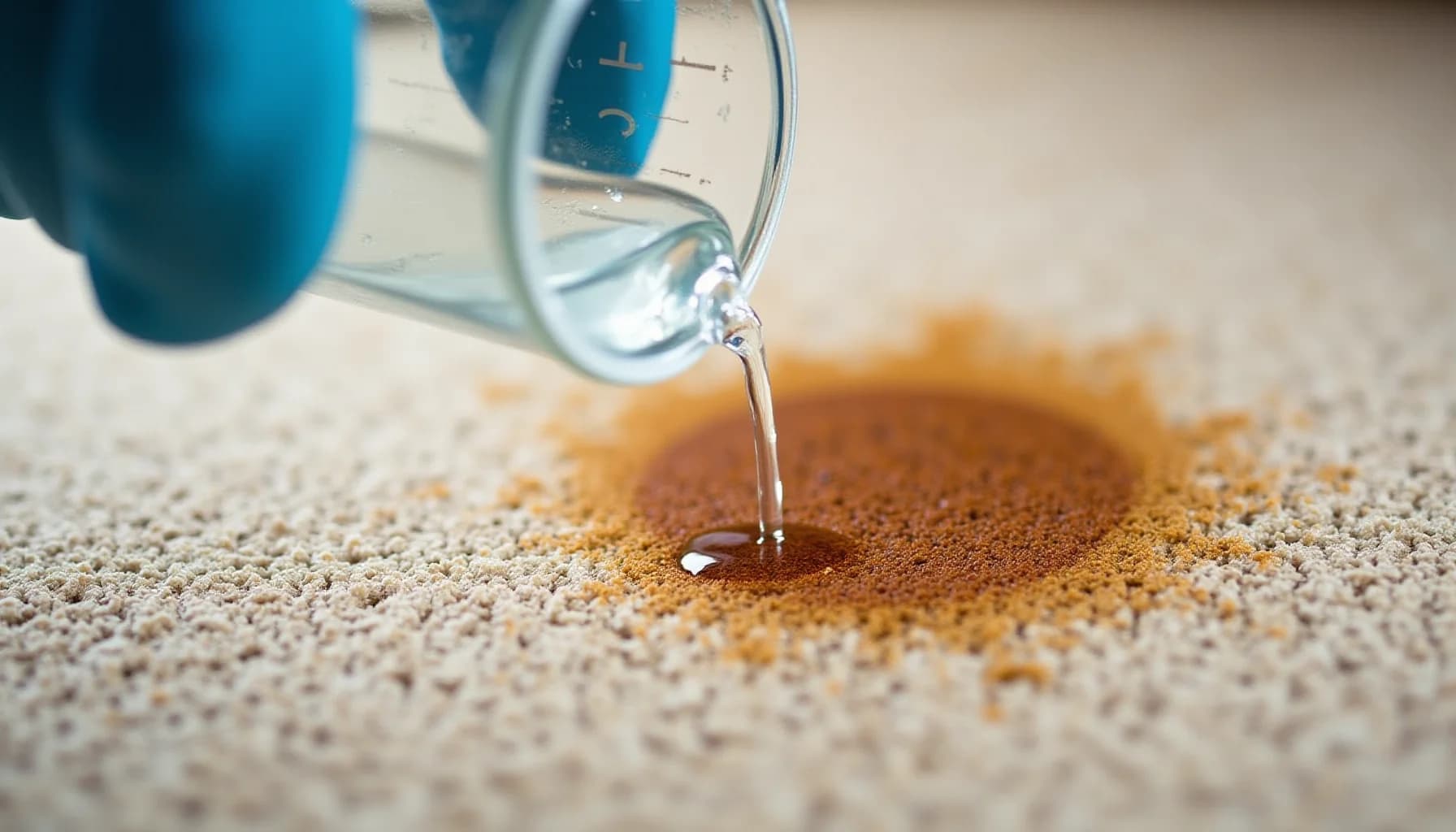
What mistakes make a coffee stain harder to remove?
Several instincts that feel logical in the moment will actively make a coffee stain worse. Knowing which ones to avoid is just as important as knowing the right method.
Using hot water. It seems like hot water would dissolve a stain faster, but heat does the opposite here. Tannins, the compounds responsible for coffee's color, bond permanently to carpet fibers when exposed to heat. Always use cold or lukewarm water, regardless of how long the stain has been sitting.
Scrubbing instead of blotting. Rubbing at a coffee spill with a brush or rough cloth spreads the stain outward and forces it deeper into the fiber structure. It can also fray and damage the carpet surface in ways that are impossible to reverse. The only correct motion is a firm, dabbing blot, working from the outer edge of the stain inward toward the center.
Reaching for bleach. On colored carpets especially, bleach causes permanent discoloration and degrades carpet fibers. Even on light-colored carpets, hydrogen peroxide is a far safer alternative for breaking down dark tannins.
Using laundry detergent or dishwasher detergent. Both contain chemical agents that can permanently damage carpet fibers or backing. Stick to plain liquid dish soap, which is formulated to be much milder.
Soaking the carpet with water. Over-wetting is a genuine risk. Too much water penetrates deep into the carpet backing and creates conditions for wicking, where residue travels back up the fibers and the stain reappears days after you thought it was gone. Use water sparingly, and once the stain is treated, dry the area as quickly as possible with a fan to stop wicking before it starts.
Does your carpet type change how you should treat a coffee stain?
The fiber your carpet is made from changes everything about which cleaning solution is safe to use and how aggressively you can work.
Synthetic carpets, particularly nylon and triexta (sold under the SmartStrand brand), are the most forgiving. Both materials resist liquid absorption better than natural fibers, and many come factory-treated with protective coatings that increase surface tension so spilled coffee beads up rather than soaking in immediately. That small window matters. On a coated synthetic carpet, you may have enough time to blot the spill cleanly before the tannins bond to the fibers at all. The dish soap and water method, and the dish soap and vinegar solution, are both safe on these materials.
Wool is a different problem entirely. Wool absorbs liquids deeply and quickly, and the fibers are far more sensitive to chemical damage. Using hydrogen peroxide on a wool carpet, even diluted, risks stripping the natural color. Vinegar, despite its usefulness on synthetics, can be too harsh for wool at full strength. If your carpet is wool, plush, or a high-end designer rug, stop after one careful attempt with plain cold water and a tiny amount of mild dish soap. If the stain does not lighten after two tries, call a professional cleaner. Continued DIY attempts on delicate natural-fiber carpets cause more irreversible damage than the original stain. For a broader look at which cleaning method is safe for your fabric, the fiber type is always the starting point, not the stain itself.
Frequently asked questions
Can a coffee stain on carpet be fully removed?
Why is coffee so hard to get out of carpet?
Should I use hot water to remove a coffee stain?
What should I do first when coffee spills on my carpet?
When should you call a professional carpet cleaner?
Two failed attempts are your signal to stop. If the stain hasn't visibly lightened after trying a cleaning solution twice, continued DIY efforts risk pushing the stain deeper into the backing or damaging the fibers permanently. Delicate materials, such as wool, plush, or designer rugs, are especially vulnerable, since they absorb liquid deeply and react poorly to strong cleaners. For those, a professional cleaner is the safer call from the start. If you are unsure what fiber your carpet or upholstery is made from, reviewing which cleaning method is safe for your fabric before applying any solution can save you a costly mistake.
Looking forward, prevention is far more practical than repeated stain removal. Stain protection treatments work by creating an invisible barrier around carpet fibers that increases surface tension, so spilled coffee pools briefly on top rather than soaking in immediately, giving you extra seconds to blot. Have your carpets professionally cleaned every six to twelve months to maintain fiber integrity and remove the embedded residue that home cleaning misses. High-traffic areas, where spills are likeliest, benefit most from this routine. Building that schedule into your calendar now, rather than reacting after the next spill, is what keeps carpet looking clean year after year.
How this article was made
Researched and written with AI assistance. What gets published is a human editorial decision. Grounded in 8 cited sources.
Edited by Claire Mercier, Editor. The guides are written with AI assistance.
Sources (8)
- Comparative Efficacy of Four Stain Removal Methods for Bleach-Shade Composite Resins after Immersion in Staining Solutions: An In Vitro Study - PMC
- Comparative Efficacy of Four Stain Removal Methods for Bleach-Shade Composite Resins after Immersion in Staining Solutions: An In Vitro Study - PubMed
- Comparative Efficacy of Four Stain Removal Methods for Bleach-Shade Composite Resins after Immersion in Staining Solutions: An In Vitro Study
- How to Get Coffee Stains Out of Carpet
- How to Get Coffee Stains Out of Your Carpet?
- How Remove Coffee Stain from Carpet
- Remove coffee & beverage stains from carpet and prevent them from coming back - Multi-Clean
- How to remove coffee stains from carpet | How to remove old coffee stains from carpet | Mint Condition | Orlando Florida