How to Identify Your Cooktop Type in 3 Quick Steps
Part of Appliance Cleaning · article 2 of 13
On this page
| What You See or Notice | Cooktop Type | What It Means for You |
|---|---|---|
| Open flame, metal grates, gas pipe behind unit | Gas | Remove grates to clean; any cookware works |
| Spiral metal coils, 3- or 4-prong cord | Electric coil | Remove coils to clean; never submerge them |
| Smooth glass surface, glows red when on, gradual heat | Electric radiant | Wipe-clean surface; any cookware works |
| Smooth glass surface, surface stays cool, hums when on | Induction | Easiest to wipe clean; magnetic cookware required |
| Smooth glass, uncertain — magnet sticks firmly to surface | Induction confirmed | Spills won't bake on; budget for compatible pots |
| Smooth glass, uncertain — magnet does not stick to surface | Electric radiant confirmed | Scratch-safe pads only; no cookware restrictions |
Start by looking at the surface and the connections you can see without moving anything. Gas cooktops are the easiest to rule out: if you see raised metal grates sitting above individual burners, or you notice a flexible yellow or stainless steel gas pipe behind the unit, you have gas. The single distinguishing test for gas versus everything else is whether an open flame appears when you turn a burner on.
If the surface is smooth glass with no grates, you are either looking at an electric radiant cooktop or an induction cooktop. Both look nearly identical from above. The one test that separates them: hold a magnet against the center of the cooking zone on the cooktop surface itself. An induction unit will attract the magnet firmly; a radiant electric surface will not.
When even that test feels uncertain, pull the stove away from the wall slightly and check the cord. A thick three- or four-pronged electrical cord confirms electric or induction. A gas pipe eliminates both.
What does your cooktop look like up close?
- Induction cooktop
- A cooktop that uses electromagnetic energy to heat magnetic cookware directly, leaving the glass surface itself relatively cool to the touch. It requires pots and pans that attract a magnet to function.
The surface itself tells you most of what you need to know before you touch a single control.
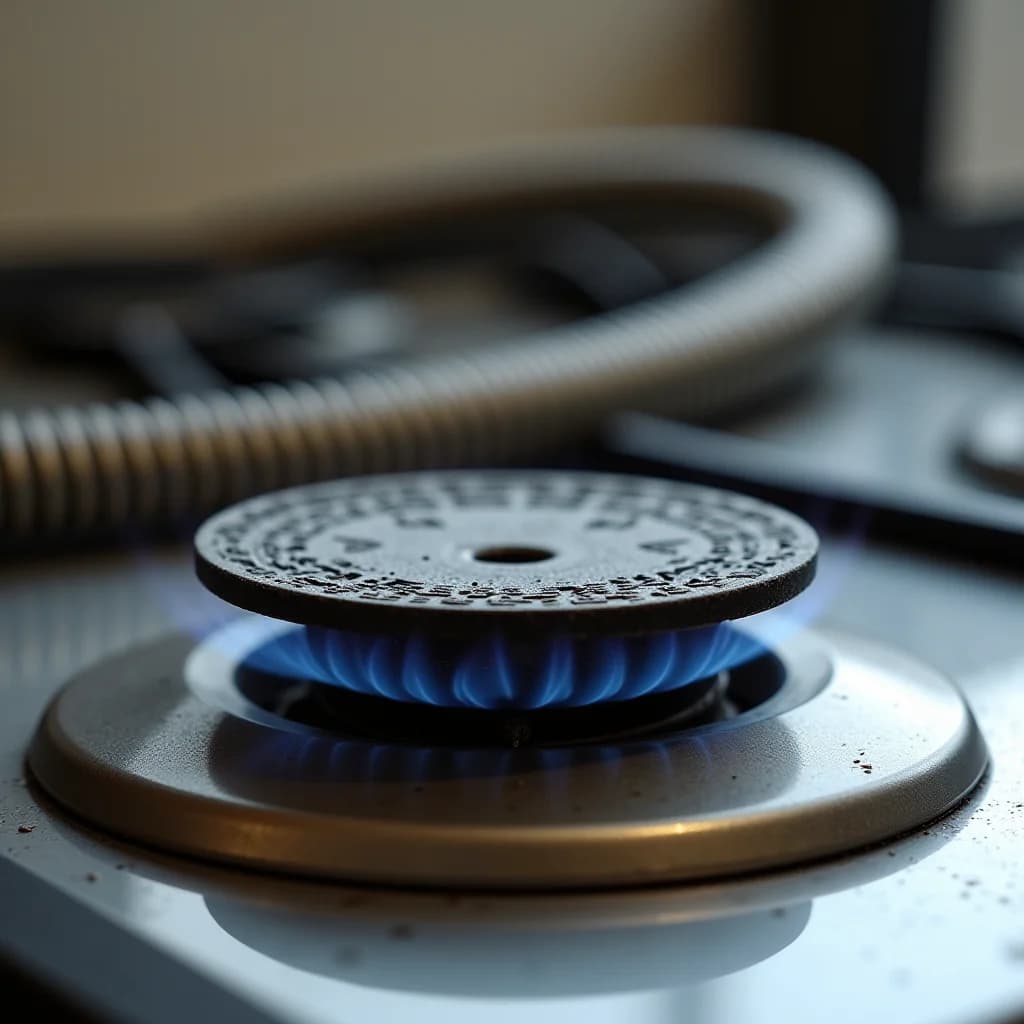
A gas cooktop sits above the counter with raised metal grates, usually cast iron, that hold pots up off the burner. Underneath those grates are the burner heads, small circular fixtures with tiny ports around the rim where the flame emerges. The whole assembly is elevated and has visible gaps, separate pieces, and a mechanical feel. Nothing about it is flat.
An electric coil cooktop is also fairly easy to place. Four or more spiral metal coils sit in shallow, removable drip pans, and the coils plug directly into receptacles on the range. The surface around them is typically painted steel, not glass.
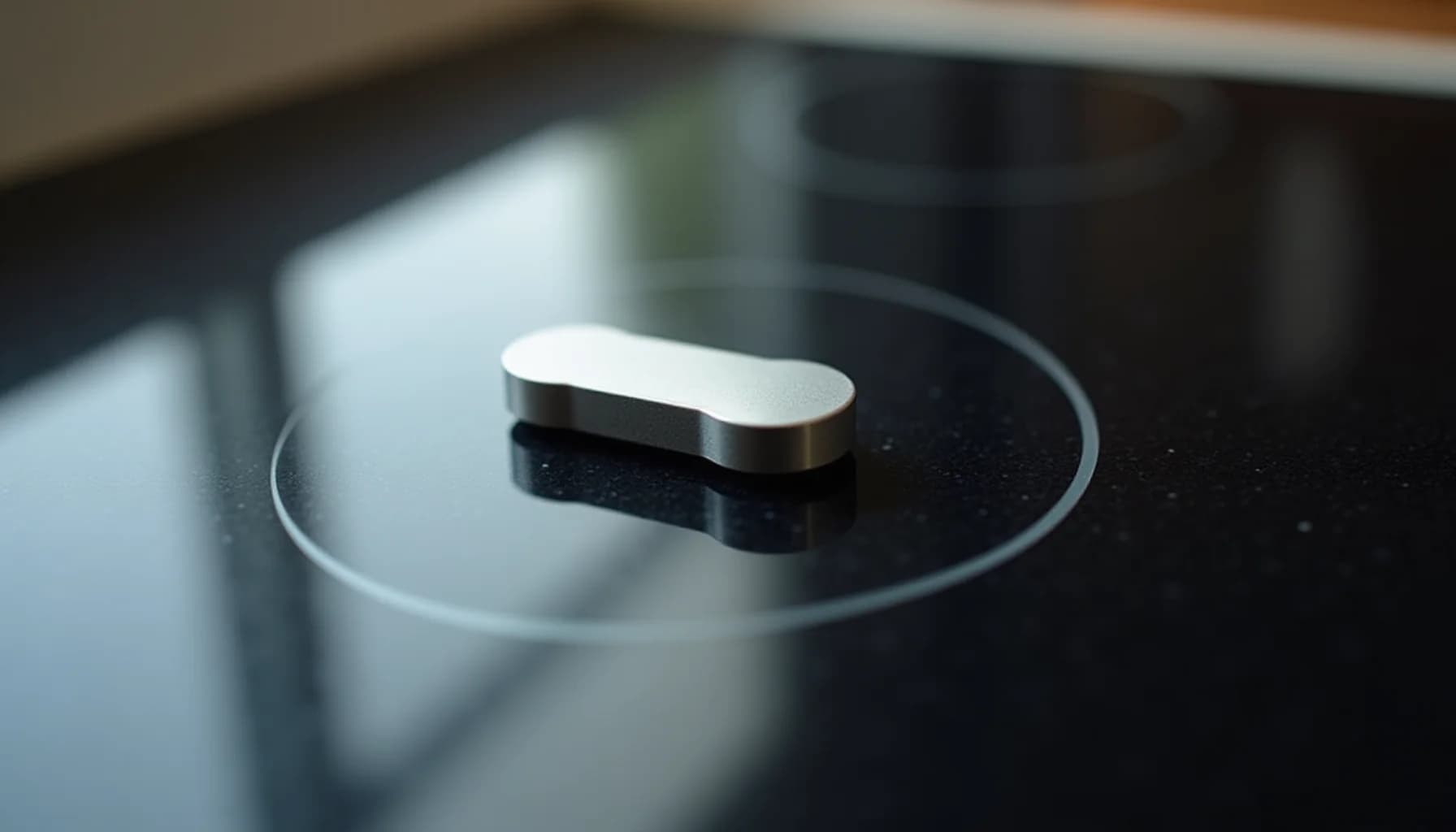
The real point of confusion is between a smooth-top electric cooktop and an induction cooktop. Both have a flat, black glass-ceramic surface, and both look nearly identical at rest. The key visual difference is that many induction cooktops print a faint coil or loop symbol directly on the glass to mark each heating zone. Those markings are specific to induction. Some models also have a fully touch-based control panel with a digital display showing numbered power levels, rather than physical knobs or dials.
If the surface is flat glass and carries no visible markings or symbols over the cooking zones, the next step is to check behind the unit rather than guess from appearance alone.
How can you tell if your glass-top cooktop is induction or electric?
Both glass-top cooktop styles, radiant electric and induction, use the same smooth ceramic-glass surface from the same two major suppliers. That surface tells you almost nothing on its own. Getting this wrong has real consequences: buy the wrong cleaning product and you may scratch the glass; assume you can use any pan on an induction unit and you will get no heat at all, wasting time and potentially convincing yourself the cooktop is broken.
Run these two tests in order.
The magnet test, done correctly. Take a standard refrigerator magnet and hold it against the cooktop surface itself, directly over a burner zone, not against the bottom of a pan. If the magnet is drawn toward the glass with noticeable pull, the electromagnetic coils beneath the surface are attracting it, confirming induction. If it slides freely with no pull, you have a radiant electric model. A word of caution: some induction units use glass formulations that attract magnets only weakly, so a faint response still counts. The test works better on the cooktop surface than on cookware, because a pan that happens to be non-magnetic can mislead you into thinking the cooktop is electric when it is not.
The heat response test. Set a burner to medium and place a dry palm two inches above the surface without touching it. On a radiant electric model you will feel warmth building from the glass within thirty to sixty seconds. On an induction unit the glass stays cool. If you have a compatible magnetic pan, place it on the burner instead: induction heats the pan almost instantly, while radiant electric warms gradually.
If both tests give ambiguous results, check the control panel. Induction units almost universally use touch controls with a digital power-level display rather than physical knobs, and many print a coil-loop symbol directly on the glass over each burner zone.
How does your cooktop type affect cleaning and maintenance?
Still unsure?
- Check behind or beneath the stove for a thick 3- or 4-pronged electrical cord (electric or induction) or a flexible yellow or stainless steel gas pipe (gas)
- Test the cooking surface with a small magnet held directly against the cooktop glass — a firm magnetic pull confirms induction, no pull confirms electric
- Turn on a burner and watch: an immediate, near-instant response points to induction; a gradual warm-up that eventually glows red is electric coil or radiant electric
- If you still can't tell, locate the model number on the frame or door edge and look it up in the user manual or manufacturer's website before calling a qualified appliance technician
Does your cookware work with your cooktop type?
Once you know your cooktop type, the next practical question is whether your existing pots and pans will actually work with it. The answer depends entirely on which type you have, and one type is far more restrictive than the others.
Gas and electric coil cooktops accept virtually any cookware: stainless steel, nonstick, cast iron, copper, and aluminum all perform fine on either. There are no compatibility surprises.
Induction is different. Because it heats the pan directly through an electromagnetic field rather than a hot surface, the cookware itself must be made from a magnetic material. Cast iron and most stainless steel qualify; pure aluminum, copper, and most glass do not. Before assuming your current pots are compatible, run a quick test: hold a magnet to the bottom of each piece. If it holds firmly, the cookware works on induction. If it slides off, it will not heat at all on an induction cooktop.
Two misconceptions are worth correcting here. First, many homeowners assume that because induction looks similar to a radiant electric cooktop, their cookware transfers between the two without issue. It often does not. Second, some assume induction is weaker technology because of its association with smooth glass surfaces. In fact, induction uses 85–95% of the heat it generates, while gas uses only 35–65%, losing the rest to the surrounding air. The power delivery is not the problem; the cookware requirement is the adjustment.
How this article was made
Researched and written with AI assistance. What gets published is a human editorial decision. Grounded in 8 cited sources.
Edited by Claire Mercier, Editor. The guides are written with AI assistance.
Sources (8)
- The Difference Between Gas, Electric and Induction Cooktops | AJ Madison
- Is My Stove Gas or Electric? How to Tell [Quick Identification Guide] - TrueTips.blog
- Decoding Your Kitchen: Identifying Induction vs. Electric Cooktops – Lukata LTD
- How To Tell If Cooktop Is Induction: Quick & Easy Tips
- How Do I Know If My Cooktop Is Induction: Easy Tips Revealed
- How To Know If Cooktop Is Induction: Quick & Easy Tips
- How To Tell If Cooktop Is Induction: A Simple Guide - Kitchendemy
- 5 Different Types of Cooktops & Stovetops | Whirlpool