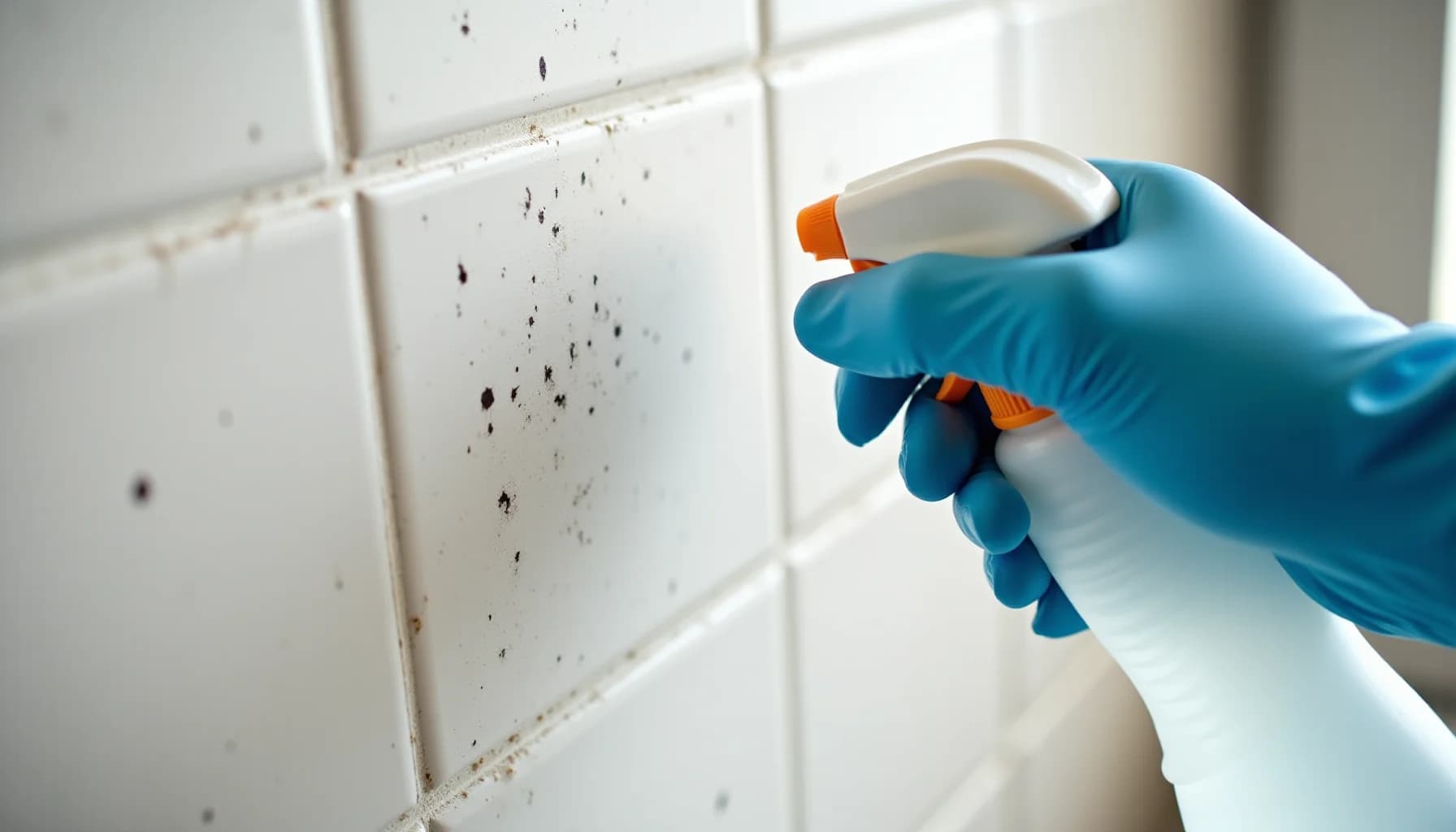
How to Clean Shower Mold (and Stop It Coming Back)
Part of Bathroom Cleaning · article 8 of 16
On this page
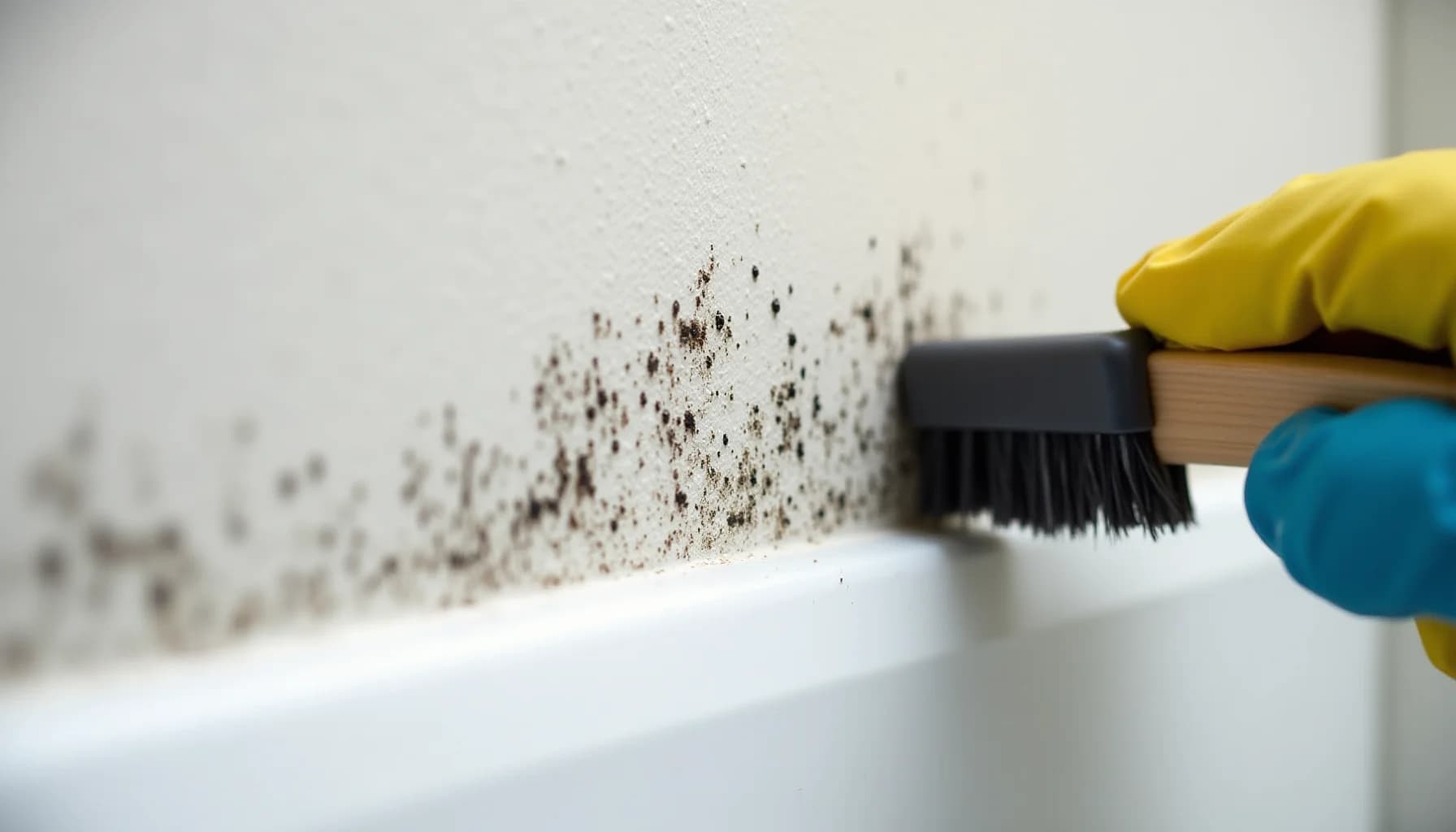
Spray undiluted white vinegar directly onto moldy surfaces, let it sit for at least 30 minutes, then scrub with a stiff-bristled brush, rinse with warm water, and dry completely. Vinegar kills around 82% of mold species and penetrates porous grout and caulk where bleach cannot follow. On non-porous surfaces like ceramic tile, porcelain, and glass, a bleach solution of one-third cup per gallon of water works faster, give it 10 to 15 minutes before scrubbing. Never mix the two: bleach combined with vinegar produces chlorine gas, which is genuinely dangerous in an enclosed bathroom. Choose your cleaner based on the tile or surface material you're working with, apply it at the correct dwell time, and ventilate the room throughout.
What is shower mold and why does it keep coming back?
Mold is a fungus, and unlike the thin surface film of mildew, it can colonize both porous and nonporous materials. It travels as microscopic airborne spores that are invisible to the naked eye. Once those spores land on a damp surface with a food source nearby, they can begin growing within 24 to 48 hours, according to EPA guidance on mold and moisture.
Bathrooms are ideal breeding grounds because a single hot shower can push indoor humidity well above 70%. That warm, moist air settles on cooler tile and grout surfaces, where leftover soap scum, body oils, and shampoo residue give mold exactly the organic food source it needs. Poor ventilation keeps that moisture trapped, and the cycle repeats every day.
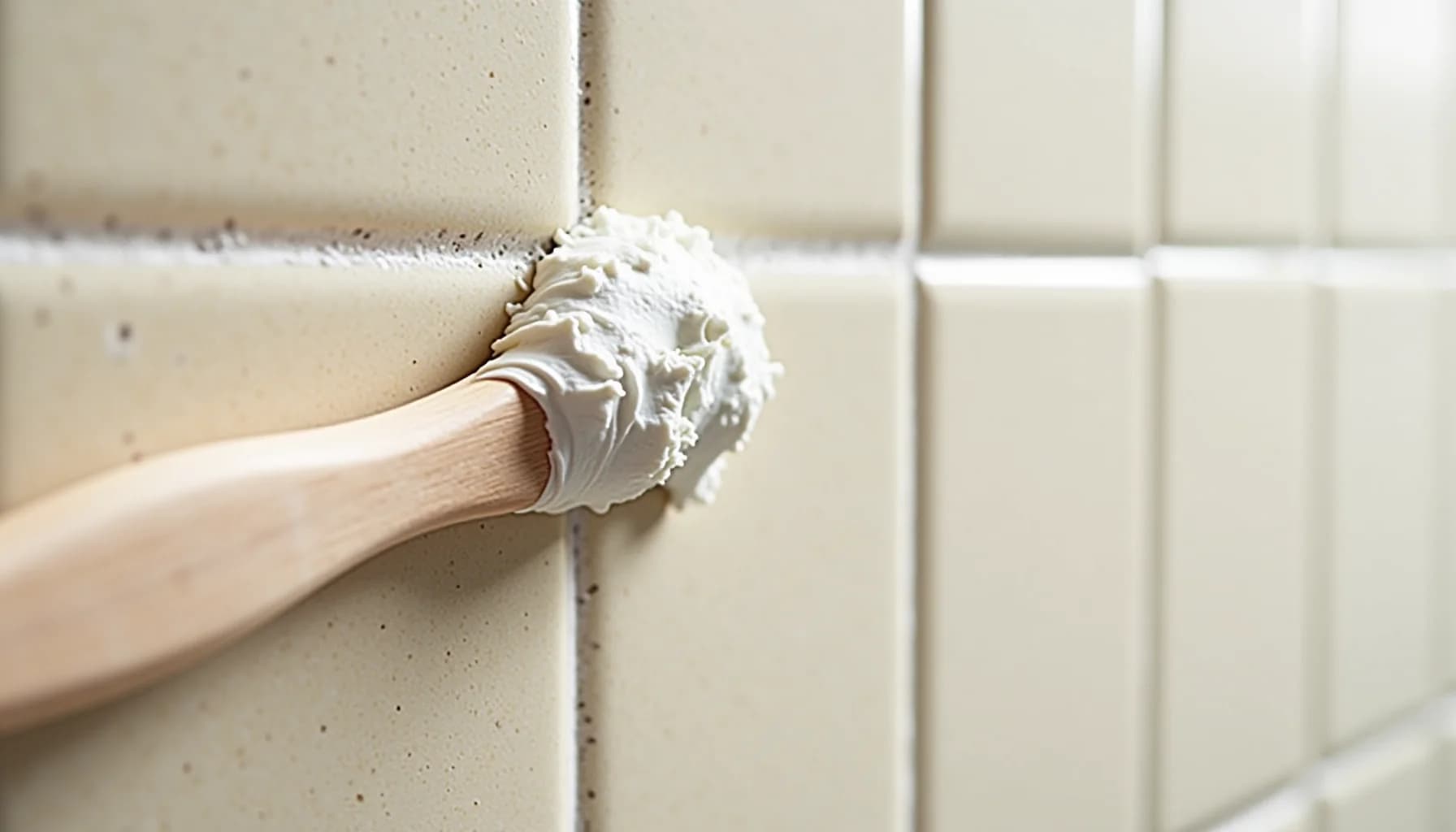
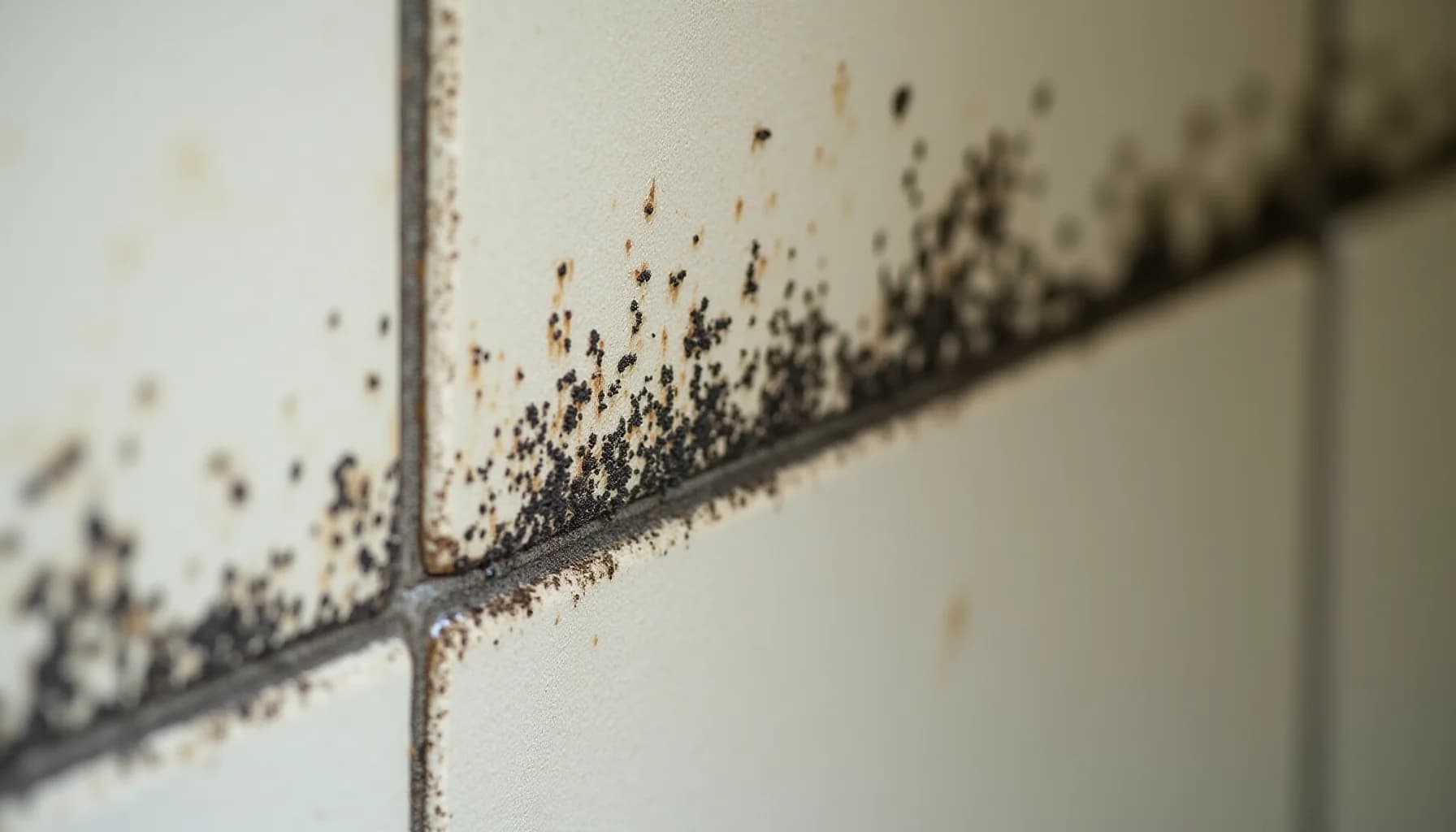
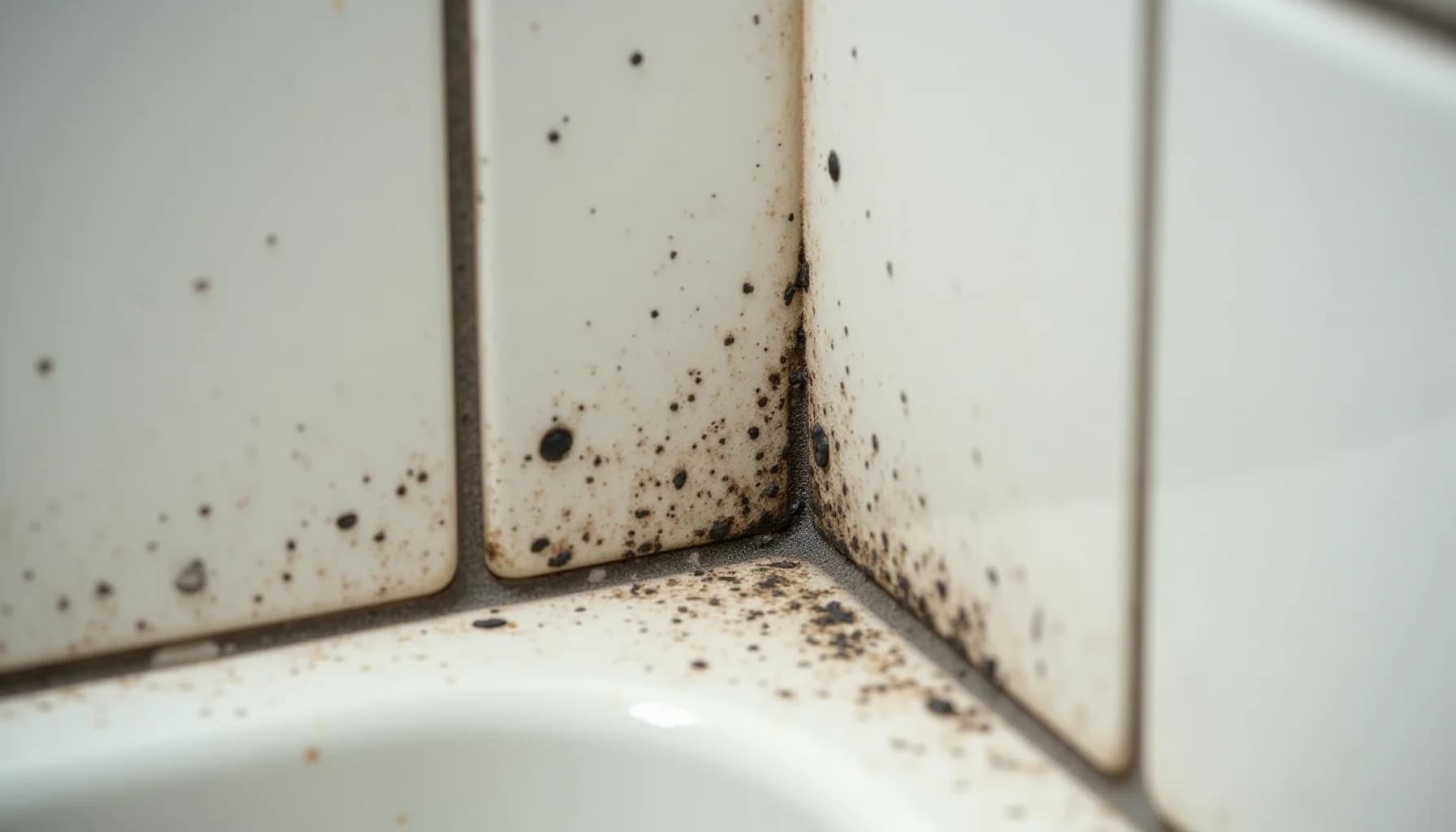
What trips most homeowners up is the difference between surface mold and deep mold. Surface mold sits on top of tile, glass, or sealed porcelain, and you can usually wipe or scrub it away without too much difficulty. The harder problem is mold that has worked its way into grout lines or through damaged caulk. Grout is cement-based and porous, which means mold hyphae, the root-like structures of the fungus, can grow below the visible surface layer. Silicone caulk presents a similar issue: once mold is inside the bead rather than on top of it, no amount of scrubbing will reach it. Those two materials require a fundamentally different approach than cleaning a flat tile surface, and knowing which situation you are dealing with determines everything that comes next.
Which Cleaning Agent Works Best for Your Shower Surface?
Protect yourself and ventilate the space
Open the bathroom window, turn on the exhaust fan, and put on rubber gloves and an old face mask before you start. Mold releases airborne spores when disturbed, and a confined bathroom concentrates them quickly.
Choose the right cleaner for your surface
Use a bleach solution (1/3 cup of bleach per 1 gallon of water) on non-porous surfaces like ceramic tile, glass, porcelain, or fiberglass, where it eliminates visible mold fast and removes staining. Use undiluted white distilled vinegar on porous materials such as unsealed grout or painted walls, since vinegar penetrates to the roots while bleach cannot, and never mix the two chemicals as combining them produces toxic chlorine gas.
Apply the cleaner and respect the dwell time
Spray or apply your chosen cleaner until the moldy surface is fully wet, then leave bleach solution for 10 to 15 minutes on tile, or vinegar for 30 to 60 minutes on porous surfaces. Both treatments work best when the room is between 70 and 80 degrees Fahrenheit, so avoid cleaning on a cold morning without warming the space first.
Scrub, rinse, and dry completely
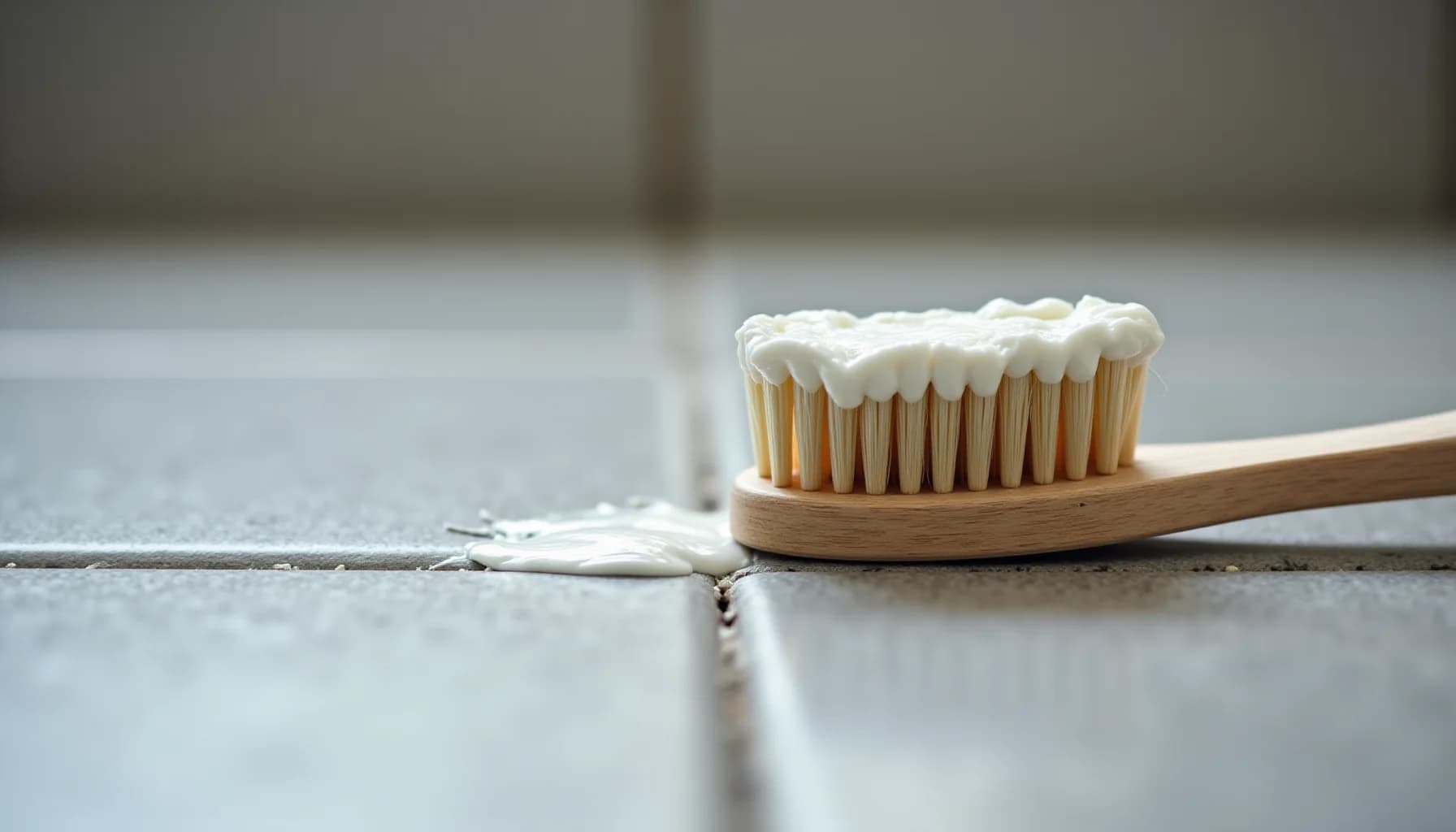
Scrub firmly with a stiff-bristled brush, working the cleaner into grout lines and corners, then rinse thoroughly with warm water. Dry the surface completely with a microfiber cloth, since any remaining moisture restarts the growth cycle within 24 to 48 hours.
Replace caulk or grout when cleaning is not enough
If mold inside a silicone caulk bead keeps returning after cleaning, remove the old caulk entirely, let the area dry fully for at least 24 hours, and recaulk with a mold-resistant silicone product. For grout where mold has penetrated deeply, re-grouting with epoxy grout is the only permanent fix, as epoxy is non-porous and resists mold infiltration in a way cement-based grout cannot.
Build a two-minute post-shower routine to prevent regrowth
After every shower, run a squeegee across the glass, tiles, and walls, then wipe remaining moisture with a microfiber cloth; the whole process takes under three minutes and removes the standing water mold needs to establish itself. Run your exhaust fan for at least 30 minutes after each shower and keep indoor humidity below 50 percent, using a humidity-sensing fan if possible, to cut off the moisture supply that drives every recurrence.
When Should You Clean Shower Mold Versus Replace the Surface?
Surface type decides both which cleaner to use and whether cleaning is worth attempting at all.
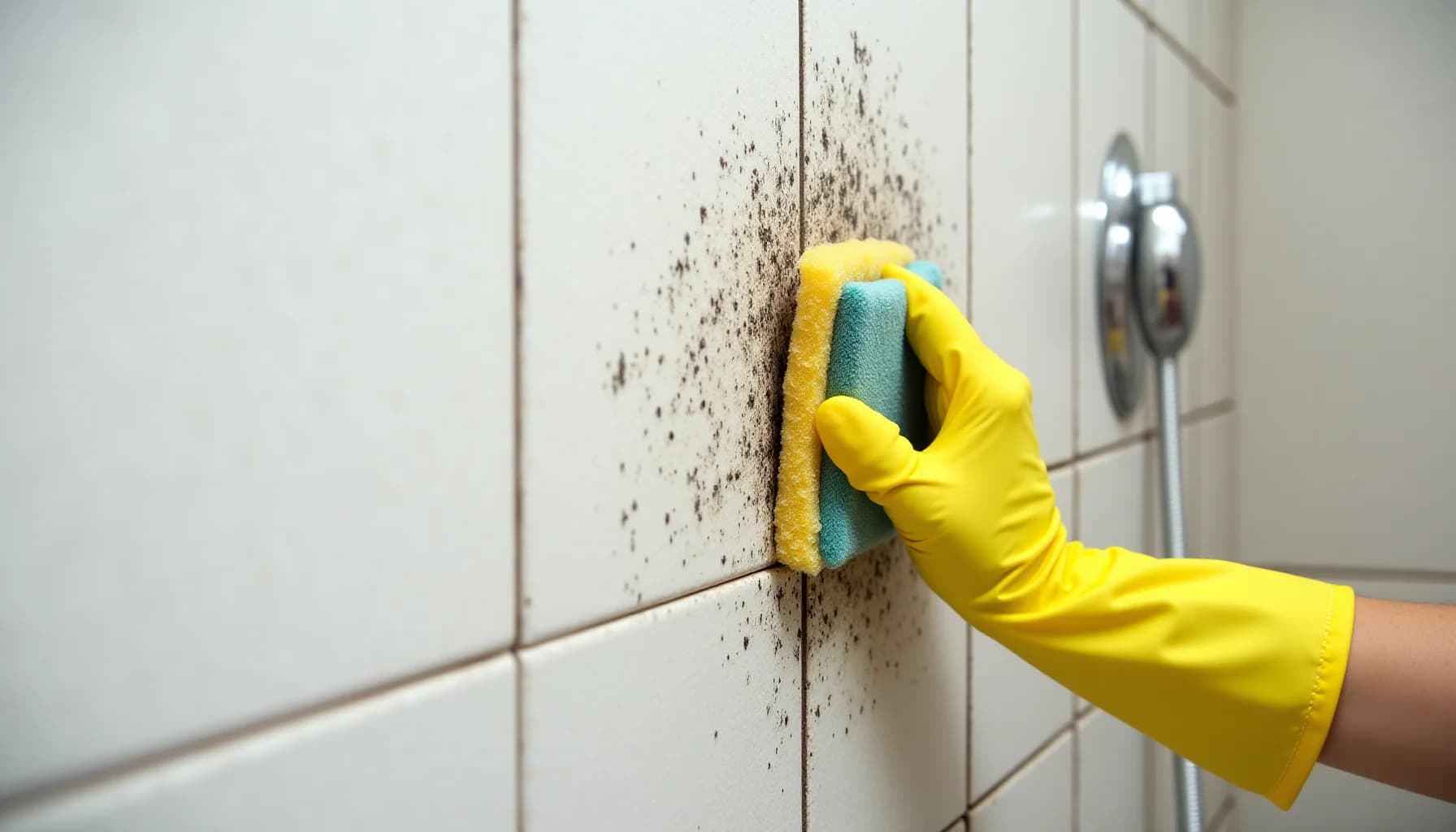
Ceramic tile, porcelain, and glass: These non-porous surfaces are where bleach earns its reputation. Mix ⅓ cup of Clorox Disinfecting Bleach into 1 gallon of water, apply it directly to the moldy area, and let it sit for 10 to 15 minutes. Scrub with a stiff-bristled brush, rinse thoroughly with warm water, and dry the surface completely. Do not leave the solution on longer than recommended, as extended contact can cause discoloration. For best results, the bathroom should be between 70 and 80°F; below 50°F the bleach loses up to 40% of its kill rate, and above 90°F it evaporates before it can work.
Grout: Grout is cement-based and porous, which means bleach stays on the surface while its water component soaks deeper, potentially feeding mold roots below. Hydrogen peroxide handles black staining well here. Apply it directly to the grout lines, allow 10 to 15 minutes of contact time, then scrub firmly and rinse. For recurring mold that has genuinely colonized the grout body, no amount of cleaning will produce a lasting result. Re-grouting is the only permanent fix, and if you go that route, choose epoxy grout: its non-porous, water-resistant composition resists mold infiltration in a way cement-based grout simply cannot match. If you are unsure what type of grout or tile you have, identifying your tile type before choosing a cleaning method prevents both damage and wasted effort.
Silicone caulk: This is where cleaning consistently fails. Bleach can lighten the staining temporarily, but mold that has worked its way inside the caulk bead will return within weeks. The correct approach is to remove the old caulk entirely, allow the underlying surface to dry fully, and re-seal with a mold-resistant silicone product. Trying to clean over compromised caulk is a short-term fix that costs more time in the long run than a single proper replacement.
Why does shower mold keep coming back?
Cleaning shower mold and then watching it return within two or three weeks is one of the most frustrating home maintenance cycles there is. The mold itself is not the root problem. The problem is whatever is keeping your shower wet long enough for mold spores, which are always present in indoor air, to take hold again.
Regular showering can push indoor humidity well above 70%. Without adequate ventilation, that moisture lingers on tile, grout, and caulk for hours. The EPA recommends keeping indoor relative humidity below 50% to inhibit mold growth, and a properly sized exhaust fan is the most reliable way to reach that target. For a standard bathroom, the minimum is 50 CFM; for larger spaces, size the fan at 1 CFM per square foot. The fan must vent directly outdoors, not into an attic, where moisture simply accumulates elsewhere. Run it during every shower and for at least 30 minutes afterward. If you find yourself forgetting, a fan with a built-in humidity sensor will handle the timing automatically, switching off once moisture drops below the threshold.
Ventilation alone is not enough if water sits on surfaces after you step out. A quick pass with a squeegee across the glass, tiles, and grout lines, followed by a wipe with a microfiber cloth, takes under three minutes and removes the standing moisture that mold needs to germinate within 24 to 48 hours. Soap scum, body oils, and shampoo residue left on surfaces also serve as a food source, so the wipe-down matters for more than just dryness.
If mold still returns after you have addressed ventilation and drying habits, look for a slow plumbing leak or moisture intrusion behind the wall. Repeated surface cleaning cannot fix a concealed moisture source.
Frequently asked questions
Can I clean shower mold myself, or do I need a professional?
Should I use bleach or vinegar to clean shower mold?
How long do I need to leave the cleaner on before scrubbing?
Why does mold keep coming back in my shower even after I clean it?
Is shower mold actually dangerous to your health?
The short answer is: for most healthy adults, shower mold is more of a nuisance than a genuine threat. In small amounts, it primarily triggers allergy-type symptoms, including a runny nose, sneezing, headaches, drowsiness, and congestion. If you already live with seasonal allergies or asthma, you may notice your bathroom time leaves you feeling worse than usual. That is worth addressing, but it is not an emergency.
The "toxic black mold" alarm you may have seen online refers specifically to Stachybotrys chartarum, a fungus that produces mycotoxins. The critical nuance most headlines skip: mycotoxins pose the greatest risk when ingested, not when briefly inhaled in a shower environment. The typical bathroom rarely sustains the conditions needed for significant toxin production, so the jump from "I have black mold in my grout" to "my home is poisoning me" is rarely supported by the facts.
Where the concern is legitimate is with vulnerable populations: elderly family members, young children, and anyone with a compromised immune system due to illness or medical treatment face a meaningfully higher risk from mold exposure and deserve a quicker, more thorough response.
The practical upshot: treat shower mold consistently, protect vulnerable household members, and resist the panic framing. Address the mold, then address the moisture that feeds it.
How this article was made
Researched and written with AI assistance. What gets published is a human editorial decision. Grounded in 8 cited sources.
Edited by Claire Mercier, Editor. The guides are written with AI assistance.
Sources (8)
- How to Clean Mildew and Mold From the Shower - The Maids
- How to Remove Mold Stains in the Shower & Bathroom Walls | Clorox™
- How To Get Rid Of Mold In Shower - Got Mold In Bathroom?
- How to Clean Shower Mold: Tested Methods That Actually Work
- How to Clean and Remove Mold from Your Shower | Elite Restoration
- The Easy Shower Cleaning Trick That Prevents Mold and Grime
- The War on Shower Mold | Strategies For Mold Removal
- How to Prevent Mold in Shower | The Long-Term Fix You Should Know – Apollo Tile