Seven Field Tests to Identify Your Tile Type
Part of Bathroom Cleaning · article 2 of 16
On this page
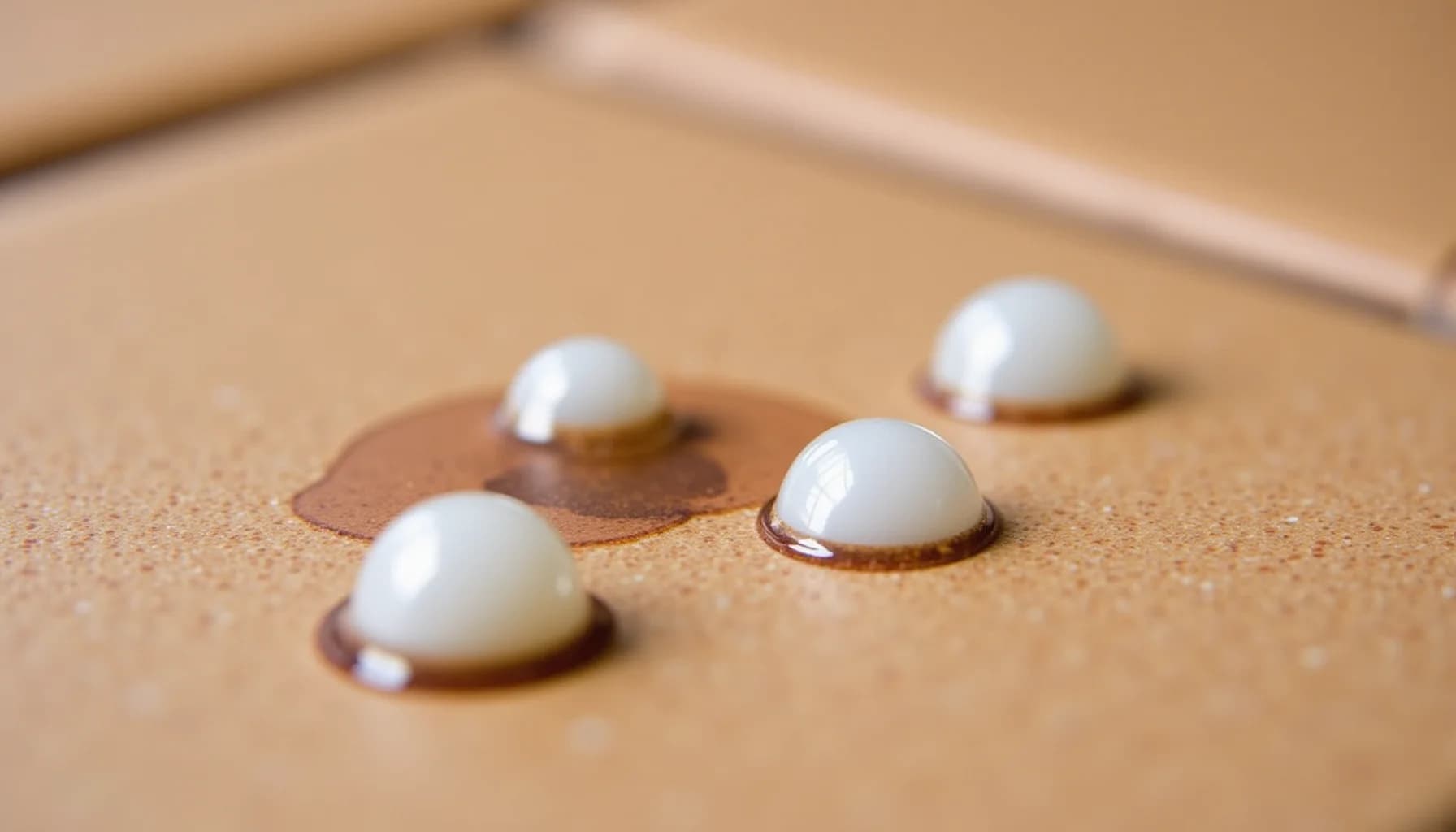
Check the original packaging first: most manufacturers label tiles as ceramic or porcelain, and that label is the fastest, most reliable answer you'll get. If packaging is gone, run physical tests instead. Drop a few beads of water on an unglazed section or the tile's back face. Porcelain absorbs little or nothing; standard ceramic darkens within seconds. Flip a loose tile and feel the unglazed surface: porcelain is smooth and fine-grained, ceramic feels coarse. Examine the edges and body color too. A chipped porcelain tile shows uniform color throughout its thickness, while ceramic often reveals a different shade beneath its glaze.
Why does tile identification matter for cleaning and upkeep?
Grab the wrong cleaner and you can etch marble, strip the sealer from travertine, or leave a cloudy residue on glass tile that no amount of buffing will fix. Tile identification is not a formality. It is the step that determines every product you buy, every tool you reach for, and every repair decision you make.
The core reason identification matters is that each material has a completely different relationship with water, acids, and abrasion. Porcelain absorbs less than 0.5% water by weight, making it nearly impervious to moisture, so it needs very little in the way of sealing. Non-porcelain ceramic can absorb anywhere from 0.5% up to 20% water, depending on the clay body and firing temperature. Use a high-pH alkaline cleaner on unglazed terracotta and you accelerate surface breakdown; use an acidic grout cleaner on limestone and you dissolve the stone itself.
For renovation decisions, the stakes are equally practical. If you are matching replacement tiles for a repair job, knowing whether your floor is porcelain, Saltillo, or quarry tile narrows your sourcing options and tells you what adhesive and grout your installer needs. Getting it wrong means mismatched hardness ratings, incompatible moisture performance, and tiles that fail within a few years.
For regular upkeep, a homeowner who knows they have a glazed ceramic backsplash can confidently use a mild all-purpose cleaner, while someone with a slate floor in a mudroom needs a pH-neutral stone cleaner and periodic resealing to prevent water damage.
Is porcelain a type of ceramic?
Check the Packaging or Manufacturer Label First
Look for any remaining tile boxes, crates, or adhesive labels in your storage area. Most manufacturers clearly print whether the tile is porcelain, ceramic, or natural stone, making this the fastest and most reliable identification method available.
Perform a Water Drop Test on the Tile Surface
Pour a small amount of water onto the tile face and watch closely. Porcelain absorbs water very slowly or not at all, while non-porcelain ceramic absorbs it noticeably faster, and stone or unglazed terracotta will visibly darken where the water sits.
Examine the Glaze Line and Surface Texture
Look along the tile edge for a thin glazed layer sitting above the body of the tile. Natural stone will show small pits, fissures, and surface irregularities that porcelain and glazed ceramic will not have.
Inspect the Tile Edge and Body Color
Look closely at a chipped corner or an exposed edge. Porcelain has a uniform color running all the way through its thickness, while glazed ceramic often reveals a different, lighter-colored body beneath a surface glaze layer.
Feel the Back Surface Texture and Compare Weight
Turn over any loose tile and run your finger across the unglazed back. Ceramic tile will feel noticeably coarse and grainy, while porcelain will feel smooth and dense. Porcelain is also measurably heavier than a same-sized ceramic tile.
Tap the Tile and Scratch an Hidden Spot to Confirm Density
Tap the tile surface with a coin and listen: a dense, solid sound points to porcelain, while a slightly hollow sound suggests a less dense ceramic body. For hardness, lightly scratch an inconspicuous area with a steel tool, since porcelain rates 7 to 9 on the Mohs scale and resists scratching far better than non-porcelain ceramic, which rates around 5 to 6.
What sets ceramic and porcelain apart physically?
Both materials start from the same basic recipe: clay, sand, and water, shaped and fired in a kiln. The meaningful differences come down to what goes into that recipe and how hot the kiln runs.
Porcelain adds feldspar, a mineral found naturally in granite, to its clay mixture. That blend is also more finely ground and fired at significantly higher temperatures than standard ceramic, which typically fires somewhere around 1,000–1,100°C. The result is a denser, harder tile with a much finer grain structure throughout its body.
The single most important physical distinction is water absorption. Under ANSI A137.1:2022, the official US standard for ceramic tile, porcelain is defined as any ceramic tile with a water absorption rate of 0.5% or less. Non-porcelain ceramic tiles absorb considerably more: a stoneware clay body can absorb anywhere from 0.5% up to 3%, and some ceramic types reach as high as 20%. That gap has real consequences for where each tile can safely be used and how you clean and seal it.
Hardness follows a similar pattern. Porcelain typically rates 7, 8, or 9 on the Mohs scale, while non-porcelain ceramic tiles commonly fall at 5 or 6. A harder surface resists scratching better and holds up longer under heavy foot traffic.
Density is what ties these properties together. Because porcelain is fired longer at greater heat, its particles bind more tightly, leaving fewer internal voids for water or dirt to occupy. Pick up a loose porcelain tile and compare it to a ceramic one of the same size: the porcelain will feel noticeably heavier. Snap or chip a piece of each, and the difference becomes visible too. Porcelain shows a uniform color straight through its thickness, while ceramic often has a different-colored clay body beneath its glazed surface layer.
How Can You Test Your Tile Type at Home?
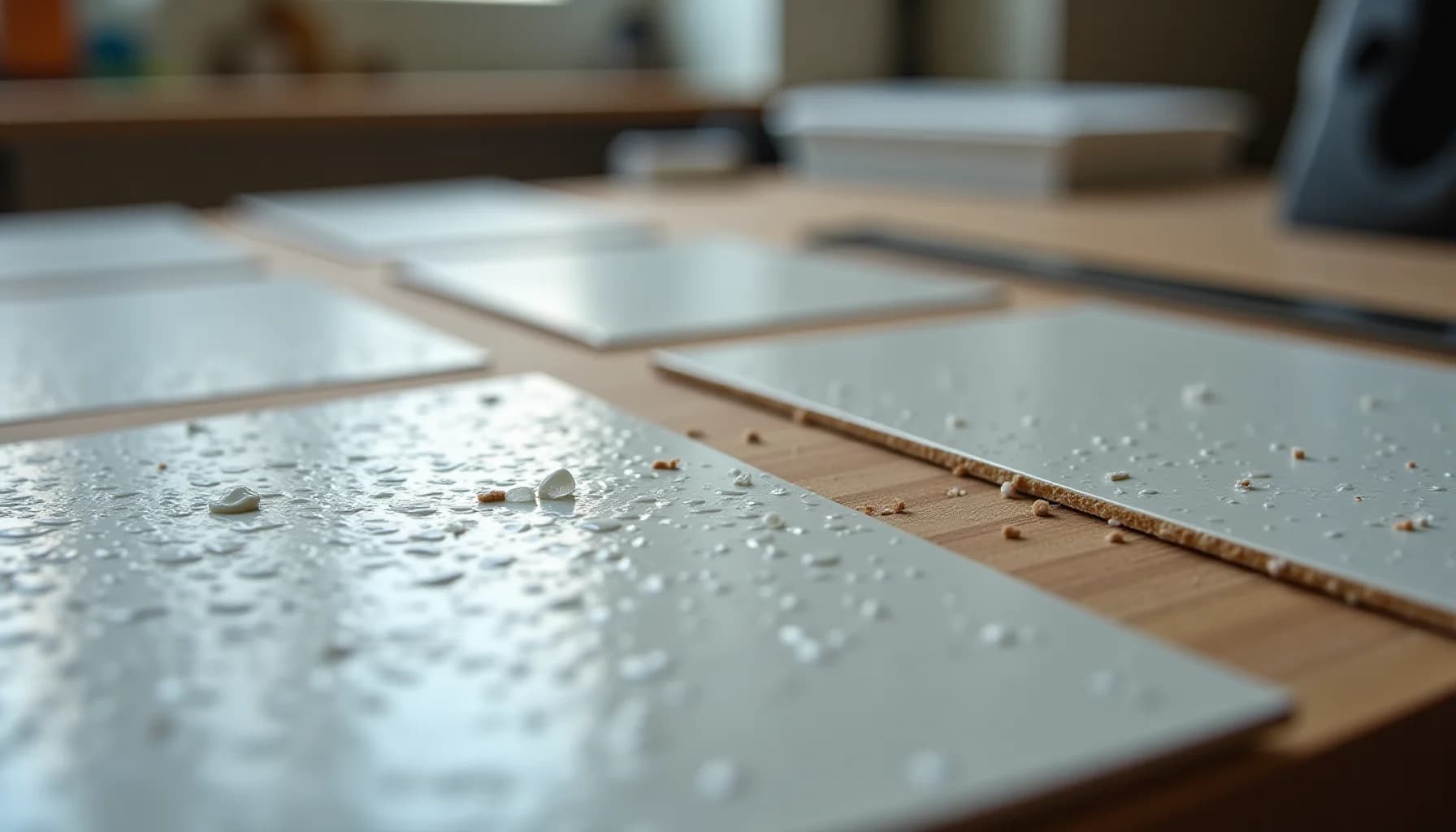
Start with the water drop test, since it reveals the single most important variable: how porous your tile is. Place a few drops of water on the back of a loose tile, or on a grout joint where the surface finish won't interfere. Watch what happens over 60 seconds. Porcelain, which must meet a water absorption rate below 0.5% under ANSI A137.1:2022, will bead or absorb almost nothing. Non-porcelain ceramic can absorb water noticeably faster, and natural stone or unglazed terracotta will darken visibly where the water sits.
Next, flip a loose tile over and feel the unglazed back surface. Porcelain feels smooth and fine-grained. Non-porcelain ceramic feels coarser and slightly gritty. If no loose tile is available, examine a chipped edge: porcelain will show the same color all the way through its thickness, while glazed ceramic often reveals a different, lighter clay body beneath the surface color.
Check the edges. Porcelain's density gives it a clean, sharp, straight edge. Ceramic edges tend to be slightly more rounded or irregular, especially on older tiles.
Pick up a tile if you can. Ceramic is less dense than porcelain and noticeably lighter for the same size piece.
Tap the installed tile with a coin. A solid, dense sound points toward porcelain or dense stone. A hollow or duller sound can indicate a less dense material, or simply an air pocket beneath.
Look for glaze. A thin, glassy line sitting just above the grout joint, or a clearly reflective surface layer, confirms a glaze is present. Most porcelain and natural stone tiles are unglazed.
Finally, check any remaining packaging, boxes, or the back stamp on the tile itself. Manufacturers are required to label certified porcelain tiles, and that mark is the fastest definitive answer you will find.
| Field Test | What You Need | What to Look For | Reliability |
|---|---|---|---|
| Water Drop Test | Few drops of water | Porcelain beads water; ceramic absorbs quickly | High |
| Edge Examination | Eye or magnifier | Porcelain: clean, straight edge; ceramic: slightly rounded | Medium |
| Body Color Check | Chipped or loose tile | Porcelain: uniform color throughout; ceramic: different color under glaze | High |
| Texture & Weight | Bare hands | Porcelain: smooth, dense, heavier; ceramic: coarser, lighter | Medium |
| Packaging / Label | Tile box or stamp | Manufacturer states ceramic or porcelain directly | Highest |
How Do You Identify Natural Stone, Terracotta, and Glass Tiles?
Natural stone, terracotta, and glass each announce themselves through specific physical traits, and misreading those traits leads to damage that no amount of resealing or polishing will undo.
Natural stone (marble, travertine, limestone, slate, granite) will never look perfectly uniform. Marble shows veins running through the body; travertine has small pits and holes typically filled with resin during manufacturing. Run your finger across the surface: genuine stone has fissures and micro-irregularities that porcelain imitations do not replicate convincingly. Stone is porous, which means it requires periodic resealing. The critical mistake is using an acidic cleaner, such as vinegar or a citrus-based product, on marble or limestone. Acid etches the calcium carbonate in the stone permanently, leaving dull, frosted patches that cannot be cleaned away. They require professional re-honing to correct.
Terracotta is a warm, earthy clay tile with visible natural color variation. It is less dense than quarry tile and noticeably more porous. Drip water on an unglazed terracotta surface and it darkens almost immediately. Using terracotta unsealed in a bathroom or kitchen invites moisture absorption, mold growth, and surface crumbling that worsens with every wet cycle.
Glass tile is non-porous, highly reflective, and resists stains, water, and mold. Abrasive scrubbers will scratch the surface permanently.
If you cannot determine whether a stone tile has been sealed, or the surface shows etching, deep staining, or cracking, stop and contact a certified stone restoration professional before applying any product.
Frequently asked questions
Is porcelain a completely different material from ceramic?
What is the most reliable way to tell ceramic from porcelain at home?
Can I use ceramic tile in my bathroom or kitchen?
Does natural stone tile need any special ongoing maintenance?
When Should You Call a Professional to Identify Your Tile?
For most homeowners, the field tests covered elsewhere in this article will get you to a confident answer. But there are situations where guesswork carries real cost, and that is when official standards and professional identification earn their place in your maintenance routine.
The governing US standard for porcelain tile is ANSI A137.1:2022, published by the Tile Council of North America. It defines porcelain as any ceramic tile with a water absorption rate of 0.5% or less, measured using ASTM C373-18. The Porcelain Tile Certification Agency (PTCA), jointly established by TCNA and the Ceramic Tile Distributors Association, runs a certification program for manufacturers and sellers, so certified porcelain carries official labeling you can look up. If you have any original packaging, receipts, or installer documentation, check those first: manufacturer labels are the single most reliable identification method available.
Call a professional when the stakes are high enough to matter. Specifically, before applying any coating, sealer, or chemical treatment to a floor you cannot positively identify; before undertaking repairs on what may be natural stone; or if a water absorption test gives you an ambiguous result. A tile specialist can perform a proper ASTM C373 absorption test using controlled boiling or vacuum methods, giving you a definitive answer rather than an educated guess, and protecting you from a costly, irreversible mistake.
How this article was made
Researched and written with AI assistance. What gets published is a human editorial decision. Grounded in 3 cited sources.
Edited by Claire Mercier, Editor. The guides are written with AI assistance.