How to Clean Slate Tiles Without Wrecking the Finish
Part of Bathroom Cleaning · article 15 of 16
On this page
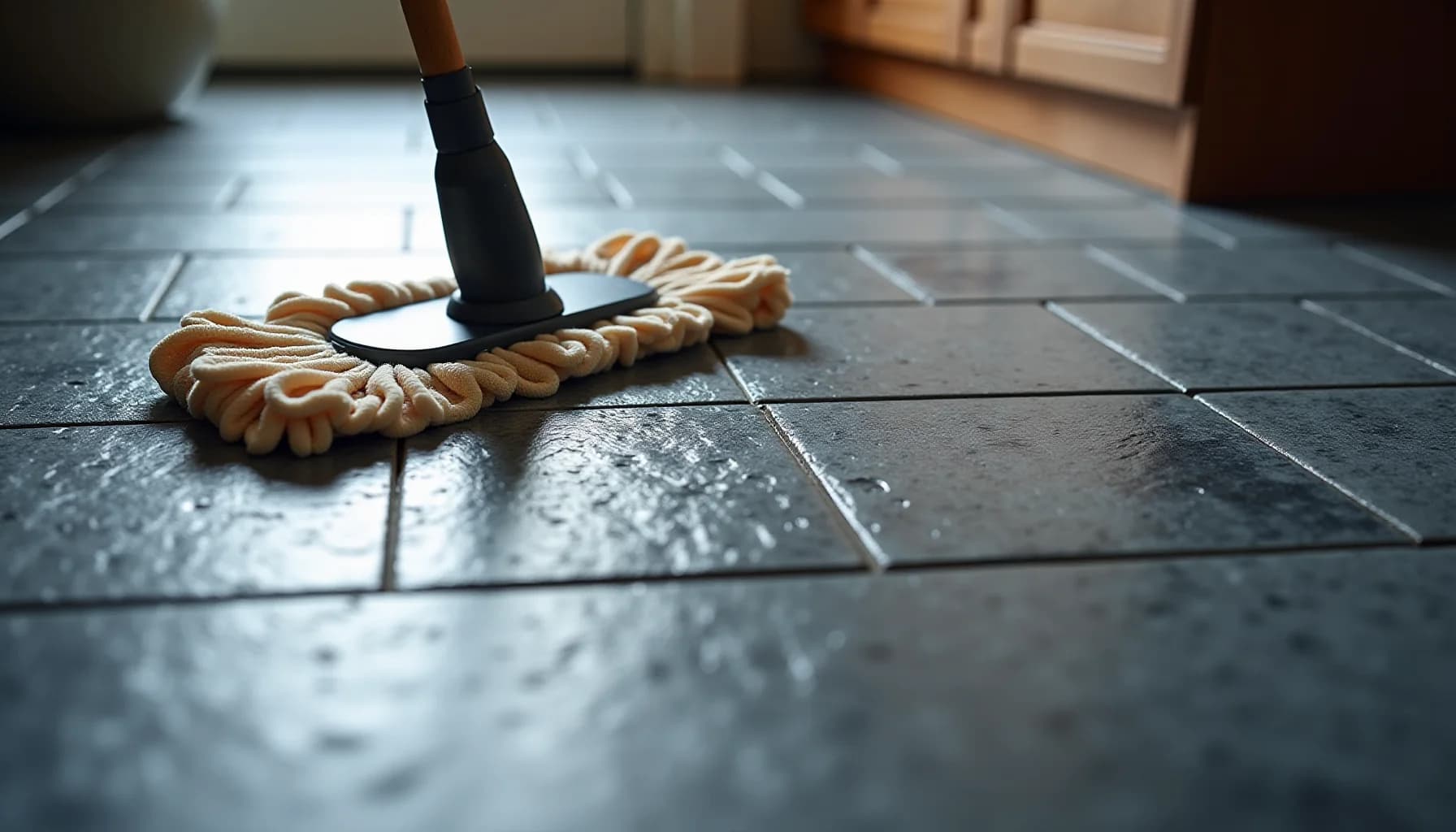
Slate cleans safely with a pH-neutral cleaner formulated specifically for natural stone, applied with a damp mop and followed by a clean-water rinse. Before you reach for any product, identify whether your slate is honed or natural cleft, because smooth honed surfaces scratch more readily and need extra care with mopping pressure and tool choice. Either way, skip anything labeled for ceramic tile, and never use vinegar, lemon juice, or bleach. These acids etch slate, dull the finish, and strip protective sealer. Sweep or dry-mop daily. Grit sitting underfoot does more damage than spills.
What type of slate tile do you have, and why does it matter for cleaning?
Before you touch a mop or reach for a cleaner, knowing exactly which type of slate you have will save you from mistakes that can't be undone.
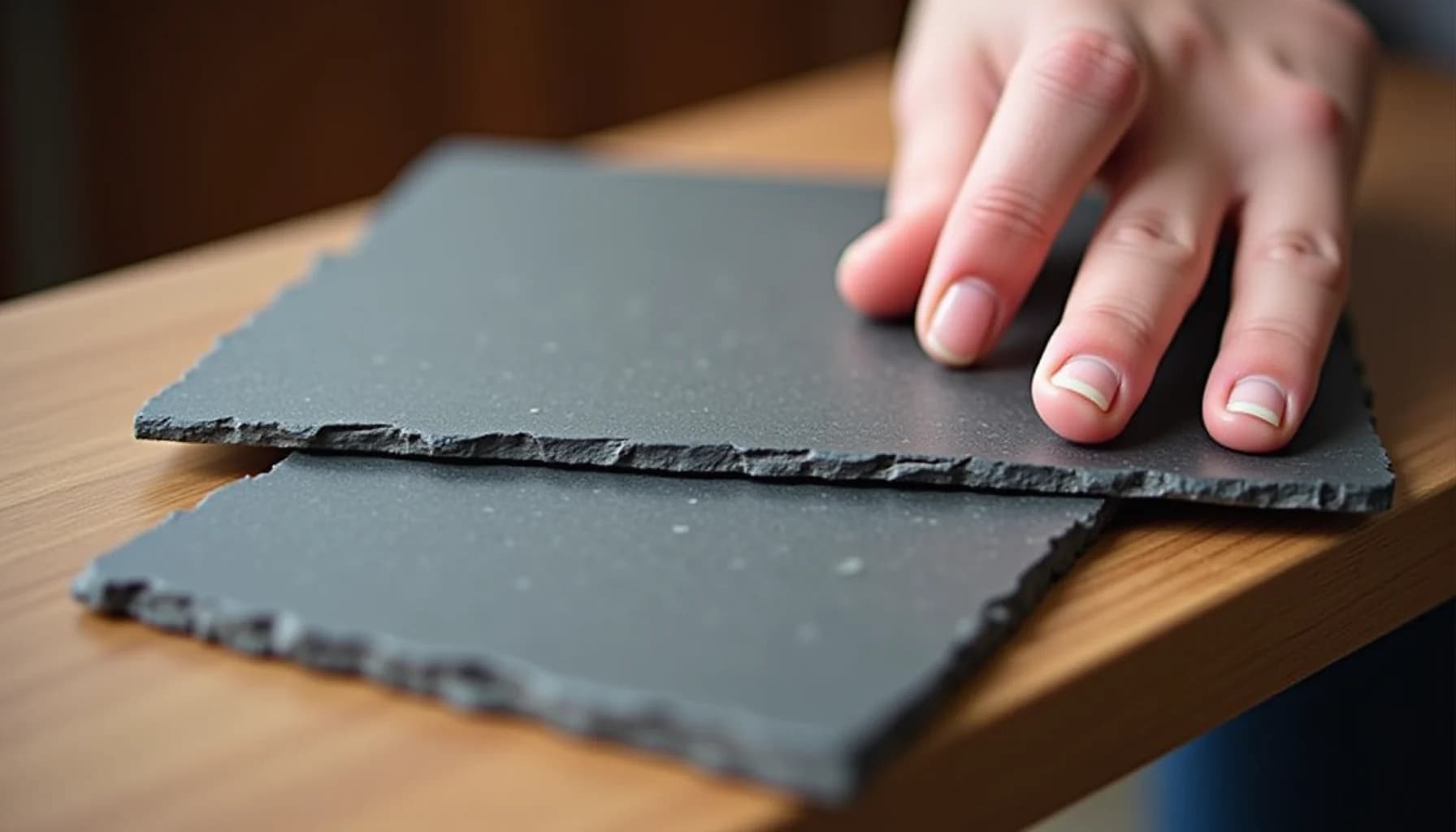
Slate comes in two common surface finishes. Honed slate has been ground to a smooth, matte surface. It looks refined and sits flat underfoot, but that smoothness means it shows scratches more readily than its rougher counterpart. Natural cleft slate is split along its natural grain during production, leaving a textured, uneven surface with ridges and valleys. That texture makes surface scratches less visible, but it also traps dirt and grit in its crevices, which demands more thorough dry cleaning.
Both types share the same fundamental material properties: slate is a metamorphic rock composed primarily of clay minerals. Despite its reputation for lasting centuries, it is a relatively soft stone that scratches and chips more easily than harder materials like granite. It is also highly porous, meaning it absorbs moisture and stains quickly. If you are unsure whether your tiles are genuine slate or a ceramic lookalike, the 7 field tests for identifying tile type can help you confirm before you commit to a cleaning method.
One more thing worth knowing if your slate tiles are newly installed: light spalling, tiny flakes shedding from the surface, is normal during the first few months and settles on its own. It is not damage, and it should not change how you clean.
How do you clean slate tile floors day to day?
Identify your slate type before you touch it
Check whether your tiles are honed (smooth, matte surface) or natural cleft (rough, uneven surface): honed slate scratches more easily and demands extra care with tools and pressure. This distinction also affects which products are safe, so confirm it before choosing any cleaner or pad.
Dry-clean daily to stop grit from scratching the surface
Sweep or dust-mop the floor every day using a clean, dry, non-treated mop to remove sand, dirt, and grit, which are abrasive enough to dull and scratch slate on their own. If you vacuum instead, check that the wheels and attachments are not worn, as bare metal or plastic will score the surface.
Mop with a pH-neutral, natural-stone cleaner only
Add a few drops of mild dish soap to a bucket of warm water, or use a commercial cleaner whose label explicitly states it is formulated for natural stone: many supermarket tile cleaners are acidic and suited only for ceramic tile, and they will damage slate over time. Mop the floor, paying close attention to grout lines where dirt collects, then follow immediately with a clean-water rinse to remove all residue and prevent a dull film from forming once the floor dries.
Blot spills the moment they happen
Press a paper towel firmly onto any spill and blot, do not wipe, so you lift the liquid rather than spread it. Even plain water can leave dark marks on unsealed or aging-sealer slate if it is allowed to sit, and acidic liquids such as wine, tomato sauce, or citrus juice will etch the surface if they are not removed immediately.
Test the sealer and reapply it once a year
Place a few drops of water on the slate surface: if the stone darkens and does not return to its original shade within 10 minutes, the sealer has failed and needs a fresh coat. Apply a high-quality penetrating sealer in multiple thin coats rather than one thick coat, which allows the product to fill the pores of the stone more effectively, then keep foot traffic off the floor for 24 to 48 hours while the sealer bonds.
Protect the surface from scratches you cannot fix
Fit felt pads to the feet of all chairs, tables, and other furniture in the room, because dragging any object across slate causes deep scratches that are extremely difficult and often impossible to reverse. Also avoid wire brushes, steel wool, abrasive pads, vinegar, lemon juice, and bleach entirely: all of them etch or scratch the finish and accelerate the damage that proper cleaning is meant to prevent.
How do you remove stains from slate tiles?
Slate stains fall into two main categories, and treating the wrong one with the wrong product will make things worse, not better.
For oil and grease stains, the most reliable approach is a baking soda poultice. Mix baking soda with acetone until you reach a consistency similar to pancake batter, spread it over the stain, and leave it for 24 hours. The mixture draws the oil out of the porous stone as it dries. Once the time is up, wipe it away cleanly and rinse with water. Stubborn grease may need two or three rounds before it lifts fully, so patience matters here. Cooking grease is a particularly common culprit in kitchen slate, especially when spills are left to sit rather than blotted immediately.
For organic stains, such as food, mold, or mildew marks on lighter stone, a 1:1 mix of hydrogen peroxide and water works well. Spray it onto the stained area, let it sit for ten minutes, scrub gently with a soft brush, and rinse thoroughly. Avoid the instinct to reach for vinegar here. Despite being a popular folk remedy for household cleaning, vinegar is acidic and will chemically etch slate, leaving the surface dull and pitted. The same applies to lemon juice, tomato-based products, tea, wine, and citrus in general, all of which can cause etching if left in contact with the stone.
Because slate is porous, stains absorb quickly. The faster you respond to a spill, the shallower the penetration. Blot with a paper towel rather than wiping, which spreads the liquid further. Even plain water can leave a dark mark on unsealed or aging-sealed slate if it is allowed to sit.
After any stain removal attempt, rinse the area well and let it dry completely before assessing whether a second treatment is needed.
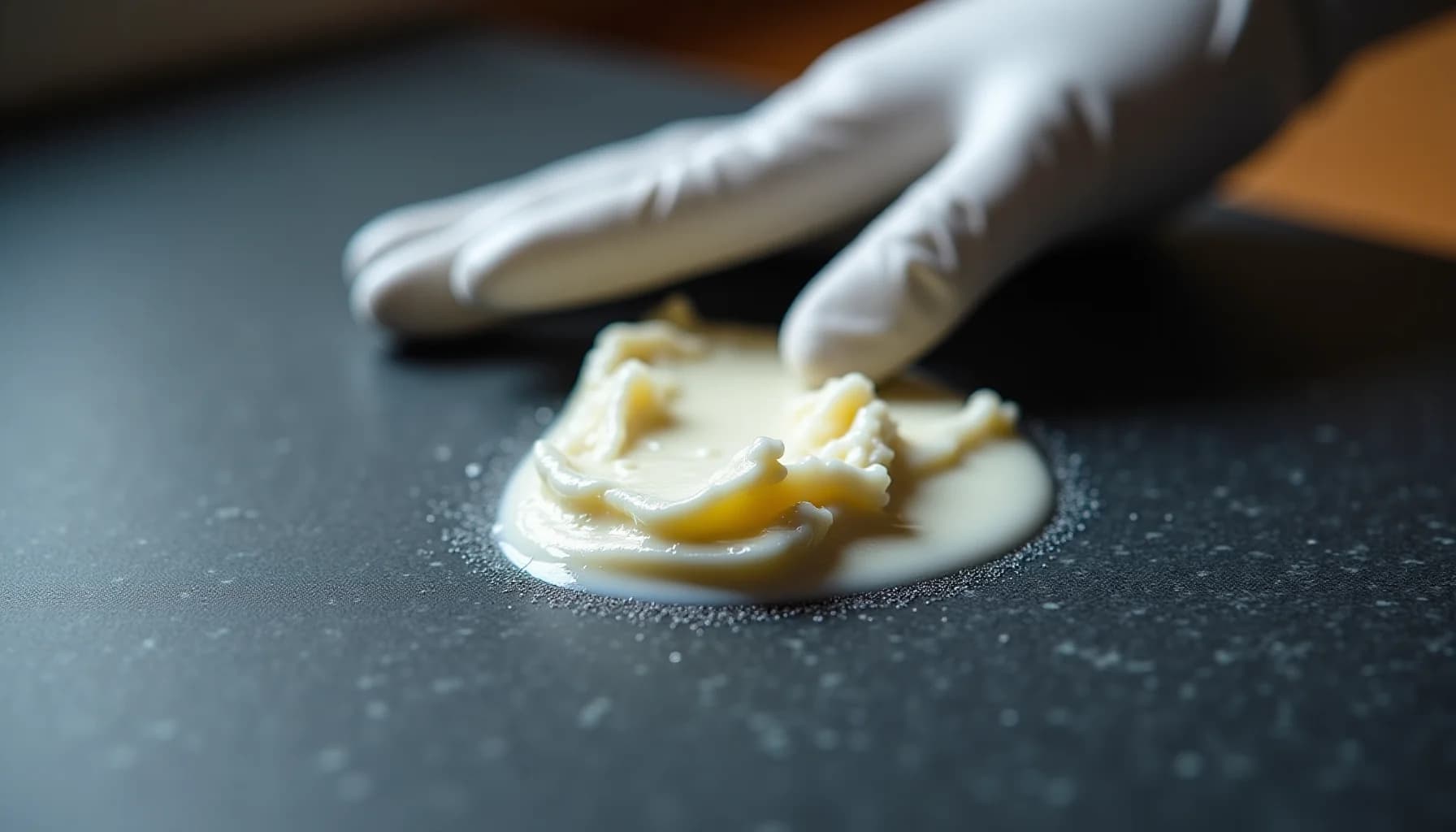
What products and tools will damage your slate tiles?
The cleaning aisle at most hardware stores is not your friend if you have slate floors. Many products marketed as tile cleaners are formulated for ceramic or porcelain, which are non-porous and far more resistant to chemical damage. Their acidic formulas will eat into slate over time, dulling the finish and causing etching, a form of surface erosion that leaves the stone looking pitted and worn. Always read the label before buying: if it does not specifically say "safe for natural stone" and pH-neutral, set it back on the shelf.
Vinegar is the most common mistake homeowners make. It is widely recommended as a general-purpose cleaner, and it is genuinely effective on many surfaces, but slate is not one of them. The acetic acid reacts with the minerals in the stone, stripping away any protective sealer and leaving the surface roughened and dull. Lemon juice causes the same problem. Neither should ever contact your slate tiles, even in diluted form.
On the tools side, wire brushes, steel wool, and rough abrasive sponges all scratch the surface of slate. Because scratches in slate are essentially permanent and extremely difficult to repair, a single aggressive scrubbing session can cause lasting damage that no amount of sealing or polishing will reverse. Stick to soft mops, microfiber cloths, and non-metallic brushes with soft bristles for grout lines.
Two more overlooked hazards: rubber-backed mats can discolor both tiles and grout when left in place over time, and a vacuum cleaner with worn metal or plastic wheels will score the surface with every pass. Check your vacuum's underside before running it across slate. If you are unsure what type of slate or tile you are dealing with, the field tests for identifying tile type can help you confirm the material before committing to any cleaning product.
| Damaging Agent | Type of Damage | Safe Alternative |
|---|---|---|
| Vinegar / lemon juice | Etching, dulled finish, surface erosion | pH-neutral natural stone cleaner |
| Abrasive pads / steel wool | Scratches surface, worsens stain absorption | Soft cloth or non-abrasive mop |
| Supermarket tile cleaners | Acidic formula damages slate over time | Cleaner labeled for natural stone |
| Over-wetting / pooled water | Weakens adhesive, causes lifting or cracking | Damp mop; dry floor promptly |
| Rubber-backed mats | Discolors tiles and grout beneath | Felt pads; non-rubber matting |
How do you seal slate tiles and know when they need resealing?
Slate's porosity means it will absorb water, oils, and cleaning residue unless a sealer closes off those pores. A penetrating sealer, sometimes called an impregnating sealer, soaks into the stone rather than sitting on top of it, which is what you want. Surface coatings trap dirt and peel; penetrating formulas bond with the stone's internal structure and last far longer.
Before buying a bottle, run the water-drop test: place a few drops of water on the slate and watch for ten minutes. If the stone darkens and does not return to its original shade within that window, the sealer has broken down and a fresh application is overdue. For most households, resealing once a year is sufficient, though high-traffic entryways or kitchen floors may need attention every six to eight months.
When you apply, resist the urge to lay on one heavy coat. Multiple thin coats penetrate more effectively into porous stone than a single thick one, which can sit on the surface, dry unevenly, and leave a hazy film. After the final coat, stay off the floor entirely for 24 to 48 hours. Walking on the floor during that curing window prevents the sealer from bonding properly, and the only remedy is stripping and starting over.
If you are unsure whether your slate is honed or natural cleft before choosing a sealer product, the field tests for identifying tile type can help you confirm what you are working with. Call a professional tile contractor if your slate shows active lifting, cracking, or widespread sealer failure that the water-drop test reveals across most of the floor, as those conditions point to substrate problems a sealer alone cannot fix.
Frequently asked questions
Can I use vinegar to clean slate tiles?
How do I know when my slate tiles need resealing?
Why is daily sweeping so important for slate floors?
What kind of cleaner is safe for wet mopping slate?
How do you prevent scratches and physical damage to slate tiles?
Slate's biggest enemy is not a spill or a wrong cleaner. It is the slow, cumulative damage that comes from friction: grit ground underfoot, furniture dragged across the surface, a vacuum wheel that has worn down to bare metal. Because slate is a relatively soft stone that scratches easily, and because those scratches are essentially permanent (mineral oil can soften the look of a light surface mark, but it cannot undo the damage), the only effective strategy is prevention built into weekly habits.
Start with daily dry sweeping or dust mopping. Sand and fine grit act like sandpaper under foot traffic, and each pass across an unswept floor leaves micro-abrasions that dull the surface over time. When vacuuming, check that all wheels and attachments are in good condition before they touch the tile. A worn plastic wheel can score slate just as readily as a wire brush.
Furniture deserves the same attention. Fit felt pads to every chair leg, table base, and couch foot in any room with slate flooring. This is not a cosmetic suggestion. Dragging a chair across slate even once can leave a deep, permanent gouge. Check those pads every few months because they wear down and fall off, especially on chairs that are moved frequently.
Finally, skip rubber-backed mats. They trap moisture against the tile and discolor both the slate and the grout beneath them over time.
How this article was made
Researched and written with AI assistance. What gets published is a human editorial decision. Grounded in 7 cited sources.
Edited by Claire Mercier, Editor. The guides are written with AI assistance.
Sources (7)
- 4+ Ultimate Hacks To Clean Slate Quickly And Easily
- How Clean Slate Tile Floors
- How to Clean Slate Floors: Simple Steps to Shine - eufy US
- The Best Tips I've Learned to Clean Rough Slate Floors
- Removing Years of Dirt from Slate Kitchen Tiles - Stone Cleaning and Polishing tips for Slate floors
- Slate Tile Care and Maintenance
- Tile Style: Easy Care Guide For Slate Flooring