Which Cleaner Is Safe for Your Tile: A Guide by Tile Type
Part of Bathroom Cleaning · article 3 of 16
On this page
The safest cleaner for any tile is a pH-neutral product, sitting around 6 to 8 on the pH scale. That single rule covers ceramic, porcelain, and natural stone without risk of etching, fading, or grout erosion. Diluted dish soap, chosen without bleach, oils, or moisturizers, works as a practical daily option across all tile types. If you are unsure what material your floor is, these seven field tests can tell you before you pick up a bottle. Vinegar and ammonia damage grout by corroding its cement-based binders over time. Bleach, while usable on glazed ceramic and porcelain when diluted, will permanently etch natural stone and fade colored grout with repeated use. Never mix bleach with ammonia or vinegar; both combinations release toxic gases serious enough to require emergency care.
What type of tile do you have, and why does it change everything?
Before you reach for any cleaner, you need to know exactly what you are mopping. Tile falls into three broad families, and the rules for each are different enough that the wrong product on the wrong surface causes permanent damage rather than a clean floor.
Ceramic and porcelain are the most forgiving. Ceramic is made from clay fired at relatively low temperatures and typically has a glazed surface layer. Porcelain is denser, fired at higher heat, and absorbs less moisture. Both can handle a wider range of cleaners, though that flexibility still has limits.
Natural stone is the category that demands the most caution. Marble, travertine, limestone, granite, and slate are all porous and chemically reactive. Because natural stone tiles are porous, they absorb cleaning solutions and stains if not properly sealed, meaning the cleaner you use does not just sit on the surface. It gets in. Acidic or strongly alkaline products will etch and dull stone that cannot be restored by any household remedy.
Grout is not a tile type, but it acts like one. Most residential grout is cement-based and porous, so it responds to cleaners the same way natural stone does, just faster.
If you are not certain which category your floor belongs to, there are field tests that can identify your tile type before you risk damage with the wrong product. Getting this identification right is the single step that makes every other cleaning decision easier.
Why does pH matter for tile and grout cleaners?
Identify your tile material before buying any cleaner
Confirm whether your tile is ceramic, porcelain, or natural stone such as marble, travertine, granite, or limestone. Each material has different chemical sensitivities, so getting this wrong before you buy a cleaner is the mistake that causes permanent damage.
Understand pH and why it determines cleaner safety
A pH-neutral cleaner sits between 6 and 8 and is safe for all common tile types, including natural stone. Cleaners outside that range, whether acidic or highly alkaline, will degrade cement-based grout, dissolve sealers, and etch porous stone surfaces over time.
Stop using vinegar, bleach, ammonia, and abrasive powders on the wrong surfaces
Vinegar and abrasive powders corrode grout and will permanently etch natural stone such as marble, travertine, and terrazzo. Bleach may be diluted for glazed ceramic or porcelain only, but repeated use erodes grout and removes sealant, and mixing bleach with ammonia or vinegar releases toxic gases that can cause serious respiratory harm.
Use a pH-neutral cleaner or diluted dish soap for all routine cleaning
For daily or weekly cleaning on any tile type, mix a small amount of bleach-free, oil-free dish soap with water, or use a labeled pH-neutral product such as Bona Stone Floor Cleaner or Method Squirt and Mop Hard Floor Cleaner. For natural stone specifically, castile soap or a product like StoneTech are the safest choices.
Sweep first, then mop with a microfiber mop
Sweep or vacuum the floor before any wet cleaning, because grit acts like sandpaper under foot traffic and can scratch glazed tile over time. Apply your chosen cleaner with a microfiber mop, which picks up more dirt than cotton and leaves less lint behind.
Match specialty products to grout and stone problems, and call a professional for severe damage
For stained or discolored grout, use an oxygen bleach product such as sodium percarbonate or a bleach-free grout restorer like Zep Grout Cleaner and Brightener. If grout is already crumbling, pitted, or heavily eroded from repeated use of acidic cleaners, the damage is beyond DIY recovery and a tile professional should assess whether regrouting is needed.
Which Common Household Cleaners Actually Damage Tile and Grout?
Three products sit in almost every American cleaning cabinet and cause more tile damage than anything else: vinegar, bleach, and ammonia. All three carry reputations as powerful, trustworthy cleaners, and all three can permanently ruin your tile or grout under the wrong conditions.
Vinegar is the biggest offender, precisely because it has earned a reputation as a safe, natural alternative to chemical cleaners. That reputation falls apart on tile. Vinegar is acidic, and acetic acid attacks cement-based grout directly, corroding the binding agents that hold it together. Over repeated use, the grout softens, discolors, and eventually crumbles, leaving gaps that trap moisture and bacteria. On natural stone tiles such as marble, travertine, or terrazzo, a single application can permanently etch and dull the surface. That damage cannot be scrubbed away; it is a chemical reaction baked into the stone.
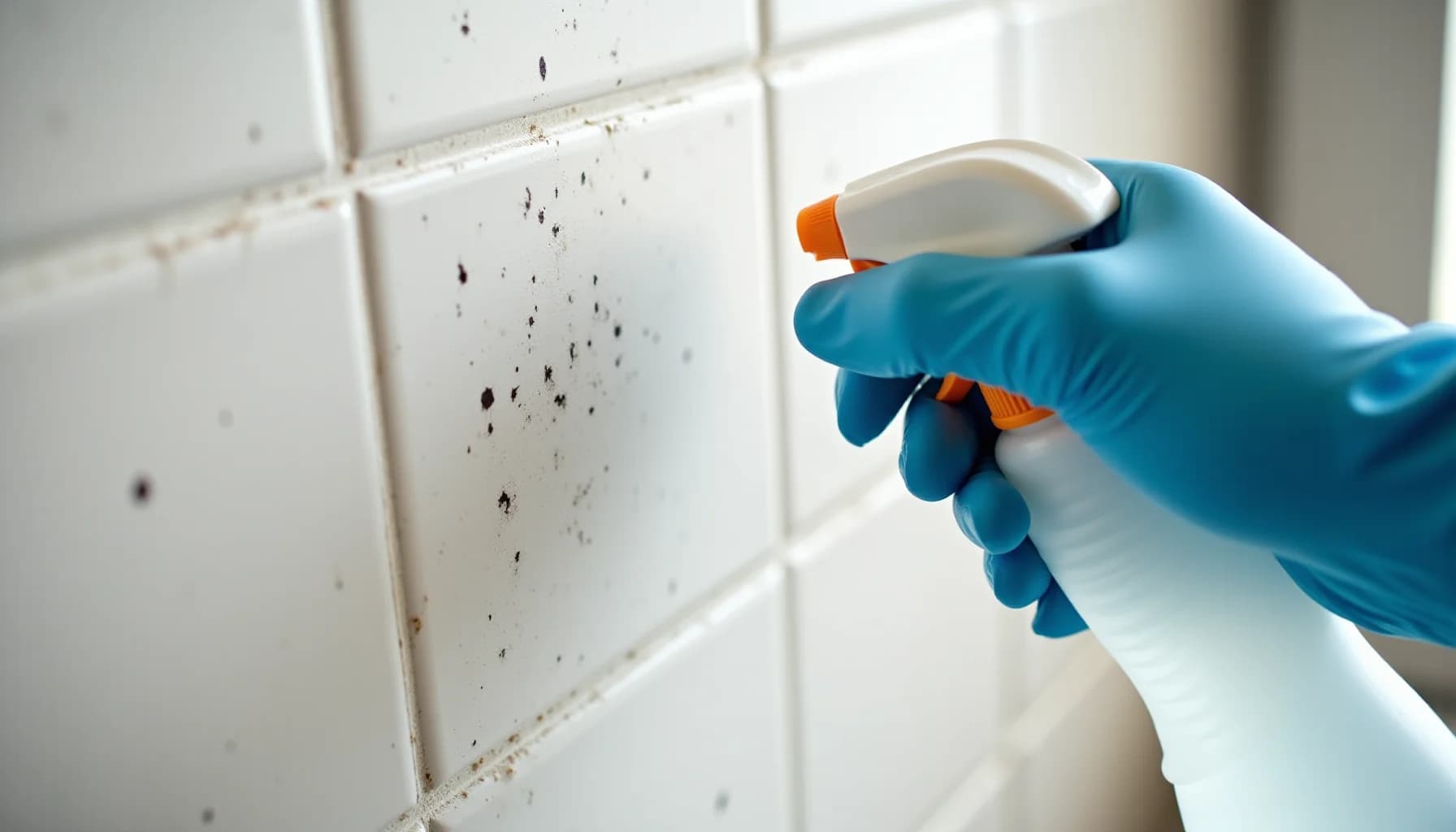
Bleach carries its own set of misconceptions. Diluted chlorine bleach does work on glazed ceramic and porcelain, particularly against mold-darkened grout, but repeated use erodes the grout and strips away its sealer. On natural stone, bleach causes the same permanent etching as vinegar. On colored grout, it fades the pigment. The more serious danger, though, is chemical mixing: bleach combined with ammonia produces toxic chloramine vapors, and bleach mixed with vinegar or any other acid releases chlorine gas. Both reactions have sent people to emergency rooms. These are not theoretical risks.
Ammonia is highly alkaline, which makes it just as destructive to grout as acidic cleaners, only from the opposite direction on the pH scale. It dissolves grout sealer and can damage tile finishes outright.
Toilet bowl cleaners and powdered abrasive scrubs round out the list. Toilet bowl cleaners are corrosive enough to eat through grout and strip tile finishes entirely. Many powdered and soft-scrub products are also acidic and cause the same long-term grout deterioration, with the added problem of micro-scratches on glazed surfaces from abrasive particles.
If you are unsure what type of tile you are working with before choosing a product, the field tests described in how to identify your tile type can help you confirm the material before you risk permanent damage.
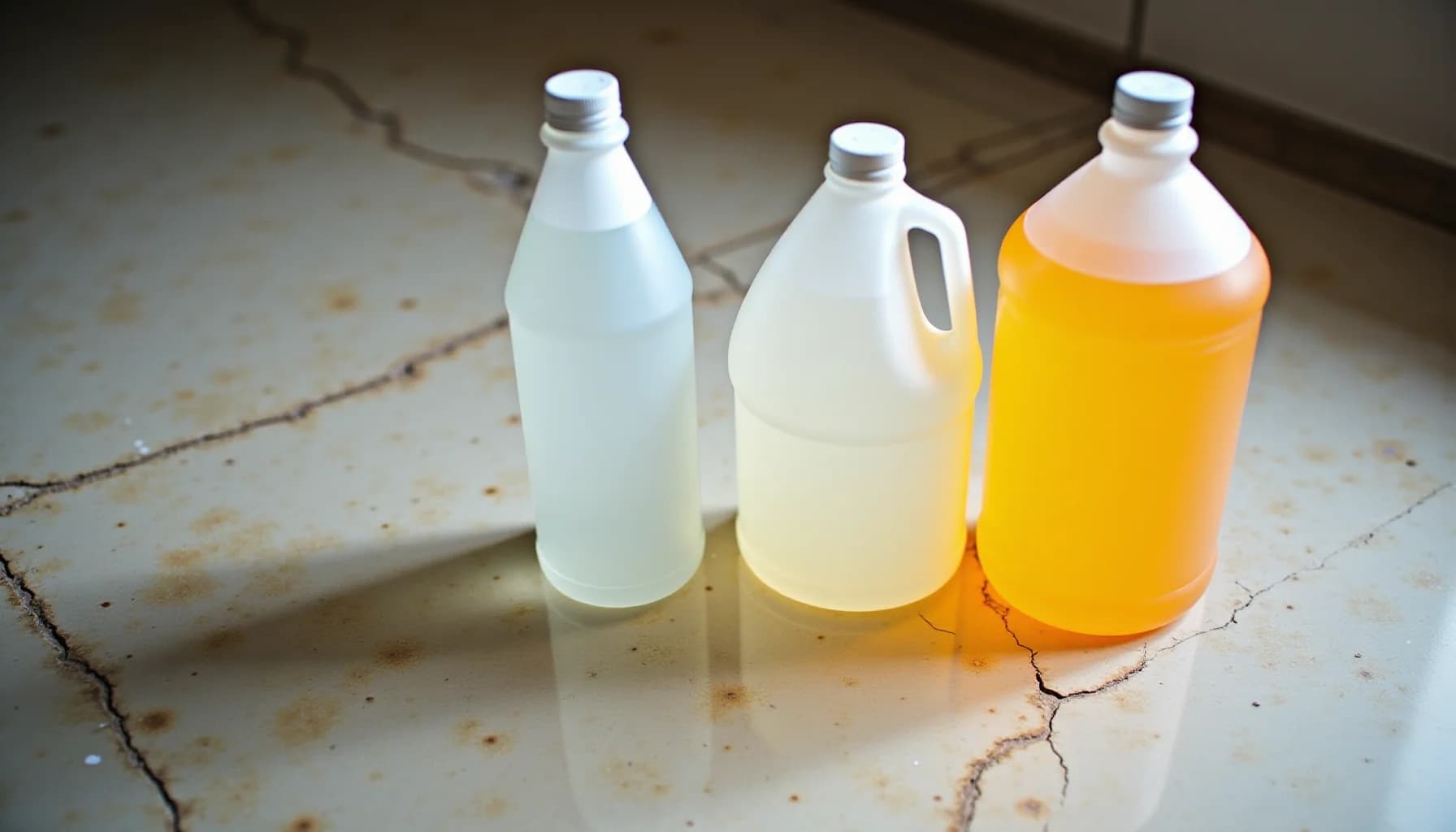
What cleaners are safe for daily and deep cleaning by tile type?
The right cleaner for your tile depends on what your tile is made of, so identifying your material before you buy anything is time well spent.
Ceramic and porcelain tiles are the most forgiving. For daily cleaning, a pH-neutral cleaner, sitting safely in the 6 to 8 range, is the safest default. Diluted dish soap works equally well here: choose one without bleach, oils, or moisturizers, mix it with warm water, and mop with a microfiber mop, which picks up more dirt than cotton and leaves less lint. For deeper cleans, white vinegar diluted in water can cut through stubborn buildup on ceramic or porcelain, though this should remain an occasional tool rather than a daily habit. Diluted bleach can also be used periodically on glazed ceramic and porcelain for disinfection or to address mold.
Natural stone tiles, including marble, travertine, limestone, granite, and slate, require strict adherence to pH-neutral products at all times, for both daily maintenance and deeper cleaning. Castile soap is a reliable DIY option that is genuinely safe for all stone surfaces. StoneTech is a ready-made pH-neutral cleaner formulated specifically for stone, and Bona Stone Floor Cleaner is another well-regarded option that will not dull a stone floor's finish. For daily mopping, the same diluted dish soap approach used on ceramic works on stone, provided the soap contains no bleach or harsh additives.
Grout, regardless of tile type, benefits from oxygen bleach (sodium percarbonate) rather than chlorine bleach for periodic deep cleaning. It whitens and removes organic stains without harsh fumes. For targeted grout restoration, Zep Grout Cleaner and Brightener offers results without bleach. Method Squirt + Mop, with its plant-based biodegradable formula, is a practical everyday option safe across all common tile surfaces.
| Tile Type | Safe Daily Cleaner | Avoid Completely | Diluted Bleach OK? |
|---|---|---|---|
| Ceramic (glazed) | pH-neutral cleaner or dish soap | Toilet bowl cleaner, abrasive powders | Yes, occasionally |
| Porcelain | pH-neutral cleaner or dish soap | Toilet bowl cleaner, abrasive powders | Yes, occasionally |
| Marble | pH-neutral cleaner or castile soap | Vinegar, bleach, ammonia, abrasive powders | No — etches permanently |
| Travertine / Limestone | pH-neutral cleaner or castile soap | Vinegar, bleach, ammonia, abrasive powders | No — etches permanently |
| Granite / Slate | pH-neutral cleaner or castile soap | Vinegar, bleach, ammonia | No — etches permanently |
Can acidic cleaners destroy your grout?
Grout is cement-based, porous, and far more chemically fragile than the tile it surrounds. When you apply an acidic cleaner, the acid reacts with the calcium compounds in the cement binder, gradually dissolving the material that holds each joint together. Vinegar is the most common offender: its acetic acid wears grout down over repeated use, causing discoloration and eventually crumbling at the joint edges. Ammonia causes a different kind of harm, stripping the grout sealer and degrading the finish from the top down. Powdered abrasive cleaners compound the problem by scoring the grout surface, giving future moisture and stains a rougher, more absorbent face to penetrate.
The practical consequence is that damaged grout no longer repels water. Moisture works into the subfloor, mold establishes itself in the joint, and the repair becomes structural rather than cosmetic.
For routine maintenance, diluted dish soap (without bleach, oils, or moisturizers) or a pH-neutral cleaner in the 6-to-8 range is all grout needs. For stained joints, oxygen bleach (sodium percarbonate) whitens organic staining without attacking the binder the way chlorine bleach does repeatedly over time. Zep Grout Cleaner and Brightener is a bleach-free option worth keeping on hand for periodic brightening.
If your grout is already crumbling, hollow-sounding underfoot, or missing in sections longer than a few inches, stop. Regrouting and resealing at that stage requires a professional, because improper repairs trap moisture and accelerate the underlying damage rather than reversing it.
Frequently asked questions
Can I use vinegar to clean my tile floors?
Is bleach safe to use on all tile types?
What is the safest cleaner to use on all tile types every day?
Is it dangerous to mix bleach with other common cleaners?
What happens if you mix the wrong cleaners, and when should you call a pro?
Mixing bleach with ammonia produces toxic chloramine vapors. Mixing bleach with vinegar, or any other acid, releases chlorine gas. Both reactions have sent people to emergency rooms. Neither combination offers any cleaning benefit that a single product cannot achieve on its own, so there is no practical reason to ever combine them. Keep these products in separate parts of your cleaning cabinet, and make it a firm weekly habit to check what you are reaching for before you mix anything into a bucket.
If you have already used the wrong cleaner, act quickly. Flush the area thoroughly with clean water to dilute and remove residue. For grout that has been repeatedly exposed to vinegar, bleach, or ammonia, the damage accumulates quietly until the grout begins to crumble or discolor visibly. At that point, routine cleaning cannot reverse it.
Calling a professional tile restoration company makes sense when grout has eroded enough to feel soft or powdery underfoot, when natural stone shows visible etching or a persistent dull patch that wiping cannot fix, or when resealing alone will not close the gaps left by crumbled grout. Professionals can regrout, hone etched stone, and apply commercial-grade sealers that consumer products cannot match. Delaying that call tends to widen the damage and raise the eventual cost.
How this article was made
Researched and written with AI assistance. What gets published is a human editorial decision. Grounded in 8 cited sources.
Edited by Claire Mercier, Editor. The guides are written with AI assistance.
Sources (8)
- Safe, Effective, Non-toxic Cleaning Recipes
- Cleaning & Disinfecting
- Best Multisurface Floor Cleaners, Lab-Tested and Reviewed via @ConsumerReports
- Best Tile Floor Cleaners: Expert Reviews & Buying Guide - Pro Tool Reviews
- What is the Best Homemade Floor Cleaner? 10+ DIY Ideas
- Best Tile Floor Cleaner — VPWS Commercial Cleaning
- Best Tile Floor Cleaner: Top Products and Methods for Spotless Floors - D and G Flooring
- Best Homemade Tile and Floor Cleaner in Every Season